
液化天然气

Search documents
美专家:美想造LNG是痴人说梦
news flash· 2025-04-29 06:16
多名分析师表示LNG生产商难以按照USTR的标准运输商品。"标普全球"网站称,他们指出的理由是, 与海外造船厂相比,美国造船成本更高,还有其他因素。哥伦比亚大学全球能源政策中心研究员约瑟夫 表示,美国想要在近几年建造一艘LNG运输船是"痴人说梦",船厂没有建造LNG运输船的经验和技术。 (环球时报) ...
撑不住了!美国发现不对劲,没中国果然不行?王毅打开天窗说亮话
Sou Hu Cai Jing· 2025-04-29 05:26
Group 1 - The article highlights the impact of increased tariffs on products like Tiger Balm, which is primarily produced in China and distributed in the U.S. This could lead to a significant price increase for consumers [1] - The U.S. government has raised tariffs on Chinese goods to 145%, which is expected to result in an additional tariff cost of $3 million to $5 million for Tiger Balm this year [1] - The article notes a trend of American consumers rapidly purchasing Chinese-made goods before they become more expensive, indicating a reaction to the tariff situation [1] Group 2 - The article discusses the broader implications of tariffs on consumer goods in the U.S., with prices for items like furniture increasing by 27% due to tariffs [3] - It mentions that the new tariffs could lead to a significant economic impact, with an estimated annual revenue increase of $737.4 billion from tariffs, but a GDP loss of $1.2 trillion due to reduced consumer spending [3] - The trade structure between the U.S. and China shows that the U.S. primarily imports consumer goods, while China imports intermediate goods, indicating a potential imbalance in trade dependencies [3] Group 3 - The article reports a significant reduction in China's purchases of U.S. pork, with a decrease of 12,000 tons in one week, marking the lowest weekly delivery volume of the year [5] - It also notes a decline in soybean purchases from the U.S., with only 1,800 tons bought in the same week, reflecting a trend of reduced imports from China [5] - The article emphasizes China's stance against U.S. tariffs, advocating for multilateral trade systems and expressing a commitment to high-level openness and win-win cooperation [5][8] Group 4 - The article concludes with a statement on China's ability to counter U.S. provocations and its strategy to mitigate the negative impacts of U.S. tariffs through domestic demand expansion and market diversification [8] - It asserts that the trade war initiated by the U.S. has no winners and warns that continued protectionism will hinder global economic development [8] - The global community is watching closely to see how this tariff conflict will unfold and what the eventual outcomes will be [8]

澳大利亚能源公司Woodside围绕美国路易斯安那州175亿美元规模的液化天然气(LNG)开发项目做最终投资决定(FID)。
news flash· 2025-04-28 22:41
澳大利亚能源公司Woodside围绕美国路易斯安那州175亿美元规模的液化天然气(LNG)开发项目做最 终投资决定(FID)。 ...
美液化天然气行业警告:征收港口费将损害美国能源战略,我们无法遵守新规
Sou Hu Cai Jing· 2025-04-28 13:58
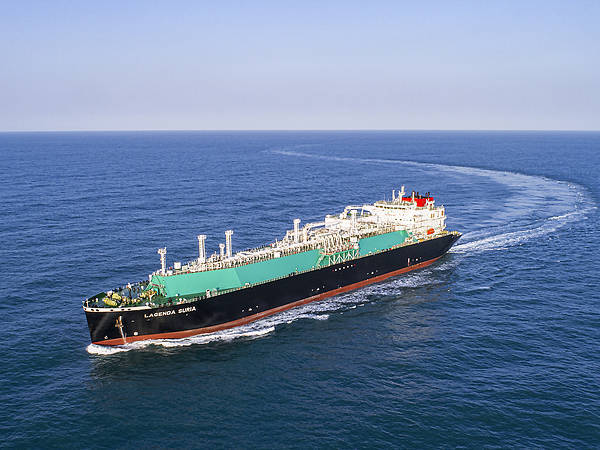
Group 1 - The U.S. Trade Representative's office announced high "port fees" on ships built and operated by China, effective mid-October 2023, raising concerns across various U.S. industries [1][4] - The U.S. LNG industry warned that the inability to build LNG ships domestically means the port fees will increase operational costs and undermine U.S. producers' global dominance [1][3] - The American Petroleum Institute (API) stated that U.S. LNG producers cannot comply with the new regulations, as there are no U.S.-built LNG ships available and none will be ready before 2029 [1][4] Group 2 - The port fees will be $50 per net ton for Chinese shipowners and operators, increasing by $30 annually over three years, while other countries using Chinese-built ships will incur fees of $18 per net ton or $120 per container [4] - The U.S. surpassed Australia in 2023 to become the world's largest LNG exporter, exporting approximately 337 million cubic meters daily, contributing $34 billion annually to the U.S. economy [4] - Industry leaders expressed concerns that the new measures could destabilize long-term contracts and increase costs for global buyers, threatening the U.S.'s position as a major LNG exporter [3][4] Group 3 - The Chinese shipbuilding industry currently holds a 7% share of the global LNG fleet and 28% of LNG ship orders, indicating a growing market presence [4] - Experts from Columbia University and the LNG Center highlighted that the U.S. lacks the experience and technology to build new LNG ships before 2029, making compliance with the new regulations impractical [4] - The Chinese government criticized the U.S. measures, stating they would raise global shipping costs, disrupt supply chains, and ultimately harm U.S. consumers and businesses [4]
240万吨大豆成“致命武器”,特朗普收噩耗,大量美国人或面临破产
Sou Hu Cai Jing· 2025-04-28 08:58
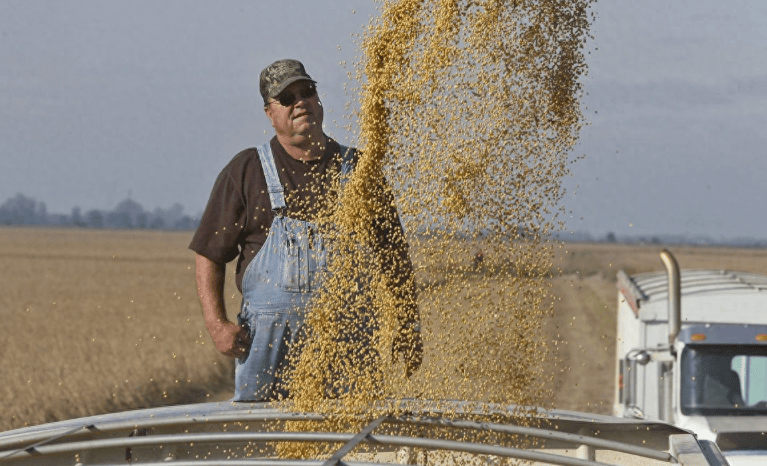
据《湖南日报》援引新加坡媒体报道,在农产品贸易领域,大豆作为美国对华出口的核心产品之一,一直占 据着重要地位,去年还占到美国对华出口农产品的28% 。然而,特朗普政府显然低估了中国应对贸易挑战的 决心和能力。 除了大豆市场,美国在其他领域的对华出口也遭受重创。在能源领域,2025年3月,中国对美液化天然气进 口"清零",这是自2022年6月以来的首次。曾经作为中国LNG市场"五大供应国"之一的美国,出口量锐减,而 中国则加大从印尼、澳大利亚和文莱等国的采购力度,还与阿联酋签署了15年、每年100万吨的液化天然气 大单。在汽车领域,特朗普以"国家安全"为由对中国汽车加征关税,结果却为德国、日本和韩国等国的汽车 企业腾出了市场空间。 特朗普(资料图) 如今,美国空出来的市场份额已被其他国家迅速填补。阿联酋、巴西、澳大利亚、印尼、阿根廷等国与中国 构建起长期、稳定、非政治化的贸易关系网络,而美国在这个网络之外逐渐被边缘化。业内人士指出,留给 美国企业的时间已经不多,如果中美迟迟无法达成协议,等到市场被完全瓜分,美国企业想要重回中国市场 将难上加难。就像澳大利亚,其牛肉在2019年因莫里森政府的遏华政策几乎"百分百退 ...
美LNG,无法遵守特朗普新规!
Sou Hu Cai Jing· 2025-04-28 03:42
Core Viewpoint - The Trump administration's new "port fee" policy, effective from mid-October, imposes high charges on ships built and operated by China, raising concerns particularly in the liquefied natural gas (LNG) sector, which may undermine the U.S. energy strategy and economic stability [1][3][5]. LNG Industry Impact - The policy sets a fee of $50 per net ton for Chinese shipowners and operators, while other countries using Chinese-built vessels will incur charges of $18 per net ton or $120 per container [3]. - This will lead to increased transportation costs for the U.S. LNG industry, which is already facing challenges in maintaining its competitive edge globally [3][5]. - The American Petroleum Institute (API) has expressed strong opposition, highlighting the lack of sufficient U.S. shipbuilding capacity to meet LNG vessel demand, projecting that even with investment, U.S. shipyards cannot fulfill needs before 2029 [3][5]. Long-term Contract Stability - The new fees may disrupt existing long-term contracts and threaten the U.S.'s leadership in the global LNG market, increasing procurement costs for global buyers and destabilizing supply chains [5][7]. - The policy could exacerbate risks to the U.S. energy strategy, especially as the country has recently become the largest LNG exporter [5][7]. Shipbuilding Capacity Concerns - The requirement for using U.S.-built and flagged vessels for transporting U.S. LNG is deemed unrealistic, as current U.S. shipyards lack the technology and experience to construct LNG vessels in the short term [7]. - Experts believe that it would take decades for U.S. shipyards to meet market demands for LNG vessel construction, indicating a severe misjudgment by the Trump administration regarding the capabilities of the domestic shipbuilding industry [7][8]. Economic Consequences - The "port fee" policy is characterized as a "self-harming" decision that fails to address the underlying issues of the U.S. shipbuilding industry, potentially leading to more severe economic repercussions [8]. - A more open and cooperative role in the global economy is suggested as a more effective approach for long-term domestic economic growth, rather than imposing protective tariffs like the "port fee" [8].
西班牙正寻求从不同的生产商进口更多液化天然气
news flash· 2025-04-24 12:00
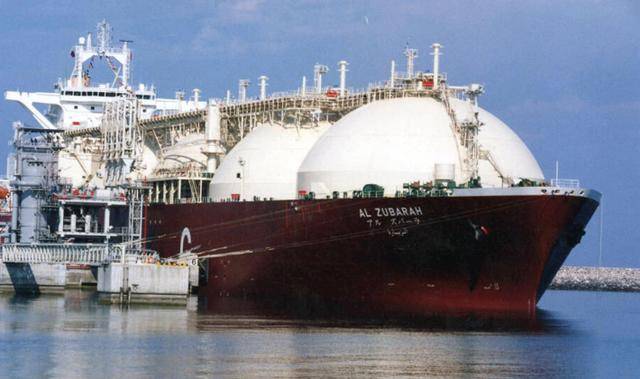
据报道,西班牙希望欧盟保持其减少能源行业甲烷排放量的目标,同时西班牙正寻求从不同的生产商进 口更多的液化天然气。西班牙副首相认为,该国应该多样化其液化天然气进口渠道,而不应完全依赖美 国。(第一财经) ...
美国发动关税战陷入进退维谷困境
Zhong Guo Fa Zhan Wang· 2025-04-24 03:27
Group 1: Trade Policies and Impacts - The U.S. President Trump continues to reinforce his trade war policies, specifically targeting non-tariff barriers set by the EU and Japan, while demanding Japan to significantly reduce its trade deficit with the U.S. [1] - Countries like Thailand and Vietnam are showing reluctance to quickly compromise with the U.S. on trade negotiations, indicating a shift in global trade dynamics [1][2]. - The U.S. is imposing new port fees on Chinese vessels, which could accelerate the shift of shipping orders from China to Japan and South Korea, potentially increasing global shipping costs [5][6]. Group 2: Market Reactions and Economic Indicators - The U.S. stock market has experienced significant declines, with the S&P 500 index down 6% in April, while the dollar index has dropped 5%, reflecting concerns over "stagflation" in the U.S. economy [2]. - Gold prices have surged over 2.5%, reaching a historical high of over $3420 per ounce, driven by increased demand for safe-haven assets amid rising market volatility [2]. - The U.S. manufacturing sector is facing challenges as companies like the American baby products firm are halting orders due to new tariffs, highlighting the impact of trade policies on domestic production capabilities [3]. Group 3: Supply Chain Adjustments - China has significantly reduced imports of U.S. liquefied natural gas, with a 70% decrease in the first quarter, as it shifts to suppliers in Indonesia and Qatar due to tariffs [3]. - The logistics sector is facing increased complexity and costs, with major shipping companies like DHL and FedEx adjusting their operations in response to new trade regulations [4]. - The Chinese shipbuilding industry is under pressure as U.S. tariffs may lead to a shift in orders to South Korea and Japan, which could raise global ship prices by 30% to 50% [6]. Group 4: Diversification Strategies - China is actively pursuing a diversified global economic strategy, with increased engagement in Southeast Asia and other regions to mitigate the impact of U.S. trade policies [9][11]. - The recent statistics show a rise in foreign buyers at trade fairs, with countries along the Belt and Road Initiative accounting for 72% of the total, indicating a shift in trade focus [9]. - Chinese manufacturing investment abroad has reached nearly $300 billion, with a notable increase in investments in Latin America and Europe, reflecting a strategic shift to counter geopolitical pressures [11].
4月24日电,韩国代总统韩德洙表示,与美国会谈的重点是贸易平衡、造船和液化天然气。
news flash· 2025-04-24 01:34
智通财经4月24日电,韩国代总统韩德洙表示,与美国会谈的重点是贸易平衡、造船和液化天然气。 ...
需求端存在下滑预期 预期LPG上方空间不大
Jin Tou Wang· 2025-04-22 01:59
机构观点 瑞达期货: OPEC、国际能源署大幅下调全球原油需求增速,国际原油价格下跌。华南液化气市场上涨,华南炼厂 供应减少,码头库存有所回落;沙特5月CP下调,加征关税将使美国丙烷的进口受到影响,进口气成本 上升,港口库有所去化;华南国产气价格环比上涨,PG主力合约期货较华南现货贴水为741左右。LPG 主力合约多空减仓,净空单呈现减少。技术上,PG主力合约上方关注4450附近压力,下方关注4260附 近支撑,短线呈现偏强震荡走势,操作上,短线交易为主。 新湖期货: 近期原油小幅反弹,站上5日均线。随着下游补库结束,现货强势上涨的局面得到扭转,近期价格持续 下跌。2025年5月13日之前到港的美国货物不加征关税,短期码头货源充足。对于5月之后的进口,国内 贸易商可以用中东货替代美国货,因贸易摩擦,第二季度进口量仍存在下滑预期。另一方面,需求端也 存在下滑预期,PDH、轻烃裂解等装置,因原料不足,将关停或者降负,这部分需求减量将匹配进口量 的下降。供需双减,基本面矛盾不大。原油价格受关税政策压制,此轮反弹是情绪修复,尚未形成上涨 趋势,且仓单充足,预期PG上方空间不大。 消息面 新奥股份近日与阿布扎比国家石油 ...