量子科技

Search documents
未来五年,八大领域将站上风口
Guo Ji Jin Rong Bao· 2026-01-04 08:53
Core Themes - The "15th Five-Year Plan" emphasizes the construction of a modern industrial system, promoting technological innovation and self-reliance, and expanding domestic demand, particularly in consumption [1][2]. Commercial Aerospace - The commercial aerospace sector is recognized as a strategic emerging industry cluster in the "15th Five-Year Plan," marking its elevation to a national strategic level [2]. - Key investment areas include the commercial rocket industry chain and satellite manufacturing and application chain, which are expected to benefit from increased launch demand and technological advancements [2][3]. - The commercial aerospace industry is entering a critical phase of scale and commercialization, with over 600 companies projected by 2025 and an expected market size of 2.5 to 2.8 trillion yuan [3]. Low-altitude Economy - The low-altitude economy is defined as activities in the airspace of 1,000 to 3,000 meters, utilizing drones and eVTOLs, with applications in logistics, tourism, and emergency rescue [5]. - The industry is projected to reach a market size of 2 trillion yuan by 2030, with a compound annual growth rate of 34.2% [5]. - As of November 2025, there are over 97,000 companies in the low-altitude economy sector, with significant growth in regions like Guangdong and Shandong [5][6]. Embodied Intelligence - The embodied intelligence sector is experiencing rapid development, with a market size of approximately 5.295 billion yuan in 2025, accounting for 27% of the global market [8]. - The sector is expected to grow to over 1 trillion yuan by 2035, with significant investment activity, including over 500 billion yuan in financing by October 2025 [8][9]. - Companies are advancing towards commercialization, with applications expected to transform household cleaning and other sectors [10]. 6G Technology - The "15th Five-Year Plan" includes a forward-looking layout for 6G technology, which is anticipated to enhance communication, perception, and intelligence integration [10][11]. - The 6G market is projected to reach a scale of 1 trillion yuan by 2035, with significant advancements in technology and standardization expected during the "15th Five-Year Plan" period [12]. Artificial Intelligence - The core AI industry in China is expected to exceed 1 trillion yuan by 2025, with a focus on deep integration with various sectors [14]. - The government aims for AI applications to achieve over 70% penetration in key areas by 2027 and over 90% by 2030 [14][15]. - Infrastructure upgrades and a comprehensive computing network are critical for supporting AI innovation and application [15]. Quantum Technology - Quantum technology is prioritized in the "15th Five-Year Plan," with expectations for significant growth and application across various industries [16][17]. - The global quantum industry is projected to reach approximately 239.1 billion dollars by 2030, with a compound annual growth rate of 65% [16][17]. Cultural and Tourism Industry - The tourism industry is undergoing a quality revolution, with a focus on high-quality tourism products and services as outlined in the "15th Five-Year Plan" [18][19]. - Domestic tourism is recovering, with nearly 50 billion trips recorded in the first three quarters of 2025, reflecting a shift towards deeper consumption and experience upgrades [18]. - The plan emphasizes enhancing inbound tourism services and integrating technology to improve visitor experiences [19]. New Consumption - Consumption is a key driver of economic growth, with retail sales expected to grow from 39.1 trillion yuan in 2020 to 48.3 trillion yuan by 2024 [20][21]. - The government aims to support new consumption models and expand consumer goods supply structures, targeting several trillion-yuan sectors by 2027 [21].
轮到合肥上市潮
投资界· 2026-01-04 08:15
Core Viewpoint - The article discusses the rise of quantum technology companies in Hefei, particularly focusing on Guoyi Quantum, which has recently applied for an IPO on the Shanghai Stock Exchange's Sci-Tech Innovation Board. The company aims to replace foreign high-end scientific instruments with domestic alternatives, leveraging quantum properties for precision measurement [5][10]. Company Overview - Guoyi Quantum was co-founded in 2016 by Du Jiangfeng and He Yu, who are both alumni of the University of Science and Technology of China (USTC). The company operates from a small office and has developed quantum sensors that can measure at microscopic scales, addressing the need for high-end scientific instruments in China [6][8]. - The company has achieved significant breakthroughs, including the launch of China's first commercial X-band electron paramagnetic resonance spectrometer in 2018, which broke the foreign monopoly in this technology [9]. Financial Performance - Guoyi Quantum's revenue has shown a compound annual growth rate (CAGR) of over 80% in the past three years. The projected revenues for 2022, 2023, and 2024 are 151 million, 400 million, and 501 million yuan respectively, with net losses of 168 million, 169 million, and 104 million yuan during the same period [10][11]. - As of the first half of this year, the company reported an accumulated deficit of 427 million yuan [11]. Investment and Shareholding - The company has attracted significant investment since its inception, with early investments from USTC and other venture capital firms. Notable funding rounds include an A round in 2018 and a B round in 2021, led by prominent investors such as Hillhouse Capital [11][12]. - The major shareholders before the IPO include Hefei Sikun, USTC Holdings, and Shuhua Technology, holding 27.2%, 14.75%, and 8.43% of the shares respectively [12]. Industry Context - Hefei has become a hub for quantum technology, with over 30 quantum companies located on "Quantum Avenue." This area has seen significant advancements in quantum communication and computing, with notable projects like the "Mozi" satellite and the "Beijing-Shanghai" quantum communication line [13][15]. - The establishment of a 10 billion yuan quantum industry fund in 2017 and the recent approval of a provincial-level future industry pilot zone in Hefei indicate strong governmental support for the quantum sector [15][16].


观察 | 万亿资金进场!2026年选对这几个赛道,比埋头努力更重要
未可知人工智能研究院· 2026-01-04 04:03
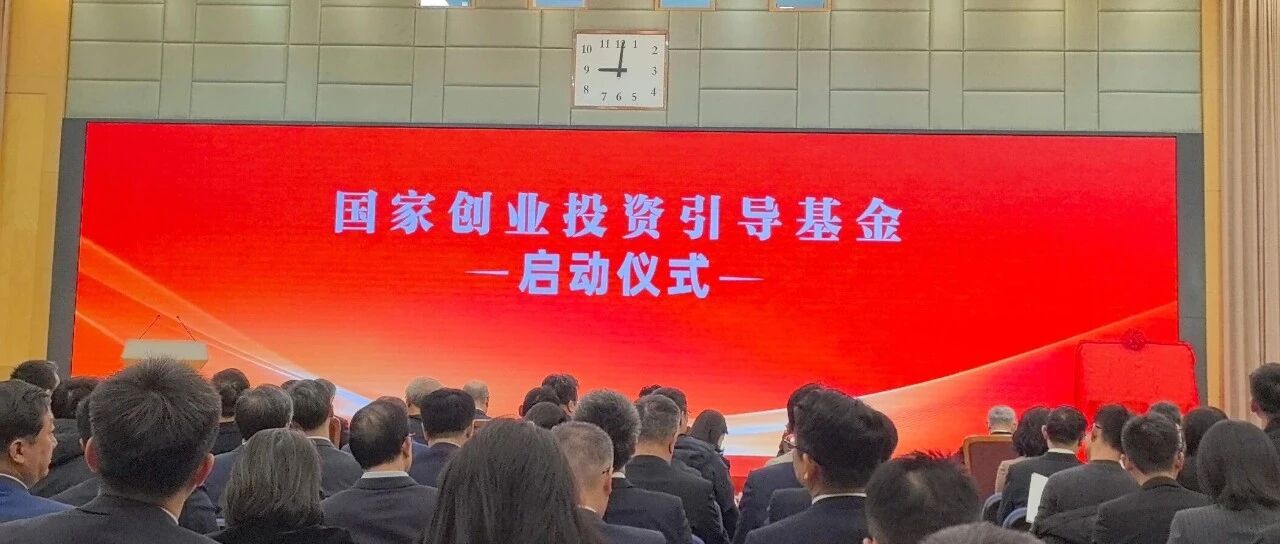
Group 1: Core Insights - The article discusses the launch of a national venture capital fund with a direct investment of 100 billion yuan to leverage over a trillion yuan in social capital, indicating a significant shift in the entrepreneurial landscape [1][2] - It emphasizes five key sectors that present real opportunities for wealth generation by 2026, highlighting the intersection of policy support and technological advancements [2][62] Group 2: Embodied Intelligence - The first opportunity is in embodied intelligence, specifically humanoid robots, with a notable company, UBTECH, reporting over 1.3 billion yuan in orders this year, surpassing the total industry sales from the previous year [7][8] - The article notes that 2025 is expected to be a financing year for embodied intelligence, while 2026 will focus on actual deliveries, with major companies like BYD and Foxconn placing orders [10][13] - Opportunities for ordinary entrepreneurs lie in components such as dexterous hands and sensors, as well as in robot maintenance and after-sales services, which are expected to become lucrative as robots are deployed in factories [15][18] Group 3: AI Application Layer - The second opportunity focuses on the AI application layer, particularly vertical industry AI tools, as the price war for large models has concluded, paving the way for a golden era of application [19][22] - Examples include an AI legal assistant that automates contract review for small businesses and an AI video editing tool for e-commerce, both demonstrating significant revenue potential [23][27] - The article advises against creating generic AI solutions and instead suggests developing specific industry applications that can save costs or generate revenue for businesses [29][30] Group 4: Low-altitude Economy - The third opportunity is in the low-altitude economy, projected to reach a market size of 3.5 trillion yuan, with recent developments like the launch of a manned eVTOL route between Shenzhen and Zhuhai [31][39] - Key opportunities include the development of supporting infrastructure such as landing pads and charging stations, as well as low-altitude logistics and tourism services [37][38] Group 5: Quantum Technology and Brain-Machine Interfaces - The fourth opportunity involves quantum technology and brain-machine interfaces, with the national venture capital fund focusing on these critical technologies [40][41] - There is potential for early-stage projects in quantum communication and medical rehabilitation using brain-machine interfaces, with significant market demand for rehabilitation services [44][45] - Entrepreneurs with access to medical or academic resources are encouraged to explore technology transfer services or invest in early-stage funds in these sectors [46][48] Group 6: Chinese Enterprises Going Global - The final opportunity is for Chinese enterprises to expand overseas, capitalizing on the significant market potential outside of China, particularly in Southeast Asia [50][51] - Successful examples include cross-border e-commerce and live-streaming sales, where Chinese products are in high demand due to a lack of local supply chains [52][53] - The article cautions that entering foreign markets requires understanding local regulations and consumer habits, suggesting partnerships with local experts or established companies [56][58]


【新华社】一起来看!中国科技创新的“硬核”与“温度”
Xin Hua She· 2026-01-04 01:23
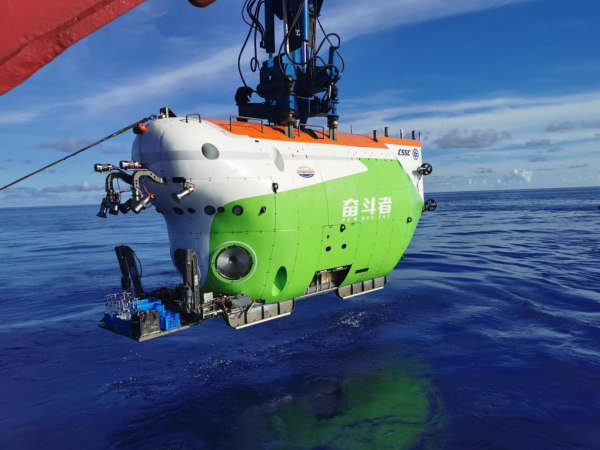
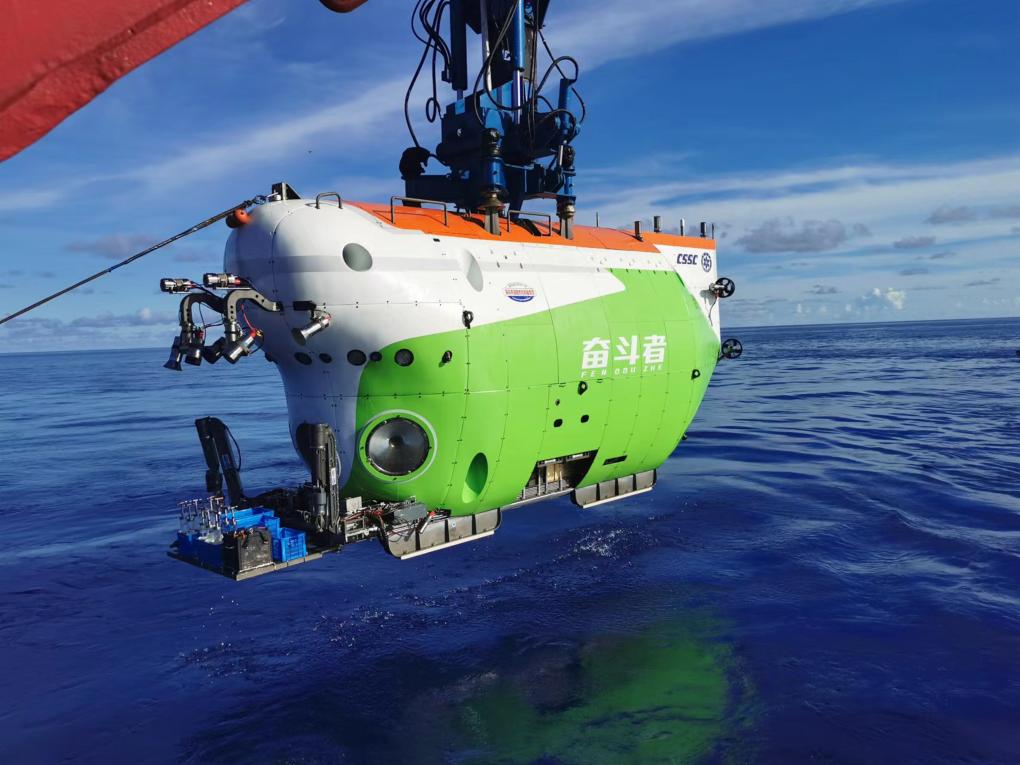
Core Insights - China is making significant advancements in various scientific fields, including artificial intelligence, space exploration, and quantum technology, positioning itself as one of the fastest-growing innovative economies globally [4][5][7]. Group 1: Space Exploration - The Chang'e 6 mission successfully returned 1935.3 grams of lunar soil samples, providing crucial scientific data for future lunar exploration [5]. - The Chinese space station has transitioned to regular operations, serving as a "space laboratory" that produces significant scientific results, including breakthroughs in materials science and life support technologies for deep space missions [5]. - The "Fighter" manned submersible has completed China's first manned deep-sea scientific expedition in the Arctic, marking a shift from "full ocean depth" to "full ocean area" exploration [5]. Group 2: Artificial Intelligence - The launch of the DeepSeek-R1 model demonstrates a significant reduction in training costs while achieving results comparable to previous AI models [10]. - Robotics have become integral to various sectors, showcasing capabilities in entertainment and manufacturing, indicating a shift from AI as a tool to a partner in daily life [10]. - The evolution of AI technologies is reshaping human-computer interaction and driving innovation across industries, enhancing both productivity and quality of life [10]. Group 3: Quantum Technology and Materials Science - China has achieved a breakthrough in quantum computing with the "Zu Chongzhi No. 3" model, showcasing a computing power increase of trillions of times [8]. - The development of atomic-level thin two-dimensional metals has been realized through innovative techniques, marking a significant achievement in materials science [8]. Group 4: Research and Development - China continues to lead globally in high-quality scientific research output, with a growing advantage in various fields [7]. - The "Seed Precision Design and Creation" initiative has successfully developed high-yield crop varieties, increasing production by 10% to 20% while reducing input losses by 15% to 20% [8].
四川成都锦江区:构建未来产业体系 激活高质量发展动能
Xin Lang Cai Jing· 2026-01-03 23:23
Core Insights - Chengdu's Jinjiang District is actively developing a future industry system to stimulate high-quality economic growth through the "Future Industry High-Quality Development Action Plan (2025-2027)" [1] Group 1: Future Industry Development - The district is focusing on six cutting-edge tracks: intelligent 6G, brain-computer interfaces, quantum technology, embodied intelligence, low-altitude economy, and intelligent connected vehicles [3] - Jinjiang District has established a new development pattern featuring "1 leading area, 6 breakthrough tracks, and 'science and technology + application' dual-core drive" [1] Group 2: Technological Innovations - Chengdu XinNerve Technology Co., which specializes in brain-computer interface technology, has achieved a 91.67% accuracy rate in diagnosing autism, serving over 2,000 children since its establishment in the district [2] - The district has introduced key projects from institutions like Beijing University of Posts and Telecommunications to incubate significant technological achievements in intelligent 6G [3] Group 3: Ecosystem and Application - Jinjiang District is creating a dual-core geographical layout with "Chunxi Road + Science and Technology Bailu Bay" to facilitate the transformation of technological innovations into practical applications [4] - The Bailu Bay Technology Ecological Park is positioned as a new engine for future industries, leveraging leading enterprises and innovation platforms to streamline the conversion from technology to products [4] Group 4: Future Plans - The district aims to optimize future industry layout, build an ecosystem, and accelerate the transformation of achievements, striving to create a nationally influential future industry cluster and application demonstration area [5]
从实验室到全球基建:IonQ 百比特算力落子韩国
国泰海通· 2026-01-03 08:21
Investment Rating - The report does not explicitly provide an investment rating for the industry or companies discussed. Core Insights - The technology industry experienced 196 financing events globally from December 22, 2025, to January 1, 2026, with 181 events in China and 15 abroad, highlighting significant investment activity in advanced manufacturing, artificial intelligence, and enterprise services [9]. - The semiconductor sector is witnessing advancements with the global release of high-purity P-type SiC substrates and the development of the first 12-inch high-quality silicon carbide epitaxial wafer, which are expected to enhance production efficiency and reduce costs in the semiconductor industry [33][38]. - The artificial intelligence sector is advancing with new technologies such as the TurboDiffusion framework for video generation, which can accelerate video creation by up to 200 times, and the introduction of the "Shan Hai" S30FP/S30P SPU IP, which provides comprehensive security solutions for high-performance computing chips [4][41]. Summary by Sections Financing Overview - A total of 196 financing events occurred in the technology sector during the specified period, with advanced manufacturing, artificial intelligence, and enterprise services leading the way in terms of the number of events [9]. IPO Updates - Several companies went public, including: - **InSilico Medicine** listed on the Hong Kong Stock Exchange, focusing on AI-driven drug discovery, significantly reducing the time for drug development from an average of 4.5 years to 12-18 months [11][12]. - **Tiansu Measurement** listed on the Shenzhen Stock Exchange, providing independent third-party measurement and testing services across various industries [15][16]. - **Nobikang** also listed on the Hong Kong Stock Exchange, specializing in AI solutions for railway and power companies [18][19]. Semiconductor Sector Developments - **SuperChip** launched a high-purity P-type SiC substrate, addressing critical impurities that have historically hindered the industry, thus enhancing the reliability of high-voltage IGBT devices [33][36]. - **Hantian Technology** developed the world's first 12-inch high-quality silicon carbide epitaxial wafer, which is expected to significantly improve production efficiency and lower costs in the semiconductor industry [38][40]. - **Arm Technology** introduced the "Shan Hai" S30FP/S30P SPU IP, enhancing security for high-performance computing applications [41][42]. AI and Quantum Technology Innovations - The report highlights advancements in AI, including a collaboration between Shenshu Technology and Tsinghua University to accelerate video generation, and IBM's new framework for large language model planning [4][41]. - In quantum technology, IonQ has established a significant presence in South Korea with its quantum computing capabilities, marking a strategic expansion in the global infrastructure [4][6].
科学家研发出新型量子互连平台,量子互联网将加速构建
Sou Hu Cai Jing· 2026-01-01 09:51
近日,位于美国印第安纳州的普渡大学实验室里,研究人员宣布了一项关键突破:他们开发出一种新型 量子互连平台,成功将多个独立的量子处理器连接在一起,传输效率比现有技术高出百倍。 这项技术的意义不亚于发明了量子世界的"光纤",为构建全球量子互联网迈出了至关重要的一步。 构建量子互联网的首要障碍是量子态的脆弱性。每个量子比特都像是一座玻璃城堡里的勇士——威力强 大但极度敏感,任何微小的干扰都会导致"量子退相干",使这些量子比特失去魔力。 科学家们面临着一个看似无解的困境:既要让量子比特相互交流,又要保护它们不受外界干扰。 此前量子计算机的规模难以突破的一个重要原因正是这种连接困境。即使是现在最先进的量子计算机, 其内部的量子比特数量也不过几百个。要将这些脆弱的量子比特连接成网络,难度不亚于用蜘蛛丝编织 一张横跨太平洋的网。 令人惊叹的是,整个转换过程的保真度高达99.7%,意味着信息在传递过程中几乎没有任何失真。 这项技术的神奇之处还在于它的可扩展性。现有的量子连接技术通常只能实现点对点的链接,而普渡大 学的新平台能够同时连接多个量子节点,形成一个真正的量子网络。 这就像是从只能两人通话的老式电话,进化到了可以多方视 ...
一起来看!中国科技创新的“硬核”与“温度”
Xin Hua Wang· 2026-01-01 05:28
Group 1: Technological Advancements - China's AI large models are rapidly advancing, with breakthroughs in chip self-research, positioning the country as one of the fastest-growing economies in innovation [1] - The "Tianwen-2" mission has commenced its journey to explore celestial bodies, while significant infrastructure projects like the Yaxia hydropower project and the commissioning of the first electromagnetic catapult aircraft carrier are underway [1] - Major scientific achievements are transitioning from "point breakthroughs" to "systematic explosions," showcasing a blend of "hardcore strength" and "people's livelihood" [1] Group 2: Space Exploration - China is expanding its exploration into deep space and deep sea, revealing young volcanic activity on the moon's far side and providing critical data for future lunar missions [2] - The Chinese space station is now operational, serving as a "space laboratory" that produces significant scientific results, including high-temperature experiments and valuable data from space experiments [2][3] Group 3: Fundamental Research - China maintains its position as the global leader in high-quality scientific research output, with significant advancements in fusion energy and agricultural biotechnology [5] - The EAST nuclear fusion experiment achieved a milestone of 1 million degrees Celsius for 1000 seconds, marking a significant leap from basic science to engineering practice [5] - Breakthroughs in seed research have led to the development of high-yield crop varieties, with a cumulative promotion of 14.48 million acres [5] Group 4: Material Science Innovations - The successful creation of five types of two-dimensional metals using a novel "van der Waals compression technology" marks a significant achievement in material science [6] Group 5: National Scientific Instruments - The FAST telescope has discovered over 1,170 pulsars, surpassing the total number found by other international telescopes during the same period [7] - Researchers in Jiangmen have improved the precision of neutrino oscillation parameters by 1.5 to 1.8 times compared to previous experiments [7] - The Guo Shoujing telescope has published over 28 million spectral data, maintaining the world's largest data volume [7] Group 6: Artificial Intelligence Integration - The introduction of the DeepSeek-R1 model has achieved significant results at lower training costs, indicating a shift in AI's role from a standalone tool to an integral part of daily life and production [9] - Upgrades in computing power and advancements in multimodal integration are reshaping human-computer interaction and accelerating the growth of the humanoid robot industry [9]
布局未来:六大产业引领“十五五”新开局
Guo Ji Jin Rong Bao· 2026-01-01 00:31
Core Viewpoint - The "14th Five-Year Plan" lays the foundation for the "15th Five-Year Plan," which aims to cultivate emerging and future industries as a key part of building a modern industrial system, positioning China strategically for the next round of global technological and industrial transformation [1][3] Group 1: Strategic Overview - The "15th Five-Year Plan" emphasizes the construction of a modern industrial system and the consolidation of the real economy as primary strategic tasks, signaling the necessity for a solid technological and industrial foundation for China's modernization [3] - Future industries are characterized by their frontier, disruptive, and high-growth nature, stemming from significant breakthroughs in basic science, and are expected to dominate global economic landscapes in the coming decades [3] Group 2: Key Future Industries - Six future industries identified in the "15th Five-Year Plan" are crucial for driving the next wave of technological revolution, interlinked and collaboratively evolving to form a new matrix of productive forces [5] - Quantum technology is positioned as a cornerstone for information security and computational advancements, with China leading in quantum communication and achieving "quantum supremacy" with prototypes [5] - Biomanufacturing connects green transformation with industrial upgrading, with a market size nearing 1 trillion yuan, showcasing potential in achieving carbon neutrality through innovative technologies [5] - Hydrogen and nuclear fusion energy represent ultimate solutions for energy, with ongoing developments in compact fusion devices pushing towards engineering applications [5] Group 3: Market and Technological Development - Brain-computer interfaces and embodied intelligence are redefining human-machine relationships, with significant market growth expected in these areas by 2025 [6] - The sixth generation of mobile communication (6G) is set to integrate communication, perception, computation, and artificial intelligence, with China establishing a leading edge in 6G technology [6] Group 4: China's Unique Advantages - China's unique advantages lie in the combination of a new type of national system and a super-large market, allowing for concentrated resource investment in strategic areas like quantum and fusion technologies [8] - A tailored approach is essential for developing future industries, focusing on 1-2 key segments based on local resources and industrial foundations [8] - Establishing a virtuous cycle of technology, capital, and talent is crucial for fostering innovation and long-term investment in emerging technologies [8]
未来产业:如何前瞻布局
Xin Lang Cai Jing· 2025-12-31 21:05
Core Insights - The article discusses the importance of future industries as a core competitive arena for countries to seize technological leadership and cultivate new growth drivers, as outlined in China's 15th Five-Year Plan [10][11][12]. Group 1: Global Competition in Future Industries - Future industries such as quantum technology, bio-manufacturing, and brain-computer interfaces are seen as key areas for countries to gain competitive advantages and enhance national strength [10][11]. - The global R&D expenditure as a percentage of GDP has increased significantly from 2013 to 2022, indicating strong resilience in technology investment despite economic downturns [10]. Group 2: China's Progress in Future Industries - China is transitioning from technology catch-up to proactive layout in future industries, with strengths in quantum communication, 6G, brain-computer interfaces, hydrogen energy, and nuclear fusion [13][14]. - By 2024, China's total R&D investment is expected to exceed 3.6 trillion yuan, a 48% increase from 2020, with R&D intensity reaching 2.69%, surpassing the EU average [14]. Group 3: Funding Support for Future Industries - Future industries require substantial investment and long-term capital support, necessitating a multi-faceted funding structure that includes government, state-owned, and social capital [20][21]. - The establishment of a future industry fund in Shanghai, with a total scale of approximately 15 billion yuan, aims to support the growth of future industries through a structured investment approach [21]. Group 4: Application Scenario Innovation - Application scenarios are crucial for connecting technology with market needs, serving as testing grounds for new technologies and driving industrialization [24][25]. - The Ministry of Industry and Information Technology emphasizes the need for scenario-driven innovation to accelerate the commercialization of future industries [24].