
畜牧业

Search documents
京基智农(000048.SZ)10月生猪销售收入3.17亿元
智通财经网· 2025-11-06 08:01
Core Insights - The company, Jingji Zhino (000048.SZ), reported its pig sales for October 2025, indicating a total sale of 233,300 pigs, including 23,800 piglets, generating a revenue of 317 million yuan [1] - The average selling price for commercial pigs was 11.87 yuan/kg [1] - Cumulatively, from January to October 2025, the company sold 1,909,000 pigs, including 290,500 piglets, with a total revenue of 3.163 billion yuan [1] Summary by Categories Sales Performance - In October 2025, the company sold 233,300 pigs, with 23,800 being piglets [1] - The cumulative sales from January to October 2025 reached 1,909,000 pigs, including 290,500 piglets [1] Revenue Generation - The sales revenue for October 2025 was 317 million yuan [1] - The total revenue from January to October 2025 amounted to 3.163 billion yuan [1] Pricing Information - The average selling price for commercial pigs in October 2025 was 11.87 yuan/kg [1]

京基智农:2025年10月,公司销售生猪收入3.17亿元
Xin Lang Cai Jing· 2025-11-06 07:52
Core Insights - The company announced that in October 2025, it sold 233,300 pigs, including 23,800 piglets, generating a revenue of 317 million yuan [1] - The average selling price of commercial pigs was 11.87 yuan/kg [1] - From January to October 2025, the company sold a total of 1,909,000 pigs, including 290,500 piglets, with a cumulative revenue of 3.163 billion yuan [1] Sales Performance - In October 2025, the company achieved sales of 233,300 pigs, contributing to a monthly revenue of 317 million yuan [1] - The cumulative sales from January to October 2025 reached 1,909,000 pigs, indicating strong performance throughout the year [1] Pricing Information - The average price for commercial pigs sold in October 2025 was 11.87 yuan/kg, reflecting the market conditions during that period [1]
农产品日报:标猪供应增加,猪价震荡调整-20251106
Hua Tai Qi Huo· 2025-11-06 05:11
Group 1: Investment Ratings - The investment strategy for the pig and egg industries is cautiously bearish [3][5] Group 2: Core Views - The supply of standard pigs is increasing, and pig prices are fluctuating and adjusting. The pattern of strong supply and weak demand in the pig market is difficult to change due to factors such as future supply pressure and potential over - supply at the end of the year [1][2] - For eggs, the situation of oversupply persists as new grain is concentrated on the market, and enterprises have low inventory and weak willingness to build up stocks. Attention should be paid to farmers' selling progress and traders' inventory strength [4] Group 3: Market News and Important Data Pig - Futures: The closing price of the live pig 2601 contract yesterday was 11,945 yuan/ton, a change of +260.00 yuan/ton from the previous trading day, an increase of +2.23% [1] - Spot: In Henan, the price of external ternary live pigs was 11.85 yuan/kg, a change of - 0.11 yuan/kg from the previous trading day; in Jiangsu, it was 11.96 yuan/kg, a change of - 0.19 yuan/kg; in Sichuan, it was 11.46 yuan/kg, a change of - 0.17 yuan/kg [1] - Agricultural product prices: On November 5th, the "200 - index of agricultural product wholesale prices" was 124.97, up 0.01 points from yesterday. The average wholesale price of pork in the national agricultural product wholesale market was 18.19 yuan/kg, up 0.9% from yesterday [1] Egg - Futures: The closing price of the egg 2512 contract yesterday was 3,217 yuan/500 kilograms, a change of +73.00 yuan from the previous trading day, an increase of +2.32% [3] - Spot: In Liaoning, the egg spot price was 2.69 yuan/jin, with no change from the previous trading day; in Shandong, it was 2.85 yuan/jin, with no change; in Hebei, it was 2.76 yuan/jin, a change of +0.07 yuan/jin [3] - Inventory: On November 5th, 2025, the national production - link inventory was 1.13 days, a decrease of 0.02 days from yesterday, a decrease of 1.74%. The circulation - link inventory was 1.29 days, unchanged from yesterday [3] Group 4: Market Analysis Pig - The inventory of large and medium - sized pigs over 5 months old nationwide decreased by 0.1% month - on - month, and the year - on - year decline narrowed by 2.4%. The number of newborn piglets increased by 0.3% month - on - month and 6.6% year - on - year, with a significant increase in large - scale farms, indicating obvious long - term supply pressure [2] Egg - Deep - processing and feed enterprises have relatively low inventory, weak willingness to build up stocks, and a strong wait - and - see attitude, with spot - purchasing as the main trend [4]
【立方早知道】自动驾驶“双子星”同日上市/超300亿!贵州茅台大利好/A股一公司董事长被判刑
Sou Hu Cai Jing· 2025-11-06 01:00
Group 1: New Listings - Two autonomous driving companies, Pony.ai and WeRide, are set to list on the Hong Kong stock market on November 6, marking them as the second and third Chinese concept stocks to achieve dual listings in Hong Kong and the U.S. this year after Hesai's return on September 16 [1] Group 2: Guizhou Moutai Announcements - Guizhou Moutai announced a share buyback plan with a total fund of no less than 15 billion yuan and up to 30 billion yuan, with a maximum buyback price of 1887.63 yuan per share [2] - The company also plans to distribute a cash dividend of 23.957 yuan per share, totaling approximately 300.01 billion yuan, subject to shareholder approval [2] Group 3: Macro News - The Central Financial Office emphasized the need to accelerate the construction of a financial power to support high-quality development, focusing on strategic tasks and financial support for key areas [4] Group 4: Tariff Adjustments - The State Council Tariff Commission announced a suspension of the 24% additional tariff on U.S. imports for one year while retaining a 10% tariff [5] Group 5: AI and Industry Integration - The Ministry of Industry and Information Technology is promoting the deep integration of artificial intelligence with industry, focusing on key areas such as AI+ manufacturing and technological innovation [6] Group 6: Gold Industry Development - Anhui Province is seeking to implement a high-quality development plan for the gold industry, aiming for a 5% increase in gold resources and production capacity by 2027 [6] Group 7: New Energy Storage - As of September, China's new energy storage capacity exceeded 100 million kilowatts, marking a more than 30-fold increase since the end of the 13th Five-Year Plan and accounting for over 40% of the global total [10] Group 8: Company Updates - Xintian Technology's stock price surged by 28.95% over two days, with the company stating no significant changes in its operations or external environment [13] - Muyuan Foods reported a revenue of 10.3 billion yuan from the sale of 707.6 million pigs in October, reflecting a 22.28% year-on-year decline [17] - Hengyuan Coal Power plans to acquire 100% equity of two companies for approximately 4.4 billion yuan and assume 11.37 billion yuan in debt [19] - Bertley announced a joint investment of 100 million yuan with Jinrun Electric to establish Bertley Drive, focusing on key components for humanoid robots [23] - Jiayuan Technology signed a cooperation framework agreement with CATL to expand their business relationship in the supply and production of copper foil products [24]



总台记者观察丨高收入岗位无人问津 土耳其遭遇“牧羊人危机”
Yang Shi Xin Wen Ke Hu Duan· 2025-11-05 23:30
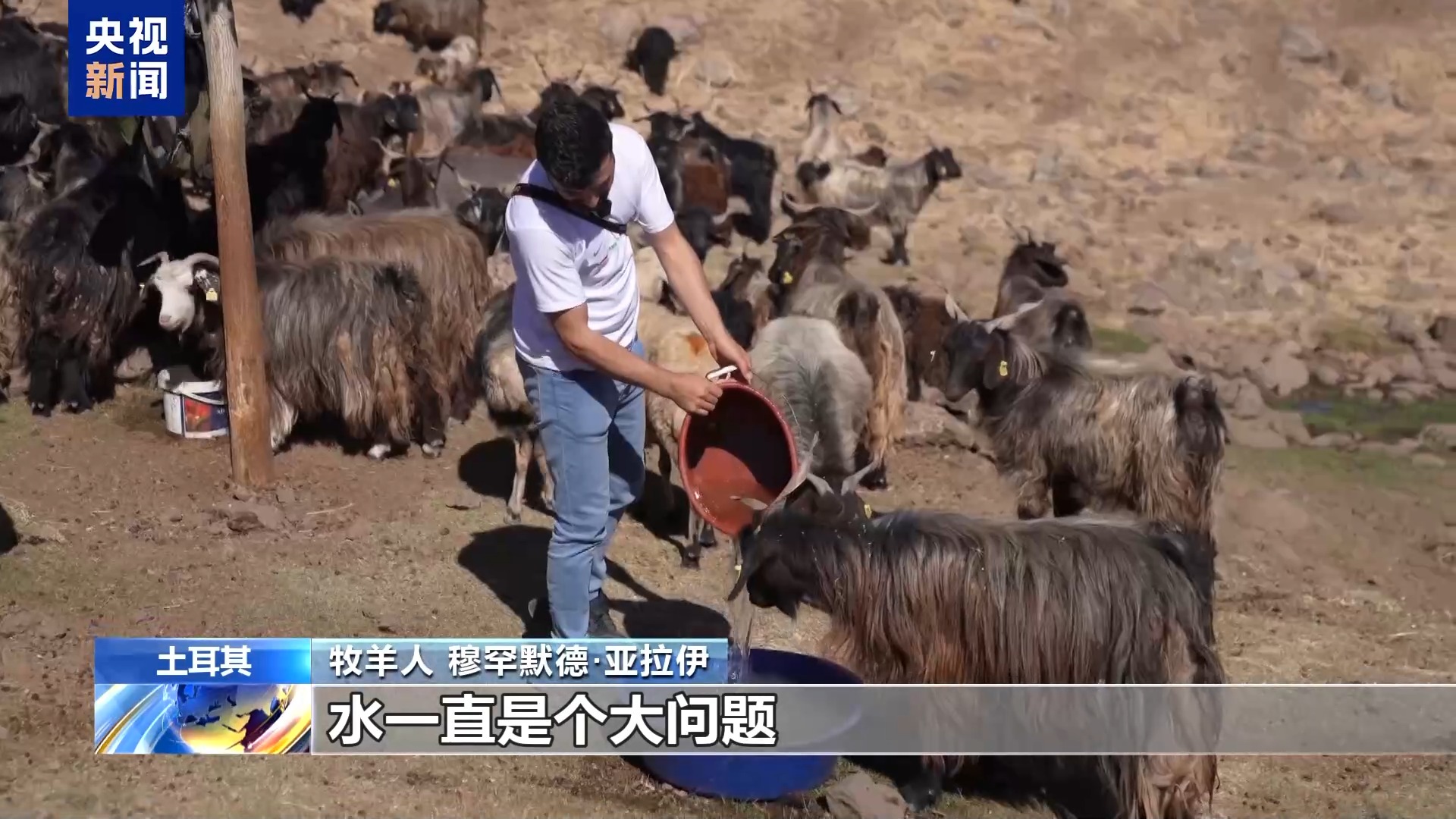
0:00 在土耳其,牧羊人成了"金饭碗"——月薪可达十几万里拉、约合人民币2万到3万元。即便这样,这个职业依旧无人问津。与此同时,饲料价格等成本不断攀 升,让从事传统畜牧业的农场主承受巨大压力。最终导致当地肉价飙升。 牧羊人 穆罕默德·亚拉伊:我们现在最大的困难就是缺水,大概三年了,水一直是个大问题。 为了缓解牧羊人短缺,2025年,土耳其开始允许农场雇佣外国牧羊人。现在,这里有三位来自叙利亚的牧羊人。 总台记者 陈慧慧:我觉得这个工作真的是挺辛苦的。刚才还了解到,它的饲料成本也非常的高,一头牛每天大概要吃掉10公斤的饲料,那么整个农场光光 是饲料的消耗,一个月就要4万里拉(约8千元人民币)。 在土耳其东南部,有一片古老的放牧地——卡拉贾达山。牧羊人陪着羊群迁徙、觅食,一起看日出日落。这种生活延续了几百年,如今却正在慢慢消失。 总台记者 陈慧慧:听说现在土耳其正在遭遇牧羊人危机,薪水已经开到了10万里拉(约2万元人民币)一个月,但还是没有人愿意干,为什么呢? 牧羊人 穆罕默德·亚拉伊:为什么没人愿意把牧羊当职业?因为要离开亲朋和熟悉的生活,至少四到五个月。几乎与世隔绝,非常孤独。 风声大过人声。有时候,一天都 ...
债市基本面高频数据跟踪:车市零售月底走强:2025 年 10 月第5 周
SINOLINK SECURITIES· 2025-11-05 14:19
Report Industry Investment Rating No relevant content provided. Core Viewpoints of the Report - Economic growth shows a strengthening trend in the auto market retail at the end of the month, while production is restricted by environmental protection measures. The inflation situation features a bottom - oscillating pork price and an oscillatingly strong oil price [1][2][3]. Summary by Relevant Catalogs 1. Economic Growth: Strengthening Auto Market Retail at the End of the Month 1.1 Production: Environmental Protection Restricts开工 - **Production End: Slowing Decline in Power Plant Daily Consumption** - On November 4, the average daily consumption of 6 major power - generating groups was 75.7 tons, a 1.4% decrease from October 28. On October 30, the daily consumption of power plants in eight southern provinces was 180.5 tons, a 2.9% decrease from October 22. Although the consumption has slowed down, industrial electricity consumption has increased due to the positive impact of Sino - US negotiations on the black - series products [5][12]. - **Production End: Local Sharp Decline in Blast Furnace Operating Rate** - On October 31, the national blast furnace operating rate was 81.7%, a 3.0 - percentage - point decrease from October 24, and the capacity utilization rate was 88.6%, a 1.3 - percentage - point decrease. In Tangshan, the blast furnace operating rate of steel mills was 68.3%, a 25.1 - percentage - point decrease from October 24. The start - up rate has dropped significantly due to the start of heavy - pollution weather warnings in many places [15]. - **Production End: Moderate Decline in Tire Operating Rate** - On October 30, the operating rate of all - steel tires for trucks was 65.3%, a 0.2 - percentage - point decrease from October 23, and the operating rate of semi - steel tires for cars was 73.4%, a 0.3 - percentage - point increase. The operating rate of downstream looms in the Jiangsu and Zhejiang regions reached a new high for the year [17]. 1.2 Demand: Strengthening Auto Market Retail at the End of the Month - **Demand End: Improved Monthly - on - Monthly New Home Sales in 30 Cities** - From November 1 - 4, the average daily sales area of commercial housing in 30 large and medium - sized cities was 155,000 square meters, a 145.6% increase from October, but a 53.3% decrease from November last year. Sales in first - tier, second - tier, and third - tier cities decreased year - on - year [22]. - **Demand End: Strengthening Auto Market Retail at the End of the Month** - In October, retail sales increased by 6% year - on - year, and wholesale sales increased by 7% year - on - year. In the fifth week of October, retail and wholesale reached daily averages of 155,000 and 210,000 vehicles respectively, with significant year - on - year and month - on - month growth [26]. - **Demand End: Weak Steel Prices** - On November 4, the prices of rebar, wire rod, hot - rolled coil, and cold - rolled coil changed by - 1.2%, 0%, - 2.4%, and + 0.3% respectively compared to October 28. Since November, these varieties have shown different year - on - year and month - on - month changes. Steel inventories are seasonally decreasing [31]. - **Demand End: Oscillatingly Strong Cement Prices** - On November 4, the national cement price index increased by 0.1% compared to October 28, but prices in the East China and Yangtze River regions decreased. The year - on - year decline in cement prices has widened [32]. - **Demand End: Narrow - Range Oscillation of Glass Prices** - On November 4, the active glass futures contract price was 1,103 yuan/ton, a 0.5% decrease from October 28. Since November, glass prices have shown a month - on - month and year - on - year decline [37]. - **Demand End: Strong Increase in Container Shipping Freight Index** - On October 31, the CCFI index increased by 2.9% and the SCFI index increased by 10.5% compared to October 24. Since October, both indices have shown different year - on - year and month - on - month changes [39]. 2. Inflation: Bottom - Oscillating Pork Price 2.1 CPI: Bottom - Oscillating Pork Price - **Pork Price Bottom - Oscillating** - On November 4, the average wholesale price of pork was 18.0 yuan/kg, a 0.1% decrease from October 28. The supply has increased while the demand is weak, and the month - on - month decline has narrowed [45]. - **Slowing Growth Rate of Agricultural Product Price Index** - On November 4, the agricultural product wholesale price index increased by 0.9% compared to October 28. Different agricultural products showed different price changes. Since November, the index has shown year - on - year and month - on - month increases [51]. 2.2 PPI: Oscillatingly Strong Oil Price - **Oil Price Oscillatingly Strong** - On November 4, the spot prices of Brent and WTI crude oil were 65.5 and 60.6 dollars/barrel respectively, increasing by 1.6% and 0.7% compared to October 28. OPEC's decision to suspend production increase in the first quarter of next year supports the oil price [54]. - **Decline in Copper and Aluminum Prices** - On November 4, the prices of LME 3 - month copper and aluminum decreased by 2.9% and remained flat respectively compared to October 28. Since November, they have shown different year - on - year and month - on - month changes [58]. - **Most Industrial Product Prices Continue to Decline Month - on - Month** - Since November, industrial product prices have shown mixed changes. Most of the year - on - year declines have converged, but the year - on - year declines in cement and glass prices have widened [62].
牧原股份:2025年10月份销售简报
Zheng Quan Ri Bao Zhi Sheng· 2025-11-05 13:13
Core Insights - In October 2025, the company sold 7.076 million live pigs, representing a year-on-year increase of 13.17% [1] - The average selling price of live pigs was 11.55 yuan per kilogram, showing a year-on-year decrease of 32.73% [1] - The total sales revenue from live pigs amounted to 10.331 billion yuan, reflecting a year-on-year decline of 22.28% [1] Sales Performance - The company sold 2.999 million live pigs to its wholly-owned subsidiary, Muyuan Meat Products Co., Ltd., and its subsidiaries [1] - The overall sales volume increased compared to the previous year, indicating a positive trend in sales volume despite price declines [1] Financial Impact - The significant drop in average selling price and total sales revenue suggests challenges in the market, potentially affecting profitability [1] - The decline in revenue by 22.28% indicates a need for the company to address pricing strategies and market conditions [1]

正虹科技:2025年10月份生猪销售简报
Zheng Quan Ri Bao Zhi Sheng· 2025-11-05 11:41
Core Points - In October 2025, the company sold 0.40 thousand pigs, generating sales revenue of 4.32 million yuan, representing a month-on-month decrease of 50.47% and 58.93% respectively [1] - Year-on-year changes for October 2025 show a decrease of 54.19% in sales volume and 52.80% in sales revenue [1] - From January to October 2025, the company sold a total of 10.82 thousand pigs, with cumulative sales revenue reaching 147.19 million yuan, reflecting a year-on-year increase of 56.63% in sales volume and 22.95% in sales revenue [1]

【BOYAR监测】生猪市场每日简评【11.5】
Xin Lang Cai Jing· 2025-11-05 11:23
Group 1 - The average price of external three-yuan pigs in China on November 5, 2025, was 11.87 yuan/kg, a decrease of 0.15 yuan/kg from the previous day [1] - The average price of piglets increased by 0.15 yuan/kg to 18.75 yuan/kg, while the average price of pork dropped by 0.25 yuan/kg to 15.95 yuan/kg [1] - The pig feed-to-meat ratio was 3.54:1, a reduction of 0.04 from the previous day [1] Group 2 - The national average pig price showed a downward trend, with a decrease of 0.15 yuan/kg, and prices in some regions of South China, Southwest, and Northwest fell below 11.5 yuan/kg [2] - The increase in pig prices in late October was attributed to a temporary tightening of supply due to concentrated second fattening, but this trend has reversed as the enthusiasm for second fattening has decreased [2] - Market sentiment is mixed, with expectations of price fluctuations, particularly in the northern low-price areas, where a rebound is possible but limited [2]

牧原股份(002714)季报点评:生猪养殖持续降本 屠宰单季扭亏
Xin Lang Cai Jing· 2025-11-05 10:42
Core Insights - The company reported a revenue of 111.79 billion yuan for the first three quarters of 2025, a year-on-year increase of 15.52%, and a net profit attributable to shareholders of 14.78 billion yuan, up 41.01% [1] - In Q3 alone, the company experienced a revenue decline of 11.48% to 35.33 billion yuan and a significant net profit drop of 55.98% to 4.25 billion yuan [1] - The company sold 57.32 million pigs in the first three quarters, marking a 27% increase year-on-year, while the complete breeding cost decreased to 11.6 yuan/kg by September, down 1.5 yuan/kg since January [1] Revenue and Profitability - The company achieved a substantial increase in pig slaughtering, with 19.16 million pigs processed from January to September, a 140% year-on-year growth, and an 88% capacity utilization rate [2] - The slaughtering business turned profitable in Q3 due to improved capacity utilization, product structure optimization, and enhanced sales channels [2] - Future growth in slaughtering volume is anticipated as the company continues to implement planned capacity expansions and optimize channels and products [2] Cost Management and Debt Reduction - The company has successfully reduced its debt, achieving an asset-liability ratio of 55.5% by the end of Q3, exceeding its initial target of reducing the ratio below 50% [2] - The company is committed to prudent management and is exploring overseas business opportunities, including a partnership with BAF Vietnam to establish a breeding project [2] Profit Forecast and Investment Rating - The company is projected to have net profits of 17.06 billion, 24.09 billion, and 34.17 billion yuan for 2025, 2026, and 2027 respectively, with EPS of 3.12, 4.41, and 6.26 yuan, and PE ratios of 16, 12, and 8 [3] - The company maintains a "strong buy" rating based on its core cost advantages as a leading player in the pig farming industry [3]