金融科技

Search documents
应对中企“出海”跨境金融难点,专家称港元稳定币可先行先试
Di Yi Cai Jing· 2025-09-12 11:40
Group 1 - The core viewpoint of the articles highlights the rapid growth of Chinese enterprises' outbound direct investment, with a net investment amounting to $192.2 billion in 2024, representing an 8.4% increase from the previous year [2] - By the end of 2024, approximately 34,000 domestic investors in China established around 52,000 outbound direct investment enterprises across 190 countries and regions, with total overseas assets exceeding $9 trillion [2][3] - The challenges faced by Chinese companies in cross-border finance include risks associated with currency fluctuations, regulatory compliance, and the complexities of cross-border payment processes [3][4] Group 2 - To mitigate risks, companies are advised to centralize the management of their overseas accounts, which can help streamline the settlement process and reduce potential financial risks [4] - Stablecoins are emerging as a viable option for cross-border trade settlements and fund flows, offering high efficiency, speed, and lower costs compared to traditional banking systems [5] - The current cross-border RMB payment volume in China is already eight times that of mainstream stablecoins, indicating significant potential for growth in this area [5]
“AI+金融”创新实验室落户良乡大学城 北京中关村学院、中关村人工智能研究院与北京基金小镇共筑科技金融新引擎
Zheng Quan Shi Bao Wang· 2025-09-12 11:17
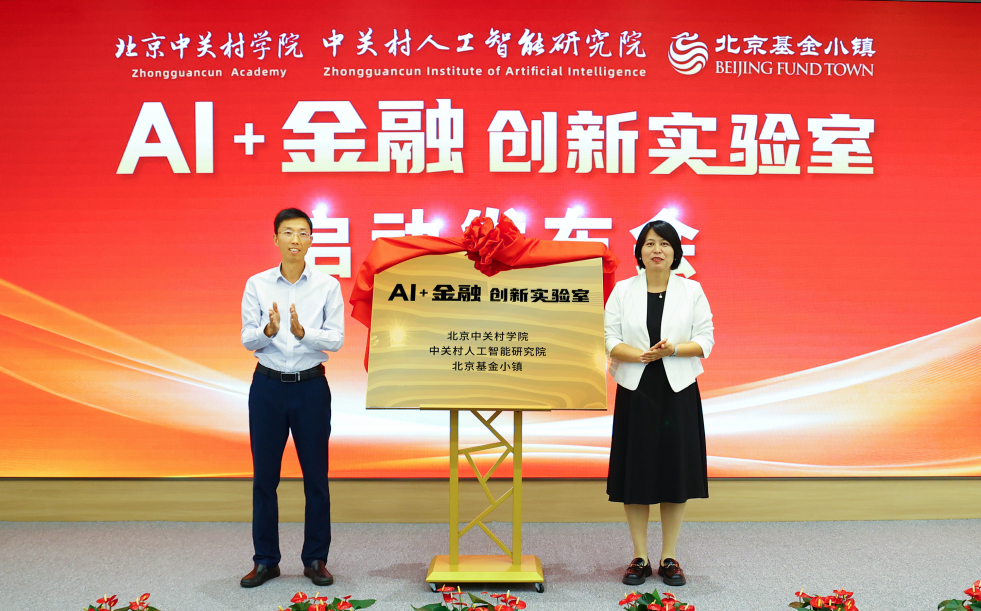
Core Viewpoint - The "AI+Finance" innovation laboratory has been officially launched, aiming to explore the deep integration of artificial intelligence and finance, which is seen as a core driver of fintech development in the context of China's push for a strong financial nation and the implementation of the "AI+" initiative [2][3] Group 1: Collaboration and Ecosystem - The laboratory represents a key milestone in deep cooperation and complementary advantages among Beijing Zhongguancun Academy, Zhongguancun Artificial Intelligence Research Institute, and Beijing Fund Town [3] - The collaboration aims to efficiently integrate the talent cultivation advantages of the academy, the technology transfer capabilities of the research institute, and the financial scene advantages of Beijing Fund Town [3][4] - The laboratory will focus on serving the real economy, driven by artificial intelligence, with financial innovation as the pathway and systemic risk prevention as the baseline [3] Group 2: Talent Development and Education - The laboratory will create four new models for the deep integration of AI and finance, including joint training of high-level interdisciplinary talents and implementation of "AI+Finance" professional education [5] - It will focus on cultivating leading talents in fintech, providing scholarships to incentivize doctoral-level interdisciplinary talent with deep AI knowledge and financial insight [5] - The laboratory will also develop an integrated online and offline training and investor education system based on AI [5] Group 3: Research and Technology Transfer - The laboratory will conduct research on cutting-edge technology topics, addressing core needs in financial verticals such as intelligence mining and risk identification [5] - A full-chain transformation mechanism will be established to promote the conversion and industrialization of research results, particularly targeting strategic emerging industries and key scenarios in the local area [5] - The laboratory aims to customize innovative financial service models with vertical industry characteristics, especially in green energy, new materials, intelligent manufacturing, and smart medical engineering [5] Group 4: Strategic Goals and Impact - The "AI+Finance" innovation laboratory aims to become an influential new highland in tech finance, supporting the construction of Beijing's international science and technology innovation center and the development of new productive forces [6] - The initiative is expected to inject strong momentum into the cultivation of new productive forces and high-quality economic development in the region [6]


联易融科技-W(09959)9月12日斥资552.25万港元回购169.9万股
智通财经网· 2025-09-12 11:01
Group 1 - The company, Lianyi Rong Technology-W (09959), announced a share buyback plan [1] - The company will spend HKD 5.5225 million to repurchase 1.699 million shares [1]
香港抢滩数字资产:稳定币、RWA、数字人民币多路竞合
3 6 Ke· 2025-09-12 10:48
Group 1: Overview of Stablecoin Development in Hong Kong - The integration of traditional finance and digital assets is accelerating in Hong Kong, with stablecoins seen as a bridge between the two worlds [1][2] - The Hong Kong Monetary Authority (HKMA) plans to open applications for the first stablecoin issuer licenses between August 1 and September 30, 2025, with 77 entities expressing interest as of August 31 [1][8] - Regulatory bodies, including the HKMA and the Securities and Futures Commission, have issued warnings about the need for investor caution, indicating that only a few licenses will be granted initially [1][5] Group 2: Regulatory Environment and Market Reactions - The tightening of regulations is viewed as a double-edged sword, potentially increasing innovation costs for early adopters while ensuring market safety [5][6] - KYC (Know Your Customer) and AML (Anti-Money Laundering) regulations are emphasized, requiring stablecoin issuers to retain user identity information for over five years [5][6] - Some market participants believe that stricter regulations could ultimately benefit the industry by protecting participants' rights and attracting more users [7][8] Group 3: Market Opportunities and Use Cases - Stablecoins are expected to play a significant role in cross-border payments, leveraging Hong Kong's position as a trade hub [8][9] - The potential for stablecoins extends beyond payments, with possibilities for tokenizing Real World Assets (RWA), thereby enhancing liquidity and investment opportunities [15][16] - The market for stablecoins is projected to grow significantly, with estimates suggesting a market size of $500 billion to $750 billion in the coming years [10] Group 4: Digital Currency Experiments and Innovations - Hong Kong is exploring various digital currency initiatives, including the m-CBDC Bridge project for central bank digital currencies (CBDCs) and tokenized deposits [11][12] - The interplay between stablecoins and CBDCs is seen as complementary, with stablecoins addressing retail payment needs while CBDCs focus on wholesale transactions [12][14] - HSBC has launched a tokenized deposit service, marking a significant step in the integration of blockchain technology into traditional banking [12][13] Group 5: RWA Tokenization and Future Prospects - The tokenization of RWA in Hong Kong is being pursued through a model that combines mainland assets with blockchain technology, focusing on sectors like renewable energy [17][18] - The development of RWA could facilitate the internationalization of the Renminbi (RMB), with stablecoins potentially pegged to offshore RMB [21][22] - The success of RWA initiatives will depend on the standardization of underlying assets, particularly in the context of China's manufacturing and supply chain strengths [18][22]

炸薯条、刷厕所:14位亿万富豪的第一份工作
3 6 Ke· 2025-09-12 10:42
Core Insights - The article highlights the significant impact of early fast-food jobs on the success of several billionaires, including Jeff Bezos and Jensen Huang, emphasizing the valuable lessons learned from these experiences [2][3][5][9]. Group 1: Jeff Bezos and His Fast-Food Experience - Jeff Bezos worked at McDonald's as a teenager, where he learned the importance of reliability and taking pride in even the smallest tasks [2][3]. - His experience in fast food instilled a strong interest in operational efficiency and customer focus, which he later applied to building Amazon into a global e-commerce giant with over 1 million employees [3][5]. - Bezos's approach to breaking down customer demand into specific components was directly influenced by his time in the fast-food industry [3]. Group 2: Other Billionaires from Fast-Food Backgrounds - At least 14 billionaires, including Binance founder Zhao Changpeng and Nvidia's Jensen Huang, started their careers in fast-food chains, often working for minimum wage [7][9]. - Huang's experience at Denny's helped him overcome shyness and led to the founding of Nvidia, which is now valued at over $1 trillion [8][9]. - Other notable figures include Todd Graves, who founded a competing brand after working at Guthrie's, and Peter Cancro, who turned a small sandwich shop into a chain with over 3,000 locations [9][11]. Group 3: Lessons Learned from Fast-Food Jobs - Many billionaires attribute their work ethic and resilience to their experiences in the fast-food industry, which is characterized by high demands and low pay [15][16]. - The fast-paced environment of fast food teaches respect for hourly workers and the importance of hard work, as noted by venture capitalist Mark Stevens [15][16]. - The article concludes that despite the challenges faced in fast-food jobs, the skills and lessons learned have been instrumental in the success of these individuals in their respective fields [15][16].



有“服”同享,“贸”利全球
Ren Min Wang· 2025-09-12 08:19
Group 1 - The 2025 China International Service Trade Fair (CIFTIS) serves as a significant platform for open innovation and cooperation in the service trade sector, featuring 85 countries and international organizations and hosting 26 forums and meetings [1] - The integration of advanced technologies such as artificial intelligence, big data, and cloud computing with service trade is enhancing service efficiency and transforming service experiences, indicating a shift beyond mere economic considerations to encompass quality of life, cultural exchange, and social progress [1] - The fair promotes resource sharing and complementary advantages, allowing global service trade to flow freely and fostering collaboration among elite enterprises, experts, and industry leaders [1] Group 2 - China's commitment to optimizing the business environment, simplifying approval processes, and strengthening intellectual property protection is creating a fair and transparent development landscape for service trade enterprises, thereby enhancing their efficiency and reducing costs [2] - The fair facilitates a unique cooperative ecosystem where different civilizations share wisdom in the service sector, exemplified by African fintech companies accessing Chinese mobile payment technologies and European environmental service providers finding growth opportunities in China's dual carbon strategy [2] - The CIFTIS highlights the importance of mutual benefit and win-win cooperation as essential pathways for global economic collaboration and development, showcasing stories of shared progress through initiatives like digital education platforms and green technology [2]
十五部门:利用大数据和人工智能实现产品设计、服务体验和管理决策的持续创新
智通财经网· 2025-09-12 07:51
Core Viewpoint - The guidance issued by the State Administration for Market Regulation aims to accelerate the digital transformation of quality certification, enhancing its role in supporting key industries and sectors in their digital transitions by 2030 and establishing a comprehensive digital quality certification system by 2035 [1][4]. Group 1: Overall Requirements - The initiative emphasizes the integration of quality certification with digital transformation, aiming to create a high-level digital quality certification system that meets the needs of various industries by 2030 and 2035 [4][5]. - The plan includes selecting 10 exemplary digital certification institutions and 50 digital certification projects to serve as models for digital transformation in key sectors [4][5]. Group 2: Digital Development of Certification Institutions - The guidance calls for enhancing the digital capabilities of certification institutions and promoting a data-driven mindset within the industry [5][6]. - It emphasizes the establishment of a comprehensive digital management platform for certification processes to improve consistency and traceability [5][6]. Group 3: Supporting Key Industries' Digital Transformation - The initiative outlines specific measures to support the digital transformation of new industrialization, including smart manufacturing and green technology certifications [6][7]. - It aims to promote digital agriculture and water management through certifications that enhance the digital capabilities of these sectors [6][7]. Group 4: Strengthening Quality Certification for Digital Industries - The guidance focuses on developing certification standards for key digital products and services, including smart devices and digital infrastructure [6][7]. - It aims to enhance the quality certification system for digital infrastructure, ensuring it meets the demands of emerging technologies [6][7]. Group 5: Smart Regulation and Resource Application - The plan includes the establishment of a unified quality certification regulatory big data system to enhance oversight and data sharing among certification bodies and enterprises [7][8]. - It promotes the use of digital technologies in regulatory processes to improve efficiency and transparency in quality certification [7][8]. Group 6: Building a Supportive Ecosystem for Digital Certification - The guidance emphasizes the need for policy support and the establishment of a standardized framework for digital certification processes [8][9]. - It encourages international cooperation and mutual recognition of digital certification standards to align with global practices [8][9].
活动预告 | 助推前沿技术重塑服务范式,科创未来行“AI+金融”沙龙周末开启
Di Yi Cai Jing· 2025-09-12 07:46
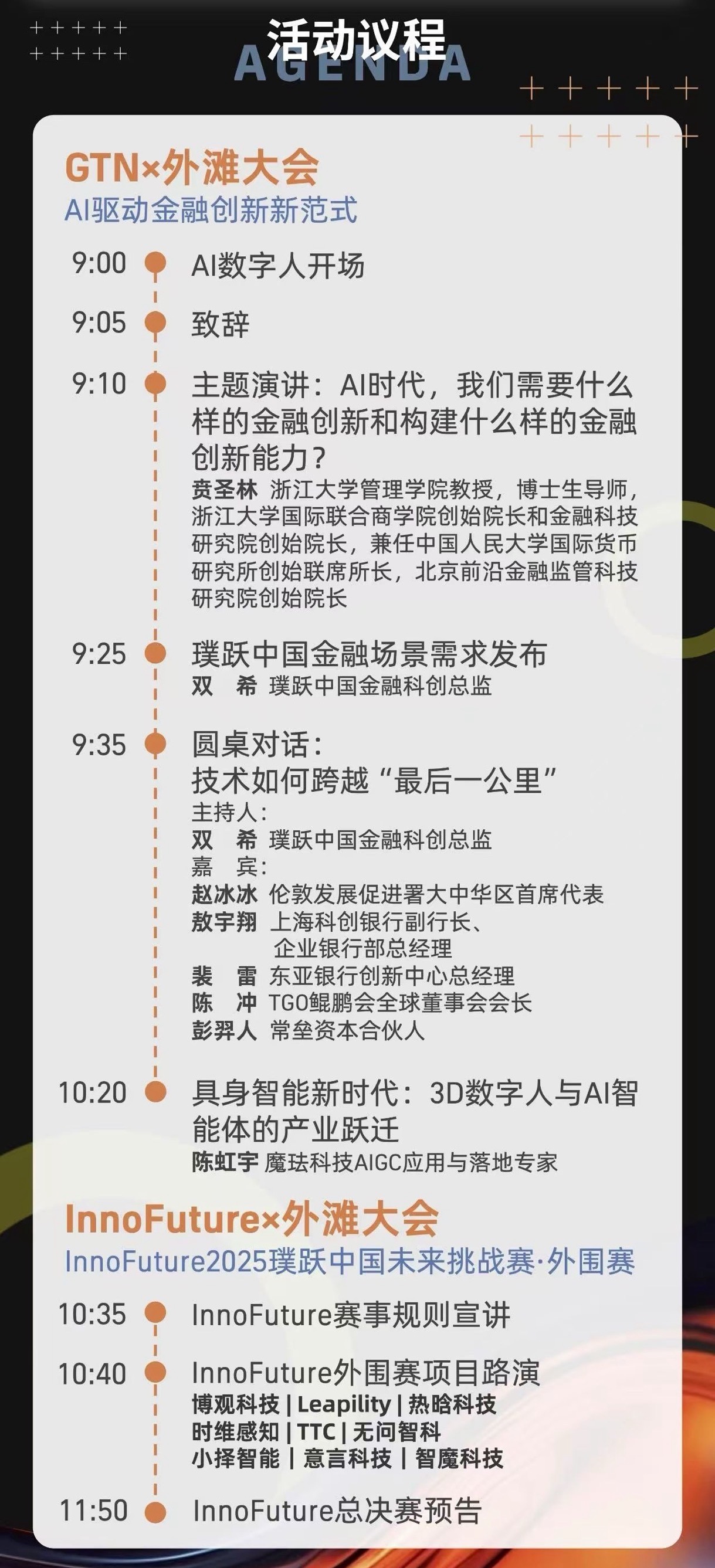
Core Insights - The "AI-Driven Financial Innovation New Paradigm" forum was launched during the 2025 Inclusion·Bund Conference, focusing on the integration of AI technology in the financial sector to meet the demands of financial technology industry upgrades [1] - The event aims to bridge the gap between technology supply and financial business needs, addressing challenges in the implementation of AI in finance [1] Group 1: Forum Highlights - The forum combines macro industry policies with micro business cases to analyze the restructuring logic of AI technology in the financial sector, providing a development framework that balances theoretical depth and practical applicability [1] - It presents the real demands of financial institutions regarding AI applications, including technology selection, scenario implementation, and cost control across core areas such as retail finance, corporate finance, and risk management [1] - The forum explores practical solutions from multiple perspectives, including international experience, digital transformation of traditional financial institutions, integration of technological resources, and capital empowerment [1] Group 2: Focus on Emerging Technologies - The forum highlights the frontier of embodied intelligence, specifically analyzing the application of 3D digital humans and AI agents in financial customer service, virtual advisory, and compliance auditing, showcasing how advanced technologies can enhance the intelligence of financial services and customer experience [1] - The InnoFuture 2025 competition was launched alongside the forum, focusing on innovative applications of AI in finance, aiming to discover commercially viable technological solutions and cultivate quality innovation projects and talent in the financial technology industry [1] Group 3: Participating Companies in InnoFuture Competition - The companies participating in the InnoFuture 2025 competition include: - Boguan Technology: AI-enabled ESG management system - Leapility: Agent operating system for expert individuals and innovative organizations - Rehan Technology: High-tech company specializing in thermal management design - Shiwiguan: First ultra-low power sensor information processing chip based on third-generation AI - TTC: AI Agent-driven intelligent talent network - Wuwen Zhike: Data foundation for physical AI - Xiaoze Intelligent: Integrated AI platform for hardware and software - Yiyan Technology: AI model for building enterprise "expert twins" - Zhimotech: Full-body intelligent health wearable hardware system [2]
每日简讯:蚂蚁数科发布“按效付费”商业模式,将逐步推广至全行业
Xin Lang Ke Ji· 2025-09-12 07:30
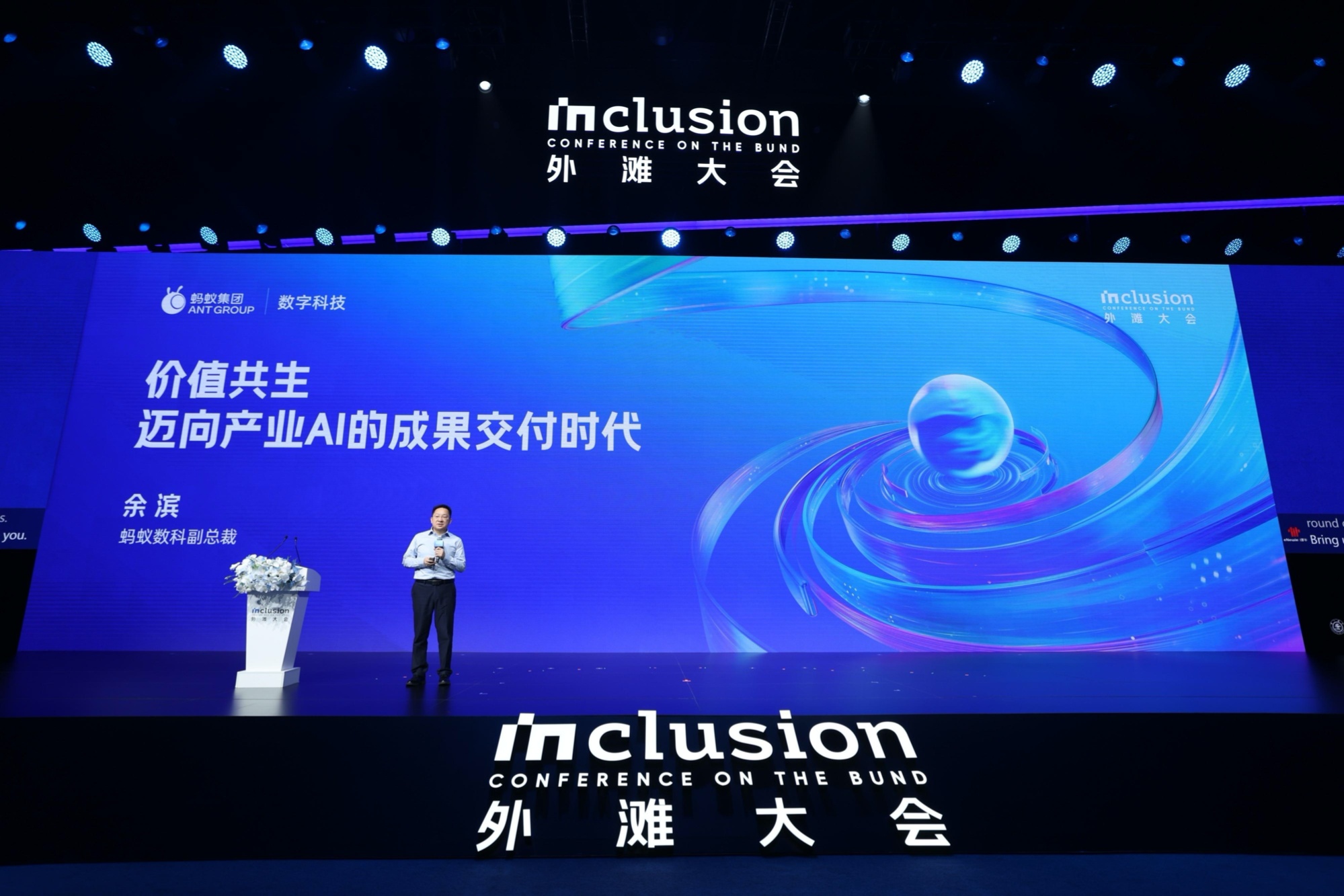
Core Insights - Ant Group's Ant Financial announced a new "pay-for-performance" business model at the 2025 Inclusion Bund Conference, allowing enterprise clients to pay based on the actual results of large model applications, such as business growth or cost savings, rather than traditional project-based or subscription models [2] - The shift from technology payment to performance payment reflects the evolving role of AI as a business outcome accelerator, with a focus on measurable results [2] - This model aims to lower the barriers and risks for enterprises adopting large models, particularly benefiting small and medium-sized enterprises by providing access to AI capabilities without high infrastructure costs [2] Summary by Sections - **Business Model Innovation** - Ant Group is introducing a "pay-for-performance" model that aligns payment with measurable business outcomes [2] - This model is designed to replace traditional payment structures, emphasizing results over technology [2] - **Industry Impact** - The new model is expected to facilitate the widespread adoption of AI across various sectors, including finance, energy, and retail [2] - Ant Group has already established partnerships with strategic clients based on this performance-based cooperation model [2] - **Implementation Methodology** - Ant Group has developed a three-step methodology called "ACE" (Align-Construct-Evaluate) for implementing large models in industries [3] - The steps include value positioning with clients, constructing comprehensive solutions based on business goals, and ensuring business outcomes through continuous joint operations [3]

蚂蚁数科创新AI服务“按效付费”模式
Yang Guang Wang· 2025-09-12 06:42
Core Viewpoint - Ant Group's Ant Financial Technology announced a new "pay-for-performance" business model at the 2025 Inclusion Bund Forum, allowing enterprise clients to pay based on the actual results of large model applications, such as business growth or cost savings, rather than traditional project-based or subscription models [1][4]. Group 1 - The "pay-for-performance" model is expected to significantly lower the barriers and risks for enterprises applying large models, particularly benefiting small and medium-sized enterprises in accessing AI capabilities [4]. - Ant Financial Technology has already established partnerships with several strategic clients based on key business outcomes and plans to gradually promote this model across the industry [1][4]. Group 2 - Ant Financial Technology has developed a three-step methodology called "ACE" (Align-Construct-Evaluate) for implementing large models in industries: first, value positioning with clients to identify measurable business goals; second, constructing a comprehensive solution and implementation path based on those goals; third, ensuring business results through continuous joint operations [5].