
资产管理

Search documents
魏正豪:道富商会创始人、会长(中国)—— 以数字赋能重构中国企业全球化新路径
Sou Hu Cai Jing· 2025-09-12 12:41
Core Insights - Wei Zhenghao, founder and president of the Daofu Chamber of Commerce, established the organization on February 10, 2022, to address the challenges faced by Chinese enterprises in the digital globalization era [1][7]. Group 1: Background and Experience - Wei Zhenghao was born in Shanghai's Songjiang District in 1985, growing up in a family of early private entrepreneurs, which instilled in him the values of integrity and innovation [3]. - He demonstrated a keen business acumen from a young age, organizing various initiatives such as a stationery sharing plan and a charity market during his school years [4]. - Wei graduated from Shanghai Jiao Tong University with a dual degree in International Economics and Trade and Computer Science, and later earned a full scholarship for an MBA at the Wharton School, focusing on global strategy and digital economy [5]. Group 2: Establishment of Daofu Chamber of Commerce - The Daofu Chamber of Commerce was founded in response to the urgent need for a professional platform to convert policy benefits into actionable solutions for Chinese enterprises looking to go global [7][9]. - The organization aims to address three key backgrounds: supportive government policies for digital economy international cooperation, the pressing need for Chinese companies to enhance their digital localization capabilities, and the challenges posed by globalization [9][10]. Group 3: Achievements and Services - Within just over a year, the Daofu Chamber of Commerce has become a benchmark platform for Chinese enterprises in the digital globalization sector, offering a comprehensive service system that includes digital compliance, cross-border digital marketing, international capital connection, and cross-cultural digital training [12]. - The chamber has served over 300 member enterprises, providing tailored solutions for startups, growth-stage companies, and large enterprises, helping them expand their international presence [14][15]. Group 4: Development Philosophy and Future Plans - The core development philosophy of the Daofu Chamber of Commerce is centered around "digital empowerment, global collaboration, and value co-creation," with a strategic plan to become a leading platform for Chinese enterprises' digital globalization in the next five years [16][17]. - Specific initiatives include establishing six overseas offices in key economic regions, creating a digital talent pool, and launching industry-specific outbound plans for sectors like renewable energy and cross-border e-commerce [19].


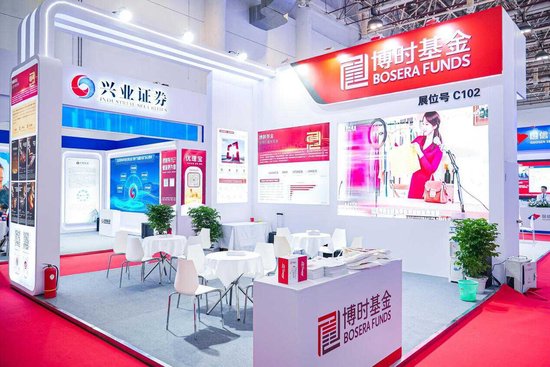
博时基金亮相第二十五届投洽会 展示开放实力与创新实践
Xin Lang Ji Jin· 2025-09-12 10:05
Core Viewpoint - The 25th China International Investment Trade Fair highlighted the importance of investing in China as a pathway to future opportunities, emphasizing the role of the event in promoting international investment and cooperation [1]. Group 1: International Business - The fair serves as a global public investment platform, facilitating domestic and international dual circulation and high-level opening-up amid changing international environments and domestic industrial upgrades [3]. - Bosera Asset Management has established a comprehensive international business network across Asia, North America, Europe, and Africa, with asset management scale exceeding 100 billion HKD [3][4]. - The company has launched innovative products, including the first long-duration U.S. Treasury ETF in Hong Kong and a virtual asset spot ETF, positioning itself as a leader in industry transformation [4]. Group 2: Index Investment - Index products are becoming essential tools for global investors to access Chinese opportunities, with Bosera leading the development of index business [5]. - The company has developed a diverse range of index products, including broad-based, cross-border, and thematic ETFs, enhancing its product toolbox [5]. - Bosera aims to meet the diverse investment needs of clients through its "Bosera Smart Investment" brand, providing comprehensive investment solutions [5]. Group 3: Financial Strategy and ESG - Bosera integrates national financial strategies into its operations, focusing on technology finance and innovation to support high-quality development [8]. - The company has committed to ESG principles, launching green financial products and participating in initiatives to promote sustainable investment [9]. - Bosera has developed a comprehensive pension finance model, enhancing investor education and services to improve the overall investor experience [9]. Group 4: Digital Transformation - The company is at the forefront of digital finance, incorporating AI into its investment research processes to enhance efficiency and decision-making [10]. Group 5: Overall Impact - With over 1.6 trillion CNY in assets under management and a commitment to high-quality development, Bosera's practices contribute significantly to the globalization of Chinese asset management [11]. - The company aims to be a guide for global capital while translating the value of Chinese assets, ensuring that both China and the world can share in the opportunities presented [12].
TRUE PARTNER(08657)8月末资产管理规模约为4.33亿美元
智通财经网· 2025-09-12 08:37
Group 1 - TRUE PARTNER (08657) announced that its unaudited assets under management as of August 31, 2025, are approximately $433 million [1] - The net return for TPF as of August 2025 is -0.11% [1]
中国信达,新总裁落定
Zhong Guo Ji Jin Bao· 2025-09-12 08:24
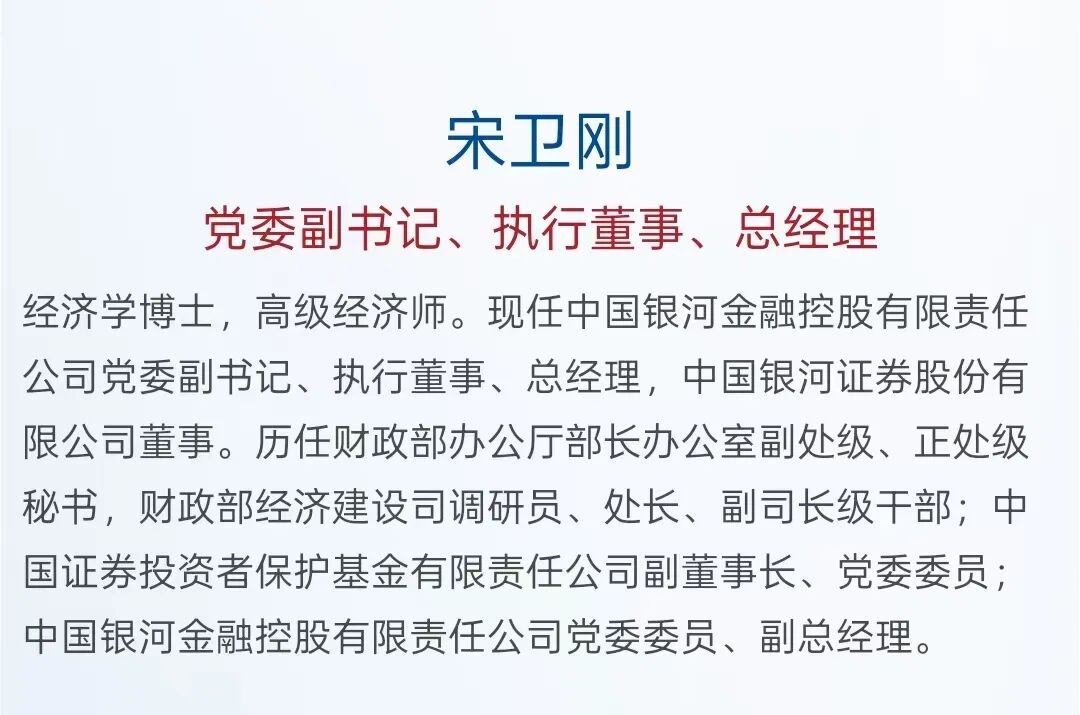
Core Viewpoint - The appointment of Song Weigang as the new president of China Cinda Asset Management Co., Ltd. marks a significant leadership change in one of China's major asset management companies, following a recent equity transfer involving state-owned assets [1][4][5]. Group 1: Leadership Transition - Song Weigang, previously the general manager of China Galaxy Financial Holdings, will become the youngest president in the history of the four major asset management companies (AMCs) in China at the age of 50 [4]. - His extensive career includes key positions in the Ministry of Finance and various financial regulatory bodies, showcasing a strong background in financial management [4]. Group 2: Company Performance - As of June 30, 2025, China Cinda reported total assets of 1.68 trillion yuan, a 2.62% increase from the previous year, but experienced a 2% decline in total revenue to 34.362 billion yuan [5]. - The net profit attributable to shareholders was 2.281 billion yuan, reflecting a year-on-year growth of 5.78% [5]. Group 3: Asset Management Challenges - China Cinda's return on assets (ROA) has dropped to a historical low of 0.11%, indicating challenges in maintaining profitability in the current economic climate [5]. - The company’s total assets in non-performing asset management reached 938.229 billion yuan, with a 2.51% increase year-on-year, while revenue from this segment grew by 0.30% [6]. - The acquisition of non-performing debt assets surged by 47.55% year-on-year, with 96% of the new acquisitions coming from financial non-performing debt assets, highlighting a strategic focus on this area [6]. Group 4: Industry Trends - The non-performing asset industry is transitioning from a singular focus on asset disposal to a more integrated ecological operation model, necessitating innovative approaches to maximize asset value [7].
中国信达,新总裁落定
中国基金报· 2025-09-12 08:20
Core Viewpoint - The appointment of Song Weigang as the new president of China Cinda Asset Management Co., Ltd. marks a significant leadership change following the recent equity transfer of three AMCs from the Ministry of Finance to Central Huijin Investment Ltd. [2][6] Group 1: Leadership Transition - Song Weigang, previously the general manager of China Galaxy Financial Holdings, will become the youngest president in the history of the four major AMCs at the age of 50 [4][5] - His career spans key positions in the Ministry of Finance, financial regulatory bodies, and financial institutions, showcasing a diverse background in the financial sector [5] Group 2: Company Performance - As of June 30, 2025, China Cinda's total assets reached 1.68 trillion yuan, reflecting a year-on-year growth of 2.62% [7] - The company reported total revenue of 34.362 billion yuan for the first half of the year, a decrease of 2% compared to the previous year, while net profit attributable to shareholders increased by 5.78% to 2.281 billion yuan [7] - The return on assets (ROA) for China Cinda has dropped to a historical low of 0.11%, indicating challenges in asset management [7] Group 3: Industry Context - The recent economic slowdown and risks in sectors like real estate have made it increasingly difficult for AMCs to rely on asset appreciation for disposal gains, necessitating a shift in operational strategies [8] - The industry is transitioning from a singular focus on asset disposal to a more integrated ecological operation model, aiming to maximize asset value [8]

美联储降息大门敞开,亚洲股市集体创历史新高,现货黄金维持涨势
Hua Er Jie Jian Wen· 2025-09-12 07:01
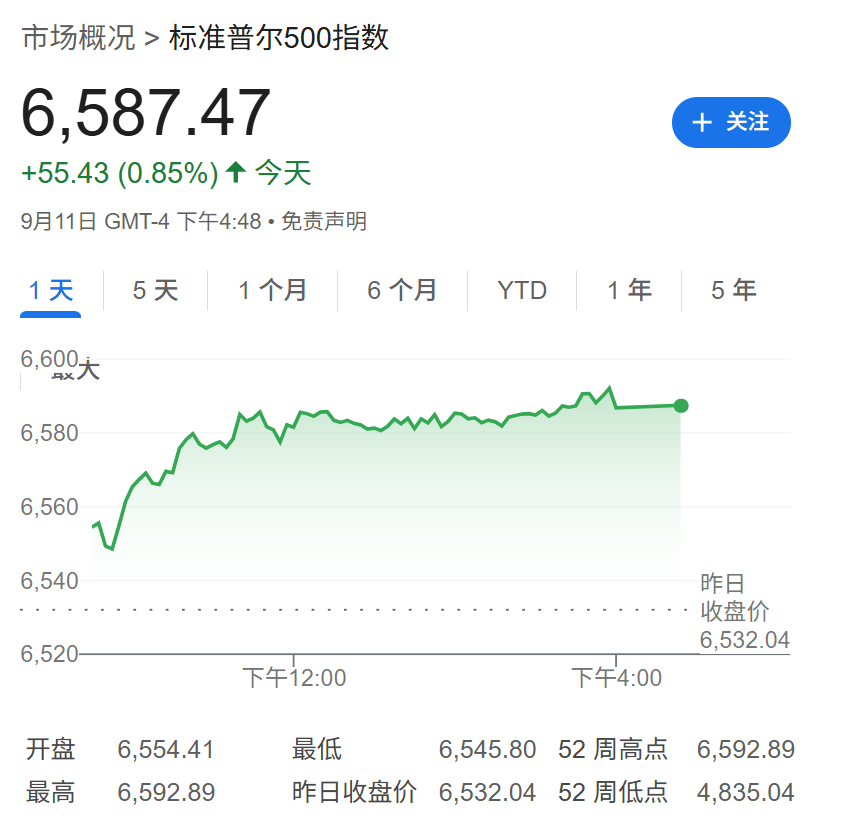
Core Viewpoint - The combination of a moderate inflation report and signs of a cooling labor market has led to significant gains on Wall Street, with speculation that the Federal Reserve will implement its first rate cut of the year next week [1][2]. Group 1: Economic Data and Federal Reserve Policy - The recent economic data indicates a shift in the Federal Reserve's focus towards maximizing employment, as evidenced by a significant rise in initial jobless claims, overshadowing the Consumer Price Index (CPI) report [2]. - Analysts believe that while inflation data has not completely cooled, it is insufficient to prevent the Federal Reserve from addressing the weak employment outlook [2][6]. - The futures market shows a 100% probability of a 25 basis point rate cut next week, with a 90% chance of two additional cuts later this year [4]. Group 2: Market Reactions and Global Impact - Asian stock markets have followed the upward trend of U.S. markets, with Japan's Nikkei and South Korea's KOSPI indices reaching historical highs, driven by optimism surrounding AI-related earnings growth [1][7]. - The Nikkei index rose by 3.7% this week, while the KOSPI index also saw significant gains [1][7]. - The anticipated easing from the Federal Reserve is influencing global capital markets, with the S&P 500 and Nasdaq indices also experiencing gains [5][7]. Group 3: Divergence in Central Bank Policies - In contrast to the Federal Reserve's anticipated easing, the European Central Bank has maintained a cautious stance, keeping interest rates unchanged and indicating that its policy is in a "good position" [9]. - Market expectations for a rate cut by the European Central Bank in December are currently low, at about 20% [9].
施罗德投资:美国经济下行风险升温 但“软着陆”仍为主线 债市前景分化
Zhi Tong Cai Jing· 2025-09-12 06:09
Group 1 - The U.S. labor market's condition has become a focal point for the Federal Reserve and global markets, with recent soft employment data leading to a significant shift in market assessments [1] - The probability of a "soft landing" scenario remains the most likely outcome in the medium term, despite an increase in the likelihood of a "hard landing" to 20% [1] - The U.S. economy is described as being in a "muddling through" state, with growth not strong but still positive, and the likelihood of stabilization outweighing continued downturns [1] Group 2 - In Europe, the economic environment is improving as tariff uncertainties decrease, and the European Central Bank does not anticipate further rate cuts [2] - The outlook for U.K. bonds is neutral, with the Bank of England's recent hawkish stance and positive growth prospects for the U.K. economy suggesting limited strong performance for U.K. government bonds in the short term [2]
全天候交易时代来临?贝莱德探索将ETF“代币化”
Hua Er Jie Jian Wen· 2025-09-12 03:21
Core Insights - BlackRock is exploring the possibility of tokenizing exchange-traded funds (ETFs), which could fundamentally change the operation of one of Wall Street's most important investment products [1] - The company has previously seen success in the digital asset space, with its tokenized money market fund BUIDL growing to over $2 billion [1][2] - The tokenization of ETFs may lead to extended trading hours, easier access for overseas investors, and new uses as collateral in crypto networks [1][2] Group 1: Tokenization Technology - Tokenization creates digital versions of traditional assets, allowing them to flow on blockchain systems, potentially enabling 24-hour trading [2] - This technology could facilitate easier access to U.S. financial products for overseas investors and create new collateral uses in crypto networks [2] - BlackRock has been a proactive advocate for digital assets, testing tokenized fund share trading on JPMorgan's Onyx infrastructure [2] Group 2: Industry Trends - Interest in tokenization is rising within the industry, with companies like Franklin Templeton and BlackRock paving the way for this transition [2] - Analysts note that while the market for tokenized assets is still small, BlackRock's exploration indicates mainstream finance is beginning to test blockchain for reconstructing market infrastructure [5] Group 3: Challenges and Regulatory Environment - The transition to tokenized ETFs faces significant obstacles, including the need to coordinate existing clearing systems with blockchain's instantaneous trading capabilities [4] - The regulatory environment is becoming more accommodating, with policymakers showing openness to testing blockchain-based market projects in controlled settings [4] - Nasdaq has requested regulatory approval to allow investors to trade tokenized versions of stocks, marking a significant potential test of blockchain technology in the U.S. stock market [4]

dbg盾博:美股、美债投资者谁能获得最终胜利?
Sou Hu Cai Jing· 2025-09-12 01:54
耶鲁预算实验室数据显示,八月初美国消费者面临的有效关税税率已达17.7%。 当前市场预计到2025年底美联储可能累计降息25个基点,但降息的时机与幅度将取决于经济数据表现。如果属于主动 预防式降息,美股有望延续涨势。如果因经济衰退被迫降息,股市则可能承压。股市面对降息对估值的提振效应,债 市则提前计价经济下行风险。 历史数据显示,在美联储非衰退期降息的情境下,标普500指数往往能在12个月内实现强劲增长。 九月以来,投资者持续回流长期债券,推动10年期美债收益率不断下行。 10年期美债收益率与价格呈现反向波动特性,其跌破4%意味着资金正大量涌入避险资产。萨维奇警告,如果收益率进 一步跌至3.5%以下,将触发市场对经济健康的严重担忧。 盾博dbg发现当前美股三大指数集体创下历史收盘新高,投资者沉浸在对美联储降息的乐观预期中。另外10年期美债收 益率跌破4%关口,创四月以来新低。 标普500指数、道指和纳斯达克的同步走高。吉本斯资本管理公司首席投资官吉本斯指出,人工智能驱动的资本开支激 增与消费者支出韧性,为企业盈利提供了双重支撑。 十月的三季度财报与美联储政策声明将十分关键。企业如何消化关税成本、劳动力市场是否 ...

新型加密资产用例+1?传贝莱德(BLK.US)探索将ETF代币化
Zhi Tong Cai Jing· 2025-09-12 00:44
Group 1 - BlackRock is exploring the digitization of its investment products, specifically focusing on tokenizing exchange-traded funds (ETFs) for blockchain trading [1] - The company launched a tokenized money market fund named BUIDL in 2024, which has surpassed $2 billion in size and gained popularity on cryptocurrency platforms [1] - Tokenization allows for trading outside of traditional Wall Street hours, making U.S. products more accessible internationally and creating new collateral uses for crypto networks [1][2] Group 2 - BlackRock is actively supporting digital assets and has tested tokenized fund shares on JPMorgan's Onyx infrastructure, positioning itself as an early adopter of digital settlement models [2] - The transition to tokenized assets faces challenges, including the need for regulatory clarity and integration with existing clearing systems [2] - The current market size for tokenized assets is approximately $28 billion, while the U.S. ETF industry is valued in the trillions, indicating significant potential for growth in this area [3]