
农业

Search documents
众兴菌业(002772.SZ):拟推1437.5万份股票期权激励计划
Ge Long Hui A P P· 2025-09-25 12:42
Core Viewpoint - Zhongxing Junye (002772.SZ) announced a stock option incentive plan for 2025, aiming to enhance employee motivation and align interests with shareholders [1] Group 1: Stock Option Details - The incentive plan proposes to grant a total of 14.375 million stock options, representing approximately 3.66% of the company's total share capital of 393.241359 million shares at the time of the announcement [1] - A total of 17 individuals are designated as the initial recipients of the stock options under this plan [1] - The exercise price for the granted stock options (including reserved grants) is set at 6.87 yuan per share [1]

收评:指数分化创业板指涨1.58% 有色板块强势
Jing Ji Wang· 2025-09-25 10:09
Market Overview - The Shanghai Composite Index closed at 3853.30 points, with a slight decline of 0.01% [1] - The Shenzhen Component Index reported a rise of 0.67%, closing at 13445.90 points [1] - The ChiNext Index increased by 1.58%, ending at 3235.76 points [1] Trading Volume - The trading volume for the Shanghai Composite was 100.12 billion yuan [1] - The Shenzhen Component had a trading volume of 136.99 billion yuan [1] - The ChiNext Index recorded a trading volume of 65.98 billion yuan [1] Sector Performance - Sectors such as logistics, real estate, oil, agriculture, banking, liquor, and pharmaceuticals experienced declines [1] - Conversely, sectors like non-ferrous metals and media showed upward movement [1] - Emerging concepts such as AI applications and controllable nuclear fusion were notably active [1]

收评:沪指窄幅震荡,银行、酿酒等板块走低,有色板块强势
Zheng Quan Shi Bao Wang· 2025-09-25 07:51
Market Overview - The Shanghai Composite Index experienced slight fluctuations, closing down 0.01% at 3853.3 points, while the Shenzhen Component Index rose by 0.67% to 13445.9 points. The ChiNext Index increased by 1.58% to 3235.76 points, and the STAR Market 50 Index gained 1.24% [1] - The total trading volume across the Shanghai, Shenzhen, and North markets reached 23.92 billion yuan [1] Sector Performance - Sectors such as logistics, real estate, oil, agriculture, banking, liquor, and pharmaceuticals saw declines, while sectors like non-ferrous metals and media showed gains. AI application concepts and controllable nuclear fusion concepts were particularly active [1] Investment Insights - Pacific Securities noted increased volatility and accelerated sector rotation as the holiday approaches. Given the generally poor performance of A-shares before holidays, investors are advised to avoid sectors with high financing ratios. However, the banking sector shows significant bottom support and may be worth monitoring [1] - Yinhua Fund indicated that with the "National Day" holiday approaching, some funds may exit the market. The short-term risk outlook appears stable, with future attention on potential interest rate cuts domestically and U.S. tariff policies towards China. Overall, a bullish market atmosphere is expected to continue, with the market likely to maintain a fluctuating upward trend [1]
关注电力行业新能源装机推进
Hua Tai Qi Huo· 2025-09-25 05:06
Report Core View - The report focuses on the new energy installation progress in the power industry and provides an overview of mid - level events, industry status, and key data in various industries [1] Industry Overview Production Industry - On September 24, 2025, President Xi Jinping announced China's new national independent contributions at the United Nations Climate Change Summit. By 2035, China aims to reduce the net greenhouse gas emissions in the entire economy by 7% - 10% from the peak, increase the share of non - fossil energy consumption in the total energy consumption to over 30%, increase the total installed capacity of wind and solar power to more than 6 times that of 2020, striving for 36 billion kilowatts, reach a forest stock volume of over 240 billion cubic meters, make new energy vehicles the mainstream of new vehicle sales, cover major high - emission industries in the national carbon emissions trading market, and basically build a climate - resilient society [1] Service Industry - Nine departments including the Ministry of Commerce issued 13 policy measures to promote service exports, aiming to boost the high - quality development of service trade. These measures include leveraging existing funds, enhancing the guiding fund's role, optimizing tax - free procedures, and increasing export credit insurance support. Support is also provided for international data service businesses in areas like the Lin - gang New Area of the Shanghai Free Trade Pilot Zone and the Hainan Free Trade Port, and for establishing international data and cloud - computing centers in relevant areas [2] Upstream - In infrastructure, cement prices have increased; in agriculture, the prices of eggs and palm oil have declined [2] Midstream - The polyester operating rate in the chemical industry has slightly decreased [3] Downstream - In the real estate sector, the sales of commercial housing in first - and second - tier cities have declined; in the service sector, the number of domestic flights has remained stable [3] Key Data Agricultural Products - On September 24, the spot price of corn was 2,288.6 yuan/ton with a year - on - year decrease of 0.12%, the spot price of eggs was 7.8 yuan/kg with a - 3.13% change, the spot price of palm oil was 9,040 yuan/ton with a - 4.50% change, the spot price of cotton was 15,090.8 yuan/ton with a - 1.50% change, the average wholesale price of pork was 19.6 yuan/kg with a - 0.81% change [37] Metals - On September 24, the spot price of copper was 80,060 yuan/ton with a - 0.67% change, the spot price of zinc was 21,824 yuan/ton with a - 1.45% change, the spot price of aluminum was 20,693.3 yuan/ton with a - 1.02% change, the spot price of nickel was 122,633.3 yuan/ton with a - 0.31% change, the spot price of aluminum was 17,031.3 yuan/ton with a - 0.18% change, the spot price of螺纹钢 was 3,195 yuan/ton with a 1.49% change, the spot price of iron ore was 813.7 yuan/ton with a 0.76% change, the spot price of wire rod was 3,375 yuan/ton with a 0.75% change, the spot price of glass was 14.3 yuan/square meter with no change [37] Others - On September 24, the spot price of natural rubber was 14,983.3 yuan/ton with a - 0.72% change, the China Plastic City price index was 790.7 with a - 0.33% change, the spot price of WTI crude oil was 63.4 dollars/barrel with a 0.17% change, the spot price of Brent crude oil was 67 dollars/barrel with a - 0.70% change, the spot price of liquefied natural gas was 3,802 yuan/ton with a - 1.81% change, the coal price was 788 yuan/ton with a 1.03% change, the spot price of PTA was 4,572.9 yuan/ton with a - 1.64% change, the spot price of polyethylene was 7,350 yuan/ton with a - 0.63% change, the spot price of urea was 1,655 yuan/ton with a - 1.05% change, the spot price of soda ash was 1,262.5 yuan/ton with no change, the national cement price index was 134.1 (compared to 114.3) with a 2.68% change, the real - estate building materials comprehensive index had a 0.24% change, and the national concrete price index was 91.7 with a - 0.08% change [37]
推进乡村全面振兴 加快建设农业强省 为推动高质量发展提供基础保障坚实支撑
Zheng Zhou Ri Bao· 2025-09-25 00:45
Core Viewpoint - The meeting held in Xinxiang City emphasizes the importance of advancing agricultural modernization in Henan Province, aligning with President Xi Jinping's directives to strengthen rural revitalization and agricultural development [1][2]. Group 1: Key Tasks and Requirements - The focus is on achieving the "Four Strengths and Two Highs" which include strong grain production capacity, strong agricultural product supply assurance, strong agricultural technology innovation, strong rural industry competitiveness, high farmer income levels, and high rural modernization levels [2]. - There is a commitment to ensure food security by enhancing grain production capacity, stabilizing important agricultural product supply, and improving disaster prevention and mitigation capabilities [2]. - The plan includes strengthening farmland protection, managing high-standard farmland construction, and improving soil quality and fertility [2]. Group 2: Agricultural Innovation and Development - The establishment of agricultural technology innovation platforms such as the Zhoukou National Agricultural High-tech Zone and the Central Plains Agricultural Valley is prioritized to enhance new agricultural productivity [2]. - The strategy involves extending the agricultural industrial chain, boosting county-level industries, and optimizing the agricultural product processing industry [2]. - There is an emphasis on creating livable and workable rural areas, improving rural governance, and enhancing the quality of rural life [2]. Group 3: Leadership and Support - The importance of strong party leadership and a clear responsibility chain is highlighted to ensure the sustainable development of agricultural strength [3]. - The meeting discusses the need for systematic measures to support the "Three Autumns" production campaign, which is crucial for the annual grain harvest [3]. - Participants engaged in field research on agricultural digital management platforms and high-standard farmland to gather insights for implementation [3].
工投集团“大健康”理念指引产品创新
Xin Hua Ri Bao· 2025-09-24 21:48
Core Viewpoint - Lianyungang Industrial Investment Group focuses on enhancing quality and efficiency in the "big health" sector by innovating in salt, agriculture, and aquaculture products while deepening brand value [1] Group 1: Salt Industry - The company aims to create a non-heritage salt product display base, emphasizing the cultural significance of Huai salt [1] - It plans to enhance the influence of its three major self-owned brands: "Golden Huai," "Ancient Huai," and "Monkey King" [1] - The company is developing high-value-added product clusters led by "Snow Salt," using high-quality sea salt produced through the national-level intangible cultural heritage technique of sun-drying salt [1] Group 2: Agriculture - A green production base for seawater rice is being established to create organic agricultural brands [1] - The company is leveraging the unique soil characteristics of salt fields, such as high humus content and rich trace elements, in collaboration with research institutions [1] - The brand "Salt Field Jade" rice is being developed into a well-known trademark [1] Group 3: Aquaculture - The company is constructing a modern aquaculture demonstration base to develop high-end fishery brands [1] - It is exploring industrial development paths under the "fishing-solar complementary" model [1] - The company is introducing leading enterprises to promote the construction of a modern facility fishery full industry chain project [1]
快码住!农、林、牧、渔业企业所得税税惠礼包来了
蓝色柳林财税室· 2025-09-24 13:59
Core Viewpoint - The article discusses tax incentives for agricultural enterprises, including reduced corporate income tax rates and exemptions for specific agricultural processing projects [3][6]. Group 1: Corporate Income Tax Reductions - Enterprises engaged in the cultivation of flowers, tea, and other beverage crops, as well as spice crops, are eligible for a 50% reduction in corporate income tax [3]. - Aquaculture activities, including marine and inland farming, also qualify for the same tax reduction [3]. Group 2: Exemptions for Agricultural Processing - Certain agricultural processing projects are exempt from corporate income tax, including initial processing of grains, forestry products, horticultural plants, oilseeds, sugar crops, tea, medicinal plants, fiber plants, tropical crops, livestock, feed, forage, aquatic animals, and aquatic plants [3]. - Specific guidelines are provided for the treatment of livestock and poultry farming, as well as ornamental crop cultivation, under the relevant tax policies [3]. Group 3: Documentation and Compliance - Enterprises must self-assess and declare their eligibility for tax incentives, maintaining relevant documentation for review by tax authorities [3]. - Required documentation includes certificates or proof of qualifications related to the agricultural activities undertaken [4].


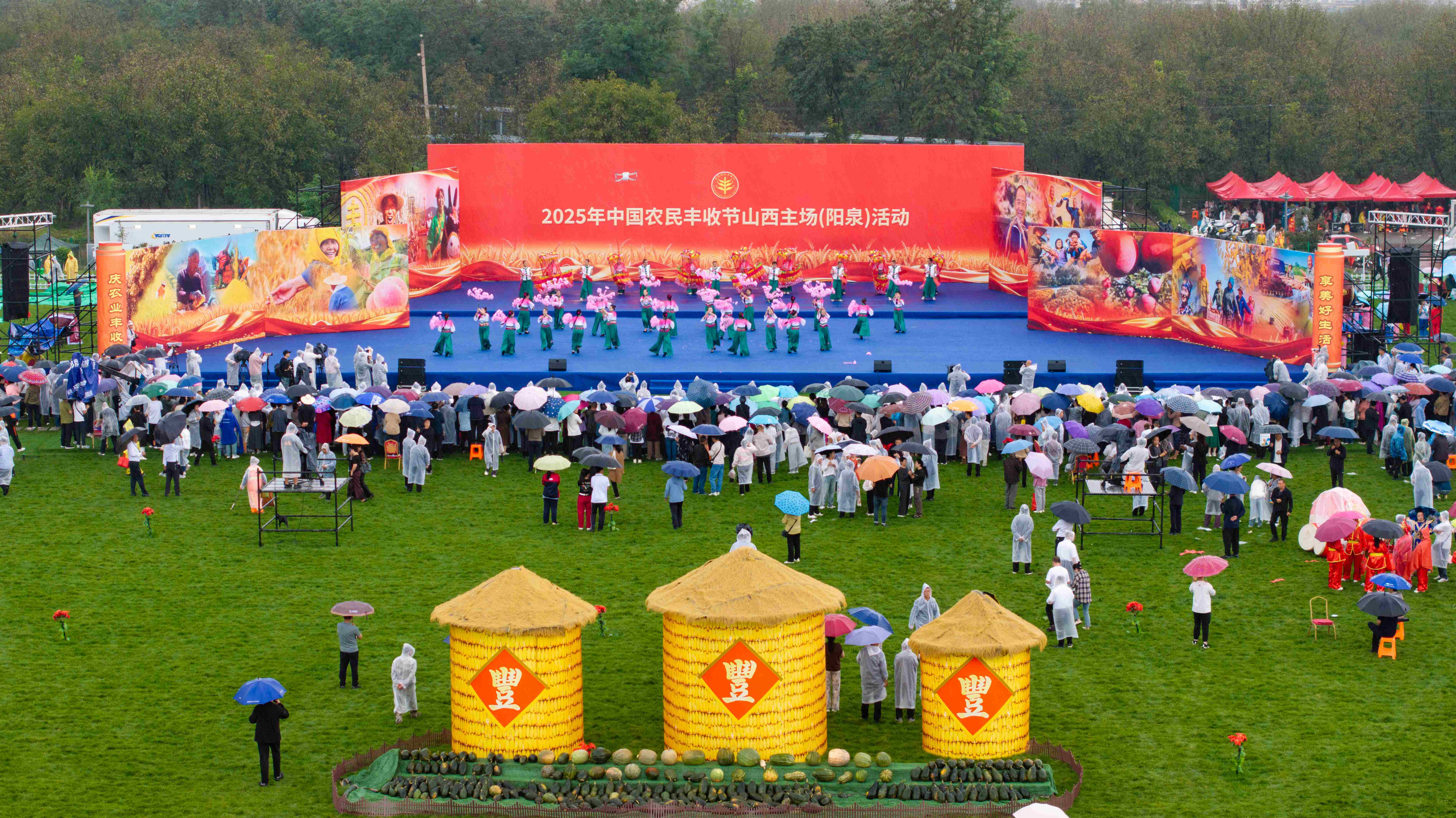
山西阳泉:用一方水土“融”出发展新路
Ren Min Wang· 2025-09-24 11:02
Core Viewpoint - The 2025 China Farmers' Harvest Festival in Shanxi is being celebrated in Yangquan, showcasing local agricultural and cultural tourism initiatives to enhance rural revitalization and attract visitors [1][6]. Group 1: Agricultural and Cultural Tourism Development - Yangquan City has launched six exclusive agricultural and cultural tourism routes, leveraging red resources and rural characteristics to create unique autumn experiences for visitors [1]. - The integration of local culture and industry is emphasized as a key strategy for rural revitalization, with initiatives ranging from agricultural experiences to local food tastings [4]. Group 2: Apple Industry Growth - The southwestern region of Xiyuan has transformed from initial apple cultivation in the 1950s to becoming one of China's top 100 quality apple production towns, with over 12,000 acres of apple orchards and an annual production exceeding 15 million kilograms, generating over 200 million yuan in value [4]. - The region has diversified its apple products from dried apples to apple chips and preserves, expanding market opportunities for local farmers [4]. Group 3: Rural Accommodation and Tourism Experience - The "Benwu" homestay in Xiyuan has become a popular destination, with high demand for bookings during the upcoming holidays, reflecting a trend towards rural tourism and unique lodging experiences [7]. - The homestay combines traditional charm with modern amenities, offering a serene environment that integrates with the natural landscape [8]. Group 4: Innovative Tourism Models - Dazhuang Village in Yangquan is developing a new consumption model that combines agricultural sightseeing, cultural experiences, and elder care, creating a unique rural tourism path [10]. - The establishment of the "Wuking Cultural Tourism Corridor" and a fossil science museum aims to enhance visitor engagement and promote local culture [10].
股债跷跷板未来如何演绎?
2025-09-24 09:35
Summary of Key Points from Conference Call Industry Overview - The conference call discusses the A-share market dynamics, macroeconomic conditions, and the bond market in China, highlighting the interplay between stock and bond investments and the impact of foreign capital inflows on the market. Core Insights and Arguments 1. **A-share Market Support Factors** The passive appreciation of the RMB, narrowing of the US-China interest rate differential, and the shift of household deposits to the stock market are key long-term supports for the A-share market. Notably, there was a significant reduction in household deposits in July and August, while non-bank financial institutions saw an increase in deposits, indicating a clear trend of funds flowing into the stock market [1][4]. 2. **Foreign Capital Inflows** In the first three weeks of September, foreign capital inflows exceeded $10 billion, reflecting optimism towards the A-share market, while sentiment towards the Hong Kong stock market remains weak. Foreign investments have been concentrated in sectors such as pharmaceuticals, finance, commodities, and consumer energy, with a notable outflow from the technology sector [1][5]. 3. **Bond Market Dynamics** The 10-year government bond yield has reached 1.8%, which has sparked a divergence of opinions among investors. The yield range for the year has been between 1.6% and 1.9%, and the current level suggests potential adjustment pressures on fixed-income products. The bond market has experienced multiple yield adjustments throughout the year, with recent trends indicating a cautious outlook [1][6][7]. 4. **Economic Growth Projections** A long-term economic growth target of around 4.5% is deemed reasonable, with a focus on expanding domestic demand, particularly in consumer and service sectors, which presents significant investment opportunities [3][13][15]. 5. **Market Trends and Strategies** The current market is characterized by a "stock-bond seesaw" effect, where the correlation between stocks and bonds has shifted from negative to positive. This indicates a potential change in pricing dynamics, suggesting that investors should maintain a neutral duration strategy for trading in a volatile market [11][12]. 6. **Policy and Economic Conditions** The economic fundamentals show insufficient domestic demand and slow recovery, with various economic indicators reflecting a slowdown. Despite a deflationary environment, there are signs of inflation expectations rising, which could influence market sentiment [8][9]. 7. **Investment in Human Capital** The call emphasizes the importance of investing in human capital through measures such as childcare subsidies and educational support, which are expected to increase in the upcoming planning period [17]. 8. **Major Projects in the 15th Five-Year Plan** The 15th Five-Year Plan will introduce significant projects in infrastructure, including transportation, water conservancy, and energy, which are expected to stimulate investment and support local debt resolution [18]. 9. **Real Estate Development Model** A new model for real estate development is being proposed, focusing on a full industry chain approach, including scientific land planning and compliance with higher construction standards, aimed at promoting healthy market development [19]. 10. **High-Quality Development of Capital Markets** The call highlights the need for high-quality development in capital markets, aiming to attract domestic and foreign investments and improve market infrastructure to foster a healthy bull market [20]. Other Important but Overlooked Content - The call discusses the necessity for monetary policy to balance domestic and international considerations, with potential room for rate cuts if economic conditions worsen. The upcoming peak in special bond issuance is also noted, which may affect liquidity in the market [9][10].
罗牛山:参股企业海南(潭牛)文昌鸡股份有限公司相关信息不属于上市公司披露义务
Zheng Quan Ri Bao Wang· 2025-09-24 09:10
证券日报网讯罗牛山9月24日在互动平台回答投资者提问时表示,公司的参股企业海南(潭牛)文昌鸡股 份有限公司相关信息不属于上市公司披露义务。 ...
