养老

Search documents
大力提振消费 夯实发展根基
Qi Huo Ri Bao Wang· 2025-11-21 01:32
Core Viewpoint - The "14th Five-Year Plan" emphasizes boosting consumption as a key driver for sustainable economic growth and improving the quality of life for citizens, especially in the context of a complex global economic environment and domestic economic transformation [1] Group 1: Implementation of Consumption Boosting Actions - The government will implement targeted actions to stimulate consumption through a combination of policies aimed at enhancing market vitality [2] - Focus on increasing employment and income, particularly for key groups such as recent graduates and migrant workers, to enhance consumer capacity [2] - Increase public service spending in areas like education and healthcare to reduce the financial burden on residents, encouraging them to spend more [2] Group 2: Development of International Consumption Centers - The plan includes cultivating international consumption center cities to attract global quality consumption resources and enhance the national image [3] - Improvement of urban consumption infrastructure and introduction of international brands to meet consumer demand for global products [3] - Expansion of inbound consumption by optimizing the environment for international tourists, including simplifying visa processes and enhancing payment options [3] Group 3: Direct Consumer Benefits through Inclusive Policies - The government will increase funding for consumer welfare initiatives, such as issuing consumption vouchers and providing subsidies for upgrading old products [4] - Policies will target high-demand sectors like dining and tourism to stimulate market recovery [4] - Removal of unreasonable restrictions on consumption, such as easing car purchase limits, to unleash consumer potential [4] Group 4: Strengthening Consumer Rights Protection - Enhancing consumer rights protection is crucial for boosting consumption, with plans to improve legislation and market regulation [5] - Establishing efficient complaint resolution mechanisms to lower the cost of consumer rights protection [6] - Promoting consumer education to foster informed and responsible consumption behaviors [6]
多部门印发实施方案 支持北京提振和扩大消费 积极开展汽车贷款业务 引导社会资本加大对服务消费重点领域投资
Zhong Guo Zheng Quan Bao· 2025-11-19 00:14
Core Insights - The People's Bank of China Beijing Branch, along with 12 other departments, issued an implementation plan to support the expansion of consumption in Beijing, aiming to enhance financial services in the consumption sector by 2030 [1][2] Group 1: Financial Support for Consumption - The implementation plan emphasizes the need for quality enterprises in the consumption industry to finance through public offerings and "New Third Board" listings [1] - It aims to increase the loan balance for sectors such as accommodation, catering, cultural tourism, education, and elderly services, while enhancing the quality and efficiency of personal consumption financial services [1] - The plan sets a goal to establish a diversified consumption financial service system to support Beijing's development as an international consumption center [1] Group 2: Credit Support and Financial Products - The plan calls for increased credit support for consumer goods, particularly in the automotive sector, by optimizing loan issuance ratios, terms, and interest rates [2] - Financial institutions are encouraged to innovate financial products tailored to various car purchasing scenarios, including first-time purchases and trade-ins, with a focus on electric vehicles [2] - There is a push for financial institutions to meet consumer demand in areas like home appliances, green smart home renovations, and electronics through various promotional activities [2] Group 3: Equity Financing and Investment - The plan supports equity financing for quality enterprises in the consumption industry through public listings and private equity investments [2] - It encourages social capital to invest in key service consumption areas, utilizing "long-term capital" and "patient capital" to meet the financing needs of long-cycle consumption industries [2] - The role of private equity and venture capital funds is highlighted to increase investments in seed and early-stage enterprises [2]
大湾区跨境养老渐成势 远洋椿萱茂逐浪“夕阳红”新蓝海
Zheng Quan Ri Bao· 2025-11-18 13:41
Core Viewpoint - The trend of cross-border elderly care is emerging in the Guangdong-Hong Kong-Macao Greater Bay Area, with an increasing number of Hong Kong residents choosing to retire in mainland cities within the region [1][2]. Policy Connection - The "Guangdong Residential Care Service Program" has expanded, now recognizing 24 service institutions across eight mainland cities, including Guangzhou and Shenzhen [1][2]. - By 2024, nearly 100,000 Hong Kong residents aged 65 and above are expected to settle in Guangdong, marking a 40.5% increase compared to the past decade [2]. - The "Guangdong Residential Care Service Program" has strict selection criteria, emphasizing the need for institutions to meet high operational standards and provide 24-hour medical care [2][3]. Service Innovation - The facilities at Chuanxuanmao (Guangzhou Kelin Road) include well-designed living spaces, with double rooms averaging 40 square meters and single rooms exceeding 90 square meters, ensuring comfort for the elderly [5][7]. - The monthly cost for self-paying double rooms starts at 7,000 yuan, with various subsidies enhancing affordability [7]. - Cultural and dietary services are tailored to create a sense of belonging, including regular Hong Kong-style afternoon teas and activities that help residents integrate into mainland life [7][11]. - The company has developed a non-pharmaceutical intervention solution called "Memory Journey" for elderly residents with cognitive impairments, establishing a unique advantage in dementia care [11]. - Future expansion plans focus on cities like Guangzhou, Shenzhen, and Foshan, considering GDP, aging rates, and consumer capacity [11].


京津冀多举措加强异地养老政策支持
Zhong Guo Xin Wen Wang· 2025-11-18 09:15
京津冀推进医养结合,方便老年人异地就医。成立京津冀医养结合联盟,覆盖三地542家单位;扩容北 京市医养结合远程协同平台,纳入56家河北省医养结合机构,发挥"互联网+医疗"作用,开展人员培 训、照护指导、远程会诊等协同服务。 京津冀多举措加强异地养老政策支持 中新社北京11月18日电 (记者 徐婧)京津冀地区持续强化异地养老政策支持,推动养老项目资源共享。 北京市民政局18日发布的报告显示,截至今年9月底,入住河北养老机构的京籍老年人1万余人,入住天 津养老机构的京籍老年人200余人。 京津冀养老服务协同发展有助于优化养老资源布局,是京津冀协同发展战略在民生领域的重要实践。18 日,2025年京津冀养老服务协同发展项目推介会在北京举办,会上发布的主旨报告指出,近年来,京津 冀地区着力打破养老服务地域壁垒,北京按照"政策跟着老人走"思路,落实对津冀地区接收京籍老年人 养老机构的运营补贴政策;河北省印发相关措施,吸引京津老年人到河北养老。 下一步,民政部门将推动北京养老项目向环京周边地区延伸布局。同时,加强部门协同力度,推动解决 养老机构等级评定结果互认的应用场景不广泛等问题。(完) 来源:中国新闻网 本文为转载内 ...
服务消费有望进入发展快车道
Sou Hu Cai Jing· 2025-11-17 22:17
Core Viewpoint - The article emphasizes the importance of service consumption in China's economic development, highlighting the expected growth in service consumption quality and quantity over the next five years, driven by rising GDP and an expanding middle-income group [1][2]. Group 1: Economic Context - China's per capita GDP is projected to rise from $10,000 in 2019 to $13,300 in 2024, with per capita service consumption expected to reach 13,000 yuan by 2024 [1]. - Currently, service consumption accounts for approximately 52% of GDP in China, compared to 68.5% in the U.S., indicating significant room for growth [1]. Group 2: Demand Factors - The expansion of service consumption is primarily driven by the demand from a growing middle-income group, which is expected to exceed 800 million people in the next decade [2]. - However, the average daily working hours for employed individuals in China is projected to be 49 hours, which may limit the time available for service consumption, leading to a "crowding out effect" on leisure activities [2]. Group 3: Supply Constraints - There are multiple supply-side constraints affecting service consumption, including insufficient effective supply, a mismatch in supply and demand, and a lack of quality and standards in services [3]. - The integration of technology in traditional service sectors remains shallow, with significant gaps in areas such as telemedicine and smart elderly care [3]. Group 4: Policy Recommendations - To enhance service consumption, it is recommended to improve overall income levels through employment promotion and social security reforms, as well as to stabilize asset prices and enhance social security systems [4]. - Policy innovation is needed to enrich high-quality service supply, including investment in cultural, tourism, and healthcare services, while also easing market access and breaking local protectionism [4]. Group 5: Standardization and Consumer Protection - There is a need for a systematic approach to developing service consumption standards, involving industry associations and leading enterprises to create a collaborative standard system [5]. - Establishing efficient dispute resolution mechanisms and consumer protection measures is crucial, particularly in high-risk service areas such as home services and education [5].
策略专题:“十五五”投资机遇
Tianfeng Securities· 2025-11-17 11:15
Group 1 - The core conclusion of the report explores investment opportunities in the "14th Five-Year Plan" from two dimensions: strategic directions indicated by planning suggestions and historical focus industries from previous five-year plans [1] - The three main policy lines of the "14th Five-Year Plan" are summarized as "Development," "Livelihood," and "Security," with "Development" focusing on advanced manufacturing and new productivity, "Livelihood" emphasizing domestic demand expansion, and "Security" reinforcing national defense and key technology areas [1][2] - The report indicates that while certain industry themes may create long-term excess returns if performance continues to validate, the likelihood of sustained excess returns throughout the entire five-year planning cycle is low [3] Group 2 - The "14th Five-Year Plan" emphasizes high-quality development, breaking down economic and social development goals into three main lines: "Development," "Livelihood," and "Security," with 12 key tasks identified [2][8] - The "Development" line focuses on enhancing traditional industries, scaling new pillar industries, and ensuring supportive industries for high-quality growth, with a strong emphasis on technological self-reliance [9][10] - The "Livelihood" line aims to address issues related to population structure changes and economic development, focusing on expanding domestic demand and improving residents' income levels to boost consumption in health, education, and elderly care sectors [11][12] - The "Security" line highlights the importance of national defense and ecological safety, with a focus on military modernization, key resource security, and the development of critical technologies [14][17] Group 3 - The investment guidance indicates that key themes and newly emphasized industries may not achieve significant excess returns over the entire five-year cycle, citing examples from previous plans where certain sectors underperformed [15][16] - The report notes that while industries like new energy vehicles have shown potential for long-term excess returns, the possibility of sustained excess returns throughout the five-year planning cycle remains limited due to over-optimistic pricing and cyclical nature of industries [15]
从“外出务工”到“就近就业” 农民工就业渠道更加多元
Yang Shi Xin Wen Ke Hu Duan· 2025-11-17 02:06
Core Insights - The government has expanded employment channels for migrant workers through order-based training, resulting in over 2,300 labor brands and nearly 60 million job placements this year [1] - The integration of primary, secondary, and tertiary industries has led to the development of rural specialty industries, providing new job opportunities close to home for many rural residents [3][7] Employment Initiatives - The Ministry of Human Resources and Social Security has reported that over 31 million migrant workers have received subsidized vocational training during the 14th Five-Year Plan period [3] - Local governments are focusing on industries that can absorb skilled migrant workers, such as construction, maintenance, housekeeping, catering, logistics, and new occupations [3] Local Employment Development - In Wanyuan City, approximately 96,000 rural residents are unable to work outside due to family responsibilities, prompting the establishment of processing workshops for local agricultural products [7] - The local food processing company employs over 100 villagers, offering monthly incomes between 3,000 to 4,000 yuan [9] Support for Employment - Wanyuan City has transformed old factories into employment workshops to assist disadvantaged groups, including the disabled, in finding local jobs [11] - The city has implemented policies to encourage businesses to hire more workers, distributing 12.68 million yuan in support funds [13] Service Industry Growth - The demand for labor in the service sector has increased significantly, particularly in elder care and housekeeping, with job openings in these areas growing by 29.2% year-on-year [15] - The pet service industry has seen a remarkable increase in job openings, with a 43.7% rise in the third quarter, particularly for pet doctors and groomers [17]

涟水县服务业赋能县域经济高质量发展
Xin Hua Ri Bao· 2025-11-16 22:14
Core Insights - The modern service industry in Lianshui has shown a stable and positive development trend since the "14th Five-Year Plan," with steady expansion in total scale and continuous improvement in service supply capacity [1][7] Economic Growth and Service Industry Performance - The added value of the service industry in Lianshui has steadily increased from 25.356 billion to 34.725 billion by 2024, with an average annual growth rate of 8.18% [2] - The total retail sales of consumer goods are projected to reach 24.949 billion in 2024, reflecting a year-on-year growth of 5.1%, which has driven rapid revenue growth in the regulated service industry, with a projected revenue of 2.774 billion, up 25.7% year-on-year [2] Infrastructure and Market Dynamics - Lianshui's strategic location and integrated transportation network have effectively reduced operational costs and improved supply chain efficiency, fostering the development of modern commerce and service industries [3] - As of July 2025, the number of service enterprises in Lianshui reached 14,003, an increase of 115 from 2020, with significant growth in key sectors such as information transmission and technology services [3] Logistics and Financial Services - By the end of 2024, Lianshui established a comprehensive logistics service system with 4 county-level logistics centers and 366 village-level logistics points, achieving 100% coverage [4] - Financial services have been tailored to meet the needs of production service enterprises, with loans to the liquor industry reaching 354 million by June 2025, alleviating financial pressures [4] Quality of Life and Service Upgrades - Lianshui has successfully developed tourism attractions, enhancing visitor appeal and promoting cultural activities, which contribute to the local economy [6] - The elderly care services have been innovated to provide convenient dining and community support, with 20 mutual aid points and 5 community dining points established [6] Future Development Focus - Moving forward, Lianshui aims to leverage its geographical advantages and industrial foundation to enhance the digitalization, high-end, and integrated transformation of the service industry, continuously stimulating market vitality and development potential [7]


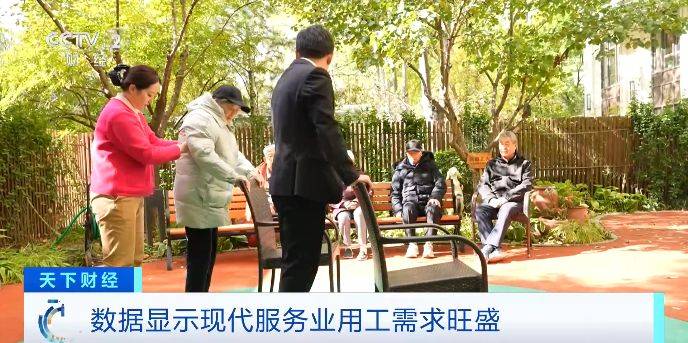
三季度宠物医生招聘猛增近130%!现代服务业用工需求旺盛
Sou Hu Cai Jing· 2025-11-16 11:57
Group 1 - The service industry is a crucial channel for absorbing rural labor employment, with increasing demand for labor driven by the booming silver economy and the trend towards specialized and segmented service consumption [1] - In the third quarter, the demand for positions in the elderly care and nursing sectors grew by 29.2% year-on-year, with specific job roles such as caregivers and rehabilitation therapists seeing demand increases of 36.1% and 25.7% respectively [3] - The home service industry also experienced a year-on-year recruitment demand growth of 13.3% [3] Group 2 - The pet service industry saw a significant year-on-year increase in recruitment positions of 43.7% in the third quarter, with pet doctors and pet grooming roles experiencing remarkable growth rates of 128.2% and 67.3% respectively [5] - The rise in the number of new energy vehicles has led to an expansion in demand for related services such as maintenance, modification, and parts, with positions like car washers, automotive repair, and automotive beauty seeing year-on-year growth of 85.4%, 64.2%, and 25.9% respectively [5]
扩大服务消费:稳增长的幸福密码
Sou Hu Cai Jing· 2025-11-15 23:47
Core Insights - The article highlights a shift in Chinese consumer behavior from material purchases to experiential consumption, indicating a new economic engine focused on service consumption [4][6] - Service consumption in China has reached 46.8% of total consumption, showing significant growth potential compared to developed countries where it stands at around 60% [4][6] - Expanding service consumption is presented as a pragmatic approach to stabilize economic growth and improve people's livelihoods [4][6] Group 1: Strategies for Expanding Service Consumption - The first strategy involves relaxing entry barriers to allow more social capital into sectors like elderly care, childcare, cultural tourism, and housekeeping, as well as introducing international quality medical and educational models [5][6] - The second strategy focuses on integrating various business formats to enhance consumer experiences, utilizing digital technology, cultural content, and physical spaces to create immersive experiences [6][7] Group 2: Long-term Implications - Service consumption is characterized as a long-term benefit rather than a short-term stimulus, with the potential to contribute significantly to high-quality economic development as supply becomes richer and income stabilizes [7]