本地生活服务

Search documents
美团-W(03690.HK):建议发行美元及人民币优先票据
Ge Long Hui· 2025-10-27 00:01
Group 1 - The company, Meituan-W (03690.HK), announced a proposal to issue international notes (USD notes and/or RMB notes depending on circumstances) exclusively to professional investors [1] - The completion of the proposed note issuance is contingent upon market conditions and investor interest [1] - As of the announcement date, the principal amount, interest rate, payment date, and several other terms and conditions of the notes have not yet been determined [1] Group 2 - The company intends to use the net proceeds from the proposed note issuance primarily for refinancing existing offshore debt and for other general corporate purposes [1]

快手调整本地生活业务架构,扩大收入规模反哺业务
3 6 Ke· 2025-10-24 13:02
Core Insights - Kuaishou is undergoing significant adjustments in its local life services business, transitioning service providers to become advertising service providers, which indicates a strategic shift towards enhancing advertising revenue generation [1][2][9] - The restructuring of the local life division, now renamed the Life Services Division, aims to integrate with the commercialization system, suggesting a focus on operational efficiency and revenue growth [1][9] - The competitive landscape in local life services is intensifying, with Kuaishou, Meituan, and Douyin dominating the market, while Alibaba and JD.com are increasing investments in instant retail and local services [2][8] Organizational Changes - The Life Services Division will now report to a higher executive level, with Liu Xiao appointed as the head, indicating a potential increase in resource allocation despite perceptions of reduced business weight [1][9] - The integration of various industry lines such as automotive, finance, education, and telecommunications into the Life Services Division is expected to enhance service efficiency for local merchants [1] Market Position and Strategy - Kuaishou's local life services are currently capturing approximately 25% of the transaction volume compared to Douyin, highlighting a significant gap in market share [8] - The operational strategy of Kuaishou's local life services is aligning closely with Douyin's, focusing on short videos and live streaming to sell local service packages, although Kuaishou has not yet seen a corresponding increase in transaction volume [2][8] - The adjustment in service provider assessment criteria to include advertising spending reflects a strategic pivot towards enhancing revenue generation through advertising [9] Future Outlook - Kuaishou is expected to introduce new policies following the restructuring, aiming to create a more favorable environment for service providers and enhance overall business performance [10]



新力量NewForce总第6889期
First Shanghai Securities· 2025-10-24 10:19
Group 1: Zijin Mining (2899) - Q3 2025 revenue reached HKD 864.89 billion, up 8.14% year-on-year[7] - Net profit attributable to shareholders for Q3 2025 was HKD 145.72 billion, a 57.14% increase year-on-year[7] - For the first three quarters of 2025, total revenue was HKD 2542 billion, up 10.33% year-on-year, with net profit at HKD 378.64 billion, a 55.45% increase[7] - Gold production for the first three quarters reached 65 tons, a 20% increase year-on-year[8] - Target price raised to HKD 43.29, maintaining a "Buy" rating, reflecting a 36% upside potential[10] Group 2: Meituan-W (3690) - Q2 2025 revenue was HKD 918.4 billion, up 11.7% year-on-year, slightly below market expectations[15] - Operating profit dropped to HKD 2.26 billion, down 98% year-on-year, with a margin of 0.2%[15] - Adjusted net profit for Q2 2025 was HKD 14.93 billion, down 89% year-on-year[15] - Target price reduced from HKD 230 to HKD 153, maintaining a "Buy" rating despite short-term profit pressures[18]
当小红书和高德坐在同一牌桌
Xin Lang Cai Jing· 2025-10-24 05:27
Core Insights - The local lifestyle sector is experiencing renewed competition among major players, including Alibaba's Taobao, Xiaohongshu, and Gaode, as they seek to capture a share of the trillion-yuan market [1][3] - New entrants like Gaode and Xiaohongshu are focusing on in-store consumption, leveraging their unique strengths to differentiate themselves in a crowded market [3][4] Group 1: New Players and Strategies - Gaode has launched the "Street Ranking" feature, emphasizing user-generated content and real-time feedback, with a promotional budget exceeding 1 billion yuan in its first month [3][4] - Xiaohongshu is introducing the "Xiaohong Card," offering discounts and focusing on user-generated content to enhance consumer decision-making [5][17] - Both companies are not viewing each other as direct competitors but are entering the same market space, leading to potential audience overlap [4][6] Group 2: Merchant Adaptation - Merchants are increasingly adopting multi-platform strategies to maximize exposure and sales, with some reporting increased revenue despite higher operational costs [9][12] - The shift from single-platform focus to multi-platform adaptation is becoming a survival necessity for businesses in the competitive landscape [12][10] - Different platforms have unique operational rules, requiring merchants to invest time and resources to navigate these complexities effectively [10][11] Group 3: Content to Transaction Dynamics - The primary focus of most players remains on in-store consumption, with platforms aiming to influence consumer decision-making through content-driven strategies [13][15] - Douyin has successfully integrated short video content with low-price group buying, significantly boosting merchant sales [15][16] - Xiaohongshu aims to leverage its community-driven content to enhance the value of its offerings, while Gaode faces challenges in creating a compelling content strategy [16][18]

天猫“双11”开卖首小时80个品牌成交破亿元;美团Keeta大量招人|未来商业早参
Mei Ri Jing Ji Xin Wen· 2025-10-21 23:32
Group 1 - Cainiao Guoguo has upgraded its "Double 11" services, expanding international shipping to over 60 countries, adding more than 40 new destinations [1] - The company has introduced a "2-hour pickup" service for merchants, significantly enhancing shipping efficiency during the peak sales period [1] - The logistics capabilities are crucial for e-commerce fulfillment, impacting promotional experiences and merchant competitiveness [1] Group 2 - Meituan Keeta is aggressively hiring, with high-paying positions available, including data analysts and senior algorithm experts, with salaries reaching up to 120,000 yuan annually [2] - Keeta, Meituan's overseas brand, is expanding its presence in high-potential markets such as Southeast Asia and the Middle East, where instant retail and delivery services are in demand [2] Group 3 - During the first hour of the 2025 Tmall "Double 11" sales, 80 brands achieved over 100 million yuan in sales, with 30,516 brands doubling their sales compared to last year [3] - The widespread adoption of "direct discount" models has lowered consumer decision-making barriers, while AI technology has improved demand-supply matching, enhancing conversion efficiency [3] - Leading categories in sales included beauty, sports, and consumer electronics, reflecting ongoing consumer demand for quality and the impact of new product launches and promotional strategies [3]
美团,核心管理层调整
财联社· 2025-10-21 12:08
Core Insights - Meituan's CEO Wang Xing announced personnel adjustments in the company's core decision-making team, expanding the S-team to include new members from the new business sectors, indicating a strategic shift towards growth in these areas [1][3] Group 1: Leadership Changes - The addition of Xiao Fei and Qiu Guangyu to the S-team reflects a significant increase in the influence of new business sectors within Meituan's management structure, aiming to open new growth avenues amid slowing core local business growth [1][3] - Xiao Fei, a long-time Meituan employee, has been promoted to oversee the hardware and software services sector, showcasing the company's commitment to internal talent development [1][2] - Qiu Guangyu's rapid ascent, having built an international team and expanded services in multiple countries within a year, highlights Meituan's focus on internationalization as a core strategy [2][4] Group 2: Strategic Focus - Meituan's current business structure is divided into core local commerce and new business sectors, with the recent appointments forming a strategic triangle that emphasizes the importance of both areas [3][4] - The promotions of Xiao Fei and Qiu Guangyu signal Meituan's dual focus on stabilizing its domestic market while aggressively pursuing international expansion, particularly in the Middle East and potentially other regions like Brazil [4]

本地生活赛道,进入“组团作战”时代
3 6 Ke· 2025-10-21 09:19
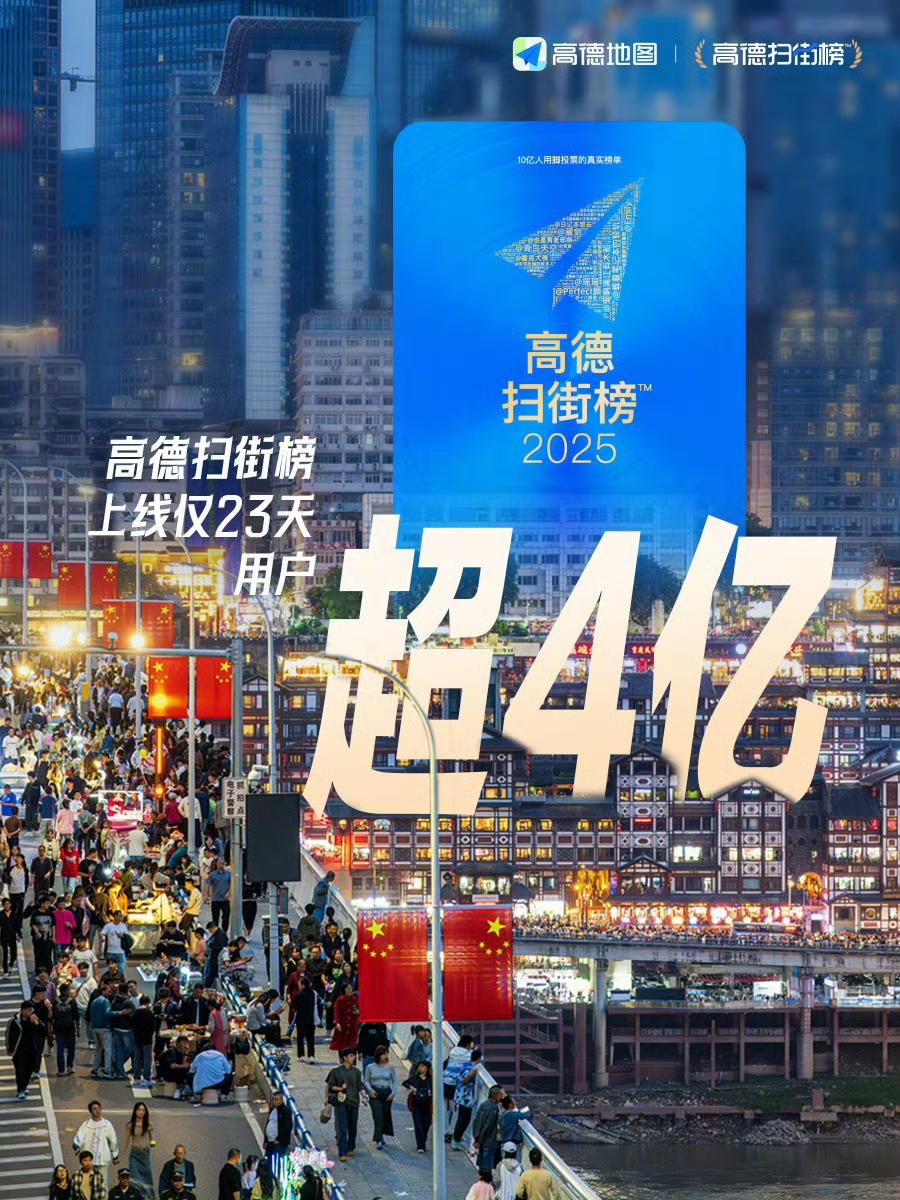
Core Insights - The article discusses the competitive landscape of local life services among major internet companies, highlighting the shift from direct competition to ecosystem collaboration [1][4][20] Group 1: Competitive Landscape - On September 10, Gaode launched the "Street Scanning List," marking the beginning of Alibaba's strategy to penetrate local life services through real user travel data [2] - Baidu responded with its "AI Go·List in List," integrating data from its previous partnerships with Dazhong Dianping and Ctrip, creating a comprehensive service platform [2][5] - The competition is characterized by a transition from single-app competition to "ecological collaboration," where AI algorithms, organizational synergy, and user reputation will play crucial roles [4][20] Group 2: Strategic Moves by Companies - Alibaba aims to leverage Gaode's high user engagement to create a seamless online-offline experience, enhancing its local life service offerings [6][14] - Baidu's strategy involves forming alliances rather than competing alone, as seen in its collaboration with Meituan and Ctrip to enhance its service capabilities [10][24] - The article notes that the local life service market is projected to grow significantly, with an expected market size of 35.3 trillion yuan by 2025, indicating substantial growth potential [19] Group 3: Role of Gaode and Ecosystem Integration - Gaode's transformation from a navigation tool to a critical entry point for Alibaba's local services is emphasized, as it connects various consumer decision-making processes [16][18] - The integration of services allows for a more efficient user experience, where consumers can easily navigate to restaurants, attractions, and hotels through Gaode [17] - The article highlights the importance of a unified membership system within Alibaba's ecosystem, enhancing user engagement and loyalty [17][18]


美团:10月20日肖飞、仇广宇加入S-team
Sou Hu Cai Jing· 2025-10-20 13:44
Core Insights - Meituan announced organizational changes on October 20, with two leaders, Xiao Fei and Qiu Guangyu, joining the S-team, the company's top management decision-making body [1] - CEO Wang Xing expressed expectations for the new members to bring fresh perspectives and contribute to the company's long-term development [1] - The adjustment is described as a routine change in the leadership team, with no alterations to the organizational structure [1]
阿里向美团到店业务正式进攻,支付宝首页上线高德团购爆品
3 6 Ke· 2025-10-20 11:35
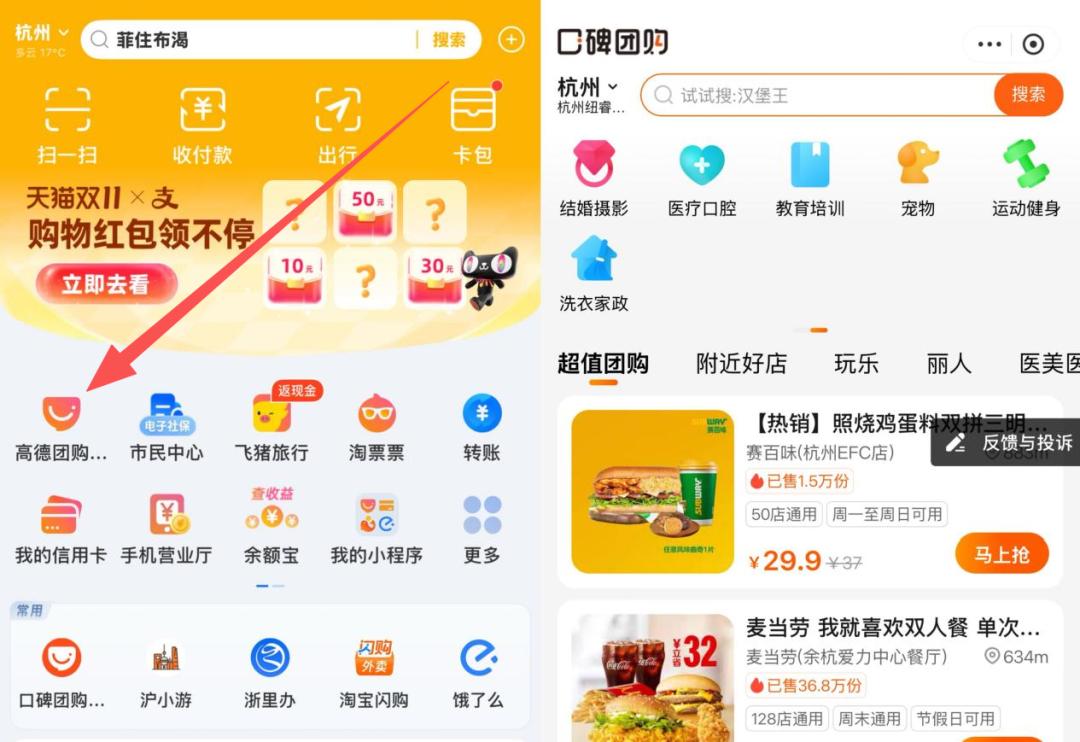
Core Insights - Alipay has introduced a new button "GaoDe Group Purchase Hot Products" on its homepage, leading to a section called "Koubei Group Purchase" with various categories [1][4] - The integration of Koubei into GaoDe's platform aims to leverage GaoDe's user base and location data while using Koubei's merchant system for transaction support [5][6] - The new group purchase feature is part of Alibaba's strategy to compete with Meituan by creating a dual-channel approach for "to-home" and "to-store" services [10] Summary by Sections New Features - Alipay's homepage now features "GaoDe Group Purchase Hot Products" with categories like "Value Group Purchase," "Nearby Good Stores," and others [1] - Some chain restaurants have already completed their onboarding process [3] Business Integration - GaoDe's group purchase is currently only visible on Alipay, while Taobao has not launched this feature yet [4] - The integration of Koubei into GaoDe allows for a clearer division of responsibilities: Koubei handles merchant onboarding and transactions, while GaoDe drives traffic [6] Competitive Landscape - GaoDe's group purchase interface shares similarities with Dazhong Dianping, but maintains a distinct e-commerce layout [7] - The entry fees for GaoDe's restaurant category are approximately 3,300 yuan, with commission rates of 6% for regular meals and 8% for light meals, which is lower than Dazhong Dianping's fees [9] Operational Challenges - GaoDe's group purchase is still in its early operational phase, with discrepancies in sales data reported by merchants and the platform [9] - Issues such as lack of transparency in sales data and inconsistent redemption rules are common in the early stages of new business models [9] Strategic Positioning - Alibaba's approach contrasts with Meituan's integrated ecosystem by utilizing multiple platforms to enhance user engagement and combat Meituan's high user retention [10]
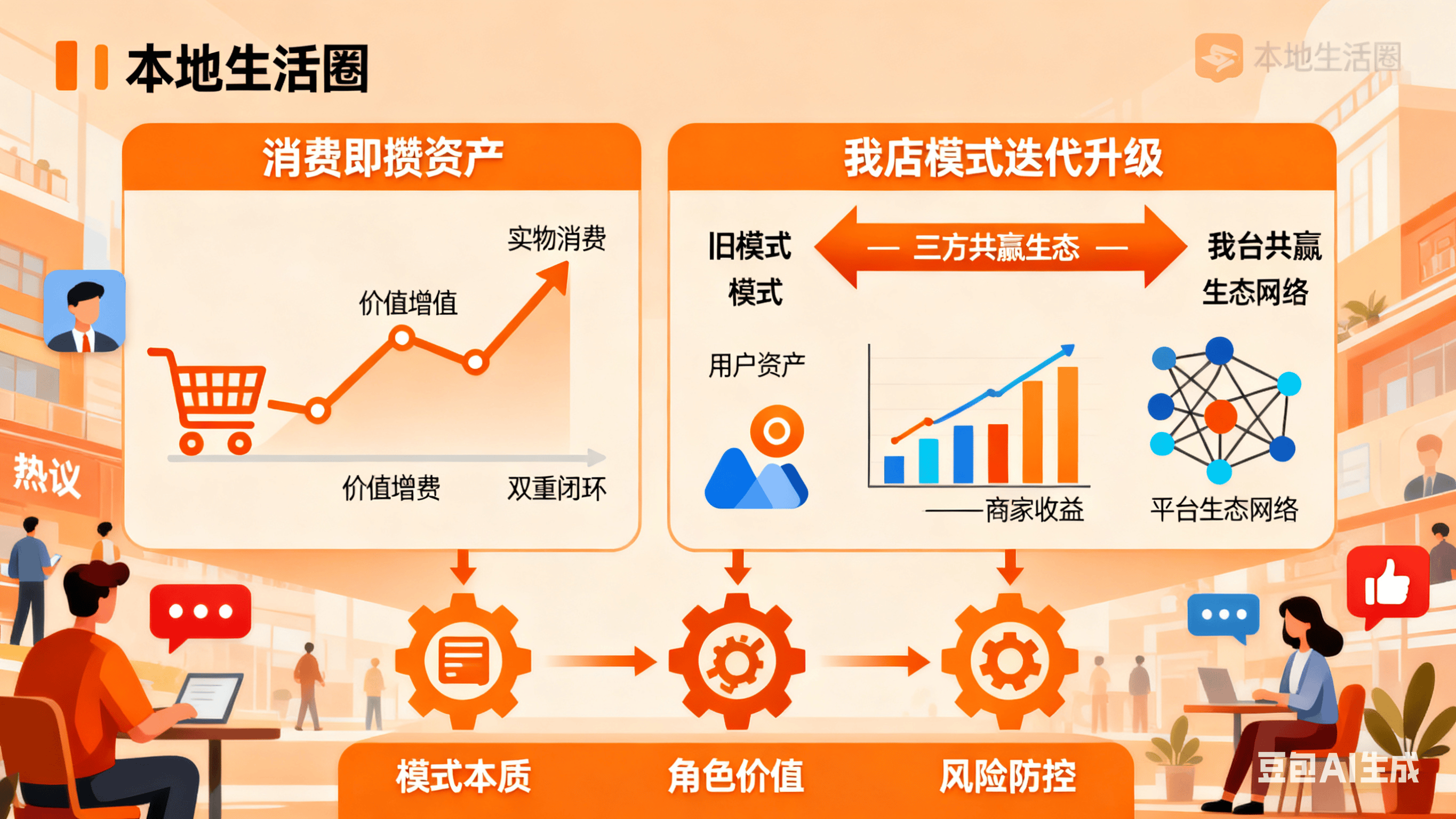
中数有为模式解析:本地生活新范式的理性视角
Sou Hu Cai Jing· 2025-10-18 17:11
Core Viewpoint - The "Zhongshu Youwei" platform has gained attention for its innovative model of "consumption equals asset accumulation," which represents an upgrade of the "My Store Model" and aims to create a win-win ecosystem through a dual loop of "physical consumption + value appreciation" [1][3]. Group 1: Essence of the Model - The platform breaks away from traditional commission-based models by introducing a "three-value guarantee" mechanism [4]. - Physical backing ensures that the consumption amount directly corresponds to equivalent goods/services, establishing foundational trust [4]. - 20% of the consumption amount is converted into green points, which can be released in 36-40 installments and ultimately exchanged for equivalent consumption vouchers, fostering continuous consumption motivation [4]. - The MA electronic voucher system, with a fixed total of 210 million pieces, incorporates a buyback mechanism that grants consumers a share in the platform's growth [4]. Group 2: Role Value - The platform establishes a three-tier role system to cater to different participant needs [6]. - Consumers benefit from immediate access to "instant goods + points + MA" across over 500 stores in 12 major industries, with examples showing significant rewards such as free meals and 10-fold MA value increases [6]. - Promoters, ranging from "Le Tui Guan" to "Regional Service Providers," earn rewards directly linked to their contributions, with long-term dividends of 4% for recommending merchants and 8% for regional service providers [6]. - Merchants can enhance customer flow and repurchase rates through voluntary discounts of 3%-20%, with case studies indicating substantial increases in repurchase rates and average transaction values [6]. Group 3: Risk Awareness - The MA value is dependent on the platform's credit and transaction volume, and it is not a financial investment product; thus, consumers should prioritize tangible benefits from physical goods and points [10]. - The platform employs an RDA system for real-time transaction monitoring to ensure that points and MA are issued based on actual consumption, complying with regulatory requirements [10]. - High-frequency consumption sectors, such as dining, are more suitable for participation, while low-frequency sectors should carefully evaluate the balance between discount costs and benefits [10]. Group 4: Conclusion - The "Zhongshu Youwei" model represents a reconstruction of traditional consumption relationships in the digital economy, offering consumers new choices for savings and value, merchants new paths for customer acquisition and retention, and promoters new opportunities for side income and entrepreneurship [11]. - All participants are encouraged to adhere to the principles of rational consumption and compliance, focusing on the real value of physical goods and points while maintaining a clear understanding of the growth nature of MA [11].