
计算机硬件

Search documents
存储涨价惩罚PC市场,为何唯独放过了苹果与联想?
Ge Long Hui· 2025-11-18 08:09
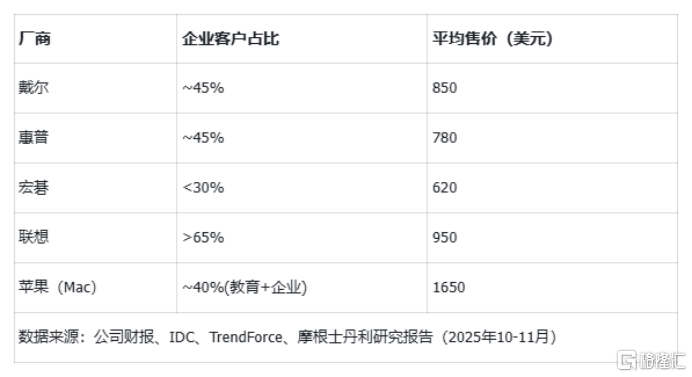
Core Viewpoint - The global storage chip contract prices have experienced a rare nonlinear surge since Q2 2025, driven by the high demand for high-bandwidth memory (HBM) from AI accelerators like NVIDIA's H100, leading to a tightening supply of traditional PC DRAM and NAND [1][3][15] Supply Chain Dynamics - The demand for high-performance SSDs and HBM has led manufacturers to prioritize production for high-margin products, resulting in a squeeze on mid-to-low-end DDR and client SSD supplies, which in turn drives up spot and contract prices [3][7] - By 2025, the global DRAM market revenue is expected to exceed $200 billion, with HBM contributing over half of the profit growth despite accounting for less than 30% of the market [3][15] - Major manufacturers like Samsung, SK Hynix, and Micron are shifting their production capacity towards HBM and enterprise SSDs, leading to a significant reduction in traditional PC DRAM supply [3][6] Impact on PC Manufacturers - Consumer-oriented manufacturers such as Dell, HP, and Acer are particularly vulnerable to rising storage costs due to their high reliance on the consumer market, where price sensitivity is extreme [4][6] - The average selling price of global consumer PCs is projected to be around $620 in 2025, making it difficult for these manufacturers to pass on increased costs without risking a decline in sales [4][6] - Morgan Stanley's report indicates that Dell and HP are the most sensitive to storage price increases, with expected declines in PC gross margins by 2-4 percentage points in FY 2026 [4][6] Resilience of Lenovo and Apple - Lenovo and Apple are viewed as exceptions that may benefit from the storage price surge due to their strong customer bases and supply chain management capabilities [1][6][15] - Lenovo's market share exceeds 25%, with over 65% of its revenue coming from enterprise and government clients, allowing it to better absorb cost increases [8][10] - Apple maintains a dominant position in the high-end market, enabling it to quickly pass on costs to consumers, supported by long-term contracts with suppliers that ensure priority access to components [13][15] Long-term Outlook - The current surge in storage prices is expected to continue, potentially leading to a reshaping of the PC industry, with Lenovo and Apple likely to maintain or even expand their market shares during this period [15]



存储涨价惩罚PC市场,为何唯独放过了苹果(AAPL.US)与联想?
Zhi Tong Cai Jing· 2025-11-18 08:01
Core Insights - The global storage chip contract prices have experienced a rare nonlinear surge since Q2 2025, driven by the high demand for high-bandwidth memory (HBM) from AI accelerators like NVIDIA's H100 [1] - Major storage manufacturers such as Samsung, SK Hynix, and Micron are shifting production capacity from traditional PC DRAM and NAND to more profitable HBM, tightening supply for traditional PC DRAM and NAND [1][2] - Companies like Lenovo and Apple are viewed as exceptions that may benefit from this storage price upcycle due to their strong customer bases and supply chain management capabilities [1][3] Supply Chain Dynamics - The demand for high-performance SSDs and HBM has surged due to AI data centers, leading manufacturers to prioritize higher-margin products, which in turn has squeezed the supply of mid-range DDR and client SSDs [2] - In 2025, the global DRAM market revenue is expected to exceed $200 billion, with HBM contributing over half of the profit growth despite accounting for less than 30% of the market [2] - The average bill of materials (BOM) for laptops shows that DRAM and NAND typically account for 10-20% of costs, meaning a 20% increase in storage costs could raise BOM by $30-50, significantly impacting profit margins if not passed on to consumers [2] Impact on PC Manufacturers - Consumer-oriented manufacturers like Dell, HP, and Acer are particularly vulnerable to rising storage costs, with their PC businesses heavily reliant on the consumer market [3] - The average selling price of consumer PCs is projected to be around $620 in 2025, making these companies sensitive to price increases, which could lead to a decline in sales or profit margins [3] - Morgan Stanley's report indicates that Dell and HP are the most sensitive to rising storage prices, predicting a 2-4 percentage point decline in their PC gross margins for FY 2026 [3] Resilience of Lenovo and Apple - Lenovo and Apple are better positioned to withstand the pressures of rising storage prices due to their strong supply chain control and customer structures [4][6] - Lenovo's market share exceeds 25%, with over 65% of its revenue coming from enterprise and government clients, allowing it to pass on costs more effectively [6][7] - Apple maintains absolute control over its supply chain, often securing long-term contracts that ensure priority access to components, allowing it to keep costs low and maintain high product prices [9][10] Long-term Outlook - Despite the pressure from rising storage prices, both Lenovo and Apple are expected to maintain or even expand their market shares during this "super cycle" of storage price increases [10] - The current situation is likely to accelerate industry differentiation and reshuffling, with Lenovo and Apple potentially gaining a competitive edge over other PC manufacturers [10]
存储涨价惩罚PC市场,为何唯独放过了苹果(AAPL.US)与联想(00992)?
智通财经网· 2025-11-18 07:57
Core Insights - The global storage chip contract prices have experienced a rare nonlinear surge since Q2 2025, driven by the high demand for high-bandwidth memory (HBM) from AI accelerators like NVIDIA's H100 [1] - Major storage manufacturers such as Samsung, SK Hynix, and Micron are shifting production capacity from traditional PC DRAM and NAND to more profitable HBM, tightening supply for traditional PC DRAM and NAND [1][2] - Companies like Lenovo and Apple are viewed as exceptions that may benefit from this storage price uptrend due to their strong customer bases and supply chain management capabilities [1][3] Supply Chain Dynamics - The demand for high-performance SSDs and HBM has surged due to AI data centers, leading manufacturers to prioritize production for high-margin products, which has squeezed the supply of mid-range DDR and client SSDs [2] - In 2025, the global DRAM market revenue is expected to exceed $200 billion, with HBM contributing over half of the profit growth despite accounting for less than 30% of the market [2] - The average storage cost increase of 20% for an $800 laptop could raise the bill of materials (BOM) by $30-$50, potentially eroding 3-6 percentage points of gross margin if manufacturers cannot pass on costs [2] Impact on Consumer-Oriented Manufacturers - Dell, HP, and Acer, which heavily rely on the consumer market, face significant profit margin threats due to their sensitivity to storage price increases [3] - The average selling price of global consumer PCs is projected to be around $620 in 2025, making these companies vulnerable to price sensitivity in a highly competitive market [3] - Morgan Stanley's report indicates that Dell and HP are the most sensitive to rising storage prices, predicting a 2-4 percentage point decline in their PC gross margins for FY 2026 [3] Resilience of Lenovo and Apple - Lenovo and Apple are better positioned to withstand the pressures of rising storage prices due to their strong supply chain control and customer structure [4][10] - Lenovo's market share exceeds 25%, with over 65% of its revenue coming from enterprise and government clients, allowing it to pass on costs more effectively [6][7] - Apple maintains absolute control over its supply chain, benefiting from long-term contracts that ensure priority access to components, which helps it manage costs effectively [9] Competitive Advantages - Lenovo's procurement strategy, which includes multi-regional sourcing, enhances its bargaining power and allows it to secure better prices and delivery guarantees [8] - Apple's BOM structure has a lower storage cost percentage, allowing it to absorb price increases more easily, and its strong brand allows for higher pricing flexibility [9][10] - Both companies are expected to maintain or even expand their market share during this "super cycle" of storage price increases, leading to greater industry differentiation [10]
异动盘点1118 | 黄金股延续跌势,金科服务复牌后涨超17%;锂矿股集体大涨,小鹏汽车跌超10%
贝塔投资智库· 2025-11-18 04:01
Group 1 - Ctrip Group-S (09961) reported a net operating revenue of 18.3 billion RMB (approximately 2.6 billion USD) for Q3 2025, a 16% increase year-on-year [1] - XPeng Motors-W (09868) experienced a decline of over 9% post-earnings, with Q3 revenue at 20.38 billion RMB, a 102% year-on-year growth, but slightly below market expectations of 20.45 billion RMB [1] - BeiGene (06160) saw a 2.32% increase following positive results from its Phase III HERIZON-GEA-01 study [1] - Kinko Service (09666) surged over 17% after resuming trading, with a revised offer price of 6.67 HKD per share contingent on shareholder approval for delisting [1] Group 2 - Gold stocks continued to decline, with Lingbao Gold (03330) down 6.91% and Tongguan Gold (00340) down 4.66%, as gold prices fell for the fourth consecutive day [2] - Joy City Property (00207) rose 1.67% after announcing plans to withdraw its listing status on November 27 [2] - Semiconductor stocks performed well, with Hua Hong Semiconductor (01347) up 4.45% and SMIC (00981) up 1.58%, indicating high demand with a 95.8% capacity utilization rate in Q3 [2] - Guangzheng Education (06068) fell nearly 10%, projecting a net profit of approximately 37.7 million RMB for the fiscal year ending August 31, 2025, down from 96.4 million RMB in the previous year [2] Group 3 - Coal stocks faced declines, with Yanzhou Coal Mining (01171) down 4.7% and China Shenhua Energy (01088) down 3.59%, despite a quarter-on-quarter recovery in coal prices [3] - Hong Kong Travel (00308) dropped over 17% following the announcement of a cash distribution plan related to its private company shares [4] Group 4 - Dell Technologies (DELL.US) fell 8.43% after Morgan Stanley downgraded its stock rating from "Overweight" to "Underweight," raising concerns about its earnings outlook [5] - XPeng Motors (XPEV.US) dropped 10.32% as its Q3 revenue fell short of market expectations [5] - Lithium stocks surged, with Sigma Lithium (SGML.US) up 32.34%, driven by strong demand rather than supply disruptions [5] - Sohu (SOHU.US) rose 7.26% with a Q3 revenue of 180 million USD, a 19% increase year-on-year [6] - Quantum Computing (QUBT.US) increased 8.49% after reporting better-than-expected earnings and outlining a roadmap for mass production [6] - Google (GOOGL.US) gained 3.11% following Berkshire Hathaway's new investment in Alphabet [6] - Alibaba (BABA.US) rose over 2.54% after announcing its entry into the AI to C market with the "Qianwen" project [6]

Mac Pro命运被苹果终结,只因无法适合AI PC时代?
3 6 Ke· 2025-11-18 00:28
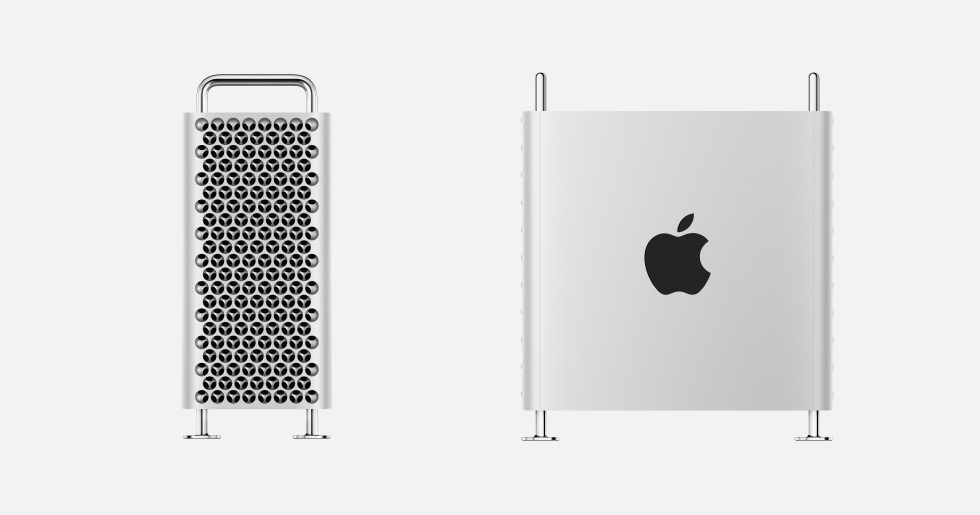
Core Viewpoint - Apple has effectively abandoned the Mac Pro product line, canceling the planned M4 Ultra chip and relegating the new Mac Pro to a "low priority" project, indicating a significant shift in the company's focus away from traditional workstations [1][12]. Group 1: Product Evolution - The Mac Pro, once a symbol of professional computing power, has struggled to find its place in the Apple Silicon era since its last update in 2019, being increasingly replaced by the more compact and integrated Mac Studio line [1][11]. - The introduction of the Mac Studio, which offers comparable performance at a lower price and with greater energy efficiency, has led to a direct migration of professional users away from the Mac Pro [11][12]. Group 2: Industry Trends - The traditional definition of workstations is being redefined as System-on-Chip (SoC) technology becomes powerful enough to challenge the need for tower PCs, with both Apple and Windows ecosystems moving towards high integration [3][18]. - The Windows PC industry is also experiencing a shift towards SoC designs, with companies like AMD and Intel developing integrated solutions that enhance performance while reducing reliance on external components [15][17]. Group 3: Future Implications - The decline of the Mac Pro reflects a broader industry consensus that future computing will require higher integration and efficiency, moving away from external expansions to chip-level integration [18][19]. - The transition from traditional tower workstations to more compact, integrated systems suggests that the need for high-performance tower PCs may diminish, with many tasks shifting to cloud-based solutions [17][18].
美股异动 | 戴尔科技(DELL.US)跌7% 遭大摩下调评级至“减持”
智通财经网· 2025-11-17 15:39
Core Viewpoint - Dell Technologies (DELL.US) experienced a 7% decline in stock price, closing at $124.40, following a downgrade by Morgan Stanley from "Overweight" to "Underweight" and a reduction in target price from $144 to $110, raising concerns about Dell's profit outlook [1] Group 1: Stock Performance - Dell's stock dropped 7% to $124.40 after the downgrade by Morgan Stanley [1] - Morgan Stanley's target price for Dell was lowered from $144 to $110 [1] Group 2: Market Concerns - The report highlighted a significant increase in DRAM spot prices, which surged 260% over the past two months [1] - NAND flash memory prices have risen over 50% since the beginning of the year [1] Group 3: Cost Impact on Dell - DRAM costs account for 10%-70% of the material costs in Dell's high-end products [1] - A 10% increase in storage chip prices could lead to a decline in Dell's gross margin by 45 to 150 basis points [1]

戴尔科技跌7.7%,惠普跌4.2%
Mei Ri Jing Ji Xin Wen· 2025-11-17 15:00
Group 1 - Dell Technologies experienced a decline of 7.7% [1] - HP Inc. saw a drop of 4.2% [1] - Morgan Stanley downgraded the ratings for both companies [1]

戴尔科技跌近6%,遭大摩降评级至"减持"
Ge Long Hui A P P· 2025-11-17 12:29
格隆汇11月17日|戴尔科技股价延续跌势,盘前交易最新下跌5.7%,此前摩根士丹利将其评级从"增 持"连降两级至"减持"。 ...
戴尔科技股价延续跌势,盘前交易最新下跌5.7%
Mei Ri Jing Ji Xin Wen· 2025-11-17 12:19
每经AI快讯,11月17日,戴尔科技股价延续跌势,盘前交易最新下跌5.7%。 ...
中科曙光推动算力基础设施向商业可用阶段发展
Zhong Guo Jing Ji Wang· 2025-11-12 07:02
Core Insights - The launch of the scaleX640 super node by Zhongke Shuguang represents a significant advancement in computing power infrastructure, addressing the transition from "technically feasible" to "commercially usable" capabilities in AI applications [1][2] - The scaleX640 super node is designed with an integrated system that combines computing, storage, networking, power, and cooling, utilizing advanced technologies such as ultra-high-density blades and immersion phase change cooling [1] - The product achieves a 20-fold increase in computing density per cabinet and doubles the overall computing performance compared to similar products in the industry, supporting large-scale cluster deployments [1] Company Developments - Zhongke Shuguang unveiled the world's first single cabinet-level 640-card super node at the 2025 World Internet Conference, showcasing its commitment to innovation in computing power [1] - The company emphasizes the importance of continuous output in industrial scenarios rather than just peak performance in laboratory settings, positioning the scaleX640 as a foundational infrastructure for AI [2] - Senior Vice President Li Bin highlighted that the open architecture and system innovation of the scaleX640 will help overcome computing power bottlenecks and support ongoing innovations in large AI models [2]
