传统产业

Search documents
GDP万亿城市增至28个
Di Yi Cai Jing· 2026-01-20 06:54
Group 1 - The core viewpoint of the articles is that Wenzhou is projected to surpass a GDP of 1 trillion yuan by 2025, driven by its robust private economy and population growth [1][2]. - In 2024, Wenzhou's GDP reached 971.88 billion yuan, marking a 6.3% increase from the previous year, with a resident population of 9.852 million, an increase of 91,000 from the previous year [1]. - Wenzhou has a significant number of registered private enterprises, totaling 1.564 million, with private industrial enterprises contributing 90.8% to the industrial output [1]. Group 2 - Recent efforts in Wenzhou focus on revitalizing traditional industries and nurturing emerging sectors, supported by advancements in technology and higher education [2]. - The city has been enhancing its transportation infrastructure, particularly high-speed rail, which facilitates better access to educational resources from Hangzhou, thereby boosting industrial development [2]. - Wenzhou is implementing a three-year action plan for large incubator clusters and optimizing its innovation ecosystem, aiming to become a leading city in artificial intelligence innovation [2]. Group 3 - Following Wenzhou's entry into the trillion-yuan GDP club, the total number of cities with a GDP exceeding 1 trillion yuan has increased to 28, including major municipalities and provincial capitals [3].
《经济日报》金观平:坚持把实体经济作为发展着力点
Jing Ji Ri Bao· 2026-01-16 02:49
Group 1 - The core focus of economic development should be on the real economy, emphasizing the optimization and upgrading of traditional industries while nurturing emerging and future industries [1] - As of 2024, China's manufacturing sector has maintained its position as the largest in the world for 15 consecutive years, providing a solid foundation for economic stability [1] - The real economy serves as a major channel for job creation, providing billions of jobs and reinforcing social stability [1] Group 2 - The development of the real economy faces significant challenges, including pressure on traditional industries to upgrade, resource and environmental constraints, and a lag in high-end and intelligent manufacturing [2] - There is a notable gap in core technology capabilities, with weak basic research and low patent conversion rates, alongside high financing costs for small and medium-sized enterprises [2] - To strengthen the foundation of the real economy, it is essential to optimize traditional industries through technological innovation, digital transformation, and a focus on green and low-carbon development [2] Group 3 - Strengthening the real economy also involves the development of emerging and future industries, which can drive collaborative upgrades across the industrial chain and create new demand [3] - The service sector is a crucial component of the real economy, and its efficient development can facilitate manufacturing upgrades and enhance employment opportunities [3] - Ultimately, the goal is to establish a modern industrial system centered on advanced manufacturing, balancing domestic and international markets while promoting quality and brand transformation in Chinese products [3]
为发展聚力 把蓝图绘美——学习贯彻党的二十届四中全会精神省委宣讲团报告会在我省各地举行(三)
Si Chuan Ri Bao· 2026-01-10 01:50
Group 1 - The recent speeches by the provincial propaganda team emphasize the importance of high-quality development and the need for local governments to align their actions with the spirit of the 20th Central Committee's Fourth Plenary Session [1][2] - The achievements during the "14th Five-Year Plan" period have been highlighted, showcasing significant progress in healthcare reform, service industry transformation, and overall public welfare [2] - Local leaders express commitment to industrial revitalization, with specific plans for new industrialization and enhancing traditional industries, particularly in regions like Dazhou and Bazhong [3][6] Group 2 - Various local governments are focusing on tailored strategies to implement the directives from the plenary session, aiming to create a conducive business environment and develop robust industrial frameworks [5][6] - The emphasis on consumer upgrades and the development of unique consumption brands is noted as a strategy to support regional economic growth [3][6] - The need for comprehensive planning for the "15th Five-Year Plan" is underscored, with local authorities aiming to translate the plenary session's spirit into actionable development plans [5][6]
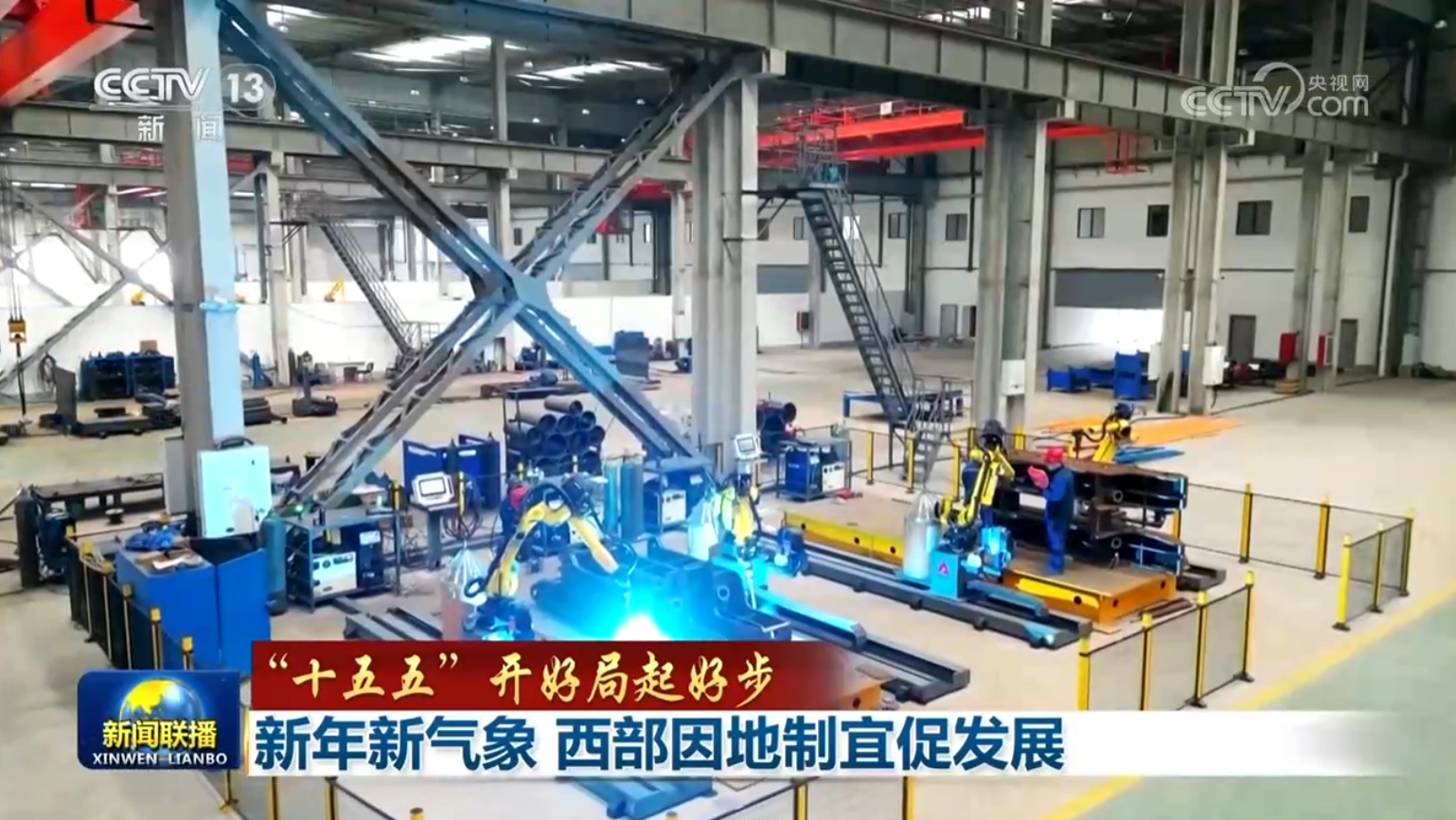
【“十五五”开好局起好步】新年新气象 西部因地制宜促发展
Yang Shi Wang· 2026-01-09 12:11
Group 1 - The western region of China is focusing on high-quality development by leveraging local resources and promoting development tailored to specific conditions [1] - Guizhou plans to enhance the quality of its business entities by utilizing big data to categorize over 4.8 million business entities and implementing measures such as allocating 40% of government procurement to small and medium-sized enterprises [3] - Gansu will allocate 120 billion yuan to advance 310 key projects aimed at transforming traditional industries through smart, green, and integrated upgrades [5] Group 2 - Qinghai is prioritizing the development of the clean energy industry by focusing on energy storage and accelerating the construction of integrated wind-solar bases, aiming to build a global solar thermal center [7] - Inner Mongolia aims to enhance the resilience of its renewable energy sector by ensuring the addition of 30 million kilowatts of new grid-connected renewable energy capacity and exploring national-level zero-carbon parks [9] - Ningxia is emphasizing urban-rural integration as a key economic focus, implementing major projects such as underground pipeline upgrades and clean heating initiatives [11]

五方面28项措施促经济稳增长提质效 山东公布2026年首份“政策包”
Zhong Guo Fa Zhan Wang· 2026-01-06 08:26
Group 1 - The Shandong Provincial Government has released a policy list for 2026 aimed at promoting economic stability and quality improvement, consisting of 28 practical measures across five key areas [1] - The policy focuses on consolidating the positive trend in the service industry, with a budget of 150 million yuan allocated for modern service projects, including 90 million yuan for high-end productive service enterprises and 60 million yuan for key service sectors [1] - The marine service industry will receive 100 million yuan in special funding, while cultural and tourism consumption will see the launch of numerous activities and financial incentives to stimulate consumer spending [1] Group 2 - The policy emphasizes the transformation of traditional industries through targeted measures, including financial support for green and digital upgrades, with specific incentives for the commercial aerospace sector [2] - Investment projects are highlighted as a cornerstone for economic growth, with 50 million yuan allocated for fixed asset investment assessment rewards, and a focus on facilitating the rapid implementation of key projects [2] - Efforts to integrate into the national market and expand international markets include subsidies for patent rights protection and support for newly approved public service platforms [2] Group 3 - The "Ten Thousand Enterprises Going Global" initiative will organize over 500 overseas exhibition activities in 2026, aiming to involve 10,000 enterprises and promote the integration of cross-border e-commerce with industrial clusters [3] - Shandong plans to enhance the implementation of policies through a dual-level platform to ensure quick access to benefits, with expectations for significant policy effects in the first quarter of 2026 [3] - The overall strategy aims to strengthen Shandong's role as a major economic province, providing solid support for economic stability and growth in the upcoming year [3]
2026年,中央企业将更好催生新质生产力
Ke Ji Ri Bao· 2025-12-25 01:23
Core Insights - The meeting of central enterprise leaders aimed to enhance core functions and competitiveness, contributing to the modernization of China [1] Group 1: Innovation and R&D - In the first 11 months, central enterprises invested CNY 890.16 billion in R&D, achieving an R&D intensity of 2.62% [1] - By 2025, central enterprises are expected to strengthen independent innovation, with 97 original technology sources yielding 121 significant results [1] - Collaborative innovation has expanded, with 23 innovation consortia involving over 100 entities and more than 1,000 high-quality projects [1][2] Group 2: Emerging Industries and Investment - In the first 11 months, central enterprises completed approximately CNY 2 trillion in investments in emerging industries, accounting for 40.1% of total investments [2] - Revenue from emerging industries increased to 32.7%, a rise of over 10 percentage points compared to 2022 [2] - Cumulatively, R&D funding from central enterprises exceeded CNY 5 trillion over five years, with an annual growth rate of over 20% in emerging industry investments [2] Group 3: Future Focus and Strategic Goals - For 2026, central enterprises will focus on integrating innovation and transformation, emphasizing both traditional and emerging industries [3] - Key areas of focus include renewable energy, new materials, aerospace, and digital transformation initiatives [3] - The goal is to enhance original innovation and tackle key core technologies, improving the efficiency of innovation resource allocation [3][4]
工信部:全力稳住工业基本盘,发挥存量政策和增量政策集成效应
Xin Hua Cai Jing· 2025-12-12 15:32
Core Points - The meeting emphasized that the year ahead marks the beginning of the "14th Five-Year Plan" and highlighted the need for comprehensive implementation of the spirit of the 20th National Congress of the Communist Party and subsequent plenary sessions [2] - The focus is on achieving high-quality development, stabilizing growth, enhancing innovation, promoting integration, optimizing governance, and preventing risks [2] - The meeting called for the development of a modern industrial system centered on advanced manufacturing and the implementation of key industry growth plans [2] Group 1 - The meeting stressed the importance of stabilizing the industrial foundation and enhancing supply-demand adaptability to promote consumption [2] - It highlighted the need for deep integration of technological and industrial innovation, reinforcing the role of enterprises in innovation [2] - The meeting called for the optimization of industrial and supply chains, including the promotion of domestic orderly transfer of industries [2] Group 2 - The meeting emphasized the need for the digital transformation of manufacturing and the integration of artificial intelligence with manufacturing [2] - It called for the development of high-quality information and communication industries, including the advancement of 6G technology and satellite internet [2] - The meeting underscored the importance of modernizing industry governance and reducing the burden on enterprises by addressing overdue payments [2]
高质量发展看亮点·读数丨从税费数据看经济发展亮点
Ren Min Ri Bao· 2025-12-09 01:49
Core Insights - The overall economic operation in China is stable and improving, with manufacturing playing a crucial role, maintaining a tax revenue share of around 30% [2][3] - High-tech industries have shown significant growth, with sales revenue increasing by 14.7% year-on-year, particularly in smart equipment manufacturing, which grew by 28.2% [2][3] Group 1: Manufacturing Sector Performance - High-tech industries are experiencing rapid growth, with high-tech service revenue up by 17.2% and high-tech manufacturing revenue up by 11.1% [4] - The manufacturing sector is undergoing a transformation towards high-end, intelligent, and green development, with equipment manufacturing sales up by 8.3% and automation equipment purchases up by 14.2% [3][4] - Traditional industries are also enhancing their quality, with R&D investment from key tax source enterprises increasing by 12.3% [4] Group 2: Consumer Market Dynamics - Consumption is being stimulated by policies such as the trade-in program, with retail sales in mobile communication devices and home appliances increasing by 20.3% and 26.5% respectively [5] - The tourism and cultural sectors are thriving, with sales in cultural performances and film screenings up by 15.6% and 19.1% [6] - The number of travelers benefiting from tax refunds has surged by 285%, with tax refund sales and amounts increasing by 98.8% [6][7] Group 3: Taxation and Service Reforms - Cross-regional tax service reforms have been implemented, allowing for a significant increase in the handling of cross-regional tax matters, with a nearly fourfold increase in transactions [8][9] - The proportion of inter-provincial trade sales in total national sales revenue has reached 41.1%, reflecting improved efficiency in tax services [8] - Over 7,000 domestic and foreign platforms are complying with tax information reporting obligations, leading to a 12.7% increase in tax payments [9]
长三角空间蓝图落地:科创走廊架起“创新三角”,都市圈分层协同
2 1 Shi Ji Jing Ji Bao Dao· 2025-12-04 12:45
Core Viewpoint - The approval of the "Yangtze River Delta Land Space Planning (2023-2035)" establishes a comprehensive spatial development blueprint for the region, promoting integration and sustainable development across Shanghai, Jiangsu, Zhejiang, and Anhui provinces [1][2]. Group 1: Spatial Integration and Urban Development - The planning aims to transition from a fragmented urban cluster model to a more integrated approach, emphasizing the role of innovation corridors and facilitating the efficient flow of talent, capital, and technology among the four provinces [1][2]. - The approval clarifies the relationship between urban clusters and city groups, ensuring that no region is overlooked in the spatial layout, thus enhancing the overall effectiveness of regional development [2][3]. - The focus on optimizing the spatial structure led by urban clusters supports Shanghai's role as a leading city, fostering collaboration with surrounding urban areas like Suzhou, Wuxi, and Changzhou [2][3]. Group 2: Industrial Transfer and Innovation - The planning highlights the importance of industrial transfer and innovation, particularly through the establishment of three key innovation corridors: the G60 Science and Technology Corridor, the Shanghai-Nanjing Industrial Innovation Belt, and the Ningbo-Hangzhou Ecological Economic Belt [4][5]. - Each corridor has distinct functions: the G60 focuses on technology application, the Shanghai-Nanjing belt on major application technology development, and the Ningbo-Hangzhou belt on ecological and green technology [5][6]. - The planning aims to facilitate a gradient transfer of industries from core cities to surrounding areas, ensuring that the transfer aligns with regional strengths and fosters a collaborative mechanism between research and production [6][7]. Group 3: Marine and Land Coordination - The planning emphasizes the need for coordinated development of land and marine resources, proposing a comprehensive spatial layout that integrates the Yangtze River and East China Sea [8][9]. - It aims to shift from nearshore development to deep-sea utilization, unlocking potential for marine economic growth and exploring new industries such as marine renewable energy [9][10]. - The integration of port, industry, and urban functions is crucial for developing a port-city urban cluster model, drawing on successful international examples [10].
利好来了!刚刚,国家重磅发布
中国基金报· 2025-12-03 12:54
Core Viewpoint - The article discusses the approval of the "Yangtze River Delta Land Space Planning (2023-2035)" by the State Council, which serves as a national-level guideline for sustainable spatial development in the Yangtze River Delta region, emphasizing the integration of development strategies and the construction of a world-class urban agglomeration [3][6]. Summary by Sections Section 1: Planning Objectives - By 2035, the Yangtze River Delta will maintain a cultivated land area of no less than 16.148 million acres, with permanent basic farmland protection of at least 14.290 million acres; ecological protection red line area will be no less than 77,000 square kilometers; total water usage will not exceed national targets [4][7]. Section 2: Risk Management - The planning identifies key areas for natural disaster risk prevention, delineating control lines for geological disasters and floods, and ensuring safety spaces for strategic mineral resources and historical cultural protection, thereby anchoring the spatial bottom line for high-quality development [4][7]. Section 3: Spatial Structure Optimization - The plan optimizes the spatial layout led by urban agglomerations, supporting Shanghai's leading role and enhancing spatial integration with surrounding urban areas such as Suzhou, Wuxi, Changzhou, Nanjing, Hangzhou, Hefei, and Ningbo, to support the construction of a world-class urban cluster [5][8]. Section 4: Innovation and Industry Collaboration - It emphasizes cross-regional collaboration in technological and industrial innovation, ensuring the spatial needs of the G60 Science and Technology Corridor, the Shanghai-Nanjing Industrial Innovation Belt, and the Ningbo-Hangzhou Ecological Economic Belt are met, while optimizing traditional industrial land use along the Yangtze and coastal areas [5][8]. Section 5: Marine and Land Coordination - The plan promotes a coordinated spatial layout for coastal areas, enhancing port and shipping functions, and rationally utilizing deep-sea spaces to unleash marine development potential [5][8]. Section 6: Implementation and Governance - The plan mandates strict adherence to the established guidelines, with local governments required to integrate the planning objectives into their respective land space plans, ensuring a unified spatial planning system and enhancing digital governance capabilities [9][10].