光伏制造

Search documents
中泰国际每日晨讯-20260126
ZHONGTAI INTERNATIONAL SECURITIES· 2026-01-26 02:15
Market Overview - On January 23, Hong Kong stocks opened higher and fluctuated upwards, with the Hang Seng Index rising by 119 points (0.5%) to close at 26,749 points[1] - The Hang Seng Tech Index increased by 35 points (0.6%), closing at 5,798 points, with total market turnover reaching HKD 240.9 billion[1] - Southbound capital experienced a net outflow of HKD 1.6 billion[1] Regulatory Concerns - Chinese regulators are considering tightening the standards for mainland companies issuing shares in Hong Kong due to concerns over the quality of listed companies[1] - Potential measures may include setting a minimum market capitalization requirement for companies applying to list H-shares in Hong Kong[1] Sector Performance - The technology sector showed signs of recovery, with Alibaba (9988 HK) rising by 2.2%, Xiaomi (1810 HK) by 2.8%, and Kuaishou (1024 HK) by 2.7%[1] - The photovoltaic sector surged, with Xinyi Solar (968 HK) increasing by 11.1% and Fuyao Glass (6865 HK) by 10.4% following Tesla CEO Elon Musk's support for space photovoltaics[1] U.S. Market Dynamics - In the U.S., geopolitical tensions and conservative earnings guidance from Intel (INTC US) led to a decline in the Dow Jones Index by 285 points (0.6%) to 49,098 points[2] - The Nasdaq Index rose by 65 points (0.3%) to 23,501 points, while the S&P 500 Index increased by 2 points to 6,915 points[2] - Intel's stock fell by 17% due to supply constraints, while Nvidia (NVDA US) rose by 1.5% on news of Chinese approval for large tech firms to purchase H200 chips[2] Automotive Sector Highlights - The smart driving sector performed well, with Tesla's FSD system set to launch in China next month[3] - GAC Aion and Didi's Robotaxi R2 officially began mass production, and Cao Cao Mobility (2643 HK) plans to deploy 100,000 custom Robotaxis by 2030, with its stock rising by 10.2%[3] Healthcare Sector Insights - The Hang Seng Healthcare Index fell by 2.8% last week but rose by 1.1% on Friday[4] - Insilico Medicine (3696 HK) saw a rise after receiving FDA approval for its oral NLRP3 inhibitor for Parkinson's disease treatment[4] - Crystal Technology (2228 HK) reported significant advancements in CAR-T therapy, achieving a 100% complete response rate in lupus patients[4]
第一创业晨会纪要-20260123
First Capital Securities· 2026-01-23 10:34
Group 1: Semiconductor Industry - Shengmei Shanghai (688082.SH) announced a voluntary disclosure of its 2025 operating performance and 2026 performance forecast, estimating 2025 revenue between RMB 668 million and RMB 688 million, representing a year-on-year growth of 18.91% to 22.47%. For 2026, the expected revenue is between RMB 8.2 billion and RMB 8.8 billion, indicating a further acceleration in growth to 22.7% to 28% year-on-year, reflecting the trend of domestic semiconductor expansion driven by AI demand [2] - Ruichuang Micro-Nano (688002.SH) projected a revenue exceeding RMB 6 billion for 2025, with a year-on-year increase of 40%, and a net profit attributable to shareholders of approximately RMB 1.1 billion, up about 93%. The fourth quarter alone is expected to exceed RMB 2 billion in revenue, with a year-on-year growth of over 60% [3] Group 2: Military Industry - Zhongbing Hongjian (000519.SZ) reported a projected net profit attributable to shareholders of RMB 34 million to RMB 46 million for 2025, recovering from a loss of approximately RMB 330 million the previous year. The fourth quarter is expected to show a net profit of about RMB 100 million, indicating a significant recovery in domestic military orders [3] Group 3: Advanced Manufacturing - The restart time for the Tiaowei Mine under CATL remains uncertain, keeping lithium prices at high levels. The production cost of lithium carbonate from integrated lithium mica mines has decreased to RMB 60,000 per ton. Short-term supply constraints are expected to support high lithium prices, while new supply may emerge in the second half of 2026 [6] Group 4: Solar Industry - Major Chinese photovoltaic companies are projected to remain in a loss-making state for 2025, with Tongwei Co. expecting a net profit of -RMB 9 billion to -RMB 10 billion, and JinkoSolar forecasting a net profit of -RMB 5.9 billion to -RMB 6.9 billion. The significant losses are attributed to supply-demand mismatches and rising costs, indicating the industry is likely in a "clearing-bottom" phase [7] Group 5: Consumer Sector - Chow Tai Fook reported a retail value growth of 17.8% year-on-year for FY26Q3, with mainland China growing by 16.9%. The core driver of performance is the optimization of product structure, with "priced jewelry" retail value increasing by 59.6%, now accounting for 40.1% of sales. The company is actively optimizing its store network, with a net reduction of over 200 stores [9]
商业航天催生太空光伏需求,海外供应链短板凸显,航空航天ETF(159227)成交居同类第一
Mei Ri Jing Ji Xin Wen· 2026-01-23 04:48
1月23日,A股三大指数集体上涨,商业航天板块开盘拉升。截至10:49,航空航天ETF(159227) 涨幅1.97%,成交额达4.51亿元,稳居同类第一,持仓股国博电子领涨超13%,航天电子、上海瀚讯、 中国卫星、振芯科技等股跟涨。航空航天ETF最新规模达30.15亿元,稳居同类第一。 航空航天ETF(159227):紧密跟踪国证航天指数,成分股覆盖战斗机、航空发动机、火箭、导 弹、卫星、雷达等全产业链龙头,完美契合"空天一体"的战略方向,涵盖大飞机、商业航天、低空经济 等新兴领域,商业航天含量高达70.19%。前十大重仓股中包含了航天发展、中国卫星、航天电子、中 航机载、中航高科等行业龙头。 截至2025年底,美国本土组件产能约60GW,而电池产能仅2GW且均为上一代的PERC技术、当前 极度依赖于东南亚进口,而根据大美丽法案,光伏组件项目被禁外国实体(PFE)外物料成本占比需达 到一定比例(26-29年分别为50%/60%/70%/80%/85%)才可享受ITC、PTC、MPTC等补贴资格,且各国 光伏产品输美需要承受201、301、对等、双反等关税,极大地制约了美国光伏产业链的本土化供应能力 和光伏发 ...
白银价格创历史新高,月内涨幅超37%
Jin Rong Jie· 2026-01-23 03:43
伴随白银价格爆发式上涨,相关下游行业受到影响。数据显示,全球光伏行业白银年需求量已突破5000 吨,占全球白银年产量的六分之一。截至1月22日,已有15家A股光伏制造上市公司发布2025年度业绩 预告,多家企业将白银价格上涨列为预亏原因之一。目前,多家上市公司已启动"去银化""少银化"技术 研发,相关技术预计2026年启动规模化产能建设。 声明:市场有风险,投资需谨慎。本文为AI基于第三方数据生成,仅供参考,不构成个人投资建议。 1月23日,现货白银延续上行态势,最新报价每盎司99.01美元,创下历史新高,日内涨幅近3%。 2026年开年以来,现货白银价格持续冲高,月内累计涨幅超37%,累计上涨约27美元。期间,现货白银 先后向上触及96美元关口,突破96.60美元、97美元、98美元价位,多次刷新历史纪录。 同期全球贵金属市场整体走强,现货黄金同步突破4950美元/盎司关口,同样创下历史新高。受贵金属 价格上涨带动,A股市场贵金属概念板块反复走强,白银有色实现4连板,豫光金铅、中国黄金、四川 黄金、盛达资源、兴业银锡等个股涨幅靠前。 本文源自:市场资讯 作者:观察君 ...
仕净科技跨界血亏: 百亿豪赌光伏,深陷债务泥潭
Xin Lang Cai Jing· 2026-01-21 08:44
Core Viewpoint - Shijin Technology is facing multiple challenges after its foray into the photovoltaic sector, leading to a significant decline in performance and financial instability [1][2]. Group 1: Company Overview - Shijin Technology, established in 2005, initially focused on pollution control equipment in the semiconductor industry and had a close partnership with JinkoSolar [1]. - The company went public in 2021, with its market value exceeding 10 billion yuan at one point [1]. Group 2: Financial Performance - In 2024, Shijin Technology's photovoltaic product revenue reached 644 million yuan, accounting for 31.35% of total revenue, but the gross margin plummeted to -40.26%, resulting in significant losses [2]. - The traditional environmental equipment business also saw a gross margin drop to -1.3%, leading to an annual loss of 771 million yuan, wiping out net profits accumulated over three years [3]. - By the third quarter of 2025, losses further expanded to 226 million yuan, with cash reserves dwindling to 303 million yuan, a 58.42% decrease year-on-year [3]. Group 3: Debt and Financial Strain - The company's short-term borrowings and liabilities due within one year reached 1.824 billion yuan, pushing the debt-to-asset ratio to 90.85% [3]. - To alleviate financial pressure, the controlling shareholder pledged 98.56% of their shares and transferred 10.1 million shares to repay stock pledge financing, raising 118 million yuan [3]. Group 4: Strategic Response - In September 2025, Shijin Technology attempted to introduce state-owned capital for relief by establishing a special purpose vehicle (SPV) with an initial capital of no more than 135 million yuan [3]. - This move aimed to acquire existing debts and provide a loan for operational support, but it only addressed short-term liquidity issues without resolving the underlying losses in the photovoltaic business [3]. Group 5: Industry Context - The case of Shijin Technology serves as a warning to the capital market, highlighting that over 70 companies announced forays into the photovoltaic sector in 2022, with many facing challenges due to technical barriers and financial pressures [4]. - The transition from a leader in environmental equipment to significant losses in the photovoltaic sector underscores common issues in strategic transformation, including misjudgment of industry cycles and inadequate risk management [4].

仕净科技跨界血亏:百亿豪赌光伏,深陷债务泥潭
Xin Lang Cai Jing· 2026-01-20 08:29
Core Viewpoint - Shijin Technology is facing multiple challenges after its foray into the photovoltaic sector, leading to a significant decline in performance, high debt levels, and substantial shareholder equity pledges [1][2][3] Company Overview - Founded in 2005, Shijin Technology initially specialized in pollution control equipment for the semiconductor industry and had a close partnership with JinkoSolar [1] - The company went public in 2021, achieving a market capitalization exceeding 10 billion yuan [1] Investment in Photovoltaics - In early 2023, Shijin Technology announced a major investment of 11.2 billion yuan to establish a 24GW TOPCon solar cell project in Anhui and a joint investment of 10 billion yuan with JinkoSolar for a 20GW silicon wafer and 20GW solar cell base in Sichuan [1][2] - The company also accelerated its overseas factory layout in Mexico [1] Financial Performance - The photovoltaic business generated revenue of 644 million yuan in 2024, accounting for 31.35% of total revenue, but suffered a gross margin of -40.26%, resulting in significant losses [2][5] - The traditional environmental equipment business also faced challenges, with a gross margin of -1.3%, leading to an overall annual loss of 771 million yuan [2][5] - Cumulatively, the company has reported a total net loss since its IPO, with losses further expanding to 226 million yuan in the first three quarters of 2025 [2][5] Cash Flow and Debt Situation - By the end of Q3 2025, Shijin Technology's cash reserves had dwindled to 303 million yuan, a decrease of 58.42% year-on-year, while short-term borrowings and liabilities due within one year reached 1.824 billion yuan [2][5] - The company's debt-to-asset ratio surged to 90.85% [2][5] Shareholder Actions - To alleviate financial pressure, the controlling shareholder, Zhu Ye, and associates pledged 98.56% of their shares [2][5] - In September 2025, Zhu Ye transferred 10.0998 million shares (4.99% of total shares) to Beijing Scorpius Asset Management for 118 million yuan to repay debt [2][5] Crisis Management Efforts - In September 2025, Shijin Technology attempted to introduce state-owned capital for relief by establishing a special purpose vehicle (SPV) with Suzhou Xingtai Industrial, raising a total of 135 million yuan [3][6] - However, this measure only provided temporary liquidity relief and did not address the fundamental issues of losses in the photovoltaic business [3][6] Industry Context - Shijin Technology's situation serves as a warning to the capital market, as over 70 companies announced forays into photovoltaics in 2022, with many facing challenges due to technical barriers and financial pressures [3][6] - The company's transition from a leader in environmental equipment to significant losses in the photovoltaic sector highlights common issues in strategic transformation, including misjudgment of industry cycles and inadequate risk management [3][6]
新华财经早报:1月19日
Zhong Guo Jin Rong Xin Xi Wang· 2026-01-18 23:34
Group 1: Trade and Economic Developments - Hainan Free Trade Port has seen the registration of over 5,000 foreign trade enterprises since its closure on December 18, 2025, with a total of 5,132 new registrations as of January 17, 2026 [1] - The duty-free sales amount in Hainan reached 4.86 billion yuan, marking a year-on-year increase of 46.8%, with 745,000 shoppers, up 30.2% year-on-year [1] - China has achieved a record high in trade with Central Asian countries, with total imports and exports surpassing 100 billion USD for the first time, maintaining positive growth for five consecutive years [3] Group 2: Company Announcements and Financial Performance - Rongbai Technology is under investigation by the China Securities Regulatory Commission for misleading statements in a major contract announcement [3] - Tongwei Co. expects a net loss of 9 to 10 billion yuan for 2025, while Longi Green Energy anticipates a net loss of 6 to 6.5 billion yuan for the same year [4][6] - Guizhou Moutai has issued a warning regarding fraudulent promotions using its name, indicating potential risks to consumers [3] Group 3: Industry Trends - The photovoltaic industry is undergoing significant adjustments, with several companies, including Longi Green Energy and Tongwei Co., reporting losses [4] - The South American Common Market (Mercosur) and the EU have signed a free trade agreement, marking a significant step towards creating one of the world's largest free trade areas [5]


《关于调整光伏等产品出口退税政策的公告》政策解读
Lian He Zi Xin· 2026-01-15 11:10
Policy Overview - The Ministry of Finance and the State Taxation Administration announced a differentiated adjustment to the export tax rebate policy for photovoltaic (PV) products, effective April 1, 2026, marking a strategic shift from subsidy-driven to market-driven growth[5] - The policy aims to address issues of overcapacity, price competition, and international trade friction in the PV manufacturing industry[4] Short-term Impacts - The export tax rebate for all PV products, including silicon wafers, solar cells, and modules, will be completely eliminated, with the previous 9% rebate rate reduced to 0%[6] - The export volume for polysilicon, silicon wafers, solar cells, and modules in 2024 is projected to be approximately 40,000 tons, 60.9 GW, 58.3 GW, and 236.2 GW, respectively, with module exports accounting for 40.2% of production[9] - The removal of the rebate will increase tax costs for exporting companies, leading to a significant drop in profitability; for example, the profit margin for solar modules will decrease from 7.73% to -0.17%[9] Long-term Effects - The policy is expected to accelerate the exit of less competitive small and medium-sized enterprises (SMEs) from the market, leading to a structural reshaping of the industry[10] - By eliminating reliance on export tax rebates, the industry will shift towards a focus on technology and value-driven competition, enhancing innovation and quality[11] - The market concentration in the PV manufacturing sector is projected to increase, with the CR5 market share for polysilicon, silicon wafers, solar cells, and modules expected to rise to 78%, 77%, 62%, and 63% respectively by 2025[12] Strategic Implications - The adjustment is seen as a proactive measure to mitigate international trade disputes and enhance the global competitiveness of Chinese PV products[13] - Companies with established overseas production capabilities will benefit from the policy, as they can mitigate risks associated with the removal of export rebates and tariffs[12]
曾经的光伏组件行业“第一股”,陷生存危机
Di Yi Cai Jing· 2026-01-14 14:20
Core Viewpoint - Yichin Photovoltaic (600537.SH), once a leading player in the solar module industry, announced a projected net loss of at least 450 million yuan for 2025, with a potential negative net asset value by year-end, indicating a risk of delisting due to continuous financial losses and industry downturn [1][5][6]. Group 1: Company Performance - The company expects a net profit loss of 450 million to 600 million yuan for 2025, with a non-recurring net profit loss of 447 million to 597 million yuan [3]. - The fourth quarter is projected to see a significant increase in losses, with an estimated loss of approximately 236 million to 386 million yuan, marking a substantial rise from the previous quarter's loss of 61.24 million yuan [3]. - The company's production capacity utilization rate for 2025 is only 35%, significantly below the industry average, and it faces risks of production halts [3][4]. Group 2: Industry Context - The photovoltaic industry is experiencing a cyclical downturn, with persistent supply-demand imbalances and declining prices affecting overall profitability [2][8]. - The company's challenges are compounded by a competitive environment where firms are forced to lower prices to maintain market share, leading to reduced profit margins [2]. Group 3: Financial Health - Yichin Photovoltaic's net assets are expected to turn negative, with estimates ranging from -68 million to -130 million yuan by the end of 2025, raising concerns about potential delisting [6]. - The company's debt ratio has surged to 95.23%, the highest in the photovoltaic sector, indicating severe financial strain [6][7]. - The company is facing multiple lawsuits totaling approximately 228 million yuan, which could further exacerbate its financial burdens [7]. Group 4: Governance and Future Outlook - The company is currently without a controlling shareholder due to the judicial auction of its former major shareholder's stock, which negatively impacts its credit status and financing capabilities [7]. - Despite the challenging environment, the company aims to improve operational efficiency and reduce costs while navigating through its financial difficulties [7].

港股收评:止跌回暖!恒指涨0.32%,有色金属股活跃
Ge Long Hui· 2026-01-09 08:49
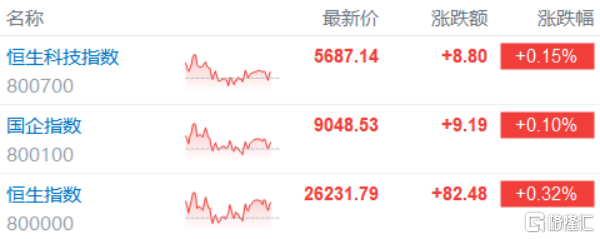
Market Overview - The Hong Kong stock market experienced slight gains on January 9, with the Hang Seng Index rising by 0.32%, while the Hang Seng China Enterprises Index and the Hang Seng Tech Index increased by 0.1% and 0.15% respectively, ending a two-day decline [1] - Southbound funds recorded a net inflow of HKD 6.815 billion, with HKD 1.66 billion from the Shanghai-Hong Kong Stock Connect and HKD 5.155 billion from the Shenzhen-Hong Kong Stock Connect [22] Sector Performance - Large technology stocks showed mixed performance, with Kuaishou, Tencent Music, and Bilibili rising over 3%, while Alibaba and JD.com increased by over 2%. Conversely, Baidu and Meituan fell by more than 2% [3][5] - Gold and precious metals stocks were active, with Shandong Gold rising over 6% and Zhaojin Mining hitting a historical high. Other gold stocks also saw gains [6][8] - The oil sector and internet healthcare stocks experienced upward movement, while gaming stocks and the gambling sector rebounded after previous declines [3] Specific Stock Movements - MINIMAX-WP debuted with a surge of 109%, while Zhiyuan's stock rose over 20%, reaching a market capitalization of HKD 72 billion [10] - TSMC reported a revenue increase of approximately 20% in Q4, reaching NT$1.05 trillion (approximately USD 33.1 billion), exceeding market expectations [9] - Innovative drug stocks were active, with stocks like Crystal Technology and Boan Biotechnology seeing significant gains [12][11] Industry Insights - The gold market is supported by supply-demand imbalances and anticipated interest rate cuts from the Federal Reserve, as noted by Barclays Bank [7] - The photovoltaic sector faced declines due to regulatory scrutiny regarding monopoly risks, impacting major companies in the industry [13][14] - The battery sector is under pressure following a meeting by regulatory authorities addressing irrational competition and rapid industry growth [15][16] Future Outlook - Analysts from Industrial Securities predict that the Hong Kong stock market will continue its bullish trend into 2026, driven by earnings and liquidity [24]