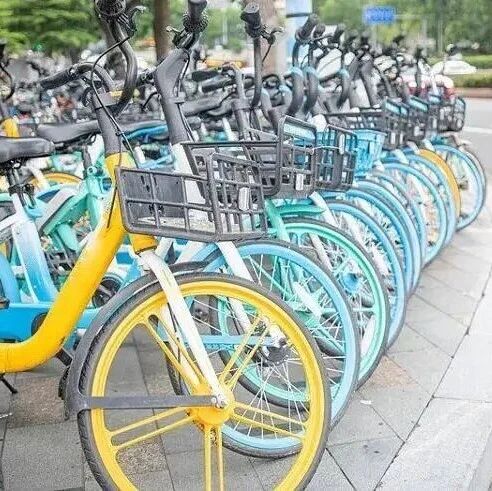
共享单车

Search documents
共享单车骑行中为何会自动落锁?可能与平台“一码多车”有关
Yang Shi Wang· 2025-10-15 19:37
Core Viewpoint - Users have reported incidents of shared bicycles automatically locking during rides, leading to accidents and injuries, raising questions about accountability and safety measures in the industry [1][2][10]. User Incidents - Multiple users across cities like Shanghai, Beijing, and Guangdong have experienced automatic locking of shared bicycles while riding, often resulting in injuries [2]. - A specific case involved a user named Hong who fell and sustained injuries after her bicycle unexpectedly locked while turning at a traffic light [1]. Platform Responses - Shared bicycle platforms have denied the existence of technical defects causing automatic locking, suggesting user error as a potential cause [3]. - Platforms claim that users may have accidentally triggered the lock by not properly closing the lock screen or riding a bicycle that was not properly locked by the previous user [3][6]. Technical Analysis - Industry experts conducted tests indicating that the likelihood of users accidentally locking the bicycle while riding is very low, as systems typically prevent locking while in motion [4][5]. - The remote locking feature requires specific conditions to be met, and while it is designed to prevent locking while in motion, technical failures could lead to unintended locking [7]. Regulatory Issues - The phenomenon of "one code, multiple bikes" has been identified as a potential cause for automatic locking incidents, stemming from platforms over-deploying bicycles to gain market share [8][9]. - Regulatory bodies have noted that some platforms have violated rules by deploying excessive numbers of bicycles, which can lead to system errors and safety risks [9]. Legal and Safety Obligations - Shared bicycle platforms are legally obligated to ensure the safety of their vehicles, and failure to do so may result in civil liability for accidents caused by automatic locking [10]. - Experts criticize the platforms' rental agreements that attempt to limit their liability, arguing that such clauses are unfair to users [11]. Recommendations for Users - Users are advised to document incidents thoroughly, including taking photos and preserving order records, to support their claims in case of accidents [11]. - There is a call for increased regulatory oversight and the establishment of industry standards to enhance public safety and trust in shared bicycle services [12].
【法治之道】以法治化手段重塑公平市场秩序
Zheng Quan Shi Bao· 2025-10-09 18:21
Core Viewpoint - The newly revised Anti-Unfair Competition Law of the People's Republic of China will officially take effect on October 15, 2025, focusing on regulating new forms of competition issues in the digital economy, such as false transactions and malicious returns, which disrupt market order [1] Group 1: Regulation of Unfair Competition - The law addresses the issues of false transactions and malicious returns, which have become survival tactics for some e-commerce platforms, indicating a need for a profound transformation in the competitive order of the digital economy [1] - The revised law aims to establish a standard of integrity in digital competition, requiring operators to shift from a speculative mindset based on data manipulation to a long-term approach that relies on genuine service quality to gain consumer recognition [2] Group 2: Price Competition and Market Dynamics - The law critically examines low-price competition, prohibiting platforms from forcing merchants to sell below cost, which is seen as a corrective measure against harmful competition practices that can lead to industry profit depletion and quality decline [3] - The legislative process reflects a deep understanding of the competitive dynamics in the digital economy, tailoring solutions to new characteristics and problems rather than applying traditional regulatory frameworks [3]
滴滴:双节假期打车需求同比上涨14%,站点巴士累计运送旅客超100万人次
Xin Lang Ke Ji· 2025-10-09 07:24
Core Insights - During the National Day and Mid-Autumn Festival holidays, Didi Chuxing reported a 14% year-on-year increase in average daily ride-hailing demand, with significant growth in cross-city and long-distance travel [1][2][3] - The demand for pre-booked rides surged by 58% compared to the period before the holidays, with notable increases in trips to transportation hubs and tourist attractions [1][2] - The demand for Didi's bike and e-bike services saw a significant rise, particularly in major cities, while the demand for delivery services also experienced substantial growth [3] Group 1: Ride-Hailing Demand - Average daily ride-hailing demand increased by 14% year-on-year during the holidays [1] - Cross-city ride-hailing demand rose by 89% compared to the pre-holiday period, with 68% of this demand coming from users outside the province [1] - Long-distance ride-hailing demand from users traveling over 800 kilometers increased by 22% year-on-year, with younger generations (post-2000s and post-1995) contributing 47% of this demand [1] Group 2: Bus and Group Travel - Didi's bus service saw an 86% increase in passenger volume compared to the pre-holiday period, transporting over 1 million passengers [2] - The demand for chartered vehicles during the holidays grew by 88% year-on-year, with family travel being a significant driver [2] - The demand for 7-seat vehicles for family outings increased by 123% year-on-year [2] Group 3: Delivery and Bike Services - Didi's bike and e-bike services experienced a notable increase in demand, particularly in cities like Chengdu and Tianjin [3] - The volume of Didi's delivery orders grew by 202% year-on-year during the holidays, with significant increases in demand for flowers, cakes, and pet deliveries [3] - Rental car orders surged by 212% year-on-year, with an average rental duration of 2.5 days and a 12% increase in daily spending [3] Group 4: International Travel - The number of Didi ride-hailing orders from inbound users increased by 139% year-on-year during the holidays, reflecting a growing interest in travel to China [3] - The demand for overseas travel surged, with daily demand exceeding 100% compared to the summer peak [3]

共享单车车筐“藏”垃圾?企业回应:“随见随清”
Zhong Guo Xin Wen Wang· 2025-09-20 01:33
Core Viewpoint - The article highlights the issue of garbage accumulation in shared bicycle baskets in certain areas of Beijing and the proactive measures taken by various shared bicycle companies to address this problem, ensuring a cleaner riding experience for citizens [1][2]. Group 1: Company Responses - Multiple shared bicycle companies have responded to the issue by incorporating basket cleaning into their standard operating procedures, implementing mechanisms like "clean as you see" to maintain vehicle cleanliness [1]. - Meituan Bicycle has established a "four must clean" operational standard, requiring maintenance personnel to clean baskets during vehicle dispatch, placement, and repair [1]. - Didi Qingju enforces a "must clean before handling" policy, ensuring each bicycle is cleaned before being dispatched or placed [1]. - Hello Bicycle has increased maintenance personnel in areas with frequent garbage accumulation and included cleaning performance in their management assessment system [1]. Group 2: Cleaning Tools and Procedures - Shared bicycle companies have equipped maintenance staff with professional cleaning tools, focusing on daily inspections in key areas such as transportation hubs and commercial districts [1]. - For stubborn dirt and oil stains that cannot be cleaned on-site, companies will recall affected bicycles to warehouses for thorough cleaning [1]. Group 3: Public Awareness and Cooperation - The Beijing Transportation Commission is collaborating with various departments to promote civilized riding and is considering placing signs on bicycles to discourage littering in baskets [1]. - The commission has issued an appeal to citizens to take care of shared bicycles and to remove personal items and trash after use, emphasizing that small actions contribute to a better city [2].
女厕所排队、共享单车扎堆、APP「偷」信息,本周节目全都来自少年的好奇心 | Knock Knock 世界
声动活泼· 2025-09-20 01:04
Group 1 - The article discusses the ongoing issue of long queues at women's restrooms and the legislative measures taken in Gansu Province to address this by mandating a 3:2 ratio of female to male toilet stalls in public facilities [2][3] - It highlights the unique challenges women face when using restrooms, including the presence of children and special circumstances that may require additional facilities [2] - The article mentions a case study from Tokyo, where data showed that the number of male toilet stalls was 1.76 times greater than that of female stalls, emphasizing the need for better restroom design [2][3] Group 2 - The article explores the shared bicycle industry in China, noting that major players like Hello Bike, Meituan, and Qingju have largely dominated the market after a period of intense competition [5] - It provides historical context, mentioning that the first shared bicycle project was launched in Amsterdam in 1965, while China's first public bike service began in Hangzhou in 2008 [5] - The article reflects on the peak of the shared bicycle market in 2016, when over 20 companies were competing, and questions why many of these brands have since disappeared [5] Group 3 - The article addresses the issue of personal data collection by mobile apps, specifically citing a case where Google was fined for illegally collecting user information despite users opting out [7] - It discusses the implications of data collection in the digital age, comparing it to traditional customer service practices, such as a restaurant owner remembering regular customers' preferences [8] - The article emphasizes the importance of understanding how user data is collected and used by internet platforms in contrast to more personal, face-to-face interactions [8]


哈啰Robotaxi首次亮相 跨界突围之路前景几何?
Xi Niu Cai Jing· 2025-09-16 06:31
Core Viewpoint - Hello's first self-developed Robotaxi was unveiled on September 11, marking the company's entry into the autonomous driving sector, with plans to launch over 50,000 Robotaxis by 2027 [2] Group 1: Company Overview - Hello was founded in September 2016, initially focusing on shared bicycle services and has since expanded into four-wheeled transportation services [2] - The company has completed over ten rounds of financing, with investors including Ant Group, Fosun Group, and Qiming Venture Partners [2] - In March, Hello acquired a controlling stake in Yong'anxing, a leading bike-sharing company, to strengthen its position in the transportation sector [2] Group 2: Investment and Partnerships - In June, Hello partnered with Ant Group and CATL, investing 3 billion yuan to establish Shanghai Zhaofu Intelligent Technology Co., with clear division of responsibilities among the partners [3] - Hello is responsible for Robotaxi operations and development, Ant Group provides AI technology support, and CATL supplies power batteries and chassis technology [3] Group 3: Market Challenges - The Robotaxi market is highly competitive, with major players like Baidu, Pony.ai, and WeRide already in the field, most of whom are still in pilot operation stages without large-scale commercialization [3][4] - Hello faces significant challenges, including a substantial funding gap compared to competitors, with Tesla and Baidu having invested over $20 billion and $10 billion respectively in autonomous driving [3] - The technical barriers are high, as established players have years of experience and extensive data from road testing, making it difficult for newcomers like Hello to catch up quickly [4] Group 4: Commercialization Uncertainties - The commercialization of Robotaxi services is complicated by various uncertainties, including regulatory policies, market demand, and safety standards [5] - The ability of Hello to overcome existing challenges and succeed in the autonomous driving sector remains to be seen, with ongoing monitoring from industry analysts [5]

共享单车自动落锁致用户摔伤?哈啰单车、滴滴青桔否认存在技术问题
Xin Lang Cai Jing· 2025-09-12 19:25
Core Viewpoint - The incident involving a woman injured due to a shared bicycle suddenly locking has raised significant public concern regarding the safety of shared bicycles in China [1][3]. Company Responses - Both Didi Qingju and Hello Bike have stated that they found no software or technical flaws after investigation, suggesting that the incident may be due to chain malfunctions or user errors [3][6]. - Didi Qingju confirmed that they conducted hardware and software checks on the involved bicycles and identified potential issues with loose chains causing riding difficulties, but denied any software-related problems [6][8]. - Hello Bike explained that their locking mechanism prevents locking while the bicycle is moving faster than 0.5 m/s, and suggested that user error could lead to unintended locking [8]. Industry Context - Reports indicate that there have been at least 41 similar incidents of shared bicycles locking unexpectedly during rides, highlighting a persistent safety concern within the industry [5]. - The shared bicycle user base in China has surpassed 600 million as of 2024, indicating the growing importance of this mode of transportation [8]. - Media commentary suggests that reliance on self-inspection by companies is insufficient, advocating for government intervention and third-party investigations to ensure safety and transparency [9].
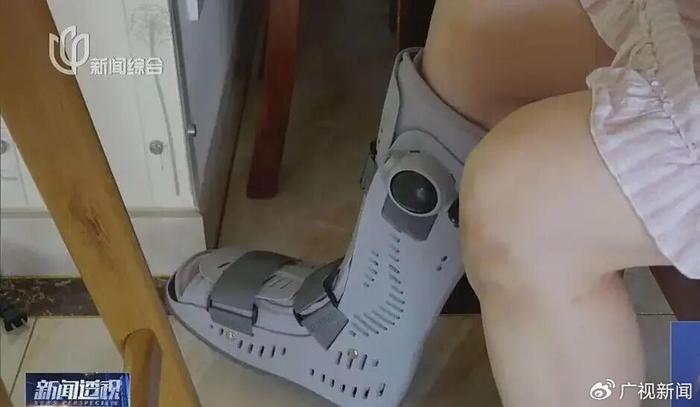
共享单车骑行中自动落锁致摔伤?品牌方:未发现技术缺陷,梳理后发现有三种可能
Yang Zi Wan Bao Wang· 2025-09-12 14:35
Core Viewpoint - A recent incident involving a woman who suffered a broken right foot due to a sudden locking of a Didi Qingju shared bicycle has raised significant safety concerns regarding shared bicycles in China [1] Group 1: Incident Details - The incident occurred when a woman was riding a Didi Qingju bicycle, which reportedly locked unexpectedly, leading to her injury [1] - The woman was diagnosed with three fractures in her right foot, and the platform indicated there was no record of an automatic lock in the backend, suggesting a possible chain malfunction [1] - Similar incidents have been reported by users of various brands, including Hello Bike and Meituan, indicating a broader issue within the shared bicycle industry [1][7] Group 2: Industry Statistics - As of December 2023, there are over 6 billion users of internet rental (electric) bicycles in China, with more than 12 million bicycles deployed across over 410 cities [1] - The number of internet rental bicycles exceeds 8 million across more than 700 cities, highlighting the extensive reach and popularity of shared bicycles [1] Group 3: Company Responses - Didi Qingju stated that bicycles should not automatically lock during use and that regular maintenance checks are conducted to ensure safety [1][12] - Hello Bike's response indicated that their technical team found no evidence of a technical defect causing automatic locking, suggesting user error or external factors may be involved [12][13] - Both companies are actively investigating user feedback and have implemented measures to improve safety and user experience [12][13]
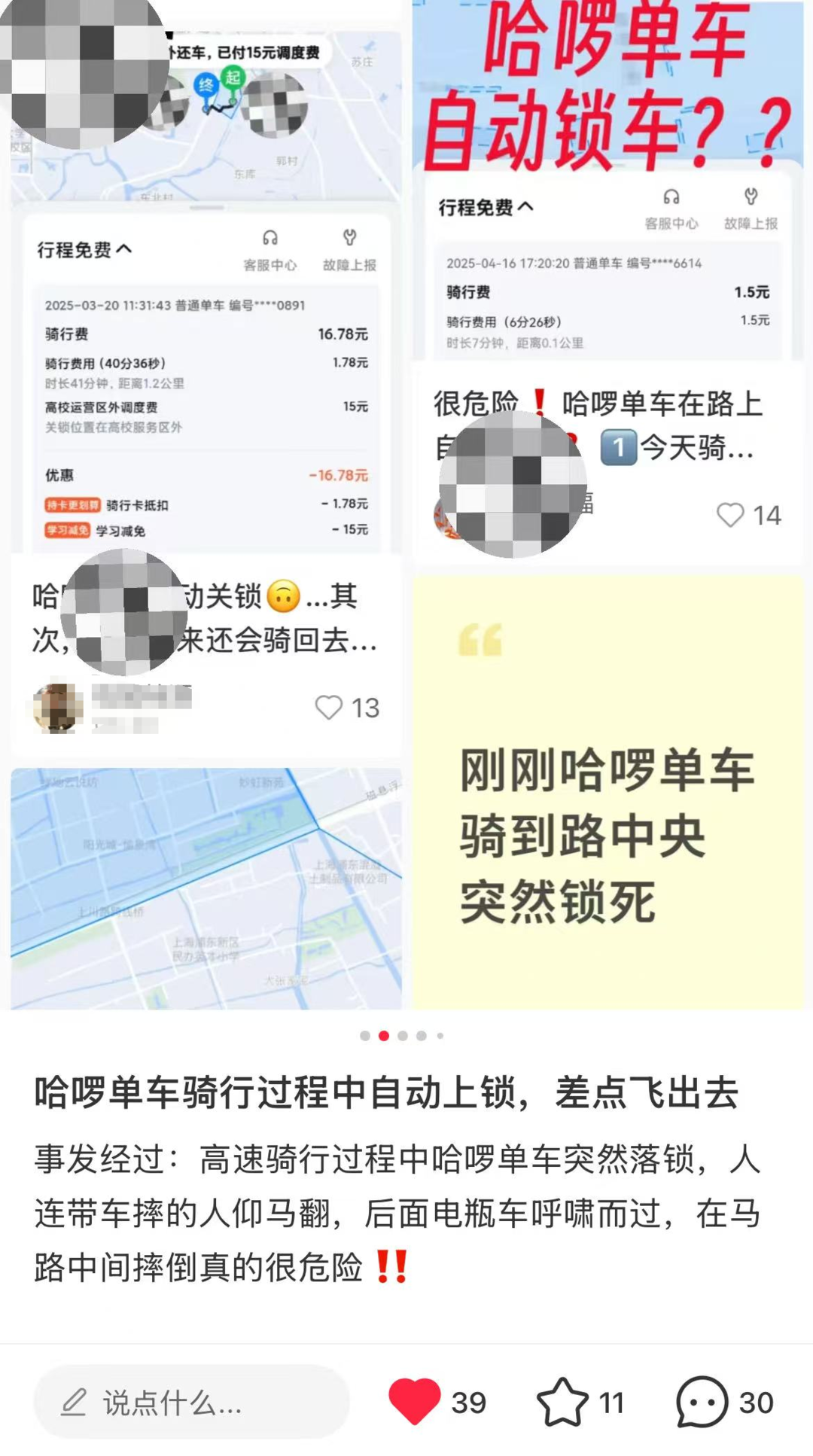
刚扫的单车,没骑几分钟就“车轮抱死”,人被摔骨折!青桔、哈啰回应
凤凰网财经· 2025-09-12 12:50
Core Viewpoint - The article highlights the safety concerns surrounding shared bicycles, particularly incidents of automatic locking that have led to user injuries, prompting calls for improved accountability and safety measures within the industry [2][3]. Group 1: Company Responses - Both major companies, Qingju and Hello Bike, have denied that technical defects caused the automatic locking incidents, attributing issues to potential hardware problems such as loose chains [5][6]. - Qingju has expressed regret for the negative riding experience and is actively managing user claims and insurance processes following reported accidents [5]. - Hello Bike has outlined three scenarios that could lead to automatic locking, emphasizing that their locking mechanism is designed to prevent locking while the bike is in motion [6]. Group 2: User Concerns and Industry Analysis - Users have expressed skepticism regarding the companies' self-assessments, suggesting that independent third-party evaluations are necessary to ensure vehicle safety [7]. - Industry analysts argue that the responsibility for safety should be reinforced through technological improvements and better product design to minimize risks [8]. - The article notes that the shared bicycle user base is expected to exceed 600 million by 2024, with a significant increase in riding frequency, highlighting the need for improved safety and claims mechanisms [9][11]. Group 3: Recommendations for Improvement - Analysts recommend that the shared bicycle industry adopt a more mature insurance framework similar to that of ride-hailing services, clarifying accident liability and compensation processes [11]. - It is suggested that leading companies establish a consumer protection fund to cover damages not addressed by traditional insurance [11]. - Regulatory bodies are encouraged to focus on enforcing existing responsibilities rather than introducing new regulations, promoting a more effective problem-solving framework [12]. Group 4: Future Directions - The shared bicycle industry is transitioning from rapid growth to refined operations, with a focus on enhancing user trust through transparency, improved insurance mechanisms, and corporate social responsibility [13]. - Achieving a state where users feel secure while riding and have clear compensation pathways is essential for the sustainable integration of shared bicycles into urban transportation systems [14].

共享单车骑行中突然落锁致人受伤?滴滴青桔、哈啰单车回应
新浪财经· 2025-09-12 08:51
Core Viewpoint - Recent incidents involving users of Hello Bike and Didi Qingju experiencing sudden locking of bikes during rides have raised safety concerns, with both companies investigating the claims and providing responses regarding the technical issues involved [2][9][15]. Group 1: Incident Reports - Multiple users reported that Hello Bike and Didi Qingju bikes unexpectedly locked during rides, leading to injuries such as abrasions and fractures [3][9]. - Users expressed dissatisfaction with customer service responses, stating that they were told no technical faults were found and were offered minimal compensation [3][12]. Group 2: Company Responses - Hello Bike stated that their technical team conducted a thorough analysis of user data and found no evidence of technical defects causing the automatic locking incidents. They identified potential scenarios that could lead to such occurrences, including user error and mechanical issues [11][12]. - Didi Qingju acknowledged the possibility of chain looseness causing ride interruptions and confirmed that there were no software-related issues. They expressed regret for the negative riding experiences and are handling user claims for medical compensation [14][15]. Group 3: Industry Context - The rise of shared bicycles as a common mode of transportation has led to increased scrutiny over their safety mechanisms, particularly concerning the remote locking feature [21][23]. - As of December 2023, over 6 billion users have utilized internet rental bicycles in China, with more than 12 million vehicles deployed across over 410 cities, highlighting the importance of reliable safety measures in this sector [21][24].