制鞋业

Search documents
哈森股份(603958.SH):已完成在精密金属减材制造、增材的原材料生产和核心设备研发制造领域的布
Ge Long Hui· 2026-01-28 00:53
格隆汇1月28日丨哈森股份(603958.SH)近日接受特定对象调研时表示,目前公司主营中高端皮鞋的品牌 运营﹑产品设计和销售,并已开拓精密金属结构件及相关设备的研发、生产、销售业务,已实现公司主 营业务向多元化的战略转型升级,形成了"中高端鞋业+精密金属结构件及相关设备"主营业务。除前述 业务,公司还布局了3D打印设备及系统解决方案、上游核心原材料业务。截至目前,公司已完成在精 密金属减材制造、增材的原材料生产和核心设备研发制造领域的布局,面向下游消费电子等领域客户提 供全套产品及服务。未来公司将持续深耕中高端皮鞋业务以及精密金属减材制造、增材的原材料生产和 核心设备研发制造业务,并努力向消费电子以外的其他领域拓展。 ...

广东省梅州市五华县综合实力越来越强 城乡融合发展成效越来越足
Zhong Guo Fa Zhan Wang· 2026-01-27 06:42
Core Viewpoint - The recent meeting of the Wuhua County Committee outlines the economic and social development plans for the "15th Five-Year Plan" period, emphasizing the need for collective effort to advance modernization in Wuhua [1] Economic Development - In 2025, Wuhua County aims to achieve significant economic progress, with a focus on the "Hundred-Thousand-Million Project" as a key strategy, resulting in a 19.2% increase in industrial added value and a 19% rise in technological transformation investment [3] - The county's general public budget revenue reached 1.62 billion yuan, ranking first in the city, with manufacturing tax revenue increasing by 37.15% year-on-year [3] - Over 9,000 new business entities were established, bringing the total to nearly 90,000, leading the city in both growth and total numbers [3] Urban and Rural Development - Wuhua has improved its urban and rural landscape, with nearly 15,000 rural houses renovated and the completion of the "Beautiful Town" initiative, which has led to its selection as a pilot for "Livable County" construction [4] - The county's economic total surpassed 20 billion yuan during the "14th Five-Year Plan" period, with 22,300 new urban jobs and 20,800 new educational slots created [4] Challenges and Opportunities - Wuhua acknowledges its economic underdevelopment, weak industrial base, and fiscal imbalances, while also recognizing that opportunities outweigh challenges [4] - The county plans to convert policy opportunities into concrete projects and improve living standards for its residents [4] Strategic Focus for 2026 - The county's strategy for 2026 includes five key focuses: promoting county strength, town development, village enhancement, and boosting investment, consumption, and foreign trade while ensuring ecological and social safety [7][8] - Wuhua aims for a GDP growth of 5% to 5.5% and to maintain double-digit growth in industrial investment, with a target of over 10 billion yuan in investment attraction [8] Action Plans - Wuhua has initiated immediate actions to implement its plans, with local industries ramping up production and actively pursuing investment opportunities [10][11] - The county's leadership is engaging in active招商引资 (investment attraction) efforts, including a recent event in Shenzhen that resulted in 31.4 billion yuan in planned investments across various sectors [12]


见特朗普要制裁伊朗,印尼经济部强硬表态:不惧美国关税威胁!
Sou Hu Cai Jing· 2026-01-17 06:21
Group 1 - Indonesia's trade with Iran amounted to $206.9 million last year, which is significantly less than the $370 billion expected in exports to the U.S. [1][3] - Indonesian officials prioritize maintaining orders from their largest customer, the U.S., over concerns regarding tariffs imposed by the Trump administration [3][5] - The response to the potential 25% tariff from the U.S. is characterized by a focus on the economic benefits of trade with the U.S., rather than engaging in diplomatic disputes [1][5] Group 2 - The ongoing production of palm oil, sneakers, and nickel processing in Indonesia continues unaffected by geopolitical tensions, emphasizing the country's commitment to fulfilling U.S. orders [5][7] - As the end of the month approaches, Indonesia is preparing to finalize a trade agreement with the U.S., which could be seen as a diplomatic victory for both parties [7] - The operational efficiency in Indonesia remains high, with workers focused on meeting deadlines and ensuring that shipments are dispatched on time, regardless of external pressures [5][7]

这里的雪地靴,为何“全年无淡季”(神州看点·冷资源成热产业)
Ren Min Ri Bao· 2026-01-15 07:44
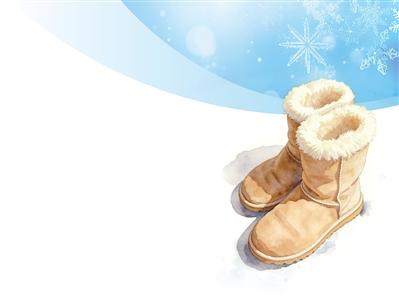
三九时节,我国多地迎来寒冷天气。黑龙江、吉林部分地区最低气温突破零下30摄氏度。 凛冽寒冬,热情不减。新疆滑雪场里欢歌笑语,黑龙江哈尔滨冰雪大世界人潮涌动,北方多地的天然滑 冰场上,传递着"刺溜刺溜"的冬日专属快乐。 如何为乐享冰雪的人们送上"温暖"保障?寒冬里蕴藏的"商机",正在浙江台州市迸发出强大动能。 "我们这款可加热雪地靴,保暖时尚,还特别添加防水功能——雨雪天出门,暖和又放心!"台州路桥区 上倪村的"鞋首同心"共富工坊共享直播间里,主播手持一款雪地靴,对着镜头推荐。屏幕右下角,订单 数字不断刷新。 与此同时,不远处一家家纺公司内,生产线全速运转。裁剪、缝制、质检……工人们专注地操作设备, 一双双雪地靴快速成型。刚"走"下终端的成品,转眼就被快速打包,从这里出发,跨越山海,发往国内 各地乃至海外。 雪地靴,正是台州鞋企的"主打产品"。 有了精准发展的眼光,首先离不开雄厚的制造业基础——台州是我国重要的鞋类生产基地之一。作为台 州市知名的专业鞋帽生产村,上倪村的鞋帽产业有着几十年发展历史,年产值达10多亿元。 想要巩固发展优势,难免经历转型"阵痛"——曾经,由于订单不稳定、利润微薄、同质化竞争激烈等因 ...
抓住寒冬蕴藏的“商机”,培育区域公共品牌 这里的雪地靴,为何“全年无淡季”(神州看点·冷资源成热产业)
Ren Min Ri Bao· 2026-01-14 22:13
Group 1 - The article highlights the booming demand for heated snow boots in the winter season, particularly in Taizhou, Zhejiang, where local companies are capitalizing on this opportunity [2][3] - Taizhou is recognized as a significant production base for footwear in China, with a strong manufacturing foundation that supports the local snow boot industry [3] - The local footwear industry is transitioning from a focus on quantity and price competition to prioritizing quality and value, addressing previous challenges such as unstable orders and low profit margins [3][4] Group 2 - The implementation of strict quality control measures, including a shared testing laboratory and brand certification, has improved the quality of snow boots, with the pass rate for inspections rising from 60% to over 95% [4][5] - As of now, 20 companies in the area have received brand certification, and there are 106 registered trademarks and 36 patent applications, indicating a significant enhancement in brand recognition and innovation [5] - The snow boot industry is expanding its overseas business, allowing for year-round production and sales, with companies adapting their inventory strategies to align with seasonal demands in different hemispheres [6][7] Group 3 - The "Xie Shou Tong Xin" shared workshop has established multiple live streaming rooms, significantly increasing online sales by 20% per month through collaborations with various cross-border e-commerce platforms [7] - The local industry aims to deliver warmth through Taizhou-made snow boots to a broader audience, reflecting a commitment to quality and customer satisfaction [7]
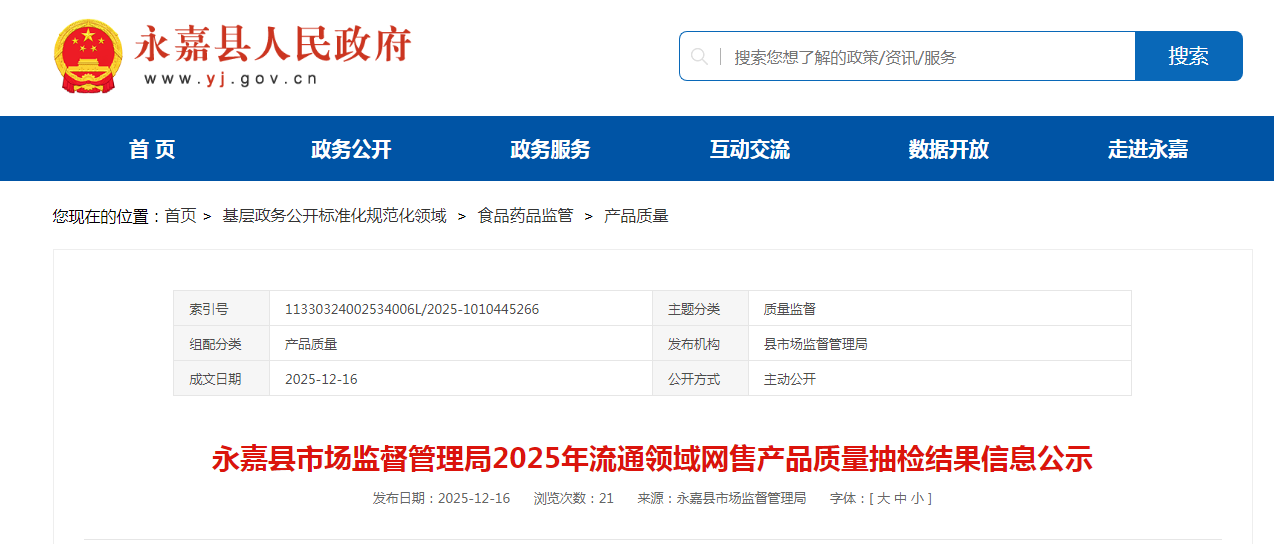
浙江省永嘉县市场监督管理局公示2025年流通领域网售产品质量抽检结果
Xin Lang Cai Jing· 2026-01-12 08:44
Core Viewpoint - The article reports on the results of a product quality inspection conducted by the Yongjia County Market Supervision Administration in Zhejiang Province, focusing on the quality of products sold online in the circulation field [3]. Group 1: Inspection Results - The inspection covered various products, including men's shoes, children's shoes, and toys, with a total of 10 samples tested [3]. - Among the tested samples, 6 products passed the quality inspection, while 4 were found to be non-compliant with safety standards [3]. - Specific non-compliance issues included inadequate strength and stability in children's toys, as well as issues related to packaging and labeling [3]. Group 2: Product Details - The inspected products included: - Men's casual shoes from Zhejiang Hongcao Hat Industry Co., which passed the inspection [3]. - Children's shoes from Wenzhou Duoqi Cat E-commerce Co., which failed due to multiple safety issues [3]. - A children's swing from Wenzhou Yijia Le Toy Co., which was also deemed non-compliant due to safety concerns [3]. - The inspection aimed to ensure that products meet safety requirements, particularly those intended for children [3].
当双星创始人汪海说“中国人的民族品牌,绝不能让‘美国身份的人’接班”,他已经输了
Sou Hu Cai Jing· 2026-01-08 07:12
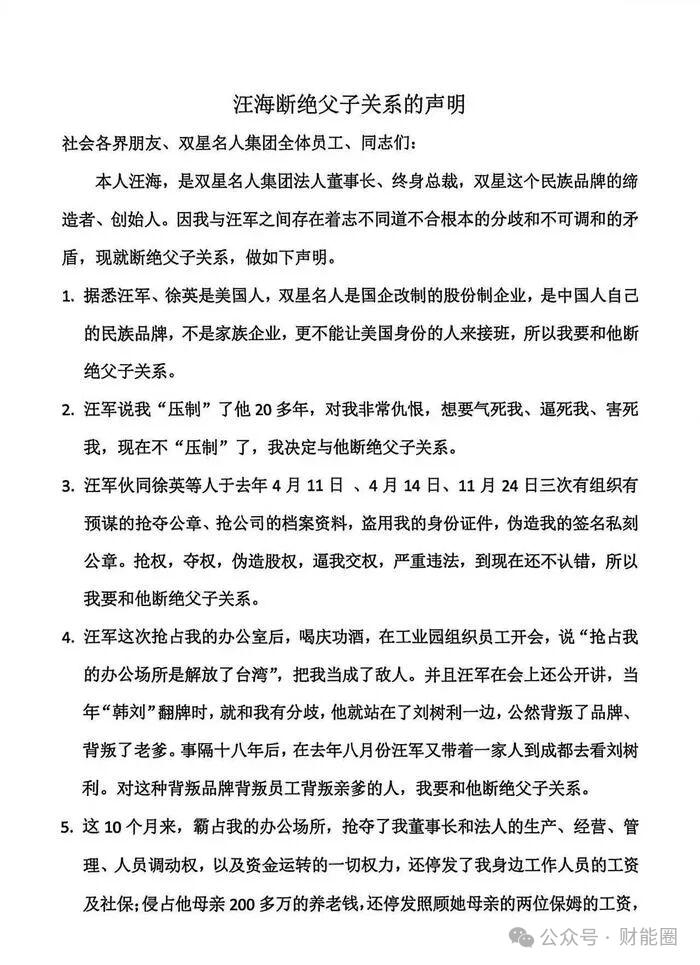
Core Viewpoint - The control dispute over the century-old shoe company, Double Star, has escalated into a complete rupture between founder Wang Hai and his son Wang Jun, as Wang Hai publicly announced the severance of familial ties due to concerns over American identities taking over a Chinese national brand [1][3]. Group 1: Control and Ownership - Wang Hai's statement emphasizes that the company, as a national brand, should not be led by individuals with American identities, marking a significant shift in the narrative from a family dispute to a public issue of brand sovereignty [1][3]. - The ownership structure reveals that Wang Jun and his wife Xu Ying control 69.48% of the shares through their company Xingmaida, while Wang Hai holds only 21.88%, placing him at a significant disadvantage in terms of capital [3][6]. Group 2: Narrative and Public Perception - Wang Hai's strategy effectively reframes the internal family conflict as a defense of national identity, appealing to public sentiment and shifting focus from legal ownership to the concept of brand sovereignty [3][4]. - This approach risks politicizing business issues, potentially harming the global development of Chinese enterprises by fostering misunderstandings about cross-border operations and talent mobility [7][9]. Group 3: Implications for Brand Identity - The narrative constructed by Wang Hai may obscure the underlying business challenges faced by Double Star, such as brand aging and operational difficulties, while prioritizing a narrow view of national identity over broader market realities [6][9]. - The emphasis on excluding foreign identities from leadership roles may ultimately undermine the brand's ability to adapt and thrive in a globalized market, highlighting a disconnect between traditional views and modern business practices [9].

分野与突围:中国鞋业洗牌期,中小鞋企生存法则——对话升维咨询
首席商业评论· 2026-01-08 04:27
Core Viewpoint - The article discusses the significant transformation in the Chinese footwear industry, highlighting a shift from traditional consumption patterns to a focus on comfort, functionality, and health, which reflects broader changes in consumer values and aesthetics [6][10]. Group 1: Market Dynamics - The Chinese footwear industry produced 13 billion pairs of shoes in 2024, accounting for over 54% of global production and 62.20% of exports, maintaining its position as the world's largest producer and exporter [7]. - There is a stark contrast in market performance, with traditional shoe brands facing declining sales while specialized sports brands experience high demand, indicating a bifurcation in consumer preferences [6][10]. - The article notes that many small and medium-sized shoe enterprises are struggling due to overcapacity and a mismatch between traditional business models and evolving consumer demands [11][12]. Group 2: Consumer Behavior Changes - Consumers are increasingly seeking shoes that meet specific needs for different occasions, moving away from the previous model where one type of shoe sufficed for multiple activities [12][15]. - The demand for specialized footwear has led to a clear market divide: generic styles are struggling to sell, while technologically advanced products are in high demand, indicating a shift towards professionalization and high-end offerings in the market [16][18]. Group 3: Industry Challenges - The article identifies three critical disconnects affecting small and medium-sized shoe companies: a structural mismatch between traditional capabilities and new market demands, supply chain issues, and a lack of genuine innovation [11][20]. - Many companies are trapped in outdated operational models, relying on low-cost production and imitation rather than investing in brand development and innovation [18][20]. Group 4: Strategic Recommendations - Companies are encouraged to undergo systemic restructuring, focusing on strategic clarity, capability enhancement, and dynamic long-termism to adapt to market changes [27][39]. - The article emphasizes the importance of understanding unique value propositions and targeting specific consumer segments to create competitive advantages [28][32]. - It suggests that successful companies will be those that maintain a strong commitment to quality, leverage data-driven decision-making, and remain open to learning from other industries [43][44]. Group 5: Future Outlook - The article concludes that the future of the footwear industry will favor companies that can create real, perceivable value for consumers, moving away from traditional competitive strategies based on scale and cost [46][57]. - It highlights the necessity for businesses to innovate continuously and adapt to changing consumer needs, emphasizing that those who can effectively address these challenges will thrive in the evolving market landscape [49][50].

华利集团:公司为阿迪达斯在越南、印尼和中国均开设了专属工厂
Zheng Quan Ri Bao Wang· 2026-01-07 11:11
证券日报网讯 1月7日,华利集团(300979)在互动平台回答投资者提问时表示,公司为阿迪达斯在越 南、印尼和中国均开设了专属工厂,正式订单与预告订单差异不大,这几个工厂的出货情况基本按规划 在进行,没有出现大的异常。 ...
84岁老爹和儿子“翻脸”:一双鞋引发的家族“内战”
3 6 Ke· 2026-01-06 09:17
Group 1 - The core issue revolves around a family power struggle within the Chinese shoe company, Dousheng Mingren, initiated by the founder's public disownment of his son and daughter-in-law, highlighting the complexities of family business succession [1][7] - In 2022, a company controlled by the daughter-in-law acquired 56.96% of Dousheng Mingren's shares, effectively transferring control away from the founder, who remains a nominal figurehead [5][6] - The conflict escalated to a "seal dispute," where control over the company seal became a focal point, illustrating the precarious governance structures in many family businesses in China [6][8] Group 2 - The situation reflects a broader issue in family businesses where the transition of control often leads to conflicts, as seen in other cases like Haixiang Pharmaceutical, where similar power struggles resulted in significant losses [5][8] - The founder's drastic decision to sever ties with his son raises questions about the nature of family business inheritance and the potential for generational conflict when values and management philosophies differ [7][8] - The ongoing turmoil serves as a cautionary tale for family businesses, emphasizing the need for clear governance structures and professional management to prevent familial disputes from jeopardizing the business [8][9]