智能消费设备制造业

Search documents
去年规模以上高技术制造业利润增长超百分之十三 我国工业经济发展质效不断提升
Ren Min Ri Bao· 2026-01-27 22:22
Group 1 - The core viewpoint of the articles indicates that in 2025, the profits of large-scale industrial enterprises in China increased by 0.6% compared to the previous year, reversing a three-year decline, with significant support from emerging sectors like equipment manufacturing and high-tech manufacturing [1][2] - In the manufacturing sector, profits grew by 5.0%, a substantial rebound of 8.9 percentage points compared to 2024, while the electricity, heat, gas, and water production and supply industry saw a profit increase of 9.4%. However, the mining industry experienced a decline of 26.2% [1] - In December, the profits of large-scale industrial enterprises shifted from a 13.1% decline in November to a 5.3% increase, marking an 18.4 percentage point recovery [1] Group 2 - The equipment manufacturing sector provided strong support for the upgrade of industrial quality, with profits in this sector increasing by 7.7% in 2025, contributing 2.8 percentage points to the overall profit growth of large-scale industrial enterprises [1] - Profits from the equipment manufacturing sector accounted for 39.8% of total industrial enterprise profits, an increase of 2.6 percentage points from the previous year, indicating further optimization of the profit structure [1] - In the high-tech manufacturing sector, profits rose by 13.3%, surpassing the overall industrial average by 12.7 percentage points, with the smart consumer device manufacturing industry experiencing a remarkable profit increase of 48.0% [2] Group 3 - Traditional industries are continuously upgrading, with significant profit growth in specific sectors. For instance, profits in the biochemical pesticide and microbial pesticide manufacturing sectors increased by 20.7% and 15.2%, respectively, exceeding the average profit growth in the chemical industry by 28.0 and 22.5 percentage points [2] - In the chemical fiber and power industries, profits from bio-based chemical fiber manufacturing and biomass power generation grew by 88.6% and 47.9%, respectively, significantly higher than the average profit growth in their respective categories by 93.1 and 34.0 percentage points [2]
中国工业利润三年跌势扭转,今年稳增长行动思路明确
Di Yi Cai Jing· 2026-01-27 15:59
Core Insights - The overall profit of industrial enterprises above designated size in China reached 73,982 billion yuan in 2025, marking a 0.6% increase from the previous year, reversing a three-year decline trend [1][2] - The equipment manufacturing industry accounted for 39.8% of total industrial profits, with a significant profit increase of 7.7% [5] - The high-tech manufacturing sector saw a profit growth of 13.3%, with smart consumer devices manufacturing profits soaring by 48% [5] Industrial Profit Growth - In December 2025, profits for industrial enterprises increased by 5.3% compared to the previous month, marking a recovery from a 13.1% decline in November [1][2] - The profit growth trajectory for 2025 was characterized by a "low first half, high second half" pattern, with fluctuations influenced by policy effects and market conditions [2] Cost and Expense Analysis - The cost per 100 yuan of revenue for industrial enterprises was 85.31 yuan, an increase of 0.16 yuan year-on-year, while expenses decreased to 8.62 yuan [3] - The average accounts receivable collection period improved to 67.9 days, down by 2.5 days from the previous value, indicating better cash flow management [3] Profit Structure Improvement - Small and medium-sized enterprises, as well as foreign-invested enterprises, saw profit growth of 1.4% and 4.2% respectively, reversing previous declines [4] - Manufacturing profits grew by 5.0%, with notable increases in the electricity and gas supply sectors [4] Sector-Specific Performance - The equipment manufacturing sector was the strongest contributor to overall industrial profit growth, adding 2.8 percentage points to the total [5] - The semiconductor industry experienced remarkable profit increases, with integrated circuit manufacturing profits rising by 172.6% [5] Future Outlook - Industrial profits are expected to continue recovering in 2026, supported by stable domestic consumption and improved investment conditions [6][10] - The government plans to focus on stabilizing growth in key industries and regions, enhancing the competitive environment for enterprises [9]
一万亿顺差和工业利润下降,哪个是真实的中国?
Xin Lang Cai Jing· 2025-12-29 01:58
Group 1 - In the first eleven months of 2025, the total profit of industrial enterprises above designated size in China reached 66,268.6 billion yuan, showing a year-on-year growth of 0.1% [1][17] - However, in November alone, the profit of industrial enterprises decreased by 13.1% year-on-year, indicating a potential decline in total profits for December 2025 [3][19] - The sectors experiencing the most significant profit declines include textiles (-8.2%), apparel (-27.1%), footwear (-15.7%), wood processing (-30.9%), and furniture manufacturing (-22.7%), which have historically been major contributors to China's export earnings [3][19] Group 2 - On a positive note, the profit of high-tech manufacturing industries increased by 10.0% year-on-year during the same period [4][20] - Industries related to the "Artificial Intelligence+" initiative saw remarkable profit growth, with electronic industrial equipment manufacturing profits rising by 57.4%, and semiconductor device manufacturing profits increasing by 97.2% [5][21] - The smart consumer device manufacturing sector also experienced significant growth, with profits increasing by 54.0%, including smart vehicle equipment (105.7%) and smart drones (76.6%) [5][21] Group 3 - China's trade surplus reached 1.08 trillion USD in the first eleven months of 2025, marking the first time it exceeded 1 trillion USD in history [6][23] - Exports to the EU amounted to 508.05 billion USD, a year-on-year increase of 8.1%, while exports to ASEAN reached 599.03 billion USD, growing by 13.7% [7][23] - Notably, exports of integrated circuits grew by 25.6% to 1.29 trillion yuan, and automotive exports increased by 17.6% to 896.91 billion yuan [7][23] Group 4 - The apparent contradiction between the trade surplus and declining industrial profits reflects a structural adjustment within the Chinese economy, transitioning from traditional sectors to emerging fields [9][25] - The ongoing "reconstruction" of the economy is characterized by the rise of high-tech manufacturing as a new driving force, while traditional industries face inevitable decline [11][26] - The depth and breadth of this reconstruction will determine the future landscape of the Chinese economy [15][30]

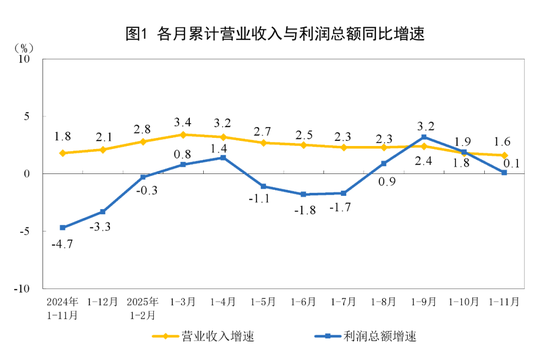
2025年11月经济数据点评:供强需弱下经济内部的结构性分化
KAIYUAN SECURITIES· 2025-12-17 06:41
Report Summary 1. Report Industry Investment Rating No industry investment rating is provided in the report. 2. Core Viewpoints - The economic structure shows internal differentiation under the situation of strong supply and weak demand in November 2025. Although there are challenges, the transformation of new and old driving forces has structural highlights, and it is expected that the annual economic development target can be achieved with the continuous policy support. In the bond market, bond yields are expected to rise trend - wise due to the revision of economic expectations [5][7][8]. 3. Summary by Related Catalogs 3.1 November Economic Data Focus - **Industrial Added Value**: Affected by insufficient domestic demand and the high - base effect, the year - on - year growth of industrial added value in November was lower than expected. The year - on - year growth was 4.8%, 0.1 pct lower than the previous value, and lower than the median and average forecasts of 18 institutions. However, the month - on - month growth was 0.44%, 0.27 pct higher than the previous value, showing some month - on - month recovery [4]. - **Consumption and Export**: Consumption and export data showed a differentiated trend. The year - on - year growth of social retail sales in November was 1.3%, 1.6 pct lower than the previous value, reflecting insufficient domestic demand. The year - on - year growth of exports was 5.9%, 7.0 pct higher than the previous value [5]. - **Investment**: Fixed - asset investment was under pressure. The cumulative year - on - year decrease was 2.6%, 0.9 pct lower than the previous value. Real estate investment continued to bottom out, with a year - on - year decrease of 15.9% from January to November, and the decline was 1.2 pct larger than that from January to October [5][6]. 3.2 Structural Highlights in the Transformation of New and Old Driving Forces - **Investment Structure Optimization**: The cumulative year - on - year growth of investment in high - tech services was 4.1%, accounting for 5.4% of total service industry investment, 0.6 pct higher than the same period in 2024. - **Growth of New - Quality Productivity Industries**: The cumulative year - on - year growth of the added value of large - scale high - tech manufacturing and intelligent consumer equipment manufacturing was 9.2% and 7.6% respectively. - **Stabilizing Role of Equipment Manufacturing**: In November, the year - on - year growth of the added value of large - scale equipment manufacturing was 7.7%, and the cumulative added value accounted for 36.4% of all large - scale industries, 1.8 pct higher than the whole year of 2024, and it has exceeded 30% for 33 consecutive months [7]. 3.3 Bond Market Viewpoint - It is maintained that in the second half of 2025, the economic growth rate may not decline significantly, structural problems such as prices are expected to improve trend - wise, and the bond - stock allocation will continue to switch, with bond yields expected to rise continuously [8].
权威发布|“实现全年预期目标有较好条件”
Ren Min Ri Bao· 2025-12-16 05:26
Core Viewpoint - The macroeconomic policies in China are showing positive effects, with a focus on strengthening the domestic market, increasing production supply, expanding market sales, and maintaining overall stability in employment and prices, contributing to a steady economic growth trend [1] Economic Performance - Industrial production remains stable, with the industrial added value of large-scale enterprises growing by 4.8% year-on-year in November, maintaining the same growth rate as the previous month [2] - The service sector's production index increased by 4.2% year-on-year, with significant growth in information transmission and business services [2] - Social retail sales grew by 1.3% year-on-year in November, with a cumulative growth of 5.4% from January to November [2] - The total value of imports and exports increased by 4.1% year-on-year in November, accelerating by 4 percentage points compared to the previous month [2] - The urban unemployment rate remained stable at 5.1%, while consumer prices rose by 0.7% year-on-year, marking three consecutive months of increase [2] Energy and Investment - Energy supply has been strengthened to meet winter production and living needs, with significant increases in industrial oil, natural gas, and electricity production [3] - Investment in accommodation, catering, wholesale, and retail sectors grew by 7.1% year-on-year, while electricity and heat production and supply saw a 12.5% increase [3] New Production Capacity - New quality productivity is developing rapidly, with high-tech manufacturing value added increasing by 9.2% year-on-year from January to November [4] - The production of industrial robots and control systems surged by 29.2% and 87.6% respectively, indicating strong growth in emerging industries [4] - Traditional industries are also seeing improvements, with biomass fuel processing value added growing by 15.6% [4] Consumption and Investment Potential - Consumer spending is on the rise, with retail sales of cultural and office supplies and communication equipment growing by 11.7% and 20.6% respectively [6] - Online retail sales of physical goods increased by 5.7% year-on-year, accounting for 25.9% of total social retail sales [6] - Fixed asset investment (excluding rural households) decreased by 2.6%, but project investment excluding real estate development grew by 0.8% [6] - Investment in key sectors such as equipment manufacturing and green energy transition remains strong, supporting long-term economic development [6][7]
11月份主要指标出炉,当前经济运行态势如何?
Xin Hua She· 2025-12-16 01:29
Economic Overview - The national economy continues to show a stable and progressive development trend, with key indicators reflecting steady performance in production, employment, and market prices [2][4] - In November, the industrial added value of large-scale enterprises increased by 4.8% year-on-year, with the equipment manufacturing sector growing by 7.7%, contributing 59.4% to the overall industrial growth [2][3] Market Sales and Investment - Social retail sales increased by 1.3% year-on-year in November, with a cumulative growth of 4% for the first 11 months, surpassing last year's performance [3] - Fixed asset investment (excluding rural households) decreased by 2.6% year-on-year, but investment in key areas remains robust due to policies aimed at expanding domestic demand and industrial upgrades [3] Foreign Trade and Employment - In November, China's total goods import and export value rose by 4.1% year-on-year, with exports increasing by 5.7%, marking a turnaround from previous declines [3] - The urban unemployment rate remained stable at 5.1%, while the Consumer Price Index (CPI) rose by 0.7%, indicating a gradual recovery in prices [3] New Quality Productivity - Significant progress has been made in cultivating new quality productivity, with high-tech manufacturing value added increasing by 9.2% year-on-year from January to November [5] - The digital economy is expanding, with the manufacturing value added of digital products growing by 9.3% and the production index for information transmission and software services increasing by 11.3% [5][6] Policy Support and Future Outlook - The macroeconomic policies implemented this year have played a crucial role in supporting stable economic operations, with expectations for achieving annual targets remaining positive [7] - International institutions have raised their economic growth forecasts for China in 2025, reflecting confidence in the country's economic resilience and potential [7][8]
11月份主要指标出炉 当前经济运行态势如何?
Xin Hua Wang· 2025-12-16 00:28
Economic Overview - The national economy continues to show a stable and progressive development trend, with key indicators reflecting steady performance in production, employment, and market prices [2][4] - In November, the industrial added value of large-scale enterprises increased by 4.8% year-on-year, with the equipment manufacturing sector growing by 7.7%, contributing 59.4% to the overall industrial growth [2] - The service sector's production index rose by 4.2% year-on-year in November [2] Market Sales and Investment - Social retail sales increased by 1.3% year-on-year in November, with a cumulative growth of 4% for the first 11 months, surpassing both the previous year's growth and the annual total [3] - Fixed asset investment (excluding rural households) decreased by 2.6% year-on-year, but project investment excluding real estate grew by 0.8% [3] - Despite a decline in investment growth, key sectors continue to see investment increases, supporting long-term economic development [3] Foreign Trade and Employment - In November, China's total goods import and export value grew by 4.1% year-on-year, with exports increasing by 5.7% [3] - The urban unemployment rate remained stable at 5.1%, while the Consumer Price Index (CPI) rose by 0.7% year-on-year, marking a 0.5 percentage point increase from the previous month [3] Agricultural Production - The grain output for the year reached 1.42975 trillion jin, a 1.2% increase from the previous year, maintaining stability above 1.4 trillion jin [4] New Productive Forces - Significant progress has been made in cultivating new productive forces, with high-tech manufacturing value added increasing by 9.2% year-on-year from January to November [5] - The manufacturing of smart consumer devices grew by 7.6%, and the digital economy continues to expand, with digital product manufacturing value added increasing by 9.3% [5][6] Policy Support and Future Outlook - The economy is expected to meet annual targets despite challenges, supported by strong macro policies and the growth of new economic drivers [7] - Consumption policies have shown effectiveness, with significant year-on-year growth in retail sales of home appliances and communication equipment [7] - International institutions have raised their economic growth forecasts for China for 2025, indicating positive future expectations [7]
“实现全年预期目标有较好条件”(权威发布)
Ren Min Ri Bao· 2025-12-15 22:12
Core Viewpoint - The macroeconomic policies in November have shown positive effects, with a focus on strengthening domestic circulation, leading to stable economic growth and a favorable environment for achieving annual targets [1] Economic Performance - Industrial production maintained steady growth, with the industrial added value of large-scale enterprises increasing by 4.8% year-on-year in November, remaining stable compared to the previous month [2] - The service sector also saw growth, with a production index increase of 4.2%, particularly in information transmission and business services, which grew by 12.9% and 8.4% respectively [2] - Retail sales of consumer goods rose by 1.3% year-on-year in November, with service retail sales increasing by 5.4% from January to November, indicating a slight acceleration in growth [2] - Foreign trade showed resilience, with total goods imports and exports increasing by 4.1% year-on-year in November, a significant acceleration compared to the previous month [2] Employment and Prices - The urban unemployment rate remained stable at 5.1% in November, while consumer prices rose by 0.7% year-on-year, marking three consecutive months of increase [2] Energy Supply and Investment - Energy supply has been strengthened to meet winter demands, with industrial crude oil, natural gas, and electricity production increasing by 2.2%, 5.7%, and 2.7% respectively in November [3] - Investment in accommodation, catering, wholesale, and retail sectors grew by 7.1% each, and electricity and heat production and supply saw a 12.5% increase [3] New Production Capacity and Industrial Upgrades - The development of new productive forces has accelerated, with high-tech manufacturing value added increasing by 9.2% from January to November, and smart consumer equipment manufacturing growing by 7.6% [4] - Traditional industries are undergoing transformation, with biomass fuel processing value added rising by 15.6%, contributing to the growth of the petroleum processing industry [4] - The digital economy is also on the rise, with the value added of large-scale digital product manufacturing increasing by 9.3% [4] Consumption and Investment Potential - Consumption potential continues to be released, with retail sales of cultural and office supplies and communication equipment growing by 11.7% and 20.6% respectively in November [7] - Online retail sales of physical goods increased by 5.7%, accounting for 25.9% of total retail sales, indicating a shift towards new consumption models [7] - Fixed asset investment (excluding rural households) decreased by 2.6% year-on-year, but project investment excluding real estate development grew by 0.8% [7] - Investment potential remains significant, with ongoing measures to promote investment growth in various sectors, including education, healthcare, and public services [8]
11月经济延续稳中有进态势
Zhong Guo Zheng Quan Bao· 2025-12-15 20:19
Economic Performance Overview - In November, China's industrial added value above designated size grew by 4.8% year-on-year, while the total retail sales of consumer goods reached 43,898 billion yuan, marking a 1.3% increase year-on-year [1][2] - The overall economic operation in November was stable, continuing a trend of steady progress, supported by strong macro policies and the growth of new economic drivers [1][4] Industrial Production and Supply - Industrial production remained stable, with the equipment manufacturing sector experiencing a significant increase of 7.7% year-on-year, contributing 59.4% to the growth of industrial added value [1][2] - The service sector also showed steady growth, with the service production index increasing by 4.2% year-on-year in November [1] Consumer Market Trends - Retail sales of consumer goods increased by 1.3% year-on-year, with notable growth in cosmetics (6.1%) and gold and silver jewelry (8.5%) [2] - The retail sales of services grew by 5.4% year-on-year from January to November, indicating a slight acceleration compared to the previous period [2] New Consumption Patterns - New consumption models such as instant retail and live-streaming e-commerce are rapidly growing, with online retail sales of physical goods increasing by 5.7% year-on-year, accounting for 25.9% of total retail sales [3] - Emerging consumption trends in digital, green, and health sectors are becoming significant drivers of consumer behavior [3] Investment in Emerging Industries - Investment in high-tech manufacturing industries showed robust growth, with a year-on-year increase of 9.2% in added value for high-tech manufacturing from January to November [3] - The production of industrial robots and control systems saw substantial increases of 29.2% and 87.6% year-on-year, respectively [3] Economic Outlook - Despite challenges, the resilience of the economy, strong macro policy support, and the steady growth of new economic drivers provide favorable conditions for achieving annual economic targets [4][5] - International organizations have raised their growth forecasts for China's economy, reflecting confidence in its development [4]
培育新质生产力取得积极成效
Sou Hu Cai Jing· 2025-12-15 19:48
Economic Performance - In November, the industrial production maintained stable growth, with the added value of large-scale industrial enterprises increasing by 4.8% year-on-year, consistent with the previous month [1] - The equipment manufacturing industry, driven by industrial upgrading, saw a significant increase in added value by 7.7%, contributing 59.4% to the overall industrial growth [1] - The service production index grew by 4.2% year-on-year, indicating a positive trend in the service sector [1] Market Sales and Trade - Social retail sales increased by 1.3% year-on-year in November, with cosmetics and gold and silver jewelry retail sales growing by 6.1% and 8.5% respectively [1] - The total value of goods imports and exports rose by 4.1% year-on-year, with exports increasing by 5.7%, marking a turnaround from the previous month's decline [1] Employment and Prices - The urban unemployment rate remained stable at 5.1%, unchanged from the previous month [2] - Consumer prices rose by 0.7% year-on-year, with the core CPI (excluding food and energy) stable at a 1.2% increase [2] Future Industry Development - High-tech manufacturing added value grew by 9.2% from January to November, with smart consumer equipment manufacturing increasing by 7.6% [2] - The production of industrial robots and control computers surged by 29.2% and 87.6% respectively, indicating strong growth in advanced manufacturing [2][3] Digital Economy and Green Industry - Online retail sales increased by 9.1% year-on-year, reflecting the expansion of digital consumption [3] - The production of new energy vehicles and lithium-ion batteries for vehicles grew by 26.5% and 42.2% respectively, showcasing rapid growth in the green industry [3] International Confidence - Major international organizations have raised their growth forecasts for the Chinese economy, indicating increased international confidence [4] - Despite challenges, the resilience of the Chinese economy and supportive macro policies are expected to help achieve annual growth targets [4]