办公设备

Search documents
明确本国产品标准 内外资企业一视同仁 3万亿政府采购市场迎“新标准”
Xin Hua Wang· 2025-10-09 02:44
Core Points - The State Council issued a notification to implement domestic product standards in government procurement, effective from January 1, 2026, aimed at enhancing the government procurement system and ensuring fair competition among various market participants [1][2] Group 1: Government Procurement Market - The scale of China's government procurement market is substantial, with a reported size of 33,929.6 billion yuan in 2023 [1] - The notification aims to create a unified, open, and competitive government procurement market system, contributing to a market-oriented, legal, and international business environment [1][2] Group 2: Domestic Product Standards - The notification defines domestic product standards as products produced within China, with a specified percentage of domestic production costs, and certain key components must also be produced domestically [2] - A 20% price evaluation preference will be given to domestic products in government procurement activities [2] Group 3: Equal Treatment of Enterprises - The notification emphasizes equal treatment for state-owned, private, and foreign enterprises in government procurement, prohibiting discriminatory practices based on ownership or investment nationality [3] - The lack of clear definitions for "domestic goods, projects, and services" has been addressed, which previously led to unfair competition [3] Group 4: Industry Impact - The introduction of the new standards is expected to significantly enhance the competitiveness of domestic products in government procurement evaluations [4] - Key sectors such as information technology, medical equipment, office equipment, transportation, and engineering equipment are likely to see increased market share and competitiveness due to the policy [4]
全球媒体聚焦 | 外媒:智能经济和新兴消费趋势点亮中国经济
Sou Hu Cai Jing· 2025-10-02 06:32
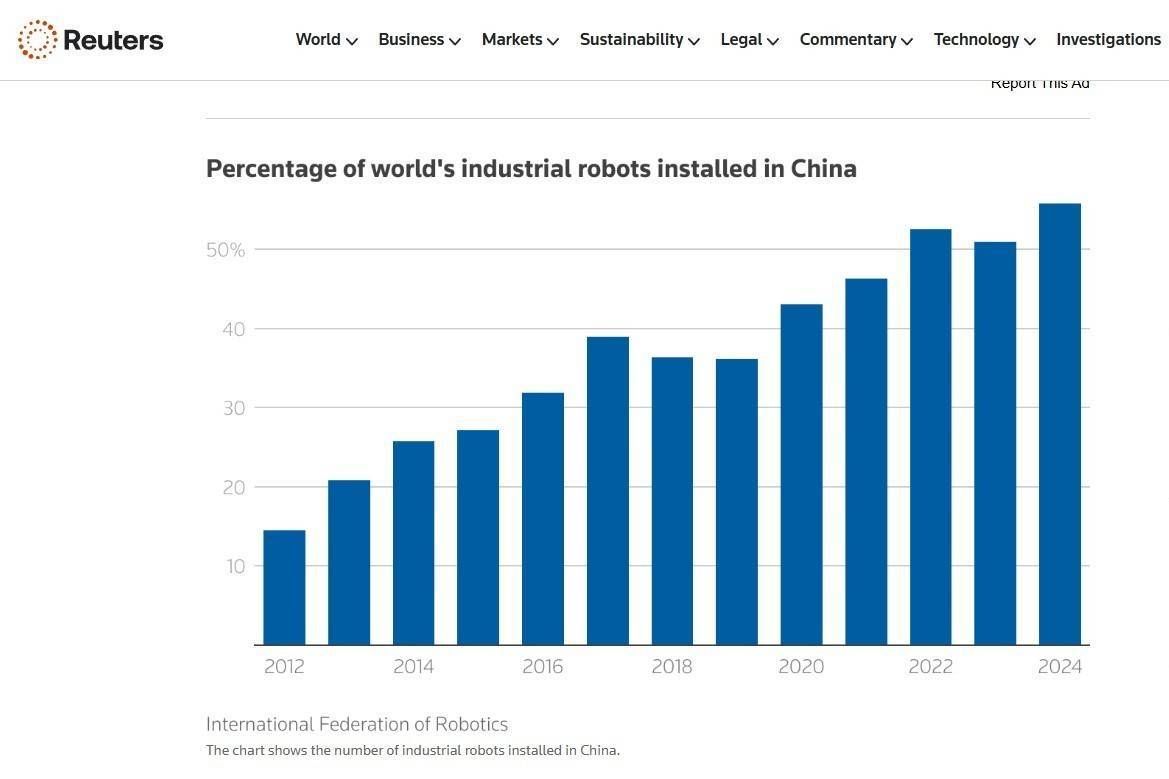
Core Insights - The article emphasizes the importance of a technology-driven "smart economy" in supporting China's economic development and facilitating its economic transformation [1][4]. Group 1: Economic Growth Drivers - Government policies aimed at supporting the "smart economy," including investments in artificial intelligence, semiconductors, and advanced manufacturing, have led to significant growth in the information technology and business services sectors since early 2024 [1]. - The proportion of industrial robots installed in China has been increasing, with over half of the world's industrial robots installed in the country over the past three years [4]. - The retail sector has benefited from targeted government policies, such as the trade-in policy implemented at the end of 2024, which has spurred growth in household appliances, furniture, and communication equipment [4]. Group 2: Consumer Trends - A shift in consumer preferences, particularly among millennials and Generation Z, is driving demand for new domestic products and services that combine tradition with modernity and leverage artificial intelligence and digital technologies [4][6]. - Emerging products and services, such as the sales of Pop Mart's Labubu dolls and the popularity of themed tea shops like "Bawang Chaji," highlight the potential for new consumption trends to break existing categories [4]. Group 3: Aging Population and New Business Opportunities - The aging population in China is creating new business opportunities in areas such as smart home technology, elderly care services, financial pension plans, and specialized healthcare products [6]. Group 4: Long-term Economic Transition - The transition to a sustainable consumption-driven economy in China is expected to be a long and complex process, but investments in advanced industries, innovation in products and services, and flexible policy-making can lay a solid foundation for this shift [6].

富士胶片集团发布2025财年第一季度财务报告
Zhong Guo Chan Ye Jing Ji Xin Xi Wang· 2025-08-11 13:46
Core Insights - Fujifilm Holdings Corporation reported a slight year-on-year increase of 0.1% in sales revenue for Q1 of FY2025, reaching 749.5 billion yen, driven by strong performance in Bio CDMO, semiconductor materials, and imaging businesses, which offset adverse effects from currency fluctuations [1][2] - All business segments achieved growth in operating profit, with the imaging segment showing remarkable performance, with operating profit increasing by 21.1% to 75.3 billion yen [1][2] - Net profit attributable to Fujifilm Holdings decreased by 11.5% year-on-year to 53.8 billion yen due to foreign exchange losses [1] Business Segment Highlights Medical Health - Sales revenue was 228.5 billion yen, a slight decrease of 2.9% year-on-year, while operating profit increased by 20.7% to 4.3 billion yen [2] - The decline in sales revenue was primarily due to reduced demand for medical materials in the Chinese market [3] Bio CDMO - Sales revenue increased due to contributions from a new factory in Denmark and the resumption of operations at the Texas production facility in the U.S. [3] Life Sciences - Sales revenue improved due to a recovery in the cell culture media market and strong demand for chemical reagents [4] Electronic Materials - Sales revenue was 102.1 billion yen, a slight decrease of 0.9%, while operating profit rose by 13.0% to 22.5 billion yen [5] - Demand for advanced semiconductor materials for generative AI contributed to a 3.8% increase in sales revenue [6] Imaging - Sales revenue increased by 11.2% to 145.3 billion yen, with operating profit rising significantly by 28.4% to 41.8 billion yen [8] - Strong sales of instant imaging systems and digital cameras drove revenue growth [9][10] Commercial Innovation - Sales revenue was 273.6 billion yen, a slight decrease of 2.3%, while operating profit increased by 7.9% to 15.6 billion yen [11] - The business solutions segment benefited from increased sales related to digital transformation solutions [12] - The office solutions segment experienced a decline in sales revenue due to adjustments in the sales structure of low-margin products in the Chinese market [13]
趋势研判!2025年中国数码复合机行业发展历程、产业链、市场规模、竞争格局及未来趋势:在数字化办公需求推动下,数码复合机规模突破200亿元大关[图]
Chan Ye Xin Xi Wang· 2025-08-11 01:29
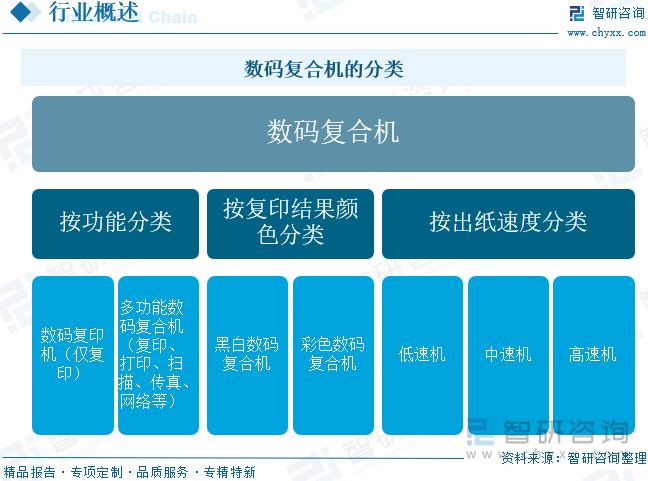
Core Insights - The digital multifunction printer (MFP) is becoming a core device in modern office environments due to its integrated features such as printing, copying, scanning, and faxing, along with its strong batch processing capabilities and high efficiency [1][15] - The Chinese digital MFP market is projected to grow from CNY 16.181 billion in 2019 to CNY 21.608 billion by 2024, with a compound annual growth rate (CAGR) of 5.95%, indicating robust market vitality [1][15] - The industry is expected to benefit from the ongoing digital transformation and the integration of new technologies such as artificial intelligence and the Internet of Things, leading to broader development opportunities [1][15] Industry Overview - Digital multifunction printers are based on copying functions and can include printing, scanning, and faxing capabilities, utilizing digital principles for document output [3][5] - The industry has evolved significantly since the late 1990s, transitioning from analog to digital technology, which has improved copy quality and operational convenience [8] - The digital MFP industry is characterized by a complete supply chain, including upstream raw materials, midstream manufacturing, and downstream sales and applications [10] Market Dynamics - The digital MFP market is experiencing stable growth, with increasing demand for automation in office environments [14][15] - The market for printing heads, a critical component of digital MFPs, is also growing, with a projected market size of approximately CNY 14.759 billion by 2024, reflecting a year-on-year growth of 2.31% [12] Competitive Landscape - The global digital MFP industry is undergoing significant changes, with international giants like Ricoh, Fuji Xerox, Canon, and Konica Minolta leading the market, while local companies in China are enhancing their competitiveness through technology innovation [18][20] - Key players in the Chinese market include Ricoh (China), Fuji Xerox (China), Sharp, Toshiba, and Canon, among others, which are expanding their product offerings and market presence [20][21][23] Future Trends - The industry is moving towards greater intelligence, with new MFPs expected to feature enhanced decision-making capabilities, predictive maintenance, and improved user interfaces [25] - Efficiency will be a core competitive advantage, with advancements in printing speed, resolution, and modular designs allowing for flexible functionality [26] - Environmental considerations are reshaping the industry, with a focus on sustainable manufacturing practices and the development of eco-friendly products [27]
联合国贸发会议认为——全球贸易总体增长但日趋失衡
Jing Ji Ri Bao· 2025-07-24 22:03
Group 1 - The report indicates that global trade continued to grow in the first half of 2025, but the growth rate has slowed due to factors such as a slowdown in global economic growth, uncertainty in trade policies, and increased geopolitical risks [1][2] - Developed countries experienced a faster trade growth rate compared to developing countries, primarily driven by strong import growth in the United States and a recovery in EU exports [1][2] - Trade imbalances are worsening, with the U.S. trade deficit expanding while trade surpluses for China and the EU have increased, highlighting ongoing tensions in trade relationships among major economies [2] Group 2 - The report notes significant differences in trade growth across industries, with the chemical and pharmaceutical sectors experiencing trade growth rates well above the global average, while trade in communication equipment has significantly declined [2] - The digital economy is facing issues of market concentration, negatively impacting competition, innovation, and consumer choice, particularly in developing countries [3] - Recommendations include promoting trade diversification, encouraging companies to enhance supply chain diversity, strengthening regional cooperation, and simplifying trade procedures to reduce costs [3]
纳思达: 关于重大资产出售完成交割的提示性公告
Zheng Quan Zhi Xing· 2025-07-02 16:03
Core Points - The major asset sale by Nasda Co., Ltd. has been completed on July 1, 2025, with Xerox Corporation as the buyer [1][2] - The estimated transaction price on the closing date is approximately $90.057206 million [2] - The buyer has transferred $60.057206 million to the designated bank account of the Cayman subsidiary II and an additional $30 million to an escrow account as per the equity purchase agreement [2] Group 1 - The board of directors and the supervisory board have approved the sale of 100% equity of Lexmark International II, LLC by Ninestar Group Company Limited [1] - The company has disclosed the relevant documents in major financial newspapers and on its official website [2] - The company will timely disclose the implementation status of the major asset sale as required by laws and regulations [2]

杨涛-营销讲师-大客户营销实战专家
Sou Hu Cai Jing· 2025-06-28 02:52
Core Insights - The articles highlight the extensive experience and achievements of Yang Tao in large customer marketing and sales management within Fortune 500 companies, showcasing his ability to drive significant revenue growth and develop effective marketing strategies [2][3][4][5][6]. Group 1: Professional Background - Yang Tao has over 25 years of practical experience in large customer marketing management and has held key positions in several Fortune 500 companies, including Ricoh and Fuji Xerox [2][3]. - He has a strong academic background with degrees from prestigious institutions, including an MBA from Sun Yat-sen University and MIT, as well as a PhD in Management [2]. Group 2: Achievements in Companies - At Ricoh, he led the national Chinese customer business center, achieving an annual revenue growth of 20%-28%, culminating in a total revenue of 170 million [4]. - As the general manager of the Shanghai branch, he focused on maximizing existing large customer potential, resulting in an annual growth rate of 12%-20%, with total revenue reaching 120 million [4]. - During his tenure in the Guangzhou branch, he implemented strategies that led to an impressive annual growth rate of 120%, achieving a total revenue of 40 million [4]. - In the emerging markets department, he emphasized resource utilization, leading to an annual growth of 50%, with total revenue of 30 million [4]. Group 3: Training and Development - Yang Tao has conducted over 50 training sessions on topics such as large customer strategies and sales techniques, which have reportedly improved marketing department efficiency by 20% [4]. - He has developed and delivered various courses focusing on sales management, customer communication, and effective sales team building, emphasizing practical application and interactive learning [9][10]. Group 4: Client Feedback - Clients have praised Yang Tao for his structured and practical training approach, noting the applicability of his teachings to real-world sales management challenges [10][11][12].