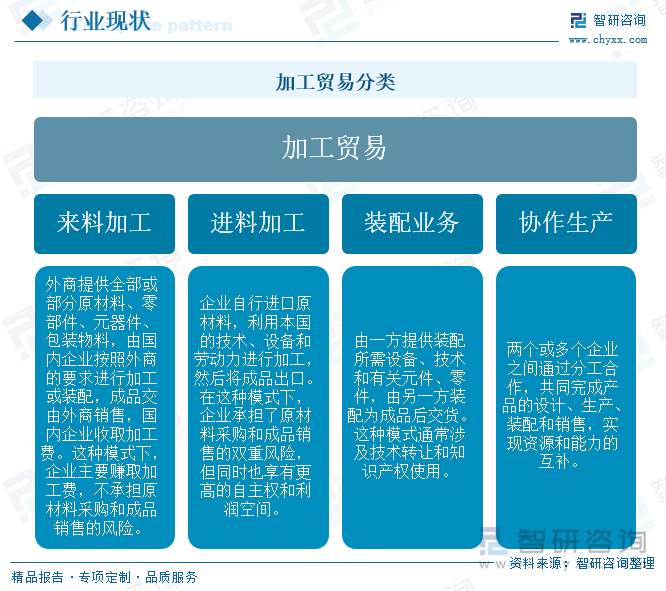
加工贸易

Search documents
海关总署:前三季度 我国对约8成的贸易伙伴出口实现增长
智通财经网· 2025-10-13 03:28
Core Viewpoint - China's foreign trade has shown resilience and growth in the first three quarters of 2023, with total imports and exports reaching 33.61 trillion yuan, a year-on-year increase of 4% [1][5][7]. Group 1: Trade Performance - Exports amounted to 19.95 trillion yuan, growing by 7.1%, while imports were 13.66 trillion yuan, slightly decreasing by 0.2% [1][5]. - In September alone, trade reached 4.04 trillion yuan, marking an 8% increase [1][5]. - The growth rate of imports and exports has accelerated each quarter, with the third quarter showing a 6% increase [5][6]. Group 2: Market Diversification - Trade with countries involved in the Belt and Road Initiative reached 17.37 trillion yuan, a 6.2% increase, accounting for 51.7% of total trade [5][31]. - Exports to ASEAN, Latin America, Africa, and Central Asia grew by 9.6%, 3.9%, 19.5%, and 16.7% respectively [5][6]. Group 3: Export Product Trends - Exports of electromechanical products reached 12.07 trillion yuan, growing by 9.6% and comprising 60.5% of total exports [6][19]. - High-tech products such as electronic information and high-end equipment saw significant growth, with increases of 8.1%, 22.4%, and 15.2% respectively [6][19]. Group 4: Import Recovery - Imports began to recover, with a 0.3% increase in the second quarter and a further 4.7% increase in the third quarter [6][28]. - Notable increases in import volumes included crude oil and metal ores, which rose by 4.9% and 10.1% respectively [6][28]. Group 5: Active Foreign Trade Entities - The number of foreign trade enterprises reached 700,000, an increase of 5.2% year-on-year, with private enterprises accounting for 613,000 of these [6][19]. - Private enterprises contributed significantly to trade growth, with a 7.8% increase in total trade value [19]. Group 6: Challenges and Future Outlook - Despite the positive performance, external challenges remain, including uncertainties in trade policies and a complex global economic environment [7][26]. - The customs authority plans to enhance regulatory efficiency and promote trade facilitation to support stable foreign trade development [7][29].
西部陆海新通道海铁联运推动中国—东盟跨境产业合作
Zhong Guo Xin Wen Wang· 2025-09-24 07:55
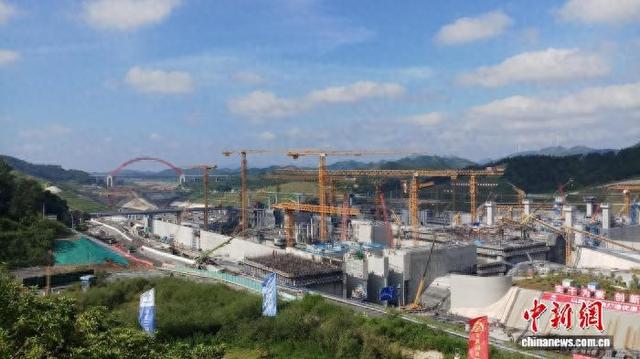
Core Insights - The construction of the Pinglu Canal and its associated infrastructure is a significant opportunity for the city of Qinzhou, enhancing its development as a coastal canal city with high-quality growth and openness [3] Infrastructure Development - The Pinglu Canal project has seen a total investment of approximately 596.81 billion yuan, accounting for 82.1% of the estimated project cost [3] - Key infrastructure includes the completion of a 300,000-ton oil terminal, a 200,000-ton channel, and four automated container terminals, adding 16 berths for vessels over 10,000 tons and increasing port throughput capacity by 49.73 million tons and container capacity by 2.63 million TEUs [3][4] Cargo and Trade Growth - The port's cargo throughput has surpassed 200 million tons, with container throughput expected to reach 6.96 million TEUs in 2024, marking a 92.4% increase since 2020 [4] - The Western Land-Sea New Corridor has seen the annual operation of over 10,000 sea-rail intermodal trains, doubling since 2020, and expanding coverage to 18 provinces, 75 cities, and 163 stations [4] ASEAN Trade and Investment - Qinzhou has established a cross-border industrial chain for products like bird's nest and palm oil, facilitating continuous imports from ASEAN countries [6] - The city has opened 84 container shipping routes, including direct routes to Malaysia and Vietnam, and has seen a 72.9% year-on-year increase in trade with ASEAN countries, with total trade expected to reach 14.69 billion yuan in 2024 [6]

【宝鸡】海关精准施策——为加工贸易企业“出海”护航
Shan Xi Ri Bao· 2025-07-31 00:03
Core Viewpoint - The successful delivery of copper alloy processing trade goods from Baoji to Canada has invigorated local private foreign trade enterprises, highlighting the importance of processing trade in expanding international markets and driving domestic economic growth [1] Group 1: Processing Trade and Economic Impact - Processing trade is a crucial component of foreign trade, playing a key role in exploring international markets and leveraging overseas demand [1] - Baoji's processing trade import and export value reached approximately 230 million yuan from January to June this year [1] Group 2: Support from Customs - Baoji Customs has implemented various measures to assist enterprises in expanding international markets, including one-on-one support and policy seminars [2] - The customs authority has introduced an innovative "enterprise unit" customs supervision model, significantly enhancing the alignment between customs regulation and enterprise operations [2] - Companies have reported receiving new orders and improved market competitiveness due to the support from Baoji Customs [2] Group 3: Specific Company Experiences - Companies like Shaanxi Sui Fu Advanced Copper Alloy Co., Ltd. have benefited from customs guidance, completing processing trade manual registration efficiently without paper materials [3] - Shaanxi Zhongsheng Tianze Composite Material Technology Co., Ltd. has established a processing trade factory in Baoji Comprehensive Bonded Zone, utilizing customs support for logistics and cross-border e-commerce [2] Group 4: Training and Policy Awareness - Baoji Customs regularly organizes policy seminars and training sessions to help processing trade enterprises understand the latest tax incentives and customs regulations [4] - A series of convenient policies and efficient services have effectively reduced operational costs and improved customs clearance efficiency for enterprises [4] - Baoji Customs aims to continue enhancing services and regulatory innovations to better support private enterprises in exploring international markets [4]
全岛封关运作时间明确 海南自贸港即将加速腾飞
Zhong Guo Chan Ye Jing Ji Xin Xi Wang· 2025-07-29 22:22
Core Points - The Hainan Free Trade Port will officially start its full island closure operation on December 18, 2025, as approved by the Central Committee [1] - From 2020 to 2024, Hainan's actual foreign investment exceeded the total of the first 32 years after the province was established, with an average annual growth rate of over 30% in goods trade import and export [1] Group 1: Policy Measures - The closure policy can be summarized in "four more": more favorable zero-tariff policies, more relaxed trade management measures, more convenient passage measures, and more efficient regulatory models [2] - The proportion of zero-tariff goods for "one-line" imports will increase from 21% to 74%, allowing for tax-free circulation among eligible entities within the island [2] - The new regulatory model will ensure low intervention and high efficiency for zero-tariff goods and relaxed trade management goods [2] Group 2: Economic Impact - Over the past four years, the processing and value-added tax exemption policy has led to 122 registered or approved pilot enterprises, with a total value of approximately 100.3 billion yuan and tax exemptions of about 8.4 billion yuan [3] - The actual use of foreign capital in Hainan reached 102.5 billion yuan, with an average annual growth of 14.6%, and the number of newly established foreign-funded enterprises increased by 43.7% [4] - The average annual growth rates for goods trade and service trade were 31.3% and 32.3%, respectively, with investments from 176 countries and regions [4] Group 3: Future Development - Hainan aims to create a world-class biological breeding zone and enhance its tropical agriculture sector to enrich the domestic market [4] - The province plans to accelerate the construction of an international tourism consumption center, focusing on creating influential cultural tourism projects and upgrading existing attractions [4]
同比增长5.2%!
Sou Hu Cai Jing· 2025-07-17 11:02
Core Insights - Jiangsu Province's total import and export value reached 2.81 trillion yuan in the first half of the year, a 5.2% increase compared to the same period last year, surpassing the national growth rate of 2.3% and accounting for 12.9% of China's total import and export value [1] Group 1: Trade Performance - Exports amounted to 1.88 trillion yuan, growing by 9.4%, while imports were 933.93 billion yuan, a decrease of 2.4% [1] - The proportion of processing trade increased, with processing trade imports and exports totaling 883.04 billion yuan, a growth of 6.1%, accounting for 31.4% of the total trade value, up 0.3 percentage points from the previous year [1] Group 2: Contribution by Enterprises - Foreign-invested enterprises contributed significantly, with imports and exports totaling 1.32 trillion yuan, a growth of 5.8%, contributing 2.7 percentage points to the overall growth, representing 46.9% of the total trade value [1] - Private enterprises had imports and exports of 1.25 trillion yuan, growing by 2.5%, contributing 1.2 percentage points to the overall growth, accounting for 44.5% of the total [1] - State-owned enterprises saw a notable increase in trade, with imports and exports reaching 241.35 billion yuan, a growth of 16.8% [1] Group 3: Regional Trade Dynamics - Jiangsu's trade with countries involved in the "Belt and Road" initiative reached 1.39 trillion yuan, a growth of 9.5%, contributing 4.5 percentage points to the overall growth, and accounting for 49.5% of the total trade value, an increase of 2 percentage points from the previous year [2] - Trade with ASEAN countries was particularly strong, reaching 510 billion yuan, a growth of 21.8%, while trade with the EU was 395.2 billion yuan, growing by 2.8% [2] Group 4: Product Categories - Mechanical and electrical products were the main drivers of export growth, with exports totaling 1.3 trillion yuan, a growth of 10.4% [2] - Key exports included computers and components (116.42 billion yuan, up 0.3%), electrical equipment (113.88 billion yuan, up 19%), and ships (63.82 billion yuan, up 27.6%) [2] - Imports of mechanical and electrical products also grew, totaling 532.7 billion yuan, a growth of 3%, with significant increases in flat panel display modules and computer components [2]
淄博一季度外贸出口同比增长百分之五
Da Zhong Ri Bao· 2025-05-09 02:25
Core Insights - In the first quarter, Zibo's total foreign trade import and export value reached 25.62 billion yuan, with exports valued at 15.77 billion yuan, reflecting a year-on-year growth of 5% [1] Trade Composition - General trade accounted for 83.6% of Zibo's foreign trade, with a total value of 21.42 billion yuan. Processing trade and bonded logistics saw imports and exports of 2.41 billion yuan and 1.79 billion yuan, respectively, marking year-on-year increases of 15.1% and 6.4% [1] Market Diversification - ASEAN emerged as Zibo's largest trading market, with a total trade value of 4.88 billion yuan, representing 19% of the city's foreign trade. Trade with the EU and the US reached 2.68 billion yuan and 2.49 billion yuan, showing year-on-year growth of 7.6% and 15.9%. Additionally, trade with emerging markets in Latin America and Africa amounted to 2.83 billion yuan and 1.65 billion yuan, with growth rates of 28.7% and 120% respectively [1] Export Growth by Product - Exports of electromechanical products totaled 2.9 billion yuan, up 6.3%, constituting 18.4% of Zibo's total exports. Other notable export growth included glass products at 1.4 billion yuan (7% increase), medicinal materials and pharmaceuticals at 950 million yuan (25.2% increase), and paper products at 740 million yuan (64.4% increase) [1] Import Growth - Zibo's imports included crude oil valued at 4.22 billion yuan, making up 42.9% of total imports. Other significant imports were pulp at 1.3 billion yuan, coal at 700 million yuan, and aluminum ore at 560 million yuan, with growth rates of 58.6%, 23%, and 4.7 times respectively [2] Enterprise Contribution - Private enterprises contributed 20.85 billion yuan to the total foreign trade, accounting for 81.4%. Foreign enterprises had an import and export value of 3.31 billion yuan, reflecting a year-on-year increase of 7.3%, while state-owned enterprises contributed 1.47 billion yuan [1]
综保区无人机智能通关为加工贸易发展插上“翅膀” 服务企业打通国内国际市场
Yang Shi Wang· 2025-04-29 10:13
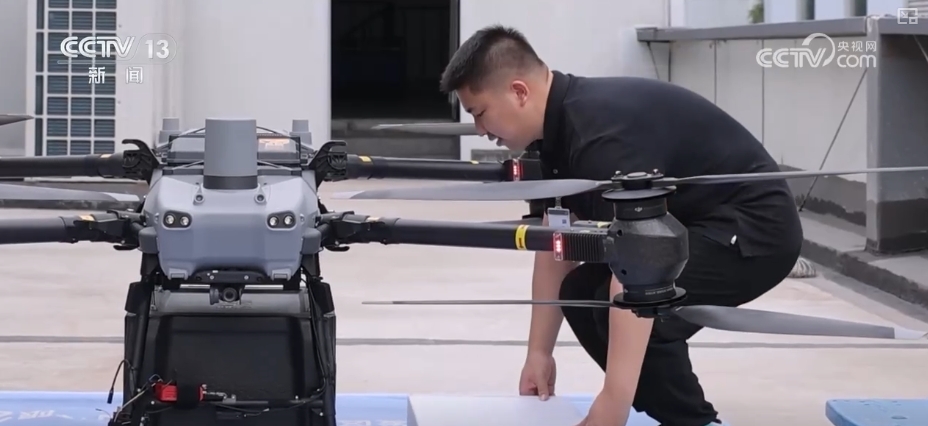
Group 1 - The first comprehensive bonded zone low-altitude transportation intelligent customs clearance model in China was officially launched in Huangpu District, Guangzhou, enhancing the efficiency of customs supervision for drone transportation of bonded goods [1][6] - Under the full-position monitoring of the Huangpu Customs low-altitude logistics control platform, a drone carrying bonded goods completed a 13-kilometer flight in approximately 30 minutes, showcasing the efficiency of the new model [6] - The low-altitude logistics control platform acts as an "invisible electronic fence," triggering alarms if the drone deviates from its planned route, ensuring precise supervision of bonded goods [9] Group 2 - Drone transportation is not only faster but also more cost-effective, with an estimated 50% reduction in logistics time and a 10% decrease in transportation costs compared to traditional truck transport [12] - The Pearl River Delta region has a vast market for bonded goods drone transportation due to its early development and large scale of processing trade, allowing companies to transport high-value, small-sized, and time-sensitive goods efficiently [14] - Companies are expected to continue improving drone transportation facilities and ensure rapid delivery of goods, with an anticipated annual value of drone transportation reaching 150 million yuan [16]
进料加工复出口业务申报注意动态调整差异
Sou Hu Cai Jing· 2025-04-27 03:48
Core Points - The article discusses the requirements for taxpayers engaged in processing trade and the recent adjustments made to the VAT declaration process for these businesses [2][3][5] Group 1: Processing Trade and VAT Declaration - In 2024, China's processing trade export value reached 50,201 billion yuan, reflecting a 2.4% increase from the previous year [2] - Taxpayers involved in processing trade must accurately report the value of bonded materials used in their export goods, as per the relevant tax policies [2][3] - The State Administration of Taxation issued Announcement No. 2 in 2025, optimizing the VAT declaration process for taxpayers engaged in processing trade [3][5] Group 2: Adjustments and Compliance - The new regulations require taxpayers to dynamically adjust the reported value of bonded materials when discrepancies arise between the total amount used and the amounts reported in previous tax periods [3][5] - Taxpayers must ensure accurate accounting of bonded materials and report the corresponding amounts during export declarations [3][5] - The announcement also emphasizes the importance of compliance, stating that any fraudulent activities related to customs declarations will be subject to legal penalties [7]

研判2025!中国加工贸易行业相关政策、行业现状及重点企业分析:行业深度融入全球产业链,仍面临全球经济格局变化挑战[图]
Chan Ye Xin Xi Wang· 2025-04-23 01:36
Core Viewpoint - The Chinese processing trade industry has become a bright spot in foreign trade, with a year-on-year growth of 7.27% in import and export value during January-February 2025, reaching 1.20 trillion yuan, despite a 1.2% overall decline in China's foreign trade [1][13]. Industry Overview - Processing trade refers to the business activities where enterprises import raw materials and components for processing or assembly, and then re-export the finished products. Its core feature is "two ends abroad," meaning both raw material imports and finished product exports target international markets [2]. Industry Development History - The development of China's processing trade industry has gone through four stages: 1. Initial stage (1978-1985) focused on pilot projects in coastal areas. 2. Preliminary development stage (1986-1992) saw rapid growth and policy encouragement. 3. Rapid development stage (1993-2000) where processing trade became a significant part of foreign trade. 4. Adjustment and upgrading stage (2001-present) emphasizing structural optimization and high-end development [4][5]. Industry Status - The processing trade industry has deeply integrated into the global supply chain, with significant growth attributed to the optimization of industrial structure, particularly in high-end manufacturing and intelligent manufacturing sectors [13]. Key Enterprises - The processing trade industry includes various types of enterprises such as state-owned, private, and foreign enterprises. State-owned enterprises dominate large projects and high-end manufacturing, while private enterprises excel in niche markets due to their flexibility. Foreign enterprises leverage advanced technology and management experience [15]. Industry Development Trends 1. **High-end, Intelligent, and Green Transformation**: The industry is focusing on high-tech, high-value products, with increased R&D investment and the adoption of smart manufacturing technologies [21]. 2. **Regional Integration and Global Market Layout**: Enterprises are actively engaging in regional markets and diversifying their market presence to reduce dependency on single markets [22][23]. 3. **Brand Building and Value Addition**: Strengthening brand recognition and enhancing product value are key strategies for improving competitiveness and achieving sustainable development [24].