
印染

Search documents
航民股份(600987):近日染料价格上涨,看好节后公司染费价格上涨
GF SECURITIES· 2026-02-08 06:29
Investment Rating - The investment rating for the company is "Buy" with a current price of 8.29 CNY and a fair value of 10.20 CNY [3]. Core Insights - The report highlights a recent increase in dye prices, which is expected to lead to a rise in dyeing fees for the company after the holiday season. The textile dyeing industry typically sees a peak in orders during March and April, suggesting a favorable outlook for the company's operations [1][6]. - The company operates in two main sectors: textile dyeing and gold jewelry processing, with the dyeing segment being the primary revenue contributor. The company employs a processing model where it charges fees for dyeing and finishing services [6]. - The report anticipates that the company's earnings per share (EPS) will grow from 0.72 CNY in 2025 to 0.91 CNY in 2027, reflecting a stable growth trajectory [6]. Financial Forecast - Revenue projections for the company are as follows: - 2023: 9,666 million CNY - 2024: 11,468 million CNY (growth rate of 18.6%) - 2025: 11,761 million CNY (growth rate of 2.6%) - 2026: 12,647 million CNY (growth rate of 7.5%) - 2027: 13,601 million CNY (growth rate of 7.5%) [2]. - The forecasted EBITDA is expected to increase from 1,126 million CNY in 2023 to 1,521 million CNY in 2027 [2]. - The net profit attributable to shareholders is projected to rise from 685 million CNY in 2023 to 933 million CNY in 2027, with a notable increase of 18.2% in 2026 [2]. Business Model and Market Position - The company is recognized as a leading player in the domestic dyeing industry and gold jewelry processing sector, with a dyeing capacity of 1.45 billion meters annually as of the first half of 2025 [6]. - The report notes that the company’s dyeing business is closely linked to the fluctuations in dye prices, which have been rising due to increased costs of raw materials [6]. - The company’s competitive edge in the international market is attributed to its efficient production capabilities and technological advantages, which are expected to support a recovery in order placements from overseas clients in 2026 [6].

量化大势研判202602:市场△gf继续保持扩张
Guolian Minsheng Securities· 2026-02-04 05:29
- The report introduces a quantitative model framework for market trend analysis, focusing on five asset style stages: external growth, quality growth, quality dividend, value dividend, and bankruptcy value. The model evaluates assets based on their intrinsic attributes and prioritizes them using the sequence of g > ROE > D, analyzing whether there are "good assets" and whether they are "expensive" [5][8][9] - The model incorporates key factors such as expected growth (gf), actual growth (g), profitability (ROE), high dividend (D), and bankruptcy value (B/P). Each factor is associated with specific market phases, e.g., expected growth is relevant across all phases, while profitability is emphasized during maturity phases [9][12] - The quantitative model has demonstrated strong historical performance, achieving an annualized return of 27.67% since 2009. It has shown consistent excess returns in most years, particularly post-2017, with limited effectiveness in years like 2011, 2012, and 2016 [19][22] - The model's backtesting results for specific years include notable excess returns, such as 51% in 2009, 36% in 2013, and 62% in 2022. However, it also recorded underperformance in years like 2011 (-11%) and 2014 (-4%) [22] - The report details six specific strategies derived from the model, each focusing on different factors: - **Expected Growth Strategy**: Selects industries with the highest analyst-forecasted growth rates. Recent recommendations include sectors like automotive sales, lithium equipment, and tungsten [38][39] - **Actual Growth Strategy**: Focuses on industries with the highest unexpected growth (△g). Current recommendations include photovoltaic equipment, insurance, and coal chemical sectors [40][41] - **Profitability Strategy**: Targets high-ROE industries with low valuations under the PB-ROE framework. Recommended sectors include copper, liquor, and non-dairy beverages [43][44] - **Quality Dividend Strategy**: Utilizes a DP+ROE scoring system to identify industries. Current recommendations include forestry, lithium equipment, and fiberglass [46][47] - **Value Dividend Strategy**: Employs a DP+BP scoring system. Recommended sectors include security, daily chemicals, and buses [49][50] - **Bankruptcy Value Strategy**: Focuses on industries with the lowest PB+SIZE scores. Current recommendations include automotive sales, ceramics, and cotton textiles [53][54]





仪征市空气质量连续两年“双达标”创历史新纪录
Yang Zi Wan Bao Wang· 2026-01-30 10:11
Group 1 - In 2025, Yizheng City achieved an average PM2.5 concentration of 28.7 micrograms per cubic meter, a year-on-year decrease of 3.7%, and an air quality good days ratio of 82.5%, ranking first among the nine counties and cities in Yangzhou [1] - Yizheng City successfully completed all 38 key air pollution control projects in 2025, laying a solid foundation for air quality improvement [3] - The city implemented targeted pollution control measures for key industries, including the successful conversion of biomass boiler fuel to natural gas at Yangzhou Huateng Dyeing Co., Ltd. and the installation of wet electrostatic precipitators at Yangzhou Jinteng Environmental Technology Co., Ltd. [3] Group 2 - Yizheng's ecological environment bureau coordinated with various departments to enhance dust pollution control, resulting in the identification, reporting, and rectification of 603 dust pollution issues throughout 2025 [5] - The chemical park was identified as a key area for air pollution control, with 228 VOC-related issues reported and 226 successfully rectified [5] - The bureau maintained a combination of regular management and source reduction, exceeding annual reduction targets for air pollutants [7] Group 3 - In 2025, Yizheng planned to reduce nitrogen oxides by 190 tons and volatile organic compounds by 14 tons, but achieved actual reductions of 701.209 tons and 233.7888 tons, respectively, significantly exceeding targets [8] - The city also eliminated 59 diesel trucks that did not meet the National III emission standards, further reducing mobile source pollution [8] - The city recorded 301 days of good air quality, marking a milestone in ecological protection and a new starting point for green development [8]

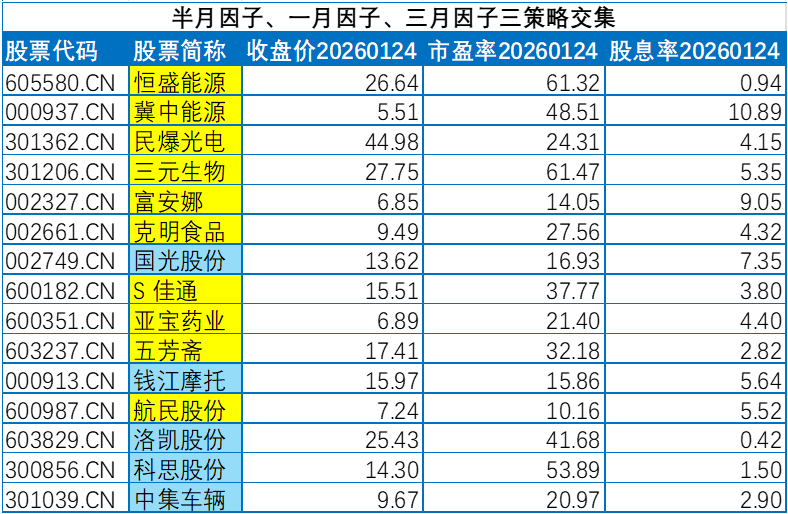
第九期筛选结果:虽然股息率看起来还行,但是成长方面,不少股票并不给力
Xin Lang Cai Jing· 2026-01-25 05:55
Core Insights - The article presents a summary of stock performance based on three testing strategies, highlighting a total of 15 stocks with an average dividend yield of 4.60% and an average price-to-earnings (P/E) ratio of 32.54 [1] Group 1: Stock Performance Summary - The intersection of the three strategies includes 15 stocks with an average dividend yield of 4.60% and an average P/E ratio of 32.54 [1] - The union of the three strategies results in 20 stocks with an average dividend yield of 4.76% and an average P/E ratio of 33.96, indicating a higher dividend yield compared to the previous period while the P/E ratio is lower [2][3] Group 2: High-Value Stocks - Jizhong Energy (000937) is a leading coal mining company with a P/E ratio of 48.51 and a high dividend yield of 10.89%, despite a significant drop in net profit [4] - Thinking Control (603508) specializes in railway safety equipment with a P/E ratio of 18.2 and a dividend yield of approximately 5.8%, showing a positive net profit growth [4] - Hangmin Co. (600987) is a leader in the dyeing industry with a low P/E ratio of 10.06 and a stable dividend yield of 3.23%, despite facing industry challenges [5] - Kemin Food (002661) is a leading noodle manufacturer with a P/E ratio of 15.2 and a dividend yield of about 4.8%, although it has experienced a decline in net profit [5] Group 3: Mid-Value Stocks - Zhongjian Vehicles (301039) is a global leader in commercial vehicles with a P/E ratio of 20.97 and a stable net profit despite a year-on-year decline [6] - Yabao Pharmaceutical (600351) is a leader in traditional Chinese medicine with a P/E ratio of 22.3 and a dividend yield of approximately 3.5%, showing stable cash flow [6] - Qianjiang Motorcycle (000913) is a major player in the motorcycle industry with a P/E ratio of 18.5 and a dividend yield of about 2.1%, facing market challenges [6] - Wufangzhai (603237) is a well-known brand in the rice dumpling market with a P/E ratio of 25.6 and a dividend yield of approximately 3.8%, despite a decline in net profit [6] Group 4: Cautious Stocks - Hengsheng Energy (605580) operates in the thermal power sector with a high P/E ratio of 61.83, indicating overvaluation concerns [7] - S Jiatong (600182) is in the tire industry with a P/E ratio of around 45 and a low dividend yield of 0.3%, facing profitability challenges [7] - Delmar (301332) is a small appliance company with a P/E ratio of about 40, showing weak brand strength compared to peers [7] - Wenfeng Co. (601010) is a retail company with a P/E ratio of about 22, experiencing a significant decline in net profit [7]
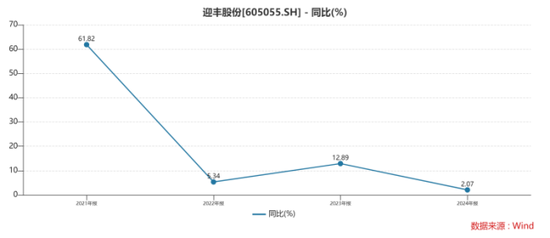
外部环境波动叠加新厂阵痛,迎丰股份再陷亏损局面
Xin Lang Cai Jing· 2026-01-19 08:34
Core Viewpoint - Yingfeng Co., Ltd. (605055.SH) has announced a projected annual loss for 2025, estimating a net profit loss of between 56 million to 45 million yuan, marking a return to annual losses after two years [1][9]. Group 1: Financial Performance - The company reported a significant decline in revenue growth, with a drop from 61.82% in 2021 to 5.34% in 2022, resulting in a net profit loss of 47.48 million yuan [2][10]. - In 2024, revenue growth further slowed to 2.07%, with a 7.21% decline in revenue from its core region of Zhejiang, totaling 1.247 billion yuan [2][10]. - For the first three quarters of 2025, the company achieved revenue of 1.095 billion yuan, a year-on-year decline of 3.63%, with Q1 and Q2 revenues down by 5.45% and 10.05% respectively, before a recovery of 5.18% in Q3 [4][12]. Group 2: Industry Context - The textile dyeing industry is facing significant pressure due to external factors such as tariff impacts and declining demand, leading to a competitive environment characterized by price reductions [4][12]. - The average export price of major dyeing products has fallen to its lowest level in nearly 15 years, indicating a shift towards "price for volume" competition [2][10]. Group 3: Operational Challenges - The company is experiencing increased fixed costs due to the gradual production ramp-up of its third business unit, which began operations in April 2025 [5][14]. - Management expenses rose by approximately 34.41% to 74.4645 million yuan, contributing to the net profit loss of 42.6776 million yuan reported in the third quarter [7][17]. Group 4: Strategic Investments - In 2025, the company invested in two chip companies to explore the integration of AI technology with traditional dyeing processes, although these investments are not expected to yield immediate financial benefits [1][8]. - The company holds a 7% stake in Hangzhou Weiheng, which focuses on integrated computing chips, and has also invested in Qingwei Intelligent, which raised over 2 billion yuan in funding [7][18].

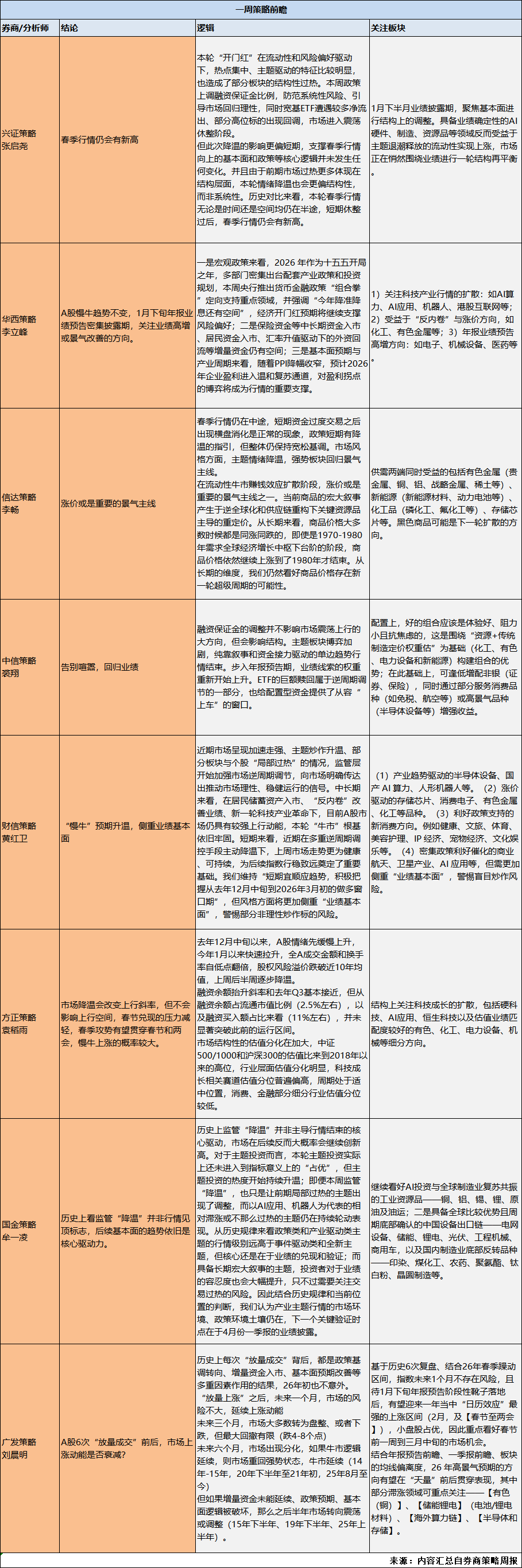
十大券商一周策略:历次“降温”后反而大概率创新高,围绕业绩博弈情绪升温,长牛慢牛基础进一步夯实
Sou Hu Cai Jing· 2026-01-19 00:00
Group 1 - The A-share market is transitioning from an "emotion-driven" phase to one anchored by performance, indicating a shift towards a more stable upward trend [1][2] - As the annual report preview period approaches, the focus of investment logic is shifting from narrative-driven speculation to performance verification [1][2] - A robust investment strategy should combine high-growth sectors like AI computing with cyclical sectors such as resources and manufacturing to create a balanced portfolio [1][2] Group 2 - The adjustment of financing margins does not alter the overall upward trend of the market but will impact its structure, leading to increased competition among thematic sectors [2][4] - The current market environment suggests that the next key verification point will be the performance disclosures in April, with a focus on sectors like AI applications and robotics [3][4] - The market is expected to experience short-term fluctuations, with a focus on sectors benefiting from supply-demand improvements, such as new energy and consumer goods [4][5] Group 3 - The policy environment remains supportive, with indications of potential interest rate cuts, which could bolster market confidence and support a long-term bullish trend [6][7] - The current market structure is likely to see a rotation towards sectors with strong fundamentals, such as industrial resources and consumer recovery channels [3][7] - The investment focus should remain on sectors with high growth potential, including AI, semiconductor equipment, and traditional manufacturing [3][5][10] Group 4 - The "spring rally" is facing short-term pressures due to complex macroeconomic conditions and regulatory measures aimed at stabilizing the market [8][9] - Despite recent market corrections, the underlying logic for AI applications remains intact, suggesting continued investment opportunities in this area [8][12] - The overall market sentiment is expected to stabilize, with a focus on sectors like electronics, power equipment, and non-bank financials as potential investment areas [9][10]
古越新章 智风和畅——绍兴传统产业以创新突破发展瓶颈
Shang Hai Zheng Quan Bao· 2026-01-18 18:15
Core Viewpoint - Shaoxing is experiencing a transformation in its traditional industries through green and intelligent upgrades, maintaining its historical essence while adapting to modern trends [1] Industry Summary - The textile, pharmaceutical, and chemical industries, which have historically formed the foundation of Shaoxing's economy, are revitalizing through innovation and technology integration [1] - The manufacturing sector in Shaoxing is showing significant growth, with the industrial added value of above-scale enterprises increasing by 9.8% year-on-year from January to November 2025 [1] Company Summary - Xilinmen, starting from small workshops, focuses on health sleep solutions by integrating innovative technology into smart mattresses [1] - Wanfeng Co., known for its substantial R&D investments, is leading the green upgrade in high-end printing and dyeing, beginning with a high-temperature dye [1] - The computer communication and electronic equipment manufacturing industry, representing new growth momentum, achieved a growth rate of 20.1%, while the chemical raw materials and chemical products manufacturing industry also saw a 20% increase [1]
A股分析师前瞻:后市指数行情依旧值得期待,结构上更关注业绩线
Xuan Gu Bao· 2026-01-18 14:42
Core Viewpoint - The current market sentiment is driven by liquidity and risk appetite, leading to a concentration of hot sectors and thematic investments, which has resulted in structural overheating in some areas [1][2] Group 1: Market Trends - The recent "opening red" market rally is characterized by significant liquidity and heightened risk preferences, with a clear focus on thematic investments [1][2] - The adjustment of financing margin ratios aims to prevent systemic risks and guide the market back to rationality, while broad-based ETFs have experienced significant net outflows, indicating a market entering a phase of consolidation [1][2] - Historical comparisons suggest that the current spring market rally is still in its early stages, with potential for new highs following a short-term correction [1][2] Group 2: Sector Focus - Analysts emphasize that the upcoming earnings reporting period will shift focus back to performance indicators, particularly in sectors expected to show high growth or improved conditions, such as electronics, machinery, and pharmaceuticals [1][2] - The adjustment in financing margins is not expected to impact the overall upward trend of the market but will affect sector dynamics, with increased competition among thematic sectors [2][3] - The focus on sectors benefiting from the "anti-involution" trend and price increases includes chemicals and non-ferrous metals, with a particular emphasis on high-growth areas in the upcoming earnings forecasts [2][3] Group 3: Investment Strategies - The market is expected to maintain a "slow bull" trend, with a focus on performance fundamentals as the primary driver of investment decisions, while cautioning against irrational speculative activities [2][3] - The anticipated earnings reports in late January are expected to catalyze significant market movements, particularly in sectors with strong performance indicators [2][3] - The overall market sentiment remains positive, with expectations of continued upward momentum despite short-term fluctuations, driven by fundamental improvements and policy support [2][3]
远信工业:Y5088AI智能定形机的突破在于构建了全流程感知-决策-执行闭环,能够实现工艺自动触发
Ge Long Hui· 2026-01-15 13:16
Core Viewpoint - The company has developed the Y5088AI intelligent shaping machine, which integrates a full-process perception-decision-execution loop, enabling automatic process triggering and AI smart reminders for fabric handling [1] Group 1: Technological Advancements - The Y5088AI intelligent shaping machine features visual recognition for fabric handling, detecting empty, full, and changing states, while linking with the MES system to automatically issue process parameters [1] - The self-optimizing system of the Y5088AI transforms tacit knowledge previously reliant on experienced workers into reusable digital models, enhancing transparency and control in the production process [1] Group 2: Company Developments - The controlling subsidiary, Green Chapter Yuanzhi (Zhejiang) Technology Co., Ltd., focuses on digitalization and intelligence in the dyeing industry [1] - The company has obtained 8 software copyrights and has developed products such as online thickness and weight detection instruments for full-width fabric, as well as a centralized control system for continuous machines [1] - The AI intelligent agent version 1.0 for dyeing enterprises was showcased at the Shanghai Textile Machinery Exhibition in December 2025, with plans for market promotion in 2026 [1]
迎丰股份:预计2025年净亏损4500万元-5600万元,同比由盈转亏
Di Yi Cai Jing· 2026-01-14 10:53
Group 1 - The company expects a net profit attributable to the parent company owners for the year 2025 to be between -56 million and -45 million yuan, indicating a significant loss compared to the previous year's profit of 44.18 million yuan [1][1][1] - This marks a transition from profit to loss year-on-year, highlighting a concerning financial outlook for the company [1][1][1]