地热能

Search documents
2025全球十大潮商年度人物
Sou Hu Cai Jing· 2026-01-02 05:22
Group 1 - The "2025 Top Ten潮商 Annual Figures" list was announced, highlighting outstanding潮商 leaders who drive global潮商 development with exceptional business strategies and leadership qualities [1][4][9] - The潮商 leaders are recognized for their innovative achievements and their commitment to national sentiments and responsibilities, marking a significant impact on global business culture [1][4] Group 2 - 加华银行 partnered with Alibaba's Taobao to launch a dedicated payment solution, reinforcing its position as Cambodia's largest commercial bank [3] - 方侨生, as the president of the Cambodian Chinese Association, promotes investment cooperation between China and Cambodia in various sectors, including industrial parks and medical equipment [3] Group 3 - 玉湖集团, led by 黄向墨, is expanding its cold chain logistics operations, with significant projects in Wuhan and眉山 expected to generate over 20 billion yuan in annual transactions [7][8] - The company is also implementing AI algorithms to enhance warehouse scheduling efficiency by 40% and has established a digital platform for trading services [7] Group 4 - 彭云鹏, founder of 印尼巴里多太平洋集团, has seen his wealth rise to $39.8 billion, with significant growth in the energy and infrastructure sectors, including a 3565% increase in net profit for his petrochemical division [11][12] - His company is also expanding geothermal energy projects, aiming to make Indonesia a global leader in geothermal power generation [11][12] Group 5 - 三环集团, under 张万镇, reported a revenue of 6.508 billion yuan in the first three quarters of 2025, a year-on-year increase of 20.96%, and a net profit of 1.959 billion yuan, up 22.16% [19][20] - The company is advancing its technology in high-end MLCCs and plans to launch an IPO to raise funds for global expansion [19][20] Group 6 - 马时亨, chairman of the Hong Kong Trade Development Council, is implementing a dual strategy to enhance the council's global presence and support SMEs in adopting digital technologies [22][23] - Under his leadership, 富卫集团 completed a significant IPO, raising 3.611 billion HKD, and reported a 38% increase in new business sales in the first half of the year [23] Group 7 - 周六福, founded by 李伟桂, has rapidly expanded its store count to over 4,100, achieving a compound annual growth rate of 35.8% from 2022 to 2024, significantly outpacing the industry average [30][31] - The company is also venturing into the digital asset space through a strategic investment in a Hong Kong securities firm, marking a significant shift for traditional jewelry businesses [31]


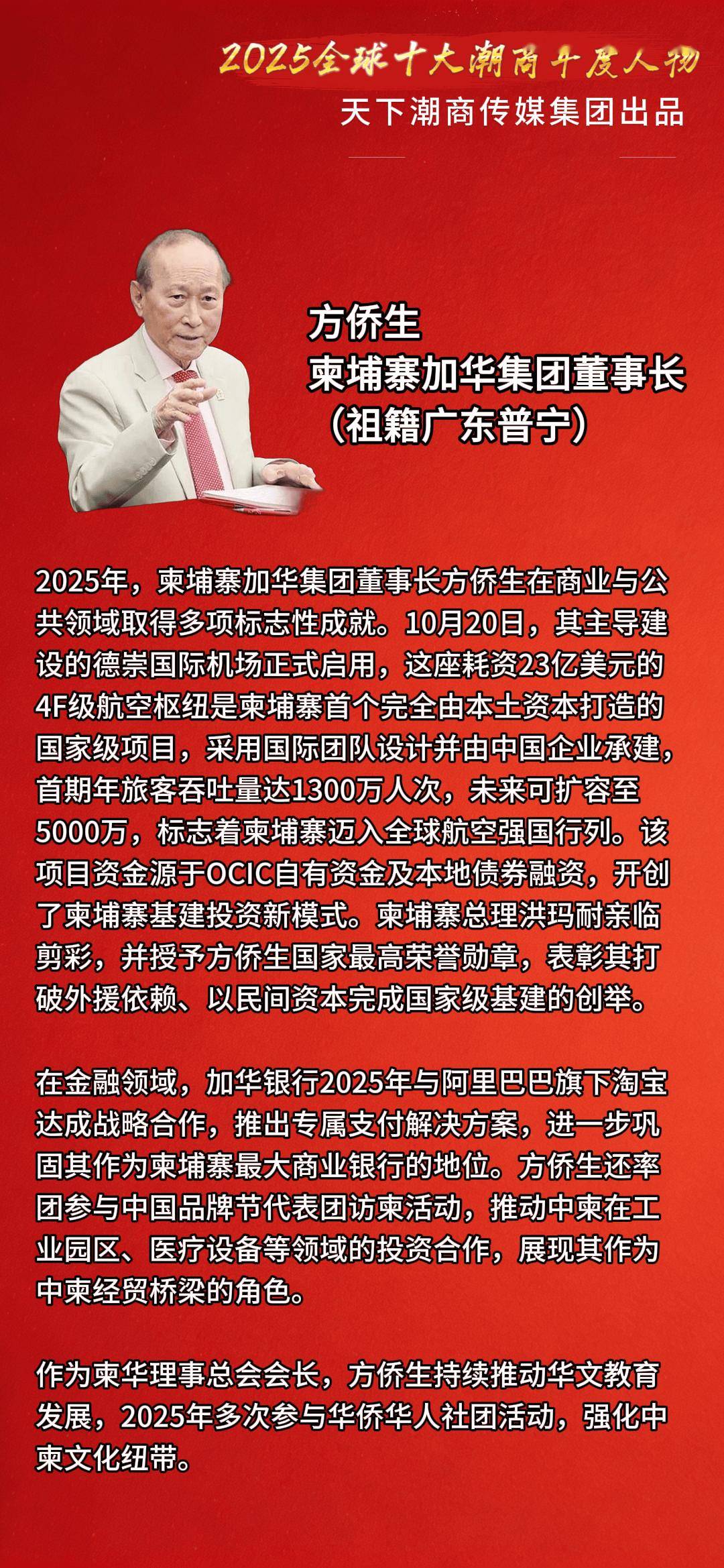
抢抓发展新机遇 助力建设美丽贵州
Xin Lang Cai Jing· 2025-12-28 22:36
Core Insights - The development of shallow geothermal energy in Guizhou Province is gaining momentum, with multiple pilot projects demonstrating significant energy savings and environmental benefits [6][7][9]. Group 1: Geothermal Energy Projects - Guizhou Province has initiated its first buried pipe geothermal heat pump project at the Guizhou Geological Science and Technology Park, which has been operating smoothly for nine years and saves about 50% energy compared to conventional systems [8]. - The Future Ark Renewable Energy Centralized Supply Project utilizes various energy forms, including water source heat pumps and gas tri-generation, effectively integrating energy management and serving over 20,000 users [8]. - The Guizhou Shallow Geothermal Energy Development Company has implemented over ten geothermal projects in the province, covering more than 1.2 million square meters [9]. Group 2: Policy and Industry Development - The "14th Five-Year Plan" has established a new development pattern for shallow geothermal energy in Guizhou, focusing on winter heating and summer cooling for both residential and commercial use [7]. - By the end of October 2025, the geothermal heating and cooling area in Guizhou is expected to reach 12 million square meters, with an annual resource capacity equivalent to 315 million tons of standard coal [7]. - The Guizhou Provincial Energy Bureau has set a goal for the geothermal industry to achieve high-quality development by 2030, supported by policies and collaboration with other provinces [13][14]. Group 3: Technological Advancements - The Guizhou Shallow Geothermal Energy Development Company has received recognition for its project on key technologies for geothermal exploration and development, which addresses challenges in drilling and cost [9]. - National policies are promoting the integration of geothermal energy into the energy structure, with a focus on research in geothermal resource evaluation and extraction technologies [11][12]. - The emphasis on "heat extraction without water" technology is expected to be a key research direction during the "14th Five-Year Plan" period [11]. Group 4: Environmental Impact - The first "zero-carbon" office building in Guizhou, developed by China Nuclear Huineng, utilizes a combination of renewable energy sources, achieving a 30% to 50% reduction in energy consumption compared to traditional systems [10]. - The building's design allows for self-sufficient energy production throughout its lifecycle, contributing to a significant reduction in carbon emissions [10]. Group 5: Future Opportunities - The geothermal energy industry in China is projected to reach a heating area of 2.1 billion square meters by 2025, indicating substantial growth potential [11]. - The Guizhou Geothermal Energy Industry Association aims to leverage new opportunities during the "14th Five-Year Plan" to enhance collaboration with advanced geothermal regions [14].
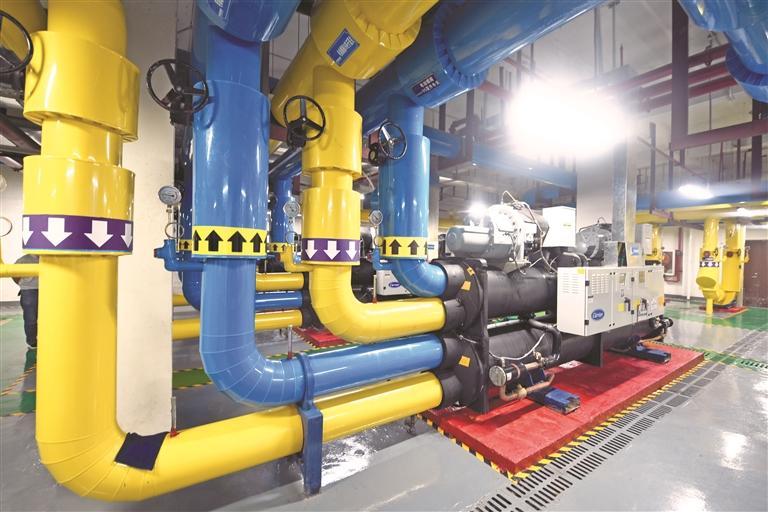
24小时不间断供给且零碳排放! 这家地热能初创公司获谷歌(GOOGL.US)青睐
Zhi Tong Cai Jing· 2025-12-10 13:41
Core Insights - Fervo Energy, a US geothermal startup, has raised $462 million in a funding round led by Capital B, with participation from major investors including Google and Tesla co-founder JB Straubel, aiming for large-scale commercialization of geothermal energy [1][2] - Geothermal energy currently accounts for only 0.4% of global electricity capacity, but its demand is increasing due to the electrification and power needs of AI systems, making it a critical energy source for tech giants like Google and Microsoft [2][3] - The global AI race is fundamentally a competition for AI computing infrastructure, which requires a stable and substantial power supply, leading to unprecedented electricity demand driven by AI data centers [3][4] Company Insights - Fervo Energy is the first startup to commercialize Enhanced Geothermal Systems (EGS), utilizing fracking technology from the oil and gas industry to extract heat from deep underground [2] - The company has a commercial pilot project in northern Nevada and a long-term agreement with Google to supply power to its AI data centers, while also constructing a 500 MW facility in Utah expected to deliver up to 100 MW of carbon-free power to the US grid by 2026 [2][4] Industry Insights - The unique characteristics of geothermal energy, such as its clean and stable power supply, make it an attractive investment for tech companies seeking reliable, low-carbon energy sources [4] - Unlike solar and wind energy, geothermal energy is not affected by weather or seasonal changes, allowing for continuous operation and significant reductions in carbon emissions [4] - Goldman Sachs has revised its forecast for electricity demand driven by data centers to increase by 175% by 2030, highlighting the significant role of AI in creating a "super demand cycle" for electricity [3]
“融”耀中原 水到林成 ——河南科技金融生态一线调研见闻
Zhong Guo Zheng Quan Bao· 2025-11-27 22:26
Core Insights - The article emphasizes the importance of financial support in fostering technological and industrial innovation in Henan, highlighting a tailored approach to financing that aligns with the specific needs of different stages of technology enterprises [1][2][5]. Financial Support for Technology Enterprises - Henan's banking sector has shifted from traditional collateral-based lending to a model that evaluates technology, industry, and future potential, providing comprehensive financial support throughout the lifecycle of technology companies [2][4]. - The case of Hengxing Technology illustrates how financial institutions have supported its transformation and growth through various credit products, with over 1 billion yuan in loans provided by the Export-Import Bank [3][4]. Innovative Financial Products - The banking industry in Henan has developed specialized financial products such as photovoltaic loans, clean energy project loans, and cold chain logistics loans to cater to the unique characteristics of technology enterprises [5][6]. - The introduction of these products aims to facilitate the growth of the technology and innovation sectors by ensuring that financial resources are effectively allocated [5]. Case Studies of Successful Financing - The establishment of Zhongke Qingneng, which focuses on liquid hydrogen technology, demonstrates the banks' willingness to support innovative startups despite their initial lack of profitability, with a loan of 10 million yuan provided by China Bank [3][4]. - The development of geothermal energy by Wanjing New Energy showcases the potential for innovative financing solutions in emerging sectors, with a loan of 88 million yuan structured to support their projects [6]. Strengthening the Financial Ecosystem - The article highlights the collaboration between financial institutions and technology enterprises, emphasizing the role of banks in enhancing the financing environment through policy alignment and innovative financial tools [8][9]. - The integration of digital technologies in banking services has improved the efficiency and accessibility of financing for enterprises, breaking down traditional barriers [7][9]. Comprehensive Support for the Agricultural Sector - The case of Muyuan Foods illustrates how banks have provided increasing credit support as the company expanded its operations, with loans growing from 300 million yuan in 2016 to 3 billion yuan in 2020 [8][9]. - The establishment of information-sharing mechanisms among stakeholders in the agricultural supply chain has enabled banks to better assess risks and tailor financing solutions [9].


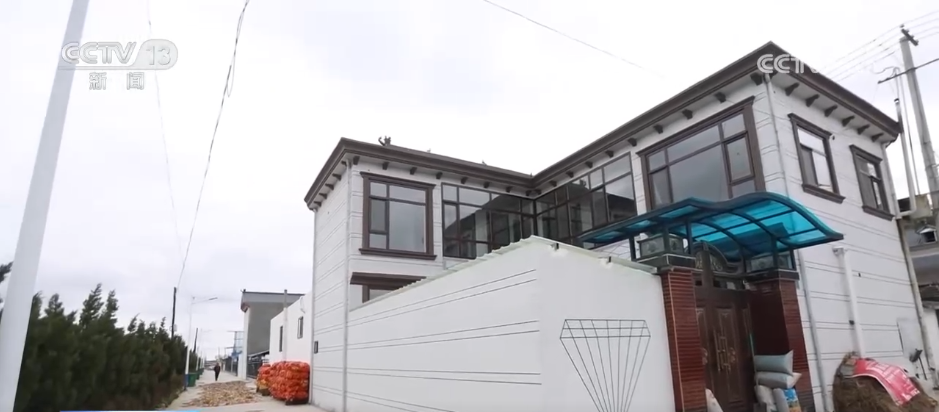
就“地”取“热”助力群众温暖过冬 地热能“赋能”乡村振兴
Yang Shi Wang· 2025-11-17 05:30
Core Viewpoint - The article highlights the implementation of a geothermal energy heating project in Tianshui, Gansu, aimed at improving living conditions and promoting green transformation in response to a cold wave affecting the region [1][6]. Group 1: Project Overview - The geothermal energy heating project in Baoshan Village, Tianshui, has been established as part of the national resettlement area for poverty alleviation [1]. - The project covers a total heating area of 53,000 square meters and integrates shallow and medium-deep geothermal resources [6]. Group 2: Technological Innovations - The project employs green technologies such as "heat extraction without water" and "heat extraction without consumption of water," creating an efficient and stable clean energy heating system [6]. Group 3: Economic and Environmental Impact - The heating system has reduced winter heating costs for residents by approximately 75% [6]. - Annually, the project can replace 2,270 tons of standard coal and reduce carbon dioxide emissions by 5,950 tons [6].
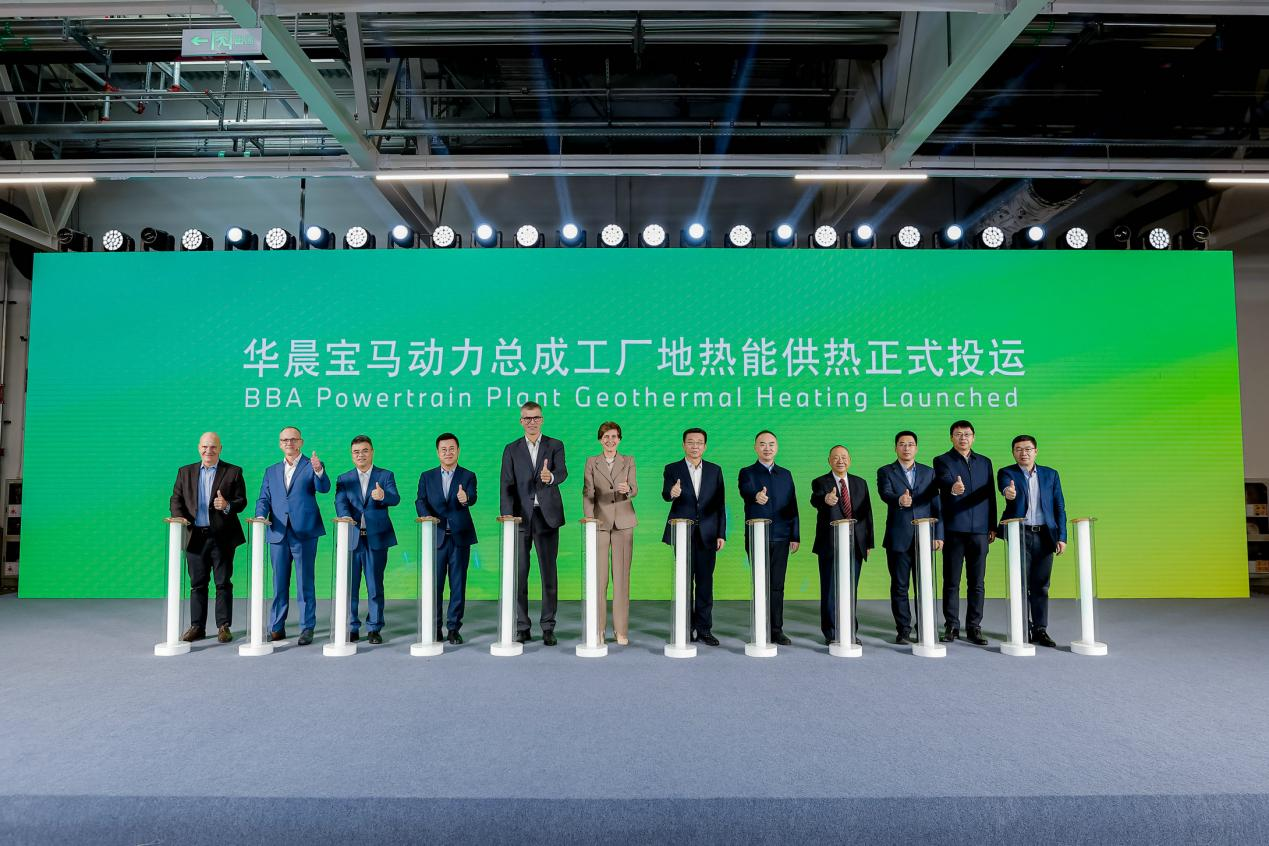
地热+工业!万江宝马华能联手掀起零碳园区供热新革命
Zhong Guo Neng Yuan Wang· 2025-10-31 09:13
Core Insights - The completion and operation of the geothermal heating project at the Brilliance BMW powertrain plant in Shenyang marks a significant shift from traditional fossil fuel reliance to clean, low-carbon energy in the industrial heating sector [1][10] - This project serves as a replicable and promotable model for low-carbon transformation in northern industrial cities, contributing to the broader goal of sustainable development [1][10] Group 1: Project Overview - The geothermal heating project was inaugurated on October 31, with key government and corporate leaders in attendance, highlighting its importance as a model for industrial and ecological leadership [2][3] - The project is a collaboration between Brilliance BMW, China Huaneng Group, and Wanjing New Energy Co., showcasing cross-sector cooperation [4][6] Group 2: Strategic Importance - The project aligns with the global trend towards green development and is seen as a critical step in the automotive industry's green upgrade [4] - It is positioned as a new benchmark for zero-carbon parks and factories in Shenyang, contributing to the region's clean energy goals [4][10] Group 3: Technological Innovation - The project utilizes advanced geothermal technology, including a closed-loop system that avoids water extraction, ensuring efficient heat collection while protecting groundwater resources [7][9] - The geothermal wells reach a depth of 2,900 meters, equivalent to stacking nearly ten Eiffel Towers, demonstrating significant technological achievement [9] Group 4: Environmental Impact - The project is expected to provide 100% non-fossil energy heating over an area of approximately 580,000 square meters, reducing carbon emissions by 18,000 tons annually [10] - This reduction is comparable to the carbon emissions produced by a car circling the Earth 3,000 times, reinforcing the project's ecological benefits [10] Group 5: Future Implications - The successful implementation of this project is anticipated to support further low-carbon transitions in other northern industrial cities, contributing to China's dual carbon goals and revitalizing old industrial bases [10]

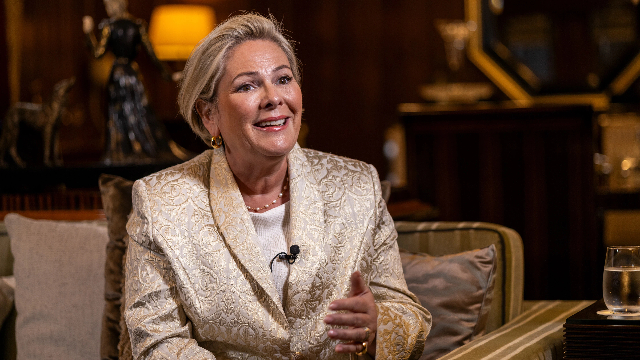
独家专访冰岛总统托马斯多蒂尔:冰岛创新与中国规模是完美组合
第一财经· 2025-10-30 10:49
Core Viewpoint - The article discusses the growing cooperation between China and Iceland, particularly in the geothermal energy sector, highlighting the potential for sustainable development and green energy initiatives between the two countries [3][4][6]. Economic and Trade Relations - Iceland is the first Western European country to recognize China's market economy status and has established a free trade agreement and currency swap agreement with China [4]. - China is currently Iceland's fourth-largest trading partner and has been the largest trading partner in Asia for 19 consecutive years [4]. Geothermal Energy Cooperation - Iceland has rich geothermal resources, with 95% of its heating needs met through geothermal energy, and has been promoting its geothermal technology globally [5][6]. - A joint statement was released during the visit, emphasizing the commitment to enhance cooperation in geothermal energy and green transformation, aiming to reduce greenhouse gas emissions and create new green industries and jobs [5][6]. - The partnership has been ongoing for decades, with a joint venture established in 2006 providing renewable energy heating services to over 70 regions in China [5][6]. Sustainable Development Initiatives - The 2025 Sustainable Global Leaders Conference aims to transform discussions on sustainability into actionable initiatives, connecting policy, business, and innovation [9]. - Iceland's strengths in sustainable practices and innovation are highlighted, with a focus on collaboration with China's execution capabilities and scale [9][10]. Tourism Growth - The number of Chinese tourists visiting Iceland reached 75,000 in the first eight months of the year, with expectations for continued growth [12][13]. - The unique natural landscapes of Iceland attract Chinese tourists, providing a stark contrast to their densely populated environments [12][13]. - There is a call for direct flights to enhance connectivity and promote further exchanges between the two nations [13][14].

独家专访冰岛总统托马斯多蒂尔:冰岛创新与中国规模是完美组合
Di Yi Cai Jing· 2025-10-30 05:06
Core Viewpoint - The increasing interest of Chinese tourists in Iceland highlights the potential for deeper cooperation between China and Iceland in tourism and sustainable energy sectors [1][11]. Tourism - Iceland has become a popular travel destination for Chinese tourists, with 75,000 visitors recorded in the first eight months of the year, expected to reach a new annual high by year-end [11] - The unique natural landscapes of Iceland provide a rare experience for tourists from densely populated regions like China, making it an attractive destination [11][12] - The Icelandic government aims to ensure high-quality experiences for Chinese tourists while protecting the natural environment [12] Geothermal Energy Cooperation - Iceland is rich in geothermal resources, with a centralized heating system covering 95% of the country, and has been collaborating with China in this field for decades [4][5] - A joint venture between Sinopec and Icelandic companies has been providing energy services to over 70 regions in China, benefiting hundreds of thousands of people [5] - The recent joint statement emphasizes the commitment to enhance cooperation in geothermal energy and green transformation, aiming to reduce greenhouse gas emissions and create new green jobs [5][6] Sustainable Development - Iceland's focus on sustainable practices is evident in its advanced fisheries and food processing sectors, which align with ESG investment principles [8] - The 2025 Sustainable Global Leaders Conference aims to transform discussions on sustainability into actionable practices between China and Iceland [8] - The collaboration between Iceland's innovative approaches and China's execution capabilities is seen as a perfect combination to address climate change challenges [9]
银行如何解锁创新型企业“价值密码”
Jing Ji Wang· 2025-10-16 03:08
Core Insights - The banking industry is shifting its focus from traditional financial metrics to understanding the potential of technology companies, emphasizing the need for a deeper comprehension of the tech sector and its opportunities [1][8] Group 1: Case Studies - The case of Wanjing New Energy highlights the challenges banks face in understanding innovative technologies, such as the geothermal heating project in Luoyang, which required extensive research and collaboration with various governmental departments [2][5] - Zhongyuan Bank provided a credit line of 85 million yuan for the geothermal project, and subsequently extended a total of nearly 200 million yuan to Wanjing New Energy, demonstrating a commitment to supporting the clean energy sector [5] - The bank's team conducted thorough on-site investigations to assess the project's viability, including evaluating occupancy rates in residential areas to gauge potential revenue [3][5] Group 2: Evolving Banking Practices - Traditional banking practices focused on past performance metrics, but there is a shift towards evaluating technology companies based on their industry, technology, team, and future potential [6] - China Bank's Zhengzhou Free Trade Zone branch provided a loan of 10 million yuan to Zhongke Qingneng, a startup specializing in low-temperature technology, indicating a willingness to support innovative firms despite their early-stage status [6][7] - The evaluation of technology companies now includes assessing their innovation capabilities, such as the number and quality of patents, and their potential market applications across various sectors [6][7] Group 3: Recommendations for Banks - Experts suggest that banks need to upgrade their evaluation methods to better understand technology companies, moving from static financial data to dynamic, multi-dimensional assessments of innovation capabilities [8] - There is a call for banks to develop a composite evaluation model that includes metrics like R&D expenditure growth and venture capital investment, which can help identify high-potential tech firms [8] - Talent development is crucial, with recommendations for banks to cultivate a workforce that understands both finance and technology, enhancing their ability to assess and support innovative enterprises [9]

中国和冰岛联合声明
财联社· 2025-10-14 05:29
Core Viewpoint - The joint statement emphasizes the importance of geothermal energy in mitigating climate change and achieving green transformation, highlighting the commitment of China and Iceland to enhance cooperation in this area [1][2]. Group 1: Climate Change and Cooperation - Both parties recognize climate change as a significant challenge and reaffirm their commitment to the principles of fairness and common but differentiated responsibilities under the UN Framework Convention on Climate Change and the Paris Agreement [1]. - The agreement aims to strengthen intergovernmental and industry cooperation to develop geothermal energy potential at global, regional, and national levels [2]. Group 2: Sustainable Development and Green Innovation - The parties will support and promote sustainable development policies and practices, develop a circular economy, and encourage green innovation and low-carbon solutions [2]. - There is a commitment to jointly advance global plastic pollution governance as part of their green cooperation efforts [2]. Group 3: Collaboration Mechanisms - Relevant authorities, enterprises, and organizations will engage in cooperation and dialogue based on mutual interests and available resources, focusing on existing cooperation areas and new initiatives that facilitate green transformation and sustainable development [2].