家居装饰

Search documents
四个项目落户阿曼穆达比工业城,投资额达1160万里亚尔
Shang Wu Bu Wang Zhan· 2025-09-19 16:11
Core Insights - The total number of investment contracts in Al Mudhaibi Industrial City has increased to 12, with a total investment amount of 1,160 million Omani Rials [1] - In the first half of this year, the industrial city received 5 investment applications, with 4 projects successfully established, including one industrial project covering over 14,000 square meters and exceeding 1 million Omani Rials in investment [1] - The sectors involved in these contracts include oil and gas, food industry, construction, electronic materials, and home decoration [1]
联翔股份:8月份公司未进行回购
Zheng Quan Ri Bao Wang· 2025-09-02 13:16
Core Viewpoint - On the evening of September 2, the company announced that it did not conduct any share repurchase in August 2025 [1] Group 1 - The company, Lianxiang Co., Ltd. (603272), released an announcement regarding its share repurchase activities [1]

财说丨联翔股份业绩扭亏为盈?靠赊销撑起的扭亏幻象
Xin Lang Cai Jing· 2025-08-31 00:13
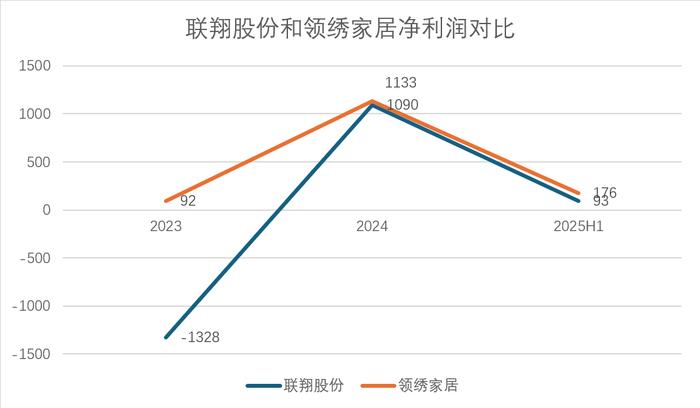
Core Viewpoint - Lianxiang Co., Ltd. reported a significant revenue growth of 38.72% in the first half of 2025, but underlying operational issues raise concerns about the sustainability of this performance [1][5]. Financial Performance - In 2022, Lianxiang's revenue was 200 million yuan, down 28.48% year-on-year, with a net profit of 36 million yuan, a decline of 45.90% [2]. - By 2023, revenue further decreased to 156 million yuan, a 21.73% drop, and the company reported a net loss of 13 million yuan, a 136.64% decline [2]. - In 2024, Lianxiang's revenue rebounded to 216 million yuan, a 37.83% increase, and net profit turned positive at 10.9 million yuan [5]. - The first half of 2025 saw revenue of 74.39 million yuan, up 38.72%, with a net profit of 0.93 million yuan [1][5]. Business Structure and Growth Drivers - The main business of Lianxiang, which includes wall fabrics and curtains, is closely tied to the real estate market, which is currently under pressure [6]. - The significant growth in revenue is attributed to the expansion of the decoration and renovation business, which previously contributed minimally to overall revenue [5][6]. - In 2024, the renovation business generated 71.45 million yuan, a substantial increase from 8.93 million yuan in 2023, indicating a shift in business focus [6]. Accounts Receivable and Cash Flow Issues - Lianxiang's accounts receivable surged from 3.5 million yuan at the end of 2023 to 69.46 million yuan by the end of 2024, marking an increase of over 18 times [8][11]. - The cash flow situation deteriorated, with a net cash outflow of 14.43 million yuan in 2024, indicating that revenue growth has not translated into actual cash [12][15]. - The company has begun relying on short-term loans, with 10.51 million yuan in short-term borrowings reported in the first half of 2025, the first instance since its IPO [15]. Governance and Regulatory Concerns - The company faced scrutiny from regulators due to issues with financial disclosures and governance, leading to public reprimands for key executives [4]. - Frequent changes in performance forecasts have raised questions about internal governance and financial accuracy [3][4]. Shareholder Sentiment - Major pre-IPO shareholders have begun to reduce their stakes, indicating a lack of confidence in the company's future prospects [16]. - The departure of key financial personnel has also raised concerns about the company's financial management and stability [16].

浙江5部门通告追溯娃哈哈20年资金流向?官方辟谣;农夫山泉、祖名股份:与余杭异味自来水无关联;演唱会出轨门CEO宣布辞职丨邦早报
创业邦· 2025-07-20 01:15
Group 1 - Zhejiang authorities denied rumors about tracing Wahaha's 20-year fund flow, labeling it as false news [2] - Farmer Spring and Zunming Co. clarified their non-involvement in the recent water contamination incident in Liangzhu, stating they do not have production bases in the affected area [4][5] - The founder of West B, Jia Guolong, criticized the irrational pricing strategies of food delivery platforms, urging for a return of pricing power to merchants [8] Group 2 - Moutai's e-commerce channel saw a significant change with 24 online stores being removed, indicating a tightening of channel control by major liquor companies [10] - Gree responded to complaints about a ranking platform, asserting that the platform lacks credibility and has a history of legal issues [10] - NIO announced that it has surpassed 80 million battery swaps and has established 3,405 battery swap stations [10] Group 3 - BMW announced the establishment of a new IT research center in Nanjing, which will be one of its six global centers [17] - Lixun Robotics has commenced construction on a headquarters project with a total investment of 5 billion yuan, expected to generate an annual output value of 10 billion yuan upon completion [17] - Corning's commitments to the EU were accepted, avoiding potential antitrust fines related to exclusive supply agreements [19] Group 4 - The Chinese unicorn companies' total valuation exceeded 1.2 trillion USD, with the integrated circuit sector leading in the number of companies and valuation [33] - The global PC shipment volume increased by 8.4% year-on-year in Q2 2025, with Lenovo maintaining the leading position [31]
联翔股份: 2025年半年度业绩预告
Zheng Quan Zhi Xing· 2025-07-14 08:22
Group 1 - The company expects to achieve a net profit attributable to shareholders of between 600,000 and 900,000 yuan for the first half of 2025, marking a turnaround from a loss in the same period last year [2][2][2] - The net profit attributable to shareholders after deducting non-recurring gains and losses is projected to be between 400,000 and 600,000 yuan [2][2][2] - The company reported a total profit of -14.299 million yuan and a net profit of -13.626 million yuan attributable to shareholders for the first half of 2024 [2][2][2] Group 2 - The company attributes the expected improvement in performance to increased efforts in expanding its wall fabric and curtain engineering channels and decoration business [2][2][2] - The performance forecast is based on preliminary calculations by the company's finance department and has not been audited by an accounting firm [2][2][2] - The company confirms that there are no significant uncertainties that would affect the accuracy of this performance forecast [2][2][2]
海南率先推行放心消费“在线承诺+动态星级”服务
Hai Nan Ri Bao· 2025-07-01 01:23
Core Viewpoint - Hainan has implemented an innovative "online commitment + dynamic star rating" service to enhance consumer confidence and promote self-discipline among merchants, contributing to a more trustworthy consumption environment [2][3][10]. Group 1: System Innovation - The initiative is part of Hainan's broader strategy to integrate institutional innovation to drive reform and development in the free trade port [2][3]. - The "放心消费在海南" (Safe Consumption in Hainan) program allows consumers to check the star rating, reviews, and credit status of shops before making purchases, significantly reducing the risk of poor experiences [3][5]. Group 2: Consumer Empowerment - The system aims to address information asymmetry, enabling consumers to make informed choices rather than random selections [5][6]. - Consumers can access detailed information about businesses, including product offerings and customer feedback, thereby enhancing their right to know [5][6]. Group 3: Merchant Participation - Merchants must sign an online commitment to become "放心消费单位" (Safe Consumption Units), which subjects them to social supervision [7][11]. - The star rating system categorizes businesses into three levels, with higher ratings indicating more commitments to consumer protection [8][9]. Group 4: Market Impact - The program has led to a rapid increase in the number of "放心消费单位," with over 128,000 units established across various sectors, including tourism, shopping, and dining [11]. - The initiative has transformed the relationship between government and businesses, shifting from a regulatory approach to one of voluntary commitment and social oversight [11]. Group 5: Future Outlook - As the influence of the "放心消费在海南" brand grows, it is expected to catalyze a qualitative change in the consumption environment, enhancing overall market trust [12].
*ST金刚重整迎来关键节点:确定控股股东欧昊集团为重整产业投资人 最高出资4.02亿元强化控股权
Zheng Quan Ri Bao· 2025-06-12 12:38
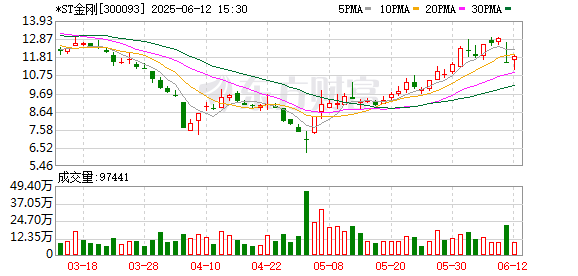
Core Viewpoint - Gansu King Kong Photovoltaic Co., Ltd. (*ST King Kong*) has entered a critical phase in its restructuring process, with Guangdong Ouhao Group confirmed as the industrial investor to aid in its debt resolution and operational recovery [2][3]. Group 1: Restructuring Details - The restructuring investment agreement was signed on June 9, with Ouhao Group committing to invest between 268 million yuan and 402 million yuan at a price of 4.96 yuan per share, which is 50% of the average stock price over the previous 60 trading days [3][4]. - Following the transaction, Ouhao Group's shareholding will be between 20% and 25%, solidifying its control over *ST King Kong* [3][4]. - The restructuring process was initiated after creditors filed for bankruptcy due to *ST King Kong*'s inability to repay debts, highlighting the company's significant financial distress [3][4]. Group 2: Financial Performance and Challenges - *ST King Kong* has faced continuous losses, with net losses of 202 million yuan in 2021, 269 million yuan in 2022, and 362 million yuan in 2023. In 2024, the company reported a revenue drop of 78.69% to 124 million yuan and a net loss of 795 million yuan, marking a 119.83% increase in losses year-on-year [6][7]. - The company's total assets were reported at 2.711 billion yuan, with total liabilities of 3.635 billion yuan, resulting in a debt ratio of 134.08% and a negative net asset value of 921 million yuan [6][7]. Group 3: Future Prospects and Contracts - If the restructuring is successful, *ST King Kong* could potentially turn its net assets positive and avoid delisting risks. However, failure to restructure could lead to delisting based on its current financial status [7]. - A significant sales contract was signed with a South Asian customer for 194 MW of HJT solar cells, expected to account for over 50% of the company's audited revenue for 2024, indicating a potential boost to future performance [7].

美股前瞻 | 三大股指期货涨跌不一,美联储官员放风:9月之前可能不会降息
智通财经网· 2025-05-20 12:00
Market Overview - US stock index futures showed mixed performance with Dow futures slightly up, S&P 500 futures down by 0.16%, and Nasdaq futures down by 0.66% [1] - European indices saw positive movement with Germany's DAX up by 0.61%, UK's FTSE 100 up by 0.60%, France's CAC40 up by 0.56%, and the Euro Stoxx 50 up by 0.50% [2][3] - WTI crude oil prices fell by 0.42% to $61.88 per barrel, while Brent crude oil dropped by 0.46% to $65.24 per barrel [3][4] Federal Reserve Insights - Federal Reserve officials indicated that interest rate cuts may not occur before September due to uncertain economic outlook, with current expectations for a rate cut in June being less than 10% [5] - The market anticipates two rate cuts by the end of the year, each by 25 basis points, which is lower than previous expectations of four cuts [5] Banking Sector Developments - Moody's downgraded the deposit ratings of major US banks, including Bank of America and JPMorgan Chase, citing reduced government support following the downgrade of the US credit rating [6] - The long-term deposit ratings for these banks were lowered to Aa2, which is Moody's third-highest rating [6] Currency and Economic Outlook - Deutsche Bank warned of potential depreciation risks for the US dollar, suggesting that upcoming budget negotiations will significantly impact the dollar's position [7] - Wells Fargo advised investors to reduce exposure to emerging market stocks in favor of US equities, predicting a stronger dollar and cautioning against overly optimistic sentiment towards emerging markets [7] Company-Specific News - Vodafone reported a decline in revenue in its key German market, forecasting minimal growth for the upcoming fiscal year and announcing a new €2 billion share buyback plan [8] - Yalla Technology's Q1 revenue grew by 6.5% year-over-year to $83.9 million, but paid user numbers fell by 8% [9] - Vipshop's Q1 net revenue decreased by 4.7% to RMB 26.3 billion (approximately $3.6 billion), with active customer numbers down by 4.2% [10] - Home Depot's sales fell short of expectations, indicating weakened consumer confidence, with comparable sales down by 0.3% [10] - Cathie Wood's ARK Invest made significant purchases of Taiwan Semiconductor Manufacturing Company (TSMC) shares, marking a shift in strategy amid easing trade tensions [11] Upcoming Economic Events - Key economic data releases include the US Redbook retail sales year-on-year and API crude oil inventory changes [12][14] - Notable speeches from Federal Reserve officials are scheduled, which may provide further insights into monetary policy [13][14]







新常态下的中国消费-麦肯锡
Sou Hu Cai Jing· 2025-05-05 13:37
Core Insights - The report by McKinsey highlights the characteristics and trends of China's consumer market under the "new normal," indicating a shift to single-digit growth since Q2 2025, despite perceptions of consumer confidence issues and consumption downgrade [8][10][33] Group 1: Economic Growth and Consumer Behavior - China's GDP is projected to maintain approximately 5% growth in Q1 2024-2025, with resilience in domestic consumption, particularly in tourism, dining, and home appliance sectors [11][33] - Consumer expectations for growth in 2025 are cautious, with a forecasted growth rate of 2.3%, nearly unchanged from 2024's 2.4%, driven by urbanization and stable consumption-to-income ratios [11][12] - Urbanization is progressing, with urbanization rates increasing from 65.2% in 2022 to 67.0% in 2024, contributing to household growth [11][12] Group 2: Consumer Confidence Trends - Consumer confidence has stabilized, with 81% of respondents aware of recent economic stimulus policies expressing greater confidence in the macroeconomic outlook [16][21] - Rural consumers show increased confidence, benefiting from government policies, while urban affluent seniors and low-income millennials in tier-one and tier-two cities exhibit declining confidence [21][24] - The overall optimism among consumers is reflected in three-quarters of respondents maintaining a positive outlook on the economy [21][22] Group 3: Shifts in Consumer Priorities - Consumers are increasingly focusing on personal achievement, with spending decisions more influenced by personal asset values and income rather than general confidence levels [28][33] - Wealthy urban consumers plan to increase daily spending by 2.6% in 2025, prioritizing high-quality living and personal fulfillment through significant purchases and experiences [28][33] - The report indicates a growing complexity and differentiation in the consumer market, necessitating strategic adjustments by companies to capture emerging opportunities [33]

2025年中国三大消费趋势洞察
Sou Hu Cai Jing· 2025-05-02 00:33
Group 1 - The core viewpoint of the article highlights the profound and complex transformation of the Chinese consumer market, entering a "new normal" phase, as revealed by McKinsey's report based on a detailed survey of over 17,000 Chinese consumers [2] - The report identifies three key trends in the Chinese consumer market under this new normal, providing valuable insights for understanding market dynamics and seizing business opportunities [2] - The Chinese economy shows resilience with a GDP growth rate of approximately 5%, and sectors such as tourism, dining, food and beverage, outdoor sports, and health are experiencing strong recovery [3][5] Group 2 - Consumers are gradually emerging from a period of low confidence and are adapting to the new normal, with a cautious but rational outlook on future consumption growth [5] - Despite a slowdown in expected household income growth, consumers anticipate that their consumption as a proportion of income will remain stable, reflecting a shift towards quality and value in spending [5] - The growth of urban households due to ongoing urbanization is injecting new vitality into the consumer market, leading consumers to prioritize quality and cost-effectiveness over mere expansion of consumption [5] Group 3 - Since September 2024, the People's Bank of China has implemented a series of stimulus policies aimed at boosting consumer confidence, resulting in 81% of surveyed individuals expressing greater confidence in the macroeconomic outlook [9] - However, consumer confidence is not uniformly distributed; affluent urban elderly consumers have seen a 20% decline in confidence, while rural consumers have experienced a notable increase due to government rural revitalization policies [12][9] - The disparity in consumer confidence reflects the complexity and diversity of the Chinese consumer market, necessitating differentiated market strategies based on regional and income-level variations [12] Group 4 - There is a notable shift from material consumption to value consumption, with consumers increasingly focusing on personal achievement and the emotional value of products and services [18][20] - Consumers are making spending decisions based more on tangible factors like personal asset value rather than solely on confidence levels, with affluent urban consumers expecting to increase daily spending by 2.6% in 2025 [20] - This transition indicates that businesses must not only provide high-quality products and services but also infuse them with cultural and emotional significance to connect deeply with consumers [20] Group 5 - Overall, the complexity and differentiation of the Chinese consumer market are increasing, with spending intentions being influenced more by actual income and assets rather than confidence levels [21] - Consumers are becoming more rational in their spending arrangements, emphasizing the enhancement of life quality, which presents both challenges and opportunities for businesses that can adapt and innovate [21] - Companies need to deeply understand the evolving consumer demands and offer products and services that fulfill the pursuit of personal achievement to thrive in this changing market landscape [21]