
美元微笑理论

Search documents
又一个!欧洲最大资管公司:将减少对美投资
Sou Hu Cai Jing· 2026-02-04 20:15
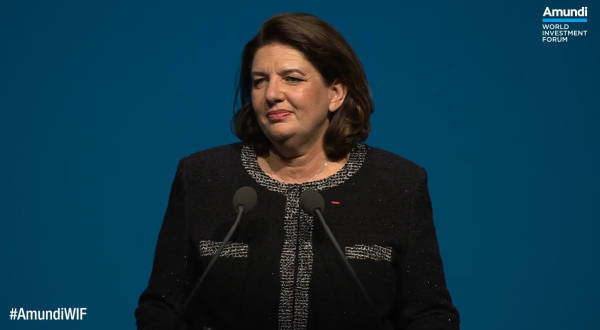
Core Viewpoint - The article discusses the concerns of Amundi, Europe's largest asset management company, regarding the impact of U.S. economic policies on dollar assets, leading to a planned reduction or hedging of U.S. asset exposure [1][3]. Group 1: Amundi's Strategy - Amundi is advising clients to reduce their exposure to dollar assets and is shifting focus towards European and emerging markets [1][3]. - The CEO of Amundi, Valerie Baudson, indicated that the company has been promoting diversification in investments over the past 12 to 15 months and will continue to do so in the coming year [1][3]. Group 2: Market Trends - The dollar has weakened significantly, dropping over 10% against a basket of major currencies in the past 12 months, with a notable decline since the "liberation day" tariffs initiated by Trump [3][4]. - Gold prices surged to over $5,500 per ounce at the end of January, nearly doubling in price during the same period, as international investors sought to hedge against dollar depreciation [3][4]. Group 3: Investor Behavior - Investors are increasingly diversifying away from U.S. assets, with a notable shift towards gold as a viable alternative, as highlighted by Amundi's Chief Investment Officer, Vincent Mortier [3][4]. - Other major asset management firms, including PIMCO and Wellington Management, are also echoing similar sentiments regarding the reduction of U.S. asset investments [5][6]. Group 4: Economic Implications - The article notes that geopolitical factors, the U.S. deficit, and uncertainties surrounding Federal Reserve policies are accelerating the flight from the dollar [4][5]. - The weakening dollar has led to significant gains in other currencies, with the euro and pound reaching their strongest levels since 2021, while gold prices have continued to rise [6][7].

“美元微笑曲线”之父:美元新一轮下跌开启,市场对特朗普默认贬值“毫无准备”
Hua Er Jie Jian Wen· 2026-01-28 08:41
Core Viewpoint - Stephen Jen warns that a new cycle of dollar depreciation may have begun, and the market is unprepared for it [1] Group 1: Market Reactions - The dollar experienced its largest single-day drop since the imposition of tariffs last year, with the Bloomberg Dollar Index falling 1.2% to its lowest level in nearly four years [1] - Trump's comments led to significant volatility in the foreign exchange market, with the euro and pound reaching their strongest levels since 2021, and the Swiss franc hitting its highest level since 2015 [1] - The decline in the dollar has prompted concerns among overseas investors about selling off dollar assets, further exacerbated by previous threats of tariffs and unpredictable Federal Reserve policies [1] Group 2: Analyst Insights - Analysts note that many forex analysts are accustomed to a strong dollar and a robust U.S. economy, making them ill-prepared for a scenario where the dollar weakens while the economy remains strong [2] - Anthony Doyle from Pinnacle Investment Management suggests that the lack of concern from those who typically support the dollar indicates a weakening support for the currency [2] Group 3: Market Indicators - A market indicator from JPMorgan shows that the risk reversal index for the dollar against major currencies has dropped to its lowest level since June, indicating increased demand for hedging against dollar weakness [3] - The OECD data suggests that the dollar is overvalued against all G-10 currencies except the Swiss franc, with the yen and euro being particularly undervalued [3] Group 4: Diverging Opinions - Not all analysts agree that Trump's comments signal a long-term decline for the dollar; some believe the government is more focused on seeing the appreciation of currencies like the yuan and yen [4] - Robert Kaplan from Goldman Sachs warns that a prolonged dollar weakness could pose risks to the U.S. economy, emphasizing the importance of currency stability over export benefits given the current high debt levels [4]
“美元微笑理论”提出者:特朗普言论可能意味着美元新一轮跌势的开始
Xin Lang Cai Jing· 2026-01-28 03:21
Core Viewpoint - President Donald Trump's casual remarks about the decline of the US dollar have intensified market speculation that the dollar may be entering a long-term downtrend [1][3]. Group 1: Market Reaction - Trump's statement led to the largest single-day drop in the dollar since the imposition of tariffs last year, with the Bloomberg Dollar Index falling by 1.2% [1][3]. - The comments weakened the attractiveness of the dollar and US Treasury bonds, prompting what is referred to as a devaluation trade [1][3]. Group 2: Expert Opinions - Stephen Jen, founder of Eurizon SLJ Capital and proponent of the "dollar smile theory," indicated that this marks the beginning of a new phase of dollar depreciation, aimed at benefiting US exporters [1][3]. - Jen also noted that many analysts are unprepared for a scenario where the dollar weakens while the US economy remains strong, highlighting a generational shift in forex analysis [1][3]. Group 3: Implications for US Businesses - Trump stated that the recent decline in the dollar is beneficial for American companies, aligning with previous statements from US officials but causing significant volatility in the forex market [1][3].
这下美国焦虑又加剧了!中国企业抛售万亿美国资产转投本土科技,人民币升值已成定局
Sou Hu Cai Jing· 2026-01-23 17:21
Group 1: Currency Exchange and Economic Predictions - The offshore RMB/USD exchange rate is expected to rise above 7.0 by the end of 2025, marking a 14-month high, influenced by the onset of the Federal Reserve's interest rate cuts and global capital flow shifts [1] - Economist Huang Qifan predicts that the RMB will appreciate to around 6.0 against the USD over the next decade, supported by China's industrial value added accounting for 32% of the global economy [1] Group 2: Federal Reserve Policy and Capital Flows - The Federal Reserve is projected to cut interest rates by a total of 200 basis points by the end of 2025, bringing the federal funds rate to a range of 4.00-4.25% [3] - The USD index is expected to decline from 105 to below 95, prompting investors to reassess global asset allocations [3] - By the second half of 2025, Chinese companies are anticipated to sell off $800 billion in USD assets, primarily investing in technology sectors such as semiconductors and renewable energy [3] Group 3: Impact on Import and Export Sectors - The appreciation of the RMB is expected to benefit import enterprises, with China's oil import costs projected to decrease by approximately 5% due to exchange rate factors, saving over $1 billion for petrochemical companies [4] - Conversely, the export sector faces challenges, with a projected 5% decline in exports to the US, leading to reduced orders for textile companies [6] Group 4: Cross-Border Capital Flows and Payment Systems - By 2025, northbound capital inflows are expected to exceed 150 billion RMB, doubling from 2024, with significant investments in high-dividend assets [6] - The CIPS cross-border payment system is projected to handle 12% of SWIFT's transaction volume, with RMB payments accounting for 30%, facilitating capital repatriation [6] Group 5: Global Currency Dynamics - The RMB's weight in the IMF's SDR basket is expected to rise to 12.28% by 2025, with countries like Iran and Saudi Arabia beginning to use RMB for oil trade settlements [6] - Criticism of the US for misusing dollar hegemony is growing, particularly as its budget deficit reaches 6% of GDP while continuing to lower interest rates [6] Group 6: Economic Structure and Trade Dynamics - China's export of new energy vehicles is projected to reach $120 billion by 2025, a sevenfold increase since 2019, while integrated circuit exports are expected to rise from $100 billion to $150 billion [10] - The US's attempts to reverse trade deficits through tariffs have resulted in an overall widening of its trade deficit [10]
日元奔向干预红线,空头回补风暴一触即发!
Jin Shi Shu Ju· 2026-01-14 05:58
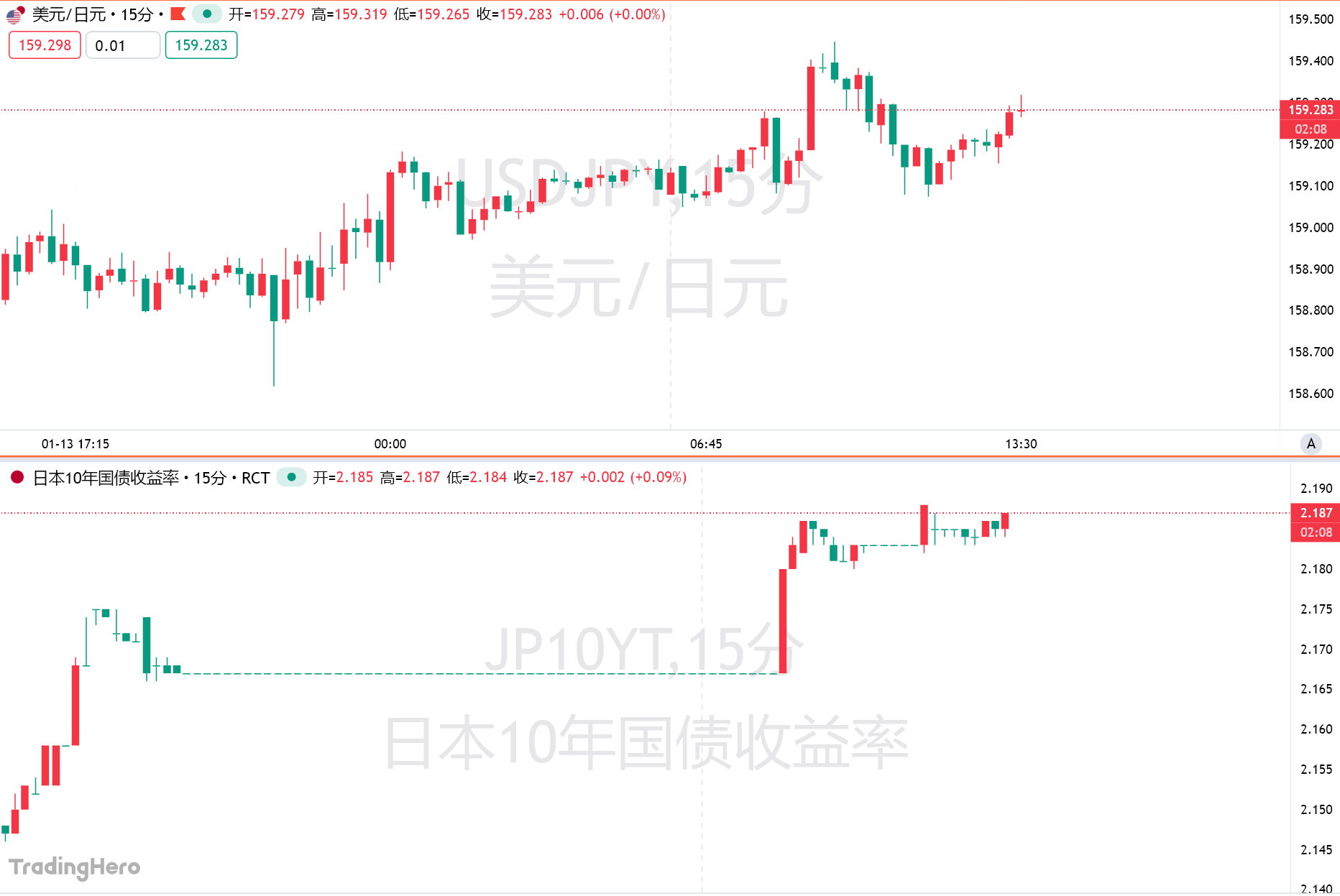
Group 1 - The core viewpoint is that the USD/JPY exchange rate has risen above 159, reaching its highest level since July 2024, influenced by speculation of early elections in Japan, which may strengthen the ruling Liberal Democratic Party's position and clear the way for further fiscal stimulus policies, negatively impacting the yen and Japanese government bonds [1] - Japan's 5-year government bond yield rose by 1.5 basis points to 1.615%, marking the highest level since the issuance of this maturity bond in 2000, with similar increases observed in 2-year and 10-year bond yields [1] - Investors are closely monitoring the upcoming 5-year government bond auction, which will test market demand amid rising expectations for fiscal expansion and increasing supply-demand risks [1] Group 2 - Stephen Jen, CEO of Eurizon, indicated that the risks for the USD/JPY exchange rate are "severely skewed to the downside," suggesting that timely intervention could trigger a significant correction [3] - Market experts view the 160 level as a potential intervention threshold, with Japanese officials emphasizing their focus on excessive volatility rather than specific exchange rate levels [4] - Any intervention actions will be authorized by the Japanese Ministry of Finance and executed by the Bank of Japan, with previous interventions occurring when the USD/JPY approached 160.17 [5] Group 3 - Prime Minister Sanae Takaichi's pro-reflation policies may hinder the Bank of Japan from raising interest rates in the short term, which has been a factor suppressing the yen since her appointment in October 2022 [6] - Despite the ruling party's majority in the more powerful House of Representatives, concerns over debt sustainability suggest that aggressive fiscal expansion is unlikely, supporting a "buy on dips" strategy for Japanese government bonds and the yen [6] - The latest data from the Commodity Futures Trading Commission indicates that while speculative net short positions have decreased recently, they remain at high levels, indicating a risk of short covering for the yen [6] Group 4 - Citigroup's yen pain index, which tracks overall trader positions, remains in negative territory, highlighting that the current short positions on the yen are crowded [7]

“市场看好中国,人民币有望迎5年来最强表现”
Sou Hu Cai Jing· 2025-12-02 06:44
Core Viewpoint - The market's growing optimism towards Chinese assets and the economy is expected to offset concerns over US-China trade tensions, leading to the best annual performance of the Renminbi in five years [1] Group 1: Renminbi Performance - The offshore Renminbi has appreciated nearly 4% this year, supported by China's daily midpoint pricing, rising Chinese stock markets attracting capital inflows, and a weakening US dollar [1] - Analysts are optimistic about the Renminbi's trajectory, with predictions that the USD/CNY exchange rate could reach 7 by 2026 [1][4] - The People's Bank of China has recently set the Renminbi midpoint weaker than analysts' median forecasts, indicating a desire to manage the currency's appreciation [5] Group 2: Economic and Trade Context - China's strategy in the current US-China trade conflict has evolved, with a shift towards diversifying exports to "global south" countries and strengthening its position in critical supply chains like rare earths [2] - Analysts expect further Renminbi appreciation in the coming months, with predictions of the exchange rate reaching 6.95 by the end of next year [4] Group 3: Internationalization of Renminbi - Russia is set to issue its first Renminbi-denominated bonds, reflecting a significant step in the internationalization of the Renminbi and a shift towards reducing reliance on the US dollar [6][7] - The issuance of these bonds is seen as a key indicator of the evolving global financial landscape and may contribute to a structural shift away from dollar dominance [7]
高盛客户调查:2026年资产前景怎么看?
Hua Er Jie Jian Wen· 2025-12-01 03:39
Group 1: Market Sentiment and Trends - Investors are cautiously optimistic about technology stocks driven by AI, while maintaining a preference for defensive sectors amid macroeconomic uncertainties [1][5] - The TMT sector is identified as the most favored investment area for 2026, despite a recent rotation towards defensive stocks [3][5] - There is a notable shift in investor sentiment towards the dollar, with slightly more bullish views compared to bearish ones [1][9] Group 2: Interest Rate Expectations - Investors anticipate two interest rate cuts by the Federal Reserve in the first half of 2026, with 34% expecting the federal funds rate to be between 3% and 3.25% by year-end [6][8] - There are concerns that these expectations may be overly optimistic due to recent hawkish comments from Fed officials [8] Group 3: Credit Market Insights - Over half of the respondents expect AI-related bond issuance to be substantial, estimating between $500 billion and $1 trillion [11] - Despite high issuance expectations, enthusiasm for AI concept stocks appears to be waning, with only 15% expecting increased investor interest [13] Group 4: Commodity Market Outlook - There is a strong bullish sentiment towards gold, with 69% of respondents optimistic about its price, primarily driven by central bank purchases and fiscal concerns [14][16] - Conversely, sentiment towards oil is predominantly bearish, with 52% of investors expecting a decline [14]

“美元微笑”创立者警告英国税收已过“临界点”,英镑或面临“断崖式”暴跌
智通财经网· 2025-11-28 09:19
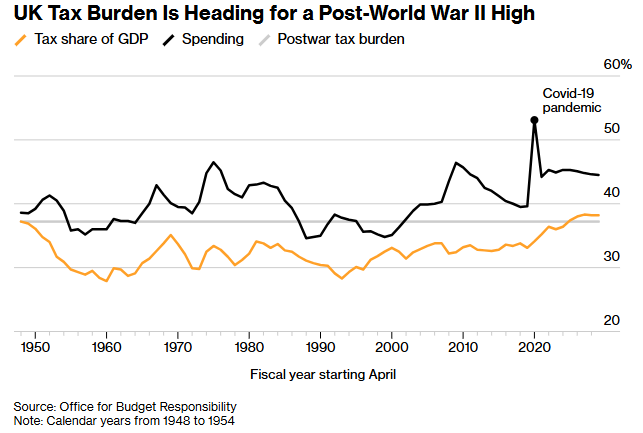
Group 1 - Hedge fund manager Stephen Jen predicts a significant depreciation of the British pound as the UK approaches a critical point where increased taxation no longer generates additional government revenue [1] - Jen expects the pound to weaken against major currencies such as the euro, yen, and Swiss franc due to rising taxes hindering business operations for the wealthy and corporations in the UK [1] - Following the announcement of a series of tax increases by Chancellor Rachel Reeves, the pound initially rose, achieving its best single-day performance against a basket of currencies since August, despite a 20% decline over the past decade largely attributed to Brexit [1] Group 2 - Jen references the Laffer Curve, which suggests that beyond a certain point, higher tax rates can actually reduce government revenue by discouraging work, savings, and investment [4] - He notes that the UK is currently "exploring" this relationship and highlights the recent departure of some ultra-wealthy individuals from the country [4] - Jen warns that if tax revenues decrease despite the new tax measures, it could indicate a significant problem, as current models assume individuals will remain in the UK [4] Group 3 - Despite concerns, Jen anticipates more tax increases in the UK budget in the coming years, with Reeves indicating that further tax hikes cannot be ruled out before the next election [8] - He cautions that if additional tax increases are sought by the government, market reactions may not be linear, suggesting potential volatility [8]
轮到美国焦虑!美经济学者预言:万亿美元变人民币,升值或成定局
Sou Hu Cai Jing· 2025-11-13 11:37
Core Insights - The U.S. has accumulated a significant debt burden, with national debt reaching $38 trillion, over 124% of GDP, a nearly fivefold increase since 2003 [2][4] - The Federal Reserve's high interest rate policy has been aimed at combating inflation, but recent economic data suggests a shift towards interest rate cuts to stimulate growth [5][7] - The return of capital from Chinese enterprises, estimated to be between $1 trillion and $1.3 trillion, is expected to strengthen the yuan against the dollar, with a potential appreciation of up to 10% [7][11] Debt Dynamics - U.S. national debt has surged due to government stimulus measures, with foreign ownership dropping to less than 25% [4] - The debt growth rate has accelerated from an average of 10% to over 20% annually from 2022 to 2025 [2][13] - The burden of debt is increasingly falling on domestic institutions and households, with each American carrying nearly $110,000 in debt [13] Economic Policy Shifts - The Federal Reserve's interest rate cuts, with the federal funds rate dropping to 3.75%-4.00% by late October 2025, are a response to weak employment data and persistent inflation [5][7] - The shift in monetary policy is expected to lead to a capital outflow from the U.S. as borrowing costs decrease, redirecting funds to higher-return regions [9][15] Capital Reallocation - Chinese enterprises have accumulated over $2 trillion in overseas dollar assets, primarily in bonds and equities, with a projected return of these assets to China [9][11] - The reallocation process involves selling short-term bonds and shifting equity investments back to domestic or Hong Kong markets, with a completion target by 2026 [9][11] Currency and Trade Implications - The depreciation of the dollar, with an 8% drop in the dollar index, is expected to enhance the return on investments in China, facilitating capital repatriation [11][15] - The internationalization of the yuan is projected to increase, with its share in global payments rising from 2% in 2020 to 4% by 2025 [15][22] Infrastructure and Economic Growth - The return of capital is anticipated to boost investments in key sectors such as semiconductors and renewable energy, with semiconductor global market share expected to rise from 15% in 2020 to 25% by 2025 [11][15] - Infrastructure projects, including high-speed rail expansion from 38,000 km in 2020 to 45,000 km by 2025, will benefit from this capital influx [19][20]
“美元微笑”理论创始人预警:特朗普任内美元恐再暴跌13.5%
Sou Hu Cai Jing· 2025-11-11 23:44
Core Viewpoint - The well-known analyst Stephen Jen predicts that despite a recent rebound, the struggling dollar will continue to decline, driven by accelerating overseas economic growth that diminishes the dollar's appeal [1][2]. Group 1: Dollar Performance and Predictions - Jen forecasts that the dollar index will drop by an additional 13.5% during the remainder of Trump's presidential term, compounding an already accumulated decline of approximately 7% in 2025, potentially marking the worst year for the dollar in eight years [1][2]. - The dollar's next significant movement is expected to be downward, influenced by unpredictable trade policies and market expectations of Federal Reserve rate cuts [2]. Group 2: Economic Context and Theories - Jen's analysis aligns with his "dollar smile" theory, which posits that the dollar tends to perform well during periods of extreme economic strength or deep recession, while struggling during moderate growth phases [2]. - The U.S. economy's ability to achieve a soft landing is under observation, as it needs to complement accelerating growth in other global regions [2][3]. Group 3: Global Economic Comparisons - The International Monetary Fund projects that U.S. GDP growth will slow from 2.8% last year to 2% by 2025, while the Eurozone economy is expected to accelerate from 0.9% in 2024 to 1.2% [3]. - Jen highlights that the Trump administration may require further dollar depreciation to reduce costs in the manufacturing sector, which it aims to revitalize [3]. Group 4: Market Reactions - There is a growing aversion to major reserve currencies, including the dollar, which is driving record increases in gold and Bitcoin prices, a trend that Jen anticipates will continue [3][4].