小微企业

Search documents
乌兰察布市打出金融助企“组合拳” 多维度发力破解企业融资难题
Nei Meng Gu Ri Bao· 2025-08-11 01:42
Group 1 - The core viewpoint of the news is that Ulanqab City is actively promoting financial support for enterprises, particularly through innovative financing models and collaboration with banks to address financing challenges faced by businesses [1][2][3][4] - Jitie Ferroalloy Co., a leading enterprise in the ferroalloy industry, has successfully utilized the "1+N" supply chain financing model, which has enabled over 10 upstream companies to secure loans, enhancing their bargaining power [1] - Ulanqab City has implemented a comprehensive financial assistance strategy, including establishing a financing demand push mechanism and conducting regular financial matching events, resulting in a total loan issuance of 1.322 billion yuan [1][2] Group 2 - The city has upgraded its services by organizing financial service teams to conduct direct visits to key enterprises, ensuring that financial policies and support reach the market effectively [2] - Ulanqab City has introduced innovative guarantee models, such as the "Smart Livestock Loan" and "Smart Inventory Loan," which have provided 51 million yuan in loans to 11 enterprises, addressing collateral shortages for small and micro enterprises [3] - The city has launched targeted financial service plans for specific industries, including the ferroalloy and potato industries, facilitating a total of 5.042 billion yuan in financing for the ferroalloy sector and implementing a "Pledge Model" for the potato industry [4]
政策“组合拳”精准发力稳就业稳预期
Jin Rong Shi Bao· 2025-08-08 08:00
Core Viewpoint - The Chinese government has issued a notification to enhance employment stability through a comprehensive policy framework aimed at stabilizing employment, enterprises, markets, and expectations, reflecting the high priority given to employment issues by the central government [1] Group 1: Employment Stability Measures - The notification includes 19 measures to support employment, emphasizing the importance of stable jobs for income growth and consumer spending, which are crucial for economic stability [1] - The central government prioritizes employment stability as a response to external uncertainties, indicating a strategic focus on high-quality development [1] Group 2: Financial Support for Enterprises - The policy aims to improve financing access for small and micro enterprises by expanding the scope of special loans and enhancing cooperation between government and banks, with credit limits raised to 50 million yuan for small enterprises and 1 million yuan for individuals [2] - A significant increase in unemployment insurance refunds is introduced, with small and micro enterprises receiving a refund rate of 90% and large enterprises 50%, providing immediate cash flow relief [2] - Incentives for job creation include subsidies for enterprises hiring key demographics, with a one-time subsidy of up to 1,500 yuan for hiring unemployed youth aged 16 to 24 [2] Group 3: Focus on Small and Micro Enterprises - Small and micro enterprises are identified as key beneficiaries of the policy, contributing over 80% of urban employment and facing challenges such as financing difficulties and low risk resilience [3] - Financial management departments have implemented differentiated support for small enterprises, including reduced risk weights for loans and expanded financing channels [4] Group 4: Policy Implementation and Collaboration - The effectiveness of the policies is beginning to show, with the urban unemployment rate stabilizing at 5.2% from January to May, and increased job demand in emerging sectors [4] - Successful implementation requires collaboration among various stakeholders, including government departments, financial institutions, enterprises, and workers, to ensure that policies translate into sustainable employment growth [4]
八部门联合发文 大力度支持小微企业融资
Zheng Quan Ri Bao· 2025-08-08 07:23
Core Viewpoint - The National Financial Regulatory Administration, along with several other government bodies, has issued measures to enhance financing for small and micro enterprises, focusing on increasing financing supply, reducing costs, improving efficiency, and ensuring precise support [1][2][3]. Group 1: Increasing Financing Supply - The measures emphasize the establishment of a coordination mechanism to support small and micro enterprises, directing resources towards key sectors such as foreign trade, private enterprises, technology, and consumption [1]. - There will be an increase in the issuance of first loans, credit loans, medium to long-term loans, corporate loans, and loans to private enterprises [1]. Group 2: Reducing Financing Costs - Banks are guided to strengthen loan pricing management and rationally determine loan interest rates for small and micro enterprises [2]. - The measures include reducing additional loan fees and addressing illegal intermediary practices in the financial sector [2]. Group 3: Improving Financing Efficiency - The development of online loans will be promoted, with banks encouraged to utilize technology to enhance credit approval and risk management processes [2]. - The measures aim to streamline loan application materials and optimize approval processes for offline loans [2]. Group 4: Ensuring Precise Support - Financial support will be strengthened for key sectors, including specialized and innovative small and micro enterprises [2]. - Activities such as "one month, one chain" will be organized to promote financing for small and micro enterprises nationwide [2]. Group 5: Implementing Regulatory Policies - Regular evaluations of banks' services to small and micro enterprises will be conducted, ensuring compliance with due diligence and accountability standards [2]. - The establishment of a mechanism for inclusive finance will be emphasized, with performance assessments and internal pricing incentives [2]. Group 6: Strengthening Risk Management - The measures include revising the risk classification methods for small and micro enterprise loans and simplifying classification processes [3]. - Banks will be guided to allocate more resources towards writing off loans for small and micro enterprises [3]. Group 7: Enhancing Policy Support - The development of a high-quality government financing guarantee system will be promoted to support small and micro enterprises [3]. - Policies related to credit information sharing and credit repair for small and micro enterprises will be advanced [3]. Group 8: Organizational Implementation - Each department is tasked with formulating detailed policy guidelines and ensuring the effective implementation of these measures by banks [3].
今日视点:支持小微企业融资协调工作机制显效的启示
Zheng Quan Ri Bao· 2025-08-03 23:20
Core Viewpoint - The support mechanism for small and micro enterprises financing has shown positive results since its establishment in October last year, with significant increases in credit and loan issuance [1][2]. Group 1: Mechanism Effectiveness - As of June 2025, over 90 million small and micro enterprises have been visited, resulting in new credit issuance of 23.6 trillion yuan and new loans of 17.8 trillion yuan, with credit loans accounting for 32.8% [1]. - The balance of inclusive loans for small and micro enterprises increased by 12.31% year-on-year, significantly higher than the average growth rate of all loans [1]. Group 2: Collaborative Approach - The mechanism leverages the advantages of the Chinese leadership and system, involving multiple stakeholders including national and local government departments and banks to address the complex challenges of financing [1][2]. - A market-oriented and legal approach is utilized to ensure effective collaboration between government support and banking operations, addressing information asymmetry and facilitating better financing connections [2]. Group 3: Policy Implementation - Attention to detail in policy implementation is crucial to prevent bottlenecks in the financing process, ensuring that credit reaches the intended enterprises effectively [3]. - The introduction of measures to protect diligent credit personnel encourages banks to lend more freely, thereby enhancing the overall financing environment for small and micro enterprises [3].
向“新”集聚!货币政策“精准滴灌”发力,金融产品“量体裁衣”服务实体经济
Sou Hu Cai Jing· 2025-08-03 12:24
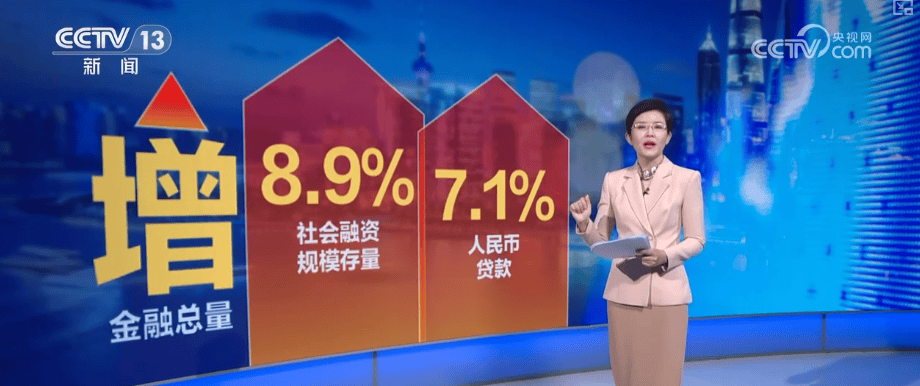
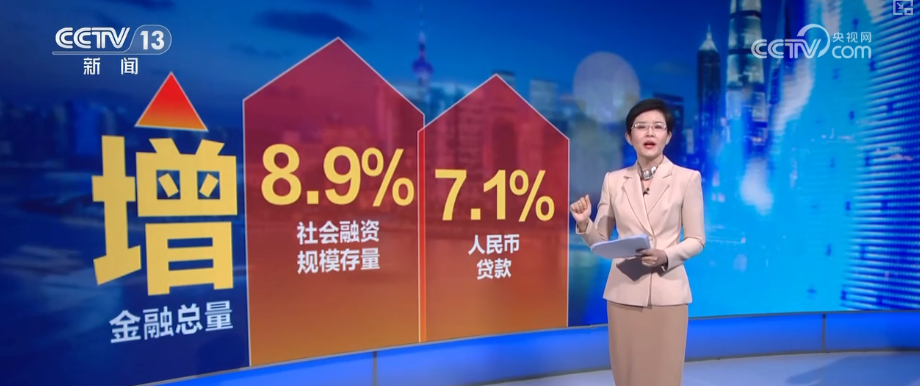
Group 1 - The core viewpoint emphasizes the importance of financial support for the real economy, with the People's Bank of China focusing on serving the real economy as a primary goal [1][2] - Key financial measures include increasing the total financial volume, reducing financing costs, and optimizing credit structure, with social financing stock growing by 8.9% year-on-year and RMB loans increasing by 7.1% as of June [6][12] - The support for small and micro enterprises is highlighted, with a mechanism established to facilitate direct access to bank credit, addressing common financing difficulties such as lack of collateral [7][10] Group 2 - The financing situation for small and micro enterprises is improving, driven by three trends: increasing volume, expanding coverage, and reducing costs [13][15] - The implementation of low-cost funding through targeted monetary policy and risk-sharing mechanisms has significantly boosted loan growth for small and micro enterprises [15][21] - Financial support for technological innovation is also a key focus, with measures such as optimizing re-loan policies for technology innovation and establishing a "technology board" in the bond market [16][18] Group 3 - Despite progress, some technology enterprises still face financing challenges due to difficulties in assessing technological value and mismatched risk-return profiles [19][21] - Solutions proposed include establishing risk compensation funds and improving the financial service capabilities for technology enterprises, along with streamlining financing processes [21]

向“新”集聚!货币政策“精准滴灌”发力 金融产品“量体裁衣”服务实体经济
Yang Shi Wang· 2025-08-03 03:46
Group 1 - The core viewpoint emphasizes the importance of financial support for the real economy, with the People's Bank of China focusing on serving the real economy as a primary direction for its policies [1][5] - Key financial metrics show an increase in total financing, with social financing stock growing by 8.9% year-on-year and RMB loans increasing by 7.1% [5] - The reduction in financing costs is highlighted, with the average interest rate on new corporate loans at approximately 3.3%, down by about 45 basis points compared to the previous year [5] Group 2 - The support for small and micro enterprises is a significant focus, with a mechanism established to facilitate direct access to bank credit for these businesses [7][11] - The mechanism has successfully visited over 90 million small business entities, resulting in new credit issuance of 23.6 trillion yuan and new loans of 17.8 trillion yuan, with credit loans accounting for 32.8% [11] - The positive trend in financing for small and micro enterprises is attributed to three main factors: increased volume, expanded coverage, and reduced costs [11][13] Group 3 - Financial support for technological innovation is also a critical aspect, with measures introduced to optimize loans for technological innovation and establish a "technology board" in the bond market [14][17] - By the end of May, the amount of loans for technological innovation and technological transformation reached 1.7 trillion yuan, 1.9 times that of the end of 2024 [17] - Challenges remain for some tech enterprises in securing financing, primarily due to difficulties in assessing technological value and mismatches in risk and return [19]
中共中央政治局召开会议 决定召开二十届四中全会 分析研究当前经济形势和经济工作
Xin Hua She· 2025-07-30 06:05
Core Points - The meeting of the Central Political Bureau emphasized the importance of the 14th Five-Year Plan and the upcoming Fourth Plenary Session of the 20th Central Committee, focusing on economic and social development strategies [1][2] - The meeting highlighted the need to maintain strategic determination and confidence in achieving modernization goals amidst complex global changes and economic challenges [1][2] - The meeting underscored the necessity of implementing proactive macroeconomic policies to ensure stable economic growth and address potential risks [3][4] Economic Development Strategy - The meeting called for adherence to Marxist principles and the comprehensive implementation of Xi Jinping's thoughts to achieve the goal of building a modern socialist country [2][3] - Emphasis was placed on achieving qualitative improvements and reasonable quantitative growth in the economy, while ensuring the well-being of the population and promoting common prosperity [2][3] - The meeting recognized the positive performance of major economic indicators and the resilience of the economy, attributing this to effective leadership and proactive policies [2][3] Policy Implementation - The meeting stressed the importance of maintaining policy continuity and flexibility, focusing on stabilizing employment, businesses, and market expectations [3][4] - It was highlighted that macroeconomic policies should be actively adjusted to support economic recovery, including the issuance of government bonds and the promotion of structural monetary policies [3][4] - The meeting called for measures to stimulate domestic demand and enhance consumption, particularly in the service sector [3][4] Reform and Innovation - The meeting emphasized the need for deepening reforms and fostering technological innovation to develop new competitive industries [4][5] - It was noted that high-level opening-up should be expanded to stabilize foreign trade and investment, with support for affected enterprises [4][5] - The meeting also addressed the importance of risk prevention in key areas, including local government debt management and urban renewal [4][5] Social Welfare and Employment - The meeting highlighted the priority of employment policies, particularly for vulnerable groups such as graduates and migrant workers [5] - It was emphasized that social safety nets should be strengthened to prevent large-scale poverty and ensure food security [5] - The meeting called for a focus on safety regulations and emergency response measures to protect public welfare [5]
“三位一体”精准发力 泰安金融活水畅灌实体经济
Zhong Guo Fa Zhan Wang· 2025-07-30 03:13
Core Insights - Shandong Province's Tai'an City has implemented a "policy guidance + product upgrade + service innovation" approach to enhance credit support for the real economy, with over 90% of new loans directed towards enterprise development [1] - Private enterprise loans have seen a year-on-year increase of 13.79%, indicating improved financial support for the real economy [1] Group 1: Financial Support Initiatives - The financial support policies in the real estate sector have been effectively implemented, resulting in customized financing solutions for 71 "white list" projects, with a total loan disbursement of 9.379 billion yuan [1] - To address financing challenges for small and micro enterprises, banks have facilitated 1,149 transactions amounting to 5.782 billion yuan under the no-repayment renewal loan policy [1] - The "talent loan" policy has been enhanced, with 130 credit loans totaling 616 million yuan issued to support innovation and entrepreneurship [1] Group 2: Credit Product Development - A diverse range of credit products has been developed, including 162 flexible "strong industry loans," providing 69.527 billion yuan to 9,509 enterprises [2] - Loans for "specialized, refined, distinctive, and innovative" enterprises and cultural tourism enterprises have increased by 15.05% and 14.26% year-on-year, respectively, both exceeding the city's average growth rate [2] Group 3: Financial Service Optimization - The Tai'an City Finance Bureau has established various platforms for government-finance-enterprise connections, conducting over 30 unique activities this year to enhance financial accessibility [2] - A direct financial service mechanism for private enterprises has been established, addressing financing needs exceeding 21 billion yuan [2] Group 4: Supply Chain Finance - The development of supply chain finance has been promoted, with 58.11 million yuan in loans provided to 137 core enterprises and their 1,185 upstream and downstream partners [2] - The balance of loans in key areas of inclusive finance in the city has surpassed 110 billion yuan, reflecting a year-on-year growth of 15.43% [2]
河南:拟对符合条件人员首次创办小微企业或从事个体经营的按规定给予一次性开业补贴
news flash· 2025-07-03 00:50
Core Viewpoint - The Henan Provincial Justice Department has released a draft regulation aimed at optimizing the development environment for the private economy, ensuring fair market competition, and promoting high-quality development of the private sector [1] Group 1: Policy Initiatives - The draft regulation proposes the establishment of comprehensive entrepreneurial support policies, including training, guidance, and education systems for entrepreneurs [1] - It includes provisions for market expansion, technological innovation, intellectual property, quality improvement, and financing guarantees as part of the entrepreneurial training [1] - Individual business operators and founders of small and micro enterprises will be included in the scope of entrepreneurial training subsidies [1] Group 2: Financial Support - The regulation outlines one-time startup subsidies and entrepreneurial guarantee loans for eligible individuals starting small micro enterprises or engaging in individual business [1] - Tax and fee reductions, along with policy incentives, will be provided to specific groups such as college graduates, veterans, returnees, unemployed individuals, and persons with disabilities who establish private economic organizations [1]
央行等四部门发声,加快构建科技金融体制;前4个月全国财政收入降幅继续收窄|每周金融评论(2025.5.19—2025.5.25)
清华金融评论· 2025-05-26 10:44
Core Viewpoint - The article discusses recent developments in China's fiscal policy and financial support for technology and small enterprises, highlighting the government's efforts to stimulate economic growth and innovation through various measures [1][4][10]. Group 1: Fiscal Revenue and Expenditure - In the first four months of the year, China's general public budget revenue reached 80,616 billion yuan, a year-on-year decrease of 0.4%, with the decline narrowing by 0.7 percentage points compared to the first quarter [13]. - Central government revenue fell by 3.8% year-on-year, but the decline was reduced by 1.9 percentage points from the first quarter, with April showing a positive growth of 1.6% [15]. - Local government revenue increased by 2.2% year-on-year, maintaining the same growth rate as the first quarter [15]. - National tax revenue totaled 65,556 billion yuan, down 2.1% year-on-year, with a narrowing decline of 1.4 percentage points from the first quarter [15]. Group 2: Support for Technology and Small Enterprises - Eight departments jointly issued measures to support financing for small and micro enterprises, focusing on increasing financing supply, reducing costs, and improving efficiency [10]. - The policy aims to alleviate financing difficulties for small businesses, enhance profitability, and stabilize economic growth [10]. - The government is working to build a more comprehensive technology finance system to guide financial resources towards technological innovation, thereby supporting high-level self-reliance in technology [9]. Group 3: Green Development in Manufacturing - The State Council approved the "Green and Low-Carbon Development Action Plan for Manufacturing (2025-2027)", emphasizing the need for green technology innovation and the promotion of advanced green technologies [12]. - The plan aims to facilitate the deep green transformation of traditional industries and promote high-starting green development in emerging industries [12]. - This transition is expected to create a market for energy-saving renovations worth hundreds of billions, driving technological upgrades in enterprises [12]. Group 4: Cross-Border Financing for Enterprises - The People's Bank of China and the State Administration of Foreign Exchange released a draft notice to optimize cross-border fund management for domestic enterprises listed overseas, aiming to enhance financing convenience [13]. - The notice includes 26 articles focused on improving the efficiency of cross-border financing and enhancing the flexibility of fund usage [13].