
数字基础设施

Search documents
我省数字经济规模今年预计突破2.2万亿元
Zheng Zhou Ri Bao· 2025-12-04 00:54
Core Insights - The digital economy is identified as a core driver for high-quality development in the province, with significant growth projected in the coming years [1] Digital Infrastructure - The province has built a total of 240,000 5G base stations, ranking 6th nationally, achieving full coverage of 5G networks in towns and above, and all administrative villages have access to gigabit optical networks [1] - The province's computing power has reached 9.8 E Flops, with major projects like the national supercomputing internet core node accelerating construction [1] - A total of 16,000 kilometers of old urban pipelines have been updated, and over 243,000 IoT sensing devices have been installed [1] Data Resource Development - The province has initiated 23 provincial-level data resource development pilot projects, with over 1,000 data backbone enterprises and an industry scale of approximately 200 billion [2] - The Zhengzhou data trading center has surpassed a transaction volume of 4.2 billion [2] - The province has established several key laboratories and technology research institutes, focusing on breakthroughs in core technologies [2] Digital Industry Growth - The smartphone production has consistently ranked among the top three in the country, and the integrated circuit industry has transitioned from "no chips available" to "monthly production of one million pieces" [2] - The software industry revenue has exceeded 100 billion, and the province has been recognized for its blockchain development and e-commerce initiatives [2] Digital Governance and Services - The province has constructed a foundational framework for comprehensive digital transformation, with significant applications in smart city management and healthcare [3] - The integration of 59 provincial and municipal government clouds has made it the first province in the country to achieve full integration of government cloud services [3] - The "one-stop" service has benefited 381 million transactions, with a comprehensive reduction rate of 81.5% in processing steps and time [3]
泰政府通过数字基础设施发展规划 打造东盟数字中心
Shang Wu Bu Wang Zhan· 2025-11-14 16:35
Core Viewpoint - The meeting chaired by Deputy Prime Minister and Minister of Transport, Phiphat Ratchakitprakarn, aims to develop the Eastern Economic Corridor (EEC) into the "ASEAN Digital Hub" and a center for emerging industries [1] Group 1: Digital Infrastructure Development - The committee approved the "2024-2027 Digital Infrastructure Development Plan" to enhance digital infrastructure and improve the efficiency of digital technology utilization [1] - Key projects include upgrading telecommunications infrastructure, updating laws and regulations related to digital activities, and providing digital government services [1] - The EEC is positioned as the "ASEAN Digital Hub," with the Ministry of Digital Economy and Society designated as the main agency to oversee and monitor the progress of this plan [1] Group 2: Special Economic Zones - Thailand has established 46 special economic zones, which include 32 industrial parks, 9 special activity zones, and 5 private industrial zones [1] - The EEC Office has developed the EEC-OSS (One-Stop Service) system, which currently offers over 50 services related to the establishment of economic zones, investment incentives, and obtaining various legal permits, including land excavation, construction, and public health approvals [1]
从硬联通到软联通 中国—东盟3.0版开启区域经济合作新篇章
Yang Shi Xin Wen· 2025-11-03 02:00
Core Viewpoint - The signing of the China-ASEAN Free Trade Area 3.0 upgrade protocol on October 28 marks a significant step towards enhancing digital technology empowerment, supply chain connectivity, and green standard alignment across various regions in China and ASEAN countries [1] Group 1: Logistics and Connectivity - The "Air Silk Road" between Zhengzhou and Kuala Lumpur has seen an increase in cargo flights to one per day, transporting nearly 10,000 tons of goods since its launch [2] - Zhengzhou Airport has opened 46 international cargo routes, reaching 18 countries involved in the Belt and Road Initiative, focusing on both "hard connectivity" in logistics and "soft connectivity" through systems like single-window and electronic bills of lading [4] Group 2: Trade Facilitation - The implementation of a single-window system allows companies in Gansu to quickly obtain certificates of origin, enabling them to enjoy tariff reductions of 12% and 5% when exporting products to Vietnam and Indonesia, respectively [6] - The protocol includes mutual recognition of certificates of origin and provisions for a single-window platform, which will enhance customs efficiency and reduce operational costs for businesses [6] Group 3: Industrial Cooperation - The 3.0 version of the free trade agreement aims to deepen the integration of supply chains between China and ASEAN, with a notable increase in rubber imports from ASEAN countries by 40.7% and a 19.8% rise in exports of automotive parts [7][9] - The establishment of a robust rubber tire processing industry cluster in Qingdao supports the export of processed tires to ASEAN nations, reflecting a shift from "product export" to "industry export" [9] Group 4: Green Economy Collaboration - The 3.0 version emphasizes green economy cooperation, with China’s advanced technologies in electric vehicles and solar products providing a foundation for capacity cooperation with ASEAN [10] - The protocol defines key concepts related to green economy and renewable energy, establishing a framework for future collaboration in green trade, investment, and circular economy [14]


五中全会绘就发展“导航图”产业、安全、内需三大主线值得关注
Western Securities· 2025-10-28 13:04
Group 1: Key Conclusions from the Report - The Fourth Plenary Session of the 20th Central Committee of the Communist Party of China outlines a clear "navigation map" for economic and social development over the next five years[1] - The report emphasizes three main lines of focus: industry, security, and domestic demand[1] - The overall word count of the report has decreased by approximately 1,000 words compared to the previous five-year plan, highlighting a more focused approach[12] Group 2: Changes and Emphasis - Increased emphasis on risks and challenges, particularly regarding international risks and uncertainties[14] - Security is now a significant theme, covering modern industrial system construction, national defense, social governance, and employment[15] - The importance of modern industrial system construction and original innovation in manufacturing is underscored[19] Group 3: Future Directions and Opportunities - The upcoming "15th Five-Year Plan" is expected to further emphasize safety, quality, efficiency, and sustainability[2] - Opportunities in modern industrial system construction, "safety + all industries," and domestic consumption are recommended for exploration[26] - The report indicates a strategic focus on enhancing domestic circulation's internal motivation and reliability, reflecting the importance of domestic demand[24]
市场点评报告:四中全会公报强化A股主线
Bank of China Securities· 2025-10-24 02:04
Group 1 - The report emphasizes that the 20th Central Committee's Fourth Plenary Session has set a directional tone for the "14th Five-Year Plan," focusing on structural optimization and high-quality development, indicating that the A-share market is expected to transition from policy support to a new starting point for structural upgrades [1][2] - The meeting's communiqué reiterates the principle of "seeking progress while maintaining stability," aiming for qualitative improvements and reasonable quantitative growth in the economy, with a focus on innovation-driven development and the construction of a domestic circulation system [2][4] - Key sectors identified for future policy resource allocation include advanced manufacturing, artificial intelligence, new energy, new materials, military industry, aerospace, and digital infrastructure, which are expected to benefit from the "14th Five-Year Plan" [2][4] Group 2 - The report highlights the importance of building a strong domestic market and suggests that consumption and service industry upgrades will become another significant policy focus, driven by improving livelihoods, promoting employment, and expanding the middle-income group [2][4] - The emphasis on green transformation and energy revolution indicates that sectors related to green electricity, energy storage, energy conservation, and carbon management may regain policy attention [2][4] - The report suggests that the core significance of the Fourth Plenary Session for the A-share market lies in clarifying medium- to long-term directions and reinforcing structural certainty, with macro policies expected to support an upward shift in the A-share market's operating center [2][4] Group 3 - The report anticipates that the subsequent rollout of the "14th Five-Year Plan" will reshape the investment themes and valuation systems in the capital market, with new productive forces represented by technological self-reliance, green transformation, and domestic demand upgrades becoming the main policy threads for the next five years [2][4] - It is suggested that long-term funds, particularly public funds, insurance capital, and state-owned funds, will increasingly concentrate on industries with strategic support value [2][4] - The report recommends maintaining a medium to high position in the portfolio, focusing on advanced manufacturing, technology hardware, green energy chains, and digital economy sectors in the short term, while also allocating to high-dividend, low-valuation sectors like finance, electricity, and public utilities to balance volatility and returns [2][4]
数字丝绸之路对合作共赢的价值
Jing Ji Ri Bao· 2025-10-23 21:46
Core Viewpoint - The construction of the Digital Silk Road is crucial for promoting global economic recovery, enhancing connectivity, and establishing an open and win-win cooperation model, as emphasized by President Xi Jinping in various forums since 2017 [1][2]. Group 1: Digital Economy Growth - The digital economy has become a significant engine for global economic growth, with the total digital economy of the US, China, Germany, Japan, and South Korea exceeding $33 trillion in 2023, growing faster than their GDPs [2]. - China's digital economy reached 53.9 trillion RMB in 2023, an increase of 3.7 trillion RMB from the previous year, solidifying its position as the second-largest digital economy globally [2]. Group 2: Infrastructure and Trade Cooperation - The Digital Silk Road emphasizes extending cooperation into cloud computing, big data, 5G, artificial intelligence, and cross-border cables, building on the achievements in traditional infrastructure [3]. - China has signed cooperation memorandums with 17 countries to create an open, fair, and non-discriminatory digital development environment [3]. Group 3: Trade Facilitation and E-commerce - The Digital Silk Road aims to break down global digital trade barriers and promote multilateral rule coordination, contrasting with rising trade protectionism in some countries [4]. - China has signed e-commerce cooperation memorandums with over 30 countries, establishing bilateral e-commerce cooperation mechanisms, enhancing trade relations, particularly with ASEAN [4]. Group 4: Practical Cooperation Areas - Key areas of cooperation under the Digital Silk Road include digital infrastructure construction, such as cross-border cables and 5G stations, exemplified by the China-Pakistan cross-border cable project [5]. - The establishment of cross-border e-commerce pilot zones and the Regional Comprehensive Economic Partnership (RCEP) has facilitated digital trade cooperation and provided a framework for regional digital trade [6]. Group 5: Challenges and Solutions - The Digital Silk Road faces challenges such as fragmented global digital governance, increased digital trade barriers, and insufficient representation of emerging economies in international standard-setting [7]. - Recommendations include enhancing bilateral and multilateral rule coordination, establishing a digital trade dispute resolution mechanism, and strengthening data security and privacy protection cooperation [8].
科技企业领军 中国企业加速“出海”中东地区
Zhong Guo Xin Wen Wang· 2025-10-23 12:34
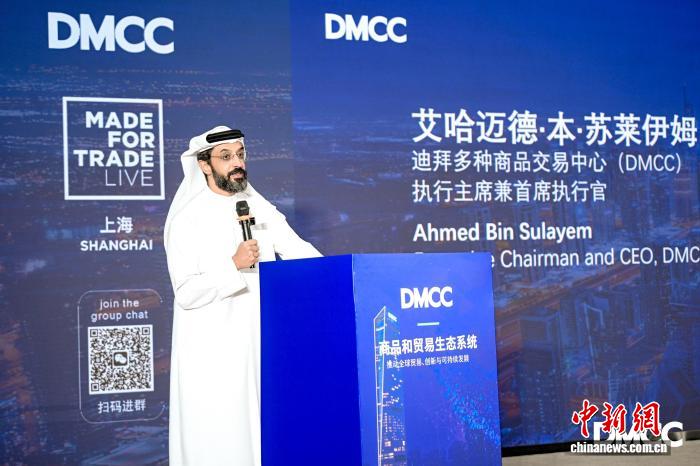
Core Insights - The number of Chinese companies registered with the Dubai Multi Commodities Centre (DMCC) has increased by over 16% in the past 12 months, surpassing 1,000 companies, indicating a strong trend of Chinese enterprises expanding into the Middle East market [1][3] Group 1: Growth of Chinese Companies in DMCC - Over the past five years, the number of Chinese companies in DMCC has consistently grown at double-digit rates: 19% in 2022, 21% in 2023, and an expected 17% in 2024, driven primarily by sectors such as artificial intelligence, blockchain, Web3, and digital infrastructure [1][3] - Currently, there are over 3,400 international tech companies in DMCC, with more than 130 being Chinese tech firms, utilizing Dubai as a gateway to the Middle East [1][3] Group 2: Trade Relations and Future Projections - China is the largest trading partner of the UAE, with bilateral trade exceeding $102 billion last year, and is projected to double by 2030, fueled by enhanced cooperation in trade, investment, and innovation [3] - DMCC aims to become the preferred business hub for Chinese companies looking to expand globally through Dubai, focusing on sectors like artificial intelligence and digital economy [3]
一周要闻·阿联酋&卡塔尔|迪拜投资2.72亿美元打造数字化跨境B2B贸易平台/哈马德国际机场携手大兴共促卡中航空联通
3 6 Ke· 2025-09-29 02:27
Group 1: Digital Trade and Economic Cooperation - The Fourth Global Digital Trade Expo is being held in Hangzhou from September 25 to 29, with over 1,700 companies participating, including more than 20% international exhibitors and over 70 global Fortune 500 companies [2] - The UAE, as a guest country, showcases advancements in digital economy, fintech, AI, and smart governance at its national pavilion [2] - Bilateral trade between China and the UAE has reached $90 billion, with a target of $200 billion by 2030 [2] Group 2: UAE Real Estate Market - The UAE real estate market is projected to reach $759 billion by 2029, with a compound annual growth rate of 2.28% [3] - The market value is expected to approach $693 billion by the end of 2025, driven by foreign direct investment and stable rental prices [3] - The UAE real estate services market is estimated to grow from $184.5 billion in 2025 to $247.5 billion by 2030, with a CAGR of 6.05% [3] Group 3: Infrastructure and Housing Development - The UAE plans to invest $28.8 billion to build 40,000 housing units in Abu Dhabi by 2029 [3] - The project includes the construction of 25,244 housing units and the development of 14,876 residential plots [3] Group 4: Foreign Direct Investment in Dubai - Dubai leads globally in greenfield foreign direct investment (FDI) projects, adding 643 projects in the first half of 2025 [4] - The city has seen a significant increase in foreign investment, ranking second globally in total foreign investment and third in job creation [4] Group 5: Digital Trade Platform Launch - Dubai GlobalX Group has launched Tradex, a digital B2B trade platform with an investment of $272 million, focusing on cross-border trade between the UAE and Iraq [4] - The platform aims to streamline import/export processes and enhance compliance in international markets [4] Group 6: Qatar Economic Growth - Qatar's economy grew by 1.9% in Q2 2025, driven by the non-energy sector, which accounted for 65.6% of the GDP [5][6] - The actual GDP reached 181.8 billion Qatari riyals, up from 178.5 billion riyals in the same period last year [5] Group 7: Legislative Reforms in Qatar - Qatar is drafting new legislation to update public-private partnership laws, foreign investment laws, and bankruptcy laws to support private sector development [6] - The reforms aim to simplify business procedures and expand the range of commercial activities available to foreign investors [6] Group 8: Strategic Partnerships in Digital Infrastructure - Qatar Investment Authority (QIA) has partnered with Blue Owl Capital to develop a digital infrastructure platform, investing over $3 billion in initial data center assets [6] - The initiative aims to enhance cloud computing and AI capabilities to meet growing global demand [6]


智联欧亚 携手前行
Shan Xi Ri Bao· 2025-09-24 23:03
Group 1: Global Governance and Cooperation - The article emphasizes the consensus among many countries to deepen connectivity and jointly implement global governance initiatives amid profound changes in the global governance system [1] - The 2025 Eurasian Economic Forum serves as a platform for domestic and international participants to discuss hot topics in Eurasian development and provide intellectual support for regional cooperation [1] Group 2: Digital Economy and Urban Development - The ninth Silk Road Economic Belt City Roundtable Conference highlights the digital economy as a core engine driving high-quality urban development [2] - Xi'an has been focusing on national digital economy strategies, enhancing digital infrastructure like 5G and data centers, and promoting the integration of digital technology with various sectors [3] Group 3: International Collaboration and Knowledge Sharing - The conference facilitated discussions on smart transportation, ecological digital monitoring, and cross-border data sharing, leading to potential cooperation intentions among participating countries [3] - The establishment of a think tank cooperation mechanism during the 2025 Eurasian Economic Forum aims to enhance policy communication and economic connectivity among Eurasian countries [8][9] Group 4: Reports and Research Findings - The "Belt and Road Initiative: Eurasian Economic Observation" report provides insights into the dynamics and trends in trade and industrial cooperation among Eurasian countries [9][10] - The "China-Central Asia Economic Cooperation Report" analyzes the cooperation mechanisms and policy optimization paths for China-Central Asia economic interactions, aiming to facilitate high-quality project and enterprise collaborations [10]
加纳启动基础设施“大跃进”战略
Shang Wu Bu Wang Zhan· 2025-09-20 17:14
Core Insights - The Ghanaian government plans to launch an ambitious "Leap Forward" initiative in 2025, investing 139 billion Ghanaian cedis (approximately 1.1 billion USD) in priority infrastructure projects to address long-standing development gaps and promote long-term growth [1] - Annual investment is expected to increase to 212 billion Ghanaian cedis (approximately 1.6 billion USD) by 2028 [1] Funding and Investment Strategy - The initiative will primarily utilize funds from the Annual Budget Funding Amount (ABFA) derived from oil revenues and mineral royalties, with the Ministry of Finance restructuring these funds to focus on roads and transportation, energy and power generation, digital infrastructure, and urban-rural development [1] - Ghana requires approximately 37 billion USD annually over the next 30 years to meet development goals across various sectors, with an additional 8 billion USD needed each year just to maintain existing assets [1] Infrastructure Investment Context - Ghana scores 47 out of 100 on the Global Infrastructure Center Index, significantly below the average for lower-middle-income countries, highlighting the issue of underinvestment [1] - The Ghana Infrastructure Investment Fund (GIIF) is expected to create special purpose vehicles to attract private capital, blended financing, and international development funds [1]