数据库

Search documents
科蓝软件SUNDB LITE数据库为脑机接口产业突破数据瓶颈提供硬核支撑
Zheng Quan Ri Bao Wang· 2026-01-09 07:40
Core Insights - The brain-computer interface (BCI) industry is entering a critical phase of large-scale implementation by 2026, driven by rigid medical rehabilitation needs and the explosive potential of consumer applications [1] - Tsinghua Kelaan Advanced Intelligent Database Research Institute has announced a strategic focus on integrating the "BCI data foundation" into Kelaan Software's SUNDBLITE database, employing a "three-layer integrated" engineering approach to overcome data bottlenecks in the BCI industry [1] Group 1 - The core value of brain-computer interfaces lies in breaking the bandwidth limitations of human-machine interaction, which involves the collection of massive neural signals at millisecond intervals, generating gigabytes of data daily from 64-channel systems [1] - Traditional databases struggle to handle the "data storm" created by the high-frequency data collection and the closed-loop management needs of medical scenarios, as well as the real-time interaction requirements of consumer scenarios [1] - Kelaan Software aims to address industry pain points such as neural signal writing delays and inefficient cross-population scenario alignment, thereby laying a solid data foundation for the application of BCI technology [1][2] Group 2 - The SUNDBLITE database's "three-layer integrated" engineering approach establishes a full-link data governance loop, efficiently managing the entire process from data collection to feature extraction and annotation, even under high concurrency and frequency data flows [2] - Innovations in vectorized retrieval and unified management of structured metadata aim to enhance data alignment efficiency, facilitating the transition from personalized adaptation to generalized applications in medical and consumer scenarios [2] - The stability, compatibility, and efficiency of the data foundation directly influence the breadth and depth of BCI technology implementation in both medical and consumer markets [3] Group 3 - The SUNDBLITE database meets the strict data security and integrity requirements of medical scenarios while also adapting to the lightweight and low-power needs of consumer products [3] - The "three-layer integrated" architecture seamlessly connects various technical routes, providing standardized and scalable data solutions for upstream and downstream enterprises in the industry chain [3] - By 2030, the global market for the BCI industry is expected to experience exponential growth, with Kelaan Software's SUNDBLITE database playing a crucial role in accelerating the application of BCI technology across multiple fields [3]

科创产业新词频现政府工作报告
Chang Jiang Ri Bao· 2026-01-07 01:16
Group 1: Government Initiatives and Innovations - The government report highlights the launch of the world's first Beidou high-precision chip and the fastest magnetic levitation technology, showcasing advancements in various fields [1] - The report emphasizes the establishment of "Wan Zhao Pioneer" cities, aiming to enhance high-performance computing capacity by over 2500P, which is crucial for future industrial ecosystems [5] - The construction of facilities like the magnetic confinement deuterium-deuterium fusion neutron source is accelerated, representing a significant step towards sustainable energy solutions [8] Group 2: Smart Manufacturing and Industry Leadership - Two companies, Wuhan Changfei Optical Fiber and Cable Co., Ltd. and Wuhan BOE Optoelectronics Technology Co., Ltd., have been recognized as the first batch of national leading smart factories, marking Wuhan's leadership in intelligent manufacturing [4] - The concept of "root technology, root enterprises, and root industries" is introduced, focusing on fostering innovation and long-term growth within the local ecosystem [10] - The establishment of "Silicon Alleys" aims to create innovation clusters that facilitate the transformation of technological achievements into market applications, enhancing the local entrepreneurial environment [9] Group 3: Future Technologies and Research - The government report outlines a strategic focus on emerging industries such as embodied intelligence, future displays, 6G, synthetic biology, quantum technology, brain-machine interfaces, hydrogen energy, and nuclear fusion [3] - The emphasis on building a robust computing infrastructure is seen as essential for meeting the increasing demands of artificial intelligence across various sectors [7]





达梦数据:公司始终坚持以独立、开放、兼容的技术路径为核心,聚焦于打造安全可靠、具备高度自主可控能力的数据管理基础设施
Zheng Quan Ri Bao Wang· 2025-12-26 12:43
Core Viewpoint - The company emphasizes its commitment to an independent, open, and compatible technology path in the diversified database industry, focusing on building secure and reliable data management infrastructure [1] Group 1: Company Strategy - The company aims to develop differentiated characteristics in architecture design, ecological adaptation, and in-depth industry services through continuous product evolution [1] - The company provides flexible and sustainable data technology options for clients by ensuring broad compatibility and collaborative optimization with various hardware platforms and application ecosystems [1] Group 2: Market Trends - In industries with high demands for supply chain security and architectural autonomy, clients tend to prefer clear hierarchical and accountable technology architectures, creating ongoing development opportunities for vendors focused on product and service depth [1]
腾讯云Valkey社区贡献位居全球第一,率先在国内支持8.0版本
Sou Hu Cai Jing· 2025-12-25 02:46
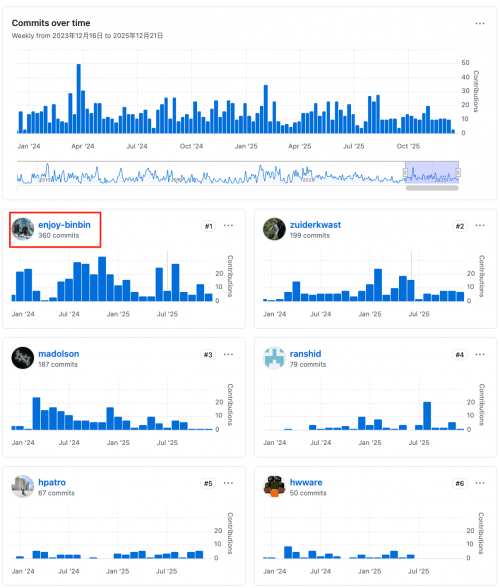
Core Insights - The article highlights the significant changes in the open-source software landscape with the emergence of the new generation open-source in-memory database Valkey, which is now supported by Tencent Cloud as the first in China to release Valkey 8.0 [1] Group 1: Valkey Overview - Valkey is an open-source in-memory Key-Value database project managed by the Linux Foundation, originating from the Redis community, aimed at creating a vendor-neutral and stable foundational software platform through a loose open-source protocol and community governance model [1] - The release of Valkey 8.0 marks the first major version since its fork from Redis, inheriting capabilities from Redis 7.2.4 while achieving significant improvements in performance and resource efficiency, particularly for Search and AI applications [5] Group 2: Tencent Cloud's Role - Tencent Cloud has become a key contributor to the Valkey project, ranking first globally in community code contributions, with expert Binbin Zhu contributing over 360 pull requests (PRs) and serving on the Technical Steering Committee (TSC) and Core Team [2] - Tencent Cloud's involvement includes adapting Valkey 8.0 for cloud environments based on its extensive experience in industries such as gaming, e-commerce, and finance, enhancing its stability and usability in production settings [5] Group 3: Community Engagement - Major global cloud providers, including AWS, Google Cloud, Oracle, Tencent Cloud, Alibaba Cloud, and Huawei Cloud, are deeply engaged in the Valkey community, fostering a community-centric open-source collaboration model [1] - The establishment of the Valkey community in Beijing allows Chinese developers to participate actively in global community governance [1]

白手起家者 vs 继承者们:富豪榜里的新钱旧钱攻防战
Sou Hu Cai Jing· 2025-12-24 13:37
Core Insights - The total wealth of the world's billionaires has surpassed $16 trillion for the first time, with nearly two-thirds of this wealth concentrated in three countries: the United States, China, and India [1][5][6] - Elon Musk's wealth increased by $147 billion over the past year, reaching $342 billion, which is higher than the GDP of nearly 100 countries [1][2] - The number of billionaires has reached 3,028, an increase of 247 from the previous year, with a total wealth increase of $2 trillion compared to last year [1][2] Industry Analysis - The technology sector dominates the billionaire rankings, with the top five positions held by tech moguls: Elon Musk, Mark Zuckerberg, Jeff Bezos, Larry Ellison, and Bernard Arnault [1][2] - The total wealth of the top 15 billionaires is $2.4 trillion, exceeding the combined wealth of the bottom 1,500 billionaires [2] - The financial and investment sector also performed well, with 113 billionaires, whose total wealth grew from $1.3 trillion to $1.5 trillion [4] Geographic Distribution - The United States leads with 902 billionaires, followed by China with 516 and India with 205, together accounting for over half of the world's billionaires [5][6] - New York remains the city with the highest concentration of billionaires, totaling 123 individuals with a combined wealth of $759 billion [6] Emerging Trends - The rise of new billionaires includes 288 newcomers, particularly from the AI sector, with significant contributions from companies like Anthropic and CoreWeave [8] - Notable new entrants in the food industry include founders of popular chains like Cava and Chipotle, while entertainment figures such as Bruce Springsteen and Arnold Schwarzenegger have also joined the ranks [9] Wealth Dynamics - A significant portion of billionaires, 67%, are self-made, indicating a trend towards entrepreneurship rather than inheritance [11] - The number of female billionaires has slightly increased to 406, representing 13.4% of the total, with Alice Walton becoming the richest woman globally [13]
【财联社早知道】2025第三届商业航天发展大会即将召开,这家公司已实现批量交付壳段、整流罩等火箭箭体结构件产品,订单充足
财联社· 2025-12-21 10:57
Group 1 - The third Commercial Space Development Conference is set to be held in 2025, with institutions predicting that China's commercial space market could reach a scale of 10 trillion yuan by 2030 [1] - A company has achieved mass delivery of rocket structural components such as shells and fairings, indicating a strong order backlog [1] - Elon Musk praised a dance video featuring a humanoid robot, with institutions stating that mass production of humanoid robots is imminent by 2026; this company has received small batch orders for its reverse planetary roller screw from multiple robotics clients [1] - Another company's database products are primarily used in critical information systems for national major space model projects, including testing, launching, and control [1]

东吴证券晨会纪要-20251219
Soochow Securities· 2025-12-19 03:23
Macro Strategy - The report highlights that export control measures on key metals have become a crucial advantage for China in the context of major power competition, particularly against the US and EU [10][11] - China's leading position in key metals is attributed not only to resource advantages but also to a complete industrial system that is difficult for developed economies to replicate [10][11] Fixed Income - The report indicates that the bond market is expected to face challenges in 2026, with less likelihood of a unilateral decline in interest rates as seen from 2022 to 2024, suggesting a need for a more flexible approach to bond trading [12][13] - Recent meetings have emphasized a continuation of proactive fiscal and moderately loose monetary policies, which are expected to influence bond market sentiment positively [12][13] Industry Analysis - The report discusses the merger of CICC with Dongxing and Xinda, which is expected to create a company with total assets exceeding one trillion yuan, ranking fourth in the industry [21][23] - The merger is seen as a strategic move to enhance scale and comprehensive strength in the securities industry, with large brokers expected to fill gaps through acquisitions while smaller brokers may achieve rapid growth through external mergers [21][23] Recommended Stocks - The report recommends investing in StarRing Technology, which is positioned as a leader in AI and big data infrastructure, with expected revenues of 426 million, 488 million, and 583 million yuan for 2025, 2026, and 2027 respectively [23][24] - The company is noted for its innovative GPU-Native database, which is anticipated to benefit significantly from the growing demand for AI inference [23][24]
华尔街顶级分析师最新评级:ROKU获上调评级,洛克希德遭下调
Xin Lang Cai Jing· 2025-12-16 15:06
Core Viewpoint - The article summarizes significant analyst rating changes that are expected to impact the market, highlighting both upgrades and downgrades across various companies and sectors [1][6]. Upgraded Ratings - Roku (ROKU): Morgan Stanley upgraded the rating from "Underweight" to "Overweight," raising the target price from $85 to $135, citing strong performance in the digital advertising market and expected robust growth in U.S. advertising spending by 2026 [5]. - Okta (OKTA): Jefferies upgraded the rating from "Hold" to "Buy," increasing the target price from $90 to $125, noting Okta's efforts to build a comprehensive identity authentication platform that can capitalize on the growing demand for intelligent agents [5]. - ServiceNow (NOW): Guggenheim upgraded the rating from "Sell" to "Neutral," stating that the current stock price is below the previously set target price, making it attractive [5]. - Rockwell Automation (ROK): Goldman Sachs upgraded the rating from "Sell" to "Neutral," raising the target price from $329 to $448, highlighting the potential operational leverage from structural price increases under new management [5]. - L3 Harris Technologies (LHX): Morgan Stanley upgraded the rating from "Hold" to "Overweight," increasing the target price from $350 to $367, based on a positive outlook for the aerospace and defense sector in 2026, with demand growth expected to outpace supply [5]. Downgraded Ratings - Zimmer Biomet (ZBH): Baird downgraded the rating from "Outperform" to "Neutral," lowering the target price from $117 to $100, citing disappointing performance expectations for 2025 and potential market share loss to Stryker's Mako orthopedic surgical robot [5]. - Capri Holdings (CPRI): Wells Fargo downgraded the rating from "Overweight" to "Hold," raising the target price from $25 to $27, indicating that previous positive factors driving the stock price have diminished, leading to increased market divergence on growth expectations [5]. - Lockheed Martin (LMT): Morgan Stanley downgraded the rating from "Overweight" to "Hold," reducing the target price from $630 to $543, while still optimistic about the aerospace and defense sector's outlook [5]. - StubHub (STUB): Citizens Bank downgraded the rating from "Outperform" to "Market Perform," with no target price set, anticipating increased market competition in 2026 that may limit market share growth [5]. - GitLab (GTLB): KeyBanc downgraded the rating from "Overweight" to "Sector Weight," with no target price set, expressing concerns over pricing power potentially hindering growth and increased execution risks due to a shift to a usage-based billing model [5]. Initiated Coverage - MongoDB (MDB): Raymond James initiated coverage with a "Market Perform" rating and no target price, noting the balanced market sentiment around the stock despite its strategic importance in the independent database platform sector [11]. - D-Wave Quantum (QBTS): Jefferies initiated coverage with a "Buy" rating and a target price of $45, highlighting the increasing market attention and application rates for various quantum computing architectures [11]. - Omnicom Group (OMC): Morgan Stanley resumed coverage with a "Hold" rating and a target price of $88, indicating that the company's merger integration efforts present both opportunities and risks [11]. - Freshpet (FRPT): Morgan Stanley initiated coverage with a "Hold" rating and a target price of $71, recognizing the long-term growth potential in the pet food industry but cautioning against short-term economic pressures [11]. - Jumia Technologies (JMIA): Craig-Hallum initiated coverage with a "Buy" rating and a target price of $18, emphasizing the company's optimized product offerings and logistics network as key drivers for achieving sustainable double-digit growth by 2030 [11].





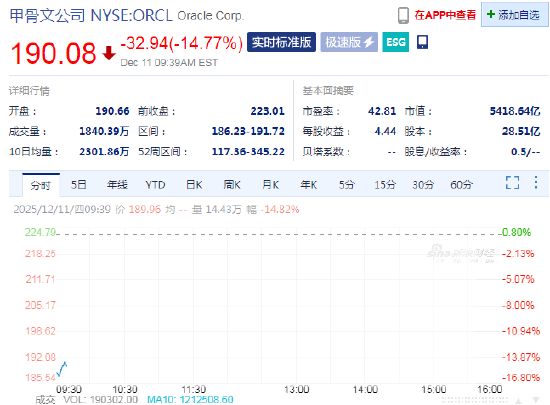
甲骨文早盘跌近15% 其信用风险升至2009年以来最高水平
Xin Lang Cai Jing· 2025-12-11 14:48
Core Insights - Oracle's credit risk indicators have reached a 16-year high, raising concerns about its ability to profit from significant AI investments due to increased spending on data centers and other equipment [2][3] - The cost of Oracle's five-year credit default swaps rose by 0.17 percentage points to approximately 1.41%, the highest level since April 2009, indicating declining investor confidence in the company's credit quality [2] - Oracle's bond spreads have widened, with the yield spread on its 6% bonds maturing in 2055 increasing by 20 basis points to 196 basis points, reflecting market concerns about rising risks in the AI sector [2][3] Financial Metrics - Oracle's debt has surpassed $100 billion, contributing to cash consumption in the recent quarter due to high capital expenditures [4] - The trading volume of Oracle's credit default swaps surged to approximately $9.2 billion over a 10-week period, significantly higher than the $410 million recorded in the same period last year [3] Management Commentary - Oracle's co-CEO expressed commitment to maintaining an investment-grade debt rating, despite rising leverage levels that could potentially lead to a downgrade to junk status [3][5] - Concerns have been raised by analysts regarding Oracle's funding needs for its expanding data center operations, with warnings that credit default swap prices could exceed 1.5% in the short term if financing strategy disclosures remain limited [5]

天量支出吓崩股价?甲骨文电话会紧急救火:“客户自带芯片”将拯救现金流,“我们没有疯狂举债”
硬AI· 2025-12-11 11:32
Core Viewpoint - Oracle's aggressive capital expenditure plan of an additional $15 billion has alarmed investors despite holding a staggering $523.3 billion in remaining performance obligations (RPO) [3][5][21]. Group 1: Financial Performance - Oracle reported a 13% year-over-year revenue growth, with cloud infrastructure (OCI) revenue soaring by 66% [2][41]. - RPO reached an astonishing $523.3 billion, a 433% increase year-over-year, driven primarily by contracts with major clients like Meta and NVIDIA [7][41]. - The company expects to confirm 40% year-over-year growth in RPO over the next 12 months, up from 25% in the previous quarter [41]. Group 2: Capital Expenditure and Debt Management - The company announced that its capital expenditure for FY2026 would increase by $15 billion, reaching a total of $50 billion, which caused a post-earnings stock drop of over 10% [5][21]. - Oracle's management defended the capital expenditure, stating that the actual borrowing needs would be significantly lower than analysts' predictions of $100 billion, thanks to innovative financing models [12][66]. - The introduction of a "Bring Your Own Chips" model allows clients like OpenAI to provide their own hardware, reducing Oracle's upfront capital expenditure [13][14][66]. Group 3: Strategic Shifts and Market Position - Larry Ellison emphasized that the future of AI lies in multi-step reasoning over private data, positioning Oracle's AI data platform as a key player in breaking down data silos [8][29][30]. - OCI's revenue growth of 66% outpaces competitors like AWS and Azure, with GPU-related revenue skyrocketing by 177% [9][32]. - The company is transitioning from a heavy asset model to a lighter asset model, which could significantly improve long-term capital returns [18][19]. Group 4: Risk Management and Client Dependency - Oracle's AI infrastructure is designed to be highly fungible, allowing for rapid reallocation of resources among clients, which mitigates risks associated with client dependency [25][26][78]. - The company has over 700 AI clients, ensuring that any unused capacity can be quickly redeployed, thus reducing potential risks from client-specific investments [26][78]. Group 5: Future Outlook - Oracle maintains a strong outlook for continued growth, with expectations of $67 billion in revenue for FY2026, supported by a robust pipeline of contracts [41][44]. - The company is focused on leveraging its unique data position and flexible financing strategies to capitalize on the AI wave without compromising its balance sheet [36][19].