
水果种植与加工

Search documents
提振消费进行时 | “我的目标,是把浦北老树陈皮卖遍全国”
Guang Xi Ri Bao· 2026-01-25 02:58
"老板,见过我们浦北的老树陈皮吗?你们瞧,这大红皮成色多正!" "我家种有500多棵老柑树,现在的果皮行情好,鲜果都在涨价。"平睦镇良村田笋坪村民李容说, 如今老树陈皮成了线上热销的"香饽饽",冬后采收的30年至45年老树干果皮,单价更是达到360元/公 斤。 在产业高歌猛进的同时,浦北也为老树产业筑牢"安全防线"。当地积极引入科技力量,建设无病毒 苗木繁育基地,从源头防控被称为柑橘"癌症"的黄龙病;推广绿色综合防控技术,全方位守护果园生态 健康。更值得一提的是,当地政府为这些"功勋老树"建立了专属数字档案,量身定制"一树一策"保护方 案。"我们要以科学的方法守护好这些老树,让它们在新时代焕发出更强的生机与活力。"农业科技特派 员覃祖添说。 为助力老树陈皮借势出圈,浦北县精准发力,开展系列电商技能培训活动,培训对象重点面向返乡 青年、村干部、种养大户等群体。2025年,累计覆盖学员1079人,一批本土主播脱颖而出,月销售额稳 步增长;更有学员组建起专业直播团队,月销售额突破60万元。电商的蓬勃动能,正让浦北老树陈皮的 芬芳,飘向更广阔的市场。(康安 陆喜击) "把浦北老树陈皮卖遍全国,就是我的目标!"1月19 ...
超20亿产值!看沙糖桔的“七十二变”
Xin Hua Wang· 2026-01-20 01:53
Core Insights - The article highlights the growing popularity of Shatangju (sugar oranges) as a sought-after New Year product in Guangdong's Zhaoqing city, particularly in the Qihui area, where the fruit is abundant and ripe for harvest [1][3] Group 1: Product Development and Value Addition - Qihui City is implementing a strategy of "one fruit, multiple products," transforming Shatangju into various products such as juice, vinegar, and wine, while also extracting essential oils and dietary fibers from the fruit's waste [3] - The value addition from processing Shatangju has increased its market appeal, alleviating concerns for local farmers about selling their produce [3] Group 2: Logistics and Cost Reduction - To address high shipping costs, multiple departments in Qihui have collaborated with logistics companies to establish 15 collection points, ensuring full coverage across towns and streets, thus facilitating easier shipping for smallholder farmers [3] - Existing express delivery fees have been reduced by 30% to 40%, and targeted discounts for e-commerce clients have been introduced, effectively lowering logistics costs [3] Group 3: Industry Growth and Economic Impact - By 2025, the area dedicated to Shatangju cultivation is projected to reach 108,700 acres, with an expected production of 233,000 tons, reflecting a year-on-year growth of 0.8% and 7% respectively [3] - The total industry chain output value has surpassed 2.3 billion yuan, integrating over 10,000 farmers into the industrialization process and contributing to steady increases in average annual income for village collectives [3][5] Group 4: Broader Agricultural Strategy - Qihui, recognized as "China's Citrus Town," is diversifying its agricultural offerings by cultivating various citrus fruits throughout the year, including Gonggan, Wogan, lemons, and others [5] - The local agricultural bureau is enhancing quality, promoting deep processing, and integrating agriculture with culture and tourism to expand the industry chain and elevate the "Qihui Citrus" brand in broader markets [5]

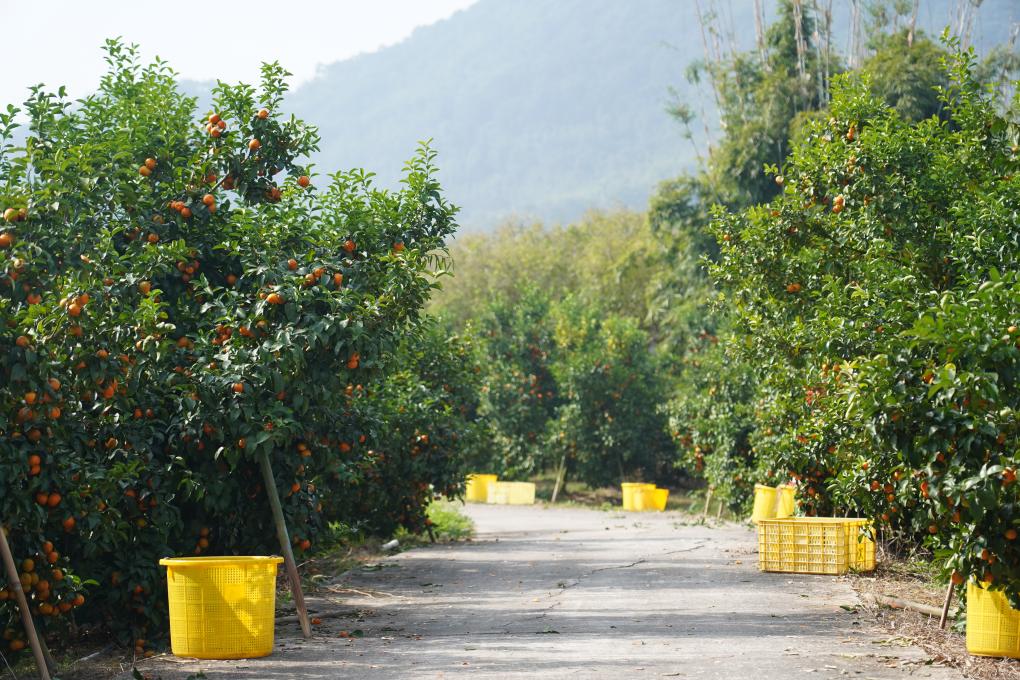
AI火眼金睛“挑”金桔 “中国金桔之乡”备战年货市场忙
Xin Lang Cai Jing· 2026-01-17 13:36
Core Viewpoint - The "Rong'an Kumquat" from Guangxi's Liuzhou is entering a peak sales season, preparing for the New Year market, with local farmers and companies actively involved in sorting and packaging kumquats for distribution [1] Group 1: Industry Overview - Guangxi's Rong'an County is known as the "Hometown of Kumquat," with three main varieties: oil-skin kumquat, smooth-skin kumquat, and crispy honey kumquat, which has gained popularity as a "internet celebrity product" due to its sweetness and durability [1] - The sales period for fresh kumquats lasts approximately four months, from November to the Spring Festival [1] Group 2: Company Operations - Ant Agriculture Company processes about 300,000 jin (150 tons) of kumquats daily, distributing them across China and exporting to international markets including Singapore, Malaysia, Thailand, Vietnam, Qatar, and Canada [1] - The company has transitioned from traditional agriculture to smart agriculture, implementing AI sorting technology that can process 600,000 jin (300 tons) of kumquats daily, enhancing sorting accuracy and efficiency [2] Group 3: Product Development - Yidian Food Technology Company focuses on deep processing of kumquats, producing dried fruits, fruit preserves, and juices, with an annual processing capacity of nearly 1,500 tons [4] - The company aims to increase kumquat utilization and value through industrialization, with projected sales of kumquat processed products reaching approximately 7 million yuan by 2025 [4] Group 4: Future Projections - By 2025, the kumquat planting area in Rong'an County is expected to reach 231,000 mu (15,400 hectares), with a total output of 287,000 tons and an industry value nearing 10 billion yuan, alongside a brand value of 6.52 billion yuan [6] - The export value is anticipated to reach 6.34 million yuan, representing a nearly threefold increase [6]
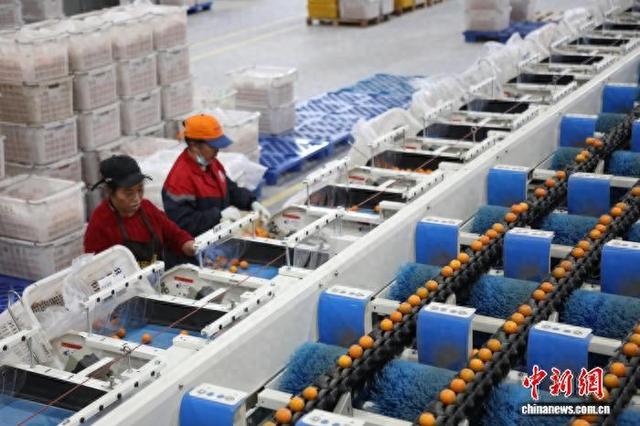
四川简阳雷家镇:全球柠檬走俏,如何接住这波“行情”?
Xin Lang Cai Jing· 2026-01-16 06:42
来源:农民日报 "2025年订单比往年多很多,得加紧赶工才供得上!"四川省成都市下辖简阳市雷家农副产品出口总部基 地内,简阳市格林兰农业开发有限公司(以下简称"格林兰农业公司")总经理李迁指挥工人将一框框分 选好的柠檬按规格包装好。 雷家镇的柠檬喜获丰收,2025年出口量达8000吨,金黄的果实不仅远销俄罗斯、泰国等二十多个国家, 更卖出了往年不敢想的高价。"雷家镇地处北纬30度附近,温度适宜、土壤肥沃,特别适合尤力克品种 柠檬的生长,而且种出来酸度刚刚好,口感纯正,国际市场就认这个味。"说起柠檬,李迁滔滔不绝。 李迁告诉记者,国际市场对柠檬的需求一直很稳定,可2025年,全球主要柠檬出口国土耳其遭遇罕见霜 冻,果园大面积减产,无奈宣布禁止出口,国际市场出现巨大供应缺口,价格翻了一倍还多! 那雷家镇是如何稳稳接住这波行情的呢?答案就在黑水寺村建成的简阳市雷家农副产品出口总部基地 里。 "轰隆隆",伴随着基地内机器的轰鸣声,刚从枝头采摘的柠檬被源源不断地倒进自动化分拣设备,喷淋 清洗、激光分选、分级装框一气呵成。不到十分钟,原本大小不一的鲜果,就按照个头被精准分成多个 等级,整齐码放在周转筐里,等待入库。 "下 ...
德庆贡柑已售近八成,黄果批量上市成为年前“抢手货”
Nan Fang Nong Cun Bao· 2026-01-16 03:31
Core Viewpoint - The article highlights the successful sales and market strategies of Deqing Gonggan, a premium citrus fruit from Deqing County, Guangdong, which has seen nearly 80% of its production sold ahead of the peak season, showcasing its growing brand value and innovative marketing approaches [1][3][10]. Group 1: Production and Sales - In 2025, Deqing County's Gonggan harvesting area is projected to reach 43,700 acres, with a total output of 83,500 tons and an estimated total value of approximately 940 million yuan [2][3]. - Currently, nearly 80% of the Gonggan has been sold, indicating strong market demand [3]. Group 2: Brand Value and Market Strategy - Deqing Gonggan, known as the "King of Citrus" in China, has a brand value of 10.8 billion yuan, supported by a systematic approach to production and marketing [6][7]. - The county has initiated a comprehensive marketing strategy involving media partnerships and various promotional activities to enhance the Gonggan brand value chain [8][9]. Group 3: Product Innovation and Diversification - Deqing Gonggan has expanded beyond fresh fruit sales to include value-added products such as NFC (Not From Concentrate) Gonggan juice and plans for Gonggan wine, with 300,000 pounds of Gonggan purchased for juice production this year [15][18]. - The Gonggan peel is being processed into a product similar to dried tangerine peel, which has seen sales increase from 400 pounds in 2021 to 1,100 pounds in 2025 [20]. Group 4: Logistics and Distribution - A new logistics model has been established, allowing for a "next-day delivery" service for Deqing Gonggan, ensuring that fresh fruit reaches consumers within 24 hours of harvest [24][25][26].

一颗脐橙的七十亿元“橙”功密码
Xin Hua Wang· 2026-01-14 02:18
Core Insights - The article highlights the technological advancements and collaborative efforts in the orange industry of Xinfeng County, Jiangxi Province, showcasing the transformation from traditional farming to a smart agricultural model [1][2][3]. Group 1: Industry Development - Xinfeng County has developed a total planting area of 285,000 acres for navel oranges, with an annual production exceeding 280,000 tons and a total industrial output value surpassing 7 billion yuan [1]. - The county's navel orange processing output value is expected to exceed 2 billion yuan in 2024, driven by the development of over 30 deep-processing products [2]. Group 2: Technological Integration - Smart agriculture is being implemented with sensors and automated irrigation systems that optimize water and fertilizer usage based on soil data [2]. - The intelligent sorting line in the processing facilities achieves a grading accuracy of 98% through spectral scanning of each fruit [2]. Group 3: Collaborative Models - The county has established a cooperative model involving 165 cooperatives and 8,346 farmers, providing unified services in seedling cultivation, technology, processing, and sales [2][3]. - Farmers like Gu Bin have reported increased incomes of around 200,000 yuan annually due to partnerships with companies that provide technical support and market access [3]. Group 4: Policy Support and Training - The county allocates 50 million yuan annually for targeted support in key areas of industry development, including subsidies for disease-resistant seedlings and new pesticide systems [3]. - Training programs for over 20,000 farmers each year are conducted to enhance skills and encourage innovation in farming practices [4]. Group 5: Marketing and Global Reach - Xinfeng County has launched a global recruitment initiative for marketing representatives, with a total funding of 3 million yuan to promote navel oranges [5][6]. - The county's navel oranges are not only sold domestically but also exported to markets in Singapore, Vietnam, and the European Union, with a projected 25% increase in export volume in 2024 [6]. Group 6: Future Goals - The "Fifteen-Five" plan aims to achieve a comprehensive output value exceeding 10 billion yuan by 2030, with over 15% of the output being exported and an average income for farmers exceeding 100,000 yuan [6].
海宁袁花以“山海协作”撬动梨产业升级
Xin Lang Cai Jing· 2026-01-12 23:09
Core Insights - The introduction of the traditional pear syrup, made from the local "Haichang Honey Pear," represents a new product initiative aimed at revitalizing the pear industry in Yuanhua Town through a collaboration with Jinhua Wuyi [1][2] - The product emphasizes a "food and medicine integration" philosophy and traditional slow-cooking methods, with no added sugars or preservatives, highlighting the quality of the local agricultural product [1] Group 1: Product Development - The traditional pear syrup is produced using over 20,000 pounds of high-quality "Haichang Honey Pear" as raw material, showcasing a resource-sharing agreement between Yuanhua Town and Jinhua Wuyi [1] - The syrup's production adheres to traditional techniques, with the critical "gathering syrup" process relying on the skill and experience of master craftsmen [1] Group 2: Market Positioning - The packaging of the pear syrup incorporates local cultural elements, featuring imagery that reflects the region's heritage and a promotional slogan that emphasizes its unique qualities [1] - The product has been integrated into the "Haining Agricultural Treasures" regional public brand system, enhancing its market visibility [1] Group 3: Agricultural Strategy - Yuanhua Town is transitioning its pear industry from selling fresh fruit to selling processed products, marking a significant step in enhancing the value of its pears [2] - The town maintains over 6,000 acres of "Haichang Honey Pear" cultivation and has introduced new varieties such as "New Jade" and "Zhejiang Pear No. 6," which offer larger fruit and extended supply periods [2] Group 4: Technological Support - The local agricultural sector is supported by technology, with experts from the Zhejiang Academy of Agricultural Sciences providing guidance to farmers, and an "expert consultation" system established to address agricultural queries [2] - In addition to the traditional pear syrup, other products like pear wine made from honey pears have also been launched, diversifying the product offerings [2]
视频丨农产品踏上“碳足迹” 这个新标尺让柑橘“甜”上加“值”
Xin Lang Cai Jing· 2026-01-12 05:36
Core Viewpoint - The article highlights the emergence of "carbon footprint" as a new standard for green agricultural products, particularly in the context of citrus production in Pujin County, Sichuan, where multiple citrus products have received "carbon label" certification, leading to a price premium of 10% to 30% over similar products [1][2]. Group 1: Carbon Footprint and Certification - The carbon footprint of a Pujin citrus is calculated to be 0.2956 kg of CO2 equivalent, which is nearly half of that of ordinary citrus [2]. - Pujin County has established 103 "zero pesticide residue" bases, promoting ecological transformation across 450,000 acres of citrus orchards [8]. - The carbon label serves as a "green bond" that connects the entire supply chain, allowing for traceability of the carbon footprint and enhancing the visibility and quantification of "green" practices [10]. Group 2: Economic Impact and Production - The citrus industry in Pujin County has become a pillar of agriculture, with an expected total production of 1.1 million tons and a direct output value of 7.2 billion yuan, contributing to a total industry chain value of 10 billion yuan [2]. - The implementation of the "two replacements" project has significantly increased the area under citrus cultivation, projected to reach 450,000 acres by the 2025-2026 harvest season [2]. - The integration of carbon labels with green finance has incentivized local farmers, resulting in a shared green low-carbon benefit for 260,000 farmers in Pujin [12]. Group 3: Technological Innovations and Standards - Advanced sorting and packaging technologies have been adopted to ensure that citrus products meet international market standards, with a focus on reducing carbon emissions throughout the supply chain [10]. - The establishment of a national carbon footprint factor database for agricultural products aims to monitor greenhouse gas emissions from various agricultural activities, with plans to expand to 50 core products by 2027 [14]. - The shift towards low-carbon agricultural products is seen as beneficial for the overall green transition of the agricultural sector, emphasizing the importance of understanding carbon emissions [16].

一颗胡柚的价值跃升
Xin Lang Cai Jing· 2026-01-11 17:16
Core Insights - The "Shuangyou" industry in Changshan has seen its output value increase from 1.872 billion to 7.405 billion yuan during the 14th Five-Year Plan period, with expectations to exceed 10 billion yuan by 2026, making it the first citrus industry chain in the province to reach this milestone [1] Industry Development - The Changshan "Zhongyou" grapefruit cooperative has reported a significant increase in sales, with over 2 million kilograms sold annually, benefiting local employment and achieving a substantial rise in industry value [2] - The quality of the 2025 grapefruit harvest has improved, with sugar content reaching an average of 12.5 degrees, indicating better fruit quality [2][3] - A new team of young experts in grapefruit cultivation has been established to enhance the industry's development, focusing on training and practical guidance for farmers [3] Production and Processing - The Changshan grapefruit industry has implemented advanced agricultural practices, resulting in a 15% increase in yield despite adverse weather conditions, with a total production of 150,000 tons from over 100,000 acres [3] - The Zhejiang Aijia Food Company has invested over 100 million yuan in a production line capable of processing 12,000 bottles of juice per hour, with plans to produce grapefruit wine and beer, projecting an annual output value of 600 million yuan [4] Future Plans - By 2026, Changshan aims to expand the "Shuangyou" planting area by over 5,000 acres and enhance raw material supply for processing enterprises, while also exploring medicinal uses for grapefruit [6] - The "Aiyou Manyuan: Grapefruit Full Chain Future Center" project, with an investment of over 50 million yuan, has received land approval and will include various facilities to enhance agricultural tourism and services [6]
武鸣沃柑首次出口安哥拉和塞舌尔
Guang Xi Ri Bao· 2026-01-09 03:02
Core Insights - The opening event for Wuming Wokan took place on January 8, where six domestic and international buyers signed procurement agreements worth 90 million yuan, marking a strong start to the sales season [1] - Wuming Wokan has expanded its market presence to 30 countries and regions globally, with an annual export volume exceeding 200,000 tons and a total industry output value surpassing 10 billion yuan [1] Industry Developments - The local area has promoted standardized planting of Wuming Wokan, widely adopting precision drip irrigation and drone spraying technologies, which have significantly reduced pesticide usage per acre and improved planting efficiency, precision, and sustainability [1] - By 2025, the planting area for Wuming Wokan is expected to exceed 460,000 acres, with an annual fresh fruit production target of 1.56 million tons [1] Processing and Value Chain - The Wuming Wokan industry has seen rapid development in deep processing, with the establishment of eight production enterprises, 404 cold storage facilities, 246 sorting lines, and 166 post-harvest processing plants, creating a complete production and processing system [1] - Products such as Wokan juice, dried fruit, soft candy, and essential oils are well-received in the market [1]