深海科技

Search documents
陈希参加崖州代表团审议时指出 坚持量质并举 提升政府效能 以实干实绩推动三亚经济社会高质量发展
Xin Lang Cai Jing· 2026-01-24 11:20
转自:三亚发布 陈希指出—— 要牢牢把握高质量发展首要任务,坚持量质并举、提质增效,着力在动能更新与形象焕新上实现 更大突破。 要聚焦南繁种业、深海科技两大方向,推动科技创新与产业创新深度融合,切实提高科技成果转 化和产业化水平。 要提升招商引资质量,重点引进行业领军企业、链主企业及配套企业,促进产业集聚与结构优 化。 要坚持过"紧日子",扎实做好就业、教育、医疗等民生保障工作,不断补齐短板、兜牢底线,以 实际成效回应群众期盼。 要切实提升依法行政水平,加强能力作风建设,久久为功、持续发力,妥善解决化解历史遗留问 题,以新形象、新业绩展现担当作为。 1月23日至24日,市委副书记、市长、市人大代表陈希在崖州代表团,与代表们一起审议政府工作报 告、市人大常委会工作报告、市中级人民法院工作报告、市人民检察院工作报告,审查"十五五"规划纲 要草案、计划报告、预算报告等文件。 审议中,代表们结合工作实际,围绕产业发展、科技创新、人才引育、民生保障等方面建言献策。陈希 边听边记,并积极回应代表关切,对代表们过去一年为三亚发展作出的贡献表示感谢。他表示,市政府 及各职能部门将充分吸纳代表意见建议,持续提升政府效能,希望代 ...
2025年中国深海科技行业原材料现状 深海材料决定着科技能力的边界【组图】
Xin Lang Cai Jing· 2026-01-21 08:13
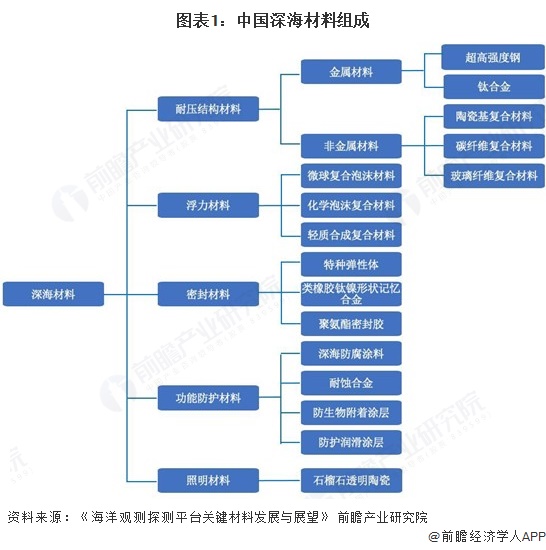
Core Viewpoint - The development of deep-sea materials is crucial for advancing deep-sea technology and unlocking the potential of the trillion-dollar deep-sea mineral resources market, supporting the entire industry chain from equipment manufacturing to resource utilization [1][3]. Group 1: Deep-Sea Materials Overview - Deep-sea materials are essential for operations in extreme environments characterized by high pressure, low temperature, and strong corrosion, directly influencing development capabilities [1]. - These materials can be categorized by function into pressure-resistant structural materials, buoyancy materials, sealing materials, protective materials, and lighting materials, and by properties into high-strength metal materials, polymer composites, and ceramic-based composites [1][3]. Group 2: Pressure-Resistant Structural Materials - Pressure-resistant structural materials are divided into metal and non-metal categories, with metal systems being more mature, including high-strength alloy steel, titanium alloys, and aluminum alloys [3]. - Non-metal materials are also making progress, with composite materials showing significant potential due to their lightweight and corrosion-resistant properties [3][4]. Group 3: Titanium Alloys - Titanium alloys, known as "marine metals," are favored for their high strength, excellent corrosion resistance, and low density (60% of steel), making them ideal for marine engineering and deep-sea pressure vessels [5]. - Companies like BaoTi Co., Ltd. and Western Materials are leading in titanium alloy production, with BaoTi being the largest global producer and achieving mass production of deep-sea titanium alloy components [7]. Group 4: Sealing Materials - Deep-sea sealing materials include rubber sealing materials, metal sealing materials, and special engineering plastics, with rubber materials currently dominating the market [9]. - Metal seals, particularly titanium and nickel-based alloys, are gaining attention for their superior durability and temperature adaptability in deep-sea applications [9]. Group 5: Corrosion-Resistant Materials - Corrosion-resistant materials are critical in deep-sea environments, with methods to reduce corrosion including the development of new materials and the application of protective coatings [11]. - Common anti-corrosion coatings used in marine applications include rubber-based, epoxy-based, fluorocarbon, and organic silicone coatings, each with specific advantages and limitations [11].




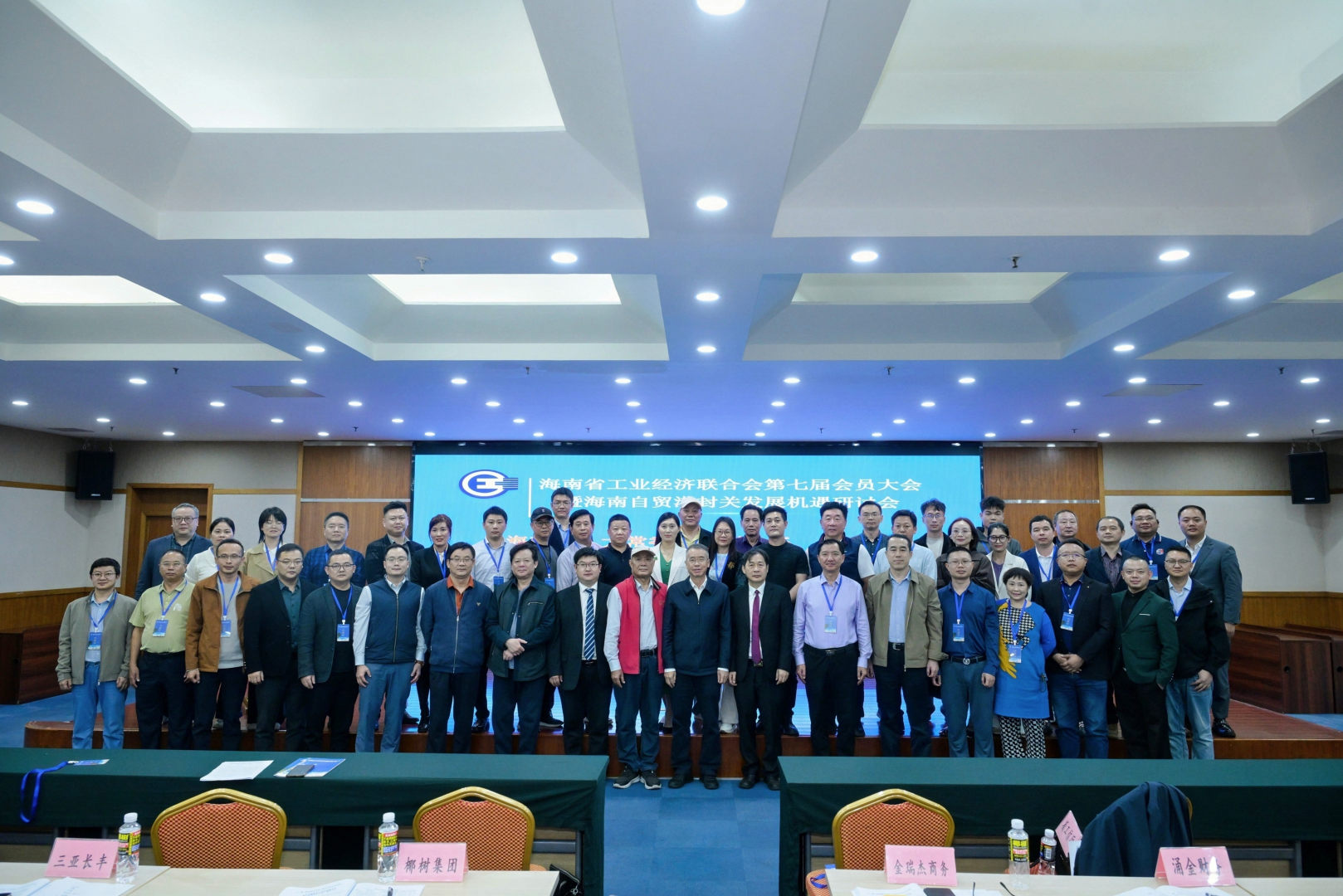
海南省工业经济联合会第七届会员大会暨海南自贸港封关发展机遇研讨会在海南海口召开
Xin Lang Cai Jing· 2026-01-17 09:29
Core Viewpoint - The Hainan Free Trade Port is entering a new phase of operation, presenting significant opportunities for industrial development and optimization in the region [2][5]. Group 1: Conference Overview - The 7th Member Conference of the Hainan Industrial Economic Association and the seminar on opportunities from the Hainan Free Trade Port's closure were held in Haikou, Hainan [1][3]. - Representatives from various industrial enterprises in Hainan focused on discussing the opportunities arising from the Free Trade Port's closure [1]. Group 2: Key Insights from Leaders - Lu Zhiyuan, President of the Hainan Charity Federation, highlighted the association's commitment to supporting industrial development through reforms, communication, and addressing enterprise needs [2]. - The Hainan Industrial Economic Association aims to provide professional advice on the development paths for advanced and high-tech manufacturing industries, leveraging Hainan's geographical and policy advantages [6]. Group 3: Industrial Growth and Policy Impact - During the 14th Five-Year Plan period, Hainan's industrial economy has shown steady growth, with a shift from a single focus on petrochemicals to a more diversified industrial structure [5]. - New industries such as electronic information manufacturing, wind power manufacturing, and biodegradable materials have emerged, alongside future-oriented sectors like biomanufacturing and commercial aerospace [5]. Group 4: Strategic Initiatives - The association plans to assist industrial enterprises in effectively utilizing Free Trade Port policies, offering comprehensive support from customs certification to tax planning and compliance [6]. - There is a focus on enhancing international operations, supply chain optimization, digital transformation, and aligning with international standards through collaboration with top domestic and international institutions [6].
海南构建知识产权全链条保护体系赋能产业发展
Zhong Guo Xin Wen Wang· 2026-01-15 15:37
Core Viewpoint - Hainan Province is focusing on building a comprehensive intellectual property protection system during the 14th Five-Year Plan period, emphasizing rapid, strict, and collaborative protection to support the development of its characteristic advantageous industries [1][2][3][4] Group 1: Rapid Protection - Hainan has established two national-level intellectual property protection centers in Sanya and Haikou, facilitating a "fast track" for patent pre-examination in industries such as seed, marine, equipment manufacturing, and biomedicine [1] - The two protection centers have received a total of 4,700 patent pre-examination cases, reducing the average authorization period for invention patents from 16 months to 3 months, an acceleration of 80% [1] Group 2: Strict Protection - Hainan has implemented the "Hainan Free Trade Port Intellectual Property Protection Regulations," aligning with international high standards to create a robust intellectual property protection system [1] - The province has pioneered a "preliminary injunction" model for cross-border e-commerce intellectual property protection, allowing for the prohibition of production and sales of infringing products before case resolution [1] Group 3: Collaborative Protection - Hainan has developed an integrated collaborative protection mechanism for intellectual property, actively combating infringement and counterfeiting [2] - During the China International Consumer Products Expo, Hainan set up intellectual property protection workstations and service windows, employing a rapid response mechanism for pre-exhibition inspections of products [2] Group 4: Innovation and Economic Impact - Hainan is enhancing the innovation incentive, industrial support, and competitiveness of enterprises by focusing on industries like "South Seed Industry" and "Deep Sea Technology," establishing a knowledge property special zone in Sanya [3] - The province has created a comprehensive service demonstration area for intellectual property in Haikou, attracting leading enterprises and achieving national recognition for its small and medium-sized enterprise characteristic industrial cluster in biomedicine [3] Group 5: Support for SMEs - Hainan is addressing the financing challenges faced by small and medium-sized enterprises through intellectual property pledge financing, with the registration amount exceeding 14.7 billion yuan, a 202% increase from the previous five-year period [4] - This initiative has benefited over 140 small and medium-sized enterprises, effectively revitalizing intellectual property assets and injecting momentum into their development [4]
预见2025:《2025年中国深海科技行业全景图谱》(附市场现状、竞争格局和发展趋势等)
Qian Zhan Wang· 2026-01-15 02:13
Industry Overview - Deep-sea technology refers to a series of scientific technologies and equipment systems used for exploration, research, and development in deep-sea areas (typically below 200 meters) [1] - The industry encompasses deep-sea detection, resource development, environmental monitoring, and biological research, including technologies like manned submersibles, unmanned underwater vehicles, and autonomous underwater robots [1] Industry Chain Analysis - The deep-sea technology industry chain includes three main areas: deep-sea material research, deep-sea equipment manufacturing and system integration, and deep-sea resource and application development [3] - Upstream material research focuses on providing high-strength, high-pressure resistant, and corrosion-resistant materials essential for deep-sea equipment [3] - Midstream involves the manufacturing of deep-sea equipment, including manned submersibles and underwater robots, which are critical for deep-sea research and resource exploration [3] - Downstream development focuses on the commercial extraction of deep-sea oil, gas, and minerals, as well as the technological commercialization of underwater security and deep-sea data centers [4] Industry Development History - The development of China's deep-sea technology has gone through four stages, from initial exploration in the late 1980s to the current phase of comprehensive layout and frontier exploration since 2021 [7][10] Policy Background - National policies for the deep-sea technology industry are characterized by systematic and precise features, aiming to promote high-quality development through top-level design and industry guidance [12] - Key policies include support for deep-sea equipment development, critical technology breakthroughs, and financial backing for long-term financing of deep-sea enterprises [12][13] Current Industry Status - The marine economy market in China has exceeded 10 trillion yuan, with deep-sea technology becoming a core driver of new industries [15] - The deep-sea technology market size has grown from 1.90 trillion yuan in 2020 to 2.53 trillion yuan in 2024, with an average annual growth rate of approximately 7.4% [16] - Investment in deep-sea equipment has increased significantly, from less than 100 million yuan in 2020 to 745 million yuan in 2024, reflecting a compound annual growth rate of 72% [18] Regional and Competitive Landscape - Guangdong and Hainan account for nearly 30% of the industry enterprise distribution, with Guangdong at 18% and Hainan at 14% [26] - The competitive landscape shows differentiation, with state-owned enterprises like China Shipbuilding and CNOOC leading in deep-sea equipment manufacturing, while companies like Baotai and Hailanxin excel in specialized materials and underwater communication systems [27] Future Industry Trends - The deep-sea technology market is projected to reach 3.8 trillion yuan by 2030, driven by ongoing investments in traditional oil and gas exploration and the commercialization of new applications [31] - Key trends include the intelligent and autonomous development of equipment, accelerated green energy development, expansion of new application scenarios, and deepening industry chain collaboration [32][34]
去年我省海洋生产总值预计2920亿元
Xin Lang Cai Jing· 2026-01-14 17:36
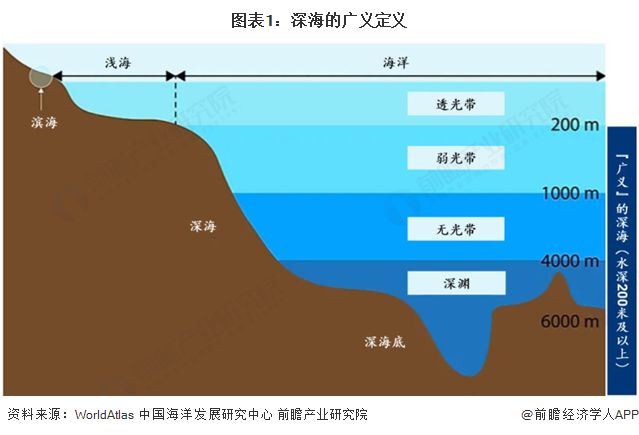
Economic Growth - The marine economy of the province is expected to grow steadily, with a projected marine GDP of 292 billion yuan in 2025, reflecting a year-on-year increase of 7.9% at current prices [1] - The total marine oil production is estimated to be approximately 611,100 tons in 2025, representing a year-on-year growth of about 125% [1] - The total marine natural gas production is projected to reach around 5.605 billion cubic meters, with a year-on-year increase of approximately 62% [1] Industry Developments - The province's marine strategic emerging industries experienced explosive growth last year, with significant increases in deep-sea oil and gas reserves and production [1] - New projects such as the "Deep Sea No. 1" gas field and others have commenced production, contributing to the overall growth [1] - The marine oil and gas industry is expected to achieve an added value of 11.6 billion yuan, with a year-on-year increase of 48.1% [1] Technological Innovation - The province has made remarkable achievements in marine technology innovation, establishing a globally leading deep-sea scientific research equipment system [2] - The establishment of two national key laboratories in marine fields and the development of underwater unmanned equipment have contributed to a burgeoning deep-sea technology industrial ecosystem [2] - The province is actively promoting the application of intelligent unmanned equipment in deep-sea testing, mineral exploration, and monitoring buoy scenarios [2] Future Plans - The province aims to leverage the role of the provincial marine office to coordinate efforts in creating a hub for deep-sea technology innovation and modern marine industries [2] - There is a commitment to marine ecological environment protection and the implementation of marine ecological restoration projects [2] - Plans are underway to advance the establishment of tropical marine national parks [2]
四大证券报精华摘要:1月14日
Xin Hua Cai Jing· 2026-01-14 00:19
Group 1: Emerging Industries and Market Trends - In 2026, several companies in emerging industries such as intelligent robotics and low-altitude economy announced production targets, indicating a shift from technical validation to mass production delivery, marking a "year of scale" for these sectors [1] - The low-altitude economy is expected to maintain rapid growth in 2026, transitioning from early-stage applications to deeper market penetration, leading to intensified competition [1] - The industrial internet sector is projected to exceed 1.6 trillion yuan by 2025, with significant growth in connected industrial devices and platform adoption [10] Group 2: Stock Market Performance - Southbound capital has seen a record net inflow of 140.48 billion HKD in 2025, continuing into 2026 with an additional net inflow of 41.296 billion HKD, contributing to a strong performance in the Hong Kong stock market [2] - The Hang Seng Index rose over 4% and the Hang Seng Tech Index over 6% in 2026, with more than 60% of stocks with a market cap over 1 trillion HKD experiencing gains [2] - A-share market saw a record daily trading volume exceeding 30 billion yuan for three consecutive days, with significant activity in AI applications and pharmaceutical stocks [7] Group 3: Company Performance and Forecasts - Several gold mining companies have reported significant earnings growth for 2025, driven by rising gold prices, with Goldman Sachs predicting gold prices to reach approximately 4,900 USD per ounce by the end of 2026 [3] - Over 140 companies in the A-share market have disclosed annual performance forecasts, with 63 companies expecting profit increases and 19 companies projecting a doubling of net profits [9] - Guizhou Moutai is accelerating its market-oriented transformation, implementing a new operational plan to adapt to market and consumer trends [13] Group 4: Regulatory and Market Developments - The Beijing Stock Exchange is experiencing an "accelerated" listing review process, particularly benefiting specialized and innovative small and medium enterprises [4] - Securities firms are increasingly engaging in capital increases and acquisitions to enhance their control over public fund companies, aiming for deeper integration of various financial services [12][13]





订单落地与资本布局并进,深海科技开年“迎新”
Xin Lang Cai Jing· 2026-01-13 22:17
Group 1 - The core viewpoint of the article highlights significant advancements in the deep-sea technology sector, particularly in the context of strategic emerging industries in China [1] - Shandong Future Robotics has successfully secured two contracts for operational robots, indicating a growing market presence and demand for automation in marine applications [1] - Jili Rigging has completed successful sea trials for its new high-grip towing anchor, showcasing innovation and practical application in deep-sea operations [1] Group 2 - The development of deep-sea technology is expected to focus on "technological iteration" and "industrialization" by 2026, driven by policy guidance and market demand [1] - New characteristics of development such as "rapid implementation," "focused capital," and "strong regional collaboration" are anticipated to become more prominent in the industry [1]

订单落地与资本布局并进 深海科技开年“迎新”
Shang Hai Zheng Quan Bao· 2026-01-13 18:34
Core Insights - The deep-sea technology sector in China is expected to see significant advancements and growth by 2026, driven by policy guidance and market demand, focusing on "technological iteration" and "industrialization" [5][11] Group 1: Industry Developments - Shandong Future Robotics has secured two contracts for underwater robots capable of operating at depths of 3,500 meters, indicating strong demand for high-end equipment in the sector [6] - Shenzhen Qianxing Innovation plans to significantly increase the production of underwater robots, with expected revenue surpassing 300 million yuan in 2026, reflecting a doubling of industry-level product shipments [6][7] - The underwater robotics market is seeing a shift towards commercial applications, with nearly 70% of products being exported overseas, and companies are focusing on various application scenarios in energy and underwater infrastructure [7] Group 2: Investment Trends - The deep-sea technology sector is attracting diverse capital sources, with ongoing C+ round financing efforts and total financing exceeding 300 million yuan for some companies [8] - The "Marine Equipment" sector has seen a 7.95% increase in stock prices since the beginning of the year, with notable gains in companies like Jili Sogou and Hailanxin [8] - Experts predict that the deep-sea technology sector will continue to attract investment, particularly in high-pressure materials and resource development equipment, which are expected to yield stable returns [9][10] Group 3: Regional Development Strategies - Various provinces in China are outlining differentiated development paths for deep-sea technology, with regions like Zhejiang and Hainan focusing on marine electronics and high-end equipment clusters [10] - The emphasis is on expanding resource development from land to ocean and from nearshore to deep-sea areas, with specific plans laid out by provinces such as Guangdong and Fujian [10] - 2026 is anticipated to be a pivotal year for the deep-sea technology industry, transitioning from isolated breakthroughs to collaborative development, forming a "deep-sea economic corridor" [11]
技术看市:沪指15连阳释放重要信号,市场进入良性循环,谨防部分指数顶部结构
Jin Rong Jie· 2026-01-08 10:58
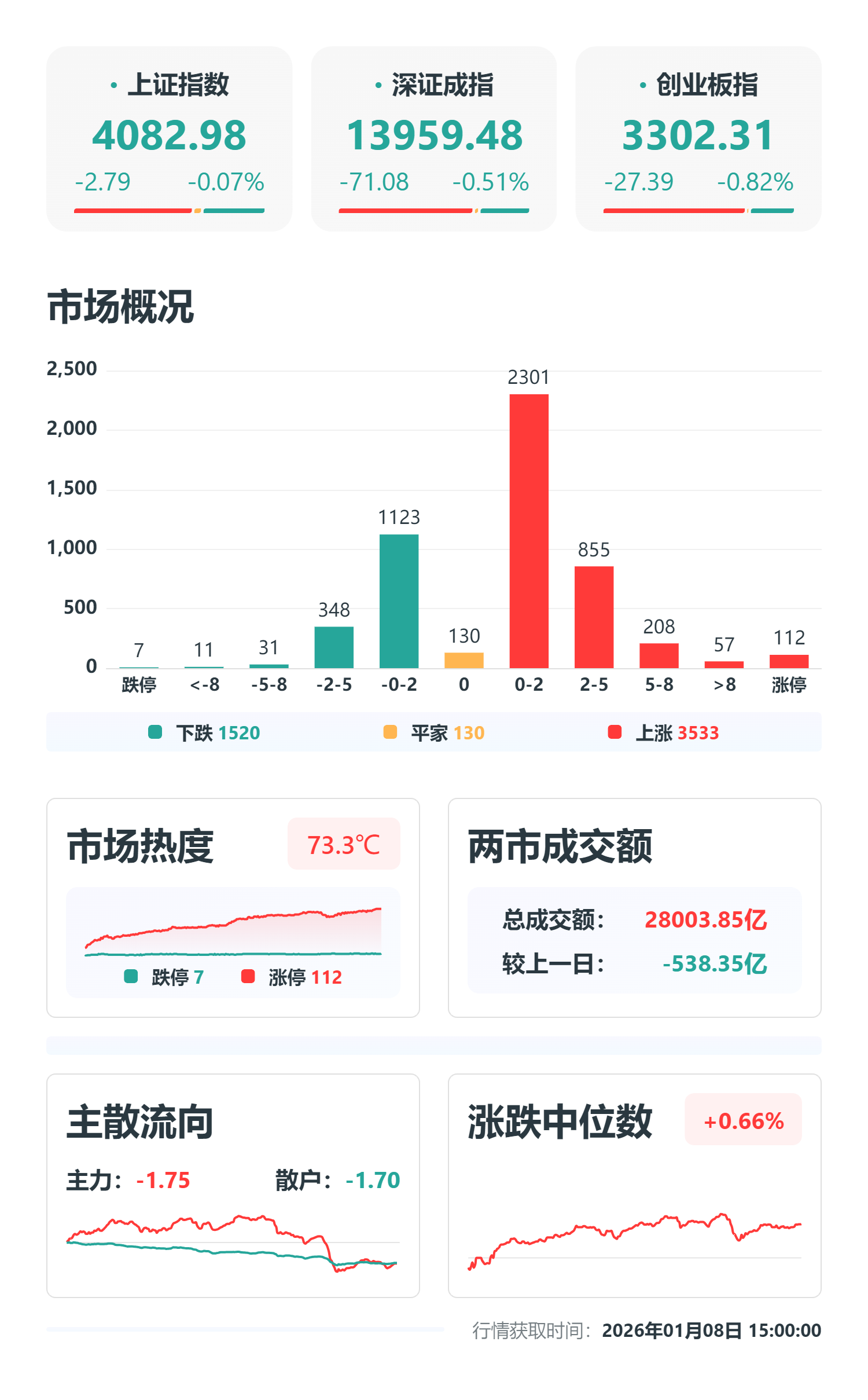
Group 1 - The A-share market experienced a slight decline after a 15-day consecutive rise, with the Shanghai Composite Index down 0.07% to 4082.98 points, and the Shenzhen Component Index down 0.51% [1] - The total trading volume in the Shanghai and Shenzhen markets was 2.80 trillion yuan, a decrease of approximately 538.34 billion yuan compared to the previous trading day, with a net outflow of 536.40 billion yuan from major funds [1] - Among the sectors, aerospace and aviation saw a net inflow of 46.53 billion yuan, while communication equipment experienced the largest net outflow of 95.05 billion yuan [1] Group 2 - Key sectors that saw significant gains included space computing power, shipbuilding, phased array antennas, deep-sea technology, and low-orbit satellites, while silver, energy metals, tungsten, insurance, and brokerage firms faced notable declines [7] - Market expert Xu Xiaoming noted that the consecutive rise of the Shanghai Composite Index is a record not seen in many years, although the overall increase is modest [8] - Xu highlighted that there is a divergence among the indices, indicating a potential top structure, with the Shanghai Composite, CSI 500, and Shanghai 50 showing signs of stabilization, while the Shenzhen Component, ChiNext, and CSI 300 indices still exhibit significant divergence [8]