
碳排放交易

Search documents
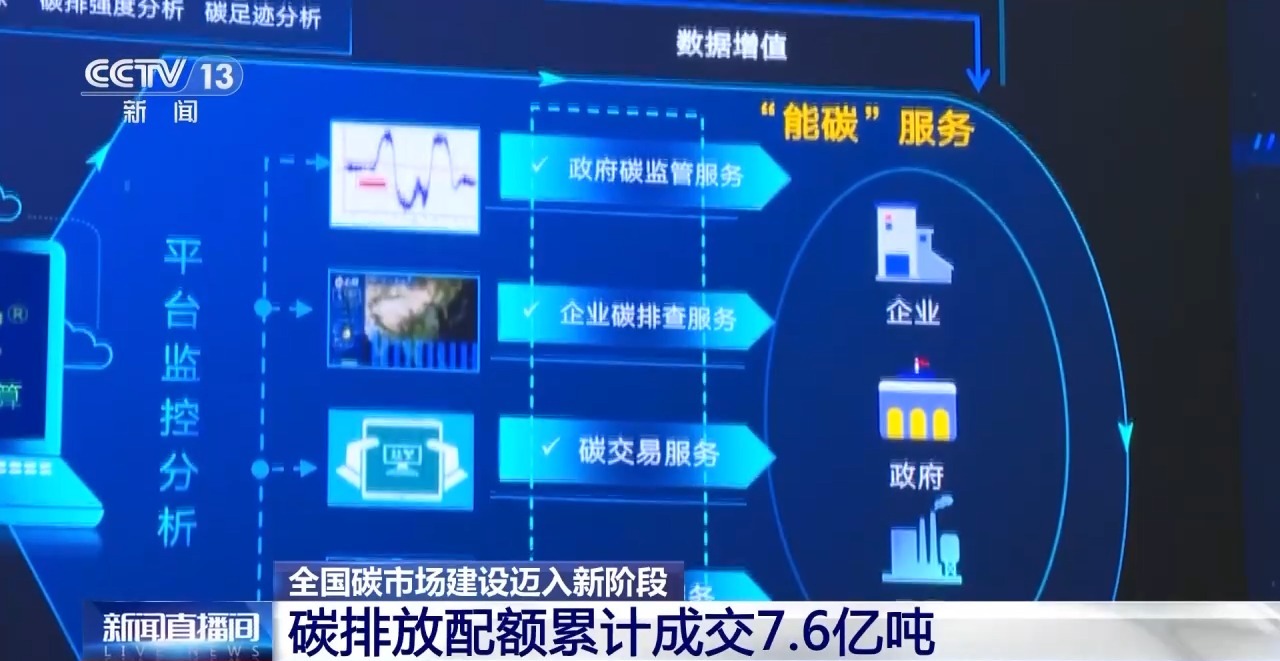
碳排放配额累计成交7.6亿吨 我国碳市场建设迈入新阶段
Yang Shi Xin Wen· 2025-10-29 23:40
Group 1 - The national carbon emissions trading market has completed its institutional framework and is now in a stable and effective operational phase, marking a new stage in its development [1][4] - As of October 28, 2025, the cumulative trading volume of carbon emission allowances reached 760 million tons, with a total transaction value of 51.44 billion yuan, indicating the gradual effectiveness of the price "guiding role" [2] - The inclusion of key emission units, approximately 1,500 new entities, will enable effective control over more than 60% of the national carbon emissions [2] Group 2 - The voluntary greenhouse gas reduction trading market has been actively promoting trading since its launch in January last year, enhancing the participation capacity and low-carbon reduction awareness among market entities [6] - The upcoming 30th United Nations Climate Change Conference aims to achieve positive outcomes, emphasizing the necessity of collective climate action and international cooperation [7] - China will adhere to the principles of the UN Framework Convention on Climate Change and the Paris Agreement, advocating for developed countries to fulfill their climate obligations while balancing negotiations on mitigation, adaptation, funding, technology, and capacity building [9]

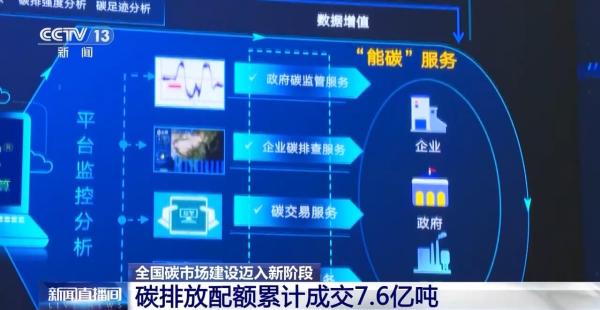
碳排放配额累计成交7.6亿吨!我国碳市场建设迈入新阶段
Yang Shi Xin Wen· 2025-10-29 17:17
Group 1 - The national carbon emissions trading market in China has established a basic framework over the past four years, with stable and effective market operations, marking a new phase in its development [1][3] - As of October 28, 2025, a total of 760 million tons of carbon emission allowances have been traded, generating a transaction value of 51.44 billion yuan, indicating the gradual emergence of a price "guiding role" [1] - The steel, cement, and aluminum smelting industries are continuously being integrated into the national carbon emissions trading market, with approximately 1,500 new key emission units added, which will effectively manage over 60% of the national carbon emissions [1] Group 2 - The voluntary greenhouse gas emission reduction trading market in China has been operational since January of last year, with active trading of reduction volumes, demonstrating the market's role in incentivizing low-cost greenhouse gas reduction actions across various industries [5] - The capacity of market participants and awareness of low-carbon reduction have significantly improved, reflecting the effectiveness of the market mechanism [5] Group 3 - China aims to promote positive outcomes at the upcoming 30th United Nations Climate Change Conference, emphasizing that no country can remain isolated in the face of the climate crisis [6][7] - The country will adhere to the framework of the United Nations Framework Convention on Climate Change and the Paris Agreement, advocating for the principle of "common but differentiated responsibilities" [9] - China calls for developed countries to fulfill their obligations regarding climate change while balancing negotiations on mitigation, adaptation, funding, technology, and capacity building [9]
碳价短期波动怎么看?生态环境部回应
2 1 Shi Ji Jing Ji Bao Dao· 2025-10-29 09:51
Core Viewpoint - The recent fluctuations in the national carbon emissions trading market are normal and influenced by multiple factors, including supply and demand, market expectations, and trading behavior [3] Group 1: Carbon Market Developments - The Ministry of Ecology and Environment plans to expand the coverage of the carbon market, prioritizing total quota control in stable carbon emission industries by 2027 [4] - The inclusion of the steel, cement, and aluminum industries in the carbon market aims to enhance emission reduction responsibilities and support national greenhouse gas emission control goals [4][5] - The carbon market has already reduced overall emission reduction costs by approximately 35 billion RMB during the first two compliance periods, with further reductions expected as more industries participate [5][6] Group 2: CCER Market Progress - As of October 28, the voluntary greenhouse gas reduction trading market has registered 31 projects and achieved a cumulative transaction volume of 3.25 million tons of CCER, with a transaction value of 27 million RMB [7] - The CCER market is expanding its support to various projects, including afforestation carbon sinks and offshore wind power, with ongoing efforts to develop new methodologies [8] - Future efforts will focus on expanding market support areas, improving data quality supervision, and enhancing international cooperation to increase the carbon market's global influence [8]
2024年全国碳市场交易额创开市新高
Ren Min Ri Bao· 2025-09-24 23:22
Core Insights - The national carbon emissions trading market in China has seen a cumulative trading volume of nearly 700 million tons and a transaction value of approximately 48 billion yuan as of the end of August 2024, marking a record high since the market's launch in 2021 [1] - The market's trading activity is increasing, with a daily average trading volume of carbon emission allowances rising by 43.55% compared to the previous compliance cycle, resulting in a total trading volume of 18.9 million tons and a transaction value of 18.114 billion yuan for the year 2024 [1] - The carbon intensity of electricity generation in China has decreased by 10.8% compared to 2018 levels [1] Market Developments - In March 2024, the steel, cement, and aluminum smelting industries were included in the national carbon emissions trading market, leading to the addition of over 1,300 new key emission units, which now account for over 60% of the total carbon dioxide emissions in the country [1] - The voluntary greenhouse gas reduction trading market has been introduced as a significant policy tool to achieve China's "dual carbon" goals, with the first batch of newly registered certified voluntary emission reductions starting trading in March 2024 [1] - As of the end of August 2024, the voluntary trading market has recorded a cumulative trading volume of 2.7061 million tons and a transaction value of 22.9 million yuan, with transaction prices exceeding 100 yuan per ton multiple times [1]
2024年全国碳市场交易额创开市新高 碳排放配额日均成交量上涨43.55%
Ren Min Ri Bao· 2025-09-24 23:07
Core Insights - The national carbon emissions trading market in China has seen a cumulative trading volume of nearly 700 million tons and a transaction value of approximately 48 billion yuan as of the end of August 2023, with 2024 expected to set a new annual record since the market's launch in 2021 [1][1][1] Market Performance - In 2024, the carbon emissions trading market operated for 242 trading days, with an average daily trading volume of carbon emission allowances increasing by 43.55% compared to the previous compliance cycle, resulting in a total trading volume of 18.9 million tons and a transaction value of 18.114 billion yuan [1][1][1] - The carbon emissions intensity of the national power sector decreased by 10.8% compared to 2018 [1][1][1] Industry Inclusion - As of March 2023, the steel, cement, and aluminum smelting industries were included in the national carbon emissions trading market, leading to over 1,300 new key emission units being added, which now account for over 60% of the total carbon dioxide emissions in the country [1][1][1] Voluntary Emission Reduction Market - The national voluntary greenhouse gas emission reduction trading market has been introduced as a significant policy tool to achieve the "dual carbon" goals, with the first batch of newly registered certified voluntary emission reductions starting trading in March 2023 [1][1][1] - As of the end of August 2023, the voluntary trading market has recorded a cumulative trading volume of 2.7061 million tons and a transaction value of 229 million yuan, with transaction prices exceeding 100 yuan per ton multiple times [1][1][1]
全国碳排放权交易市场交易活力进一步提升
Qi Huo Ri Bao· 2025-09-24 16:05
Group 1 - The national carbon emissions trading market in China has achieved a cumulative trading volume of nearly 700 million tons and a transaction value of approximately 48 billion RMB as of the end of August 2023, with the 2024 annual transaction value reaching a new high since the market's launch in 2021 [1] - In 2024, the carbon emissions trading market operated for 242 trading days, with an average daily trading volume of carbon emission allowances increasing by 43.55% compared to the previous compliance cycle, resulting in a total trading volume of 18.9 million tons and a total transaction value of 18.114 billion RMB, marking the highest level since the market's inception [1] - The carbon emissions intensity in the power sector decreased by 10.8% in 2024 compared to 2018, with the carbon market playing a significant role in this reduction [1] Group 2 - The national voluntary greenhouse gas emission reduction trading market has been introduced as an important policy tool to support the achievement of China's "dual carbon" goals, with the first batch of newly registered certified voluntary emission reductions starting trading in March 2025 [2] - As of the end of August 2023, the cumulative trading volume of the national voluntary greenhouse gas emission reduction trading market reached 2.7061 million tons, with a transaction value of 229 million RMB, and the average transaction price frequently exceeding 100 RMB per ton [2]
绿金新闻 | 扩容后的全国碳市场有何变化?生态环境部最新披露!
Xin Lang Cai Jing· 2025-09-24 15:52
Core Insights - The expansion of the national carbon emissions trading market now includes steel, cement, and aluminum smelting industries, increasing the total number of key emission units by over 1,300 and raising the total greenhouse gas emissions by approximately 3 billion tons, covering over 60% of the national carbon emissions [1][2] Group 1: Market Participation and Trading Dynamics - In 2024, the number of key emission units participating in the national carbon emissions trading market reached 1,471, a 1.38% increase from the previous compliance cycle, with trading activity showing an 18% year-on-year increase in transaction volume [2] - The willingness of key emission units to trade has increased significantly, with a 232% year-on-year rise in the total buy and sell orders for listed agreement trading by the end of August 2025 [2] - The number of key emission units selling quotas increased by 11.24% compared to the previous compliance cycle, indicating a gradual improvement in market supply and trading activity [2] Group 2: Trading Products and Price Trends - The national carbon emissions trading market has diversified its trading products, with five categories of carbon emission quotas released for trading, totaling transaction volumes of 287 million tons, 49.19 million tons, 194 million tons, 133 million tons, and 32.27 million tons for the years 2019 to 2024 [2] - In 2024, the total trading volume was 0.37 million tons for listed agreement trading and 1.52 million tons for bulk agreement trading, with the introduction of single-sided bidding trading in July 2025 enhancing market vitality [3] - The average closing price for carbon emissions in 2024 ranged from 69 yuan/ton to 106 yuan/ton, with a closing price of 97.49 yuan/ton at year-end, reflecting a 103.10% increase from the opening price on the first trading day in 2021 [3]
报告显示全国碳排放权交易市场规模创历史新高
Zhong Guo Xin Wen Wang· 2025-09-24 14:05
Core Insights - The national carbon emissions trading market in China has reached a historic high in scale, as reported in the "National Carbon Market Development Report (2025)" released during the China Carbon Market Conference held on September 24, 2025 [1] Market Performance - In 2024, the national carbon emissions trading market operated for 242 trading days, with the average daily trading volume of carbon emission allowances increasing by 43.55% compared to the previous compliance period [1] - The total trading volume for the year reached 189 million tons, with a total transaction value of 18.114 billion yuan, marking the highest level since the market's inception in 2021 [1] Environmental Impact - The carbon emissions intensity of the national electricity sector decreased by 10.8% in 2024 compared to 2018, indicating the significant role played by the carbon market in achieving this reduction [1] Technological Advancements - The report highlights the use of big data and blockchain technology to enhance regulatory efficiency and improve data quality risk management within the carbon market [1]
广东率先开考碳排放管理员!持证者可享受国家人才政策待遇
Nan Fang Du Shi Bao· 2025-09-24 06:44
Core Viewpoint - The first carbon emission administrator vocational skill level certification exam was held in Guangzhou, marking a significant step in the development of low-carbon talent cultivation in Guangdong Province [1] Group 1: Certification and Training - The exam allows successful candidates to obtain a vocational skill level certificate and enjoy national talent policy benefits, including vocational skill enhancement subsidies [1] - Guangzhou Trading Group has been officially recognized as the only organization in Guangdong capable of conducting comprehensive vocational skill level certification for carbon emission administrators [1] Group 2: Institutional Background - The Guangzhou Carbon Emission Rights Trading Center, part of Guangzhou Trading Group, is one of the first seven carbon emission rights trading pilots in the country [1] - Over the past decade, the Guangzhou Carbon Trading Center has trained more than 20,000 individuals, receiving widespread acclaim for its training quality [1]
“十四五”期间我国二氧化碳排放强度持续下降
Xin Hua She· 2025-09-19 14:12
Core Insights - The "dual carbon" goals have been emphasized as China marks the fifth anniversary of their proposal, with a focus on reducing carbon dioxide emissions intensity during the 14th Five-Year Plan period [1][2] Group 1: Carbon Emission Reduction Efforts - China's carbon dioxide emissions intensity has been continuously decreasing during the 14th Five-Year Plan period [1] - The country has established the world's largest and fastest-growing renewable energy system, achieving its 2030 national contribution target for wind and solar power installations ahead of schedule [1] - The national carbon market has been effectively managing over 60% of the country's carbon dioxide emissions, with a cumulative trading volume of 714 million tons and a total transaction value of 48.961 billion yuan as of September 18, 2025 [1] Group 2: Climate Change Adaptation and Standards - China is leading the development of a product carbon footprint management system, having released over 100 carbon footprint accounting standards and established a national greenhouse gas emission factor database [2] - The implementation of the "National Climate Change Adaptation Strategy 2035" outlines long-term goals for adapting to climate change, including the development of 39 climate-adaptive city pilot projects [2] - Future efforts will focus on enhancing the carbon market's effectiveness and international influence, improving product carbon footprint accounting standards, and promoting green and low-carbon transitions to increase the "green content" of economic development [2]