稻米种植

Search documents
科技为媒点亮镇有味“稻”发展谱系
Zhen Jiang Ri Bao· 2025-12-19 21:51
Core Viewpoint - The event highlighted the promotion of high-quality rice products from Zhenjiang, showcasing advancements in agricultural technology and the improvement of rice cultivation standards in the region [2][4]. Group 1: Event Overview - The 8th Zhenjiang Agricultural Science and Technology Carnival focused on rice, featuring the launch of 10 recommended "Zhenjiang Good Taste Rice" products [2]. - The event included demonstrations of premium rice packaging and cooking, emphasizing the quality and flavor of local rice [1]. Group 2: Featured Rice Products - The recommended rice products include varieties such as "Wild Mountain Village" South Jing 46 rice, "Zhen Rice" brand Zhen Rice 6243, and "Zhenjiang Fortune Rice" among others, sourced from various rice-producing areas in Zhenjiang [2]. - The diversity of the rice products reflects the overall improvement in rice cultivation levels across the region [2]. Group 3: Agricultural Practices - Dai Zhuang Organic Agricultural Cooperative has been practicing organic rice cultivation for 18 years, resulting in a significant increase in soil organic matter and biodiversity, with yields rising from 300 kg to over 450 kg per mu [3]. - The cooperative's success exemplifies the benefits of sustainable agricultural practices, contributing to food security and farmer income [3]. Group 4: Research and Development - The Zhen Rice 6243 variety, developed by the Zhenjiang Agricultural Science Institute, is currently in the demonstration phase, showing promising yields of around 600 kg per mu and a milling rate exceeding 65% [4]. - The research team has been active in breeding high-quality rice varieties for nearly 60 years, contributing to the development of multiple award-winning rice strains [5]. Group 5: Technological Innovations - The Zhenjiang Agricultural Science Institute employs modern techniques such as molecular marker technology and gene editing to enhance rice quality and yield, addressing challenges like grain aging [6]. - The introduction of disease-resistant rice varieties has reduced pesticide use, promoting environmentally friendly farming practices [7]. Group 6: Economic Impact - The cultivation of new rice varieties has led to an increase in rice production by over 30 million kg annually, generating direct economic benefits exceeding 100 million yuan for local farmers [7]. - The integration of rice varieties into food processing industries has garnered positive feedback, with significant annual usage in producing vinegar, wine, and rice flour [8].
尼泊尔农民面临廉价印度大米威胁
Shang Wu Bu Wang Zhan· 2025-12-11 07:51
尼泊尔班克地区农民潘迪今年收获了60公担稻谷,其中仅40公担能按政府保护价(每公担3463.81至 3628.33卢比)售予国家粮食贸易公司。剩余稻谷被迫以每公担2500-2600卢比的低价卖给私人贸易商, 差价近1000卢比。类似困境在该国普遍存在。尽管去年尼泊尔稻谷产量约590万吨,且今年预计持平, 但国家粮食公司计划收购量仅18万吨。与此同时,本财年前四个月,尼泊尔已进口价值超100亿卢比的 稻米。其中,从印度拍卖的廉价陈米严重冲击本地市场,导致国产稻谷价格受压。分析指出,进口激增 的原因包括:国内加工能力不足导致优质精米缺乏、农村劳动力短缺促使农民倾向售粮而非储粮加工、 以及边境地区化肥灌溉补贴差异影响竞争力。数据显示,尼泊尔稻谷种植面积虽在下降,但因杂交种子 与化肥使用,产量反呈上升趋势,然而进口量未减反增。上世纪七八十年代,尼泊尔曾是稻米出口国, 如今却严重依赖进口。专家警告,若不调整政策保护本土农业,尼泊尔稻农生计与粮食安全将面临长期 威胁。 ...
“稻渔共舞”激活县域经济 四川隆昌田野间端出增收“大餐”
Zhong Guo Xin Wen Wang· 2025-11-05 08:17
Core Insights - The article highlights the economic development of Longchang County in Sichuan, driven by the integration of rice and shrimp farming, which has become a significant contributor to local income and consumption [1][2]. Economic Development - Longchang County has leveraged its geographical advantages as a key area in the Chengdu-Chongqing economic zone, achieving notable recognition as a "significant county for high-quality economic development" in Sichuan for 2024 [2]. - The county's rice-shrimp industry has evolved into a core agricultural sector, with a reported annual shrimp production of 12,800 tons, accounting for one-seventh of the provincial market [2]. Agricultural Innovation - The local government has promoted integrated rice and shrimp farming since 2017, establishing the first national modern agricultural industrial park focused on this model in Sichuan [2]. - The average yield of the regenerated rice has set records for six consecutive years in the southern Sichuan region, showcasing the effectiveness of the integrated farming approach [2]. Market Strategy - Longchang's strategy includes early market entry for shrimp, with prices reaching up to 100 yuan per kilogram after the Spring Festival, capitalizing on a temperature advantage over other regions [4]. - The premium ecological rice and shrimp products are sold at 5 yuan per kilogram, double the price of ordinary rice, indicating a successful branding strategy [4]. Supportive Policies - The local government has implemented subsidy policies for high-standard farmland construction and introduced insurance for aquaculture, significantly reducing the financial burden on farmers [4]. - The area dedicated to rice-shrimp farming has expanded to 183,000 acres, reflecting the growth and acceptance of this agricultural model [4]. Human Capital Development - The emergence of local agricultural experts and new farmers has been crucial for the development of modern agriculture in Longchang, contributing to increased farmer incomes and sustainable practices [4].

江苏黄金村蝶变解码:“一度电”赋能“一粒米”撬动乡村振兴
Zhong Guo Xin Wen Wang· 2025-11-04 03:21
Core Insights - The transformation of Jiangsu's Huangjin Village from a poverty-stricken area to a thriving community is attributed to the synergy of agricultural innovation and enhanced electricity supply, encapsulated in the concepts of "one grain of rice" and "one kilowatt-hour" [1][5]. Group 1: Agricultural Development - In 1998, the village leader, Yan Qinghua, initiated a partnership with Jiangsu Agricultural Science Institute to introduce high-quality rice varieties, leading to the establishment of a cooperative that overcame challenges in organic and colored rice cultivation [2]. - Huangjin Village has developed 19 products, including instant rice noodles and sprouted brown rice, with its "Huangjin Village Soft Rice" receiving national geographical indication trademark status, significantly boosting local income [2][7]. - The rice industry in Huangjin Village has achieved an annual output value exceeding 1 billion yuan, with per capita income surpassing 30,000 yuan [7]. Group 2: Infrastructure and Electricity Supply - Historically, electricity was a bottleneck for development, with only four transformers providing insufficient power, leading to frequent outages [5]. - The implementation of rural revitalization strategies has led to the installation of 12 new 400 kVA transformers, increasing average household electricity capacity to 12.8 kW and significantly improving reliability [5]. - Future plans include the expansion of an all-electric processing center and the creation of a rice culture experience park, aiming to maximize the value of both electricity and agricultural products [7].
越日召开九龙江绿色农业投促会
Shang Wu Bu Wang Zhan· 2025-10-31 16:40
Core Points - The meeting focused on promoting investment in the Mekong Delta's high-quality low-emission rice cultivation area, emphasizing the need for sustainable development in response to climate change and environmental challenges [1][2] - Vietnam aims to reduce greenhouse gas emissions by 15% to 20% and increase farmers' income by 10% to 15% through the implementation of a sustainable development plan for 1 million hectares in the Mekong Delta [1] - The collaboration between Vietnam and Japan includes the establishment of around 600 cooperatives to support intensive farming practices, requiring significant technological assistance [1] Group 1 - The Mekong Delta is Southeast Asia's largest rice-producing area, facing severe impacts from climate change, saltwater intrusion, and land subsidence [1] - The meeting was attended by over 150 representatives from relevant departments, industry associations, cooperatives, and enterprises from both countries [1] - The goal is to establish a "green, clean, low-emission Vietnamese rice" brand in the international market [1] Group 2 - Vietnam and Japan reached agreements on multiple cooperation memorandums, marking a significant step in investment and technology transfer collaboration [2] - Key areas of cooperation include artificial intelligence, big data, agricultural robotics, mechanization, carbon emission monitoring and reduction, deep processing of agricultural products, and reuse of rice by-products [2] - The partnership aims to create a multi-layered cooperation ecosystem involving government agencies, research institutions, enterprises, cooperatives, and farmers to promote green growth and sustainable food security [2]
路过林水寨
Ren Min Ri Bao· 2025-10-24 22:20
Core Insights - The transformation of Linshuizhai village reflects a significant change in rural development, showcasing a blend of modernity and traditional agricultural practices [2][3] - The cultivation of "snow rice" has become a key driver for the village's economic growth, emphasizing quality over quantity in agricultural production [5][6] Summary by Sections Transformation of Linshuizhai - Linshuizhai has evolved from a place associated with poverty and neglect to a vibrant micro-city with diverse functions including workshops, farms, commerce, and entertainment [3] - The village now features modern amenities such as art galleries, cultural museums, and smart restaurants, creating a unique blend of urban life and rural charm [3] Agricultural Practices - The cultivation of "snow rice" involves a three-year fallow period and the prohibition of chemical fertilizers and pesticides, resulting in high-quality rice that is both visually appealing and flavorful [5] - Each bag of rice sold in the market is equipped with a traceability QR code, ensuring transparency in production processes [5] Economic Impact - The production costs for "snow rice" are significantly higher due to the careful cultivation methods, but the market value can increase by at least ten times compared to conventional rice [5] - The village's agricultural practices not only enhance local livelihoods but also contribute to a sustainable model of rural development [6]
汕尾沃野之上的“白”,可胜山珍海味|汕尾食色·白
Nan Fang Nong Cun Bao· 2025-10-19 12:04
Core Viewpoint - The article highlights the significance of "Silk Rice" from Shanwei, emphasizing its quality and cultural importance in the region, portraying it as a staple that enhances various culinary experiences [3][12][19]. Group 1: Agricultural Significance - Shanwei's Silk Rice, known as "the jade among rice," is a high-quality indica rice with a rich local heritage [11][12]. - The region has over 1.03 million acres dedicated to rice cultivation, with approximately 750,000 acres (over 70%) specifically for Silk Rice [13][14]. - The agricultural practices in Shanwei have evolved from traditional methods to modern techniques, including the use of drones and smart drying technology [20][21]. Group 2: Culinary Experience - The preparation of Shanwei Silk Rice is described as an art, where the rice's texture and flavor are highlighted, making it a preferred choice over more extravagant dishes [16][18]. - The rice is characterized by its delicate appearance and pleasant aroma when cooked, providing a unique taste experience that reflects the region's natural resources [17][24]. Group 3: Market Potential - The article suggests that the Silk Rice industry is poised for growth, with initiatives aimed at maintaining traditional flavors while exploring new market opportunities [21][24]. - The upcoming 2025 Global High-end Food and Quality Agricultural Products Expo in Shenzhen is mentioned as a platform to showcase Shanwei Silk Rice, indicating its potential for broader recognition [25].

江苏全域土地综合整治多重效益显现——“一子落”带动“满盘活”
Xin Hua Ri Bao· 2025-10-18 23:31
Core Insights - The article emphasizes the importance of comprehensive land remediation as a platform for implementing rural revitalization strategies and advancing the "Ten Thousand Projects" initiative, which optimizes land use and promotes urban-rural integration [1][2]. Group 1: Progress and Achievements - Jiangsu Province has made significant progress in comprehensive land remediation, with 41 township projects and two county-level pilot projects in Suzhou, achieving over 70% completion [3]. - The province has completed the remediation of 499,400 acres of farmland and established 206,500 acres of high-standard farmland, while also reducing construction land by 7,600 acres [3]. - A total of 605 inefficient industrial enterprises have been eliminated, and ecological restoration efforts have covered 46,700 acres, showcasing multiple benefits from these initiatives [3]. Group 2: Case Study - Huangqiao Street - Huangqiao Street in Suzhou serves as a model for land remediation, transitioning from a mixed industrial area to a hub for headquarters economy and smart manufacturing, increasing the average tax revenue per acre from 128,000 yuan to 1,000,000 yuan [2]. - The area has improved its spatial layout significantly, with a floor area ratio increase from 0.7 to 2.5, demonstrating effective urban-rural integration [2]. Group 3: Tailored Approaches - Jiangsu Province encourages localized strategies for land remediation, resulting in diverse models such as modern efficient agriculture in Yancheng and cultural heritage protection in Kunshan [4]. - The province's approach has led to enhanced agricultural productivity, with some areas reporting an increase of nearly 200 jin per acre in grain yield [4]. - The ongoing projects are expected to provide replicable experiences for high-quality rural development across the country, contributing to a more livable and workable rural landscape [4].
我省举办“海南好米”进食堂推广活动
Hai Nan Ri Bao· 2025-10-16 02:07
Core Viewpoint - The "Hainan Good Rice" promotion activity aims to enhance the brand's visibility and encourage the consumption of high-quality local rice products among the public during the National Food Security Promotion Week from October 13 to 19, 2025 [1] Group 1: Promotion Activities - The "Hainan Good Rice" initiative is a collaboration between the Hainan Rice Association and various grain enterprises to promote local rice products in canteens [1] - The promotion will extend into supermarkets and communities to introduce the "Hainan Good Rice" brand to a wider audience [2] Group 2: Product Quality and Standards - The rice showcased in the promotion consists of "Hainan Good Rice" gold award varieties, cultivated under green production standards, characterized by being "new, fragrant, and clean" [2] - The initiative emphasizes the cultivation of high-quality rice varieties through a comprehensive approach involving good seeds, methods, fields, opportunities, and systems [1] Group 3: Brand Development - Since 2019, the agricultural department has been actively developing high-quality rice varieties and conducting selection activities to identify those with promotional value [1] - The "Hainan Good Rice" brand has been featured in various exhibitions, including the Consumer Expo and culinary events, to further enhance its recognition [1]
新华全媒+丨“新农人”扎根黑土 助推稻米产业升级
Xin Hua Wang· 2025-09-21 11:05
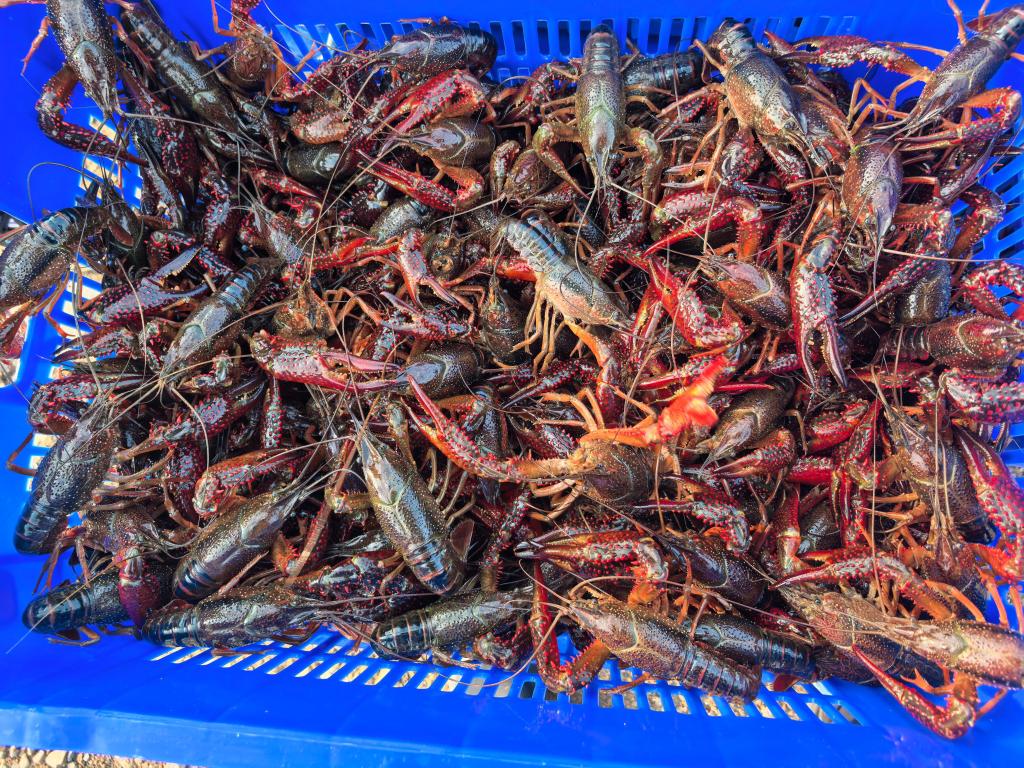
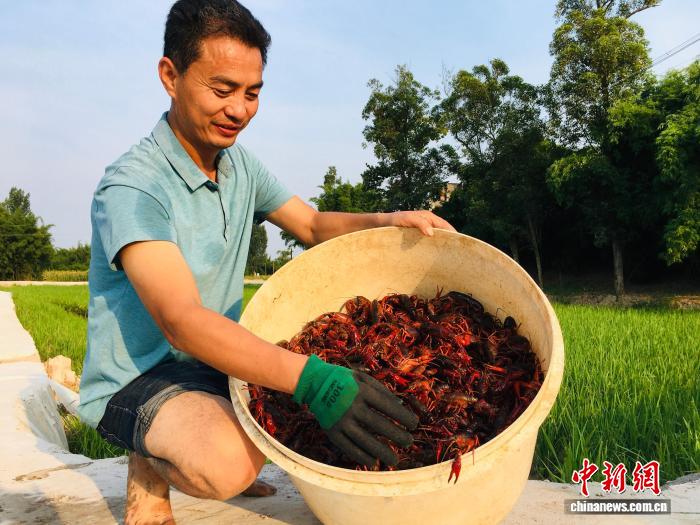
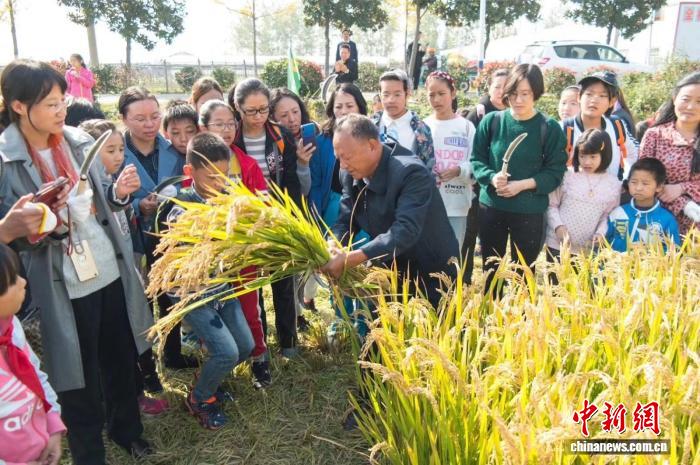
Core Insights - The article highlights the innovative practices of "new farmers" in Heilongjiang Province, focusing on the integration of rice and crayfish farming to enhance productivity and profitability [1][3]. Group 1: Rice and Crayfish Farming - The "new farmer" Feng Liang successfully combines rice cultivation with crayfish farming, achieving a dual harvest and improving the quality and market price of rice, which can sell for around 8 yuan per kilogram [1][3]. - The crayfish farming process involves introducing 3 to 5 cm crayfish seedlings into rice fields, with an expected yield of 70 to 80 kg per acre, selling for 60 to 70 yuan per kilogram [3]. - Feng Liang has invested 5 to 6 million yuan in establishing a crayfish breeding base, with a capacity of 10.35 million seedlings, and has engaged 200 local farmers in this integrated farming model [3]. Group 2: Agricultural Events and Community Engagement - The Ning'an City Heishan Big Rice Cooperative organized a harvest festival, attracting visitors to experience rice harvesting and promoting local agricultural products [4][6]. - The cooperative, led by Chen Yujia, has expanded its operations from 50 acres to 1,800 acres of organic rice cultivation, significantly increasing local employment and community involvement [6]. - The cooperative has developed a model of agritourism, offering customized agricultural products and experiences, such as "landlord subscription" for organic rice and local delicacies [6][7].