
绿色低碳

Search documents
强化项目支撑和产业带动 积极探索县域经济高质量发展新路径
Xin Lang Cai Jing· 2026-01-14 21:47
Group 1 - The government work report and the "14th Five-Year" planning outline highlight significant achievements in economic and social development, setting clear goals and tasks for the "15th Five-Year" period and 2026, reflecting political commitment, practical efforts, and public welfare [1] - Representatives suggested strengthening the traditional ceramic industry, promoting hydrogen co-firing technology for industrial upgrades, accelerating the establishment of zero-carbon industrial parks, and enhancing cultural tourism project funding [1] - The city government will actively consider and adopt these suggestions to transform them into concrete measures for promoting high-quality development [1] Group 2 - The focus for Faku County is on starting strong and making progress, using benchmarks such as "self-improvement" and "leading among peers" to identify gaps and leverage comparative advantages [2] - Emphasis on project planning and reserve, creating a virtuous cycle of project investment to support high-quality economic development [2] - Development of the general aviation industry is prioritized, leveraging infrastructure and airspace resources to build a nationally recognized aviation-themed town with global influence [2] - A push for green and low-carbon transformation, promoting the construction of green low-carbon parks and exploring new ceramic production models to create a green ceramic brand [2] - Modern agriculture will be developed by creating agricultural specialty industry clusters and promoting deep integration of agriculture, culture, and tourism [2] - Urban-rural integration will be advanced, applying successful experiences to enhance rural environment and overall community well-being [2]
上海先进制造业转型文件出炉,引导企业投资五大新增长点
Di Yi Cai Jing· 2026-01-11 12:12
Core Insights - Shanghai aims to accelerate the transformation and upgrading of its advanced manufacturing industry over the next three years, targeting the establishment of 100 new manufacturing enterprises with an annual output value exceeding 1 billion yuan by 2028 [2] - The plan emphasizes the development of emerging sectors such as low-altitude economy, commercial aerospace, embodied intelligence, biomanufacturing, and smart terminals, positioning them as new growth points for the industry [2][3] Group 1: Advanced Manufacturing Transformation - The action plan outlines structural optimization and upgrading actions, including enhancing traditional industries and promoting the growth of key and emerging sectors [2] - Shanghai has established five national-level industrial clusters and four trillion-yuan industrial clusters, focusing on integrated circuits, biomedicine, new energy vehicles, large aircraft, and marine engineering equipment [2][3] Group 2: New Growth Areas - The plan identifies five new growth areas: low-altitude economy, commercial aerospace, embodied intelligence, biomanufacturing, and smart terminals, with a goal for these sectors to reach a scale of 1 trillion yuan by the end of the 14th Five-Year Plan [3] - Specific targets include achieving a scale of 100 billion yuan in the low-altitude economy and 500 billion yuan in embodied intelligence by 2027, with projections of 1 trillion yuan by 2030 for the latter [3][4] Group 3: Financial Support and Innovation - The plan includes financial incentives for companies increasing their R&D investments, with subsidies ranging from 200,000 to 1 million yuan based on the level of investment [5] - It also promotes the "AI + manufacturing" initiative, aiming for full coverage of intelligent applications in large enterprises by 2027 and increasing robot density to 600 units per 10,000 people by 2028 [5][6] Group 4: Industrial Ecosystem and Talent Development - The Shanghai Industrial Internet Association emphasizes the need for collaboration among government, industry, academia, and research to tackle challenges in the "AI + manufacturing" sector [6] - The initiative aims to build a comprehensive standard system for "AI + manufacturing" and enhance the cultivation of industrial intelligent talent [6]
“通往再平衡之路”系列:经济“开门红”或较温和
Orient Securities· 2026-01-11 06:18
Group 1: Economic Outlook - A moderate "opening red" is expected for 2026, with a divergence in market opinions regarding initial economic data and risk preferences[5] - The overall fiscal strength for 2026 will depend on the outcomes of local two sessions, impacting early-year economic performance[8] - The broad fiscal index showed slight improvement at the end of 2025, but remains low, indicating limited rebound potential for early 2026 infrastructure growth[15] Group 2: Investment Trends - Investment direction is shifting from traditional infrastructure to new productive forces, with increased focus on digital economy, AI, and green initiatives[19] - In Henan province, the first quarter investment targets for transportation, energy, and water conservancy are significantly lower than previous years, indicating a shift in investment focus[19] - Policy-driven financial tools are expected to support investments beyond traditional infrastructure, with significant funding allocated to emerging sectors[19] Group 3: Risks and Challenges - The risk of "anti-involution" policies may exceed the positive effects of fiscal tools, potentially suppressing investment and impacting overall growth[20] - Changes in assumptions regarding fiscal measurements could lead to deviations in projected outcomes, highlighting the uncertainty in economic forecasts[22]

上海:到2028年,新增年产值10亿元以上制造业企业100家
Xin Lang Cai Jing· 2026-01-09 10:26
Core Viewpoint - The Shanghai Municipal Government has issued a three-year action plan (2026-2028) to support the transformation and upgrading of advanced manufacturing, aiming to enhance the modern industrial system and promote collaborative development among enterprises of various sizes [1]. Group 1: Main Goals - By 2028, the plan aims to add 100 manufacturing enterprises with an annual output value exceeding 1 billion yuan, totaling over 600 such enterprises, and to drive the addition of 500 industrial enterprises above designated size in the supply chain [2]. Group 2: Implementation Actions - **Optimizing Traditional Advantage Industries**: The plan encourages traditional industries like petrochemicals and steel to innovate and expand into new materials, with financial support for qualifying projects [3]. - **Accelerating Leading Industry Strategies**: Support for integrated circuit companies to achieve breakthroughs across the entire industry chain, fostering internationally competitive leading enterprises [3]. - **Promoting Key and Emerging Industries**: Focus on developing new electronic information, smart connected vehicles, and advanced materials, while encouraging investment in emerging fields like low-altitude economy and commercial aerospace [3]. Group 3: Innovation and Technology - **Releasing Innovation Vitality**: Financial incentives for companies increasing basic research investments, with varying levels of support based on annual research expenditure [4]. - **Accelerating Core Technology Research**: Support for enterprises focusing on cutting-edge technologies such as laser manufacturing and quantum technology [4]. Group 4: Quality and Efficiency Enhancement - **Promoting Technological Transformation**: Financial support for projects aimed at upgrading production and R&D processes, with a cap on total support [4]. - **Deepening Digital Transformation**: Initiatives to enhance AI applications in manufacturing, aiming for full coverage of smart factory applications by 2028 [4]. Group 5: Resource and Support Actions - **Strengthening Talent Development**: Support for attracting high-level talent in key sectors, with financial incentives for successful candidates [5]. - **Enhancing Financial Support**: Encouragement for financial institutions to offer favorable loan products for manufacturing, with interest subsidies for key components and materials [5]. - **Expanding Logistics Support**: Development of industrial logistics facilities to integrate with manufacturing needs, enhancing transportation infrastructure [5]. Group 6: Market Development and Services - **Expanding Domestic and International Markets**: Establishing platforms for supply chain connections and promoting internet marketing for industrial enterprises [5]. - **Optimizing Enterprise Services**: Coordinating to address enterprise needs and ensuring that policies are effectively communicated and implemented [5].
北京:新建中试平台最高可获1亿元补助
Xin Lang Cai Jing· 2026-01-05 18:44
Core Viewpoint - Beijing's new policies aim to enhance the city's pilot testing service capabilities, promoting the integration of technological and industrial innovation through 14 measures, including financial support for new platforms and resource sharing [1][2]. Group 1: Policy Measures - The new policies provide a differentiated support system, offering up to 100 million yuan in subsidies for new pilot testing platforms in leading industries like AI, healthcare, and green technology, with a 35% investment subsidy [2]. - For emerging industries such as new-generation information technology and smart connected vehicles, the subsidy is capped at 50 million yuan with a 25% investment support [2]. - Independent pilot testing platforms will receive higher subsidies of 45% or 35% due to their market-oriented operational advantages [2]. Group 2: Resource Sharing and Efficiency - The policies encourage universities and research institutions to open their pilot testing resources, addressing the "wall" issue that restricts access to these resources [2]. - The initiative supports the establishment of comprehensive public service institutions for pilot testing in key industrial functional areas, promoting collaboration among industry chain leaders [2]. - The inclusion of pilot testing services in the "Capital Science and Technology Innovation Voucher" program allows eligible small and medium-sized enterprises to receive up to 500,000 yuan annually, reducing their R&D costs [2]. Group 3: Future Goals - By 2030, Beijing aims to establish 10 national-level manufacturing pilot testing platforms and 50 municipal-level platforms, forming a robust pilot testing system that supports the cultivation of new productive forces [3].
北京:力争到2030年落地10家国家级制造业中试平台
Zhong Guo Jing Ji Wang· 2026-01-05 13:59
Core Viewpoint - Beijing aims to enhance its pilot testing service capabilities to promote the integration of technological and industrial innovation, targeting the establishment of 10 national-level and 50 municipal-level pilot testing platforms by 2030 [1][2]. Group 1: Pilot Testing Platforms - Pilot testing is a critical phase in the industrialization of technological achievements, facilitating the transition of new products from trial production to mass production [1]. - The newly defined pilot testing platforms in Beijing include 146 entities, primarily concentrated in the pharmaceutical health, new materials, and intelligent equipment sectors, accounting for nearly 70% of the total [1]. - The platforms are mainly located in districts such as Haidian, Daxing, and the Economic Development Zone [1]. Group 2: Financial Support and Incentives - The measures propose financial support for new pilot testing projects, offering subsidies of up to 35% of total investment, with a maximum of 100 million yuan for key industries like AI, healthcare, and green technology [2]. - For emerging industries such as new-generation information technology and intelligent connected vehicles, the subsidy is set at 25% of total investment, capped at 50 million yuan [2]. - The support for independent pilot testing platforms' fixed asset investments has been increased to 45% and 35% for different categories [2]. Group 3: Collaborative Development - The measures emphasize the need for spatial, informational, financial, talent, and standard support for the development of pilot testing platforms [2]. - There is a focus on building a collaborative industrial pilot testing transformation base in the Beijing-Tianjin-Hebei region, promoting the establishment of a regional pilot testing industry alliance [2]. - The initiative aims to facilitate the demonstration of application scenarios and the transformation of technological achievements within the Beijing-Tianjin-Hebei area [2]. Group 4: Support for SMEs - To reduce R&D costs for small and medium-sized enterprises, Beijing is exploring the inclusion of pilot testing platform services in the "Capital Science and Technology Innovation Voucher" program, allowing eligible companies to receive up to 500,000 yuan annually [3].
武汉经开区2026年招商引资“开门红”
Zhong Guo Xin Wen Wang· 2026-01-05 06:38
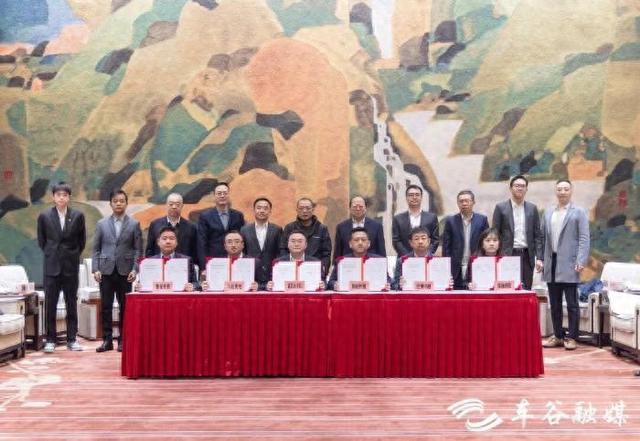
Group 1 - Wuhan Economic Development Zone held a signing event for 11 key projects with a total investment of 10.7 billion yuan, focusing on smart connected and electric vehicles, auto parts, green low-carbon, new materials, and intelligent manufacturing [1][8] - The Dito Automotive Parts Production and R&D Base project will produce key components for Geely, with an expected annual output value of 1.2 billion yuan upon full production [3] - The establishment of a joint venture, Visteon Xinyi (Wuhan) Automotive Electronics Co., aims to enhance automotive electronic product R&D capabilities in the region [4] Group 2 - The Baida Optoelectronics project plans to build a manufacturing base for high-voltage connection systems, with an expected annual output value of 2 billion yuan by 2030 [5] - The East Asia Synthetic project will enhance local automotive parts capabilities with a new production base and R&D center expected to start construction in 2026 [7] - Sunshine New Energy's project will focus on zero-carbon industrial platforms, while Wuhan Jinfa Technology will expand its new materials R&D and production base, both expected to contribute to local economic growth by 2026 [7]

北京出台鼓励措施 重点产业中试平台最高补助1亿元
Zhong Guo Xin Wen Wang· 2026-01-04 13:23
Group 1 - Beijing plans to support the construction of pilot test platforms for key industries such as artificial intelligence, healthcare, green low-carbon technologies, robotics, and smart manufacturing, with subsidies of up to 100 million RMB, covering 35% of total investment for new projects [1][2] - The goal is to establish 10 national-level manufacturing pilot test platforms and 50 municipal-level platforms by 2030, forming a pilot test system that meets the requirements of the capital's modern industrial system [1] - The measures encourage collaboration among leading enterprises in the industry chain to co-build pilot production lines, support the establishment of comprehensive pilot public service institutions, and enhance the digital and green capabilities of existing platforms [1][2] Group 2 - The measures also emphasize the collaborative construction of pilot transformation bases in key areas such as hydrogen energy, biomedicine, cybersecurity, industrial internet, high-end equipment, new energy, and intelligent connected vehicles within the Beijing-Tianjin-Hebei region [2] - A service platform for matching supply and demand in pilot testing services will be established, along with a focus on strengthening financial investment in pilot services [2]
北京:对符合条件的新建中试平台最高给予1亿元补助支持
Xin Lang Cai Jing· 2026-01-04 12:29
Core Viewpoint - Beijing aims to establish 10 national-level manufacturing pilot platforms and support the construction of 50 municipal-level pilot platforms by 2030, with financial incentives for qualifying projects [1] Group 1: Financial Support - New pilot platforms for industries such as artificial intelligence, healthcare, green low-carbon technologies, robotics and intelligent manufacturing, and integrated circuits will receive subsidies of 35% of total project investment, capped at 100 million yuan [1] - New pilot platforms for next-generation information technology and intelligent connected vehicles will receive subsidies of 25% of total project investment, capped at 50 million yuan [1] - The document emphasizes the support for pilot platforms to implement independent legal entity reforms to enhance their market service capabilities [1] Group 2: Investment Incentives - For newly established independent legal entity pilot platforms, the investment subsidy ratio increases to 45% and 35% respectively [1]
上海杨浦:新年落地签约50项,持续建设“杨数浦”新质秀带创新区
Xin Hua Cai Jing· 2026-01-04 08:09
Core Viewpoint - Shanghai Yangpu District is focusing on cultivating new productive forces and promoting deep integration of technological and industrial innovation, with a significant investment in key projects totaling over 20 billion yuan [1]. Group 1: Key Industry Projects - A total of 50 key industrial projects have been signed, with a total investment exceeding 20 billion yuan, covering sectors such as online new economy, artificial intelligence, smart manufacturing, green low-carbon, life health, technology finance, and professional services [1]. - In 2026, Yangpu plans to advance 9 urban industrial projects and 9 technology innovation projects, with a total investment of approximately 4.5 billion yuan [1]. Group 2: Major Engineering Initiatives - Yangpu District has arranged 104 major engineering projects for 2026, with 7 projects starting construction, covering a total building area of 291,600 square meters and a total investment of 13.085 billion yuan [2]. - The projects include significant developments such as the Shanghai Quantum City Time-Space Innovation Base (Phase I), Fudan University Jiangwan Campus Mathematics Science Building, Tongji University Siping Road Campus Sports Complex, and new road construction on Guojing Road [2].