芯片设备

Search documents
中国台湾芯片设备,限制出口
半导体芯闻· 2025-11-17 10:17
Group 1 - Taiwan authorities announced a revision of the export control list for strategic high-tech goods, adding 18 new controlled items including advanced 3D printing equipment, semiconductor equipment, and quantum computers [2] - The revision requires Taiwanese manufacturers to apply for export permits for controlled items, with the Trade Bureau assessing the risk of military expansion before granting permission [2][3] - The Trade Bureau aims to align Taiwan's controlled goods list with international export control organizations, referencing agreements such as the Wassenaar Arrangement and the Nuclear Suppliers Group [3] Group 2 - The semiconductor industry is experiencing significant market fluctuations, with major chip companies facing declines in market value [4] - Huang Renxun described High Bandwidth Memory (HBM) as a technological marvel, indicating its importance in the semiconductor landscape [5] - Jim Keller expressed confidence in the RISC-V architecture, predicting its eventual success in the industry [5]


TEL,营收暴增
半导体芯闻· 2025-11-04 09:48
Core Viewpoint - The demand for AI-related equipment is driving significant growth for Tokyo Electron Limited (TEL), leading to an upward revision of its financial forecasts for the fiscal year 2025, surpassing market expectations [2][3]. Financial Performance - TEL revised its consolidated revenue target for the fiscal year 2025 from 2.35 trillion yen to 2.38 trillion yen, reflecting a year-on-year decrease of 2.1% [2]. - The consolidated operating profit target was adjusted from 570 billion yen to 586 billion yen, representing a year-on-year decline of 16.0% [2]. - The consolidated net profit target was increased from 444 billion yen to 488 billion yen, indicating a year-on-year decrease of 10.3% [2]. - For the last quarter (July-September 2025), TEL reported a consolidated revenue growth of 11.2% year-on-year to 630 billion yen, with operating profit increasing by 6.9% to 158.4 billion yen, and net profit rising by 5.2% to 123.8 billion yen [3]. Market Trends - The global market size for wafer fab equipment is maintained at the previous estimate of 115 billion USD, driven by investments in advanced logic chips and DRAM for AI applications, with a recovery trend in NAND Flash [3]. - The strong demand for AI server equipment is expected to continue driving investments in advanced semiconductors [3]. Regional Sales Performance - TEL's revenue in the Japanese market slightly increased by 0.6% year-on-year to 52.9 billion yen, accounting for 8.4% of total revenue [4]. - Revenue in North America plummeted by 52% to 38.4 billion yen, representing 6.1% of total revenue [4]. - European revenue decreased by 55% to 10.8 billion yen, making up 1.7% of total revenue [4]. - South Korean revenue surged by 67% to 132.5 billion yen, contributing 21.1% to total revenue [4]. - Taiwanese revenue increased by 59% to 119.7 billion yen, accounting for 19.0% of total revenue [4]. - Revenue from China grew by 9% to 254.1 billion yen, representing 40.3% of total revenue [4]. - Revenue from Southeast Asia and other markets slightly increased by 0.5% to 21.3 billion yen, making up 3.4% of total revenue [4].


70亿!光刻机新晋独角兽诞生,挑战ASML,还要建晶圆厂
美股研究社· 2025-10-30 10:16
Core Viewpoint - A new American chip equipment startup, Substrate, has emerged as a unicorn with a valuation exceeding $1 billion, aiming to challenge industry giants ASML and TSMC in the semiconductor sector [5][6]. Group 1: Company Overview - Substrate has secured $100 million in seed funding and is focused on developing advanced X-ray lithography technology that claims to rival ASML's High-NA EUV machines, achieving a resolution comparable to 2nm semiconductor nodes [6][7]. - The company has designed a new type of vertically integrated foundry that utilizes particle accelerators to produce extremely bright beams of light, which are essential for advanced semiconductor manufacturing [8]. Group 2: Technology and Innovation - Substrate's first production-grade 300mm wafer lithography equipment has been completed, capable of withstanding the high G-forces required by leading foundries [9]. - The company aims to reduce the cost of top-tier silicon wafers significantly, projecting a cost of around $10,000 by 2030, compared to the current $100,000 [9]. Group 3: Strategic Goals - Substrate's ultimate goal is to surpass ASML's business scope and establish a custom semiconductor manufacturing foundry in the U.S., with plans for mass production starting in 2028 [10]. - The company intends to build a network of foundries equipped with its lithography machines, aiming to produce high-quality wafers at lower costs [12][13]. Group 4: Leadership and Vision - CEO James Proud emphasizes the need for the U.S. to regain its leadership in semiconductor production through a new, vertically integrated foundry model that continues to push the boundaries of Moore's Law [12][22]. - Proud, a serial entrepreneur with no prior experience in the chip industry, has assembled a team of about 50 experts from leading companies and national laboratories to drive Substrate's vision [20][18]. Group 5: Industry Challenges - Analysts express skepticism about Substrate's ambitious plans, noting the complexity and capital intensity of the semiconductor supply chain, which has historically taken decades and significant investment to develop [21][26]. - Despite the challenges, Proud remains confident, arguing that historical precedents show that such ambitious goals can be achieved [26].
美股策略:宽松预期不抵避险情绪:“蟑螂理论”发酵,避险情绪进一步升温
国泰君安国际· 2025-10-17 08:31
Core Insights - The report highlights that the rising tensions in US-China trade relations are a core variable affecting the US stock market, with recent developments including tariff increases and export controls contributing to market anxiety [3][4]. - Federal Reserve Chairman Jerome Powell's public statements have provided support to the market, indicating potential interest rate cuts and a halt to balance sheet reduction, which could positively impact stock valuations [12][16]. - Despite strong earnings reports from major US companies, concerns over bad debts in regional banks have dampened market optimism, with the "cockroach theory" suggesting that potential risks may be greater than they appear [15][16]. Trade Relations - The escalation of trade tensions has led to significant market adjustments, with President Trump threatening to impose a 100% tariff on all Chinese exports starting November 1, which directly impacted the stock market [4][6]. - The global supply chain stability is under threat due to China's dominance in rare earth elements, with over 60% of global mining and over 90% of refining capacity concentrated in China [5][6]. Market Performance - Following the trade tensions, the Nasdaq 100 index experienced a single-day drop of 3.49%, while the VIX index, reflecting market fear, surged to 22 points [6][18]. - The market's resilience is noted, as it has previously weathered similar shocks, indicating an increased tolerance for trade-related volatility [6][9]. Earnings Reports - Major US companies, including Morgan Stanley and Bank of America, reported third-quarter earnings that exceeded market expectations, providing a solid fundamental basis for the market [12][15]. - The technology sector also performed well, with ASML and TSMC reporting better-than-expected orders and revenues, respectively, indicating ongoing demand in the AI and semiconductor markets [12][15]. Future Outlook - The report suggests that the government shutdown's impact on the market is likely to be limited, as historical precedents show that markets often rebound after such events [16]. - The upcoming APEC meeting is seen as a critical window for US-China negotiations, potentially alleviating trade tensions and providing short-term support for the market [16]. - Overall, the report anticipates that the US stock market will maintain a volatile upward trend, supported by three main factors: easing monetary policy, potential trade negotiations, and strong corporate earnings [16].
阿斯麦财报前景面临考验 AI订单与2026指引成焦点
Ge Long Hui A P P· 2025-10-14 09:44
Core Viewpoint - ASML's stock has risen 45% in over a month, becoming the highest-valued listed company in Europe in September, marking its best monthly performance in 20 years. The key question ahead of the earnings announcement is whether the company can provide stronger guidance for next year compared to July [1]. Group 1: Stock Performance - ASML's stock has increased by 45% in a little over a month [1]. - The company became the highest-valued listed company in Europe in September [1]. - This performance marks ASML's best monthly results in 20 years [1]. Group 2: Market Expectations - Investors are looking for evidence that chip equipment manufacturers can capitalize on the current AI boom [1]. - There is a focus on whether increased capital expenditures related to AI from chip manufacturers are translating into ASML's order book [1]. - The recent stock increase has been primarily driven by hedge fund purchases, while long-term investors remain cautious [1]. Group 3: Management Guidance - There are concerns that management may not provide sufficiently clear guidance, despite a potentially more optimistic outlook for 2026 [1]. - The anticipation for stronger guidance ahead of the earnings report is high among investors [1].

A股,临近尾盘,为何突然跳水了,原因是什么?
Sou Hu Cai Jing· 2025-09-26 23:25
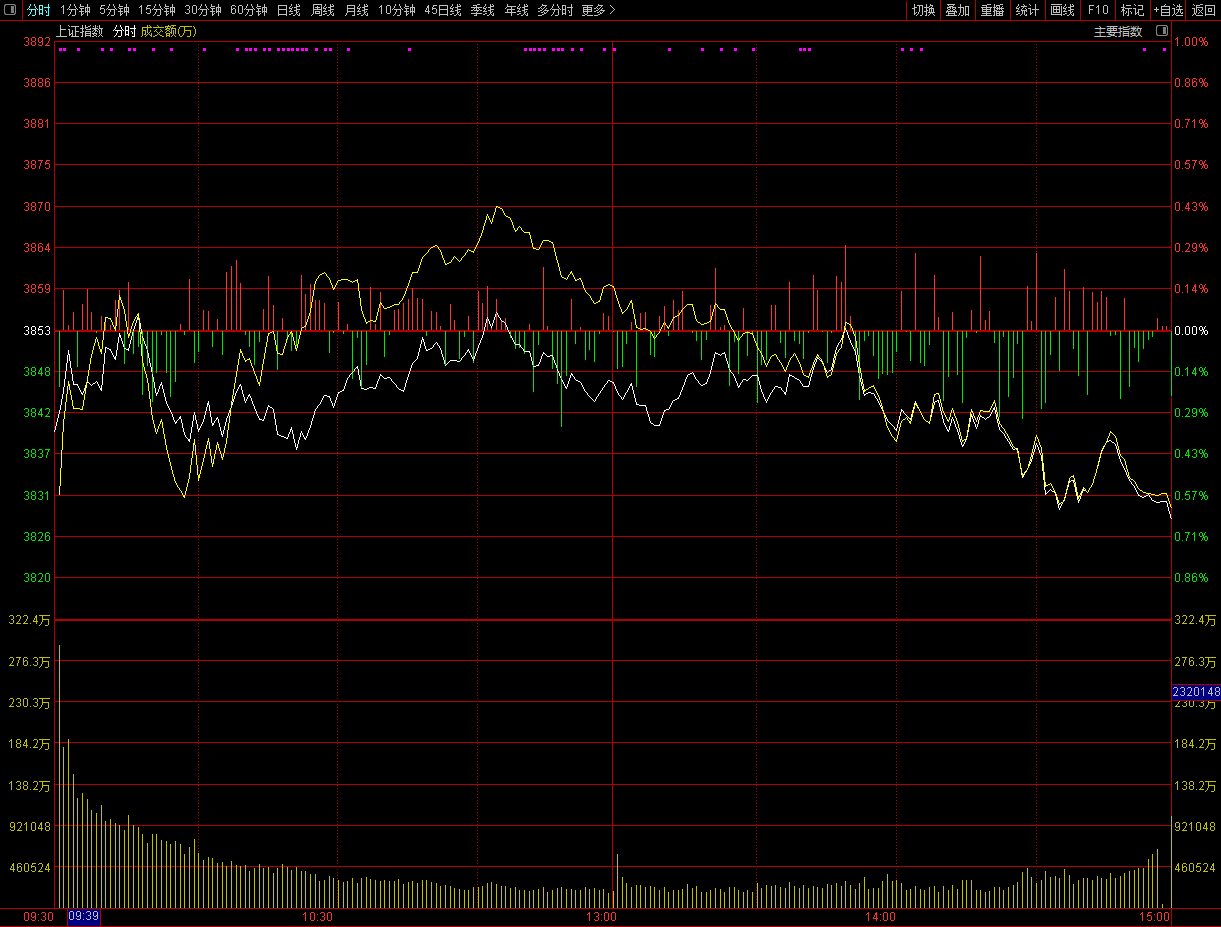
Market Performance - The A-share market experienced a downturn today, with technology stocks, particularly in the ChiNext index, seeing declines of over 4% for major players in computing power [1] - The ChiNext index closed down 2.6%, erasing gains from the previous day, largely due to significant drops in leading sectors of computing power and energy storage [1] - The Shanghai Composite Index fell by 25 points, a decrease of 0.65%, reflecting a broader market weakness [1] Market Sentiment - The sudden market decline was attributed to the upcoming long holiday, leading some investors to take profits and reduce exposure to technology stocks, which had seen the largest gains [2] - The market's downward movement was influenced by a lack of strong buying momentum, as evidenced by the Shanghai Composite Index's inability to break above 3900 points over the past month [3] Fund Dynamics - There is a noted phenomenon of capital fatigue, with the market showing a collective downward movement, indicating a lack of buying power and a potential for further adjustments [5] - The market's behavior suggests that rational investors are opting to reduce positions ahead of the holiday, contributing to the overall market decline [2][6]
“不要内卷,要联合”!中微公司董事长重磅发声:芯片设备业存在15种内卷形式,产业链过分垂直整合带来不公平竞争
Mei Ri Jing Ji Xin Wen· 2025-09-05 05:51
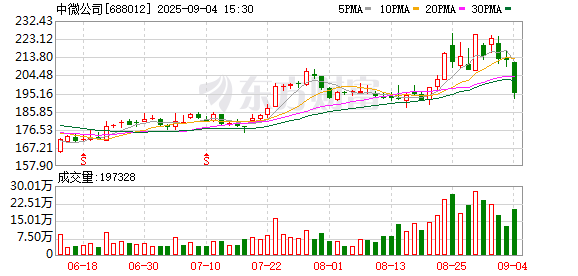
Core Viewpoint - The semiconductor equipment industry faces ten major challenges, including severe competition and various forms of industry "involution" as highlighted by the chairman of Zhongwei Company, Yin Zhiyao [1][2]. Group 1: Industry Challenges - The semiconductor micro-processing equipment industry is experiencing significant challenges, including unfair competition and the negative impacts of vertical integration attempts by some companies [1][3]. - Yin Zhiyao identified 15 manifestations of industry involution, such as unfair terms between equipment manufacturers and component suppliers, and the use of media to undermine competitors [1]. Group 2: Vertical Integration Issues - Vertical integration in the semiconductor industry leads to unfair competition, as manufacturers may leak proprietary knowledge to equipment suppliers during collaboration [3][4]. - Historical attempts by some chip manufacturers to engage in equipment production have largely failed, reinforcing the need for separation between manufacturing and equipment supply [4]. Group 3: Domestic Equipment Development - The domestic semiconductor equipment industry has made progress in localization, with the highest domestic production rate of 90% for de-bonding equipment, while other segments like thermal treatment and etching equipment have around 20% localization [5]. - The development of semiconductor equipment requires substantial funding, often exceeding the sale price of the equipment by multiples, which poses a barrier to further localization [5][6]. Group 4: Collaboration and Innovation - To reduce internal competition and promote healthy development in the semiconductor equipment industry, collaboration between smaller and larger companies is encouraged [6]. - Zhongwei Company showcased six new semiconductor equipment products at the recent exhibition, demonstrating its technological capabilities in critical processes such as plasma etching and atomic layer deposition [6].


中微公司董事长重磅发声:芯片设备业存在15种内卷形式 产业链过分垂直整合是一种不公平竞争
Mei Ri Jing Ji Xin Wen· 2025-09-04 14:13
Core Viewpoint - The article discusses the challenges and implications of vertical integration in the semiconductor industry, highlighting the risks of unfair competition and the need for collaboration rather than internal competition [1][5]. Industry Overview - The semiconductor manufacturing and equipment sectors are characterized by a high degree of specialization, with major manufacturers like TSMC, Samsung, and GlobalFoundries representing chip makers, while ASML, Applied Materials, and Lam Research represent equipment suppliers [2]. - In China, leading semiconductor manufacturers include SMIC, Hua Hong Semiconductor, and JCET, while equipment suppliers include AMEC, North Huachuang, and Shanghai Semei [2]. Competition and Collaboration - Vertical integration is seen as a source of unfair competition, as it can lead to the leakage of proprietary knowledge and trade secrets between chip manufacturers and equipment suppliers [3]. - The historical failures of vertically integrated companies in the semiconductor space underscore the importance of maintaining a clear division between manufacturing and equipment supply [3]. Domestic Semiconductor Equipment Development - The domestic semiconductor equipment industry has made progress in localization, with the highest domestic production rate of 90% achieved in the photoresist stripping equipment [6]. - Other equipment categories, such as thermal processing, etching, and cleaning, have a domestic production rate of around 20%, while CMP and PVD equipment are at approximately 10% [6]. - The development of semiconductor equipment requires significant funding and time, with R&D costs potentially exceeding the sale price of the equipment by multiples [6]. Industry Challenges - The semiconductor micro-processing equipment industry faces ten major challenges, including severe competition and various forms of internal competition [5]. - Encouragement for collaboration between smaller equipment companies and larger firms is suggested to reduce internal friction and promote healthy industry development [6]. Product Launches - At the recent semiconductor equipment exhibition, the company launched six new semiconductor equipment products, showcasing its technological capabilities in critical processes such as plasma etching, atomic layer deposition, and epitaxy [7].
半年赚到161亿,中国最强芯片设备企业,杀进全球前6名
Sou Hu Cai Jing· 2025-08-29 04:14
Group 1 - The core viewpoint of the article highlights the significant progress of domestic semiconductor equipment manufacturers, particularly North China Huachuang, in reducing reliance on foreign imports and achieving notable rankings in the global market [1][3][5] - Historically, the top 10 global semiconductor equipment companies were dominated by firms from the US, Japan, and the Netherlands, with no Chinese companies making the list until recently [1][5] - North China Huachuang has rapidly ascended the ranks, moving from not being in the top 10 in 2022 to becoming the 6th largest globally by 2024, surpassing many established international competitors [5][7] Group 2 - In the first half of 2025, North China Huachuang reported a revenue of 16.142 billion yuan, representing a year-on-year growth of 29.51%, and a net profit of 3.208 billion yuan, with a growth of 14.97%, setting new records [5][7] - The company's diverse product lines and advanced technology, achieving levels of 14nm, 7nm, and even 5nm in certain areas, have contributed to its strong performance and ability to meet the needs of various chip manufacturers [7][9] - The development of China's semiconductor industry is characterized as a collective breakthrough across the entire supply chain, including EDA, materials, equipment, and manufacturing technology, rather than the success of individual companies [9]

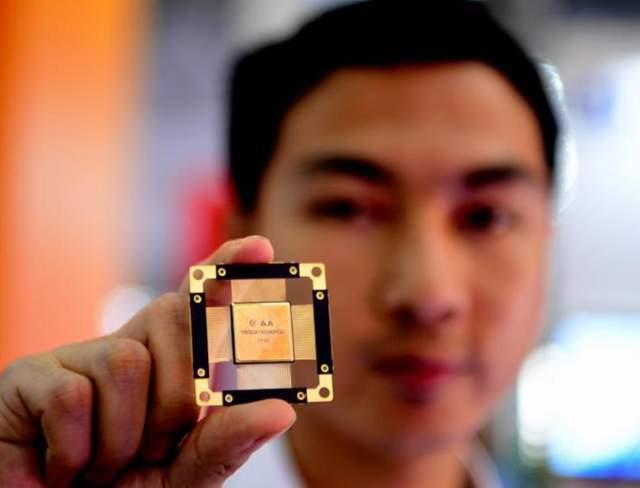
日本芯片设备业,推动大合并?
半导体行业观察· 2025-08-26 01:28
Core Viewpoint - The Japanese semiconductor equipment parts market is facing challenges as many manufacturers have not benefited from the AI boom, despite significant investments in hardware like Nvidia chips. There is a pressing need for industry consolidation to enhance competitiveness and profitability [2][3]. Group 1: Market Dynamics - Prices for semiconductor manufacturing equipment parts have not increased, contrasting with rising prices in other sectors across Japan [2]. - The domestic sales of Japan's semiconductor tool parts industry are less than 100 billion yen (approximately 6.8 billion USD) [2]. - Marumae Corporation, a key player in this niche market, holds a 7% market share and generates annual revenue of about 5 billion yen (approximately 34.5 million USD) [3]. Group 2: Company Strategies - Marumae's president, Maeda Toshikazu, emphasizes the need for consolidation in the industry, having recently acquired KM Aluminum for 9 billion yen [2]. - The company is exploring potential acquisitions in areas related to semiconductor manufacturing and is also looking into aerospace and defense sectors, which are seen as challenging yet profitable [2][3]. - Marumae has a current operating profit margin of approximately 20%, a significant increase from 3% in the previous fiscal year [3]. Group 3: Competitive Landscape - Smaller suppliers struggle to negotiate better prices due to their lack of scale, resulting in profit margins below 10% [3]. - Major clients like Tokyo Electron and Applied Materials maintain high operating profit margins around 30%, even amidst challenges such as order cancellations from Intel [4]. - Competitors often reject acquisition proposals, supported by local banks, and face structural barriers that hinder market consolidation [4]. Group 4: Future Outlook - The next potential acquisition for Marumae may take years, as many competitors lack succession plans and are aging [4]. - Concerns about technology leakage prevent clients from supporting supplier consolidation, as vacuum components are tailored for specific equipment [4]. - Foreign companies are also eyeing Japan's semiconductor technology, which could pose a threat to local firms if unique skills and technologies are acquired [4].