
蔬菜种植与销售

Search documents
山东博兴:2025年12月蔬菜价格略有波动,环比同比均上涨
Zhong Guo Fa Zhan Wang· 2026-01-13 14:21
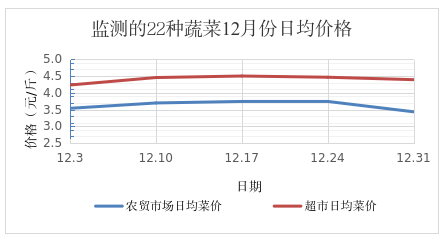
Core Insights - The vegetable prices in Boxing County, Shandong Province, have shown fluctuations, with an overall increase compared to both the previous month and the same period last year [1][4][5] Group 1: Supermarket Price Trends - The average price of 22 monitored vegetable categories in supermarkets increased from 4.232 yuan/kg at the beginning of the month to 4.391 yuan/kg by the end, marking a rise of 3.76% [1] - Significant price increases were observed in green chili, scallions, pointed pepper, and winter melon, with respective price increases of 35.42%, 52.17%, 28.89%, and 50% [1] - Spinach experienced a notable price drop from 5.5 yuan/kg to 3.5 yuan/kg, a decrease of 36.36% [1] Group 2: Agricultural Market Price Trends - The average price in agricultural markets rose from 3.536 yuan/kg to 3.629 yuan/kg, reflecting a month-on-month increase of 2.85% [5] - Key price increases were noted for eggplant, which rose by 42.22%, and significant decreases were seen in oilseed rape and spinach, which fell by 20% and 21.90%, respectively [5] - Year-on-year price increases were substantial for celery, cabbage, cucumber, eggplant, and others, with increases ranging from 41.54% to 152.31% [5] Group 3: Overall Price Trends - The monthly average price of vegetables in supermarkets was 4.408 yuan/kg, up 6.81% from the previous month and 27.44% from the same month last year [4] - In agricultural markets, the monthly average price was 3.629 yuan/kg, which is 21.71% higher than the same month last year [5] - The overall trend indicates a significant increase in vegetable prices both month-on-month and year-on-year across different market segments [4][5]

探访寒潮下的菜篮子:供应充足,价格不会暴涨
Qi Lu Wan Bao· 2025-12-12 10:42
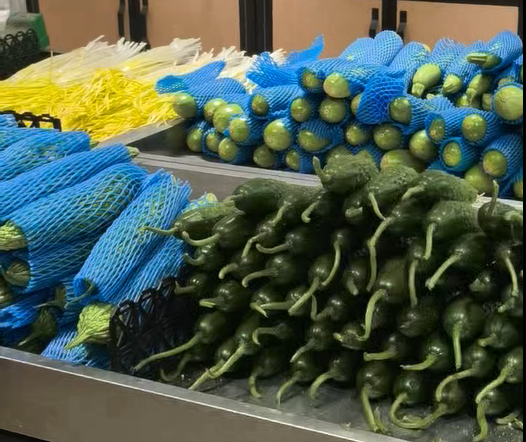
Core Viewpoint - The article discusses the impact of a cold wave and rising CPI on vegetable prices in Jinan and North China, highlighting the current stability in vegetable prices despite potential future increases due to transportation costs and supply fluctuations [1][3]. Group 1: Current Market Conditions - The vegetable market in Jinan is currently characterized by stable prices and sufficient supply, with consumers purchasing more durable vegetables like cabbage, radishes, and potatoes [1]. - Local sources are supporting the market, with minimal reliance on external supplies, and merchants are following a "daily procurement, daily sales" model without stockpiling [1]. - Major supermarkets have not yet announced price adjustments and will respond dynamically to market conditions following the cold wave [1]. Group 2: Price Stability and Government Measures - Prices for perishable vegetables remain stable, with examples such as spinach at 3 yuan per jin, coriander at 5 yuan per jin, and celery at 2 yuan per jin, indicating limited expected price increases even with rising transportation costs [3]. - The Jinan Agricultural and Rural Bureau has proactively addressed potential challenges by implementing measures for agricultural facility safety and emergency heating to ensure vegetable supply stability [3]. Group 3: Economic Analysis - Professor Zhu Jin from Jinan University explains that vegetable price volatility significantly impacts the CPI due to the strong consumer demand and limited substitutes, despite vegetables only accounting for 2% of the CPI [4]. - The food category constitutes about 20% of the CPI, meaning significant increases in vegetable prices can elevate the overall food index and subsequently the CPI [4]. - Zhu notes that urban residents' increasing income levels have led to a decrease in the Engel coefficient, allowing for better resilience against seasonal vegetable price fluctuations through alternative product choices [6]. Group 4: Government Response and Future Outlook - The current situation is seen as a routine test of Jinan's emergency supply capabilities, with the government emphasizing the importance of the "vegetable basket" project and having mature emergency plans to mitigate short-term price volatility [6].
多地迎来降雪降温天气 农业部门迅速行动保障市民“菜篮子”供应充足
Yang Shi Wang· 2025-12-12 09:15
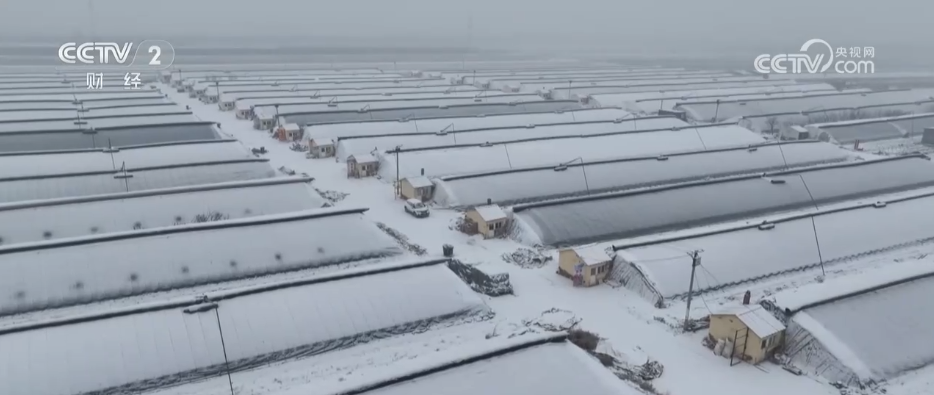
Group 1 - The core viewpoint of the articles highlights the proactive measures taken by agricultural departments in Shanxi to ensure the safety and supply of agricultural production amidst severe weather conditions, including heavy snowfall and temperature drops [1][3][5] Group 2 - Starting from December 11, Shanxi experienced widespread snowfall and a cold wave, prompting local agricultural departments to activate emergency response mechanisms [3] - Agricultural experts provided guidance to farmers for reinforcing greenhouses, repairing damaged materials, and preventing wind damage [3] - Continuous communication with meteorological and emergency management departments was emphasized to share weather information and issue warnings [3] Group 3 - In Linfen, a large agricultural market was observed actively receiving vegetable shipments, with stable prices for essential winter vegetables like potatoes and cabbages at around 1 yuan per jin [7] - The market management coordinated with vendors to secure supplies from various regions, increasing transportation and storage efforts to ensure a smooth supply chain [9] - The daily vegetable reserve in Linfen exceeded 300 tons, effectively meeting the purchasing needs of residents in the city and surrounding areas [9]
数字赋能“菜篮子”全链条守护“舌尖安全”
Zhong Guo Jin Rong Xin Xi Wang· 2025-11-22 07:03
Core Insights - Shandong Lanling, a major vegetable-producing county with an annual output exceeding 5 million tons, is undergoing a significant industrial transformation in response to rural revitalization strategies [1] - The Lanling Agricultural Development Group has developed a digital platform for agricultural product quality supervision, addressing traditional agricultural challenges and enhancing product quality and safety [2][3] Group 1: Digital Transformation - The digital platform, led by the Lanling Agricultural Development Group, utilizes a "Farm Safety Code" system for comprehensive monitoring of over 1,034 agricultural entities and more than 2,900 planting entities [2] - This system allows consumers to trace the entire lifecycle of vegetables through a simple scan, transforming quality control from an abstract concept to a tangible, verifiable process [2] Group 2: Market Integration - The establishment of the "Vegetable Basket Rural Revitalization Club" has attracted 58 well-known enterprises, including Hema Fresh and Sam's Club, enhancing market trust and integration [2] - The club operates on a "customized order" basis, allowing enterprises to dictate production based on market demand, thus creating a collaborative model that benefits both companies and farmers [3] Group 3: Economic Impact - The "minimum price + premium sharing" mechanism implemented by the Lanling Agricultural Development Group has led to an average annual income increase of 30,000 yuan for over 1,000 farmers [3] - Investments in six major centers, including cold chain logistics and processing, have increased the added value of agricultural products by over 30% [3] Group 4: Market Expansion - Lanling vegetables are now sold in over 40 domestic cities and exported to 15 countries and regions, including Japan and Europe, with an annual export volume nearing 10,000 tons [3] - The transformation from a focus on quantity to quality is providing a replicable model for rural revitalization efforts [3]
湖南江永供港蔬菜通道升级 五年出口增长超四成
Zhong Guo Xin Wen Wang· 2025-11-20 10:47
Core Insights - Hunan Jiangyong County has seen a significant increase in vegetable exports to Hong Kong, with a growth rate exceeding 40% over the past five years, rising from 1 billion to 1.438 billion yuan [1][3]. Group 1: Company Developments - Hunan Huiyou Agricultural Development Co., Ltd. signed a sales order worth 500 million yuan with Hong Kong Chuanghui Fruits and Vegetables, indicating strong demand for high-quality agricultural products in Hong Kong [1]. - The company has established a supply chain system that includes "direct sourcing from the origin + rapid cold chain," allowing fresh vegetables to reach the Hong Kong market within 7 hours [1][3]. Group 2: Industry Trends - Jiangyong County has focused on the vegetable industry, promoting the "vegetable basket" project for the Guangdong-Hong Kong-Macao Greater Bay Area and the "100 billion project" for vegetable exports [3]. - The county has developed a robust brand operation mechanism, with 2 new regional vegetable public brands and 22 agricultural enterprise brands, alongside 25 products certified as green food, organic agricultural products, and geographical indications [3]. Group 3: Agricultural Production - As of now, Jiangyong County has planted 293,900 acres of vegetables, primarily taro and ginger, with a total output of 678,900 tons, reflecting year-on-year increases of 2.07% and 4.98%, respectively [3]. - The county has established 28 production recognition bases for the "vegetable basket" project and 25 export registration bases in the Greater Bay Area [3].
湖南永州建成238个粤港澳大湾区“菜篮子”基地
Zhong Guo Xin Wen Wang· 2025-11-15 12:51
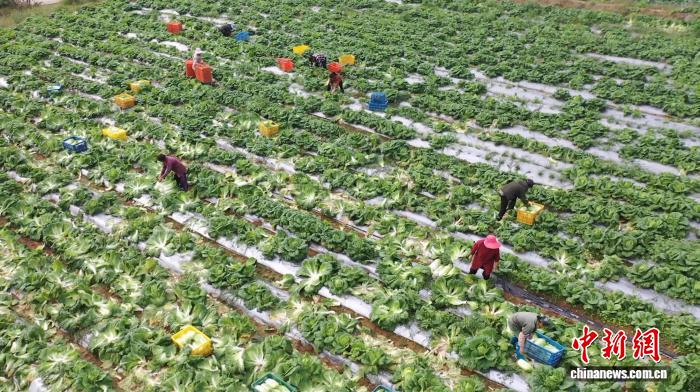
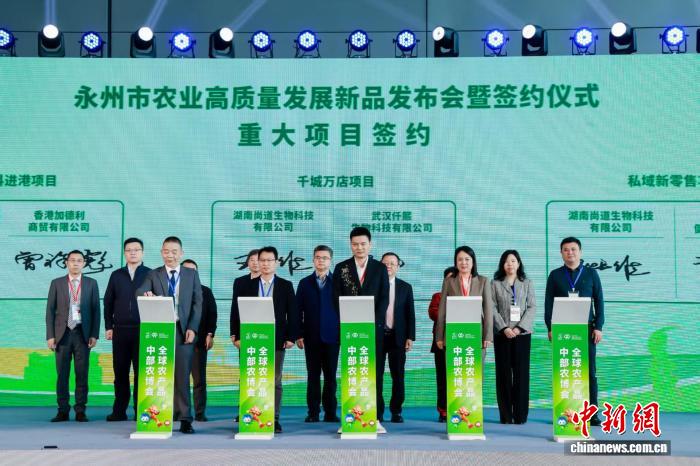
Core Viewpoint - The 26th China Central (Hunan) Agricultural Expo showcases the high-quality agricultural development in Yongzhou, highlighting its significant contributions to vegetable exports and innovative agricultural practices [1][3][5]. Group 1: Agricultural Development and Export - Yongzhou has focused on "local specialties" and extended "industrial chains," establishing six major industrial clusters, including grains, vegetables, oil tea, citrus, pigs, and egg chickens, achieving modern agricultural high-quality development [3]. - In 2024, Yongzhou's fruit and vegetable export value is projected to reach 13.89 billion yuan, maintaining its position as the top city for vegetable exports in China [3]. - Under the "Vegetable Ten Measures" policy, Yongzhou has built 238 "vegetable basket" bases for the Guangdong-Hong Kong-Macao Greater Bay Area, with vegetable exports accounting for over 87% of Hunan's total, and supplying over half of the vegetables to Hong Kong [3][5]. Group 2: Innovative Practices and Market Expansion - The "cooperative + base + farmer" model in Shuangpai County has significantly increased the scale and yield of Hu Zhua ginger, with 20,000 acres cultivated and an annual output value exceeding 400 million yuan [3]. - Yongzhou has implemented reforms such as "batch collection and reporting" and "cross-regional direct supply," successfully establishing a new export channel to the Greater Bay Area, allowing for rapid customs clearance [5]. - The innovative "fruit and vegetable assembly" model has reduced logistics costs by 30% and is being replicated in various regions across the country [5]. Group 3: New Product Launch and Partnerships - During the expo, 11 projects were signed with a total contract value of 1.15 billion yuan, including vegetable export sales orders with companies from Hong Kong [6][7]. - Yongzhou's vegetable industry emphasizes high standards and large-scale bases, with New Tian Dongsheng Farm establishing 18 large planting bases and implementing a comprehensive quality safety traceability system [6]. - The partnerships formed during the expo further solidify Yongzhou's role as a key supplier for the Guangdong-Hong Kong-Macao Greater Bay Area [7].
透过“菜篮子”工程,看到中国式经济学的关键奥秘
Sou Hu Cai Jing· 2025-10-31 14:08
Core Insights - The "菜篮子" project is a significant initiative in China aimed at ensuring stable vegetable supply, highlighting the importance of market circulation mechanisms alongside agricultural production [1][2][3] - The historical context reveals that vegetable supply in urban areas has fluctuated between scarcity and surplus, indicating a complex relationship between production and market demand [2][5] - The evolution of supply chain mechanisms, particularly the role of wholesale markets, has been crucial in addressing the challenges of vegetable distribution and availability [10][12][20] Group 1: Historical Context - The "菜篮子" project was initiated in 1988, reflecting China's commitment to integrating agricultural planning with market dynamics [1][9] - Historical events, such as the 1968 vegetable looting incident in Shanghai, illustrate the critical nature of vegetable supply in urban stability [2][5] - Data from the early 1960s shows that Shanghai experienced periods of both surplus and scarcity in vegetable supply, emphasizing the need for effective market mechanisms [2][5] Group 2: Supply Chain and Market Mechanisms - The imbalance in vegetable supply is attributed to geographical and seasonal mismatches, particularly in major cities like Beijing and Shanghai [5][6] - The transition from a planned economy to a market-oriented approach in the late 1970s improved the flexibility and responsiveness of vegetable supply [8][9] - The establishment of wholesale markets has been pivotal in connecting producers with consumers, facilitating efficient distribution and meeting urban demand [10][12][20] Group 3: Modern Developments - The rapid growth of agricultural wholesale markets since the 1990s has significantly increased transaction volumes and improved infrastructure [12][13] - Innovations in logistics and technology, such as the "智慧中心" at 海吉星, have enhanced the efficiency of agricultural product distribution [15] - The "菜篮子" project has evolved into a comprehensive supply chain system that supports the efficient flow of agricultural products across the country [20]

对话李奕:从麦肯锡咨询到非洲卖菜丨卓立出海谈
吴晓波频道· 2025-10-31 00:29
Core Viewpoint - The article discusses the journey of an individual transitioning from a high-paying consulting job at McKinsey to starting a vegetable supply business in Kenya, highlighting themes of courage, choice, and resilience in entrepreneurship [3]. Group 1: Career Transition - The individual transitioned from a high-paying job in the U.S. to a much lower income in Kenya, reflecting a significant career shift [5][6]. - The motivation for this transition stemmed from a desire to create meaningful impact, particularly during the pandemic, by supporting local businesses and government initiatives [7][8]. Group 2: Business Challenges - Initial attempts to operate self-owned farms faced significant challenges, including high startup costs (approximately $500,000 per farm) and difficulties in scaling operations due to varying soil conditions and seasonal changes [14][15][16]. - The decision was made to pivot from self-operating farms to building a supply platform, collaborating with over 4,000 farmers and nearly 20,000 vendors to ensure a stable supply of fresh vegetables [17][18]. Group 3: Management and Operations - The company established daily meetings to ensure timely communication and problem-solving among dispersed employees, utilizing technology to streamline data collection and feedback processes [22][23]. - A robust data management system was developed to track supply chain metrics, ensuring quality control and operational efficiency, which is a competitive advantage over local operators [30][31][32]. Group 4: Personal Support and Philosophy - Family support played a crucial role in the decision to pursue entrepreneurship in Africa, with effective communication helping to alleviate parental concerns [35][36]. - The individual emphasized a philosophy of making choices based on love rather than fear, which guided their entrepreneurial journey and decision-making process [37][38].

“小菜篮”里装着“大民生” 面对菜价波动 多地出实招守护“菜篮子”
Yang Shi Xin Wen Ke Hu Duan· 2025-09-12 23:03
Core Viewpoint - Recent increases in vegetable prices, particularly leafy greens, are attributed to factors such as production disasters, rising transportation costs, and transitional supply shortages due to shifting production areas [1][3][4] Group 1: Price Trends - Prices for vegetables like small cabbage have surged to 1.90 yuan per jin, more than double the usual price, marking a new high for the year [1] - The average price of vegetables in the Beijing market has increased by 10% month-on-month, with notable price hikes in spinach and celery [3][10] - In Hangzhou, prices for leafy vegetables have risen significantly, with small cabbage prices increasing from around 4-5 yuan to over 8 yuan [8][9] Group 2: Supply Chain and Production Issues - The Beijing New Fa Di market, which supplies over 80% of Beijing's agricultural products, is experiencing supply shortages due to adverse weather conditions in key production areas like Zhangbei County [1][4] - Zhangbei County, a major vegetable supplier, has seen production affected by heavy rainfall, leading to a reduction in output by approximately 1.13 million tons [5][6] - Farmers in Zhangbei are adapting to extreme weather by improving drainage systems and increasing planting efforts as prices rise [5][6] Group 3: Market Responses and Strategies - Various regions are implementing measures such as AI monitoring and price stabilization strategies to ensure sufficient vegetable supply and price stability [7][9] - In Jiangxi, local authorities are encouraging stores to increase the variety of affordable products and provide subsidies to maintain stable prices [10][11] - Supermarkets in Beijing are offering seasonal vegetables at prices approximately 10% lower than market rates to provide consumers with affordable options [9][11]
济阳“菜篮子”领鲜粤港澳
Qi Lu Wan Bao· 2025-08-29 08:20
Core Viewpoint - The event aims to promote high-quality agricultural products from Jiyang District, particularly the "Quqi Cucumber," to the high-end market in South China, enhancing the region's agricultural supply-side reform and vegetable industry development [1] Group 1: Event Overview - The Jiyang District Agricultural and Rural Bureau participated in the 2025 Guangdong-Hong Kong-Macao Greater Bay Area "Vegetable Basket" product supply and demand matching event in Guangzhou [1] - The event focused on promoting national geographical indication products and establishing connections with local businesses [1] Group 2: Strategic Goals - The initiative is part of a broader strategy to deepen agricultural supply-side reforms and drive high-quality development in the vegetable industry [1] - The district aims to enhance the visibility and competitiveness of "Quqi Cucumber" and develop the "Good Taste of Jiyang" brand matrix [1] Group 3: Business Engagement - The Jiyang delegation engaged in detailed discussions with representatives from Guangzhou's agricultural sector, covering product characteristics, supply cycles, logistics, and storage management [1] - Connections were established with companies such as Qian Dama Agricultural Products Co., Ltd. and Guangzhou Henglv Industrial Development Co., Ltd. to lay the groundwork for future cooperation [1]