
信用评级

Search documents
土耳其经济回稳面临考验
Jing Ji Ri Bao· 2025-07-30 21:59
Core Viewpoint - The Central Bank of Turkey has significantly lowered the benchmark interest rate by 300 basis points to 43%, exceeding market expectations, marking a return to a rate-cutting cycle after a previous tightening phase due to political and financial instability [1][2] Group 1: Monetary Policy - The Central Bank of Turkey's decision to cut rates is supported by easing inflation pressures and a stabilizing exchange rate, creating favorable conditions for a loose monetary policy [1] - The bank's confidence in the ongoing decline of inflation is bolstered by the Turkish lira's stability, which provides momentum for the easing policy [2] - The inflation rate in Turkey dropped to 35% in June, down from a peak of approximately 75% in May of the previous year, indicating the initial effectiveness of prior tightening measures [1] Group 2: Economic Indicators - Key financial indicators such as foreign exchange reserves and stock market levels have returned to mid-March levels, reflecting a gradual recovery in market confidence [1] - Moody's upgraded Turkey's sovereign credit rating from "B1" to "Ba3," citing improved policy continuity, credibility, and alleviation of external economic imbalances as the main reasons for the upgrade [2] Group 3: Challenges and Risks - Despite the anticipated decline in inflation, it remains significantly higher than the global average, indicating ongoing economic challenges [2] - The current account deficit suggests insufficient export competitiveness, and capital inflows are vulnerable to international fluctuations, posing potential financial risks [2][3] - Political tensions continue to hinder the recovery of economic confidence, which is seen as a major obstacle to the Central Bank's monetary policy plans [2]
中诚信国际:终止青岛城市发展集团有限公司主体及债项信用评级
Sou Hu Cai Jing· 2025-07-29 07:27
Core Viewpoint - Qingdao Urban Development Group Co., Ltd. (referred to as "Qingdao Chengfa") has decided to terminate its cooperation with China Chengxin International Credit Rating Co., Ltd. for credit rating services, which will affect its credit ratings and related debt instruments [2]. Group 1 - On July 24, 2025, China Chengxin International announced the termination of credit ratings for Qingdao Chengfa and its debt instrument "22 Qingdao Chengfa MTN001" [1]. - The last credit rating report issued on July 26, 2024, maintained Qingdao Chengfa's individual credit status (BCA) at 'a' and the credit rating for "22 Qingdao Chengfa MTN001" at 'AA' with a stable outlook [1]. - The external support for Qingdao Chengfa was based on the strong economic and fiscal strength of Qingdao City, its monopoly in public housing operations, and significant government support since its establishment [1]. Group 2 - On July 21, 2025, Qingdao Chengfa sent a notice to China Chengxin International to terminate their rating cooperation, stating that it would no longer provide materials for credit rating updates [2]. - Following the notice, China Chengxin International's credit rating results for Qingdao Chengfa and "22 Qingdao Chengfa MTN001" will become invalid and will not be updated [2].

企业如何以信致远?广州黄埔夏港街开“良方”
Sou Hu Cai Jing· 2025-07-28 16:03
Group 1 - The training session on enterprise credit construction in Huangpu District, Guangzhou, provided comprehensive knowledge and services related to credit policies, insurance, and rating guidance for local businesses [1][3]. - The Huangpu District Development and Reform Bureau presented detailed interpretations of credit policies, focusing on credit information collection, evaluation, and application, helping enterprises understand how to leverage these policies to enhance competitiveness [3]. - The representative from China People's Property Insurance Company introduced the background, product system, and protective capabilities of trade credit insurance, emphasizing the strong support of domestic trade credit insurance co-insurance [3]. Group 2 - A credit research analyst from the Guangdong Credit Association outlined the selection criteria for the "Honest Small and Medium Enterprises" in Guangzhou for 2025, encouraging eligible enterprises to apply and awarding the 2024 "Honest Small and Medium Enterprises" re-examination certificate [5]. - The establishment of the first credit street in Huangpu District, named Xiagang Street, was officially unveiled at the end of 2023, aiming to integrate credit construction with the real economy and promote regional revitalization [5]. - The event was part of a series of activities in Huangpu District, marking the conclusion of a four-month initiative aimed at promoting civilization and new trends in the city [7].


【财经分析】土耳其重启降息促循环 经济回稳仍存挑战
Xin Hua Cai Jing· 2025-07-28 12:48
Group 1 - Turkey's central bank unexpectedly cut the benchmark interest rate by 300 basis points to 43%, marking the first rate cut since the monetary easing cycle was interrupted in March due to financial and political turmoil [2][3] - The annual inflation rate in Turkey decreased to 35% in June, significantly lower than the peak of approximately 75% in May of the previous year, indicating initial success of tightening policies [3][4] - Moody's upgraded Turkey's sovereign credit rating from "B1" to "Ba3" with a stable outlook, citing improved policy continuity, credibility, and alleviation of external imbalances as key reasons for the upgrade [3] Group 2 - Despite the decline in inflation, analysts suggest that this is largely due to base effects rather than structural improvements, with expectations that inflation will remain high at the end of the year [4] - The market remains cautious regarding the consistency of policies and actual improvements in economic fundamentals, with the central bank emphasizing that future rate cuts will be carefully evaluated based on inflation outlook [5] - A recent survey of 34 economists predicts that the central bank's policy rate will further decrease to 41% by the end of September and to 36% by the end of the year, while the annual inflation rate is expected to be around 30% by year-end, exceeding the central bank's target [5]
ESG月刊 | 2025年6月
Xin Lang Cai Jing· 2025-07-28 08:39
Group 1: Domestic ESG Policy News - China's first national standard for green data centers, "Green Data Center Evaluation," was officially implemented on June 1, outlining requirements for energy efficiency, green design, procurement, operation, and services [2] - The Ministry of Ecology and Environment released the "China Climate Change Adaptation Progress Report (2024)" on June 25, reflecting the progress and effectiveness of climate change adaptation efforts in China [2] Group 2: International ESG Developments - The International Financial Reporting Standards (IFRS) S2 received equivalent recognition from the Global Reporting Initiative (GRI) 102 for greenhouse gas emissions disclosure, allowing companies to meet both standards simultaneously [4] Group 3: ESG Preferred Index Performance - The Dongfang Jincheng Credit - CSI 800 ESG Industry Preferred Index has a cumulative return of 30.88% and an annualized return of 4.41% since January 1, 2019, while the industry underperforming index has a cumulative return of -22.42% and an annualized return of -3.99% [6] - The preferred index underperformed the CSI 800 benchmark by 4.09%, while the underperforming index lagged by 57.40% [6] Group 4: Monthly Performance - The ESG industry preferred index showed a maximum monthly increase of 2.00% on June 24, with a monthly return of -3.64%, compared to a 2.45% return for the CSI 800 index [7] Group 5: ESG Risk Events - During the reporting period from June 1 to June 30, 18 ESG risk events were monitored among A-share listed companies, resulting in total penalties of RMB 278,235,160.04 [9] - The majority of ESG risk events occurred in heavy industry manufacturing, electronics, daily consumption, and finance, with heavy industry manufacturing incurring penalties exceeding RMB 200 million [9] - Regions with significant penalties included Tianjin, Guangdong, Guangxi, and Zhejiang, with Tianjin's penalties exceeding RMB 25 million [12][13]

土耳其财政部长:土耳其经济已重回“正向循环”
Xin Hua Cai Jing· 2025-07-28 01:15
Group 1 - The Turkish economy has returned to a "positive cycle" after experiencing market turmoil in March, according to Finance Minister Mehmet Simsek [1] - All financial indicators, including foreign exchange reserves and the Istanbul BIST100 stock index, have recovered to levels seen in mid-March [1] - The Central Bank of Turkey unexpectedly lowered the benchmark interest rate by 300 basis points to 43%, resuming a rate-cutting cycle that was interrupted by political events in March [1] Group 2 - Moody's upgraded Turkey's sovereign credit rating from "B1" to "Ba3," citing improved monetary policy credibility, slowing inflation, and better economic imbalances [1] - The government expects the inflation rate by the end of the year to be in the mid-to-high end of the Central Bank's forecast range, or below 29% [1] - As of June, Turkey's annual inflation rate dropped to 35%, significantly down from a peak of approximately 75% in May 2024 [1] Group 3 - Turkey's GDP growth target for this year is set at 4%, but a Reuters survey of 34 economists indicates a median GDP growth expectation of only 2.8% for 2025, down from 3.2% in 2024 [2]
Moody’s(MCO) - 2025 Q2 - Earnings Call Transcript
2025-07-23 14:00
Financial Data and Key Metrics Changes - Moody's reported second quarter revenue of $1.9 billion, growing 4% year over year, despite a tough comparison to the previous year's 22% growth [5][6] - Adjusted operating margin reached 50.9%, up 130 basis points from a year ago, translating to adjusted diluted EPS of $3.56, a 9% increase [6][7] - The company narrowed its guidance ranges for rated issuance, MIS revenue, and EPS based on second quarter performance [6][7] Business Line Data and Key Metrics Changes - MIS revenue was flat year over year at $1 billion, with a 1% decline when adjusted for positive FX effects [25] - Corporate Finance transaction revenue declined 6% year on year, while Investment Grade transaction revenue grew 18% on 16% issuance growth [26] - Moody's Analytics revenue grew 11%, with recurring revenue increasing by 12% and Decision Solutions showing double-digit growth [30][31] Market Data and Key Metrics Changes - Private credit transactions accounted for nearly 25% of first-time mandates, with a 75% revenue growth in private credit across multiple lines of business [10][11] - The U.S. Public Finance group rated the highest quarterly issuance volume since 2007, with nearly 200 first-time mandates in the second quarter [28] - EMEA first-time mandates increased year over year, driven by private credit mandates [29] Company Strategy and Development Direction - Moody's is focused on strengthening its position in private credit markets and enhancing transparency and insights for investors [9][10] - The company is investing in partnerships, such as with MSCI, to leverage data and models for emerging investor needs [12][17] - Moody's aims to capitalize on digital transformation, AI adoption, and the expansion of private markets to drive long-term sustainable value [41] Management's Comments on Operating Environment and Future Outlook - Management expressed cautious optimism for the second half of the year, citing key credit themes that could influence performance [9] - The company is monitoring macroeconomic and geopolitical uncertainties that may affect issuance volumes [38] - Management highlighted the importance of maintaining a strong pipeline and executing on growth strategies despite market challenges [52] Other Important Information - Moody's Analytics achieved a 32.1% adjusted operating margin, a 360 basis point improvement year over year [13] - The company completed the acquisition of ICR Chile, enhancing its presence in the Latin American bond market [17] - Moody's is integrating GenAI capabilities across its product portfolio, with 40% of products now including some form of GenAI enablement [20] Q&A Session Summary Question: Insights on Decision Solutions and KYC - Management acknowledged attrition from a strategic termination of a distribution partnership in KYC and ongoing ESG-related attrition, but emphasized strong growth in banking and insurance segments [45][46] Question: Potential Pull Forward of Issuance - Management indicated that there was no meaningful pull forward of issuance, noting healthy performance in both public and private credit markets [55][56] Question: Operating Margin Expansion - Management clarified that the operating margin expansion was due to disciplined expense management and not due to expense shifts from Q2 to later quarters [63][64] Question: Banking Sector Performance - Management noted that while there has been a decline in banking ARR, growth in lending products, particularly Credit Lens, is expected to drive future growth [70][71] Question: AI and GenAI Adoption - Management highlighted that while standalone AI revenue is not yet material, early adopters of GenAI are showing double the growth compared to other customers, indicating strong engagement [78][79] Question: Contribution of Private Credit to MIS Revenues - Management confirmed that private credit is contributing to several lines in the rating agency, with significant growth in asset-backed finance and first-time mandates [84][85]

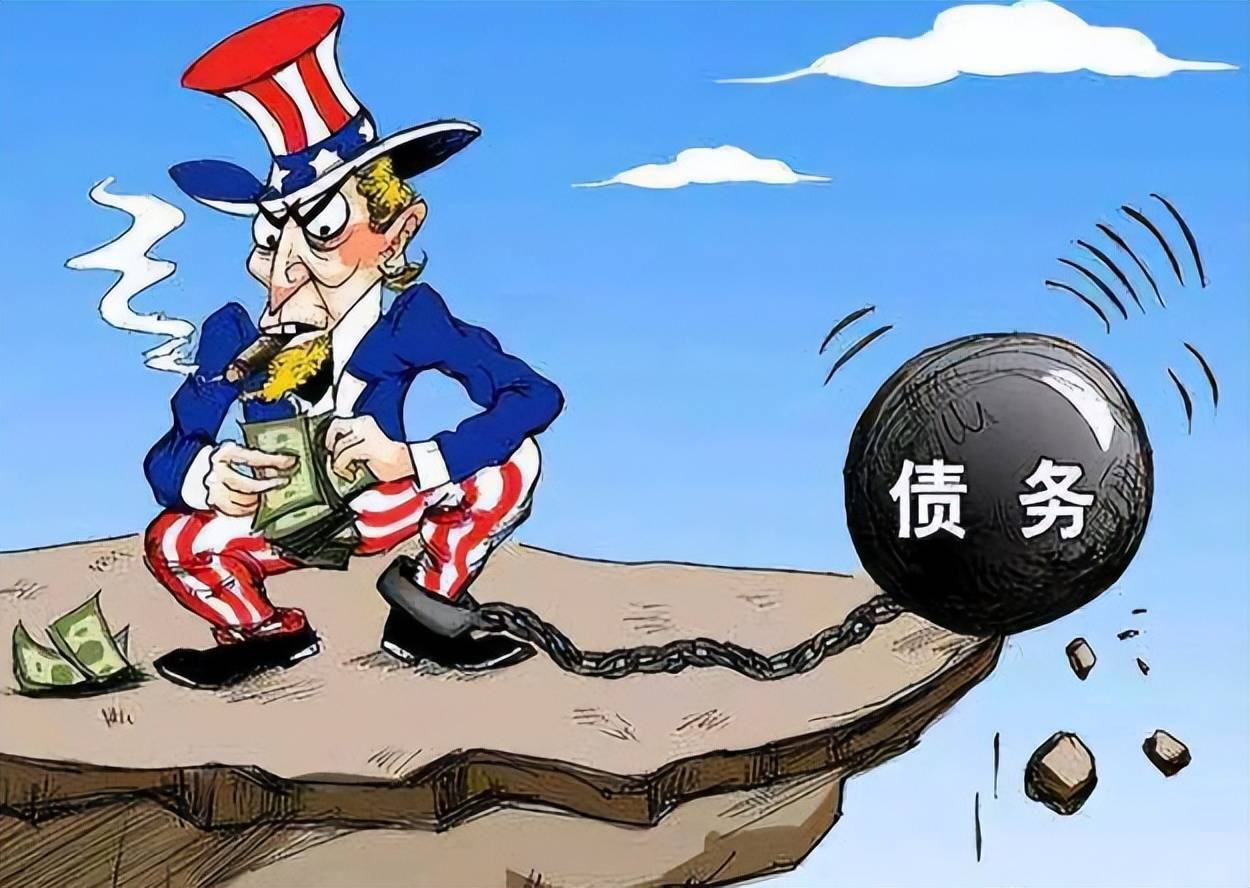
美国信用评级下降,900亿国债受影响,中国先见之明提早拿下一局
Sou Hu Cai Jing· 2025-07-19 10:39
Core Viewpoint - Fitch Ratings unexpectedly downgraded the U.S. credit rating from "AAA" to "AA", raising concerns in global financial markets about the stability of the U.S. economy and its long-term fiscal health [1][10]. Economic Factors - The downgrade is attributed to the rising fiscal deficit and national debt, which have exceeded the country's GDP, posing significant challenges to the stability and debt repayment capacity of the U.S. government [5][12]. - Political polarization and policy uncertainty have further complicated economic management, hindering coherent economic policies and potentially exacerbating fiscal deficits [6][10]. Global Economic Context - Global economic volatility, including trade tensions and geopolitical conflicts such as the Russia-Ukraine war, poses additional risks to the U.S. economy and fiscal situation [8][10]. Market Reactions - Following the downgrade, U.S. stock markets experienced significant declines, and there was a notable lack of interest in a recent issuance of over $90 billion in U.S. Treasury bonds, indicating waning investor confidence [12][14]. - Countries, particularly China, have begun to sell off U.S. Treasury bonds, which could increase borrowing costs for the U.S. government and signal a shift in global investment strategies [17][21].
中拉合作迈向新阶段,熊猫债引领金融合作新机遇
Zhong Cheng Xin Guo Ji· 2025-07-16 11:01
Report Summary 1. Report Industry Investment Rating No information provided. 2. Core Viewpoints - The China - Latin America and the Caribbean Community (CELAC) cooperation has entered a new stage, with deepening political mutual trust and expanding economic and trade cooperation. The issuance of panda bonds is an important direction for financial cooperation between the two sides, but attention should be paid to the sovereign credit risks in Latin America and the construction of a new sovereign credit rating system [1][2][6][10]. 3. Summary by Relevant Catalogs 3.1 China - Latin America Cooperation Enters a New Stage - On May 13, 2025, the Fourth Ministerial Meeting of the China - CELAC Forum was held in Beijing. On May 14, a seminar on China - Latin America panda bonds was held, with representatives from China and Brazil participating [1]. - Latin America is rich in resources and strategically important. In 2024, the bilateral trade volume between China and Latin America reached $500 billion. By the end of 2023, China's direct investment stock in Latin America was $600.8 billion. China has 5 free - trade partners in Latin America, and the free - trade dividends are constantly emerging [2]. - China's political relations with Latin American countries have been upgraded. China has proposed initiatives that are increasingly recognized by Latin American countries, and more than 20 countries have signed Belt and Road cooperation memorandums with China [4]. 3.2 Promising Prospect of China - Latin America Panda Bond Cooperation - In 2024, 44 entities issued 109 panda bonds with a total issuance scale of 194.8 billion yuan, a year - on - year increase of 26.1%. The proportion of overseas investors increased significantly to nearly 50% [6]. - In November 2024, the first panda bond issued by a Latin American entity was successfully issued, setting a benchmark for more Latin American issuers [6][7]. - Chinese rating agencies play an important role in bridging information asymmetry between overseas issuers and domestic investors. However, they need to innovate rating methods due to the limitations of local ratings and geopolitical changes [9]. 3.3 Attention to Sovereign Credit Risks in Latin America - Sovereign credit risk is an important factor affecting Latin American entities' issuance of panda bonds. The deepening of China - Latin America political mutual trust and cooperation helps improve the sovereign credit strength of Latin American economies in RMB terms [10]. - In 2025, Latin American economic growth is expected to slow from 2.4% in 2024 to 2.0%. Different countries face various challenges: Brazil has fiscal problems; Mexico is affected by the US economy; Argentina has high inflation and debt; Chile is at risk of relying on single - resource exports; and Colombia has fiscal and political uncertainties [11].
中诚信国际助力拉丁美洲及巴西首单熊猫债成功发行
Zhong Cheng Xin Guo Ji· 2025-07-16 09:26
Report Summary 1) Report Industry Investment Rating There is no information about the industry investment rating in the provided content. 2) Core Viewpoints - The successful issuance of the first panda bond in Latin America and Brazil by Suzano Group is a milestone in China - Brazil economic and trade exchanges, which is expected to attract more Brazilian entities to participate in the panda bond market [1][4]. - Zhongchengxin International rated Suzano Group's entities and the panda bond as AAA with a stable outlook, considering its strong business strength, profitability, and solvency, while also paying attention to some influencing factors [2]. - Zhongchengxin International upgraded Brazil's sovereign credit rating from BBg to BB+g in April 2024, and the Brazilian economy shows certain resilience and development potential in the medium - long term [3]. 3) Summary by Related Content A. Panda Bond Issuance - On November 15, 2024, "24 Suzano GN001BC" was successfully issued, raising RMB 1.2 billion with a coupon rate of 2.8%. It is the first panda bond issued in Latin America and Brazil [1]. B. Credit Rating of Suzano Group - Zhongchengxin International rated the issuer Suzano International Financial Co., Ltd. and the guarantor Suzano S.A. with a AAA credit rating and a stable outlook, and also rated the panda bond "24 Suzano GN001BC" as AAA [2]. - Suzano Group has a complete R & D system, integrated industry chain, high raw material self - sufficiency rate, low production cost, strong profitability, and good solvency [2]. C. Brazil's Economic Situation and Sovereign Credit Rating - In April 2024, Zhongchengxin International upgraded Brazil's sovereign credit rating from BBg to BB+g with a stable outlook [3]. - Brazil's economy showed strong resilience in 2023 and 2024, but may slow down in 2025. In the medium - long term, relevant plans and tax reforms are expected to promote economic transformation and upgrading [3]. D. China - Brazil Economic and Trade Relations - China is Brazil's largest trading partner, and bilateral trade exceeded $180 billion in 2023. China's cumulative investment in Brazil has exceeded $70 billion [4]. - The successful issuance of Suzano Group's panda bond deepens China - Brazil cooperation in the financial field and promotes the participation of Brazilian entities in the panda bond market [4]. E. Zhongchengxin International's Market Position and International Cooperation - Zhongchengxin International has an absolute advantage in the public - issuance market of panda bond ratings, with a long - term market share of over 50% and has underwritten multiple first - of - its - kind panda bonds [5]. - Zhongchengxin International actively participates in BRICS rating cooperation, serving as the Chinese contact chair of the credit rating group of the BRICS Business Council Financial Services Working Group since 2024 [6].