
核电

Search documents
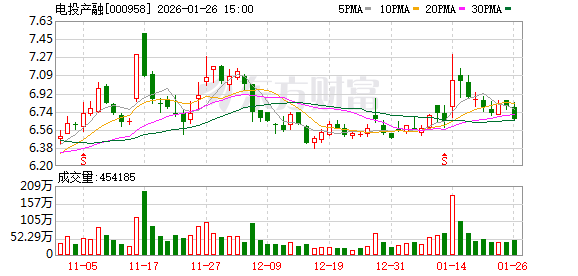
电投产融:公司将按流程积极推动莱阳一期核准相关工作
Zheng Quan Ri Bao· 2026-01-26 13:15
证券日报网讯 1月26日,电投产融在互动平台回答投资者提问时表示,生态环境部已于2025年11月批复 山东莱阳核电项目一期工程环境影响报告书(选址阶段),生态环境部官方网站已公开相关信息。莱阳 核电项目得到了项目所在地政府的大力支持,为推动项目核准相关工作提供了有力支持。下一阶段,公 司将按流程积极推动莱阳一期核准相关工作。 (文章来源:证券日报) ...


支持更多民营企业入场能源建设 释放什么信号?
Jing Ji Ri Bao· 2026-01-26 09:12
Group 1 - The energy sector in China is undergoing significant transformation, shifting from a reliance on coal and traditional energy sources to a diverse mix including renewables like wind, solar, and hydrogen, with increasing participation from private enterprises [1][2] - The Chinese government is actively encouraging private enterprises to engage in energy development, particularly in oil and gas exploration, nuclear power projects, and renewable energy, which presents substantial market opportunities [2][3] - The introduction of the Energy Law on January 1, 2025, aims to create a legal environment that supports private investment in energy infrastructure and development, promoting equal protection for various market participants [3] Group 2 - Private enterprises are becoming increasingly prominent in the energy sector, with approximately 60% of wind turbine manufacturers and a majority of solar equipment manufacturers being privately owned [3] - In the energy storage sector, nine out of the top ten companies by shipment volume in 2023 are private enterprises, and over 80% of large-scale charging service operators are also private [3] - The opening of the energy sector to more private companies is seen as a strategic move to enhance national competitiveness and foster a more dynamic market economy [4]
烟台今年入选省级重点项目152个,总投资首次突破万亿元大关
Qi Lu Wan Bao· 2026-01-26 08:21
Core Viewpoint - Yantai City has achieved significant progress in its economic and social development, with a focus on key projects that have led to a total investment exceeding 1 trillion yuan for the first time in 2025 [1][3]. Group 1: Key Project Development - Yantai City has selected 152 provincial key projects for 2025, with a total investment surpassing 1 trillion yuan, marking a historical milestone [1][3]. - The city has implemented a "list management and responsibility implementation" approach for key projects, resulting in advanced progress and improved quality in project construction [1]. - In 2025, all 139 provincial key construction projects are expected to commence and complete investments of 121.45 billion yuan, while 200 municipal key projects will also meet their investment targets of 103 billion yuan [1]. Group 2: Resource Allocation and Support - The city has adopted a strategy of "resources following projects," ensuring precise support for land, funding, and energy resources to facilitate the early implementation and production of key projects [2]. - In 2025, over 19,000 acres of land have been secured for key project construction, ensuring that land needs for major projects like the nuclear power plant and railway upgrades are met [2]. - The city has successfully secured over 50 billion yuan in various policy-based funding, setting a historical record for financial support [2]. Group 3: Future Investment Outlook - Yantai City has a robust project pipeline, with 300 municipal key projects totaling over 600 billion yuan and an annual planned investment exceeding 70 billion yuan [3]. - The presence of four projects with investments exceeding 1 billion yuan and 26 projects over 100 million yuan indicates a solid foundation for future investment growth [3]. - The project construction framework of "billion-level leadership, hundred-million support, and ten-million drive" is expected to provide strong momentum for Yantai's high-quality development in the next 3-5 years [3].
夯实基础 转变作风 坚定不移推动高质量发展
Xin Lang Cai Jing· 2026-01-26 00:25
夯实基础 转变作风 坚定不移推动高质量发展 ——访葫芦岛市委书记杨军生 本报记者 翟新群 "省委经济工作会议着眼振兴大局、锚定任务目标,纲举目张、精准发力。葫芦岛将坚决落实党中央决 策部署及省委工作要求,聚焦维护国家'五大安全'政治使命,夯实基础、全面发力,提振信心、迎难而 上,实现高质量发展和高水平安全良性互动,确保'十五五'开好局、起好步。"葫芦岛市委书记杨军生 接受采访时说。 杨军生表示,葫芦岛将坚定不移抓营商、优环境,落实全省优化营商环境大会精神,深化八方面问题专 项整治,强力推进政府履约践诺,招商讲诚信,说到做到。深化领导干部包联企业制度和"局长走流 程"活动,拓展"不见面审批""并联审批"、容缺办理、"立等可取"等清单,规范涉企执法,强化直查直 办,全力优化政策、市场、政务、法治、人文"五大环境"。坚定不移抓项目、扩投资,推动重点项 目"百日攻坚"行动取得实效,强化穿透式调度和全生命周期管理,加快徐大堡核电、中国原子能科学研 究院葫芦岛基地等重大项目建设,强化产业链招商,壮大"一通道六基地"及"千百亿"产业集群。坚定不 移抓消费、兴文旅,实施提振消费专项行动,抢抓政策机遇,供需协同发力,紧扣"北方 ...
中国核电20260122
2026-01-23 15:35
Summary of China Nuclear Power Conference Call Company Overview - **Company**: China Nuclear Power - **Industry**: Nuclear Energy and Renewable Energy Key Points 2025 Operational Performance - Planned electricity generation for 2025 was 1,954 billion kWh, but actual generation reached 2,444 billion kWh, a year-on-year increase of 12.98% [3] - Grid electricity volume was 2,307 billion kWh, up 13.15% year-on-year [3] - Nuclear power contributed 1,878 billion kWh, a 9.69% increase, while renewable energy contributed 490.29 billion kWh, a 31.34% increase [2][3] Future Generation Plans - For 2026, the planned total electricity generation is 2,592 billion kWh, with nuclear power at 2,100 billion kWh and renewable energy at 492 billion kWh [2][5] - The company plans to complete 15 nuclear unit overhauls in 2026, one less than in 2025 [5] Capacity and Construction - Total installed capacity is 46.887 million kW, with 27 operational units and 18 units under construction or awaiting startup [2][6] - By 2031, operational capacity is expected to increase by over 70% [2][6] Renewable Energy Strategy - The company is shifting its renewable energy strategy to focus on market-oriented operations, with internal return rates set at over 7% for self-built projects and 8% for acquisitions [2][8] - Emphasis is on offshore wind energy in Southeast China, with a halt on acquisition projects [2][8] Market Pricing and Policy Impact - Market-driven pricing policies in provinces like Zhejiang, Jiangsu, Fujian, and Hainan are exerting downward pressure on electricity prices [10][11] - The company is actively participating in industry associations to advocate for supportive policies [11] Tax Policy Changes - New VAT refund policies are expected to impact net profit by approximately 400 million yuan per unit over the operational lifespan of affected units [4][13] Industrial Gas Supply Business - The company is expanding its industrial gas supply business, with a total supply of 3.14 million tons in 2025 and plans for growth in 2026 [4][14] Dividend and Investment Plans - The company commits to a minimum annual dividend payout ratio of 30%, typically exceeding 35% [4][26] - Future investment spending is projected at 80 to 100 billion yuan annually, influenced by renewable project developments [26] Financial Performance and Accounts Receivable - In 2025, the renewable energy sector's national subsidy repayment was approximately 3 billion yuan, with accounts receivable around 15 billion yuan [27] Sales Expenses - Increased sales expenses are attributed to market demands and the establishment of multiple electricity sales companies [28] Aging Nuclear Units - Measures to enhance competitiveness of aging nuclear units include capacity expansion and lifespan extension, with no current retirement plans [28][29] Fourth Generation Nuclear Technology - Development of fourth-generation nuclear technology, including high-temperature gas-cooled reactors, is underway, with economic viability comparable to electricity generation [18] Collaboration with Alibaba - A partnership with Alibaba involves the investment in the Jinxingmen Phase II project, although the impact on the company is minimal [9] Conclusion - China Nuclear Power is positioned for growth in both nuclear and renewable energy sectors, with strategic adjustments to navigate market challenges and regulatory changes while maintaining a focus on profitability and operational efficiency.

未来能源:全球核电复兴下的4代核电的投资机会(附报告)
材料汇· 2026-01-23 15:18
Core Viewpoint - The article emphasizes the necessity of nuclear energy revival in the context of energy transition and the safety demands of the power system, highlighting that fourth-generation nuclear power is essential for achieving nuclear energy ambitions [5][29]. Group 1: Energy Transition and Safety - The core framework of energy reform focuses on the consumption of green electricity as the main line, while safety remains the bottom line. Central-local collaboration is a driving force, and the carbon market is a key variable [8]. - The investment direction should prioritize the safety of the power system, with nuclear power enhancing the robustness of the system under the backdrop of energy transition [15][16]. Group 2: Nuclear Energy Development - Global nuclear ambitions are continuously exceeding expectations, with the construction rate of nuclear power expected to increase significantly, projecting a total installed capacity of 1,428 GW by 2050 [19][22]. - The "Triple Nuclear Declaration" announced by 22 countries at COP28 aims for a nuclear power capacity of 1,200 GW by 2050, which is three times the capacity in 2020 [23][24]. Group 3: Technological Advancements in Nuclear Power - Fourth-generation nuclear power is crucial for achieving nuclear energy goals, offering inherent safety and sustainability advantages [29][37]. - The article discusses the potential of nuclear energy in various applications beyond base-load power, including hydrogen production and heat supply, which can significantly reduce carbon emissions [28][24]. Group 4: Current Nuclear Power Status - As of November 2025, the global operational nuclear power capacity stands at 382 GW, with the United States and China being the leading countries in terms of installed capacity [43][52]. - The average capacity factor for nuclear reactors globally is projected to be 83% in 2024, indicating stable performance across aging reactors [41].


中方签署ITER边缘局域模电源系统重大合同
Zheng Quan Shi Bao Wang· 2026-01-23 14:37
人民财讯1月23日电,核工业西南物理研究院(简称"西物院")1月23日发布消息,西物院联合体与国际热 核聚变实验堆(ITER)组织在法国总部签署边缘局域模电源系统(ELM-PS)现金合同,该合同涵盖27套电 源的设计、制造、测试、安装及调试全过程,标志着中方在ITER电源领域取得重要进展。据悉,该合 同由西物院牵头,联合荣信汇科电气股份有限公司、中国核工业二三建设有限公司、中国核电 (601985)工程有限公司、中国科学院等离子体物理研究所共同实施。 ...
新培育8个省级战略性新兴产业集群,山东省级以上集群总数达到50个、总规模超3.6万亿元
Qi Lu Wan Bao· 2026-01-23 10:49
Group 1 - The core mission of Shandong Province is to build a leading area for green, low-carbon, and high-quality development by 2025, as emphasized by the central government [1] - Shandong is focusing on industrial structure adjustment as a key driver for transformation, promoting intelligent, green, and integrated industrial upgrades [3] - The province aims to increase the proportion of advanced capacity in key industries to over 40% while fostering new pillar industries, particularly in artificial intelligence, high-end equipment, and new energy materials [3] Group 2 - Shandong is prioritizing the construction of a new energy system as a critical breakthrough for low-carbon transformation, promoting large-scale and diversified development of clean energy [4] - The total installed capacity of non-fossil energy has reached over 139 million kilowatts, which is 2.9 times that of 2020, accounting for 54.2% of the total power installed capacity, an increase of 23.4 percentage points [4] - By 2025, Shandong plans to add 23.993 million kilowatts of non-fossil energy generation capacity and achieve a power generation volume of 224.54 billion kilowatt-hours, with investments in key energy projects exceeding 215 billion yuan [4]
国投证券(香港)港股晨报-20260123
国投证券(香港)· 2026-01-23 07:06
港股晨报 2026 年 1 月 23 日 国投证券(香港)有限公司 • 研究部 1. 国投证券国际视点:科技股分化与消费韧性的博弈,金 价逻辑重构 昨日,港股三大指数涨跌互现,其中,恒生指数涨 0.17%,国企指数跌 0.09%, 恒生科技指数涨 0.28%。大市成交金额 2,348.60 亿元,主板总卖空金额 353.83 亿元,占可卖空股票总成交额比率为 17.01%。南向资金北水方面,港股通交易 净流入 139.30 亿港元。港股通 10 大成交活跃股中,北水净买入最多的是盈富 基金 2800.HK、恒生中国企业 2828.HK、阿里巴巴 9988.HK;净卖出最多的是中 国移动 941.HK、腾讯 700.HK、华虹半导体 1347.HK。 板块方面,建材水泥板块显著上扬,其中,中国建材 3323.HK 涨 6.83%,海螺 水泥 914.HK 涨 5.38%,华润建材科技 1313.HK 涨 4.97%,华新水泥 6655.HK 涨 4.18%。根据国家统计局数据,2025 年全国累计水泥产量 16.93 亿吨,同比下 降 6.9%,降幅与 1-11 月持平,较去年同期收窄 2.6 个百分点,产量为 ...
广发证券:绿电投资应关注政策驱动,核电及城燃关注需求改善
Sou Hu Cai Jing· 2026-01-22 23:39
Group 1 - The core viewpoint of the report emphasizes that green electricity is still experiencing a downward trend from installed capacity to revenue and profit, but the implementation of Document No. 136 is expected to enhance the stability of ROE in the green electricity sector [1] - The report suggests focusing on subsidies and environmental value as entry points for investment in green electricity, while downplaying the emphasis on performance [1] - For nuclear power, continuous approval of nuclear units is noted, with a greater focus on market-driven electricity price levels [1] Group 2 - The gas sector is currently in a state of margin recovery, with more attention on the growth of gas sales volume [1] - Both the nuclear power and gas sectors exhibit stronger cyclical attributes [1]
