
葡萄酒

Search documents
向青年学子释放家乡“青引力”
Zhong Guo Qing Nian Bao· 2025-12-04 23:54
Group 1 - The core initiative "Youth Power" aims to connect university students with local industries in Yinchuan, promoting employment opportunities and understanding of the local economic landscape [1][2] - The program has organized 13 sessions of "Yinchuan Youth Journey," involving over 500 students visiting key industries such as wine, goji berries, dairy, artificial intelligence, and computing power [2][3] - Students are gaining firsthand experience and insights into local industries, enhancing their employability by understanding recruitment channels, salary structures, and workplace incentives [3] Group 2 - The "Return to Hometown" social practice activities have successfully created over 2,300 internship positions, with significant participation from students, enhancing their practical skills and career clarity [4][5] - The establishment of "Youth Power" university liaison stations across 26 cities has facilitated information sharing about job opportunities and local policies for Ningxia students studying outside the region [7][8] - The initiative has fostered a sense of belonging among students, encouraging them to consider returning to Yinchuan for employment and contributing to local development [6][8]
2025年10月中国葡萄酒进口数量和进口金额分别为0.12亿升和1.03亿美元
Chan Ye Xin Xi Wang· 2025-12-04 03:12
Core Insights - The report by Zhiyan Consulting highlights a significant decline in China's wine imports, with a volume of 0.12 billion liters in October 2025, representing a year-on-year decrease of 37.6% [1] - The import value for the same period was $1.03 billion, showing a year-on-year decline of 13.3% [1] Industry Overview - Zhiyan Consulting is recognized as a leading industry consulting firm in China, specializing in in-depth industry research and providing comprehensive consulting services, including feasibility studies and customized reports [1] - The firm has over a decade of experience in the industry research field, emphasizing quality service and market insight [1]


ST通葡:12月3日召开董事会会议
Mei Ri Jing Ji Xin Wen· 2025-12-03 12:04
Group 1 - ST Tongpu announced that its ninth board meeting was held on December 3, 2025, via telecommunication [1] - The meeting reviewed the proposal for the third extraordinary shareholders' meeting of 2025 [1] Group 2 - There are concerns regarding market manipulation and platform review loopholes related to the stock surge of Xiangyang Bearing [1] - The incident highlights potential issues in market oversight and investor behavior [1]

ST通葡五连板背后的秘密:老牌酒企如何被“前任”拖累?
Xin Lang Cai Jing· 2025-12-02 11:41
Core Viewpoint - ST Tongpu, a company with nearly 90 years of winemaking history, has recently experienced a five-day stock surge, reaching a one-year high, despite its ongoing ST status due to historical issues related to illegal guarantees [1][19]. Group 1: Historical Development - Tonghua Wine Co., Ltd. is a well-established brand in China's wine industry, with nearly 90 years of winemaking experience. The company underwent restructuring in 1999 and was officially listed on January 15, 2001. It has experienced multiple changes in shareholding, notably when Xinhua Group became the largest shareholder in 2004 [2][20]. Group 2: Main Business - ST Tongpu's main business is divided into two segments: wine manufacturing and sales, and e-commerce for consumer goods. The wine segment focuses on various types of wines, including dry, ice, sweet, and grape spirits, using unique mountain grapes from Changbai Mountain. The e-commerce segment operates through its subsidiary, Jiurun Yuan, and has obtained internet distribution rights from several brand owners, collaborating with platforms like JD.com, Tmall, and Pinduoduo. The company has recently decided to gradually stop selling white wine online and will focus on wine and non-white wine consumer goods in the future [3][21]. Group 3: Financial Performance (2022-2024) - ST Tongpu's financial data has shown volatility in recent years. Key indicators include: - Basic earnings per share: -0.13 yuan in 2022, -0.17 yuan in 2023, and -0.12 yuan in 2024 [5][23]. - Net asset per share: 0.78 yuan in 2022, 0.72 yuan in 2023, and 0.67 yuan in 2024 [6][24]. - Sales gross margin: 19.49% in 2022, 17.99% in 2023, and 14.54% in 2024 [7][25]. - In 2024, the company reported revenue of 869 million yuan, a year-on-year increase of 1.22%, but a net loss attributable to shareholders of 49.88 million yuan, indicating continued losses [8][26]. - As of the first half of 2025, the company's debt-to-asset ratio reached 66.8%, indicating significant financial pressure [9][27]. Group 4: Reasons for ST Status - The direct reason for ST status is historical issues related to illegal guarantees. In August 2020, the company discovered that the former actual controller had illegally used the company's seal to guarantee a loan agreement for Dalian Dinghua International Trade Co., Ltd. The arbitration involved an amount as high as 306.3 million yuan, and although the arbitration court deemed the guarantee invalid, the company was ordered to bear compensation liability of approximately 61.26 million yuan [10][28]. Additionally, the internal control audit report for 2020 received a negative opinion, contributing to the ongoing ST status [11][29]. Group 5: Current Problem Resolution Status - As of the third quarter of 2025, the core issues leading to ST status remain unresolved, and the conditions for removal have not been met. The company has filed a lawsuit against the former actual controller for losses related to the illegal guarantee but lost the first instance in July 2025 and has appealed, with the case currently in the second instance [12][30]. The company has recognized estimated liabilities for the arbitration matter and is disclosing progress monthly, indicating a commitment to using legal means to protect its rights and mitigate risks [12][31]. Group 6: Potential Speculative Themes - Despite the pressure on fundamentals, the market may focus on the following themes: 1. Business focus: The decision to stop the e-commerce white wine business and return to the core wine business is seen as a signal of strategic clarity [13][32]. 2. Equity incentives: A restricted stock incentive plan is set to be launched in 2025, proposing to grant approximately 6.26% of shares to 45 core employees, which may be interpreted as management's confidence in the future [13][32]. 3. Historical heritage: The company has nearly 90 years of winemaking history and a unique underground wine cellar, providing a foundation for brand storytelling [14][33]. 4. Active stock price: In September 2025, the stock experienced a "five consecutive boards" phenomenon, with a monthly increase of over 40%, likely attracting short-term capital attention [15][34].
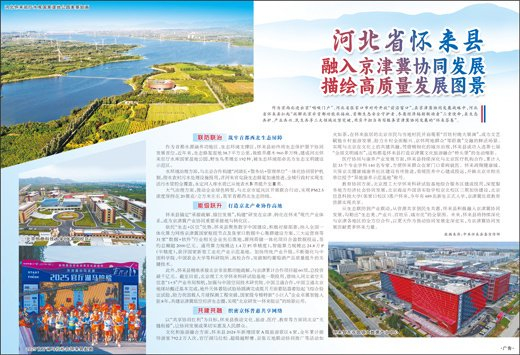
河北省怀来县 融入京津冀协同发展 描绘高质量发展图景
Ren Min Wang· 2025-12-02 01:41
Core Viewpoint - Huailai County plays a crucial role in the coordinated development strategy of Beijing-Tianjin-Hebei, focusing on ecological protection, industrial collaboration, and improving people's livelihoods [2][3][4][5][6] Ecological Protection - Huailai County prioritizes ecological protection, having restored 38.7 square kilometers of wetlands and planted over 9.6 million trees, while also establishing the Hebei Huailai Guanting Reservoir National Wetland Park [3] - The county has implemented a collaborative water management mechanism with Beijing, achieving full coverage of rural sewage treatment and improving the water quality of the Yongding River from Class IV to Class III [3] - Air quality initiatives have maintained PM2.5 concentrations around 20 micrograms per cubic meter, reinforcing the ecological defense for the northwest of the capital [3] Industrial Development - Huailai County aims to become a key area for industrial collaboration, focusing on "research in Beijing-Tianjin and transformation in Huailai," with over 60 cooperative projects with Beijing totaling over 100 billion yuan [4] - The county has attracted 31 data and software-related enterprises, with a total signed investment exceeding 200 billion yuan, and has been recognized as a national demonstration base for new industrialization [4] - The establishment of the Beijing Institute of Technology Huailai Research and Experiment Base marks a significant step in enhancing local research capabilities [4] Cultural and Tourism Integration - In 2024, Huailai County plans to add six new national A-level tourist attractions, with a total of 7.922 million visitors expected, showcasing successful cultural and tourism integration with Beijing [5] - Events like the Guanting Lake Marathon and collaborative cultural activities have fostered community engagement between residents of Beijing and Huailai [5] Healthcare and Education Collaboration - Huailai County has deepened cooperation with Beijing's medical institutions, with 33 specialized disciplines and 140 experts now available locally, enhancing healthcare access for residents [5][6] - The establishment of educational facilities, including the Beijing Institute of Technology Huailai Research and Experiment Base, has facilitated the sharing of quality educational resources, with 489 new students enrolled this year [6] Future Outlook - Huailai County is committed to furthering its collaboration with Beijing and Tianjin, aiming to enhance ecological beauty, industrial prosperity, and overall quality of life for its residents [6]
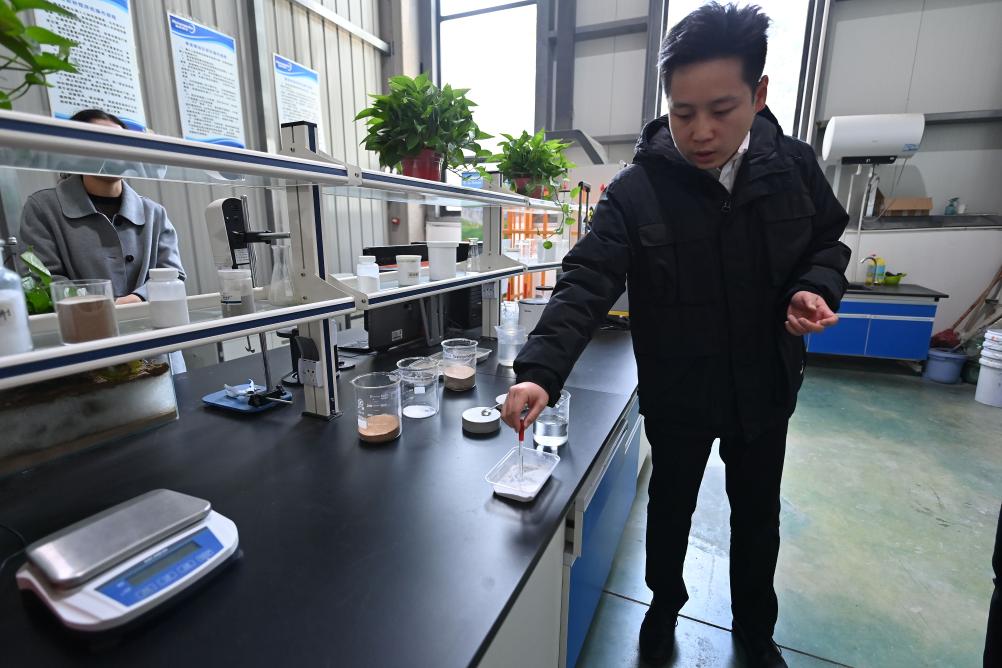
决胜“十四五” 打好收官战丨体制机制破题,陕西加速科技成果从“书架”到“货架”
Xin Hua She· 2025-12-01 09:05
Core Insights - The article highlights the acceleration of technology transfer in Shaanxi Province, focusing on the successful case of Meinan Biotechnology Co., Ltd., which has effectively transformed scientific achievements into marketable products [1][4]. Group 1: Company Development - Meinan Biotechnology achieved production within three months of entering the industrial park, with projected sales of 130 million yuan in 2024, indicating rapid growth and market acceptance [3]. - The company specializes in water-retaining materials that can convert 1 gram of powder into a gel capable of retaining approximately 1 kilogram of water, addressing agricultural needs in arid conditions [1][3]. Group 2: Government Support and Policy - The local government provided essential support during critical development phases, facilitating access to integrated factory spaces and comprehensive scientific innovation services [3][4]. - Shaanxi Province has implemented reforms to address challenges in technology transfer, including the establishment of a policy framework that promotes the management of scientific achievements and encourages innovation [4][6]. Group 3: Talent and Collaboration - The introduction of the "Technology Vice President" role in Shaanxi has allowed scientific talents to engage deeply in corporate management and decision-making, fostering collaboration between academia and industry [5][6]. - Over 1,200 scientific talents have been appointed as "Technology Vice Presidents" or advisors, enhancing the alignment of research with market needs [6][7]. Group 4: Future Outlook - The provincial government aims to continue building an innovation mechanism that integrates industry, academia, and research, positioning technology as a key driver of new productive forces in the upcoming "15th Five-Year Plan" [7].
食品饮料行业周报:茅台反馈定海神针,关注年底子板块行情-20251201
Huaxin Securities· 2025-12-01 06:35
Investment Rating - The report maintains a "Recommended" investment rating for the food and beverage & commercial sectors [6][52]. Core Insights - The liquor sector shows clear signs of bottoming out, with Kweichow Moutai's shareholder meeting reinforcing market confidence and presenting a good opportunity for low valuation positioning [51]. - The consumer goods sector is experiencing structural differentiation, with the snack food segment remaining strong while soft drinks enter the off-season [52]. - The restaurant supply chain industry is at a clearing point, with key stocks leading the recovery [52]. Summary by Sections 1. Weekly News Summary - Industry news includes a 2.6% increase in liquor production in Luliang from January to October and a 9.6% increase in the added value of the liquor and tea industry in Bozhou during the same period [14]. - Company news highlights Kweichow Moutai's focus on five key areas and the appointment of new leadership at various liquor companies [14]. 2. Key Company Feedback - The report provides insights into the performance of key companies, with a focus on their stock price movements and market strategies [25][26]. 3. Industry Rating and Investment Strategy - The liquor sector is advised for long-term investment in high-dividend leaders such as Kweichow Moutai, Wuliangye, and Luzhou Laojiao, while also considering flexible stocks that have corrected to appropriate levels [51][52]. - The consumer goods sector is recommended for companies like Anjuke Food and Baidu Food, which are adapting to market changes and consumer preferences [52]. 4. Key Companies and Earnings Forecast - The report lists several companies with their respective earnings per share (EPS) and price-to-earnings (PE) ratios, recommending a "Buy" rating for all listed companies [54].

Market Open: ASX outage hurts 80 companies as bourse struggles in arvo trade
The Market Online· 2025-12-01 03:39
Core Points - The ASX experienced a significant outage affecting around eighty companies, including Metcash and Ovanti Limited, disrupting their planned newsflow [2][3] - The ASX's performance was negatively impacted, with the XJO index down 0.4% during trading [3] - Energy and materials sectors showed slight gains, while healthcare lagged, particularly CSL Ltd and Sigma Healthcare [4] - Unico Silver and other silver miners saw price increases due to rising silver and gold prices, indicating potential bullish trends [4] - Woodside Energy's shares rose over 1.2% due to stronger oil prices, while BHP Group increased nearly 1% amid iron ore futures uptick [5] - Treasury Wine Estates faced a decline after announcing an impairment in its US business, compounded by weak sales in China [5] - AUB Group's shares plummeted nearly 20% after a key takeover partner withdrew, causing discontent among shareholders [6] - Digico Infrastructure REIT and HMC Capital also fell as interest in data center stocks waned following previous spending boom reports [6]


延期半年后0增持!威龙股份控股股东为何“爽约”?
Sou Hu Cai Jing· 2025-11-30 03:11
Core Viewpoint - The planned share buyback by Xinghe Xirang for Weilong Co., Ltd. has not been executed as of the latest report, raising concerns about the company's stock performance and shareholder confidence [2][3]. Group 1: Share Buyback Plan - Xinghe Xirang initially planned to increase its stake in Weilong Co., Ltd. by investing between 10 million to 20 million yuan starting from November 30, 2024, for a period of six months [2]. - As of the latest report, Xinghe Xirang has not purchased any shares, with a total investment of 0 yuan, and the buyback plan remains unfulfilled [3]. Group 2: Shareholder Status - Xinghe Xirang holds 62.571 million shares of Weilong Co., Ltd., representing an 18.84% ownership stake, making it the largest shareholder [5]. - A significant portion of Xinghe Xirang's shares (50.156 million shares, or 80.16% of its holdings) is currently frozen due to legal issues related to a court case involving the company's former executive [5][6]. Group 3: Legal and Financial Issues - Xinghe Xirang is involved in a legal dispute with Shandong Aite Yunxiang Information Technology Co., Ltd. over a loan of approximately 25.198 million yuan, which has led to the freezing of 395,000 shares [6].

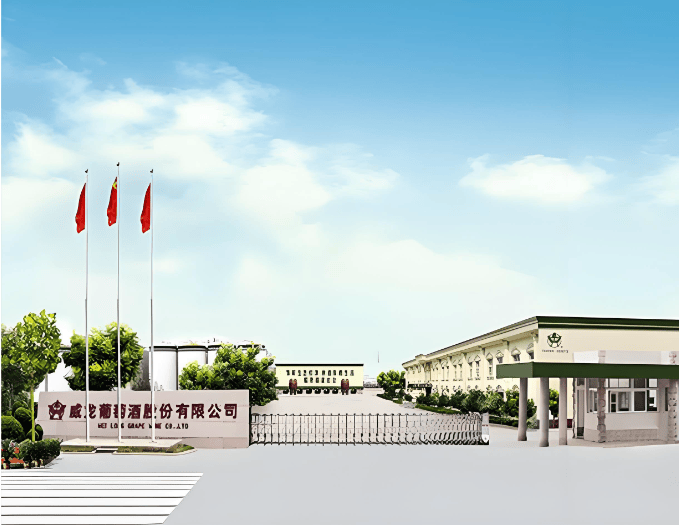
威龙葡萄酒股份有限公司 关于控股股东增持股份计划到期暨增持结果的公告
Zhong Guo Zheng Quan Bao - Zhong Zheng Wang· 2025-11-29 00:10
Core Viewpoint - The controlling shareholder of the company, Xinghe Xirang (Zhejiang) Digital Technology Co., Ltd., has not completed its planned share buyback due to various factors, including judicial freezing of shares and funding difficulties [2][3]. Summary by Sections Share Buyback Plan - The controlling shareholder plans to increase its stake in the company by investing between RMB 10 million and RMB 20 million starting from November 30, 2024, for a period of six months [1]. - The buyback plan was extended for another six months until November 30, 2025, due to changes in the company's stock price and other factors, while the other terms remained unchanged [1]. Implementation Results - As of the report date, the controlling shareholder has not purchased any shares, with a total investment of RMB 0, indicating that the buyback plan has not been executed [2]. - The failure to complete the buyback plan is attributed to the judicial freezing of shares held by the controlling shareholder and difficulties in raising funds [2]. Other Notes - The incomplete buyback plan does not trigger a mandatory tender offer and does not affect the company's listing status or the control of the company [3]. - The failure to complete the buyback plan is unrelated to the company's operational performance and will not have a significant adverse impact on short-term operations [3].