
智能眼镜

Search documents
上半年全球智能眼镜发货量增长110%,Meta占据超70%份额
Hua Er Jie Jian Wen· 2025-08-17 03:58
Core Insights - The global smart glasses market is experiencing explosive growth driven by strong demand for AI-enabled features, with Meta holding a dominant position through its collaboration with Ray-Ban [1][2] - Counterpoint's data indicates a year-on-year shipment increase of 110% for smart glasses in the first half of 2025, with Meta's market share rising to 73% [1][2] - The integration of AI functionalities has become mainstream, with AI-enabled glasses' shipment share increasing from 46% to 78% year-on-year [1] Group 1: Meta's Dominance - Meta's Ray-Ban AI glasses saw a shipment increase of over 200% in the first half of 2025, maintaining its industry leadership despite new entrants [2] - The partnership with Luxottica has been crucial for Meta, enhancing production capacity and leveraging a vast retail network for sales [2] - Meta has expanded its product line with the launch of Oakley Meta glasses, which have received positive market feedback [2] Group 2: New Entrants and Market Dynamics - New players like Xiaomi have emerged, with its AI glasses ranking fourth globally and third in the AI glasses category despite only a week of sales in the first half of 2025 [3] - The market is expected to continue growing, with major companies like Meta and Alibaba planning to release new products in the second half of the year [3] - Qualcomm's introduction of the upgraded AR 1+ Gen 1 chip is expected to enhance the development of thinner and longer-lasting glasses [3] Group 3: Future Trends and Innovations - Companies are exploring payment solutions based on smart glasses to reduce reliance on smartphones in shopping scenarios [3] - Apple is also actively developing its first AI glasses, indicating a competitive landscape [3] - The ongoing expansion of the smart glasses market is expected to benefit the entire ecosystem, including hardware manufacturers and chip suppliers [3]

第一批买AI眼镜的人,又被“渣”了
创业邦· 2025-08-15 10:07
Core Viewpoint - The article discusses the rapid rise and subsequent decline of AI glasses in the market, highlighting consumer disappointment with product performance and functionality [6][15][34]. Group 1: Market Performance - Xiaomi AI glasses sold nearly 50,000 units within three days of launch, indicating a strong initial demand [15]. - The overall market for smart glasses in China is projected to reach 2.907 million units in 2023, with multiple brands entering the competition [15]. - Despite initial sales success, a significant return wave has emerged as users report unsatisfactory experiences [7][8]. Group 2: Consumer Experience - Users have reported various issues, including connectivity problems, poor audio-visual synchronization, and inadequate translation capabilities [10][11][12]. - The weight and design of the glasses have also been criticized, with some users feeling discomfort after short periods of use [15][16]. - A notable user experience highlighted that the glasses failed to recognize simple objects, leading to frustration and eventual returns [12][16]. Group 3: Industry Trends - The AI glasses market has seen a surge in new products, with over ten new models launched in the first half of the year, including offerings from major tech companies like Huawei and Alibaba [14][15]. - The article notes a historical context, referencing the failure of Google Glass and other smart glasses due to similar issues of functionality and consumer acceptance [19][21][22]. - The current market is characterized by a high return rate of 40-50%, significantly exceeding traditional consumer electronics [33]. Group 4: Competitive Landscape - The competitive landscape is intensifying, with numerous companies, including startups and established tech giants, vying for market share in the AI glasses segment [23][33]. - Companies like Flash Technology have attempted to undercut competitors with lower pricing, but have also faced backlash over product quality [23][28]. - The article suggests that despite the influx of new entrants, the market's growth potential is hindered by technological limitations and a lack of compelling use cases for consumers [33].


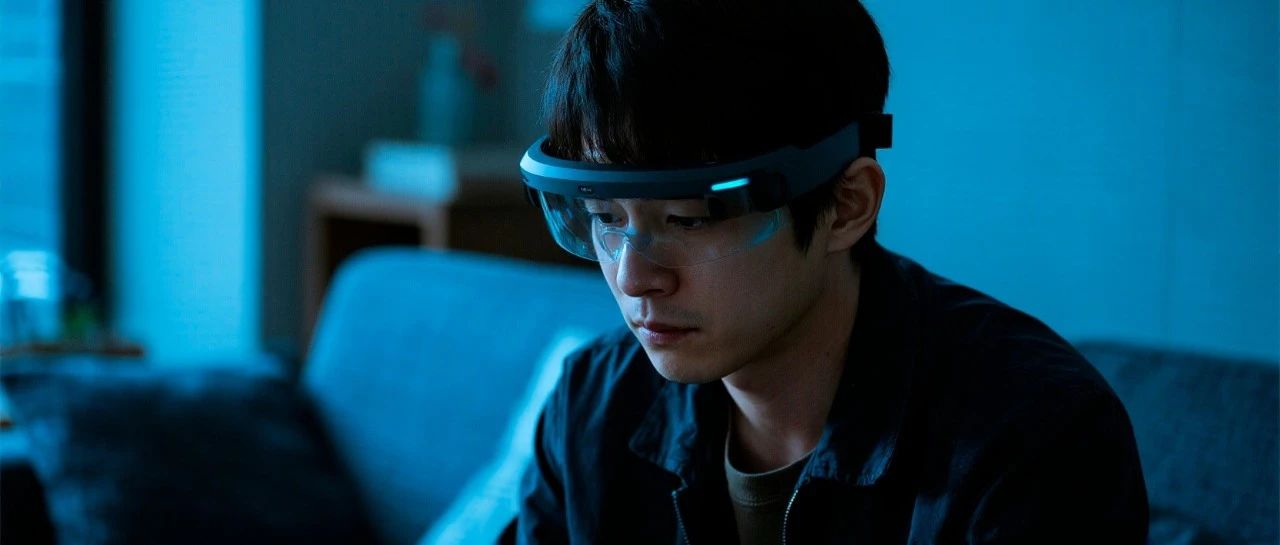
第一批买AI眼镜的人,已退货
投资界· 2025-08-15 07:05
Core Viewpoint - The rapid rise and fall of AI glasses in the market highlights significant consumer dissatisfaction with product performance and functionality, leading to a high return rate and questioning the viability of the product category [2][7][17]. Group 1: Market Dynamics - Xiaomi's AI glasses sold nearly 50,000 units within three days of launch, indicating a strong initial demand [2][7]. - The Chinese smart glasses market is projected to reach 2.907 million units in 2023, driven by multiple new entrants including major tech companies like Huawei and Alibaba [7][12]. - Despite the initial sales success, the market is experiencing a wave of returns due to poor user experiences, with return rates estimated between 40% to 50% [17]. Group 2: Consumer Experience - Users reported significant issues with the AI glasses, including connectivity problems, subpar audio and video quality, and uncomfortable weight, leading to a quick decision to return the products [4][8][19]. - Specific complaints included delayed translation features, poor image quality, and awkward design, which did not meet consumer expectations [5][8][9]. - The experience of users like Li Cheng, who faced multiple functional shortcomings, reflects a broader trend of consumer disappointment with AI glasses [4][19]. Group 3: Historical Context - The history of smart glasses dates back to Google's Glass in 2012, which ultimately failed due to high costs and privacy concerns, setting a precedent for future products in the category [11][12]. - The recent resurgence in interest, particularly with Meta's collaboration with Ray-Ban, has reignited competition among tech companies, but many products still struggle with fundamental issues [12][13]. Group 4: Competitive Landscape - The entry of various companies into the AI glasses market has led to a competitive environment, with brands like Rokid and Flash Technology launching their products at lower price points [13][14]. - Despite aggressive pricing strategies, many new entrants face similar pitfalls as established brands, leading to negative consumer feedback and product returns [13][14][16]. - The market is characterized by a rush of innovation but also a lack of maturity in product development, resulting in a disconnect between consumer expectations and actual product performance [17].

胖东来公布对刑释人员的面试题;寒武纪紧急辟谣;大疆辟谣销售部门大调整;尚界渠道招商火爆:豪车4S店转投;中国新增K字签证丨邦早报
创业邦· 2025-08-15 00:08
Group 1 - The core viewpoint of the article is that recent rumors regarding the company, including large orders and revenue forecasts, are false and misleading [3][4] - The company's stock price experienced a cumulative increase of 30% over three consecutive trading days (August 12, 13, and 14, 2025), which is classified as abnormal trading behavior [4][5] - The company confirmed that there are no undisclosed significant matters affecting its operations, and it is currently operating normally [4][6] Group 2 - Alibaba's Taotian Group has been restructured and renamed as the China E-commerce Group - Taotian Group, aligning it with Ele.me and Fliggy [7] - Alibaba has initiated a large-scale recruitment drive for nearly 1,000 AI talents, focusing on advanced technologies such as large language models and AI hardware [7] - The company is actively expanding its workforce to enhance its capabilities in cutting-edge technology areas [7] Group 3 - Geely Automobile reported a record revenue of 150.3 billion RMB for the first half of 2025, marking a 27% year-on-year increase [21][22] - The core net profit attributable to shareholders reached 6.66 billion RMB, reflecting a 102% increase compared to the previous year [21][24] - The company has raised its annual sales target to 3 million vehicles based on strong sales performance in the first half of the year [21][24] Group 4 - NetEase reported a Q2 revenue of 27.9 billion RMB, with a net profit of 9.5 billion RMB, indicating a stable growth trajectory [24][25] - The company has maintained a strong focus on high-quality and diversified product offerings, driving long-term performance [24][25] Group 5 - The global smart glasses market saw a 110% year-on-year increase in shipments in the first half of 2025, with Meta holding over 70% market share [34] - The AI smart glasses segment experienced a significant growth rate of over 250% compared to the previous year [34]



雷鸟创新与蚂蚁集团战略合作:雷鸟X3 Pro持续引领AI眼镜成为「实用工具」
IPO早知道· 2025-08-14 11:44
Core Viewpoint - The collaboration between Thunderbird Innovation and Ant Group marks a significant advancement in integrating AI and AR technology into mobile payment solutions, transitioning from concept products to practical service terminals [2][10]. Group 1: Strategic Collaboration - Thunderbird Innovation and Ant Group announced a strategic partnership on August 14 to develop global digital payment solutions, enhancing the application of AI and AR glasses in local services and cross-border consumption [2]. - The partnership signifies a breakthrough in mobile payment scenarios, indicating a shift from conceptual products to full-service terminals [2][10]. Group 2: Product Features - The Thunderbird X3 Pro is the world's first AI glasses that support "Alipay Tap to Pay," allowing users to complete payment processes hands-free by simply looking at the Alipay blue ring or QR code [5]. - The X3 Pro, launched in May, is the smallest mass-produced full-color MicroLED waveguide glasses, equipped with features like Live AI, real-time translation, AR navigation, and local service capabilities [6]. - The "Look to Pay" feature enhances user experience in high-frequency scenarios such as shopping and dining, enabling seamless interaction without needing to use a smartphone [6][7]. Group 3: Market Impact - The introduction of payment functionality in the X3 Pro completes the loop from "lifestyle services to mobile payments," transforming it into a practical tool for users [7]. - Thunderbird Innovation plans to extend this payment capability to future products like the V3 and V3 Slim, aiming to broaden its user base and accelerate market penetration of AI and AR glasses [9]. - The AI glasses industry is at a pivotal point, transitioning from technology validation to large-scale implementation, with payment integration reshaping the value chain of AI and AR glasses [9][12]. Group 4: Future Prospects - The strategic partnership aims to explore deeper applications of AI and AR glasses in daily life, including services like QR code pickups, bike rentals, and utility payments, ultimately creating a comprehensive service ecosystem [10]. - According to IDC, China's smart glasses shipment is expected to reach 2.75 million units by 2025, with a projected growth of 107%, and Thunderbird Innovation has maintained the top position in AR/AI glasses sales for three consecutive years [12].
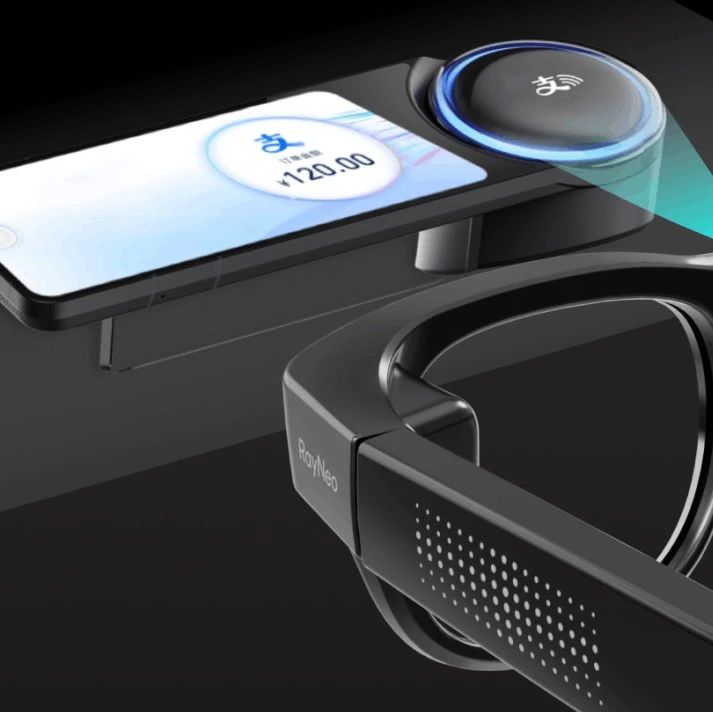
雷鸟创新与蚂蚁集团战略合作 发布全球首个全彩眼镜支付
Zheng Quan Shi Bao Wang· 2025-08-14 07:28
Core Viewpoint - The strategic partnership between Thunderbird Innovation and Ant Group aims to create innovative digital payment solutions for global markets, integrating AI and AR technologies into everyday life and cross-border consumption scenarios [1][2]. Company Summary - Thunderbird Innovation has launched the Thunderbird X3 Pro, the world's first AI glasses that support "Alipay Tap to Pay," allowing users to complete payment processes hands-free by simply looking at the Alipay blue ring or QR code [1]. - The Thunderbird X3 Pro is described as the smallest mass-producible full-color Micro LED waveguide glasses, featuring various functionalities such as Live AI, real-time translation, AR navigation, and local life services [1]. - The company plans to expand the payment capabilities to its other products, including Thunderbird V3 and V3 Slim, to reach a broader user base and accelerate market penetration of AI and AR glasses [2]. Industry Summary - The AI glasses industry is at a critical turning point, transitioning from technology validation to large-scale implementation, with payment integration expected to reshape the value chain of AI and AR glasses [3]. - According to IDC data, China's smart glasses shipment is projected to reach 2.75 million units by 2025, representing a year-on-year growth of 107% [3]. - Thunderbird Innovation has maintained its position as the market leader in AR/AI glasses in China for three consecutive years, achieving a 50% market share on major online platforms in Q1 2025 [3].
8.14犀牛财经早报:沪指突破拉动公募赚钱效应 权益类基金加大分红力度
Xi Niu Cai Jing· 2025-08-14 01:36
Group 1 - The issuance of floating rate funds is accelerating, with the second batch showing a faster-than-expected pace, as evidenced by the early closure of fundraising for the China Europe Core Smart Selection Mixed Fund and the E Fund Value Return Mixed Fund, both exceeding 2 billion yuan in scale [1][1] - The total amount of fund dividends reached 141.5 billion yuan as of August 13, a nearly 40% increase compared to the same period last year, with equity funds seeing a significant rise in dividends, amounting to 34.884 billion yuan, over three times that of the same period in 2024 [1][1] Group 2 - The Shanghai Composite Index broke through a previous high, reaching 3674.4 points, leading to a significant increase in public fund performance and a positive cycle of "market trend—profit effect—capital inflow" [2][2] - A total of 23 companies have been delisted this year, with various reasons including financial issues and major violations, indicating a more streamlined delisting process in the A-share market [2][2] Group 3 - The global smart glasses market saw a 110% year-on-year increase in shipments in the first half of 2025, driven by strong demand for Ray-Ban Meta smart glasses and the entry of new brands [3][3] - AI smart glasses accounted for 78% of total shipments, with the AI segment growing over 250% year-on-year, significantly outpacing the overall market [3][3] Group 4 - The energy storage industry is experiencing a recovery, with many companies reporting improved performance due to increased demand for energy storage cells and accelerated project implementation [4][4] - Experts believe that while the new energy storage installation growth trend will continue, challenges such as profit models and market participation need to be addressed for further development [4][4] Group 5 - Several domestic car companies have committed to paying suppliers within 60 days, with some companies actively implementing this promise, which is expected to alleviate cash flow pressures and enhance supply chain stability [5][5] - QFII's holdings in the automotive sector exceeded 1.3 billion yuan by mid-2025, indicating strong interest in this industry [5][5] Group 6 - The World Robot Conference showcased innovations in brain-controlled robots, highlighting their potential for complex tasks in real-world applications [6][6] - A significant advancement in phonon interference effects was reported, which could lead to new applications in molecular sensing and quantum computing [6][6] Group 7 - Manycore Tech Inc.'s IPO application has expired after six months, while another commercial aerospace company, Zhongke Aerospace Technology Co., has initiated its IPO process [7][7] - Ganhua Technology plans to acquire a 65% stake in Ganxin Technology for 388 million yuan, aiming to enter the optical imaging system sector [8][8] Group 8 - The US stock market saw all three major indices rise, with the Dow Jones increasing by 1.04%, and the Nasdaq and S&P 500 reaching new closing highs [9][9] - The performance of small-cap stocks outpaced large-cap stocks, with significant movements in cryptocurrency markets, including Bitcoin reaching a historical high [10][10]
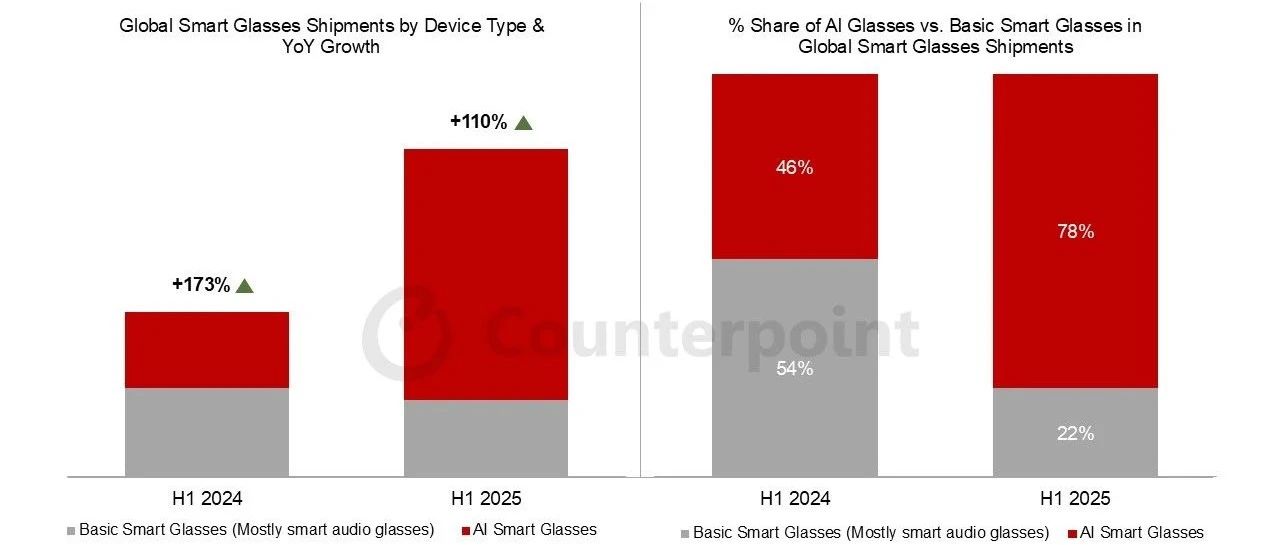
2025年上半年全球智能眼镜出货量同比激增110%,其中Meta占据了70%以上的市场份额
Counterpoint Research· 2025-08-14 01:03
Core Insights - The global smart glasses market experienced a significant year-on-year growth of 110% in the first half of 2025, driven by strong demand for Ray-Ban Meta smart glasses and the entry of new brands like Xiaomi and RayNeo [4][8][12]. - AI smart glasses accounted for 78% of total shipments in the first half of 2025, up from 46% in the first half of 2024, with a year-on-year growth rate exceeding 250% in the AI glasses segment [4][8]. Market Performance - The global smart glasses market saw a 110% increase in shipments in the first half of 2025, largely due to the strong demand for Ray-Ban Meta smart glasses and the introduction of new players like Xiaomi and RayNeo [4][8]. - Meta's market share in the global smart glasses market rose to 73% in the first half of 2025, attributed to robust demand and production capacity expansion by its key manufacturing partner, Luxottica [8][12]. Competitive Landscape - Ray-Ban Meta AI glasses saw a year-on-year shipment increase of over 200%, reflecting strong market demand and Luxottica's enhanced production capabilities [8][12]. - Other active AI smart glasses manufacturers in the first half of 2025 included Xiaomi, RayNeo, Kopin Solos, and Thunderobot, with Xiaomi's AI glasses becoming the fourth best-selling model globally despite being on the market for only about a week [12][16]. Future Outlook - More new AI smart glasses are expected to enter the market in the second half of 2025, including products from Meta and Alibaba, which are anticipated to further drive market growth [16][17]. - Counterpoint has raised its market forecasts for smart glasses for 2025 and 2026, expecting a compound annual growth rate of over 60% from 2024 to 2029, benefiting all ecosystem participants [17].
对话「光粒」张卓鹏:把智能泳镜卖到全球,我相信AR的未来就在不远处
3 6 Ke· 2025-08-14 00:35
Core Insights - The article discusses the emergence and market presence of the smart swimming goggles "Holoswim" developed by Guangli Technology, highlighting its unique features and the company's strategic focus on consumer-grade products [1][2][4] - The founder, Zhang Zhuopeng, emphasizes the importance of AR technology in the future of smart eyewear, asserting that the integration of AR and AI will soon become mainstream [4][28] Company Overview - Guangli Technology launched the first AR holographic smart swimming goggles, Holoswim, in 2021, becoming the only company at that time to mass-produce pure resin waveguide technology [2] - The company has expanded its product offerings beyond swimming goggles to include products for cycling, running, hiking, skiing, and diving [1][4] - The company has seen its products sold in various countries, including France, Germany, Italy, Spain, Poland, Russia, the USA, Mexico, Brazil, Australia, Japan, South Korea, and Singapore [1] Market Position and Strategy - The smart eyewear market has shifted focus from AR glasses to AI glasses, with significant sales growth reported for products like the Ray-Ban Meta smart glasses [2] - Zhang Zhuopeng believes that the current decline in enthusiasm for AR glasses does not reflect a lack of demand but rather engineering challenges that need to be addressed [3][14] - The company aims to maintain a focus on the sports AR eyewear niche, prioritizing real-time assistance for athletes [4][19] Product Development and Future Plans - The company plans to release new products in the Holoswim series, with one being an iteration of the current model and another being a completely new product line [26] - Zhang Zhuopeng envisions that within a year, smart glasses will transition from audio-only to include display features, driven by advancements in technology [28][29] - The company is committed to continuous product iteration, aiming to improve weight, thickness, and overall performance of their smart goggles [20][23] Industry Insights - The article highlights the competitive landscape, noting that other companies have pivoted from AR to AI, but Zhang Zhuopeng remains confident in the future of AR technology [11][15][37] - The market for smart eyewear is expected to grow, with increasing consumer interest in health and fitness driving demand for innovative products [30][31] - The company is also exploring international markets, particularly in Europe and North America, to expand its reach [34]

智能眼镜:现象级大单品,镜片制造龙头有望受益
2025-08-13 14:55
Summary of Conference Call on Smart Glasses and Connect Optical's Mid-Year Performance Industry Overview - The smart glasses industry is viewed as part of the broader consumer electronics sector, akin to the evolution seen with products like 5G smartphones and TWS earbuds [1][2] - The industry is currently in an early stage, with many domestic and international manufacturers launching new products [15][24] Key Points on Smart Glasses - Smart glasses face several core challenges, including weight, functionality, and price [5][19] - A significant pain point is the weight of smart glasses, which increases with added functionalities like waveguide components [3][19] - The industry is seeing a variety of manufacturers, particularly startups, entering the market [4][15] Technological Developments - Advances in lens manufacturing, particularly high refractive index lenses (e.g., 1.74), are crucial for addressing the needs of high myopia users [6][7] - The integration of ultra-thin lenses with waveguide technology is seen as a potential breakthrough for smart glasses [10][11] - Companies like Connect Optical are noted for their strong manufacturing capabilities and market share in high refractive index lenses [8][12] Market Potential - The potential market for smart glasses is substantial, with projections suggesting sales could reach hundreds of millions of units in the coming years [13][14] - The global market for traditional eyewear is estimated to be around 1.5 to 1.6 billion units, indicating significant room for growth in the smart glasses segment [14][30] Connect Optical's Performance - Connect Optical reported a 30.7% increase in profits for the first half of the year, aligning with previous forecasts [25] - Revenue growth was noted at 11%, although there was a decline in sales in the Americas, impacting overall performance [25][26] - The company is focusing on cost control and improving profit margins, with expectations for order volume to increase in the following year [27][28] Future Outlook - The ASP (Average Selling Price) and profit margins for smart glasses are expected to be significantly higher than traditional eyewear [18][19] - The industry is anticipated to see a surge in demand as more products are launched and consumer acceptance grows [14][30] - Retailers will play a crucial role in the distribution and fitting of smart glasses, similar to traditional eyewear [21][23] Conclusion - The smart glasses market is poised for growth, driven by technological advancements and increasing consumer interest, with companies like Connect Optical positioned to benefit from these trends [31]