
批发零售

Search documents
滁州市泓基商贸有限公司成立 注册资本100万人民币
Sou Hu Cai Jing· 2025-08-07 23:12
Company Overview - Chuzhou Hongji Trading Co., Ltd. has recently been established with a registered capital of 1 million RMB [1] - The legal representative of the company is Wang Min [1] Business Scope - The company engages in a wide range of activities including wholesale of hardware products, sales of building materials, and sales of various construction-related products such as bricks, refractory materials, and concrete components [1] - It also sells office equipment, furniture, and daily necessities, indicating a diversified product offering [1] - The company is involved in advertising services, cultural and artistic exchange activities, and construction engineering [1] Licensing and Regulatory Compliance - The company is permitted to conduct construction engineering and residential interior decoration, subject to approval from relevant authorities [1] - Specific business activities are contingent upon obtaining necessary permits and licenses as required by law [1]
澳门:上半年注册资本总额为3.0亿澳门元 公司数目净增长1551间
智通财经网· 2025-08-05 10:56
Core Insights - In the second quarter of this year, a total of 1,107 new companies were established in Macau, primarily in the wholesale retail and business services sectors, with 380 and 326 companies respectively [1] - The number of dissolved companies in the same quarter was 283, resulting in a net increase of 824 companies, which is an increase of 97 companies compared to the first quarter [1] - For the first half of 2025, there were 2,020 new companies and 469 dissolved companies, leading to a net increase of 1,551 companies [1] - The total registered capital for the first half of the year was 300 million Macau dollars [1] Company Formation and Capital - In the second quarter, the registered capital of newly established companies amounted to 97.66 million Macau dollars, with funding sources from Mainland China and Macau accounting for 33.33 million and 42.33 million Macau dollars respectively, representing 34.1% and 43.3% of the total [1] - Funding from cities within the Greater Bay Area totaled 11.53 million Macau dollars, with Zhuhai contributing 45.3% [1] - Companies from Hong Kong contributed 19.49 million Macau dollars [1] Capital Distribution - Among the newly established companies, 791 had registered capital of less than 50,000 Macau dollars, making up 71.5% of the total, corresponding to a capital of 20.33 million Macau dollars, which is 20.8% of the total [1] - There were 12 companies with registered capital of 1 million Macau dollars or more, accounting for 39.4% of the total capital at 38.50 million Macau dollars [1]
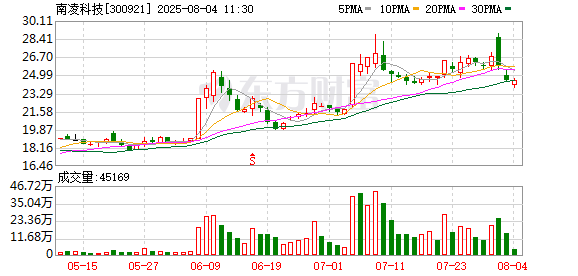
南凌科技:接受长盛基金调研
Mei Ri Jing Ji Xin Wen· 2025-08-04 04:53
Group 1 - The core point of the article is that Nanling Technology (SZ 300921) announced a scheduled investor research meeting with Changsheng Fund on July 28, 2025, where the company's board secretary, Yu Li, will participate and address investor inquiries [2] Group 2 - For the year 2024, the revenue composition of Nanling Technology is as follows: Other sectors account for 24.15%, Manufacturing accounts for 23.45%, Information Transmission, Software, and IT Services account for 20.75%, Wholesale and Retail account for 17.96%, Financial Services account for 7.47%, and Leasing and Business Services account for 6.22% [2]


农业驱动津巴布韦2025年第一季度GDP增长
Shang Wu Bu Wang Zhan· 2025-08-02 15:53
Core Insights - Zimbabwe's GDP reached 335 billion Zimbabwean dollars in Q1 2025, up from 299 billion in Q4 2024, driven by growth in agriculture, electricity, information communication, and financial insurance sectors [1] Sector Performance - Agriculture grew by 18.8%, electricity by 6.1%, and both information communication and financial insurance sectors increased by 4.3% [1] - Conversely, mining, accommodation and food services, and water supply sectors saw declines of 21.6%, 24.1%, and 12.3% respectively [1] Contribution to GDP - Manufacturing was the largest contributor to GDP in this quarter, accounting for 15%, followed by mining at 12.4%, agriculture at 11.7%, wholesale and retail at 11.6%, and financial insurance at 11.2% [1]
海合会非油经济持续发力 GDP突破5878亿美元
Shang Wu Bu Wang Zhan· 2025-08-01 15:42
Core Insights - The GDP of Gulf Cooperation Council (GCC) countries is projected to reach $587.8 billion in 2024, reflecting a year-on-year growth of 1.5% [1] - Non-oil economic activities account for 77.9% of the GDP, indicating significant progress in economic diversification within the region [1] Sector Contributions - The manufacturing sector is the largest contributor to the non-oil economy, accounting for 12.5% [1] - Wholesale and retail trade follows with a contribution of 9.9%, while the construction sector contributes 8.3% [1] - Other significant sectors include public administration and defense (7.5%), financial and insurance services (7%), and real estate (5.7%) [1]
“个转企”不只是名称之变(新知)
Ren Min Ri Bao· 2025-07-22 21:48
Core Viewpoint - The transformation of individual businesses into enterprises ("个转企") is a significant step that enhances their operational capabilities and market competitiveness, driven by recent government guidelines aimed at simplifying the transition process and providing support [1][2][3]. Group 1: Policy and Guidelines - The recent guidelines issued by nine government departments aim to optimize the process of transforming individual businesses into enterprises, reducing conversion costs and enhancing efficiency [1][3]. - The transformation allows individual businesses to retain their brand identity and facilitates the simultaneous handling of tax, social security, and other administrative matters, thus providing a more convenient pathway for growth [3]. Group 2: Economic Impact - The transformation is expected to invigorate the private economy, as individual businesses represent a significant portion of the market, with 1.27 billion individual businesses in China, making them a crucial component of the private sector [2]. - Approximately 90% of individual businesses are concentrated in the service industry, which includes retail, accommodation, and food services, indicating that their growth will enhance the overall market economy [3]. Group 3: Support and Development - The government encourages the transformation of "growth-oriented," "development-oriented," and "specialized" individual businesses into enterprises, providing policy support and vocational training to facilitate this process [4]. - It is essential to avoid imposing rigid targets for the number or speed of transformations, as the focus should be on enabling individual businesses to thrive according to their chosen operational models [4].
今年上半年杭州用电量走出“微笑曲线”
Mei Ri Shang Bao· 2025-07-22 03:00
Group 1 - The overall electricity consumption in Hangzhou reached 50.325 billion kilowatt-hours in the first half of the year, reflecting a year-on-year growth of 6.2%, indicating a stable economic growth trend in the city [1] - The electricity consumption curve showed a "smile" shape, with rapid growth in the first three months, followed by a slowdown in April due to trade friction, and a significant recovery in May and June with growth rates of 7.4% and 14.5% respectively [1] - High-tech manufacturing sectors demonstrated significant electricity consumption growth, while traditional manufacturing industries are undergoing technological upgrades to improve efficiency, leading to a more rational industrial structure [2] Group 2 - The electricity consumption in the tertiary industry reached 17.891 billion kilowatt-hours, with a year-on-year increase of 9.9%, driven by the digital economy, particularly in information transmission, software, and IT services, which grew by 15.7% [2] - The industrial sector's total electricity consumption was 21.71 billion kilowatt-hours, showing a year-on-year growth of 2.6%, with notable increases in the instrument manufacturing, computer, communication, and electronic device manufacturing, and biopharmaceutical sectors [2] - The wholesale and retail industry, along with the real estate sector, maintained double-digit year-on-year growth in electricity consumption, reaching 13.1% and 11.8% respectively, indicating a strong recovery in consumer market activity [2]
宏观深度报告20250717:寻找内需增量:发挥最低工资的“灯塔效应”
Soochow Securities· 2025-07-17 07:32
Group 1: Minimum Wage Impact - The minimum wage system can enhance residents' income through a "lighthouse effect," benefiting not only low-income groups but also those earning above the minimum wage, thus promoting income growth for the middle class and lower class[1] - During the "12th Five-Year Plan" period (2011-2015), the average annual growth rate of minimum wage reached approximately 13%, coinciding with a 2.7 percentage point increase in labor compensation's share of GDP from 2010 to 2015[1] - After 2015, the growth rate of minimum wage declined to an average of 3.3% per year, resulting in a decrease in labor compensation's share of GDP from 35.9% in 2015 to 29.3% in 2020[7] Group 2: Policy Recommendations - To increase minimum wage, it is suggested to set growth targets that are moderately higher than economic growth rates, aiming for a minimum wage that reaches about 50% of the average wage[29] - Implementing a differentiated minimum wage system that considers industry, occupation, and skill levels can better reflect the intrinsic value of different jobs and attract talent[29] - Germany's model, which combines a national minimum wage with industry-specific minimum wages, can serve as a reference for establishing a similar system in China[27] Group 3: Recent Developments - In March 2025, the central government proposed to improve the minimum wage adjustment mechanism, with several regions raising their minimum wage by 7.6% to 14.2% in the first half of the year[28] - The current minimum wage standards across various regions in China vary significantly, with the highest being 2,520 yuan in Shenzhen and 2,500 yuan in Guangdong[15] - As of 2025, 90% of countries globally have established minimum wage systems, with 52% using a single minimum wage and 48% employing a multi-tiered system[16]
广州花都出台“扶商”新政,奖励扶持全面升级
Zhong Guo Chan Ye Jing Ji Xin Xi Wang· 2025-07-13 22:17
Group 1 - The core viewpoint of the news is the introduction of a series of new policies in Huadu District aimed at promoting high-quality development of enterprises and stimulating market vitality through innovative measures and substantial rewards [1] Group 2 - The "Advanced Manufacturing Capacity Expansion and Upgrade Reward" has been established to support advanced manufacturing enterprises in expanding production scale and enhancing technology levels, offering rewards up to 3 million yuan for companies achieving over 100 million yuan in annual revenue with a 10% year-on-year growth [2] - For industrial enterprises with a revenue increase exceeding 100 million yuan, a reward of up to 2 million yuan is available based on the incremental revenue [2] - Companies utilizing outsourcing for scale expansion can receive rewards up to 500,000 yuan, providing solid financial support for advanced manufacturing [2] Group 3 - The modern service industry, a key component of Huadu District's economic development, receives significant policy support, with one-time rewards of 500,000 yuan and 1 million yuan for wholesale and retail enterprises achieving sales of 1 billion and 2 billion yuan, respectively [3] - Emerging sectors like live e-commerce can receive up to 1.5 million yuan based on growth rates if they achieve over 500 million yuan in annual retail sales [3] - The accommodation and catering industry is also supported, with a reward of 50,000 yuan for every 10 million yuan increase in annual revenue, promoting transformation and new consumption models [3] Group 4 - Huadu District encourages digital transformation by offering rewards up to 1 million yuan for companies recognized as national "Digital Leaders" or intelligent manufacturing demonstration factories [4] - Companies developing first-version software products in cutting-edge fields such as AI, blockchain, and big data can also receive up to 1 million yuan in rewards, fostering innovation and supporting digital transformation [4] Group 5 - To tap into the potential of existing enterprises, Huadu District reserves at least 600 acres of industrial land annually to prioritize land needs for expansion [5] - The district supports enterprises in increasing investment through improved land use regulations and encourages the revitalization of inefficient land, particularly for projects that do not require additional land [5] Group 6 - Huadu District optimizes the innovation and entrepreneurship ecosystem by providing 50,000 yuan rewards for each successful cultivation of enterprises into larger-scale industrial or high-tech companies, enhancing the growth environment for businesses [6]
上半年陕西1465户个体工商户转型为企业
Shan Xi Ri Bao· 2025-07-12 00:57
Core Insights - The province has seen a significant increase in the transformation of individual businesses into enterprises, with 1,465 new transformations in the first half of the year, representing a 155% increase compared to the same period last year [1] - The structure of business entities is continuously optimizing, with 89.62% of transformed enterprises now in the tertiary sector, indicating a clear trend towards diversification and high-end development in industries such as wholesale, retail, and accommodation [1] - 70.03% of the transformed entities are now limited liability companies, reflecting the accelerated adoption of modern enterprise systems [1] Policy Support and Implementation - The provincial market regulatory bureau has strengthened policy support by establishing a joint meeting system with provincial departments to promote the development of individual businesses and has introduced a series of supportive policies [1] - Efforts include simplifying registration processes, tax reductions, and increased financial investment to encourage individual businesses to transition into enterprises [1] - The bureau has implemented a "one-stop" service for the transformation process, optimizing the review process through data sharing and collaborative handling among departments [1] Financial and Training Initiatives - The bureau has partnered with financial institutions to create the "Qin Zengxin" platform, aimed at addressing financing difficulties faced by small and specialized businesses [1] - Training activities have been organized to provide legal and policy support to individual businesses, helping them solidify their development foundation and enhance their confidence in transformation [1] - Future plans include increasing policy promotion efforts and establishing credit models for individual businesses to facilitate their upgrade and transformation [2]