财富管理

Search documents
专访汇丰中国王颖:中国高净值人群的财富管理需求正向多元化、专业化持续转变
Zhong Guo Ji Jin Bao· 2025-11-02 12:14
Core Insights - The wealth management market in China is experiencing rapid growth, driven by the expansion of market size, upgrading investment demands, and favorable policies [1][2][3] - High-net-worth individuals in China are shifting their wealth management needs towards diversification and specialization, moving away from traditional deposit-based strategies to more complex investment approaches [3][4] Market Overview - China is the second-largest asset and wealth management market globally, with a stable and large client base. The number of high-net-worth individuals (net worth over $10 million) in mainland China has reached 470,000, accounting for 20% of the global total [2] - The demand for wealth management is evolving, with investors increasingly seeking diversified investment strategies to navigate a complex market environment [3][4] Investment Trends - Investors are reducing cash holdings by nearly 40% over the past year, increasing allocations to alternative assets and gold, which have seen a doubling in investment proportions [3][5] - Emerging needs among high-net-worth individuals include international asset allocation, family wealth succession, tax planning, and global lifestyle management [3][4] Policy Environment - Regulatory support for foreign institutions in wealth management is increasing, creating a favorable environment for both domestic and foreign financial institutions to collaborate and enhance service offerings [3][4] Asset Allocation Dynamics - The dual impact of ongoing market volatility and a low-interest-rate environment is accelerating the restructuring of asset allocation strategies [5][6] - Investors are shifting from traditional safe assets to higher-risk financial investments, including stocks and alternative investments, in response to low returns on cash assets [6][7] Strategic Initiatives - HSBC aims to become the preferred international bank for high-net-worth clients in China, enhancing its wealth management services through upgraded offerings and a focus on global connectivity [7][8] - The bank is expanding its wealth management footprint in over 20 major cities and has opened new flagship branches to improve service quality and accessibility [10][11] Digital Transformation - The integration of AI and digital tools is a core strategy for enhancing customer experience and improving wealth management processes [12][13] - HSBC is committed to balancing cost and customer experience while rapidly adopting digital innovations to meet evolving investor behaviors [12][13]
香港位列全球第二大跨境财富管理中心!德勤中国:建议开发针对高排放行业专属金融产品
Mei Ri Jing Ji Xin Wen· 2025-11-01 06:47
Group 1: Hong Kong's Asset Management Landscape - By the end of 2024, Hong Kong's asset and wealth management business is expected to manage assets exceeding 35 trillion HKD, making it the second-largest cross-border wealth management center globally, after Switzerland [1] - The asset management scale in Hong Kong is projected to reach 35 trillion HKD, which is 11 times the local GDP, with a net inflow of cross-border funds amounting to 700 billion HKD, representing an 80% year-on-year increase [1] - The Hong Kong government anticipates that the region will become the largest cross-border asset management center within two to three years [1] Group 2: Strategic Recommendations for Growth - Deloitte suggests expanding the eligible investment scope under the "New Capital Investor Entry Scheme" to include digital assets and alternative asset classes to stimulate the wealth management industry [1] - To support green and high-quality economic development, Deloitte recommends developing specialized financial products targeting high-emission industries [1] Group 3: Support for Mainland Enterprises - A survey by the Hong Kong Trade Development Council indicates that 93.9% of surveyed mainland enterprises face challenges such as insufficient market demand and geopolitical risks, an increase from 83.9% in 2023 [2] - 77.2% of surveyed mainland enterprises plan to seek services in Hong Kong to support their international business [2] - Deloitte proposes a new paradigm of "Mainland Cultivation, Hong Kong Services, Global Market" to provide comprehensive support for enterprises from technology validation to overseas implementation [2] Group 4: Financial Market Developments - Shenzhen authorities have launched an action plan to support high-quality mergers and acquisitions, facilitating eligible industry leaders to list or refinance in Hong Kong [3] - The Hong Kong Stock Exchange and the Securities and Futures Commission have introduced measures to streamline the listing process for large A-share companies, significantly reducing the time required for listings [3] - The "A+H" listing model is expected to enhance corporate governance and market value, benefiting companies listed under this model [3] Group 5: Green Transition Initiatives - Deloitte estimates that China and Asia face a low-carbon transition funding gap of approximately 9 trillion USD by 2030, particularly in hard-to-abate sectors like steel and cement [4] - Hong Kong is advancing its green transition through three key actions: developing a comprehensive policy framework for transition finance, launching an international voluntary carbon trading platform, and accelerating research on sustainable fuels [4][5] - Challenges in transition finance standards, carbon asset credibility, and high costs of green technology need to be addressed to enhance Hong Kong's role as a regional transition hub [5]
四中全会擘画“十五五”规划蓝图 | 一财号每周思想荟(第40期)
Sou Hu Cai Jing· 2025-10-31 04:50
Group 1: Macro Insights - The Fourth Plenary Session of the 20th Central Committee outlined the "15th Five-Year Plan," focusing on high-quality development as the foundation for Chinese-style modernization [1][2] - The plan emphasizes a shift from high-speed growth to high-quality development, highlighting the importance of structural optimization and a global perspective on institutional alignment [2] Group 2: Market Analysis - Gold and silver prices are currently under short-term pressure due to easing geopolitical risks and a decline in silver leasing rates from 34.9% to 5.6% [3] - Central banks purchased 220 tons of gold in Q3 2025, a 28% increase from the previous quarter, which could support market sentiment and limit price adjustments [3] Group 3: Technology Sector - The global stock market is entering its fourth year of a bull market, with AI-related capital expenditures expected to remain strong, supporting the outlook for technology stocks [4][5] - The adoption rate of AI technology is rapidly increasing, with early adopters beginning to see economic benefits, leading to an upgrade in the rating of Chinese technology stocks to "most attractive" [6] Group 4: Virtual Investment Risks - The recent crash in the market for "CS2" game items, resulting in a loss of $2 billion, highlights the inherent risks of investing in virtual goods controlled by a single entity [7][8] - Virtual items, with near-zero marginal production costs and supply rules dictated by game companies, should not be viewed as safe investment assets, as their value is largely driven by market sentiment [8]
【银行理财】银行理财三季报出炉,科技金融深度融合新实践——银行理财周度跟踪(2025.10.20-2025.10.26)
华宝财富魔方· 2025-10-29 09:28
Core Viewpoints - The banking wealth management market shows steady growth, with the total scale reaching 32.13 trillion yuan, a year-on-year increase of 9.42% and a quarter-on-quarter increase of 4.76% [3][7] - The integration of technology and finance is enhancing investor education and customer service capabilities in the wealth management industry, marking a shift from product sales to service-driven models [11] - The introduction of new data exchange protocols in the banking sector is expected to improve efficiency and transparency in the wealth management market [12] Regulatory and Industry Dynamics - The China Banking Wealth Management Registration and Custody Center released the "Quarterly Report on the Banking Wealth Management Market (Q3 2025)", indicating a robust growth in the wealth management market [3][7] - The number of wealth management products in the market reached 30,600, with a total scale of 29.28 trillion yuan, accounting for 91.13% of the market [7] - The increase in cash and bank deposits to 27.5% reflects a cautious investment approach among wealth management companies [9][10] Performance of Financial Products - Cash management products recorded a 7-day annualized yield of 1.27%, a decrease of 4 basis points, while money market funds saw a slight increase [14] - Fixed income products continue to dominate the market, with a total scale of 31.21 trillion yuan, representing 97.14% of all wealth management products [8] - The overall yield of fixed income products is under pressure due to market volatility and regulatory changes [17] Innovations in the Industry - Agricultural Bank and its wealth management arm successfully implemented a new data exchange protocol, enhancing the standardization and efficiency of the wealth management sector [12] - ICBC Wealth Management participated as a cornerstone investor in the IPO of Cambridge Technology, indicating a strategic focus on the AI computing industry [13] Tracking of Net Value Breaks - The net value break rate for wealth management products was 1.12%, a decrease of 0.74 percentage points, with credit spreads tightening [22] - The current credit spread is at a historical low since September 2024, indicating limited value for wealth management products [22]



第十九届HED中国峰会·深圳即将启幕
Xin Lang Ji Jin· 2025-10-28 10:03
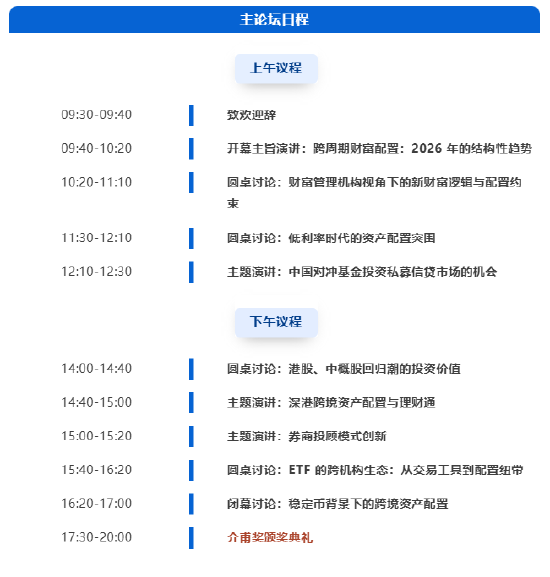
Core Insights - The 19th HED China Summit will be held in Shenzhen on January 15, 2026, focusing on the integration of private equity and wealth management [1] - The event will gather over 400 decision-makers from private equity funds, brokerages, banks, trusts, family offices, and wealth platforms to facilitate high-quality development in the asset management industry [1] Agenda Highlights - The morning session includes a welcome speech, keynote addresses on wealth allocation trends for 2026, and discussions on new wealth logic and asset allocation strategies in a low-interest-rate environment [2] - Afternoon sessions will cover topics such as investment value in Hong Kong and mainland stocks, cross-border asset allocation, and innovations in brokerage advisory services [2] - The event will conclude with discussions on the ecosystem of ETFs and cross-border asset allocation in the context of stablecoins [2] Additional Sessions - The agenda features discussions on innovative stock strategies, the application of AI in quantitative stock strategies, and the evolution of investment strategies in a low-interest-rate environment [4][5] - Keynote speeches will address the investment opportunities arising from the global interest rate decline and the challenges and opportunities for investment funds [5]
瑞士百达:今年底美国经济增长将放缓 预计美联储年内将再降息两次
Zhi Tong Cai Jing· 2025-10-28 06:03
Core Insights - Despite recent data release limitations due to the U.S. government shutdown, the economic growth in Q3 appears strong, but a slowdown is expected by the end of the year, followed by a cyclical recovery in early next year [1] - The forecast maintains that the Federal Reserve will lower interest rates twice more this year and again twice in the first half of 2026, bringing the terminal rate down to a range of 3%-3.25% [1] Economic Conditions - The U.S. economy is experiencing contradictory phenomena: while the labor market shows signs of fatigue, GDP growth remains resilient [1] - Factors contributing to this divergence include tariff policies, the "One Big Beautiful Bill," wealth distribution inequality, tightening immigration policies, and the AI boom [1] - The K-shaped economy reflects significant disparities in economic performance across different demographic groups and industries [1] Optimistic Scenarios - An optimistic scenario suggests that fiscal stimulus measures, including large-scale tax refunds, introduced in the first half of next year will improve the economic conditions for low-income households, gradually narrowing the "K-shaped" gap [1] - Other potential upward factors include significant productivity gains from AI and a cyclical recovery in the real estate market [1] Risks and Challenges - Although the labor market is expected to maintain a "low hiring, low layoff" pattern, an increase in layoffs could significantly weaken consumer spending [1] - Adjustments in financial markets may suppress the wealth effect, leading to a reduction in high-end consumption [1]
拓展全球大市场 共创财富新价值 第二届“中信财富管理大会”举办
Jin Rong Shi Bao· 2025-10-28 00:39
Core Insights - China's asset management market is projected to exceed 170 trillion yuan by June 2025, positioning it as the second-largest wealth management market globally, marking the beginning of a "big wealth management era" focused on integration and development [1] Group 1: Multi-Dimensional Development - The wealth management chain includes wealth management, asset management, and investment banking, with institutions exploring their strengths to enhance the wealth management ecosystem [2] - CITIC Group, as a leading financial holding group, has a comprehensive range of financial licenses and its subsidiaries, such as CITIC Bank and CITIC Securities, are leaders in their respective sectors [2] - CITIC Bank's personal wealth management scale is nearly 5 trillion yuan, while CITIC Securities' asset management scale exceeds 1.56 trillion yuan, indicating significant market presence [2] Group 2: Wealth Coexistence - The rapid economic growth in China has led to an increase in residents' financial assets, with total investable assets surpassing 300 trillion yuan [4] - The asset management industry is shifting from scale-driven to capability-driven, emphasizing client-centric approaches and resource sharing among various financial institutions [4] - A comprehensive product line and integrated customer service are essential for the transformation of wealth management services [4] Group 3: Connecting the Future - Cross-border investment has become essential for wealth management, with significant growth in demand for global asset allocation among Chinese residents [6] - CITIC is leveraging "connectivity" to build a diverse cross-border asset management service system, enhancing its ability to meet investors' cross-border asset allocation needs [6] - Future plans include expanding cross-border product offerings and collaborating on opportunities in areas like the Belt and Road Initiative and green finance [6]
拓展全球大市场 共创财富新价值
Jin Rong Shi Bao· 2025-10-28 00:30
Core Insights - China's asset management market is projected to exceed 170 trillion yuan by June 2025, positioning it as the second-largest wealth management market globally, marking the beginning of a "Great Wealth Management Era" focused on integration and development [1][3] Group 1: Industry Development - The wealth management chain includes wealth management, asset management, and investment banking, with participants exploring ways to enhance the wealth management ecosystem [2] - CITIC Group, as a leading financial holding group, leverages its comprehensive financial licenses to carve out a unique path in wealth management, with subsidiaries like CITIC Bank and CITIC Securities leading in their respective sectors [3] - CITIC Bank's personal wealth management scale is nearly 5 trillion yuan, while CITIC Securities' asset management scale exceeds 1.56 trillion yuan, indicating significant market presence [3] Group 2: Strategic Focus - CITIC Group aims to align with national strategies such as technological innovation and green development, directing financial resources to key areas of social development [4] - The total wealth management scale of CITIC Group and its subsidiaries has reached 31 trillion yuan, with an asset management scale of 9.8 trillion yuan, serving over 200 million individual and corporate clients [3] Group 3: Professionalism and Collaboration - The asset management industry is shifting from scale-driven to capability-driven approaches, emphasizing client-centric services and resource sharing among various financial institutions [5][6] - Industry experts advocate for deep collaboration across asset, funding, product, and service sectors to enhance professionalism and inclusivity in wealth management [5] Group 4: Global Market Expansion - As residents' wealth accumulates, cross-border investment has become essential for wealth management, with significant participation in programs like the "Cross-Border Wealth Management Connect" [7] - CITIC Group is developing a diverse cross-border asset management service system to meet investors' needs for global asset allocation, focusing on mutual recognition funds and other cross-border products [7]


家族财产纠纷刺痛高净值人群,传承大考下,香港家办或为优选
Di Yi Cai Jing· 2025-10-27 02:04
Core Insights - Offshore family trusts have become a topic of discussion, with many older entrepreneurs and founders being unaware or only partially aware of the implications for their estate planning [1][2] - Recent cases of wealthy individuals facing legal and tax disputes due to poorly structured offshore family trusts highlight the risks of relying solely on trusts for asset protection [1][2] - The importance of comprehensive family wealth management planning is emphasized, as many wealthy families have lost significant assets due to lack of planning and oversight [3][4] Group 1: Offshore Family Trusts - Offshore family trusts are commonly used by high-net-worth individuals for wealth planning, but many have encountered issues due to key pitfalls such as retaining control, neglecting tax compliance, and unclear asset sources [2][3] - Successful execution of trust arrangements is critical, as the design of the trust structure is only a small part of the overall process [2] Group 2: Wealth Management and Family Offices - The lack of a structured wealth management mechanism has led to rapid wealth loss among families, particularly in industries like coal where founders did not establish proper governance [3][4] - Family offices are increasingly seen as essential for high-net-worth families to protect assets, ensure business continuity, and manage family affairs effectively [4][6] Group 3: Hong Kong as a Family Office Hub - Hong Kong is positioned as a leading international financial center, offering a comprehensive range of services for family offices, including asset allocation, trust structuring, and tax planning [6][7] - The city boasts a robust financial infrastructure, with active capital markets and a variety of investment vehicles, making it an attractive location for family offices [7] Group 4: Education and Next-Generation Leadership - Education is becoming a critical factor in wealth transfer, with many families prioritizing the cultivation of financial responsibility and leadership skills in their children [10][11] - Hong Kong's educational resources and international school systems provide a conducive environment for the next generation to develop skills necessary for managing family wealth [11][12] Group 5: Multi-Dimensional Legacy - The concept of family offices in Hong Kong encompasses not just financial management but also the transmission of family values and cultural heritage, integrating investment philosophy with cultural continuity [12][13] - Family offices serve as neutral entities to mediate family disputes regarding wealth distribution and management, thereby fostering harmony within the family [13]

家族财产纠纷刺痛高净值人群!传承大考下,香港家办或为优选
第一财经· 2025-10-26 23:39
Core Viewpoint - The article emphasizes the importance of early and reasonable planning for family wealth management, particularly in the context of offshore family trusts, which have seen numerous failures due to poor design and execution [1][2][3]. Group 1: Offshore Family Trusts - Offshore family trusts are commonly used by high-net-worth individuals for wealth planning, but many have encountered significant issues due to factors such as retaining actual control, neglecting tax compliance, unclear asset sources, incorrect timing, and unprofessional trust terms [2][3]. - The execution of trust arrangements is critical, as it involves strict adherence to the trust's design and compliance management, rather than just the initial setup [2]. Group 2: Overall Wealth Management - Poor wealth management has led to significant losses for families, particularly among early coal industry entrepreneurs who failed to establish a family wealth management mechanism, resulting in rapid wealth depletion due to lack of long-term planning and institutional management [3][4]. - Family businesses often face wealth loss due to marriage disputes, especially when ownership is concentrated in one individual's name without proper arrangements [4]. Group 3: Importance of Family Offices - Family offices are increasingly seen as essential for high-net-worth families, serving to protect assets, ensure business succession, and manage family affairs effectively [4]. - The establishment of family offices is crucial for systematic planning and avoiding fragmented decision-making, especially as significant wealth transfer is expected in the Asia-Pacific region [4]. Group 4: Advantages of Hong Kong for Family Offices - Hong Kong is highlighted as a leading international financial center with a comprehensive range of services for family offices, including asset allocation, trust structuring, and tax arrangements [6][7]. - The presence of top-tier law firms and accounting firms in Hong Kong provides essential support for complex family structures and cross-border compliance [7][8]. Group 5: Education and Next Generation - Education for the next generation is becoming a critical consideration, with many families now opting for education in Hong Kong due to its rich educational resources and international school systems [11][12]. - Family offices can facilitate financial and non-financial education for heirs, preparing them for future management of family affairs and fostering a sense of social responsibility [12]. Group 6: Multidimensional Inheritance - Hong Kong's family wealth management has a long history, integrating cultural values with international wealth governance and philanthropy [13][14]. - Family offices in Hong Kong serve as a vehicle for transmitting family values, ensuring a comprehensive inheritance of wealth, family business, and values [14].