
新一代信息技术

Search documents
工信部启动创建国家新兴产业发展示范基地 2035年将培育“千企百园”标杆
Zheng Quan Shi Bao Wang· 2025-11-24 08:48
Core Viewpoint - The Ministry of Industry and Information Technology has launched the creation of national emerging industry development demonstration bases to support new industrialization and modern industrial system construction [1][2] Group 1: Demonstration Base Creation - The demonstration bases are categorized into park-type and enterprise-type, focusing on industrial cluster development, collaborative innovation, ecological optimization, and management efficiency [1][2] - The goal is to establish around 100 park-type and 1,000 enterprise-type demonstration bases by 2035, enhancing industrial innovation capabilities and competitiveness [1][2] Group 2: Key Industries and Dynamic Adjustment - The initiative targets nine key emerging industries, including new generation information technology, new energy, and high-end equipment, with the ability to adjust based on national policies and industry trends [2] - The creation mechanism includes a "total control, batch creation, and entry-exit" principle, with evaluations every two years to ensure quality [2] Group 3: Support Mechanisms - The Ministry will establish a central-local linkage mechanism for policy support and resource allocation, including specialized financing for demonstration bases [2][3] - Financial institutions will be encouraged to develop tailored financial products to support the construction of these bases [2] Group 4: Talent and Innovation Support - Talent needs for the demonstration bases will be integrated into relevant talent plans, with joint training mechanisms established by affiliated universities [3] - The bases will be supported in applying for projects and building innovation platforms, ensuring a focus on practical outcomes without imposing fees or requiring local matching funds [3]
工信部:打造一批新兴产业发展示范园区和示范企业 发展壮大新兴产业
智通财经网· 2025-11-24 07:29
Core Viewpoint - The Ministry of Industry and Information Technology (MIIT) of China has announced the establishment of national emerging industry development demonstration bases, aiming to create around 100 park-type and 1,000 enterprise-type bases by 2035 to support new industrialization and economic development [1][8]. Group 1: Demonstration Bases - The demonstration bases will focus on key emerging industries, leveraging industrial parks and enterprises as carriers for development [1][8]. - The initiative aims to enhance industrial innovation capabilities, optimize the development environment, and significantly improve industrial scale and competitiveness [8][9]. Group 2: Objectives and Tasks - For demonstration parks, the focus will be on promoting cluster development, attracting quality enterprises, and establishing a collaborative ecosystem among large and small enterprises [2][10]. - For demonstration enterprises, the emphasis will be on product development, technological innovation, and the establishment of new business models to expand market share and revenue [2][11]. Group 3: Evaluation and Management - The evaluation indicators for demonstration parks include cluster development, collaborative innovation, ecological optimization, and governance enhancement [12]. - The creation period for these bases is set at two years, followed by an assessment and recognition process [13][15].
都市工业回归荔湾,广州中心城区更具“实”力
2 1 Shi Ji Jing Ji Bao Dao· 2025-11-24 02:49
Core Insights - The article highlights the successful development of the 1906 Industrial Park in the Liwan District of Guangzhou, which has achieved over 90% occupancy and revitalized the urban landscape by attracting technology and cultural enterprises [1] - The Liwan District has initiated a three-year action plan to enhance industrial land utilization, aiming to create modern industrial parks that support the "1283" modern industrial system [2][4] - The district is focusing on strategic industry clusters, particularly in laser and additive manufacturing, to drive economic growth and innovation [6][10] Group 1: Industrial Development - Liwan District has completed planning optimization for three industrial clusters, providing 40.32 hectares of industrial land and 1.3 million square meters of industrial space [2] - The district aims to construct 6 million square meters of quality industrial space by 2026, including high-standard industrial plants and commercial spaces [4][12] - The "百千万工程" (Hundred-Thousand-Ten-Thousand Project) is being implemented to promote industrial development and attract new enterprises [1][4] Group 2: Strategic Industry Focus - Laser and additive manufacturing is identified as a key strategic industry cluster, with the district hosting a 3D printing innovation exhibition to showcase the entire industry chain [6][10] - The district has established a 10 billion yuan industrial development fund to support the growth of the laser and additive manufacturing sector [7][10] - Liwan is collaborating with various universities and research institutions to enhance talent and technology resources for the industry [10][11] Group 3: Economic Performance - The Liwan District's laser and additive manufacturing cluster is projected to reach a scale of nearly 6 billion yuan, with an 8% year-on-year growth [13] - The district achieved a 4.2% increase in industrial output value in the first three quarters of 2025, ranking fourth in the city [13] - The industrial technological transformation investment growth rate reached 71.6%, the highest in the city [13]

构筑海归回国创业第一站!珠海高新区以赛引才聚力新质生产力
Nan Fang Du Shi Bao· 2025-11-23 13:12
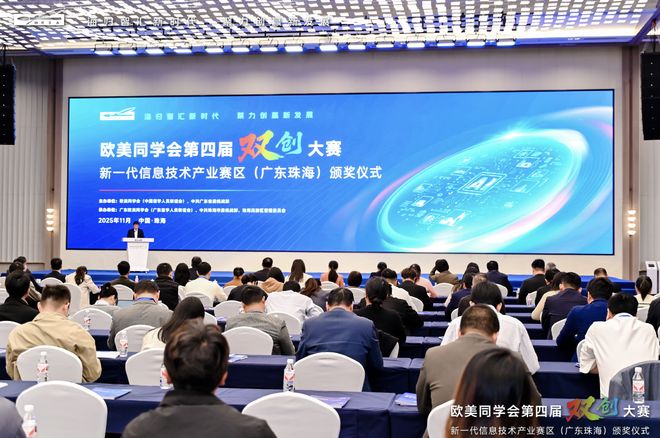
南都讯 记者陈栋 11月22日,欧美同学会第四届"双创"大赛新一代信息技术产业赛区决赛在珠海高新区 落下帷幕。本次活动吸引项目代表、归国留学人员代表、企业代表、高校代表、孵化园区、银行及投资 机构等近200人齐聚珠海高新区,共同见证赛事的圆满收官。 珠海是中国第一位留学生容闳的故乡,渴望人才和创新是珠海始终不变的追求。新一代信息技术是珠海 战略性新兴产业的核心支柱,作为首次落地广东珠海的国家级留学人员创新创业赛事,欧美同学会第四 届"双创"大赛自今年4月启动以来,线上关注突破150万人次,成为粤港澳大湾区科技创新的重要平台, 也为留学人才开启"回国创业第一站"提供强力支撑。 珠海高新区为获奖项目提供单个最高100万元的落户奖励,并依托规模超百亿元的珠海发展投资基金, 配套产业扶持与人才住房保障,推动创新成果迅速转化。活动现场,8个优质留学人员项目签署落地意 向,涵盖高端激光器芯片、脑机接口人工视觉、AI神经拟态芯片等前沿方向,与珠海重点产业布局高 度契合。 赛事共吸引510个高水平留学人才项目参赛,覆盖人工智能、具身智能、6G、量子科技等前沿领域。经 过层层选拔,21个项目脱颖而出。获奖项目整体质量亮眼,超9 ...

【广发宏观王丹】11月EPMI淡季回落,基本面有待新的信号指引
郭磊宏观茶座· 2025-11-20 11:54
Core Viewpoint - The November Emerging Industries Purchasing Managers Index (EPMI) decreased by 7.0 points to 52.7, which is a larger decline than the seasonal average of 3.0 points from 2014 to 2024, indicating a significant fluctuation related to the sharp rise in October [1][4][5]. Summary by Sections EPMI Overview - The EPMI's decline reflects a "V-shaped" fluctuation, with October experiencing a significant rise of 7.3 points [1][3]. - The absolute EPMI value of 52.7 is below the historical average of 55.0 for November, marking it as the third lowest in the historical context [5]. Changes Compared to Previous Months - Compared to September, November saw a rebound in production but a decline in demand. Key changes include: 1. Production index decreased by 10.3 points, while procurement volume fell by 6.5 points [8]. 2. Prices continued to rise, with purchase prices and sales prices up by 2.2 and 3.0 points respectively compared to September [8]. 3. The financing environment improved, with loan difficulty indicators down by 0.6 points from September [8]. 4. Corporate investment and R&D activities remained cautious, with indicators for expectations, R&D activities, and new product investments down by 2.8, 2.2, and 2.2 points respectively compared to September [8]. Sector Performance - Among the seven emerging industries, the highest EPMI was recorded in the new energy vehicle sector, followed by new generation information technology and biotechnology, both maintaining a level above 55 for two consecutive months [11]. - The marginal improvements in the biotechnology and new energy vehicle sectors exceeded 5 points compared to September [11]. Upcoming Data and Market Implications - The manufacturing PMI data will be released at the end of the month, which is expected to provide more critical insights than the EPMI, as the latter is limited to emerging industries [15][18]. - Current high-frequency data indicates a weakening trend in durable goods retail, real estate sales, and construction workload compared to October [15][16]. Conclusion - The November EPMI reflects a seasonal slowdown without providing strong directional guidance. The upcoming PMI and BCI data are anticipated to be more significant for financial markets, which are currently experiencing volatility due to a lack of new fundamental guidance [18].

山东“十四五”科创实现“上天入地下海”多点突破
Zhong Guo Xin Wen Wang· 2025-11-20 11:45
Core Viewpoint - Shandong has prioritized technological innovation as a core element of its development strategy during the "14th Five-Year Plan" period, significantly enhancing its innovation capabilities and achieving its planning goals for high-quality economic and social development [1] Group 1: Technological Achievements - Shandong has made several landmark innovations, including the world's first operational fourth-generation nuclear power plant and the largest solid rocket carrier "Gravity One" [2] - The province has achieved significant breakthroughs in traditional industries, such as the production of the world's thinnest hot-rolled strip steel at 0.6 mm and a 70% reduction in energy consumption in the metallurgy sector [2] - In the chemical industry, Shandong's Dongming Petrochemical developed a technology that reduces crude oil consumption by approximately 60% [2] Group 2: Emerging Industries - Shandong is fostering new industries, with notable advancements in information technology, including the world's first 12-inch silicon carbide substrate and a fully domestically produced server [3] - The province is also making strides in high-end equipment, such as the first semi-fixed rocket sea testing platform in China [3] - In artificial intelligence, Haier launched a smart home model covering nearly 200 million users, while robotics companies are leading in market share for precision gearboxes and collaborative robots [3] Group 3: Technology Transfer and Application - Shandong has implemented 51 technology reform tasks to eliminate barriers to innovation and enhance the service system for technology transfer [4] - The province has initiated 31 provincial-level technology demonstration projects, significantly expanding its hydrogen energy industry from over 500 companies in 2020 to 1,200 [4] - In the first half of the year, Shandong completed 284 pilot projects and verified 318 technological achievements, with 259 successfully transferred to production [4] Group 4: Market and Service Development - Shandong has established a comprehensive technology market that integrates technology trading, enterprise incubation, and financing, with 56,700 technology achievements and a transaction amount of 1.521 billion yuan [5] - The province has built 12 national and provincial-level training bases for technology transfer personnel, training over 8,700 technology managers [6] Group 5: Corporate Innovation Support - Shandong has reinforced the role of enterprises in technological innovation through various supportive policies, with over 90% of major technology projects led by enterprises [7] - The province has allocated over 5.8 billion yuan in financial support to more than 65,000 enterprises, significantly reducing R&D costs and stimulating innovation [8] - Corporate R&D investment has consistently accounted for over 88% of total social R&D investment, maintaining a leading position nationally [8]
以卓越治理与高质量信披构筑科创资本循环新生态|封面专题
清华金融评论· 2025-11-20 09:34
文/ 中国上市公司协会学术顾问委员会委员、中关村国睿金融与产业发展研究会 会长 程凤朝 借鉴国际经验,本文提出,科创板未来可从 "融资导向"转向"治理与信披 导向",通过强化以董事会为核心的内部治理、完善多层次外部制衡、推 行差异化信披,尽快筑牢创新资本循环的基石,孕育出具有全球竞争力的 科技企业。 作为中国资本市场改革的 "试验田",科创板自2018年宣布设立以来,已成为推动经济向创新驱动转型的重要引擎。然而,随着市场进入深水区,其上市 公司在公司治理与信息披露方面面临的一些深层次课题,正成为推动高质量发展的关键节点。本文剖析了科创板企业治理结构的特殊性及挑战,探讨了信 息披露在创新资本定价中的核心作用与可提升的空间。借鉴国际经验,本文提出,科创板未来可以从"融资导向"转向"治理与信披导向",通过强化以董事 会为核心的内部治理、完善多层次外部制衡、推行"实质重于形式"的差异化信披,筑牢创新资本循环的基石,孕育出具有全球竞争力的科技企业。 引言:从 "试验田"到"主阵地"的时代命题 2019年7月22日,科创板正式开市。这不仅是中国资本市场的一次制度性突破,更承载着推动科技自立自强、引领经济发展范式变革的战略 ...
淮安经开区“码上选”“现场看” 让好项目精准“安家”
Xin Hua Ri Bao· 2025-11-20 06:40
Core Insights - The introduction of the "Code-based" site selection mini-program in Huai'an Economic Development Zone significantly enhances the efficiency of industrial land selection by providing clear information about land indicators and surrounding environments [1][2]. Group 1: Innovation in Site Selection - The mini-program addresses issues of information asymmetry and transparency in land promotion, allowing for a more proactive approach to site selection [1]. - Companies can quickly filter available land parcels by scanning a QR code, accessing detailed information about land boundaries, area, planning purposes, and acquisition [2]. - The use of aerial imagery and AI views in the mini-program allows businesses to visually assess the surrounding environment, improving the overall site selection experience [2]. Group 2: Strategic Planning and Industry Development - The mini-program is based on land spatial planning and aligns with the development of key industries such as new-generation information technology, photovoltaic new energy, and automotive components [2]. - The platform promotes the use of existing land for new projects, facilitating the clustering of upstream and downstream industries, thereby creating a comprehensive industrial chain [2]. Group 3: Enhanced Service Efficiency - The mini-program features graded management of land parcels, enabling the generation of land reports and facilitating on-site selection [3]. - A total of 36 projects covering an area of 2,970 acres have successfully utilized this service, demonstrating its effectiveness in attracting significant health industry projects [3]. - Future plans include further integration of digital services and streamlined approval processes to support the development of a "3+3" industrial cluster [3].
民企人才需求保持旺盛态势
Liao Ning Ri Bao· 2025-11-19 00:49
高端装备智能化改造及汽车新能源转型等技术迭代需求,促使相关企业集中引才以支撑产能扩张与 技术攻坚。数据显示,工程机械与高端重型装备、精细化工、汽车及零部件3个产业集群人才需求进一 步集中,占比超过半数,合计需求人数较二季度提高5.05个百分点,需求人数占比连续两个季度保持正 增长。 近日,辽宁老工业基地重点产业集群三季度人才需求目录发布,我省民营企业人才需求始终保持旺 盛态势,提出人才需求的民营企业户数和需求人数均较二季度有所增长。 新兴产业人才需求攀升。新能源、新材料、生物医药、数字经济、新一代信息技术、节能、未来产 业等战略性新兴产业人才需求占比较二季度上升0.64个百分点。 岗位、专业需求集中度相对平稳。需求排名前十的岗位分别是销售服务、机械工程师、营销管理、 化工产品生产通用工艺人员、软件工程师、会计师、主管、市场开发、人事专员/经理/主管、电气工程 师,合计需求4657人,占需求总人数的21.01%,人数与占比与二季度相比基本持平,销售服务、机械 工程师的岗位需求仍稳居前两位。 ...
科创与金融齐飞 粤港澳大湾区奔赴星辰大海
Zheng Quan Shi Bao· 2025-11-17 17:00
Group 1: Technological Innovation in the Greater Bay Area - The 15th National Games showcased over 130 high-tech products, highlighting the vibrant technological innovation in the Guangdong-Hong Kong-Macau Greater Bay Area [1] - The Greater Bay Area, covering 56,000 square kilometers, has an economic output exceeding $2 trillion, contributing to 1/9 of the national economy with only 0.6% of the land area and 6% of the population [1] - The "Shenzhen-Hong Kong-Guangzhou" innovation cluster has ranked first globally, surpassing the "Tokyo-Yokohama" cluster, while the "Macau-Zhuhai" cluster has been recognized in the world's top 100 innovation clusters [2] Group 2: Investment and Capital Support - The Greater Bay Area has a comprehensive innovation capital system that supports enterprises from inception to maturity, with active private venture capital firms and state-owned capital matrices exceeding 100 billion yuan [3][4] - As of 2024, Guangdong has 2,466 private equity and venture capital fund managers, managing approximately 12,000 funds, leading the nation [4] - The investment from state-owned capital has significantly contributed to the commercialization of core products for innovative companies, as seen in the case of Deep Sea Intelligence [3] Group 3: Financial Innovation - Traditional financial institutions are innovating to support technology-driven enterprises, developing new financial products tailored for companies with intangible assets like patents and trademarks [6][8] - The introduction of climate-friendly financial services, such as the "climate融担" loan product, has provided tailored financial support for environmentally friendly enterprises [6] - Knowledge-based financial products, including the first knowledge property securitization product in the Qianhai cooperation zone, have enabled technology companies to convert intangible assets into development capital [7] Group 4: Cross-Border Collaboration - The Greater Bay Area has established cross-border mechanisms that facilitate seamless passage for events like the first cross-border marathon, enhancing collaboration among the three regions [9] - Infrastructure developments, such as the Hong Kong-Zhuhai-Macao Bridge, have strengthened connectivity, promoting the integration of innovation resources across the region [9] - The first cross-border financing support through knowledge property pledges has been successfully implemented, allowing companies to leverage their intellectual property for funding [11]