
新能源

Search documents
郑栅洁:“十五五”时期将实施一批投资万亿级以上的能源重大工程
中国能源报· 2026-03-06 10:07
Core Viewpoint - The National Development and Reform Commission emphasizes the growth potential of six emerging pillar industries, projecting their output to approach 6 trillion yuan by 2025 and potentially exceed 10 trillion yuan by 2030 [1]. Group 1: Emerging Industries - The six key emerging industries identified are integrated circuits, aerospace, biomedicine, low-altitude economy, new energy storage, and intelligent robotics [1]. - The expected output for these industries is nearly 6 trillion yuan by 2025, with a possibility of doubling to over 10 trillion yuan by 2030 [1]. Group 2: Strategic Projects - During the 14th Five-Year Plan period, the government plans to implement several strategic projects, including major energy projects like the Yarlung Tsangpo River downstream hydropower and the "Shage Desert" new energy base [1]. - Additional significant infrastructure projects include the promotion of the Three Gorges waterway new channel and the completion of the "eight vertical and eight horizontal" high-speed railway main channels and national expressway network [1].


郑栅洁:“十五五”将实施一批投资万亿级以上的能源重大工程
证券时报· 2026-03-06 09:40
Core Viewpoint - The article discusses the strategic initiatives and future plans outlined by the National Development and Reform Commission (NDRC) for the upcoming "15th Five-Year Plan" period, focusing on significant investments in energy, emerging industries, and traditional sectors. Group 1: Major Investments and Infrastructure - The NDRC plans to implement a series of major energy projects with investments exceeding one trillion yuan, including initiatives like the Yarlung Tsangpo River hydropower project and offshore wind power bases [2] - Additionally, the NDRC aims to advance significant transportation projects, including the construction of the "Eight Vertical and Eight Horizontal" high-speed railway main corridors and the national expressway network [2] Group 2: Emerging and Future Industries - The NDRC will focus on developing six emerging pillar industries: integrated circuits, aerospace, biomedicine, low-altitude economy, new energy storage, and intelligent robotics, with a combined output expected to reach nearly 6 trillion yuan by 2025 and potentially double to over 10 trillion yuan by 2030 [3] - Future industries identified include quantum technology, biomanufacturing, green hydrogen energy, nuclear fusion energy, brain-computer interfaces, embodied intelligence, and 6G technology, which are on the brink of technological breakthroughs [3] Group 3: Traditional Industries and Market Expansion - The NDRC anticipates that traditional industries will see an additional market expansion of over 10 trillion yuan in the next five years, emphasizing the importance of upgrading and strengthening these sectors [4] Group 4: Mergers, Acquisitions, and Competition - The NDRC supports the establishment of a national-level merger fund to address investment exit difficulties and promote mergers and acquisitions to alleviate "involution" competition issues [5] Group 5: Innovation and Open Scenarios - The NDRC plans to launch around ten comprehensive open scenarios in key areas this year to promote industrial innovation, with a focus on modern agriculture and elder care services, identifying approximately 100 flagship projects to drive development [6]
当前中观景气度的行业分布是怎样的
GF SECURITIES· 2026-03-06 09:28
Manufacturing Sector Insights - In February, the manufacturing PMI decreased by 0.3 points to 49.0, with high-tech manufacturing PMI at 51.5, down 0.5 points[3] - The consumer goods manufacturing PMI increased by 0.5 points to 48.8, showing seasonal strength related to the Spring Festival[3] - Among 17 sub-sectors, non-metallic mineral products PMI rose by 1.8 points, while specialized equipment saw a decline of 5.0 points[5] Price Trends - In February, the factory price index remained flat compared to the previous month, with notable increases in sectors like petroleum processing (up 15.5 points) and general equipment (up 3.1 points)[7] - Several industries, including non-ferrous metallurgy and chemical fibers, experienced significant price declines, with non-ferrous metallurgy down 10.2 points[7] Economic Outlook - The service sector PMI rose by 0.2 points to 49.7, with significant increases in hospitality and entertainment sectors, reflecting a "long holiday effect" on consumer spending[12] - The construction sector showed a slight recovery, with housing construction PMI up 1.3 points, although overall construction PMI fell by 0.6 points to 48.2[10] Emerging Industries - The new energy sector is the only strategic emerging industry with a PMI above 50, increasing by 5.2 points, indicating expansion[9] - Energy-saving and environmental protection industries also saw improvements, with PMIs rising by 3.1 points, reflecting government support for eco-friendly projects[9]
两会速览︱“十五五”109项重大工程项目 涉及能源有哪些?
中关村储能产业技术联盟· 2026-03-06 08:41
Core Viewpoint - The article emphasizes the importance of enhancing industrial foundational capabilities and competitiveness, focusing on the development of new energy systems and technologies to drive green and low-carbon transitions [6][7][9]. Industrial Foundation and Competitiveness Enhancement - Significant technological equipment is highlighted as a key area for development, including high-end new materials, basic components, and industrial software [10]. - New industries and tracks are being cultivated, particularly in new battery technologies and green hydrogen [6][12]. Cutting-edge Technology Research - The article discusses advancements in artificial intelligence and controllable nuclear fusion as critical areas for technological breakthroughs [6][13]. Modern Infrastructure System Construction - The construction of a modern infrastructure system is essential, with a focus on major hydropower and integrated wind-solar bases, as well as offshore wind power and coastal nuclear power [9][16]. Green and Low-Carbon Transition - The transition towards carbon peak and carbon neutrality is a priority, with initiatives aimed at energy conservation and carbon reduction in key industries [7][25]. - The development of zero-carbon parks and transportation corridors is also emphasized, alongside the promotion of a circular economy to assist in carbon reduction [9][25]. Safety Assurance in Key Areas - Enhancing safety assurance capabilities in critical sectors is crucial, including food security and oil and gas exploration and development [8][29].

2026年政府工作报告学习体会:“十五五”重点关注未来能源投资机会
Bank of China Securities· 2026-03-06 07:50
Investment Rating - The industry investment rating is "Outperform the Market" [1][11]. Core Insights - The report emphasizes the focus on future energy investment opportunities during the "14th Five-Year Plan" period, particularly in hydrogen energy, fusion energy, and space photovoltaic technology. The introduction of green fuels in the government work report marks a strategic upgrade towards "replacing oil" [1][3][5]. - 2026 is anticipated to be a pivotal year for the industrialization of green fuels, with pilot projects expected to drive the acceleration of the hydrogen and green fuel industries [3][5]. Summary by Relevant Sections Government Work Report Insights - The 2026 government work report highlights the cultivation and expansion of emerging and future industries, including hydrogen and fusion energy, which are expected to accelerate during the "14th Five-Year Plan" [5]. - The report also mentions the integration of space photovoltaic technology with aerospace and 6G industrialization, presenting new development opportunities [3][5]. Green Fuel Development - Green fuels are included in the government work report for the first time, indicating a strategic shift towards their role in replacing oil and ensuring energy security [5]. - The National Energy Administration has initiated pilot projects for green liquid fuel technology, with expectations for completion by the end of 2026, which will further promote the industry [3][5]. Investment Recommendations - The report recommends specific companies for investment, including Maiwei Co., Foster, Huadian Technology, and Huaguang Huaneng, while suggesting to pay attention to other companies like Aotewi, Jingsheng Mechanical and Electrical, and Dongfang Risen [3].
报名倒计时|2026年彭博新能源财经北京峰会
彭博Bloomberg· 2026-03-06 06:16
Core Viewpoint - The article emphasizes the unprecedented opportunities and challenges facing the energy industry as it undergoes transformation driven by policy, capital, and technology, particularly in the context of the ongoing reforms in the electricity market and the growth of AI computing power impacting energy demand structure [2]. Group 1: Key Discussions at the Summit - The summit will explore critical topics such as electricity market reform, international market opportunities, the synergy between energy storage and renewable energy, and the clean technology supply chain [2]. - Keynote speeches will include insights from BloombergNEF experts on capturing transformation opportunities amidst complex changes and the value opportunities within China's electricity market reform [4]. Group 2: Focus on Renewable Energy - A dedicated forum will discuss the prospects of wind and solar energy in China's renewable energy construction, along with a deep dive into the 2025 BloombergNEF China Renewable Energy Rankings [5]. - The forum will also cover the evolving mechanisms of China's electricity market and the economic optimization within this context [5]. Group 3: Global Opportunities - Another forum will address the growth opportunities in renewable energy linked to AI data centers and the competitive landscape in the Asia-Pacific market [6]. - An analyst roundtable will provide a global strategic guide for China's clean technology supply chain [6].
两会速览︱“十五五”109项重大工程项目 涉及能源有哪些?
国家能源局· 2026-03-06 03:58
Core Viewpoint - The article emphasizes the importance of major engineering projects as a key driver for the implementation of the Five-Year Plan, highlighting their role in strengthening China's economic foundation and promoting sustainable development. Group 1: Major Engineering Projects - Major engineering projects are crucial for the implementation of the Five-Year Plan, serving as a backbone for China's economy from the First to the Fourteenth Five-Year Plan [4] - The focus is on enhancing industrial capabilities and competitiveness through significant technological advancements and the development of new industries [5][11] Group 2: New Energy Systems - Development of new energy systems is prioritized, including major hydropower and integrated wind-solar bases, offshore wind power, and coastal nuclear power [7][19] - The construction of a modern energy infrastructure is essential for achieving carbon peak and carbon neutrality goals [6][32] Group 3: Green and Low-Carbon Transition - The article outlines initiatives for promoting a green and low-carbon transition, including energy-saving measures in key industries and the clean substitution of coal consumption [34] - Emphasis is placed on the construction of zero-carbon parks and transportation corridors, as well as the reduction of non-CO2 greenhouse gas emissions [8][34] Group 4: Safety and Security in Key Areas - Enhancing safety and security capabilities in critical sectors is highlighted, including food security, oil and gas exploration, and the establishment of coal-to-oil and gas bases [40] - The article discusses the importance of strategic resource reserves and emergency response systems to ensure national security [38][40]

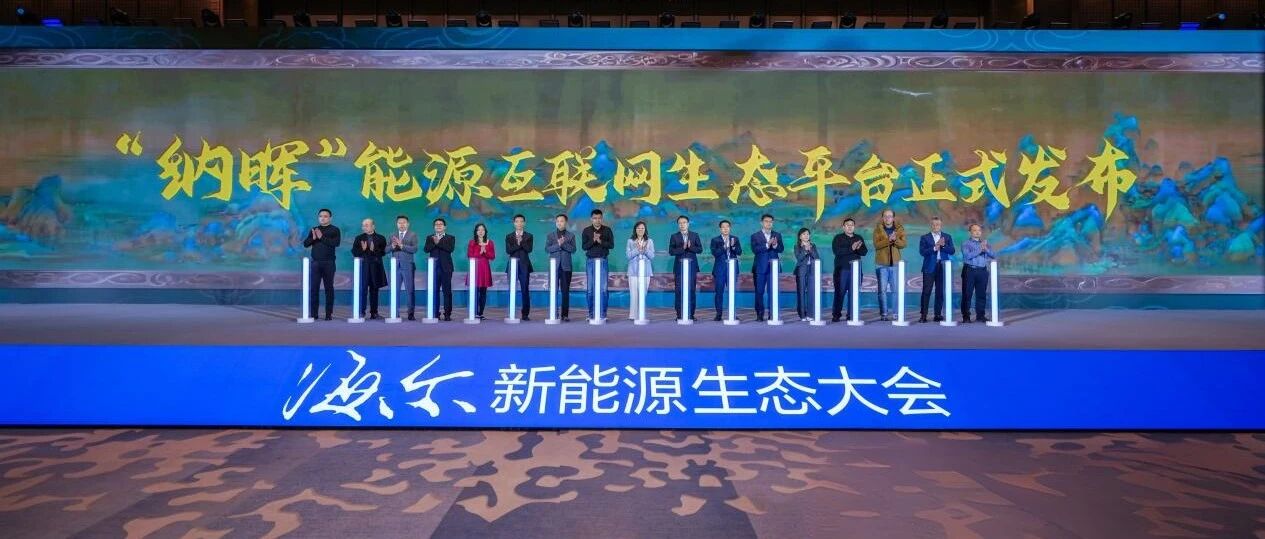
海尔新能源发布“纳晖”能源互联网生态平台,打造定制化能源服务
中国能源报· 2026-03-06 03:40
Core Viewpoint - Haier New Energy aims to lead the market in customized energy services through the launch of the "Nahui Energy Internet Ecological Platform," which integrates assets, data, and scenarios with AI technology to provide a comprehensive energy solution [1][3]. Group 1: Policy and Market Trends - The State Council's implementation opinions emphasize the need to enhance auxiliary service markets, green electricity markets, and capacity markets, promoting a shift towards more efficient, diverse, green, and market-oriented energy services [3]. - The demand for energy services is evolving from simple electricity supply to comprehensive energy efficiency and value enhancement, driven by policy and user needs [3]. Group 2: Technological Innovation and Platform Structure - The "Nahui" ecological platform utilizes an AI-driven technology innovation capability, establishing a three-tiered intelligent architecture of "cloud-edge-end" [5]. - The cloud acts as the "brain," creating solutions with global awareness and decision-making capabilities, while the edge employs AI energy robots for real-time control and precise scheduling [5]. Group 3: Service Offerings and Ecosystem Development - The platform provides customized energy services, including smart microgrid solutions, asset operation, electricity trading, green certificate trading, carbon asset management, and virtual power plant operations [5]. - The transition in the new energy industry from "development-driven" to "operation-oriented" necessitates a reconstruction of energy asset operation logic, with the platform aiming to create a circular ecosystem linking upstream and downstream partners [5].

全国政协委员姜耀东:“十五五”时期煤炭资源化利用要坚持“先立后破”
中国能源报· 2026-03-06 03:08
Core Viewpoint - The article discusses the transformation and challenges facing China's coal industry, emphasizing the need for strategic shifts towards cleaner energy and resource security amid geopolitical tensions and fluctuating commodity prices [2][5][11]. Group 1: Energy Consumption and Coal's Role - In 2025, China's total energy consumption is projected to reach 6.17 billion tons of standard coal, with a 3.5% increase from the previous year. Coal will account for 51.4% of this total, highlighting its role as a critical energy "ballast" [2]. - However, the proportion of coal consumption is expected to decrease by 1.8 percentage points compared to the previous year, indicating a gradual shift towards alternative energy sources [2]. - By around 2028, coal consumption is anticipated to plateau, with annual consumption expected to fluctuate between 4.9 billion and 5.1 billion tons, necessitating a transition from expansion to value creation in the industry [5][6]. Group 2: Structural Changes in Coal Production - The relocation of coal production capacity to western regions like Xinjiang, Inner Mongolia, and Shaanxi has become a significant structural change, enhancing resource endowment and reducing production costs [4]. - By 2024, Xinjiang's raw coal output is expected to exceed 400 million tons, benefiting from improved safety and supply resilience due to better transportation channels [4]. Group 3: Energy Security and Geopolitical Context - The high dependence on imported oil, particularly from the Middle East, poses risks to energy security, making the development of domestic coal resources crucial for strategic stability [5]. - The article emphasizes that coal's role as a "ballast" is becoming increasingly valuable in the context of international geopolitical tensions [5]. Group 4: Industry Transformation Strategies - During the 14th Five-Year Plan, the coal industry is urged to transition from being a fuel source to a raw material for modern coal chemical processes, aiming to produce high-value products like olefins and special fuels [6]. - The integration of coal with renewable energy and advanced chemicals is essential for fostering new production capabilities, while digitalization and smart mining technologies are expected to enhance efficiency and safety [6][9]. Group 5: Challenges in Smart Mining and Clean Utilization - Significant progress has been made in smart mining, with over 50% of coal mines achieving intelligent operations, but challenges remain, including data interoperability and a shortage of skilled personnel [8][9]. - The article highlights the importance of clean coal utilization, advocating for the development of technologies like CCUS and modern coal chemical industries to reduce emissions and enhance the value of coal [9]. Group 6: Critical Mineral Resources and Supply Security - The article addresses the challenges posed by fluctuating prices of key minerals like copper, aluminum, and silver, which are vital for the renewable energy sector [11]. - Strategies for securing industrial metal supplies include enhancing domestic exploration, promoting recycling, and diversifying international partnerships to mitigate risks associated with geopolitical tensions [12][13].
未知机构:3月6日股市早报智能经济AI芯片绿色燃料氢能MicroLED算力等-20260306
未知机构· 2026-03-06 02:20
一、重要财经信息 ①3月6日下午3时,举行全国两会经济主题记者会(回应资本市场改革发展相关问题)。 3月6日股市早报:智能经济/AI芯片/绿色燃料/氢能/MicroLED/算力/等 ②预告:国新办3月7日(星期六)下午3时举行吹风会 解读"十五五"规划《纲要(草案)》。 ③时隔11年政府工作报告再提公积金改革 机构预测可释放超5000亿资金。 3月6日股市早报:智能经济/AI芯片/绿色燃料/氢能/MicroLED/算力/等 一、重要财经信息 ①3月6日下午3时,举行全国两会经济主题记者会(回应资本市场改革发展相关问题)。 ②预告:国新办3月7日(星期六)下午3时举行吹风会 解读"十五五"规划《纲要(草案)》。 ③时隔11年政府工作报告再提公积金改革 机构预测可释放超5000亿资金。 ④央行:3月6日将开展8000亿元买断式逆回购操作。 ⑤伊朗并未关闭霍尔木兹海峡,只针对伪装成商船的军舰进行拦截;美、以、欧洲国家及其支持者所属船只严禁 在霍尔木兹海峡通行。 ⑥国际原油期货结算价大幅收涨。 WTI原油期货4月合约收涨8.51%,布伦特原油期货5月合约涨4.93%。 ⑦美股三大指数集体收跌,道指跌1.61%,标普5 ...