粮食种植

Search documents
湖南江华13.2万亩二季晚稻集中收割 科技赋能粮食丰收
Zhong Guo Xin Wen Wang· 2025-10-29 11:50
Core Viewpoint - Hunan Jianghua County has successfully entered the concentrated harvesting period for 132,000 acres of late rice, leveraging technology to ensure a bountiful grain harvest [1][3]. Group 1: Agricultural Practices and Technology - The use of five combined harvesters in a demonstration area allows for efficient harvesting, completing the process for one acre in just a few minutes [1][3]. - A comprehensive agricultural machinery service system has been established, involving 38 agricultural machinery cooperatives, which provides cross-regional operations and management services, achieving a mechanization level of over 86.5% for rice cultivation [3][5]. - The county has implemented a policy to support agricultural machinery upgrades, investing 10 million yuan since 2022 to add various types of machinery, including 239 large tractors and 92 combined harvesters [3][5]. Group 2: Land Management and Crop Diversification - Jianghua County is committed to land protection measures to prevent non-agricultural use of arable land and aims to restore 1,250 acres of farmland by 2025 [5]. - The county promotes crop diversification by encouraging farmers to plant oilseed rape and winter vegetables after the late rice harvest, aiming to increase land utilization and overall income [5]. - The total grain sowing area in Jianghua County remains stable at 585,000 acres this year [5].


“十四五”时期四川打造保障国家重要初级产品供给战略基地主要成就——粮仓更稳能源更绿资源更足
Si Chuan Ri Bao· 2025-10-29 00:32
Group 1: Grain Production - Sichuan's grain production has remained stable above 700 billion jin for five consecutive years, reaching a historical high of 726.8 billion jin last year, with expectations to exceed 730 billion jin this year [1][2] - The combined increase in rice, corn, and wheat contributed 21.3 billion jin to the overall grain production, accounting for 98.2% of the total increase [1][2] - The average yield per mu has increased by 5.7 kg, contributing 50.5% to the overall grain production increase [3] Group 2: New Energy Development - Sichuan has accelerated the construction of a new energy system, aiming to establish a world-class clean energy base and a national natural gas production base [4] - The province has built and put into operation 10 large hydropower stations, with total hydropower installed capacity expected to exceed 100 million kW this year [4] - The annual natural gas production has increased from 43.2 billion cubic meters to 56.2 billion cubic meters, maintaining the top position in the country [4] Group 3: Mineral Resource Discovery - Sichuan has discovered three large graphite mines and six medium to large phosphate mines, with significant increases in lithium and phosphate resources [5][6] - The province's titanium concentrate production accounts for approximately 80% of the national total, while vanadium products account for 60% [6] - The provincial government has invested significantly in geological exploration, with a fourfold increase in funding compared to the previous five-year plan [6]
粮食有望再获丰收 脱贫攻坚成果扎实巩固——农业农村部有关负责人谈前三季度农业农村经济走势
Xin Hua Wang· 2025-10-28 17:58
Group 1: Grain Production - Grain production in China is expected to achieve another bumper harvest this year, with summer grain output at 299.48 billion jin and early rice production increasing by 6.8 billion jin, a growth of 1.2% compared to last year [2] - The area for autumn grain has increased, particularly for high-yield crops like corn, with good production conditions reported in major agricultural regions [2] - The supply of "vegetable basket" products remains sufficient, with meat production at 73.12 million tons, a year-on-year increase of 3.8%, and stable prices for vegetables, fruits, and aquatic products [2] Group 2: Poverty Alleviation - As of September, over 7 million individuals at risk of falling back into poverty have been identified and assisted, with targeted measures implemented to prevent large-scale poverty [3] - More than 33 million people from the poverty alleviation population have found employment, exceeding the annual target [3] - Financial aid from eastern provinces to western provinces reached 22.48 billion yuan, with significant contributions from central units [3] Group 3: Rural Development - The construction of livable and workable beautiful villages is progressing, with a focus on rural industry development and governance [4] - The value added of the agricultural and sideline food processing industry increased by 6.7% year-on-year, and online retail sales of agricultural products are growing rapidly [4] - Investment in rural construction projects totaled 162.39 billion yuan, with improvements in rural infrastructure and living conditions [4]
“十四五”以来四川省三大主粮合计增产21.3亿斤
Xin Hua Cai Jing· 2025-10-28 13:37
Core Insights - Sichuan Province has implemented two major actions since the "14th Five-Year Plan" to restore wheat area and enhance the quality and efficiency of regenerated rice, resulting in a total grain production increase of 2.13 billion kilograms [1][2] - The contribution rates of rice, corn, and wheat to the overall grain production increase are 3.3 billion kilograms, 1.16 billion kilograms, and 640 million kilograms respectively, with wheat being the main source of summer grain increase for three consecutive years [1] - The average yield per mu (Chinese unit of area) has increased by 5.7 kilograms due to the "Tianfu Granary" initiative, which focuses on precision agriculture across all stages of farming [1] Grain Production and Infrastructure - Major grain-producing cities and counties in Sichuan, such as Dazhou, Nanchong, Yibin, and Liangshan, have collectively increased grain production by 770 million kilograms, accounting for 36% of the province's total increase [2] - The 77 major grain-producing counties have achieved a total grain production of 59.14 billion kilograms, representing 81.4% of the province's total, with an increase of 1.75 billion kilograms, which is 81.8% of the overall increase [2] Oilseed Production - Since the "14th Five-Year Plan," Sichuan has increased its rapeseed area by 2.408 million mu, accounting for 13.1% of the national increase, and the rapeseed yield has risen by 1.14 billion kilograms, contributing 20.2% to the national total [2] - The average yield of rapeseed has improved by 8 kilograms, reflecting a growth rate of 4.9% [2]
苏垦农发的前世今生:2025年三季度营收68.09亿元行业居首,净利润3.16亿元位列第二
Xin Lang Cai Jing· 2025-10-28 11:47
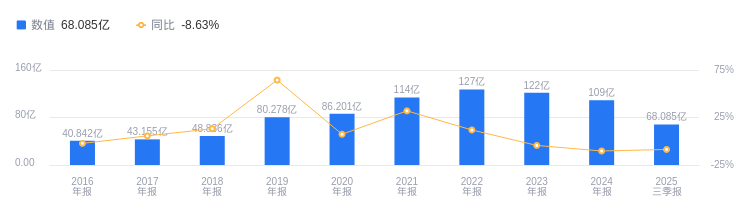
Core Viewpoint - Su Keng Agricultural Development Co., Ltd. is a leading modern agricultural enterprise in China, with a comprehensive business model covering rice and wheat cultivation, seed production, grain and oil processing, and agricultural materials trading [1] Group 1: Business Performance - In Q3 2025, Su Keng Agricultural Development achieved a revenue of 6.809 billion yuan, ranking first in the industry, surpassing the industry average of 5.458 billion yuan [2] - The company's net profit for the same period was 316 million yuan, ranking second in the industry, below the industry average of 833 million yuan [2] Group 2: Financial Ratios - As of Q3 2025, the company's debt-to-asset ratio was 51.41%, higher than the industry average of 38.53% [3] - The gross profit margin for Q3 2025 was 12.32%, lower than the industry average of 26.46% [3] Group 3: Leadership - The chairman, Deng Guoxin, has a rich background, previously holding various positions in Jiangsu Province's energy sector and currently serving as the party secretary and chairman of Su Keng Agricultural Development [4] Group 4: Shareholder Information - As of September 30, 2025, the number of A-share shareholders decreased by 3.35% to 43,900, while the average number of shares held per shareholder increased by 3.47% to 31,400 [5] Group 5: Business Highlights - The seed business showed growth in H1 2025, with revenue of 646 million yuan, a year-on-year increase of 4.31% [6] - The company achieved record production levels for its self-owned bases in barley and rapeseed [6] - The area of self-operated farmland increased to approximately 1.358 million mu, up by 42,000 mu year-on-year [6]

四川粮食产量预计突破730亿斤 创历史新高
Zhong Guo Xin Wen Wang· 2025-10-28 11:30
Core Insights - Sichuan's grain production is expected to exceed 73 billion jin, marking a historical high for the province [1] - The oilseed rape production is projected to reach over 7.6 billion jin, also setting a new record [1] Group 1: Grain Production - Sichuan has maintained a stable grain production of over 70 billion jin for five consecutive years, with a forecast of 72.68 billion jin for 2024 [1] - The contribution rate of the "three major grains" to the province's grain increase is 98.2%, with wheat production increasing by over 200 million jin for three consecutive years [1] Group 2: Storage and Reserve System - Sichuan has established a three-tiered government reserve system, acquiring a total of 10.66 million tons of grain and 1.299 million tons of oilseed rape since the start of the 14th Five-Year Plan [2] - The province has built 334 low-temperature storage facilities and high-standard grain warehouses with a capacity of 9.23 million tons, ensuring effective grain storage [2]
护航秋粮颗粒归仓
Jin Rong Shi Bao· 2025-10-28 02:03
Core Viewpoint - The article highlights the importance of financial support for farmers in Chifeng, Inner Mongolia, during the autumn harvest season, emphasizing the role of local banks in providing tailored financial services to meet diverse funding needs [1][2][3][4][5] Group 1: Agricultural Production and Financial Support - Chifeng City is a significant agricultural base in Inner Mongolia, with a grain crop planting area of 21.68 million acres, accounting for approximately 30.5% of the region's total [1] - The autumn harvest is crucial for local farmers' income and regional food security, prompting the People's Bank of China in Chifeng to guide financial institutions to focus on agricultural needs [1][3] Group 2: Innovative Financial Products - The Industrial and Commercial Bank of China (ICBC) in Chifeng has introduced flexible loan options like "Xingnong Quick Loan," providing farmers with access to 100,000 yuan to ease financial pressures during the harvest [2] - Various tailored financial products, such as "Planting e-loan," have been developed to address the financing challenges faced by agricultural entities [2][3] Group 3: Efficient Loan Processing - The People's Bank of China in Chifeng has streamlined loan approval processes, increasing efficiency by 30% and reducing loan disbursement time to within 48 hours [4] - The Agricultural Bank of China in Chifeng reported a transaction volume of 21.65 million yuan for its "Huinong Installment" product, facilitating the purchase of harvesting machinery [4] Group 4: Cost Reduction in Financing - The establishment of a grain credit guarantee fund of 400 million yuan has supported the smooth acquisition of high-quality millet, ensuring the completion of annual purchasing plans [5] - A new financing model combining a grain credit guarantee fund with a guarantee company has reduced the annual guarantee fee rate from 0.8% to 0.4%, saving enterprises over 20 million yuan [5]
新华时评|千方百计打好秋收秋种这场硬仗
Xin Hua She· 2025-10-27 14:07
Core Points - The article emphasizes the importance of effective measures to ensure autumn harvest and winter sowing in the face of adverse weather conditions affecting agricultural production [1][2] Group 1: Autumn Harvest - Since September, the Huanghuaihai region has experienced continuous rain, leading to waterlogging and difficulties in agricultural machinery operation [1] - Various local departments are implementing effective measures such as reallocating harvesting machinery and organizing manual harvesting to mitigate losses [1] - The focus is on ensuring that farmers can sell their grain, with increased market purchases and government reserve interventions being prioritized [1] Group 2: Winter Sowing - Over 80% of the autumn grain has been harvested, with the next priority being the sowing of winter wheat, which is crucial for next year's grain production [2] - Collaboration among agriculture, meteorology, and finance departments is essential for monitoring soil conditions and guiding farmers in timely sowing practices [2] - Long-term strategies include enhancing agricultural water management and modernizing irrigation systems to improve disaster resilience [2]
国家统计局:前三季度农业经济形势稳中向好
Guo Jia Tong Ji Ju· 2025-10-27 08:25
Group 1 - The overall grain production is stable, with summer grain maintaining production and early rice increasing yield, laying a good foundation for a bumper harvest in the year [2] - The total summer grain production reached 299.48 billion jin, slightly down by 0.1% year-on-year, while early rice production increased to 57.03 billion jin, up by 1.2% [2] - The autumn grain planting area has increased, and the production conditions are generally favorable, despite some regions facing adverse weather [2] Group 2 - Livestock production is stable, with total meat production reaching 73.12 million tons, an increase of 3.8% year-on-year [3] - The number of pigs slaughtered increased to 52.992 million heads, up by 1.8%, with pork production at 4.368 million tons, also up by 3.0% [3] - Cattle and sheep production remains stable, with beef production increasing by 3.3% and milk production by 0.7%, while sheep production saw a decline [4] Group 3 - The agricultural product market is well-supplied, with producer prices down by 3.6% year-on-year [5] - Grain prices have generally decreased, with specific declines in wheat by 2.5% and corn by 5.3%, while fruit prices have seen a slight increase of 1.1% [5] - Livestock prices have shown an upward trend, particularly for live cattle and sheep, while pork prices have decreased by 6.9% [5]

科技赋能,解锁新时代大国粮仓的“智慧密码”
Xin Hua She· 2025-10-25 20:32
Core Viewpoint - The article emphasizes the importance of food security in China, highlighting advancements in agricultural technology and practices that enhance grain production and management, ultimately contributing to the country's economic stability and high-quality development [1][15]. Group 1: Agricultural Advancements - The average rice yield this year is close to 1400 jin per mu, showing an increase from last year [2] - Mechanization in farming has surpassed 90%, with significant improvements in efficiency through the use of smart farming technologies such as automated irrigation and drone applications [3] - Collaboration with universities for research and trials of new rice varieties has led to higher yields and improved quality, with certain varieties meeting national grade two standards [3] Group 2: Grain Storage and Management - The grain purchasing process has become more efficient with online booking systems, allowing farmers to sell their produce without long queues and ensuring timely payments [4] - The introduction of intelligent sampling systems has increased testing efficiency for grain quality, with the time for testing rice reduced to 12-13 minutes [7] - AI technology is being utilized for pest monitoring, significantly improving the detection of storage pests with a 95% accuracy rate [8] Group 3: Food Safety and Innovation - Food safety is prioritized at every stage, from raw material selection to production, ensuring that only compliant ingredients are used [11] - The development of specialized flour products reflects advancements in production technology, catering to diverse culinary needs [12] - The introduction of D-Tagatose, a low-calorie sugar substitute, marks a significant innovation in the health food sector, filling a gap in the high-end functional sugar market [14]