
调味品

Search documents
食品饮料行业周报:茅台批价坚挺旺季氛围渐起,鸣鸣很忙上市催化零食板块-20260125
Shenwan Hongyuan Securities· 2026-01-25 13:08
Investment Rating - The report maintains a positive outlook on the liquor sector, particularly on premium brands like Guizhou Moutai, Luzhou Laojiao, and Shanxi Fenjiu, while also highlighting the potential of other brands such as Wuliangye and Jinjing Wine [2][7]. Core Insights - The liquor market is undergoing a restructuring phase, with expectations of a double-digit decline in sales year-on-year for Q1 2026, but a potential stabilization in Q2 and a turning point in Q3 [2][7]. - The report anticipates a recovery in the liquor sector by the end of 2026 and into 2027, driven by improved fundamentals and valuation [2][7]. - The consumer goods sector is showing structural improvements, with competition shifting from price to quality, leading to a gradual balance in supply and demand [2][9]. Summary by Sections 1. Weekly Insights on Food and Beverage - The food and beverage sector saw a decline of 1.41% last week, with liquor down 2.80%, underperforming the Shanghai Composite Index by 2.25 percentage points [6]. - Notable stock performances included a 19.59% increase for Haoxiangni and a 14.32% rise for Wancheng Group [6]. 2. Market Performance of Food and Beverage Sectors - The report highlights the price stability of Moutai, with a current price of 1560 RMB per bottle, up 20 RMB from the previous week, indicating a positive trend in pricing [8][27]. - The report notes that Moutai's pricing has found a bottom, reducing downward risks significantly, and anticipates a potential increase in sales volume as the Spring Festival approaches [8]. 3. Industry Events and Updates - The report mentions the upcoming IPO of Mingming Hen Mang, a leading snack retail chain, which is expected to catalyze the snack sector [10]. - The report emphasizes the importance of supply chain management and digitalization in enhancing competitive advantages for companies like Mingming Hen Mang [10]. 4. Valuation Table - The food and beverage sector's dynamic PE is currently at 19.27x, with a premium rate of 10%, while the liquor sector's dynamic PE stands at 17.50x, indicating a zero premium [27].





食品饮料行业研究:飞天茅台动销逐步起势,关注子版块春节备货催化
SINOLINK SECURITIES· 2026-01-25 07:50
Investment Rating - The report maintains a cautious outlook on the liquor industry, particularly on high-end liquor such as Moutai, with expectations of gradual recovery in sales and pricing stability post-Spring Festival [10][11][12]. Core Insights - The high-end liquor segment, especially Moutai, is experiencing a sales boost as the Spring Festival approaches, with expectations of price recovery due to increased demand driven by wealth effects [10][11]. - The report suggests that the market's concerns about post-festival price drops for Moutai are likely to be unfounded, predicting only minor seasonal fluctuations [10][12]. - The overall sentiment in the liquor industry is shifting from a pessimistic outlook to a more stable one, with expectations of improved sales dynamics as external constraints on consumption ease [11][12]. Summary by Sections Liquor Industry - The report highlights that Moutai's sales are performing better than previously cautious expectations, leading to a price recovery for both Moutai and newer Moutai products [10]. - It is noted that the market is still wary of potential price declines after the Spring Festival, but historical patterns suggest only minor adjustments are likely [10][11]. - The report emphasizes the importance of brand strength and market positioning for high-end liquor companies, recommending investments in brands with strong market presence and growth potential [12]. Beer Industry - The beer sector is seeing a steady recovery in on-premise consumption, with companies diversifying into non-drink channels and soft drinks [12]. - The report suggests that the beer industry's performance is expected to stabilize, with a focus on maintaining competitive pricing and improving dividend yields [12]. Snack Industry - The snack sector is benefiting from pre-Spring Festival stocking and product innovation, with companies like Qiaqia and Ganyuan expected to show significant profit elasticity due to low comparative bases [14]. - The report recommends focusing on leading snack companies that are expanding their store presence and adapting their product offerings [14]. Beverage Industry - The soft drink sector is currently facing challenges due to seasonal demand fluctuations and competition from ready-to-drink tea brands, leading to a slight decline in overall sales growth [14]. - Despite these challenges, leading brands like Dongpeng and Nongfu are expected to maintain double-digit growth through brand strength and market share consolidation [14]. Seasoning Industry - The seasoning sector is stabilizing as restaurant demand begins to recover, with expectations of improved performance in 2026 driven by seasonal effects [15]. - The report highlights companies like Angel Yeast and Qianhe Condiments as having strong growth potential due to favorable market conditions and dividend yields [15].


食品饮料行业周报 2026年第4期:白酒探底,餐供积极
GUOTAI HAITONG SECURITIES· 2026-01-25 07:45
Investment Rating - The report assigns an "Overweight" rating for the food and beverage industry, indicating a positive outlook compared to the market benchmark [6]. Core Insights - The report emphasizes the recovery of the consumer price index (CPI) in December, suggesting a turning point in supply and demand dynamics. It highlights the importance of focusing on growth opportunities and the valuation flexibility of consumer goods [3][9]. - The report identifies key investment targets in the liquor sector, including Guizhou Moutai, Wuliangye, and Luzhou Laojiao, as well as other brands expected to clear inventory [9]. - The beverage sector is expected to benefit from improved travel conditions, with recommendations for companies like Dongpeng Beverage and Nongfu Spring [9]. - The report notes the ongoing recovery in the restaurant supply chain and the high growth potential of companies like Bailong Chuangyuan [15]. Summary by Sections Investment Recommendations - The report suggests focusing on companies with price elasticity, including Guizhou Moutai, Wuliangye, and Luzhou Laojiao, as well as those expected to clear inventory like Yingjia Gongjiu and Guxi Gongjiu [9]. - It recommends beverage companies such as Dongpeng Beverage and Nongfu Spring, while also highlighting low-valuation, high-dividend stocks like China Foods and Master Kong [9]. - For snacks and food raw materials, it suggests Bailong Chuangyuan, Yanjinpuzi, and Three Squirrels as growth targets [9]. Liquor Sector Insights - As the Spring Festival approaches, the report highlights the importance of monitoring sales volume and pricing. It notes that the peak sales period is expected in February, with varying performance among brands [10]. - The report mentions that the liquor industry faced a significant production decline in 2025, with a total output of 3.549 million kiloliters, a year-on-year decrease of 12.1%, marking the largest drop since 2019 [11][13]. - It anticipates that the recovery in market conditions and inventory reduction will take time, with companies likely to maintain relationships through pricing strategies [11]. Consumer Goods Sector Insights - The report indicates that the restaurant supply chain is recovering, with the pre-prepared food sector expected to benefit from new national standards [15]. - Bailong Chuangyuan is highlighted for its strong growth, reporting a revenue of 1.38 billion yuan in 2025, a year-on-year increase of 19.8%, and a net profit of 366 million yuan, up 48.9% [15][16]. - The report notes that the company’s growth is driven by product optimization and increased production capacity utilization [16].

多地消费市场购销两旺洋溢浓浓年味儿 传统习俗“拉满”节日氛围感
Yang Shi Wang· 2026-01-25 03:11
Group 1: Vinegar Sales in Taiyuan - The tradition of making pickled garlic with vinegar for the Laba Festival is popular in Taiyuan, leading to long queues at vinegar shops [1][3] - The sales of aged vinegar have peaked recently, with an increase in the number of customers compared to previous years [7] - Despite the cold weather, both local residents and tourists are enthusiastic about purchasing vinegar [5] Group 2: Traditional Pastry Sales in Jiangsu - As the Spring Festival approaches, traditional pastries like Chao cake and crispy biscuits are experiencing a sales surge in Jiangsu, particularly in Nantong [8] - The production of these pastries combines traditional handmade methods with industrial production to meet market demand [8] - A crispy biscuit production company in Hai'an is receiving a significant increase in orders, leading to workers operating in shifts to fulfill the demand [10][13]

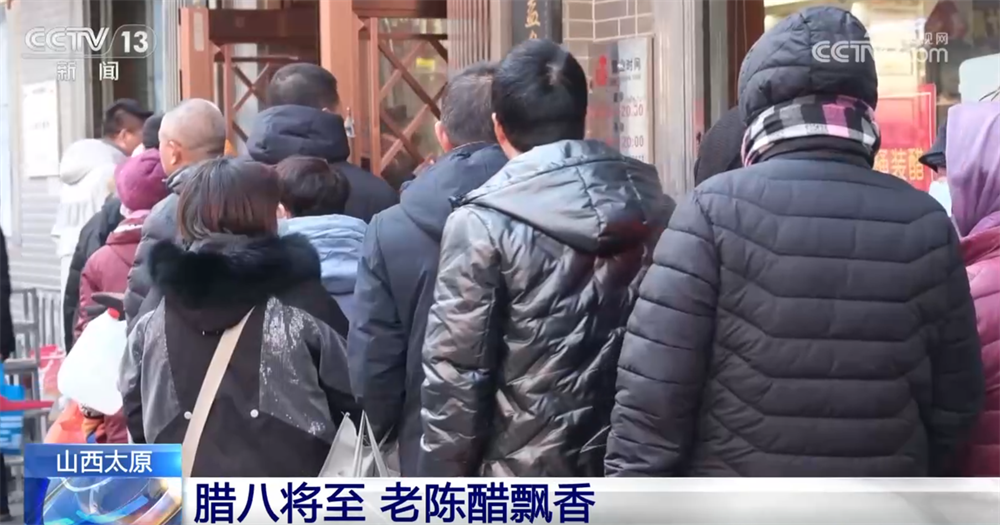
腊八将至年味浓!太原市民游客排队购买老陈醋,销售火热
Sou Hu Cai Jing· 2026-01-24 10:56
Group 1 - The upcoming Laba Festival is increasing the demand for aged vinegar in Taiyuan, Shanxi, leading to long queues at local stores [1][3] - Despite the cold weather, both local residents and tourists are eager to purchase aged vinegar, often bringing their own containers [5] - Sales of aged vinegar are at a peak, with daily sales exceeding several tons, and online sales have increased by over 10% compared to the same period last year [9]
数据亮眼却愁眉不展!全球局势持续紧张 美企高层纷纷坦言“今年不好过”
智通财经网· 2026-01-23 13:46
Group 1 - The initial earnings reports from U.S. companies indicate a cautious outlook due to geopolitical uncertainties affecting travel demand and consumer spending [1] - Delta Air Lines and United Airlines have expressed concerns about the impact of global tensions on their profitability and travel demand [1] - Consumer goods companies like Procter & Gamble and McCormick report that consumers are maintaining a cautious spending attitude, reflecting broader economic uncertainties [1] Group 2 - 3M's earnings outlook fell short of market expectations, leading to its largest single-day stock drop since April of the previous year, highlighting ongoing uncertainties in the consumer and automotive sectors [1] - Industrial distribution and logistics companies, such as Fastenal and JB Hunt, reported earnings below expectations, indicating continued pressure in the industrial sector [1] - Despite a generally positive economic backdrop, with 80% of S&P 500 companies exceeding earnings expectations, corporate management's pessimistic statements contrast sharply with these indicators [1] Group 3 - The political landscape and trade policy changes under the Trump administration are complicating corporate planning, as CEOs face challenges in forecasting annual performance [2] - McCormick's CEO noted that inflation, geopolitical tensions, and trade uncertainties are exerting pressure on the company's core market, contributing to disappointing earnings forecasts [2] - Procter & Gamble anticipates sales growth in the next six months despite external disruptions, including the impact of government shutdowns on low-income consumer purchasing power [3] Group 4 - Airlines like United Airlines are experiencing significant negative impacts on ticket bookings due to military actions in Venezuela, which could disrupt their previously positive operational outlook [3] - The Trump administration's policy measures, such as high tax refunds and potential stimulus, may provide short-term relief for consumers, potentially boosting consumer confidence [4] - The focus on consumer relief initiatives, including credit card interest rate caps, is part of a broader strategy to support low-income households and stimulate spending [4]


天味食品:4000万元闲置募集资金理财到期赎回,收益6.69万元
Xin Lang Cai Jing· 2026-01-23 09:23
Core Viewpoint - The company has made a structured deposit investment with a principal of 40 million yuan, yielding a return of 66,900 yuan over a 31-day period [1] Group 1: Investment Details - The company purchased a structured deposit product from Bank of China, Shuangliu Branch, on December 22, 2025, for an amount of 40 million yuan [1] - The investment has a maturity date of January 23, 2026, at which point the principal of 40 million yuan will be redeemed [1] - The total return from this investment is 66,900 yuan [1] Group 2: Fund Management - The company previously approved the use of up to 1.3 billion yuan of temporarily idle raised funds for cash management, with the amount being available for rolling use [1] - As of the announcement date, the company has cumulatively invested 3.84 billion yuan over the last 12 months, recovering 2.745 billion yuan and generating a total return of 25.4734 million yuan [1] - There remains an unrecovered amount of 1.095 billion yuan, with a remaining quota of 205 million yuan [1]

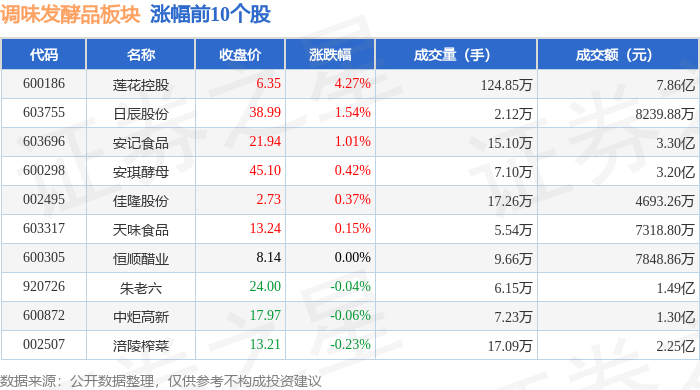
调味发酵品板块1月23日跌0.32%,海天味业领跌,主力资金净流出1.44亿元
Zheng Xing Xing Ye Ri Bao· 2026-01-23 09:04
证券之星消息,1月23日调味发酵品板块较上一交易日下跌0.32%,海天味业领跌。当日上证指数报收于 4136.16,上涨0.33%。深证成指报收于14439.66,上涨0.79%。调味发酵品板块个股涨跌见下表: | 代码 | 名称 | 收盘价 | 涨跌幅 | 成交量(手) | 成交额(元) | | --- | --- | --- | --- | --- | --- | | 600186 | 连化控股 | 6.35 | 4.27% | 124.85万 | 7.86亿 | | 603755 | 日辰股份 | 66'88 | 1.54% | 2.12万 | 8239.88万 | | 603696 | 安记食品 | 21.94 | 1.01% | 15.10万 | 3.30亿 | | 600298 | 安脂酵母 | 45.10 | 0.42% | 7.10万 | 3.20亿 | | 002495 | 佳隆股份 | 2.73 | 0.37% | 17.26万 | 4693.26万 | | 603317 | 天味食品 | 13.24 | 0.15% | 5.54万 | 7318.80万 | | 600305 | 恒顺醋业 ...

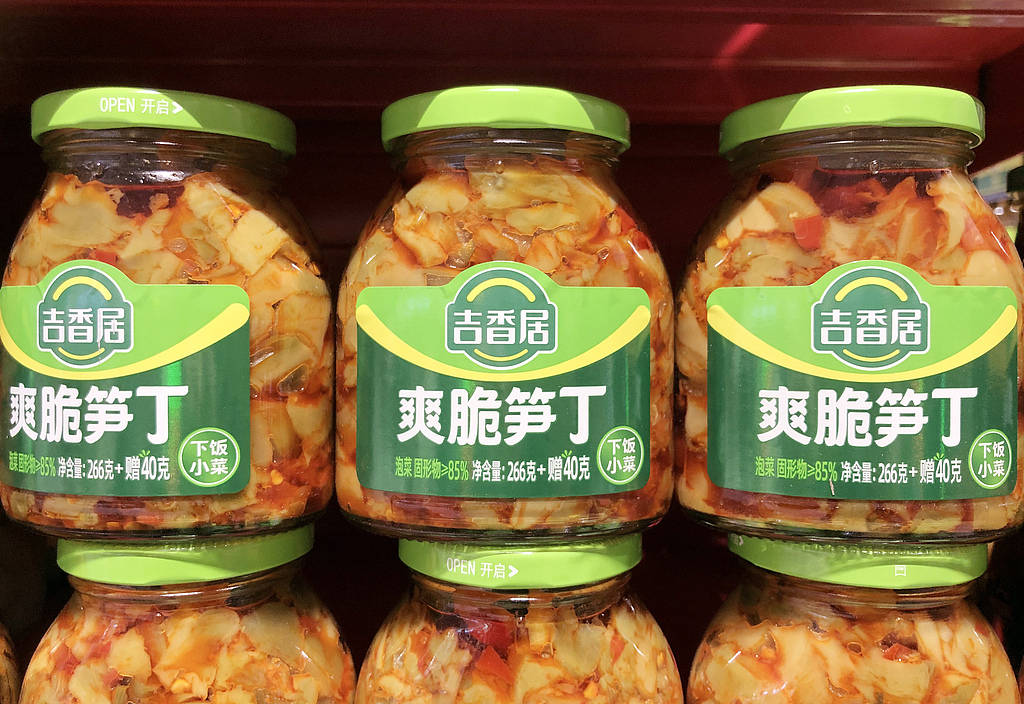
方源资本收购吉香居92%股份,公司两度易主、四年IPO未果,调味品行业格局生变
Sou Hu Cai Jing· 2026-01-23 03:28
Group 1 - The core point of the article is the acquisition of a 92% stake in Sichuan-based condiment company Jixiangju by FountainVest Capital Partners, a subsidiary of Fangyuan Capital, indicating a significant capital transaction in the Chinese condiment industry [1] - Jixiangju, founded in 2000, has developed into a prominent brand with over 100 SKUs, focusing on products like pickled vegetables and sauces, and has a presence in over 20 countries [3] - The acquisition reflects a trend where private equity firms are investing in food consumption sectors, aiming to enhance and consolidate smaller companies within a fragmented market [2][4] Group 2 - Jixiangju has faced challenges in its market segment, particularly with a shift in consumer preferences towards healthier options, leading to a projected decline in sales for pickled vegetables and sauces by over 5% by 2025 [4][6] - The company has experienced frequent changes in control, with its path to an IPO being prolonged and complicated, having undergone multiple ownership changes in recent years [3] - The entry of Fangyuan Capital is expected to provide the necessary capital support for Jixiangju to overcome production bottlenecks, upgrade its supply chain, and expand its national distribution channels [4][6]
财信证券晨会纪要-20260123
Caixin Securities· 2026-01-23 01:10
Group 1: Market Overview - The three major indices closed higher, with the overall market sentiment improving as previous hot themes rebounded [9] - The Shanghai Composite Index rose by 0.14% to close at 4122.58, while the ChiNext Index increased by 1.01% to 3328.65 [9][10] - The trading volume across the market reached approximately 27,164.05 billion, an increase of 926.58 billion from the previous trading day [10] Group 2: Economic Insights - The first batch of 936 billion yuan in ultra-long-term special government bonds has been allocated to support equipment renewal across various sectors, expected to drive total investment exceeding 460 billion yuan [18] - The People's Bank of China conducted a 2102 billion yuan reverse repurchase operation with a fixed rate of 1.40%, resulting in a net injection of 309 billion yuan [20] Group 3: Industry Dynamics - The International Energy Agency has raised its forecast for global oil demand growth in 2026 to an average increase of 930,000 barrels per day, up from a previous estimate of 860,000 barrels [29] - The China Chain Store and Franchise Association reported that 59.8% of surveyed chain restaurant enterprises expect an increase in the number of stores in 2025, primarily driven by large enterprises [31] - The output of negative electrode materials in China is projected to reach 2.922 million tons in 2025, marking a year-on-year growth of 38.1% [35] Group 4: Company Updates - Daikin Heavy Industries (002487.SZ) anticipates a net profit of 1.05 to 1.2 billion yuan for 2025, representing a year-on-year increase of 121.58% to 153.23% [45] - Boteng Co., Ltd. (300363.SZ) expects its revenue for 2025 to be between 3.35 to 3.5 billion yuan, with a growth rate of 11% to 16% [47] - Founder Technology (600601.SH) forecasts a net profit of 430 to 510 million yuan for 2025, indicating a growth of 67.06% to 98.14% year-on-year [48]


