
石油天然气

Search documents
石油ETF(561360)开盘跌2.76%,重仓股中国石油跌2.18%,中国海油跌2.61%
Xin Lang Cai Jing· 2026-02-06 01:41
2月6日,石油ETF(561360)开盘跌2.76%,报1.372元。石油ETF(561360)重仓股方面,中国石油开 盘跌2.18%,中国海油跌2.61%,中国石化跌1.56%,杰瑞股份跌3.44%,招商轮船跌1.29%,广汇能源跌 1.28%,中远海能跌1.30%,恒力石化跌1.83%,荣盛石化跌1.31%,洲际油气跌10.00%。 石油ETF(561360)业绩比较基准为中证油气产业指数收益率,管理人为国泰基金管理有限公司,基金 经理为苗梦羽,成立(2023-10-23)以来回报为40.93%,近一个月回报为15.06%。 声明:市场有风险,投资需谨慎。本文基于第三方数据库自动发布,不代表新浪财经观点,任何在本文 出现的信息均只作为参考,不构成个人投资建议。如有出入请以实际公告为准。如有疑问,请联系 biz@staff.sina.com.cn。 来源:新浪基金∞工作室 ...





中国海油2月5日获融资买入1.30亿元,融资余额16.22亿元
Xin Lang Cai Jing· 2026-02-06 01:20
融券方面,中国海油2月5日融券偿还7.72万股,融券卖出2.01万股,按当日收盘价计算,卖出金额67.70 万元;融券余量22.59万股,融券余额760.83万元,低于近一年30%分位水平,处于低位。 来源:新浪证券-红岸工作室 2月5日,中国海油跌0.97%,成交额14.93亿元。两融数据显示,当日中国海油获融资买入额1.30亿元, 融资偿还1.23亿元,融资净买入684.55万元。截至2月5日,中国海油融资融券余额合计16.30亿元。 融资方面,中国海油当日融资买入1.30亿元。当前融资余额16.22亿元,占流通市值的1.61%,融资余额 低于近一年40%分位水平,处于较低位。 分红方面,中国海油A股上市后累计派现2559.95亿元。近三年,累计派现1790.51亿元。 机构持仓方面,截止2025年9月30日,中国海油十大流通股东中,香港中央结算有限公司退出十大流通 股东之列。 声明:市场有风险,投资需谨慎。本文基于第三方数据库自动发布,不代表新浪财经观点,任何在本文 出现的信息均只作为参考,不构成个人投资建议。如有出入请以实际公告为准。如有疑问,请联系 biz@staff.sina.com.cn。 资料 ...
股票行情快报:中国石油(601857)2月5日主力资金净卖出5878.35万元
Sou Hu Cai Jing· 2026-02-05 12:03
证券之星消息,截至2026年2月5日收盘,中国石油(601857)报收于10.53元,下跌0.28%,换手率0.1%, 成交量162.25万手,成交额16.99亿元。 注:主力资金为特大单成交,游资为大单成交,散户为中小单成交 以上内容为证券之星据公开信息整理,由AI算法生成(网信算备310104345710301240019号),不构成 投资建议。 中国石油2025年三季报显示,前三季度公司主营收入21692.56亿元,同比下降3.92%;归母净利润 1262.79亿元,同比下降4.9%;扣非净利润1268.74亿元,同比下降6.36%;其中2025年第三季度,公司 单季度主营收入7191.57亿元,同比上升2.34%;单季度归母净利润422.86亿元,同比下降3.86%;单季 度扣非净利润427.58亿元,同比下降2.16%;负债率38.38%,投资收益127.32亿元,财务费用89.29亿 元,毛利率21.09%。中国石油(601857)主营业务:原油及天然气的勘探、开发、生产、输送和销售 及新能源业务;原油及石油产品的炼制,基本及衍生化工产品、其他化工产品的生产和销售及新材料业务; 炼油产品和非油品的 ...


美股异动丨壳牌盘前跌近3%,Q4调整后净利润同比降11%创近五年新低
Ge Long Hui· 2026-02-05 09:33
壳牌(SHEL.US)盘前跌近3%,报76.48美元。消息面上,原油价格走低、石油交易表现欠佳加上化工业 务陷入困境,壳牌去年第四季度调整后净利润同比下降11%至32.6亿美元,低于市场普遍预期的35.3亿 美元,更创下自2021年第一季度以来的单季利润最低纪录。这些因素共同对壳牌的盈利状况造成了打 压。期内,营收同比小幅下滑约3.3%至640.93亿美元。尽管如此,壳牌将季度股息上调4%至每股0.372 美元,并开启总额达35亿美元的股票回购计划。(格隆汇) ...

稀缺标的+资金流入 石油ETF鹏华(159697)领衔周期板块布局
Sou Hu Wang· 2026-02-05 09:31
Core Viewpoint - The cyclical sector is entering a new allocation window due to enhanced macroeconomic recovery expectations and stabilization of global commodity prices, with Penghua Fund offering a comprehensive ETF product matrix covering key cyclical sectors such as energy, chemicals, and non-ferrous metals [1] Group 1: ETF Product Matrix - Penghua Fund has launched four cyclical ETFs, forming a comprehensive layout of "oil + non-ferrous + industrial non-ferrous + chemicals," catering to diverse investor allocation needs [1][2] - The core product, the Oil ETF Penghua (159697), tracks the National Index of Oil and Gas, covering leading companies like China National Petroleum, China National Offshore Oil, and Sinopec, effectively capturing oil and gas industry cyclical opportunities [2] Group 2: Fund Performance and Market Recognition - As of February 5, 2026, Penghua's cyclical ETFs have shown significant net inflows, with the Oil ETF experiencing explosive growth from 207 million to 1.733 billion, reflecting a growth of over 700% [3] - The Chemical ETF (159870) has surpassed 33 billion, leading its category, while the Non-Ferrous ETF (159880) has seen stable inflows, with a net inflow of 305 million and a net return of 27.32% over the past 20 trading days [3] Group 3: Competitive Advantages - Penghua's cyclical ETFs possess significant index scarcity and first-mover advantages, creating differentiated competitive barriers [4] - The Oil ETF is the largest and earliest established among only three ETFs tracking the National Index of Oil and Gas, allowing for more precise tracking of industry performance [4][5] Group 4: Management and Investment Strategy - The four ETFs are managed by Yan Dong, a fund manager with 16 years of experience, who emphasizes the importance of "high-low switching" investment opportunities for 2026 [6] - The chemical sector is viewed as relatively undervalued, with potential for recovery driven by PPI improvements and ongoing "anti-involution" policies [6][7] Group 5: Institutional Consensus - Multiple institutions are optimistic about cyclical stock investment opportunities in 2026, with expectations of oil price rebounds due to geopolitical tensions and demand recovery [8] - The non-ferrous sector is anticipated to enter a bull market driven by monetary, demand, and supply factors, highlighting the investment value of non-ferrous mining companies [8] Group 6: Investment Opportunities - The Penghua Fund's cyclical ETF matrix has become a core tool for investors looking to allocate in commodities and upstream resources, with the Oil ETF being particularly noteworthy due to its explosive growth and unique index coverage [9]
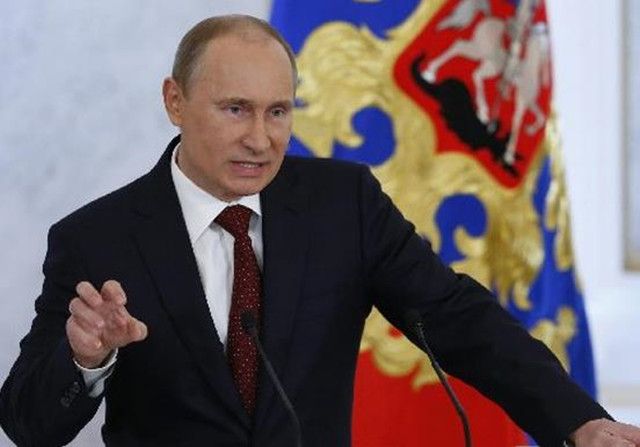
从超4%到1%:俄罗斯经济增速下降,普京表态
Di Yi Cai Jing Zi Xun· 2026-02-05 09:20
Economic Growth and Inflation - Russia's GDP growth for 2025 is projected at 1%, a slowdown from 4.1% in 2023 and 4.3% in 2024, primarily due to measures aimed at reducing inflation [2] - The inflation rate in Russia has decreased to 5.6% in 2025, down from 9.5% in 2024, with a year-to-date annualized inflation rate of 6.4% as of January 26 [3] - The Central Bank of Russia has adjusted the benchmark interest rate, which peaked at 21% in the first half of 2025 and was reduced to 18% in the second half, maintaining a "moderately tight" stance to prevent inflation rebound [3] Factors Contributing to Economic Decline - The ongoing Russia-Ukraine conflict has shifted financial resources towards military spending, limiting investments in production and technology [4] - Long-term impacts of Western sanctions have led to technological blockades, hindering industrial upgrades and weakening the industrial base [4] - High borrowing costs, reduced demand, and increased military expenditures have tightened fiscal conditions, contributing to economic slowdown [5] Sectoral Performance - Key sectors such as transportation, construction, and certain extraction industries, particularly coal, oil, and gas, have underperformed due to the Central Bank's interest rate hikes [5] - Investment growth in Russia has stagnated, with fixed asset investment projected to show zero growth by the end of 2025, marking the end of rapid growth driven by state spending and import substitution [5] Future Economic Outlook - The geopolitical uncertainty poses significant challenges for Russia's economy, with energy exports constrained and international oil prices declining [6] - The government plans to increase the value-added tax rate from 20% to 22% starting in 2026, which is expected to impact consumer prices and inflation [6] - Experts suggest that the continuation of the Russia-Ukraine conflict will likely lead to sustained economic decline unless significant changes occur [7]
加皇资本:壳牌业绩表现不及预期
Xin Lang Cai Jing· 2026-02-05 08:32
Group 1 - The core viewpoint of the article indicates that Shell's performance was slightly below expectations, attributed to weak results in its integrated gas and marketing segments [1] - Market expectations for Shell had already been lowered prior to the earnings update, reflecting a cautious outlook [1] - Despite an increase in net debt during the quarter, Shell's balance sheet remains healthy, indicating financial stability [1] Group 2 - Shell has maintained its stock buyback program at over $3 billion for the 17th consecutive quarter, demonstrating a commitment to returning value to shareholders [1] - Following the earnings report, Shell's stock price declined by 1.8%, reaching 2,815 pence [1]
从超4%到1%:俄罗斯经济增速下降,普京怎么说
Di Yi Cai Jing· 2026-02-05 06:49
Economic Growth Outlook - Russia's GDP growth rate for 2025 is projected at 1%, significantly lower than 4.1% in 2023 and 4.3% in 2024, primarily due to measures aimed at reducing inflation [1] - Cumulative growth over the past three years is reported at 9.7% [1] Inflation and Monetary Policy - Inflation in Russia is expected to decrease to 5.6% in 2025, down from 9.5% in 2024, with a current annualized rate of 6.4% [3] - The Central Bank of Russia has adjusted the benchmark interest rate, peaking at 21% in early 2025 to curb inflation expectations, then gradually lowering it to 18% while maintaining a "moderately tight" stance [3][5] - The decline in inflation has created space for a more accommodative monetary policy, despite still being above the Central Bank's target of 4% [3] Economic Challenges - The ongoing Russia-Ukraine conflict has shifted significant funding towards military sectors, limiting investments in production and technology, which hampers economic growth [4] - Long-term impacts of Western sanctions have led to technological blockades, restricting Russia's ability to upgrade its industries [5] - High borrowing costs, reduced demand, and increased military spending have contributed to a tightening fiscal situation [5] Investment Trends - Fixed asset investment in Russia is projected to stagnate, indicating the end of a period of rapid growth driven by state spending and import substitution [6] - The government plans to increase the VAT rate from 20% to 22% starting in 2026, which is expected to impact consumer prices and inflation [7] Future Economic Prospects - The geopolitical uncertainty poses significant challenges for Russia's economic recovery, with energy export conditions deteriorating due to sanctions and falling oil prices [7] - Experts suggest that without resolution to the Ukraine conflict, continued investment decline and economic slowdown are likely [8] - However, there is potential for resilience in the Russian economy if significant progress is made in negotiations and increased funding is directed towards the business sector [8]
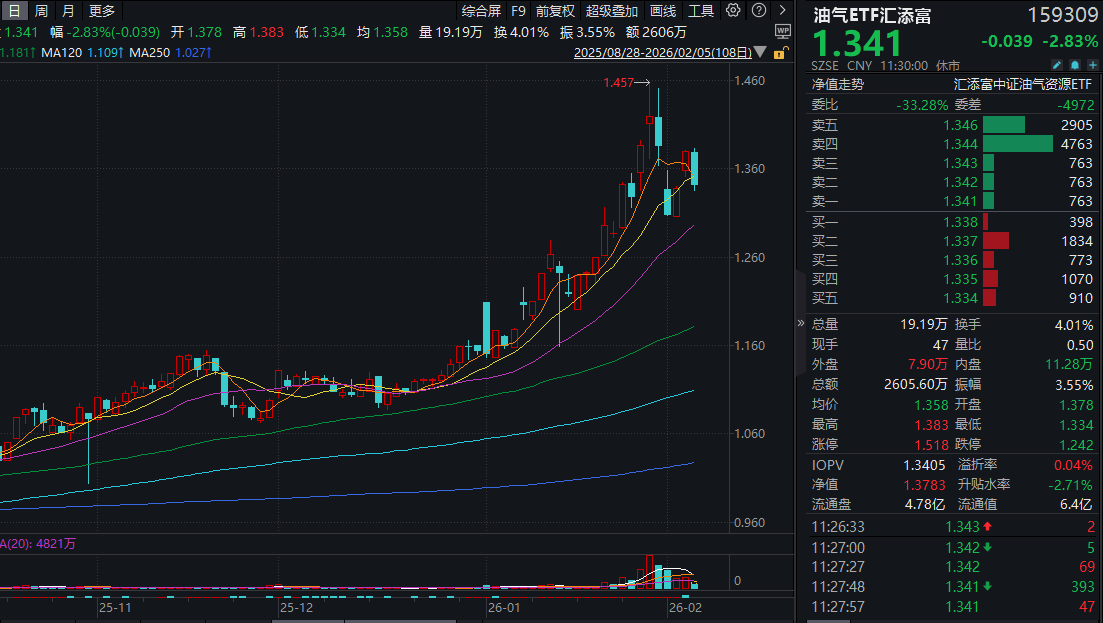
地缘局势紧张叠加美国寒潮冲击,原油供给端扰动加剧!油气板块回调,油气ETF汇添富(159309)跌近3%,近5日吸金近3亿元!
Sou Hu Cai Jing· 2026-02-05 04:02
美国能源信息署(EIA)指出,由于严寒天气冲击的缘故,美国石油库存降幅创2016年以来(同期)最大。美国上周EIA原油库存下降345.5万桶,分析师预 期减少47.483万桶,之前一周下降229.5万桶。美国石油协会(API)此前发布的行业版数据显示,美国上周API原油库存锐减1107.9万桶。 今日(2.5),市场情绪波动加剧,油气板块回调。油气ETF汇添富(159309)跌近3%,盘中成交额已超2600万元。资金持续涌入,近5日有4日获资金青睐,5 日"吸金"近3亿元! 消息面上,当地时间2月2日,美高层表示,作为加大对古巴限制行动的一部分,墨西哥将停止向古巴输送石油。美高层指出,"墨西哥将停止向他们输送石 油",但未进一步说明其作出这一判断的具体依据。墨西哥尚未就相关表态立即作出回应。 【机构:石油市场的第一个供给侧预期差机会】 中金公司指出,地缘局势的预期差为原油供应风险溢价带来重估机会。2025年以来石油市场供应过剩的一致预期背后,隐含了对地缘供应受损有限和 OPEC+提供增产缓冲的共识判断,而这二者其实都与美高层的对外政策有关。因而在美国抗通胀的宏观叙事之中,原油价格下跌似乎成为一个必然的剧本 走 ...
金融期货早评-20260205
Nan Hua Qi Huo· 2026-02-05 03:50
Report Industry Investment Rating - Not provided in the content Core Viewpoints - In February, the global financial market enters a multi - variable intertwined period with a triple game among global order fission, Fed policy disputes, and China's economic resilience. The market pricing logic shifts from single - liquidity driven to a two - dimensional one of policy fit and global pattern adaptability [2] - The fission of the global order intensifies the implementation difficulty of the "rate - cut + balance - sheet reduction" policy if Jovash comes to power. China's economy becomes a global anchor of certainty, and the industrial main line shows characteristics of differentiation and aggregation [2] - The RMB exchange rate is affected by the mixed US economic data. The US dollar index lacks upward momentum, and the RMB exchange rate may have reduced endogenous appreciation power and enhanced linkage with the US dollar index [3] - Stock index is expected to adjust before the Spring Festival and may strengthen again after the festival. Treasury bonds will maintain a short - term shock [5][7] - The freight rate of the container shipping European line will continue to fluctuate in the short term, with limited upside and downside space [9][11] - The volatility of the lithium carbonate futures market is at a historical high, and it is recommended to consider selling volatility strategies and taking a long position on dips in the medium - to - long term. Industrial silicon and polysilicon will maintain a shock pattern [12] - Copper prices will be mainly in shock before the festival, with a low risk - return ratio. Aluminum prices are expected to rise in the long - term and adjust in the short - term. Alumina is expected to be weak in the long - term and have short - term disturbances. Zinc, nickel - stainless steel, tin, and lead will maintain a shock pattern [15][17] - The external soybean market will be strong in the short - term, and the internal soybean meal market will follow the cost rebound in the short - term. Vegetable oils will enter a shock period [23][26] - Fuel oil will run weakly, low - sulfur fuel oil will have a low cracking spread, and asphalt will be in a sideways consolidation [28][30] - Platinum and palladium are expected to have a bull market in the medium - to - long term, and gold and silver will continue to rise in the medium - to - long term with short - term shock adjustments [33][35] - Pulp and offset paper will be in a range - bound shock. LPG will be affected by geopolitics in the short - term. PX - PTA is recommended to go long on dips, and PTA's high processing fees are expected to be difficult to maintain. MEG - bottle chips will lack upward drivers. Polyolefins will be in a shock consolidation. Pure benzene - styrene will be affected by export rumors. Rubber will show a differentiated trend [39][40][41][42][43][44][46][48][51] - Urea prices are expected to decline in the medium - to - long term, and it is recommended to exit long positions. Glass and soda ash will continue to shock [56][57][58][60] - Propylene's fundamentals are relatively stable, and its cost fluctuates greatly. Rebar and hot - rolled coils will be in a bottom - range shock. Iron ore is expected to increase production. The rebound of coking coal and coke is not expected to be strong and sustainable. Ferrosilicon and ferromanganese will be in a shock pattern with bottom support and upper pressure [60][62] - The price of live pigs may be affected by cold snaps in the short - term. Cotton prices are expected to rise but are constrained by the internal - external price difference. The upward space of domestic sugar prices is limited. Egg prices are expected to decline. Apples may be difficult to fall due to delivery contradictions. Red dates will be in a low - level shock. Logs may have increased price fluctuations [66][67][68][69][73][78][79][80] Summary by Directory Financial Futures - **Macro**: The US ADP employment data in January was lower than expected. The central bank deployed key work in the credit market in 2026, and the US will release important economic data such as non - farm employment and CPI inflation reports [1] - **RMB Exchange Rate**: The US economic data is mixed. The RMB exchange rate against the US dollar declined due to the slight strengthening of the US dollar index. It is recommended that export enterprises lock in forward exchange settlement on rallies, and import enterprises adopt a rolling foreign exchange purchase strategy [3][4] - **Stock Index**: Before the Spring Festival, the stock index may adjust due to the tightening of funds and risk - aversion by investors. After the festival, it may strengthen again if the spring rally continues [5][7] - **Treasury Bonds**: The treasury bonds will maintain a short - term shock due to the lack of strong driving factors [7][8] - **Container Shipping European Line**: The market is affected by geopolitical risks and weak fundamentals. The freight rate will continue to fluctuate in the short term, with limited upside and downside space [9][10][11] Commodities New Energy - **Lithium Carbonate**: The downstream restocking is coming to an end, and the spot prices of the lithium battery industry chain are weakening. It is recommended to consider selling volatility strategies and taking a long position on dips in the medium - to - long term [12] - **Industrial Silicon & Polysilicon**: The spot market of the industrial silicon and photovoltaic industry chains is generally weak. In the short term, industrial silicon prices will be in a shock pattern, and it is recommended to reduce positions before the Spring Festival for polysilicon [12][13][14] Non - ferrous Metals - **Copper**: The import window opening will increase post - festival supply. Copper prices will be mainly in shock before the festival, with a low risk - return ratio [15][16] - **Aluminum Industry Chain**: Aluminum prices are expected to rise in the long - term and adjust in the short - term. Alumina is expected to be weak in the long - term and have short - term disturbances. Zinc, nickel - stainless steel, tin, and lead will maintain a shock pattern [17][18][19][20][22] Oils and Fats, Feeds - **Oilseeds**: The external soybean market is supported by the expected increase in Chinese purchases, and the internal soybean meal market will follow the cost rebound in the short - term. The rapeseed meal is affected by import rumors and weak demand [23][24][25] - **Vegetable Oils**: The vegetable oil market will enter a shock period, and it is recommended to pay attention to the MPOB data [26][27] Energy and Oil and Gas - **Fuel Oil**: The supply of high - sulfur fuel oil is gradually recovering, and the demand is weak. The low - sulfur fuel oil has sufficient supply and stable demand, with limited upward drivers [28][29] - **Asphalt**: The asphalt price is in a sideways consolidation. The short - term price will be in shock, with limited upside and downside space [30][31] Precious Metals - **Platinum & Palladium**: The prices are affected by multiple factors such as sector linkage and policy uncertainties. They are expected to have a bull market in the medium - to - long term, and it is recommended to pay attention to long - position opportunities on dips [33][34][35] - **Gold & Silver**: The prices are in a short - term shock adjustment and are expected to rise in the medium - to - long term. It is recommended to go long on dips [35][36][37][38] Chemicals - **Pulp - Offset Paper**: The pulp and offset paper markets will be in a range - bound shock. It is recommended to wait and hold previous short positions [39][40] - **LPG**: The LPG market is affected by geopolitical factors in the short - term. The supply is neutral - low, and the demand is weak due to PDH maintenance [40][41] - **PTA - PX**: The PX - PTA market is affected by supply and demand. It is recommended to go long on dips for PX and short the processing fees of PTA [42][43] - **MEG - Bottle Chips**: The MEG market lacks upward drivers and is expected to be in a range - bound shock. It is recommended to pay attention to geopolitical risks [43][44][46] - **Polyolefins**: The polyolefin market will be in a shock consolidation. The short - term pattern of PP is slightly stronger than that of PE, and it is recommended to wait and see [46][47][48] - **Pure Benzene - Styrene**: The pure benzene - styrene market is affected by export rumors. The short - term supply of styrene will increase, and it is recommended to wait and see [48][49][50] - **Rubber**: The rubber market shows a differentiated trend. Natural rubber may be affected by inventory and demand, and synthetic rubber is affected by the price of butadiene. It is recommended to hold light positions [51][54][57] - **Urea**: The urea price is expected to decline in the medium - to - long term, and it is recommended to exit long positions [56][57] - **Glass & Soda Ash**: The glass and soda ash markets will continue to shock, with the soda ash supply remaining high in the long - term and the glass in a supply - demand weak pattern [58][59][60] - **Propylene**: The propylene market is affected by cost and supply - demand. The cost fluctuates greatly, and the short - term fundamentals can provide some support [60][61] Building Materials and Metals - **Rebar & Hot - Rolled Coils**: The rebar and hot - rolled coils will be in a bottom - range shock due to the contradiction between supply and demand. The price is supported by cost and policy [62] - **Iron Ore**: The iron ore market is in a pre - festival off - season. The supply is abundant, and the demand is expected to increase. The price has limited downside space [62] - **Coking Coal & Coke**: The rebound of coking coal and coke is not expected to be strong and sustainable due to factors such as seasonal demand and cost transmission [62][63] - **Ferrosilicon & Ferromanganese**: The ferrosilicon and ferromanganese will be in a shock pattern with bottom support and upper pressure due to the contradiction between cost support and supply - demand pressure [64][65] Agricultural and Soft Commodities - **Live Pigs**: The price of live pigs may be affected by cold snaps in the short - term, and it is recommended to wait and see [66][67][68] - **Cotton**: The cotton price is expected to rise but is constrained by the internal - external price difference. It is recommended to go long on dips [68][69] - **Sugar**: The upward space of domestic sugar prices is limited due to weak demand and low international sugar prices [69][70][72] - **Eggs**: The egg price is expected to decline due to the "supply - strong, demand - weak" pattern [73] - **Apples**: The apple market is in the middle - late stage of stocking. The price may be difficult to fall due to delivery contradictions [78][79] - **Red Dates**: The red date market will be in a low - level shock, and the price will face pressure in the long - term [79][80] - **Logs**: The log market may have increased price fluctuations due to the suspension of some delivery warehouses and low inventory. It is recommended to wait and see [81][82][83]