
制鞋业

Search documents
华利集团(300979):首次覆盖:产能扩张叠加客户结构优化,华利集团盈利优势持续显现
Haitong Securities International· 2025-06-30 08:01
Investment Rating - The report initiates coverage with an "OUTPERFORM" rating for Huali Industrial Group [2]. Core Views - Huali Industrial Group is a leading global ODM manufacturer of athletic shoes, benefiting from a strong customer base and robust global capacity expansion, which enhances its profitability [4][11]. - The company has established stable partnerships with nine of the top ten global athletic brands, maintaining a high revenue concentration while diversifying its customer structure to mitigate risks [5][27]. - Huali's revenue is projected to grow significantly, driven by increased demand in the athletic footwear market and the company's capacity expansion [15][16]. Summary by Sections 1. Company Overview - Huali Industrial Group has been deeply engaged with high-quality customers for over 50 years, establishing itself as a leading player in the athletic shoe manufacturing sector [11]. - The company primarily serves major brands like Nike, Adidas, and Vans, with a total annual shipment of 223 million pairs, making it the second-largest manufacturer globally [4][11]. 2. Revenue and Profitability - In 2024, Huali's revenue reached RMB 24.01 billion, reflecting a year-on-year growth of 19.4%, driven by recovering global footwear demand [6][15]. - The gross profit margin for 2024 was 26.8%, outperforming competitors due to an optimized customer structure and increased high-value brand orders [6][26]. 3. Customer Structure - The top five customers contributed 79.3% of total revenue in 2024, with Nike being the largest, accounting for over 30% of shipments [5][27]. - The company is actively introducing high-growth brands to its portfolio, which is expected to reduce revenue concentration from its top customers over the next few years [27][40]. 4. Capacity Expansion - Huali's production capacity is primarily located in Vietnam, with plans to increase the number of factories from 20 in 2024 to 26 by the end of 2026 [46][48]. - The strategic location of factories in low-cost regions helps maintain competitive manufacturing costs, enhancing overall profitability [48][49]. 5. Financial Forecast - Revenue is expected to grow to RMB 26.83 billion in 2025, with a compound annual growth rate (CAGR) of approximately 12.4% from 2025 to 2027 [8][15]. - Net profit is projected to reach RMB 39.51 billion in 2025, with a CAGR of 16.2% over the same period [16][8].
谁更需要高关税?
Hu Xiu· 2025-06-27 10:51
Group 1 - The core argument of the article revolves around the historical and contemporary perspectives on high tariffs and trade protectionism, particularly in developing countries [1][2][4] - The article highlights the contradiction that while many economists have proven the ineffectiveness of protected industries, the call for high tariffs persists, especially from advanced nations [3][4] - The article discusses the evolution of trade policies in the U.S. as outlined by Douglas Irwin, focusing on three main goals: Revenue, Restriction, and Reciprocity, with the emphasis shifting over time [5][30] Group 2 - The "Infant Industry Argument" proposed by Alexander Hamilton suggests that nascent industries require temporary protection from foreign competition to develop [6][7] - Friedrich List expanded on Hamilton's ideas, advocating for differentiated and progressive tariffs to protect industries with potential for growth while allowing for eventual transition to free trade [10][11] - Raul Prebisch's "Center-Periphery" theory posits that developing countries must break the unequal trade relationship with industrialized nations through strategies like import substitution and export-oriented growth [13][14][16] Group 3 - Empirical studies by economists like Frédéric Bastiat and Amasa Walker demonstrate that trade protection often leads to inefficiencies and does not guarantee the intended benefits for domestic industries [19][22] - Philippe Aghion's research indicates that protectionist policies can hinder economic dynamism and lead to stagnation, as seen in Japan's economy [28][29] - The article suggests that non-tariff measures may be more effective than tariffs in achieving trade protection goals, as supported by various studies [29][30] Group 4 - The article outlines the historical phases of U.S. trade policy, indicating a potential return to a focus on revenue generation through tariffs as the national debt escalates [33][39] - The shift in U.S. industrial structure towards services and the geographical concentration of manufacturing has implications for future trade policy [37][38] - The increasing national debt and its impact on fiscal policy may drive the U.S. government to prioritize high tariffs as a means of revenue generation [38][39]


从年销40亿到老赖,“老人鞋之王”怎么就崩了?
虎嗅APP· 2025-06-26 10:42
Core Viewpoint - The article discusses the rise and fall of the elderly shoe brand, Fuli Jian, highlighting its initial success and subsequent decline due to financial mismanagement, product quality issues, and increased competition in the market [3][10][20]. Group 1: Company Background - Fuli Jian was founded in 2015 by Zhang Jingkang, who identified a market gap for shoes specifically designed for the elderly [9][10]. - The brand gained rapid popularity, achieving revenues of 1.8 billion in 2018, with peak sales exceeding 4 billion [10][20]. Group 2: Financial Issues - As of 2023, Fuli Jian had approximately 700 million in debt, with 70%-80% of its annual revenue allocated to debt repayment [3][10]. - The company has faced multiple financial challenges, including employee salary delays and restrictions on high consumption for its founder [3][10]. Group 3: Product Quality and Reputation - Fuli Jian has been criticized for product quality issues, including claims of false advertising regarding the safety and comfort of its shoes [14][17]. - Consumer complaints about product defects led to a significant decline in brand loyalty and sales [14][20]. Group 4: Market Competition - The elderly shoe market is becoming increasingly competitive, with new entrants like Skechers and New Balance offering better quality and design [23][25]. - Fuli Jian's marketing strategies, which once resonated with consumers, are now seen as outdated and ineffective in attracting the new generation of elderly consumers [26][27]. Group 5: Future Prospects - The company is attempting to diversify by entering the organic food market with a new brand, but it remains uncertain whether consumers will continue to support Fuli Jian [28][29]. - The article emphasizes the need for brands in the silver economy to focus on genuine product quality and consumer trust rather than relying solely on marketing [29].
民营企业家走进潮州法院,“零距离”破题营商难点
Sou Hu Cai Jing· 2025-06-24 09:50
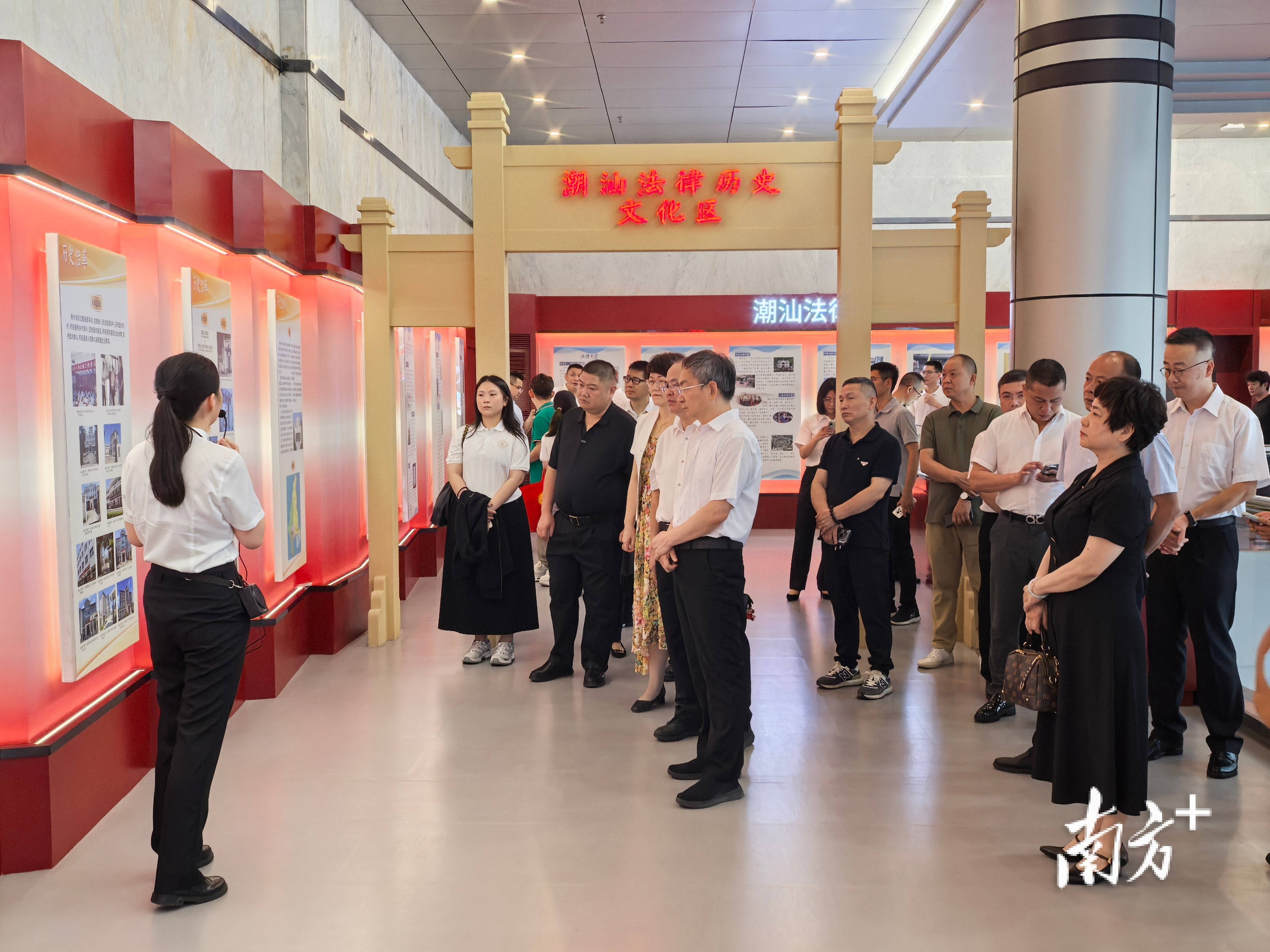
Core Viewpoint - The event organized by the Chaozhou Municipal United Front Work Department and the Chaozhou Intermediate People's Court aimed to enhance communication between the judiciary and private enterprises, fostering a law-based business environment and promoting a clear and friendly government-business relationship [1][4]. Group 1: Judicial Support for Private Enterprises - Private entrepreneurs shared their legal challenges and discussed ways to optimize the law-based business environment during the meeting [4]. - The Chaozhou Intermediate Court committed to improving execution mechanisms and increasing efficiency to protect the legal rights of winning enterprises [7]. - The court emphasized its focus on intellectual property issues, pledging to enhance scrutiny of litigation qualifications and to address malicious lawsuits effectively [7]. Group 2: Innovations in Judicial Processes - The establishment of a green channel for enterprise-related cases significantly shortened the trial period, allowing businesses to resolve disputes more efficiently [7]. - Representatives from private enterprises expressed confidence in the court's reforms and services, believing these changes would contribute to the high-quality development of Chaozhou's economy [7]. Group 3: Ongoing Communication and Support - The Chaozhou Municipal United Front Work Department plans to strengthen communication with judicial departments, establishing a regular liaison mechanism to address the judicial needs of private enterprises [13]. - The department will also enhance services for private enterprises and create platforms for cooperation to support the high-quality development of the private economy [13]. Group 4: Legal Education and Awareness - The event included a legal lecture that detailed the "Private Economy Promotion Law," helping participants understand the judiciary's role in supporting private enterprises [16].
镇宁:“税务管家”送“春风” 护航鞋企向新而行
Sou Hu Cai Jing· 2025-06-21 02:34
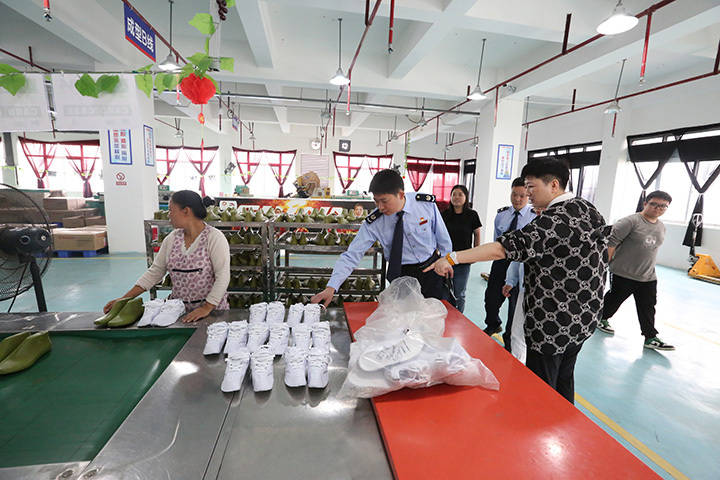
Group 1 - Small and medium-sized enterprises (SMEs) are crucial for innovation, employment, and improving livelihoods, as highlighted by the recent initiatives from the State Taxation Administration in Zhenning County [1] - The Zhenning Yonghongxiang Footwear Co., Ltd. has achieved an average annual revenue of over 60 million yuan since its establishment in 2018, maintaining a stable workforce of around 220 employees, which can increase to 300 during peak production seasons [3] - The company has been expanding its production scale and enhancing its overall competitiveness, producing high-quality labor protection shoes for both domestic and Southeast Asian markets [3] Group 2 - The Zhenning Taxation Bureau has tailored tax services for enterprises by assigning experienced staff as "tax service managers" to provide customized tax policy guidance, including tax deductions for R&D expenses and VAT reductions for advanced manufacturing [4] - The "tax service managers" offer one-on-one support to ensure that SMEs can quickly and accurately access tax benefits, aiming to facilitate the realization of tax advantages for businesses [4] - The footwear company has benefited from the improved tax policies and online services, significantly reducing tax payments and facilitating international market expansion, with exports to countries like Thailand and Vietnam [6]
成都双流造”女鞋亮相意大利国际鞋展 以非遗赋能“蓉品出海
Mei Ri Jing Ji Xin Wen· 2025-06-16 10:16
Core Insights - The 103rd International Footwear Exhibition in Italy showcased 1,100 exhibitors and brands, highlighting the latest trends and innovations in the footwear industry [1] - Chengdu's "Shuangliu-made" women's shoes, featuring the integration of traditional Shu brocade, received significant attention, marking a notable cultural export [1] Group 1: Exhibition Highlights - The exhibition attracted buyers from over 40 countries, with 80% from Europe and 12% from Asia, enhancing the event's appeal with unique Eastern charm [2] - Chengdu's dedicated exhibition booth, "Panda Hometown · Shoe Capital Craftsmanship," featured Shu brocade shoes that combine traditional craftsmanship with modern design [1][2] Group 2: Market Response - European consumers are increasingly receptive to women's shoes that incorporate elements of Chinese traditional culture, with immediate interest shown by international buyers [1] - Within half a day of the exhibition opening, over 20 buyers from various countries expressed strong interest, leading to immediate collaboration discussions with an Italian client [1] Group 3: Trade and Economic Development - From January to April, Shuangliu District achieved a total foreign trade import and export volume of 35.979 billion yuan, with a growth rate of 20.58% [2] - The district's export volume for "Rong products" reached 4.636 billion yuan, ranking second in the city with a growth rate of 63.9% [2] - Future initiatives include enhancing the "Shuangliu-made" product catalog and promoting cross-border e-commerce and international trade events [2]
足力健,老人早不爱了
3 6 Ke· 2025-06-13 11:29
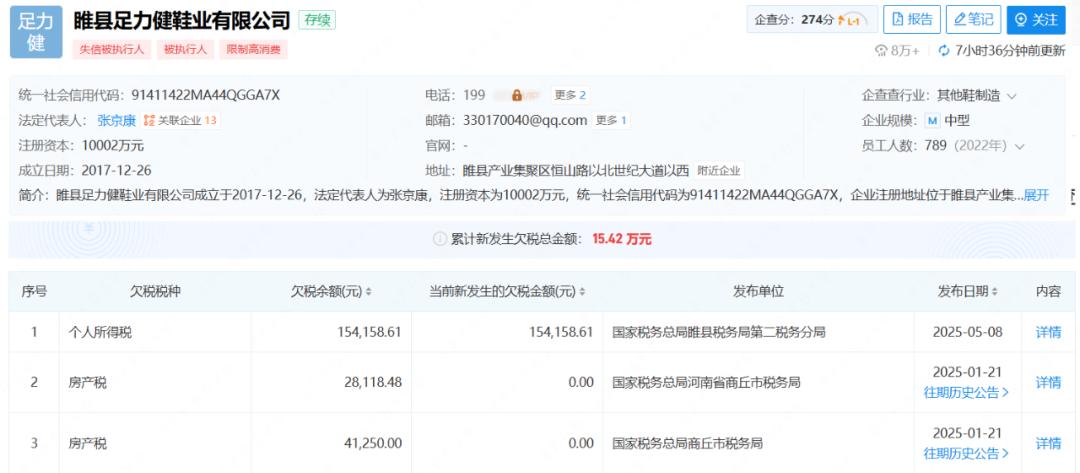
Core Viewpoint - The article highlights the operational difficulties faced by the well-known brand "Zuli Jian," revealing a stark contrast between its past success and current challenges, including tax debts and quality issues [1][3][17]. Company Overview - Zuli Jian is associated with Suixian Zuli Jian Footwear Co., Ltd., which has a tax debt of 154,158.61 yuan, indicating financial strain [1][2]. - The company was founded on December 26, 2017, with a registered capital of 100.02 million yuan and employs 789 people as of 2022 [2]. Historical Performance - Zuli Jian experienced significant success a decade ago with the launch of the "Six Super Elderly Shoes," selling 500,000 pairs and rapidly expanding to over a thousand stores [3]. - The brand's marketing strategy heavily relied on advertising, spending 200 million yuan over eight years on CCTV ads, which initially boosted its recognition [12]. Product Development and Innovation - Zuli Jian claims to have developed shoes tailored for the elderly by studying foot shape changes, resulting in multiple patents, primarily for design and accessories [4][6]. - However, only 31 out of its numerous patents are related to technology, raising questions about the actual innovation in its products [7]. Quality Issues and Brand Reputation - The brand has faced multiple quality control issues, including non-compliance in product testing, leading to negative publicity and legal challenges [17][19]. - Complaints about misleading advertising regarding the safety of its shoes have significantly impacted consumer trust, with over 60% of complaints related to false claims about anti-slip features [21]. Market Position and Competition - Zuli Jian's market position has weakened due to emerging competitors like Skechers, which offer innovative designs and effective marketing strategies targeting younger consumers [15][16]. - The brand's shift in target demographics is evident, with over 70% of online buyers being younger consumers purchasing for their elderly relatives [25]. Strategic Shifts and Future Challenges - The company is attempting to adapt its marketing strategy by engaging younger audiences through new endorsements and social media campaigns, including using pets as brand ambassadors [27][28]. - The transition to a younger marketing approach faces internal conflicts between traditional marketing strategies and modern consumer expectations, highlighting a critical challenge for the brand's future [22][28].
信星集团(01170.HK)预期年度营业额同比减少约10%
Ge Long Hui· 2025-06-13 10:53
Group 1 - The company, Xinxing Group, is experiencing a downward trend in revenue for the first half of the fiscal year ending September 30, 2024, which is expected to continue into the remaining period of the fiscal year ending March 31, 2025 [1] - The anticipated loss for the period is estimated to be between approximately HKD 33 million and HKD 38 million, compared to a profit in the previous year [1] - The revenue is projected to decrease by approximately 10% year-on-year, leading to reduced economies of scale, alongside significant increases in labor costs compared to the same period last year [1] Group 2 - The company plans to continue strategic investments to strengthen production capabilities, including retaining a skilled labor force to demonstrate operational reliability [1] - The company aims to optimize its product mix by collaborating with specific clients to focus on higher average selling price products, thereby advancing its value growth strategy [1] - The company will adhere to capital management and cost control programs to maintain financial resilience [1] Group 3 - The U.S. government announced reciprocal tariff measures to be implemented globally starting April 2, 2025, which is expected to exacerbate existing challenges and uncertainties for the company [2] - The company anticipates that the order pipeline will remain uncertain due to evolving U.S. tariff policies on footwear products from Vietnam and Cambodia [2] - Despite the expected short-term cost increases from these strategic measures, the company believes they will strengthen its long-term advantages and recovery capabilities [2]
万联晨会-20250613
Wanlian Securities· 2025-06-13 00:50
核心观点 【市场回顾】周四 A 股三大指数涨跌互现。截至收盘,上证综指涨 0.01%,深成指跌 0.11%,创业板指涨 0.26%。全市场成交额 13,035 亿元,较上日增加 169 亿元。全市场超 2,300 只个股上涨。板块题材 上,稀土永磁、量子科技、IP 经济、汽车零部件板块涨幅居前;农 业、猪肉板块跌幅居前。 【重要新闻】 市 场 研 究 [Table_Title] 万联晨会 [Table_MeetReportDate] 2025 年 06 月 13 日 星期五 [Table_Summary] 概览 【商务部召开新闻发布会介绍中美经贸磋商机制首次会议情况】2025 年 6 月 12 日商务部召开新闻发布会。商务部介绍了中美经贸团队在 英国伦敦举行中美经贸磋商机制首次会议。双方就落实两国元首 6 月 5 日通话重要共识和巩固日内瓦经贸会谈成果的措施框架达成原则 一致,就解决双方彼此经贸关切取得新进展。关于稀土问题,中国作 为负责任的大国,充分考虑各国在民用领域的合理需求与关切,依法 依规对稀土相关物项出口许可申请进行审查,已依法批准一定数量的 合规申请,并将持续加强合规申请的审批工作。 研报精选 华 ...
华利集团(300979):首次覆盖:运动鞋制造龙头,壁垒深厚,增长可期
Wanlian Securities· 2025-06-12 07:00
Investment Rating - The report assigns a "Buy" rating for the company, Huali Group (300979) [4]. Core Insights - Huali Group is a leading global manufacturer of sports shoes, collaborating with renowned brands such as Nike, Converse, and Puma. The company has a strong competitive advantage in the footwear manufacturing sector, with a concentrated ownership structure controlled by the Zhang family, holding 87.48% of the shares. The company has shown steady growth in revenue and net profit, with a CAGR of +13.31% and +19.47% respectively from 2017 to 2024 [1][25]. Company Overview - Huali Group is a global leader in sports shoe manufacturing, established in 1990, and has developed a strong competitive edge in the industry. The company operates production facilities primarily in Vietnam, with additional locations in Indonesia and China. The company’s revenue has increased from 10.01 billion yuan in 2017 to 24.01 billion yuan in 2024, with net profit rising from 1.11 billion yuan to 3.84 billion yuan during the same period [1][25][16]. Industry Analysis - The global sports footwear market is expected to grow steadily, with sales projected to rise from $95.25 billion in 2011 to $168.65 billion in 2024, reflecting a CAGR of 4.49%. Factors driving this growth include increased consumer health awareness, technological innovations in products, and the promotion of sports events [2][35]. Company Highlights - **Client Base**: The company has established strong relationships with major clients, with over 80% of sales coming from the top five customers. This high customer concentration creates a strong barrier to entry due to the high switching costs for brands [3]. - **Production Capacity**: Huali Group benefits from cost advantages and plans to expand production capacity, with a projected sale of 223 million pairs of shoes in 2024, representing a year-on-year increase of 17.53% [3][10]. - **Efficiency**: The company maintains a leading profitability level compared to peers, with a gross margin of 26.80% and a net margin of 15.98% in 2024, benefiting from low costs and high operational efficiency [10][27]. - **Product Quality**: The company boasts a product quality rate of 99.99% from 2020 to 2024, indicating stable quality and strong delivery capabilities [10]. - **Dividends**: The company has significantly increased its cash dividend payout ratio in recent years, with a projected dividend yield of 4.40% for 2024 [11]. Earnings Forecast and Investment Recommendation - The company is expected to maintain rapid growth in net profit, with projections of 4.21 billion yuan, 4.84 billion yuan, and 5.50 billion yuan for 2025, 2026, and 2027 respectively. The report anticipates a stable dividend payout, supported by strong cash flow and a solid market position [12].