
可控核聚变

Search documents
晚报 | 11月18日主题前瞻
Xuan Gu Bao· 2025-11-17 15:00
Cosmetics Industry - The National Medical Products Administration of China has issued opinions to deepen cosmetic regulation reform and promote high-quality development, encouraging local drug regulatory departments to seek government support for industry policies [1] - The Chinese cosmetics market is projected to reach a scale of 1,073.8 billion yuan in 2024, with a steady growth rate of 5%-10% over the next five years, and domestic brands have surpassed a 55% market share [1] - The industry is transitioning from scale expansion to a high-quality phase driven by technology, efficacy, and sustainable development, aiming to build competitive barriers through a "full industry chain ecosystem" [1] 3D Printing Industry - China's independently developed 3D printed simplified turbojet engine has successfully completed its first flight test, marking a significant breakthrough in engineering applications [2] - The global 3D printing market is expected to reach $21.9 billion in 2024, with China's market size around 41.5 billion yuan, and is projected to exceed $84-115 billion by 2030, with a compound annual growth rate of 20%-30% [2] - China is transitioning from "prototype manufacturing" to "direct manufacturing" in the 3D printing sector, aiming for a significant position in the global market [2] Semiconductor Industry - Research teams from Hong Kong universities have made a breakthrough in the architecture of analog-to-digital converters (ADC), reducing AI chip power consumption by 57.2% and area by 30.7% [3] - The demand for AI computing power is growing exponentially, with energy consumption in data centers and battery life in edge devices becoming industry pain points [3] Lithium Battery Industry - Prices of various lithium battery materials have increased, with ethylene carbonate rising by 23.26%, lithium hexafluorophosphate by 5.93%, and electrolytes by 4.93% [4] - The lithium battery industry is experiencing a price surge due to inventory reduction and unexpected demand for energy storage, with domestic companies benefiting from a global energy storage cycle [4] Nuclear Fusion Industry - A procurement project by Fusion New Energy (Anhui) Co., Ltd. has been announced, with a total amount exceeding 2 billion yuan, involving key components for fusion energy systems [5] - Nuclear fusion is recognized for its environmental friendliness and high energy density, with significant global investment expected to reach $9.766 billion by mid-2025 [5] Quantum Technology - The 2025 Quantum Science and Industry Conference will be held from November 20 to 21 in Hefei, with participation expected from over 600 organizations and 4,000 individuals [6] - Quantum computing is emerging as a disruptive technology, with diverse technical routes and significant breakthroughs in quantum error correction expected to influence the industry's progress [6]

可控核聚变行业资本开支加速上行,融资与技术突破催化不断
Huachuang Securities· 2025-11-15 15:23
Investment Rating - The report maintains a positive investment recommendation for the controllable nuclear fusion industry, indicating an upward trend in capital expenditure and technological breakthroughs [1]. Core Insights - The controllable nuclear fusion industry is experiencing accelerated capital expenditure, with significant recent developments in financing and technological advancements [1][8]. - The report highlights that the domestic nuclear fusion projects are expected to see a peak in bidding and investment over the next 3 to 5 years, with an estimated total investment of 146.5 billion yuan [8][19]. Summary by Sections Capital Expenditure - On November 12, the Institute of Plasma Physics at the Chinese Academy of Sciences announced a new tender worth 1.3454 billion yuan, focusing on high-value areas such as fuel cycle and tritium recovery [1][8]. - In the first half of November, the total tender amount from the Institute and Fusion New Energy in Anhui reached 1.976 billion yuan, with five projects exceeding 200 million yuan [7][19]. Financing - On November 10, Xinneng Xuanguang completed a Pre-A round financing of several hundred million yuan, led by Ant Group, aimed at enhancing the performance of its in-construction devices and expanding its team [1][8]. Technological Breakthroughs - On November 6, the Southwest Institute of Nuclear Physics completed the final design review of the ITER Langmuir probe, marking a significant advancement in the development of key diagnostic systems for the ITER project [2][10]. Recommended Companies - The report continues to recommend Lianchuang Optoelectronics and Hezhu Intelligent, while suggesting to pay attention to Guoguang Electric [3]. - In the magnet segment, companies such as Western Superconducting, Yongding Co., and Jingda Co. are highlighted for their high value contribution [3][34]. - For structural components and others, the report recommends companies like Sichuan Electronics, Yingliu Co., and Wanyi Technology, with a suggestion to monitor Antai Technology [3][35].
科股早知道:13.45亿元招标项目启动,可控核聚变正加速从实验验证迈向工程示范
Tai Mei Ti A P P· 2025-11-14 00:49
Group 1: NAND Flash Market - Major players in the NAND flash market, including Samsung, SK Hynix, and Kioxia, are planning to increase prices and reduce supply in the second half of the year [2] - Samsung is in discussions with large overseas clients regarding supply volumes for next year and is considering a price increase of over 20% to 30% [2] - The storage chip industry is experiencing a cyclical upturn, driven by explosive data growth due to the increasing complexity of AI-generated content, with storage prices expected to continue rising through Q4 2025 [2] Group 2: Controlled Nuclear Fusion - Controlled nuclear fusion, utilizing hydrogen isotopes like deuterium and tritium, is seen as a "ultimate energy" source due to its high energy density, abundant raw materials, low radioactive waste, and high safety [3] - The global nuclear fusion market is projected to reach $496.55 billion by 2030 and exceed $1 trillion by 2050, according to the International Energy Agency and the International Atomic Energy Agency [3] - The industrialization process of controlled nuclear fusion is accelerating from experimental validation to engineering demonstration, with multiple segments of the industry chain entering a growth phase [3]
A股午评:创业板指跌1.58%,超4000股下跌,光伏设备板块领跌
Ge Long Hui· 2025-11-12 03:41
Core Viewpoint - The A-share market experienced a collective adjustment in the morning session, with all three major indices declining, indicating a bearish sentiment among investors [1] Market Performance - The Shanghai Composite Index fell by 0.24% to 3993.35 points, while the Shenzhen Component Index decreased by 1.07%, and the ChiNext Index dropped by 1.58% [1] - The total trading volume in the Shanghai and Shenzhen markets reached 12,702 billion yuan, an increase of 22 billion yuan compared to the previous day, with over 4,000 stocks declining across the market [1] Sector Performance - The oil and gas extraction and services, insurance, and pharmaceutical commercial sectors showed the highest gains [1] - Bank stocks strengthened, with Agricultural Bank's total market capitalization surpassing 3 trillion yuan [1] - Conversely, sectors such as cultivated diamonds, photovoltaic equipment, and controllable nuclear fusion experienced collective declines [1]

行业周报:等离子体所主导的国际标准发布,曦融兆波完成数千万元融资-20251109
KAIYUAN SECURITIES· 2025-11-09 09:16
Investment Rating - The industry investment rating is "Positive" (maintained) [1] Core Insights - The controlled nuclear fusion sector is experiencing steady progress in the development and construction of fusion devices, with significant core component orders expected to be released continuously. The BEST device construction is advancing, and projects like Spark One, Xianjue Fusion, and Circulation Four are anticipated to commence sequentially. If the feasibility of the FRC technology route is validated, related startup projects in China may accelerate [8][27] - The recent approval of the international standard ISO 18518:2025, led by the Institute of Plasma Physics, marks a significant achievement for China in the field of superconducting magnet technology and establishes safety benchmarks for fusion devices [20][21] - The domestic ion cyclotron heating leader, Xirong Zhaobo, has completed several million yuan in Pre-A financing, indicating strong market potential for auxiliary heating systems in nuclear fusion [26] Summary by Sections Sector Review - In the week of November 3 to November 7, 2025, half of the sub-sectors in the controlled nuclear fusion sector saw price increases, with notable gains in companies such as Hailu Heavy Industry (+61.0%) and Lansi Heavy Industry (+34.6%). The overall trend indicates more stocks rose than fell [5][14] Industry Dynamics - The ISO standard for magnetic fusion facilities was officially approved, establishing safety requirements for superconducting technology applications in tokamak fusion devices. This is China's first international standard in the field, enhancing its influence in superconducting magnet technology [20][21] - The Ministry of Science and Technology will host an exhibition and matchmaking event for nuclear fusion technology achievements on November 27, 2025, promoting industry collaboration [22] - Recent procurement announcements from the Institute of Plasma Physics and Fusion New Energy have a cumulative budget of several hundred million yuan, indicating robust demand for core components [23][25] Company Developments - Xirong Zhaobo, a leading domestic company in ion cyclotron heating, has successfully completed a Pre-A financing round, highlighting the growing investment interest in nuclear fusion auxiliary heating systems. The company is the only one in China to achieve system-level delivery to multiple fusion devices [26] Weekly Outlook - The long-term development prospects of the nuclear fusion sector are viewed positively, with recommendations to focus on core components such as magnets, main devices, and power supplies. Beneficiary companies include West Superconducting, Yongding Co., and others in various segments [27][28]


机械2025年三季报总结:科技内需双轮驱动,机械行业景气新周期开启
GUOTAI HAITONG SECURITIES· 2025-11-07 12:00
Investment Rating - The report rates the mechanical industry as "Overweight" [25] Core Views - The mechanical industry is experiencing a recovery driven by both domestic demand and technological advancements, particularly in AI and robotics [2] - Key investment opportunities include humanoid robots, engineering machinery, photovoltaic equipment, lithium battery equipment, and AI infrastructure [2][3] Summary by Sections 1. Mechanical Industry Q3 Performance Overview - As of Q3 2025, the A-share mechanical industry had 546 listed companies, achieving a total revenue of CNY 16,173.11 billion, a year-on-year increase of 8.7% [8] - The net profit attributable to shareholders reached CNY 1,095.91 billion, up 15.9% year-on-year, with gross and net profit margins at 22.4% and 7.5% respectively [8][13] 2. AI Manufacturing: Humanoid Robots and AI Terminal Resonance - The humanoid robot sector is approaching mass production, with revenue growth stabilizing at 0.4% year-on-year for the first three quarters of 2025 [28] - The industry is witnessing a recovery in profitability, with net profit increasing by 9.6% year-on-year [31] 3. Manufacturing Going Abroad - External demand recovery is driving order restoration, particularly in engineering machinery, with excavator sales reaching 174,000 units, a year-on-year increase of 18.1% [2] - The oil service equipment sector benefits from resilient oil prices and increased deep-sea oil and gas investments [2] 4. Domestic Demand Recovery - The macroeconomic environment is stabilizing, with expectations for performance recovery in the industry [4] - The machine tool sector is showing signs of recovery, supported by policy measures [4] 5. Energy Equipment - The energy equipment sector is rebounding, with photovoltaic equipment seeing a return to rational competition and improved profitability [5] - Lithium battery equipment is experiencing a demand surge due to advancements in solid-state battery technology [5]
A股收评 | 沪指重回4000点 科技股爆发!寒武纪再超茅台
智通财经网· 2025-11-06 07:15
Market Performance - The Shanghai Composite Index rose by 0.97% to 4007.76 points, with a total turnover of 930.3 billion yuan, while the Shenzhen Component Index increased by 1.73% to 13452.42 points, with a turnover of 1125 billion yuan [3] - The ChiNext Index saw a rise of 1.84%, closing at 3224.62 points [3] - The overall market saw over 2800 stocks increase, with a total trading volume exceeding 2 trillion yuan [1][2] Sector Highlights - The AI-related sectors, including computing power, transportation capacity, storage capacity, and electricity, experienced significant gains, driving technology stocks higher [1] - The semiconductor sector was particularly strong, with leading companies like Haiguang Information and Cambrian Technology seeing substantial increases, contributing to a more than 3% rise in the Sci-Tech Innovation 50 Index [1] - The phosphorus chemical sector also performed well, with companies like Qingshuiyuan and Chengxing Co. hitting the daily limit, supported by a 21.42% year-on-year increase in net profit for the sector in the first three quarters, totaling 3.005 billion yuan [2] Investment Trends - Main funds focused on semiconductor, components, and automotive parts sectors, with notable net inflows into stocks like Shenghong Technology and Haiguang Information [4] - Analysts suggest that while there are doubts about the sustainability of the AI boom, the long-term growth trajectory for technology remains a key area for investment [2][10] Industry Developments - A significant restructuring plan for polysilicon companies is in discussion, aiming to establish a fund of approximately 70 billion yuan to facilitate acquisitions [5] - The global first industrial 5G international standard has been officially released, marking a significant advancement in the integration of 5G technology in industrial applications [7]

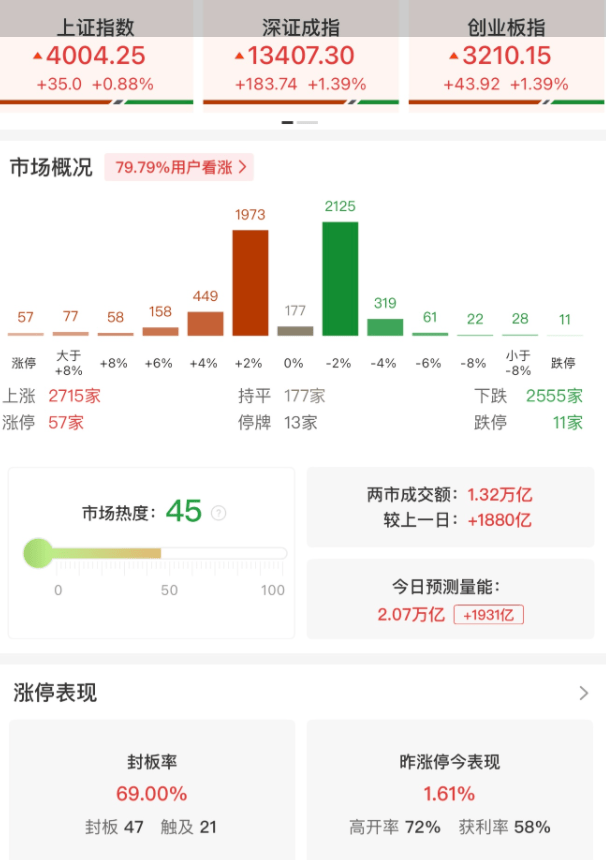
A股午评:三大指数集体上涨,沪指涨0.88%重回4000点上方创业板指涨1.39%,金属铝、存储芯片板块领涨!超2700股上涨,成交13378亿放量1881亿
Ge Long Hui· 2025-11-06 05:01
Core Viewpoint - The A-share market experienced a collective rise in the three major indices during the morning session, indicating positive investor sentiment and market activity [1]. Group 1: Market Performance - The Shanghai Composite Index increased by 0.88%, closing at 4004.25 points [1]. - The Shenzhen Component Index and the ChiNext Index both rose by 1.39% [1]. - The total trading volume in the Shanghai and Shenzhen markets reached 13,378 billion yuan, an increase of 1,881 billion yuan compared to the previous day [1]. Group 2: Sector Performance - Leading sectors included phosphorus chemical, aluminum metal, storage chips, and controllable nuclear fusion [1]. - The Hainan Free Trade Zone sector experienced a pullback, while tourism, film and television, and duty-free shop sectors declined [1]. - Over 2,700 individual stocks in the market saw an increase [1].
A股午评 | 沪指重回4000点,创指、深成指涨逾1% 券商、算力齐发力
智通财经网· 2025-11-06 03:42
Market Overview - A-shares experienced a rebound, with the Shanghai Composite Index returning to 4000 points, closing up 0.88% [1] - The Shenzhen Component Index and the ChiNext Index both rose by 1.39% [1] Key Sectors Phosphate Chemical Sector - The phosphate chemical sector saw a strong upward trend, with stocks like Baitian Co. and Qingshuiyuan hitting the daily limit, while Yuntianhua also gained [5] - Several chemical companies reported a doubling of profits in the first three quarters of the year, with high demand in sub-sectors like agricultural chemicals supporting performance [5] Semiconductor Sector - The semiconductor sector continued to rise, with Haiguang Information surging by 10% and Changguang Huaxin hitting the daily limit [1] - The storage chip concept also saw significant gains, with Yingxin Development achieving 11 consecutive daily limits and Xiangnong Chip Innovation reaching a new historical high [7] Controlled Nuclear Fusion Sector - The controlled nuclear fusion sector maintained its strong performance, with stocks like Hailu Heavy Industry and Baobian Electric hitting the daily limit [6] - The industry is entering a capital expenditure expansion phase, benefiting core companies involved in project construction and high-value supply chains [6] Individual Stock Highlights - Sunshine Power rose over 2%, reaching a historical high with a market capitalization exceeding 420 billion [2] Market Outlook - According to Xinyi Securities, the market style may shift towards technology growth while becoming more balanced compared to the third quarter [4] - Investment strategies should focus on low-value sectors and cyclical stocks, with potential rebounds in banking and non-bank financials [8][9] - Guotai Junan Securities suggests that the index may continue its upward trend, with a focus on humanoid robot concepts due to anticipated news from Tesla's shareholder meeting [10]
A股开盘速递 | A股震荡走高 存储芯片概念拉升 磷化工板块上扬
智通财经网· 2025-11-06 02:20
Core Viewpoint - The A-share market is experiencing a rebound, with significant support from government initiatives aimed at enhancing the capital market's adaptability to new industries and technologies, promoting stable development in the capital market [1] Market Performance - As of 10:04 AM, the Shanghai Composite Index rose by 0.47%, the Shenzhen Component Index increased by 0.7%, and the ChiNext Index gained 0.71% [1] Key Sectors 1. Phosphate Chemical Sector - The phosphate chemical sector is showing an upward trend, with companies like Qing Shui Yuan and Ba Tian shares hitting the daily limit, supported by strong performance in the first three quarters of the year [3] - Analysts note that despite a seasonal downturn in traditional downstream demand, high demand in sub-sectors like agricultural chemicals is bolstering profits [3] 2. Controlled Nuclear Fusion - The controlled nuclear fusion sector continues to perform strongly, with companies such as Hai Lu Heavy Industry and Bao Bian Electric hitting the daily limit [4] - The industry is entering a capital expenditure expansion phase, with core companies in the supply chain expected to benefit significantly from ongoing project tenders [4] 3. Storage Chip Concept - The storage chip sector is experiencing a surge, with Yingxin Development achieving 11 consecutive trading limits and Xiang Neng Chip Innovation rising nearly 6% to a new historical high [5] - The recent negotiations between SK Hynix and NVIDIA regarding HBM4 supply, which will see prices increase by over 50% compared to HBM3E, have positively impacted market sentiment [5] Institutional Insights 1. Shifts in Investment Style - According to Xinyi Securities, there is an increasing likelihood of style switching in investment, with a focus on low-position value sectors and potential rebounds in banking and non-bank financials [6] - The report emphasizes the importance of matching stock prices with economic expectations for future growth [7] 2. Balanced Market Outlook - Industrial trends indicate that the new momentum in technology and high-end manufacturing will continue to release advantages, suggesting a more balanced market style compared to the third quarter [8] 3. Focus on Humanoid Robotics - According to Guangda Securities, the A-share market is expected to maintain its upward trend, with a particular focus on humanoid robotics, especially in light of upcoming announcements from Tesla regarding its Optimus robot [9]