
数据产业

Search documents
国家数据专家咨询委员会2025年第一次全体会议在京召开
news flash· 2025-06-27 14:58
Group 1 - The National Data Expert Advisory Committee held its first plenary meeting in 2025, focusing on the strategic goals and major tasks for digital China construction during the 14th Five-Year Plan period [1] - Discussions included the challenges and solutions related to public data development and utilization, as well as how data work can better support the development of the artificial intelligence industry [1] - Recommendations were made to build an ecosystem for innovative technology and talent development, enhancing the new generation of data resource systems [1] Group 2 - The committee suggested promoting a "government-enterprise collaboration" model for public data authorization and operation, aiming to create inclusive data service platforms to foster the growth of data industry entities [1] - There is a call to establish foundational facilities for data circulation and utilization, accelerating the implementation of national high-quality AI data set construction projects [1] - The design of fair and transparent data value assessment, pricing, transaction, and revenue distribution models was recommended, including the use of smart contracts to define data usage parameters and ensure traceability [1]
国家数据局局长刘烈宏:全力推进数据要素市场化配置改革
news flash· 2025-06-27 14:43
Core Viewpoint - The National Data Bureau emphasizes the need to advance the market-oriented allocation reform of data elements, aiming to enhance the development and utilization of data resources [1] Group 1: Data Market Reform - The government aims to establish a sound data infrastructure and policy environment to support the market-oriented allocation of data elements [1] - There is a focus on building a credible data space to ensure efficient and trustworthy data circulation [1] - The initiative includes promoting the practical application of data in various scenarios to demonstrate the value of public data [1] Group 2: Data Industry Development - The government plans to leverage market mechanisms to optimize both on-market and off-market transactions, creating a unified national data market [1] - There is a strong emphasis on nurturing the data industry and supporting the growth of various data enterprises [1] - The initiative aims to enhance services related to data utilization and industry development [1] Group 3: Data and AI Integration - The government is focused on enabling data to empower artificial intelligence development, accelerating the construction of high-quality data sets [1] - The goal is to facilitate the deep application of AI large models across various industry sectors [1]
深圳综合改革试点再升级,前海、河套怎么干?
Nan Fang Du Shi Bao· 2025-06-19 17:00
Group 1 - The core viewpoint of the news is the introduction of new policy dividends for the Shenzhen Comprehensive Reform Pilot, focusing on the Qianhai and He Tao cooperation zones as key strategic platforms for national development [1][4] - The "Opinions" released by the Central Committee and the State Council aim to deepen reform, innovation, and expand openness in Shenzhen, building on the 2020 implementation plan [4][10] - Qianhai is set to become a new hub for productivity and innovation, with a focus on integrating education, technology, talent, and industry [7][10] Group 2 - Qianhai will enhance its internationalization by creating an international "service circle," optimizing foreign investment services, and supporting enterprises in accessing international markets [22][23] - The He Tao cooperation zone, covering approximately 3.89 square kilometers, aims to become a world-class research hub, focusing on key industries such as artificial intelligence and advanced biomedicine [11][14] - The reconstruction of the Huanggang Port is expected to significantly improve cross-border logistics and facilitate international scientific cooperation, with a new model for customs inspection [18][21] Group 3 - Qianhai plans to develop a comprehensive innovation ecosystem by attracting global enterprises and fostering collaboration between production services and advanced manufacturing [23][26] - The He Tao zone will implement policies to facilitate the flow of elements and enhance the international innovation environment, including streamlined customs procedures and improved dispute resolution mechanisms [16][17] - The new Huanggang Port will provide substantial land for research and development, enhancing the capacity for international collaboration in innovation [21][22]

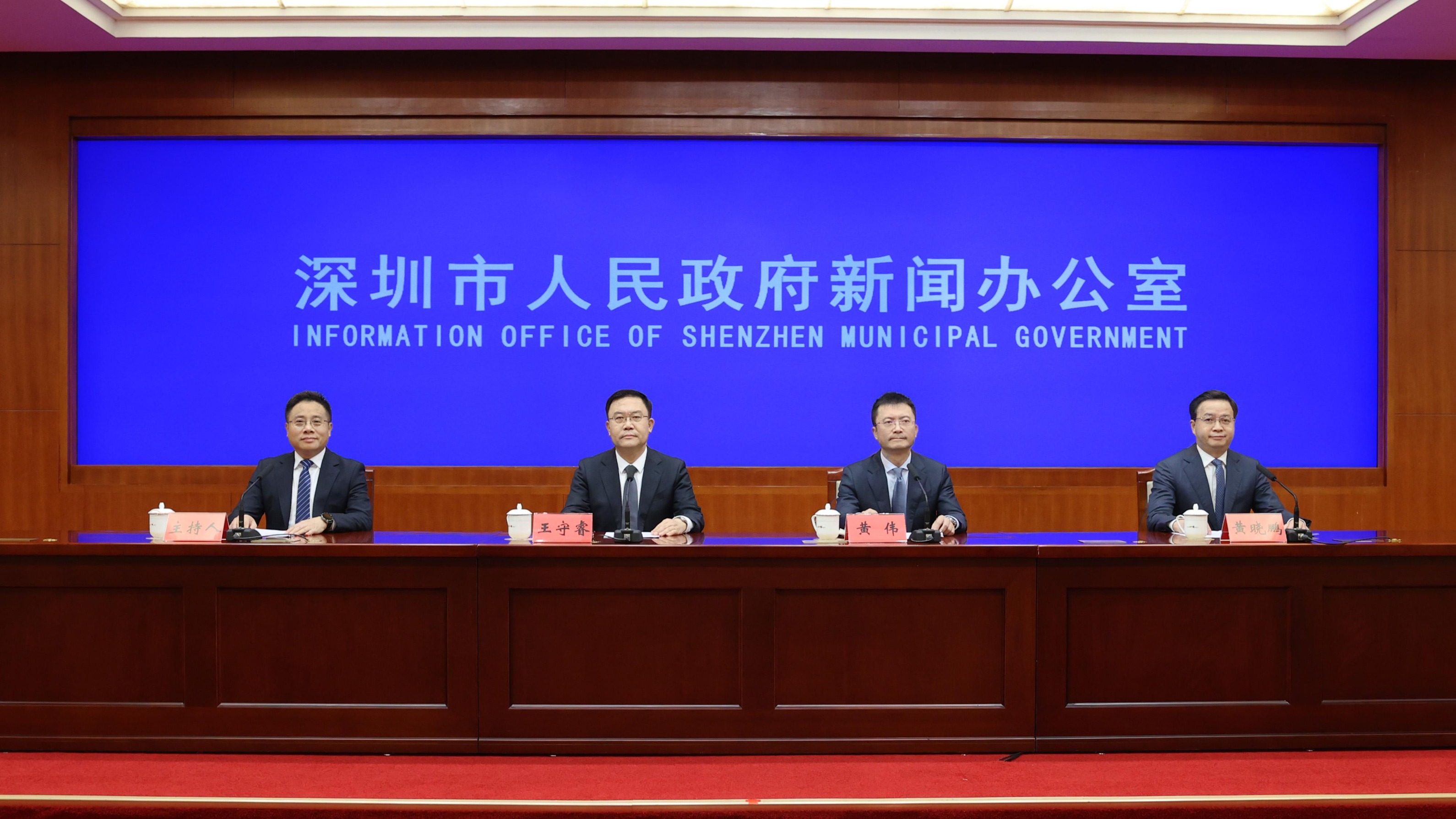
前海将打造赴港上市培育基地 布局保税维修等新业态
2 1 Shi Ji Jing Ji Bao Dao· 2025-06-19 13:05
Core Viewpoint - The recent release of the "Opinions on Deepening Reform and Innovation in Shenzhen's Comprehensive Reform Pilot" emphasizes the need for Shenzhen to build a higher-level open economy, focusing on optimizing goods trade and enhancing service trade innovation [1] Group 1: Economic Growth and Trade - Qianhai is identified as a core area for promoting high-level opening up, with 17 out of 48 reform measures implemented there [1] - By 2024, Qianhai is projected to achieve a GDP of 300.88 billion yuan, an 8.6% year-on-year increase, with imports and exports reaching 706.65 billion yuan, a 42.4% increase [1] - Actual foreign investment in Qianhai is expected to be 26.65 billion yuan, accounting for 60.4% of Shenzhen's total [1] Group 2: Financial Sector Initiatives - Qianhai will focus on emerging finance, cross-border finance, supply chain finance, and technology finance, introducing intellectual property securitization products and establishing a nurturing base for companies going public in Hong Kong [1][2] - The "Technology Startup Pass" credit program has been launched, and the first private equity fund management license for insurance capital has been issued in Shenzhen [3] Group 3: Talent and Innovation - The reform in education and talent systems aims to integrate innovation chains, industry chains, capital chains, and talent chains to create a new source of productivity [2] - Qianhai will provide rapid patent review services for Hong Kong innovation entities and establish an international technology transfer center [2] Group 4: Trade and Service Development - Qianhai has pioneered a "one-time inspection, one-time certification, one-time passage" model for goods trade, enhancing trade facilitation and liberalization [3][4] - The area will promote cross-border e-commerce, bonded maintenance, and display trading, aiming to expand the scale and variety of foreign trade [4] Group 5: Digital Trade and Data Industry - Qianhai has launched a cross-border data verification platform and initiated the first national data broker innovation center [3] - Future plans include exploring diversified data circulation and transaction methods, and establishing an offshore data center [3][6] Group 6: Service Trade Expansion - The service trade sector in Qianhai is experiencing steady growth, with rapid increases in cross-border payment and gaming industries [5][6] - The area will implement a negative list for cross-border service trade and enhance the liberalization of service trade with Hong Kong and Macau [6]
有多少“数据产业基金”,是在自嗨?
Sou Hu Cai Jing· 2025-06-17 02:41
Core Insights - The rapid development of the digital economy has highlighted the value of data as a new production factor, now recognized as the "fifth production factor" following land, labor, capital, and technology [2] - China's data output accounts for 10.5% of the global total, with a national action plan aiming for a compound annual growth rate of over 15% in the data industry by 2029 [2][3] - The establishment of data industry funds across provinces is accelerating, driven by government policies to enhance the marketization of data elements and support digital economic transformation [3][4] Data Industry Fund Growth - By June 2025, the total scale of data industry funds across provinces exceeded 150 billion yuan, a significant increase from less than 50 billion yuan in 2023, indicating strong governmental support for the data element market [4][5] - The growth of data industry funds is characterized by a shift from pilot projects to large-scale implementations, with notable funds established in 2023 focusing on diverse investment directions [7][10] Regional Development Patterns - Eastern coastal provinces are leading in fund establishment, with Guangdong's fund group reaching a total scale of 100 billion yuan, making it the largest known single data industry fund in China [13][14] - Central provinces like Henan and Hubei are catching up by focusing on integrating data elements with traditional industries, emphasizing application-driven characteristics [16][17] - Western provinces are leveraging national strategies like "East Data West Calculation" to enhance their data infrastructure, focusing on foundational projects and spatial data facilities [19][20] Investment Strategies - Investment directions are diversifying, moving from traditional infrastructure to include data assetization, cross-border data flow, and privacy computing [21][33] - Funds are increasingly aligning with national strategies, such as the Chongqing fund's focus on satellite internet and the Guangdong fund's emphasis on cross-border data flow [21][22] Challenges and Considerations - The rapid expansion of provincial data industry funds presents challenges, including the need for effective project conversion and the risk of homogeneous competition among provinces [34][35] - Compliance and security governance are critical, especially for funds involved in cross-border data flow, necessitating a balance between innovation and regulatory adherence [34][35]

一季度REITs业绩分化,生物医药园区投资加速
Sou Hu Cai Jing· 2025-06-13 08:29
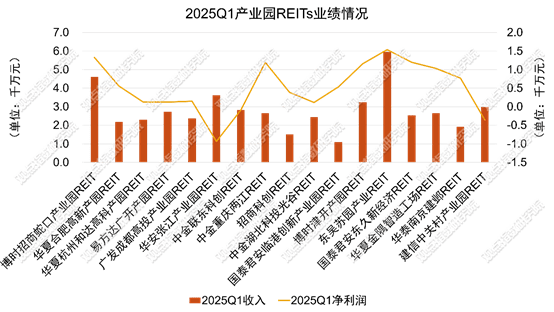
Core Insights - The report highlights significant differences in revenue and net profit for various industrial park REITs in Q1 2025 compared to the previous year [1] Group 1: Investment Trends - There were 7 recorded investment events during the reporting period, with 2 specifically in the biopharmaceutical industrial park sector [2] - The Fuzhou New Area Biopharmaceutical Industrial Park project is set to enhance production capabilities for medical devices and monoclonal antibodies, contributing to the development of Fuzhou's biopharmaceutical industry [2] - The Huachuang Smart Healthcare Industrial Park in Nansha has begun construction, covering 80,000 square meters with a total building area of 300,000 square meters, expected to be completed by the end of 2027 [2][3] Group 2: Strategic Initiatives - The Huachuang Smart Healthcare Industrial Park aims to support the "Healthy China" strategy and will focus on smart medical equipment manufacturing and big data applications [3] - Nansha District plans to attract over 1,000 biopharmaceutical companies by 2026, with an industry scale exceeding 50 billion yuan [3] - The Jiangsu Data Industry Fund was established with a total investment of 1.5 billion yuan, focusing on equity investment and private equity fund management [4] Group 3: REIT Performance - Many industrial park REITs reported a decline in rental income year-on-year, with varying occupancy rates [6][8] - The largest rental decline was observed in the Guotai Junan Lingang Innovation Industrial Park REIT, with a decrease of 5.47%, while its occupancy rate increased by 4.02 percentage points [8] - The Chuangjin Hexin Electronic City Industrial Park REIT project has been officially accepted, with a total building area of approximately 72,000 square meters and a rental rate of 88.28% as of December 31, 2024 [8]
杭州余杭数字政府2.0建设加“数”前行
Ren Min Wang· 2025-06-12 01:06
Core Insights - The article highlights the implementation of AI in enhancing the efficiency of grassroots governance in Yuhang District, showcasing the launch of "AI Yuhang" as a significant step towards digital government 2.0 [1][2] Group 1: AI Applications - "AI Yuhang" has introduced various AI applications such as "PPT Smart Creation," "Document Smart Writing," and "Knowledge Smart Search," which are part of the district's major reform projects for 2025 [1] - The initiative aims to transform AI from a supportive tool to an essential infrastructure for economic and social transformation [1] Group 2: Intelligent Service Models - The "AI Government-Enterprise Assistant" will provide 24/7 online intelligent consulting services for businesses and citizens [2] - The "AI Social Worker Assistant" will assist social workers with event handling, home visit planning, knowledge management, and risk warning [2] - The "AI Chronic Disease Assistant" will offer intelligent diagnostic suggestions, medication guidance, and follow-up plans for grassroots doctors, standardizing chronic disease management [2] Group 3: Data Industry Development - Yuhang aims to become a hub for data industry by making data acquisition convenient, attracting data talent, ensuring data security, and providing robust financial support for data enterprises [2] - The district plans to establish a data industry layout centered around Future Science City, with a goal of adding 1,000 key data enterprises and 50 large-scale data enterprises by the end of 2027 [2]
余杭计划三年打造万亿级数据产业集群
Hang Zhou Ri Bao· 2025-06-09 03:10
近日,余杭正式发布《余杭区数据产业高质量发展三年行动计划(2025—2027年)》(以下简称 《行动计划》),明确以建设"全国数据产业卓越中心(DI CoE)"为目标,依托龙头企业生态辐射效 应、政策创新引领作用、产学研用协同创新机制等,推动数据产业集聚效应凸显、规模显著增长、创新 能力提升、产业生态完善,力争三年内形成万亿级数据产业集群,争创国家级数据产业集聚区。 "数据产业作为数字经济的核心引擎,正成为推动经济社会发展的关键力量。《行动计划》强调数 据产业发展能级跃升,再次释放了突出高质量发展的明确信号。"余杭区政府相关负责人表示,《行动 计划》部署的重点任务,既是余杭积极融入全国一体化数据市场建设的主动之举,也是抢占未来产业制 高点、实现数字经济提质增效的前瞻布局。 创新浓度高、科技含量足,是余杭数据企业的鲜明特征。强脑科技通过捕捉脑电等生物信息数据, 提供个性化诊疗服务,跻身全球脑机接口领域的独角兽企业之列;灵伴科技深耕人工智能技术研发与应 用,借助"AI+AR"眼镜,重新定义"看见"的力量……目前,余杭已形成以阿里巴巴、字节跳动、同花顺 等龙头企业为核心,超万家专业化数据企业协同发力的良好生态,涵盖 ...
大力建设可信数据空间 激活万亿元市场潜能
Shang Hai Zheng Quan Bao· 2025-06-05 18:51
Core Viewpoint - The construction of trusted data spaces will be a key driver for maximizing the value of data elements in the context of a new round of technological revolution and industrial transformation, serving as a crucial infrastructure for the development of the digital economy [1][2]. Group 1: Importance of Trusted Data Spaces - Trusted data spaces will become a critical infrastructure for the digital economy, facilitating the creation of a unified national data market and enabling the co-creation of data element value [1][2]. - By 2028, China aims to establish over 100 trusted data spaces, marking a significant growth opportunity in the construction of digital infrastructure and the activation of a trillion-yuan data element market [1][2][13]. Group 2: Current State and Development Conditions - China's policy framework for data space construction has been continuously improved, with practical innovations yielding initial results and industry standards being systematically advanced [7][8]. - The release of the "Trusted Data Space Development Action Plan (2024-2028)" signifies a shift from conceptual validation to large-scale implementation of data element circulation [2][8]. Group 3: Key Features of Trusted Data Spaces - Trusted data spaces are designed to ensure secure and reliable data circulation, enabling the sharing and utilization of data resources through a unified platform and standardized processes [4][5]. - They will support the efficient matching and integration of data supply and demand, fostering a new model of data sharing and co-creation that reduces trust costs in data circulation [4][5]. Group 4: Market Potential and Growth - The trusted data space market in China is projected to exceed 500 billion yuan by 2028, driving value across the upstream and downstream industrial chains [2][13]. - The data space market reached 4.02 billion yuan in 2023, with a year-on-year growth of 24.4%, indicating a solid market foundation and potential for continued expansion [13]. Group 5: Technological and Infrastructure Development - The construction of trusted data spaces will stimulate market opportunities for technologies such as privacy computing, blockchain, and data sandboxes, which are essential for data control and security [14][15]. - The blockchain market is expected to exceed 190 billion yuan by 2025, driven by the need for data rights and transaction security [14]. Group 6: Application Scenarios and Industry Impact - Trusted data spaces will create new digital economy growth points, with enterprise data spaces serving as the main arena for data flow, enhancing collaboration and data sharing among businesses [17][18]. - Industry-specific trusted data spaces will promote end-to-end data circulation and sharing, transforming traditional industry relationships into networked ecosystems [17][18].

“无中生有”数据产业如何成长?——解码南京玄武区数据产业生态跃迁之路
Xin Hua Cai Jing· 2025-06-05 06:58
Core Insights - The article highlights the transformation of Nanjing's Xuanwu District into a key hub for data element circulation in the Yangtze River Delta, driven by the shift from traditional growth models to a focus on data as a new production factor [1][3][4]. Group 1: Data Economy Development - Xuanwu District has embraced data as a new "land" to overcome limitations posed by land scarcity and slow growth in traditional commerce and services [3][4]. - The establishment of the Jiangsu Data Exchange and various data-related initiatives, such as the first battery digital passport innovation center and a compliance data cross-border service platform, marks significant progress in the region's data economy [1][4][5]. - The district's proactive approach to data cross-border services positions it as a leader in the national data element reform landscape, despite not being part of the initial pilot areas [4][5]. Group 2: Integration of Data and Industry - The integration of data elements with Jiangsu's manufacturing capabilities is crucial for fostering new productive forces, as evidenced by the establishment of national industry clouds in the district [5][8]. - The Xuanwu Big Model Factory has attracted numerous AI companies, facilitating collaboration between traditional manufacturing and advanced data technologies, thus driving digital transformation in the manufacturing sector [9][10]. - The district's initiatives, such as the development of a digital passport for batteries, enhance the competitiveness of local industries in international markets by ensuring traceability and compliance with new regulations [9][10]. Group 3: Institutional Innovation and Ecosystem Building - Xuanwu District is actively exploring legal frameworks and institutional innovations to support data asset rights, compliance transactions, and data security governance [13][14]. - The establishment of a data quality assessment base and a data element legal service laboratory reflects the district's commitment to creating a robust ecosystem for data transactions [13][14]. - The district's shift from a land-centric to a data-centric development model signifies a broader transformation in governance and economic strategy, emphasizing the importance of data in urban development [14][15]. Group 4: Future Prospects and Strategic Vision - The article suggests that the future of urban development will increasingly rely on the richness of data ecosystems rather than physical space, positioning Xuanwu District as a model for other cities facing similar challenges [17]. - The district's experience illustrates that data elements can serve as a catalyst for traditional industries to evolve, highlighting the need for continuous exploration and innovation in the digital economy [17].