
法律服务

Search documents
特殊资产处置生态圈大会举办 聚焦热点问题与异议难题
Zheng Quan Ri Bao Zhi Sheng· 2025-05-25 08:40
Core Insights - The annual conference on special asset disposal, themed "Gathering Strength, Renewing," was held on May 24, focusing on the latest trends and challenges in the field of special asset disposal [1] - The event brought together over a hundred professionals from academia, finance, law, and special asset disposal, fostering collaboration and communication within the special asset ecosystem [1] Group 1 - The conference aimed to address hot topics and difficulties related to objections from third parties in special asset disposal, contributing to the optimization of asset disposal processes and economic development [1] - Key speakers included Liu Bin, Huang Zhenyu, Qi Chao, Xie Zhanlin, and Ji Hongyong, who provided insights and engaged in discussions on the forefront of special asset disposal [1] - The event served as an efficient communication platform for legal service providers and enterprises, enhancing cooperation between these sectors [1] Group 2 - The conference was initiated by Beijing Guosheng Law Firm and co-hosted by several organizations, including Beijing Banking Law Research Association and JD Asset Trading Platform, receiving broad support from various sectors [2]
重庆发布十大涉外法律服务产品 助推企业全球化布局
Zhong Guo Xin Wen Wang· 2025-05-24 06:42
Group 1 - The event "Yufahu·Economic and Trade Global" focused on foreign-related legal services, showcasing ten key legal service products aimed at empowering Chinese enterprises in their global expansion [1][2] - The ten foreign-related legal service products were developed by eight law firms and two notarization institutions in Chongqing, covering areas such as overseas compliance review and international commercial mediation [1] - Notable services include a comprehensive legal service guide for Chinese companies investing in Malaysia, which integrates legal resources from both countries to help mitigate risks and ensure smooth operations [1] Group 2 - Eleven organizations, including the Chongqing Bar Association and the Chongqing International Commercial Arbitration Court, signed a strategic cooperation framework agreement to build an international commercial legal service ecosystem in Chongqing [2] - The collaboration aims to prevent foreign-related legal risks, promote resource flow, and support the development of the private economy [2] - Several cross-border legal service cooperation agreements were signed between law firms from Chongqing and Southeast Asia, enhancing legal support for Chinese enterprises venturing abroad [2] Group 3 - The event also highlighted ten exemplary cases of foreign-related legal services, selected by the Chongqing Judicial Bureau and the Chongqing Commerce Commission, covering cross-border investment, international trade, and foreign-related intellectual property [2] - These cases serve as practical examples for enterprises to understand international trade rules, manage cross-border investment risks, and protect their legal rights overseas [2]
探迹科技:2025年法律服务行业发展趋势报告
Sou Hu Cai Jing· 2025-05-23 01:35
Industry Development Background and Market Landscape - The global political and economic landscape is reshaping the legal services ecosystem, with cross-border regulatory changes driving increased compliance spending by Chinese companies, leading to growth in overseas business for top law firms and activation of high-end non-litigation services [1][14] - The Chinese legal services industry is characterized by simultaneous "scale expansion" and "structural fragmentation," with the market size expected to reach 320 billion yuan by 2025, while top law firms dominate over 70% of billion-yuan cases, leaving small firms reliant on low-margin C-end business [1][26] Core Growth Trends and Opportunities - Policy-driven compliance demand is surging, with the new Company Law and Data Security Law enhancing corporate compliance management needs, leading to a projected data compliance market size of over 20 billion yuan by 2025, with a compound annual growth rate of 53% [2][46] - Specialized segments are becoming crucial, with new demands emerging in areas like renewable energy, cross-border e-commerce, and live-streaming e-commerce, necessitating targeted legal services [3][15] - AI is transforming industry productivity, automating over 60% of repetitive tasks, allowing lawyers to focus on high-value services, and enhancing client acquisition through data analysis [4][15] - Upgrading sales models and management through digitalization is essential, with a focus on AI-driven client acquisition and standardized service delivery to improve efficiency and client retention [5][15] Company Response Strategies - Firms should focus on specialization and vertical depth in niche areas to build competitive advantages and avoid homogenization [6][15] - Embracing AI tools and integrating legal, technology, and industry ecosystems can shift firms from reactive dispute resolution to proactive risk management [6][15] - Optimizing regional and client group strategies by targeting industrial clusters and small to medium enterprises with lightweight service products can enhance market coverage [6][15] Summary - The legal services industry is undergoing structural transformation driven by AI and digitalization, with firms needing to leverage policy benefits and technological opportunities to build competitive advantages through specialization, AI-driven client acquisition, and ecosystem collaboration [7][15]


2025年法律服务行业发展趋势报告-探迹科技
Sou Hu Cai Jing· 2025-05-22 17:27
Industry Overview - The legal services industry has transitioned from a "labor-intensive" model to a "technology-driven" one, forming a complete chain structure from "basic support-core services-terminal demand-ecosystem cooperation" [1][33] - The market size is projected to reach 300 billion yuan in 2024 and 320 billion yuan in 2025, with a compound annual growth rate (CAGR) of 14.3% [1][34] - Top law firms dominate the high-end market, with red circle firms accounting for 17.1% of revenue, and the top 50 firms handling over 70% of cases valued at over 100 million yuan [1][37] Company and Regional Distribution - There are over 210,000 legal service firms in China, with 68.77% being private enterprises, and a trend towards scaling up [2][39] - The distribution of firms is uneven, with Guangdong, Shandong, Jiangsu, Shanghai, and Henan having the highest number of firms, while Beijing, Shanghai, and Shenzhen account for 57% of total revenue [2][45] Competitive Landscape and Business Changes - The competition in the industry has shifted from "scale expansion" to "value competition," with specialization becoming a trend [3][49] - The implementation of the new Company Law has driven compliance upgrades, with the data compliance market expected to exceed 20 billion yuan by 2025 [3][54] Incremental Customer Insights - In recent court cases, defendants account for 57% of the parties involved, with the wholesale and retail, construction, and manufacturing sectors being the most frequently involved [4][58] - The total scale of execution cases exceeds 5 trillion yuan, with over 40% being final cases, and the accommodation and catering industry having the highest application volume [5][68] - Intellectual property disputes have seen explosive growth, with an average claim amount of 2.87 million yuan, which is 15 times that of ordinary civil cases [6][54] Growth Direction Insights - Establishing specialized barriers in segmented markets and binding high-growth industries is essential for creating new sales capabilities [7][54] - The use of "legal health checks" can facilitate bulk signing, while AI can reduce service costs and enhance response speed [8][54] - Companies are leveraging policy dividends and other golden segments to build a robust industry foundation and increase customer unit prices [9][54] Conclusion - Law firms need to balance "hard power" and "soft power," with "technology empowerment + professional depth" becoming a dual driving model for future competitive advantage [9][54]

开展服务业扩大开放综合试点
Ren Min Ri Bao· 2025-05-21 22:12
Core Insights - The productive service industry is a crucial engine for the transformation and upgrading of advanced manufacturing in Chongqing [1] - Chongqing has implemented various innovative financial services, such as the knowledge value credit loan, to support technology-driven enterprises [1][2] - The city has seen significant achievements in service industry reforms, with nearly 2000 projects launched and a notable increase in service sector contributions to GDP [3] Financial Services - Chongqing introduced the knowledge value credit loan, providing 2 million yuan in funding to Chongqing Boyton Power Machinery Co., Ltd. [1] - This loan initiative allows technology companies to apply for credit based on their knowledge value assessment, with banks offering loans within the approved credit limit [1] Technological Services - Over 20 universities and research institutions in Chongqing have been involved in pilot programs granting researchers ownership or long-term usage rights of their scientific achievements [2] - Since the pilot's inception, 391 intellectual property transformations have been completed, with a total contract value exceeding 410 million yuan [2] Logistics Services - Chongqing has established an international logistics hub, enhancing cross-regional and cross-border transportation efficiency [2] - The city has initiated international postal services and is actively participating in the development of new international logistics regulations [2] Legal and Business Services - The city has developed foreign-related legal services and optimized intellectual property services, achieving the first judicial ruling in areas like patent licensing fees [2] - Chongqing has encouraged leading enterprises to participate in the formulation of 78 international standards, enhancing the standardization of business services [2] Overall Achievements - After four years of exploration, Chongqing's service industry expansion pilot has resulted in nearly 2000 projects and 218 reform outcomes, with 27 innovations recognized as best practices nationally [3] - The service industry openness index has increased by 38.2 points, and the service sector's share of GDP has risen by 10 percentage points compared to pre-pilot levels [3]

跨国公司看中国|专访中国英国商会副主席陶克瑞:中国电动汽车进入英国,对双方都有利
2 1 Shi Ji Jing Ji Bao Dao· 2025-05-21 12:06
Core Insights - The article emphasizes the potential for increased cooperation between the UK and China, particularly in the electric vehicle sector, which aligns with the UK's emission reduction policies and offers consumers more quality product choices [1][15] - The China-UK Chamber of Commerce's "2025 Recommendations" highlights the need for further market access and the positive atmosphere for dialogue and pragmatic cooperation between the two countries [1][2] Group 1: Economic Cooperation - The UK government is encouraged to recognize the benefits of allowing more Chinese electric vehicles into the market, which could alleviate consumer financial pressure and create a win-win situation [1][15] - The recent visits by UK officials to China signify a renewed commitment to economic dialogue and cooperation, which is seen as a positive signal for both countries [2][3] Group 2: Investment Trends - There is a notable increase in private Chinese capital entering the UK market, particularly in sectors like electric vehicles, batteries, and solar energy, which are gaining acceptance among UK consumers [2][15] - The UK is viewed as a significant market for Chinese companies, especially with the growing middle-income group and the demand for quality products [7][15] Group 3: Future Economic Outlook - The expectation for China's economy to achieve a growth rate of around 5% by 2025 is considered realistic, with a focus on stimulating domestic demand [5][6] - The health of the Chinese economy is crucial for the development of UK companies operating in China, and sustained consumer spending is essential for achieving growth targets [6][7] Group 4: Market Access and Regulatory Environment - The new market access negative list from China reduces restrictions, signaling a commitment to further opening the market, which is expected to benefit UK businesses operating in China [12][13] - The ongoing efforts by China to join international trade agreements like CPTPP and DEPA are seen as positive steps towards greater economic integration and cooperation [13][14] Group 5: Sector-Specific Opportunities - The healthcare sector is highlighted as a significant area for collaboration, with UK firms providing legal and financial services to Chinese companies expanding internationally [14][15] - The investment by AstraZeneca in Beijing, amounting to $2.5 billion, reflects a long-term strategic vision and recognition of the value of the Chinese market [8][15]
关税2.0时代,企业如何重构海外供应链?
3 6 Ke· 2025-05-21 05:05
Core Insights - The global political and economic landscape is evolving under Trump's second term, with the U.S. market still holding strategic value for Chinese companies' globalization efforts [1] - Chinese enterprises need to enhance their capabilities in international rule interpretation and establish dynamic response mechanisms in supply chain restructuring and compliance management [1] Group 1: Trade Policy and Tariffs - Trump's trade policy is characterized by five strategic directions, including unilateral trade policies and the weakening of multilateral rules [3][4] - Tariff mechanisms include IEEPA tariffs raising Chinese imports by 20%, 232 tariffs on steel and aluminum products, and a significant increase in counter-tariffs on Chinese goods [4] - The Geneva Joint Statement led to a temporary suspension of tariff increases on certain goods, indicating a phase of balance in tariff negotiations [4] Group 2: Supply Chain Risks and Compliance - Supply chain risk management is crucial for internationalization, with origin rules posing significant risks [5] - Common misconceptions about origin rules can lead to unnecessary tariff burdens and compliance risks, emphasizing the need for a detailed understanding of U.S. customs regulations [5] - ESG compliance has become a global regulatory focus, requiring companies to integrate supply chain compliance with ESG management to navigate complex international regulations [6] Group 3: Economic Sanctions and Legal Risks - Chinese companies engaging in U.S. business must adhere to U.S. economic sanctions to avoid severe penalties and asset freezes [7] - The "long-arm jurisdiction" of U.S. law poses significant challenges for Chinese enterprises, with many facing legal difficulties due to unfamiliarity with U.S. legal systems [8] - Key legal challenges include a lack of understanding of U.S. legal rules, external pressures from trade tensions, and high costs associated with legal compliance [9] Group 4: Supply Chain Restructuring Strategies - Companies are encouraged to adopt strategic supply chain restructuring to mitigate risks and enhance efficiency, with three main approaches suggested: relocating production to third countries, separating overseas and domestic operations, and establishing local production in the U.S. [10][11]

行业沙龙 | 未可知 x 君和律所:共探 AI + 法律前沿趋势
未可知人工智能研究院· 2025-05-21 03:11
在产业应用场景的探讨环节,沙龙聚焦于 AIGC 在不同领域的创新应用。 张孜铭老师与杭州 心识宇宙科技有限公司商务总监卢天夫先生共同探讨了 AIGC 与智能创作的结合, 展示了 AI 技术如何为创意产业带来新的活力与机遇。 《瑞丽服饰美容》出版人 石璐女 士 、前时尚集团市场部总经理 徐聪先生 以及养生堂品牌负 责人 吴依凡女士 则从时尚产业的角度出发,分享了 AIGC 在时尚设计、品牌推广等方面的应 用案例,揭示了 AI 技术如何重塑时尚产业的未来。此外,"国风元宇宙的一千零一夜"IP 主理 人 李风先生 、酒域灵境科技有限公司 CEO 银普先生 、亚银金融集团企业融资主管 姚景文 先生 以及红鲤鱼院线 CPO 高琳女士 等嘉宾围绕 AIGC 与元宇宙新空间展开了深入对话,探 讨了 AI 技术在构建虚拟世界中的重要作用与潜在挑战。 在人工智能技术飞速发展的当下,AI 与法律的融合正成为行业关注的焦点。近日, 未可知人 工智能研究院与君合律师事务所联合举办了一场主题为 "玩转 AIGC 的 1001 种方式" 的法商 创新沙龙 ,吸引了众多法律界人士、科技从业者以及相关产业精英的积极参与。 本次沙龙 近日 在 ...
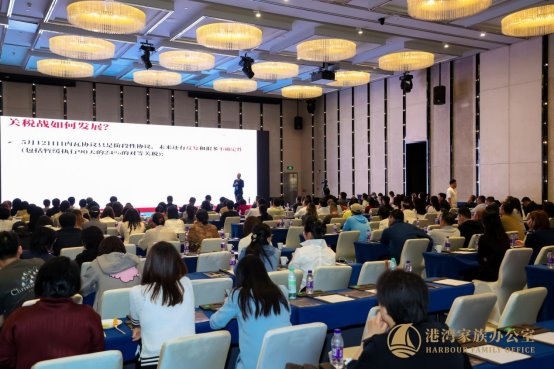
港湾家办北京专场圆满举行 解锁全球化变局下财富避风港策略
Sou Hu Wang· 2025-05-20 11:56
Group 1 - The core viewpoint of the articles highlights the increasing focus of high-net-worth families on finding stable wealth management strategies amid global economic adjustments and rising geopolitical risks [1] - The HuRun Research Institute's report indicates that China is expected to experience a wealth transfer wave of 79 trillion RMB over the next 30 years, necessitating professional solutions for asset allocation, tax compliance, and business succession [1][2] - The "Beyond Wealth: Sustainable Inheritance" national lecture series organized by the Harbor Family Office attracted over 200 offline participants and over 6000 online viewers, indicating strong interest in wealth management strategies [2][6] Group 2 - The Chief Economist of Harbor Family Office, Xing Lei, emphasized the uncertainties in the current economic environment, including the impact of the US-China tariff war and the limited return potential of RMB assets, while highlighting the advantages of low-risk dollar asset portfolios [6] - Legal expert Wang Fang discussed the dual-track protection strategy for families and enterprises, addressing higher compliance requirements in operations and inheritance due to changes in tax audits and regulations [8] - The lecture series serves as a foundation for future events, with Harbor Family Office committed to expanding its services to build a robust and sustainable wealth management system for high-net-worth families [8]
仲裁护航民企“苏八条”发布
Su Zhou Ri Bao· 2025-05-19 22:59
Core Viewpoint - The release of eight measures by the Suzhou Arbitration Commission aims to enhance the legal protection for private enterprises, optimize the business environment, and support their healthy development through innovative arbitration mechanisms [1][2]. Group 1: Measures for Private Enterprises - The eight measures cover various aspects to comprehensively safeguard the rights of private enterprises [1]. - The judicial administrative system and arbitration institutions in Suzhou will strengthen collaboration with the municipal federation of industry and commerce to better understand the needs of private enterprises [1]. - The establishment of a "green channel" for arbitration services aims to standardize, normalize, and facilitate processes, allowing for same-day application acceptance to improve efficiency [1]. Group 2: Cost Reduction and Accessibility - Suzhou will utilize the International Commercial Arbitration Service Center located in the Suzhou Industrial Park to reduce the costs of rights protection for private enterprises, including offering discounts on arbitration fees for struggling companies [1]. - The use of video conferencing technology will facilitate remote hearings, making it easier for enterprises to participate [1]. Group 3: International Arbitration and Intellectual Property - The Suzhou Free Trade Zone's International Commercial Arbitration Court will enhance foreign-related arbitration by recruiting more foreign-related arbitrators and strengthening overseas cooperation [1]. - A specialized team of arbitrators will be formed to optimize intellectual property rights protection and create convenient channels for rights protection [1]. Group 4: Digital Transformation and Legal Risk Management - The exploration of the "arbitration + mediation" model aims to deepen the connection between arbitration and mediation, enriching dispute resolution pathways [2]. - The Suzhou Arbitration Commission is promoting the digital transformation of arbitration services, including online filing and electronic delivery [2]. - Legal risk prevention consultations will be provided to help enterprises identify potential risks [2]. Group 5: Strategic Collaborations and Expert Guidance - The event included the awarding of the second batch of arbitration liaison points to various industry associations, indicating a strategic collaboration to enhance arbitration services [2]. - An expert lecture on legal risk prevention and trade challenges was delivered, focusing on international evidence law, contract law, and international arbitration [2].