电信

Search documents
除了12315,这些正规投诉途径你知道吗?高效维权指南
Xin Lang Cai Jing· 2025-12-24 06:19
Core Viewpoint - The article emphasizes the importance of a multi-layered and diversified consumer dispute resolution system in China, highlighting various effective complaint channels beyond the official 12315 platform [1][9]. Group 1: Complaint Channels - **Industry Supervisory Departments and Associations**: These channels are specialized and have a strong understanding of industry regulations, allowing for precise problem resolution [10][14]. - **Large Internet Platforms and Media-Hosted Public Complaint Platforms**: These platforms, such as the Black Cat Complaint platform, serve as communication bridges and amplify consumer voices through social supervision [14][15]. - **Market Entities' Own Complaint Channels**: Businesses and platforms often have their own customer service systems that can provide direct and efficient resolutions [15][16]. - **Consumer Organizations**: Organizations like the China Consumers Association play a crucial role in social supervision and protecting consumer rights [16][19]. Group 2: Effective Utilization Strategies - **Initial Contact**: Consumers should first attempt to resolve issues through official channels like apps or customer service, as this is often the quickest method [18][20]. - **Evidence Collection**: Maintaining clear evidence such as order screenshots and communication records is essential for effective complaint resolution [20]. - **Reasonable Claims**: Claims should be based on factual and legal grounds to facilitate resolution, avoiding excessive demands [20]. - **Parallel Approaches**: For complex disputes, consumers can simultaneously engage multiple channels to increase pressure on the issue [20]. Group 3: Conclusion - The diversification of complaint channels reflects the maturity and progress of modern consumer society, with 12315 serving as a strong support but not the only option available [8][20].
数说工信“成绩单” 前11个月我国通信业整体运行平稳
Yang Shi Wang· 2025-12-23 09:06
Group 1 - The overall operation of the telecommunications industry in China has remained stable in the first 11 months of the year, with a total revenue of 1,609.6 billion yuan, representing a year-on-year growth of 0.9% [1] - As of the end of November, the total number of fixed internet broadband access users reached 697 million, with a net increase of 27.12 million users compared to the end of the previous year [4] - The number of mobile IoT terminal users reached 2.9 billion, with a net increase of 24.4 million users since the end of last year [4] Group 2 - The total number of 5G base stations reached 4.83 million, with a net increase of 579,000 base stations compared to the end of the previous year [5]

非媒:中国科技助力非洲转型发展
Huan Qiu Wang Zi Xun· 2025-12-22 22:39
Core Insights - Emerging technologies such as IoT, big data analytics, and artificial intelligence are rapidly developing and have the potential to transform global society and economy. Africa has a unique opportunity to leverage these technologies and reliable partnerships for socio-economic transformation, potentially contributing approximately $1.5 trillion to its GDP by 2030 through accelerated sustainable growth and development [1][2]. Group 1: Technological Development and Economic Impact - The advancements in renewable energy, broadband infrastructure, and digital public services are enhancing resilience and promoting inclusive technology applications to aid development [1]. - The African Union's Agenda 2063 and the African Continental Free Trade Area (AfCFTA) provide critical frameworks that can benefit from the increasing prevalence of emerging technologies and favorable tech partnerships [1][2]. - The African Digital Transformation Strategy (2020-2030) prioritizes broadband expansion, digital skills training, e-governance, data governance, and support for emerging technologies like AI and fintech, guiding Africa's related efforts [1][2]. Group 2: China-Africa Technological Partnership - China's growing partnership with Africa in the tech sector involves governments and major telecom and mobile companies, indicating that reliable partnerships can effectively bridge the digital divide and promote inclusive economic participation and growth [2]. - China is a significant force in promoting development in the Global South through various initiatives, including the Belt and Road Initiative and the China-Africa Cooperation Forum, focusing on common development, security, cultural exchange, and equitable global governance [2][3]. - Chinese government and enterprises are crucial partners in Africa's tech-driven modernization, providing ICT support that aids economic growth and public service delivery in sectors like e-governance, healthcare, and education [2][3]. Group 3: Infrastructure and Capacity Building - Chinese enterprises have piloted AI systems in urban management, fintech solutions, and hydropower operations in several African countries, with ongoing efforts to apply technology in green energy and food security [3]. - The China-Africa Technology Partnership Program 2.0 includes joint projects for building R&D centers, tech parks, and sustainable development initiatives, marking a deepening of long-term mutually beneficial development positioning [3][4]. - China has made significant investments in Africa's digital infrastructure, assisting in the construction of extensive backbone networks totaling approximately 150,000 kilometers, with over 200,000 kilometers of fiber optic laid [3][4]. Group 4: Education and Long-term Development - China supports African universities and vocational education, launching specialized technical talent training programs and establishing joint R&D innovation institutions to deepen tech cooperation [4]. - The China-Africa partnership has acted as a catalyst in bridging Africa's digital divide, with future prospects for solidifying tech cooperation as a primary frontier for sustainable socio-economic transformation and modernization [4].
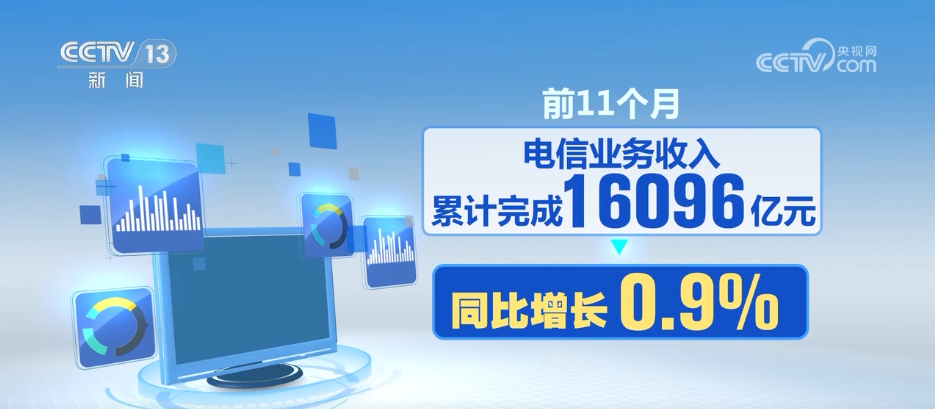
前11个月电信业务收入 同比增长0.9%
Xin Lang Cai Jing· 2025-12-22 20:23
Core Insights - The total number of mobile phone users among three major telecom companies and China Broadcasting reached 1.828 billion by the end of November, with a net increase of 38.54 million users compared to the end of last year [1] - The number of 5G mobile phone users reached 1.193 billion, with a net increase of 17.9 million users, accounting for 65.3% of total mobile phone users [1] - The overall telecom industry maintained stable operations, with total telecom business revenue reaching 1.6096 trillion yuan, a year-on-year increase of 0.9% [1] - The total telecom business volume, calculated at constant prices from the previous year, grew by 9.1% year-on-year [1] Infrastructure Development - The construction of gigabit optical fiber broadband networks is progressing, with the number of 10G PON ports capable of gigabit network service reaching 31.34 million, a net increase of 3.133 million compared to the end of last year [1] - The total number of 5G base stations reached 4.83 million, with a net increase of 579,000, accounting for 37.4% of total mobile base stations, an increase of 0.4 percentage points compared to the previous 10 months [1]
【安永税务】巴西并购——税务尽职调查并非例行公事
Sou Hu Cai Jing· 2025-12-22 13:13
Core Insights - Brazil, as the largest economy in Latin America, continues to attract strategic and financial investors due to its vast domestic market, rich natural resources, and strategic location in the Southern Hemisphere [1] - The country is undergoing significant tax reforms, including a comprehensive consumption tax reform that aligns with OECD standards, necessitating forward-looking financial and tax due diligence [1][3] Regulatory Environment - The merger and acquisition process in Brazil is more complex compared to jurisdictions like the US or Europe, requiring extensive documentation, additional regulatory approvals, and longer approval timelines [2] - Specific industries such as media, healthcare, and aviation have restrictions on foreign ownership or require special permits, impacting transaction structures and timelines [2] Tax Due Diligence - Tax due diligence (TDD) is critical in Brazil's evolving tax landscape, with three major structural reforms directly affecting valuation models and transaction agreements [3] - The transition from a fragmented VAT system to a dual VAT system (CBS/IBS) is set to begin in 2026, with significant implications for profit margins and working capital [3][10] Transfer Pricing and Global Minimum Tax - Starting January 1, 2024, Brazil will adopt OECD's arm's length principle for transfer pricing, expanding the scope to include services, intangible assets, and financial transactions [4] - The implementation of a qualified domestic minimum top-up tax (QDMTT) from January 1, 2025, will require companies with revenues exceeding €750 million to model effective tax rates and prepare compliance documentation [4] Employment Tax Risks - The Brazilian Supreme Court has paused litigation regarding the legality of hiring through personal service companies (PJs), which poses significant investment risks for industries reliant on contractors [8] - Potential liabilities related to employment taxes could arise if the court's final ruling is unfavorable, impacting cost structures and compliance obligations [8][15] Legal and Judicial Uncertainty - Court rulings can significantly affect tax treatment outcomes, necessitating careful evaluation of each tax dispute to determine refund eligibility and audit risks [7] - The dynamic nature of the CBS/IBS tax framework highlights the need for flexible pricing models and renegotiation clauses in sale and purchase agreements [7] Industry-Specific Considerations - In the consumer and retail sector, traditional pricing models based on ICMS-ST must be adjusted to comply with new CBS/IBS regulations [11] - The technology and digital industries must address historical risks and outdated contract structures while ensuring compliance with OECD transfer pricing rules [13] - The telecommunications sector will benefit from unified taxation rules under CBS/IBS, but transitional risks remain [14] Conclusion - Brazil's market presents attractive investment opportunities, but success hinges on the ability to navigate complex information and incorporate tax reforms, legal uncertainties, and employment tax risks into pricing considerations [17] - Effective tax due diligence is now a strategic tool that transforms complex situations into clear judgments, supporting decision-making processes [17]
世代交替临近,李嘉诚正在重塑他的商业帝国
Sou Hu Cai Jing· 2025-12-22 11:08
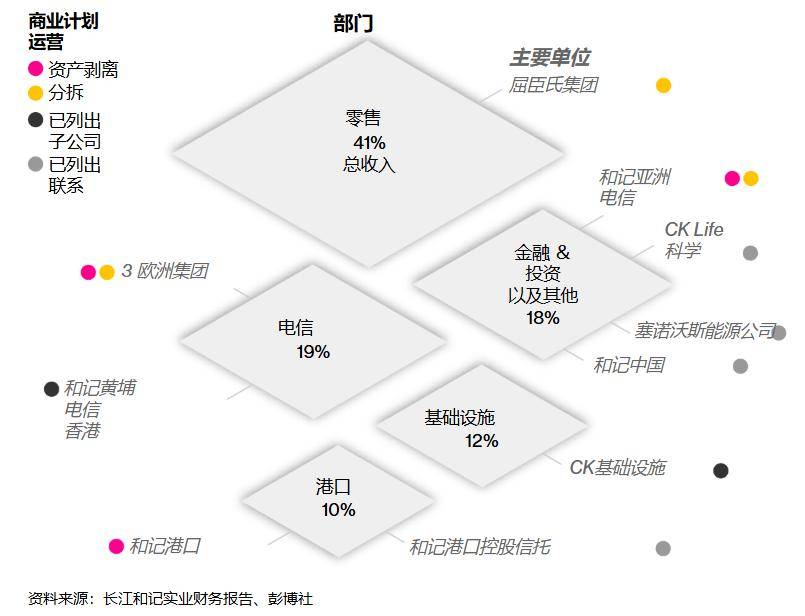
Group 1 - The article discusses how Li Ka-shing and his family are reshaping their business empire through significant transactions in anticipation of an upcoming generational transition [2][5] - Cheung Kong Holdings is pursuing three major initiatives: an IPO of its retail division to raise at least $2 billion, potential listing or partial sale of its global telecom business, and negotiations to sell 43 port assets, which could generate over $19 billion in cash [2][5] - The Li family, holding about 30% of Cheung Kong Holdings, believes that asset sales and spin-offs can unlock value exceeding current market valuations, aiming to reduce the significant discount between the company's stock price and its net asset value [5][9] Group 2 - The restructuring efforts are seen as a way to ensure the family's wealth is realized and preserved, with Li Ka-shing's son, Li Zeju, facing challenges in navigating a more turbulent business environment [7][9] - The potential transactions have helped improve market sentiment, narrowing the gap between market price and net asset value, contributing to a 32% increase in the stock market this year, outperforming the Hang Seng Index [9] - The Li family is also increasing its stake in Cheung Kong Property Holdings, currently holding about 49%, indicating a strategic focus on real estate projects primarily located in Hong Kong and mainland China [9]

工信部:截至11月末5G移动电话用户达11.93亿户
Zheng Quan Shi Bao Wang· 2025-12-22 08:52
Core Insights - The Ministry of Industry and Information Technology reported on the economic operation of the telecommunications industry for the first 11 months before 2025, highlighting the continuous expansion of 5G user base [1] Group 1: User Growth - The total number of mobile phone users among the three major telecom operators and China Broadcasting reached 1.828 billion, with a net increase of 38.54 million users compared to the end of the previous year [1] - The number of 5G mobile phone users reached 1.193 billion, with a net increase of 17.9 million users compared to the end of the previous year, accounting for 65.3% of total mobile phone users [1]
工信部:前11个月电信业务收入累计完成16096亿元,同比增长0.9%
Zheng Quan Shi Bao Wang· 2025-12-22 08:51
Core Insights - The Ministry of Industry and Information Technology reported that the telecommunications industry generated a total revenue of 1,609.6 billion yuan in the first eleven months of 2023, reflecting a year-on-year growth of 0.9% [1] - When adjusted for last year's constant prices, the total telecommunications business volume increased by 9.1% year-on-year [1] Industry Performance - Total telecommunications revenue reached 1,609.6 billion yuan [1] - Year-on-year growth in telecommunications revenue was recorded at 0.9% [1] - The adjusted total business volume for telecommunications showed a significant increase of 9.1% year-on-year [1]
鹏博士(600804)已经和解获赔,4.5万股民,还有多少没有上车!
Xin Lang Cai Jing· 2025-12-22 07:36
Core Viewpoint - Peng Bo Shi Telecom Media Group Co., Ltd. has been penalized for violations of information disclosure regulations, including failure to disclose related party transactions and significant omissions in periodic reports, which has harmed investors' rights [1][6]. Summary by Sections Administrative Penalty - The China Securities Regulatory Commission's Sichuan Regulatory Bureau issued an administrative penalty decision against Peng Bo Shi for failing to disclose non-operating fund transactions with related parties, leading to inaccurate and incomplete annual report disclosures [1][6]. Investor Compensation Eligibility - Two categories of investors are eligible for compensation: - **First Interval**: Investors who purchased Peng Bo Shi stock (600804) between April 12, 2013, and July 18, 2023, and sold or continued to hold the stock after July 18, 2023, are eligible [2][7]. - **Second Interval**: Investors who bought the stock between April 28, 2022, and April 16, 2024, and sold or continued to hold it after April 16, 2024, are also eligible [3][8]. Required Documentation for Claims - Investors must prepare the following documents for compensation claims: - **Stock Transaction Statement**: Original statement stamped by the brokerage, covering all transactions from the first purchase to the last sale or print date, including current holdings for those still owning shares [4][9]. - **Copy of ID**: Personal investors must provide a copy of their ID [5][10]. - **Securities Account Confirmation**: A confirmation from the brokerage containing the investor's name, ID number, and account number, also stamped by the brokerage [5][10].

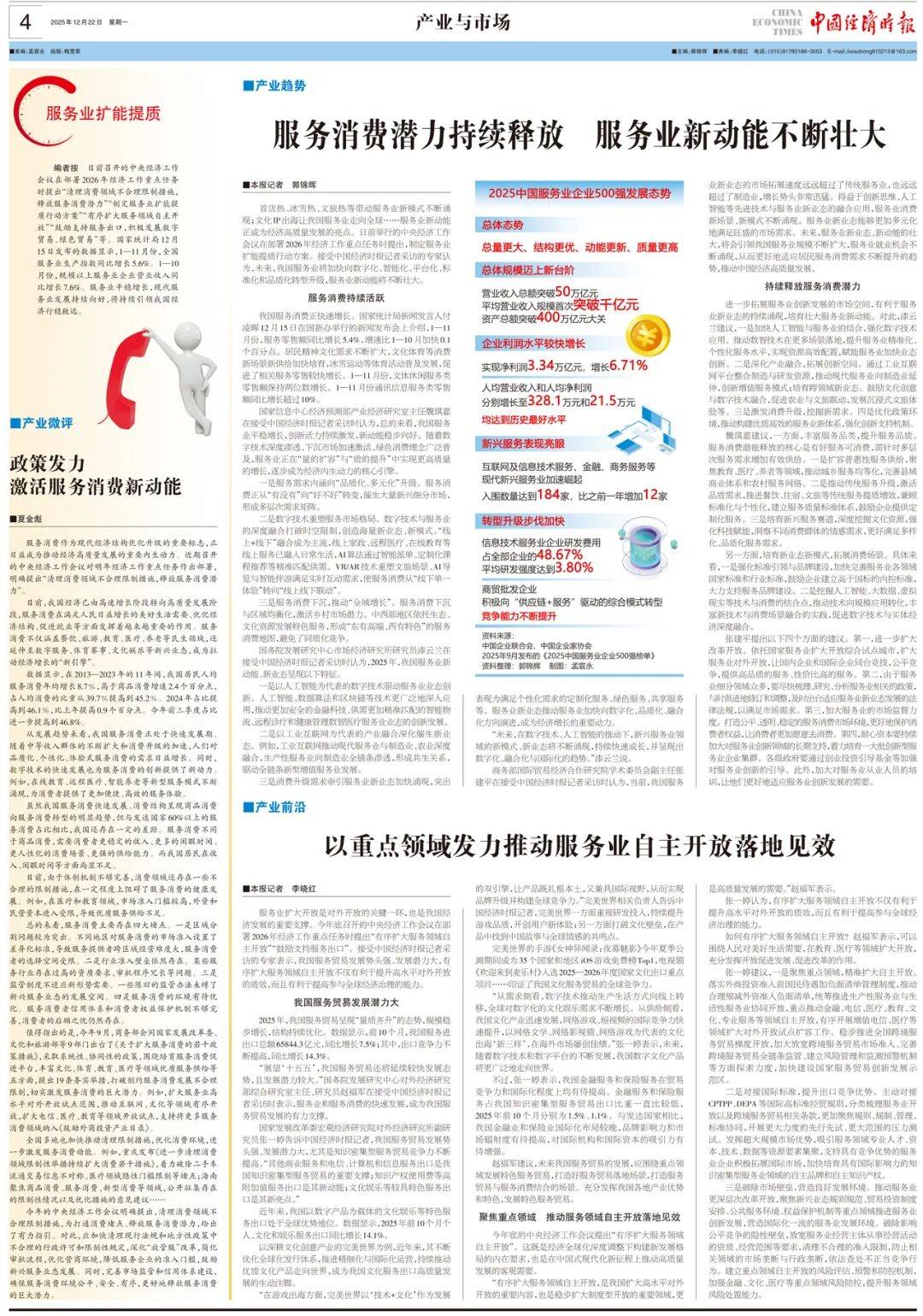
产业与市场丨政策发力 激活服务消费新动能
Sou Hu Cai Jing· 2025-12-22 07:26
Core Insights - The central economic work conference emphasized the need to "eliminate unreasonable restrictions in the consumption sector to unleash service consumption potential" and to "formulate an action plan for expanding and improving the service industry" [1][2][5] - The service industry is showing steady growth, with the national service production index increasing by 5.6% year-on-year from January to November, and revenue from large-scale service enterprises growing by 7.6% year-on-year from January to October [1][2] Group 1: Service Consumption Trends - Service consumption is becoming a significant internal driving force for high-quality economic development, covering areas such as dining, tourism, education, healthcare, and emerging sectors like digital services and cultural entertainment [2][3] - From 2013 to 2023, the average annual growth rate of per capita service consumption in China was 8.7%, surpassing the growth rate of goods consumption by 2.4 percentage points, with the share of service consumption in per capita consumption rising from 39.7% to 45.2% [2][3][4] - The share of service consumption is projected to increase to 46.1% in 2024, with a further rise to 46.8% in the first three quarters of this year [2][3] Group 2: Challenges in Service Consumption - There are four main bottlenecks in service consumption: regional segmentation, industry access barriers, outdated regulatory systems, and an inadequate consumer protection environment [4][5] - High market entry barriers in sectors like healthcare and education limit the supply of quality services, as foreign and private capital face restrictions [3][4] Group 3: Policy Initiatives - The government has introduced 19 practical measures to stimulate service consumption, including expanding high-level pilot programs for service industry openness and promoting orderly opening in sectors like telecommunications, healthcare, and education [4][5] - Local governments are also taking steps to eliminate restrictive measures and optimize the consumption environment, such as Chongqing's initiatives to address information asymmetry in the second-hand car market and hidden barriers in healthcare [5][8] Group 4: Future Outlook - The service industry is expected to accelerate its transformation towards digitalization, intelligence, platformization, standardization, and quality enhancement, with new service models emerging [8][9] - The integration of digital technology into service consumption is creating new market opportunities, with online services becoming mainstream and enhancing consumer experiences [9][10]