
核聚变

Search documents
A股这一板块集体爆发,002513,盘中上演“天地板”
Zheng Quan Shi Bao· 2025-10-09 03:25
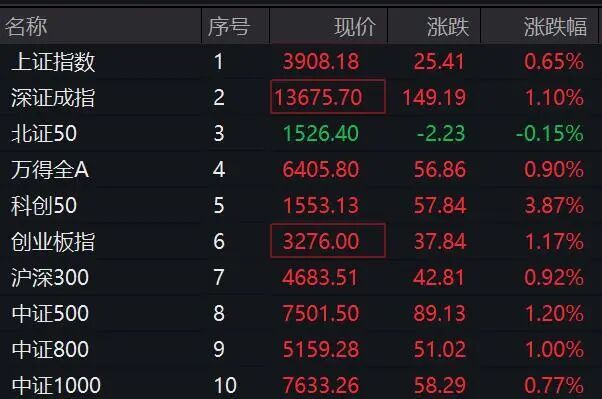
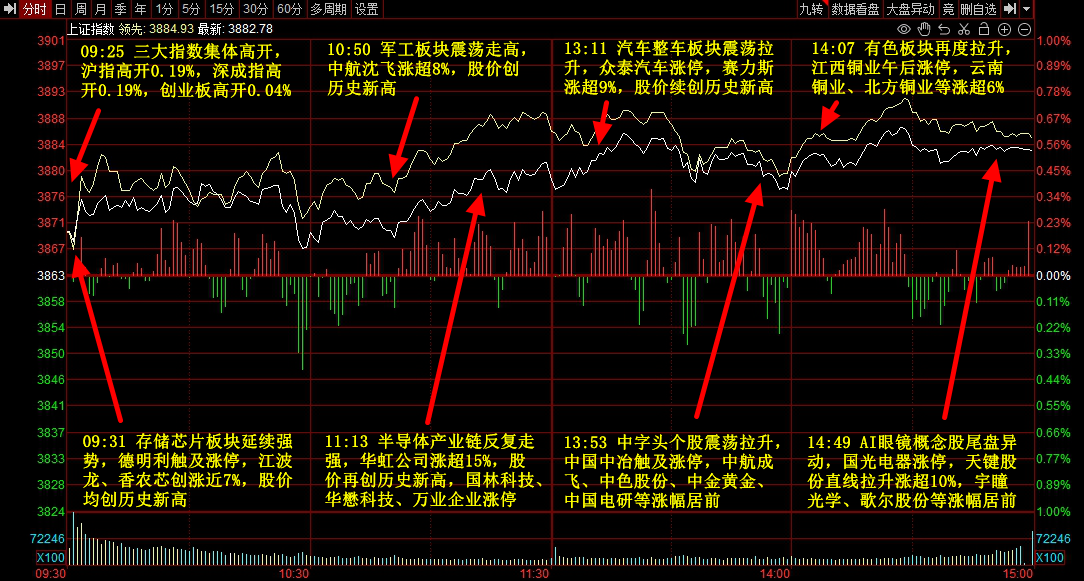
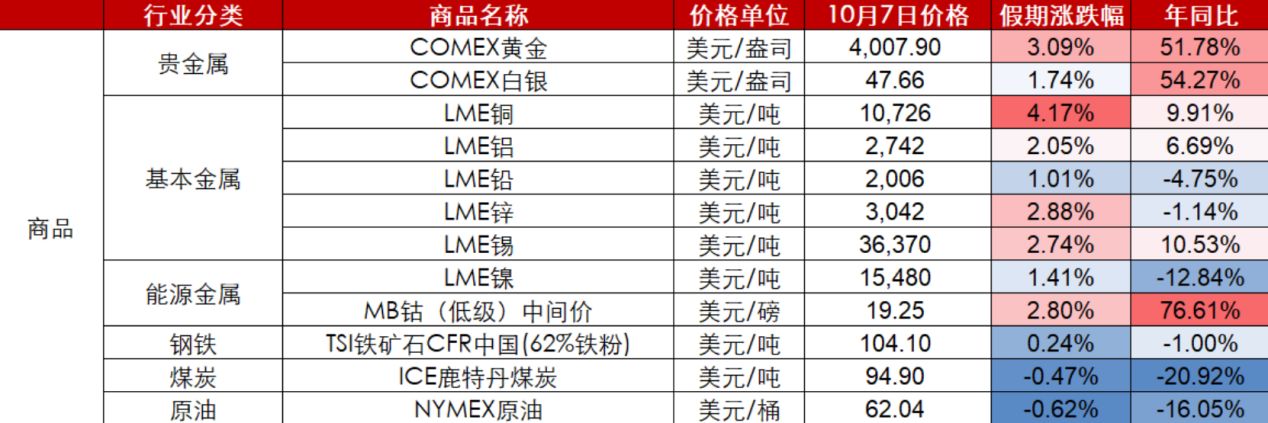
Market Overview - The A-share market experienced a strong opening on the first trading day after the National Day and Mid-Autumn Festival holidays, with all three major indices rising. The Shanghai Composite Index increased by 0.65%, surpassing 3900 points, marking a new 10-year high [1][2] - The Shenzhen Component Index and the ChiNext Index both rose over 1% [1] Sector Performance - The opening saw a collective surge in the non-ferrous metals and gold sectors, with notable stocks such as Shandong Gold and Sichuan Gold reaching new highs. The gold stock ETFs also saw significant gains, with one ETF rising by 7.43% and another by 9.64% [7][8] - Other sectors such as media and entertainment, transportation services, and tourism experienced pullbacks [2] Monetary Policy - The People's Bank of China conducted a 7-day reverse repurchase operation amounting to 612 billion yuan, maintaining the operation rate at 1.40% [3] Hong Kong Market - The Hong Kong market opened high but saw a decline, with the Hang Seng Index and Hang Seng Tech Index both experiencing a drop of over 1%. The innovative drug sector faced significant pullbacks, with several companies dropping more than 5% [5] Gold Market Insights - The spot gold price surpassed $4000 per ounce, reaching a historical high, while COMEX gold futures rose by 1.42% to $3862.9 per ounce. The gold market is believed to be entering a "third wave" of price increases, driven by various geopolitical and economic factors [9][8] Nuclear Fusion Sector - The controlled nuclear fusion concept saw a strong rally, with several companies experiencing significant stock price increases. Recent advancements in fusion energy projects in China are contributing to positive market sentiment [11] Future Market Outlook - Several brokerages are optimistic about the overall market performance in the fourth quarter, highlighting a focus on technology sectors and specific cyclical stocks. The report suggests that technology growth will continue to be a key driver, with particular attention to AI applications and semiconductor manufacturing [12]



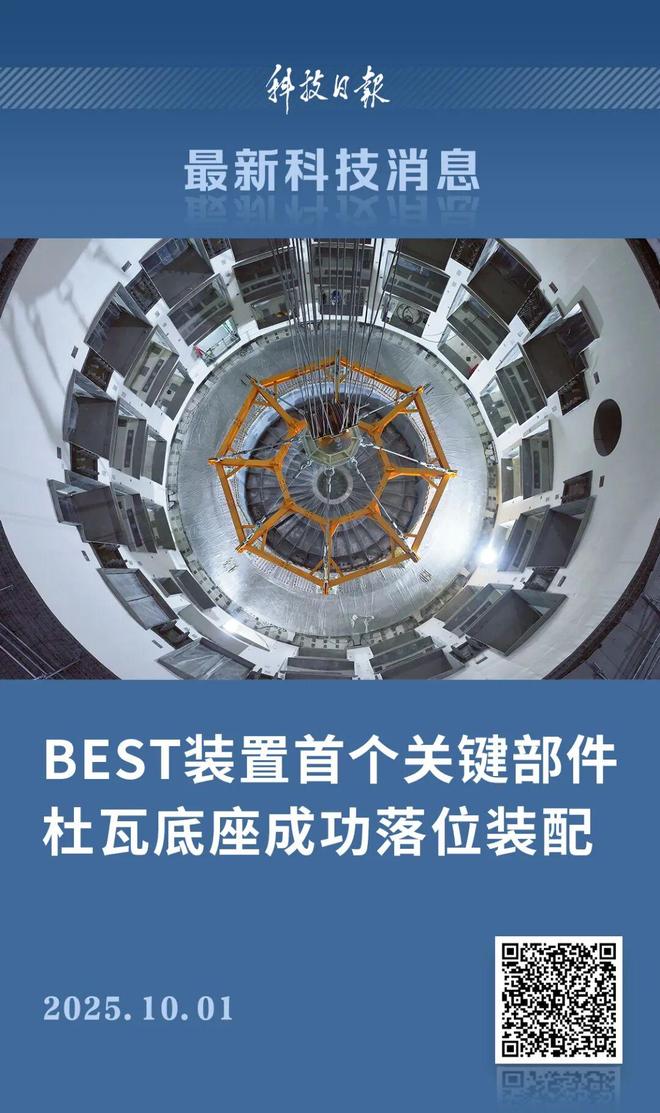
【科技日报】BEST装置首个关键部件杜瓦底座成功落位装配
Ke Ji Ri Bao· 2025-10-09 02:04
Core Insights - The successful installation of the Dewar base, a critical component of the compact fusion energy experimental device (BEST), marks a significant breakthrough in the project's construction [1][2]. Group 1: Project Overview - The Dewar base is the first large vacuum component of the BEST main machine, with a complex design and hundreds of interfaces [1]. - It has a diameter of approximately 18 meters, a height of about 5 meters, and weighs over 400 tons, making it the heaviest component in the BEST system and the largest vacuum component in China's fusion field [1]. - The Dewar base supports nearly 7,000 tons and its installation precision is crucial for the stability and safety of the entire project [1]. Group 2: Technical Challenges and Solutions - The project team faced significant challenges, including high-precision forming and welding, millimeter-level deformation control, and high vacuum sealing [1]. - The installation required a high lifting precision, with surface level differences controlled within 15 millimeters and positional deviations not exceeding ±2 millimeters [1]. - The team developed a specialized lifting system and utilized multi-station laser tracking to monitor reference points and dynamically adjust the lifting posture, achieving millimeter-level precision in the installation [1]. Group 3: Future Plans - The successful delivery and installation of the Dewar base lays a solid foundation for the installation and debugging of subsequent core components of the BEST project [2]. - The BEST team aims to continue promoting the installation work of the device components to ensure the project's construction goals are met on time and with high quality [2].
投资策略周报:更应视为科技AI主线的“黄金周”-20251008
HUAXI Securities· 2025-10-08 14:53
Group 1: Core Insights - The report highlights a significant surge in global stock markets during the National Day holiday, particularly in technology stocks driven by the AI investment boom, with the Philadelphia Semiconductor Index rising by 4.16% [1] - Gold and Bitcoin reached new highs due to uncertainties from the U.S. government shutdown and expectations of interest rate cuts by the Federal Reserve [1] - The report emphasizes the strong performance of semiconductor sectors in Hong Kong, Taiwan, and South Korea during the same period [1] Group 2: AI and Technology Developments - Major overseas tech companies are accelerating investments and collaborations in AI infrastructure, such as NVIDIA partnering with Fujitsu and OpenAI collaborating with Samsung and SK Hynix [2] - OpenAI launched a new video generation model, Sora 2, and an iPhone app that quickly topped the U.S. App Store's free app chart [2] - Domestic AI advancements include breakthroughs in large models and chip compatibility, with companies like DeepSeek and Zhipu releasing new models [2] Group 3: High-end Manufacturing and New Energy - China has made significant strides in high-end manufacturing and new energy technologies, including the construction of the BEST nuclear fusion device and the testing of the world's first "dual-tower one-machine" solar thermal energy storage power station [3] - The report notes the successful launch of China's first 10,000-ton pure electric intelligent sea vessel and advancements in solid-state lithium battery technology [3] Group 4: Domestic Economic Trends - The report indicates a weak recovery in the domestic economy, with the manufacturing PMI at 49.8%, reflecting a slight increase but remaining below the growth line [3] - Consumer behavior during the holiday showed strong travel intentions, but box office revenues fell short of expectations, and real estate sales were relatively flat [3] Group 5: Overseas Policy Events - The U.S. government shutdown has heightened risk aversion, leading to increased gold and Bitcoin prices, with market expectations for a 96% chance of a Fed rate cut in October [4] - The election of a new leader in Japan, who is expected to follow an expansionary fiscal policy, has driven a significant rise in the Japanese stock market [4] - Political instability in France has led to increased volatility in its financial markets, with the CAC40 index dropping by 1.36% [4] Group 6: Investment Strategy - The report suggests a continuation of a "slow bull" market, with a focus on technology investments and sectors benefiting from the AI revolution [5] - It highlights the importance of sectors such as AI computing, innovative pharmaceuticals, robotics, and high-end equipment manufacturing for future investments [5] - The report also advises monitoring non-tech sectors that show positive trends, such as non-ferrous metals [5]
激光聚变的发展前景及投资机会
Changjiang Securities· 2025-10-08 14:48
Investment Rating - The report maintains a "Positive" investment rating for the laser fusion industry [5]. Core Insights - Laser fusion technology has shown significant advancements, particularly in achieving a higher fusion triple product compared to other methods, indicating its potential for self-sustaining fusion reactions [15][19]. - The levelized cost of electricity (LCOE) for laser fusion could potentially drop below $80/MWh, with optimal conditions suggesting a future target of $25/MWh [19]. - The report highlights the increasing interest and investment in laser fusion, with over 10 commercial companies pursuing this technology globally [58]. Summary by Sections Why Focus on Laser Fusion? - Laser fusion ranks first in the fusion triple product among various fusion technology routes, indicating its leading position in the field [15]. - The technology is transitioning from physical principle validation to engineering prototype development, with significant cost reduction potential if laser efficiency improves and target production costs decrease [19]. Investment Opportunities in Laser Fusion - More than 11 companies globally are focusing on laser fusion, with a notable emphasis on deuterium-tritium (DT) and hydrogen-boron (pB11) fuels [58]. - Inertia Enterprises aims for an energy gain greater than 18 to achieve energy balance in facilities, with higher targets for larger power plants [63]. - The main components of laser fusion systems include high-power pulsed lasers and energy systems that significantly influence performance [67][78]. Technological Developments - The report discusses the advancements in laser glass technology, which is crucial for laser devices, and highlights the progress made by Chinese institutions in this area [77]. - The "Shenguang-III" device is compared with the NIF, showcasing its capabilities and the ongoing improvements in laser technology [70]. Collaborations and Partnerships - Domestic research institutions are collaborating with listed companies to accelerate the commercialization of laser fusion technology, focusing on precision manufacturing and advanced laser components [85].
晚报 | 10月9日主题前瞻
Xuan Gu Bao· 2025-10-08 14:28
Gold Market - The price of gold futures on the New York Commodity Exchange broke the $4000 per ounce mark for the first time on October 6, with spot gold also surpassing this threshold on October 8. China's gold reserves reached 74.06 million ounces by the end of September, marking an increase of 40,000 ounces and the 11th consecutive month of growth [1][5]. Nuclear Fusion - The BEST project in Hefei, Anhui, achieved a significant breakthrough with the successful installation of the Dewar base, marking a new phase in the construction of the compact fusion energy experimental device. The project has a total investment of 8.5 billion yuan and is expected to complete construction and demonstrate fusion power generation by 2027 [1][2]. Computing Power - OpenAI announced a strategic partnership with AMD to deploy 6 gigawatts of AMD GPU computing power, which is expected to generate hundreds of billions in revenue for AMD. This collaboration will accelerate OpenAI's AI infrastructure development [1][3][6]. Flexible Batteries - Researchers at the Chinese Academy of Sciences developed a new type of flexible battery material that can withstand 20,000 bending cycles while maintaining high ionic conductivity. This innovation is expected to drive the commercialization of flexible batteries, with the market projected to reach 36.978 billion yuan by 2032, growing at a compound annual growth rate of over 20% [1][3]. AI Video Technology - OpenAI launched the Sora2 AI video model and the Sora app, which quickly topped the App Store's free chart in the U.S. Sora2 features significant improvements in physical motion accuracy and character performance, marking a transformative moment in AI-generated video content [1][4].
节后A股开盘前,这些“信息差”你都掌握了吗?
Mei Ri Jing Ji Xin Wen· 2025-10-08 10:27
Group 1: AI Computing Power - The AI sector is experiencing a surge in investment driven by significant collaborations, including OpenAI's agreements with Samsung and SK Hynix to enhance data center capabilities, with demand for high-bandwidth memory (HBM) expected to exceed current production capacity by more than double [3][4] - OpenAI's recent product launches, including the Sora2 model, are anticipated to have a profound impact on the commercialization of AI applications, with the SoraApp achieving top rankings on the App Store [4] - The semiconductor export from South Korea saw a year-on-year increase of 22% in September, reaching a record high of $16.6 billion, indicating strong demand in the AI hardware market [3] Group 2: Gold Market - International gold prices reached a historic high, surpassing $4,000 per ounce during the holiday period, driven by political uncertainties in the U.S. and strong demand from central banks [5][6] - Central banks, including China, have been increasing their gold reserves, with China's reserves rising to approximately 7.406 million ounces, marking the 11th consecutive month of increases [6] - Goldman Sachs raised its gold price forecast for December 2026 from $4,300 to $4,900 per ounce, citing strong inflows into Western market ETFs and ongoing central bank purchases [5][6] Group 3: Solid-State Batteries - Significant advancements in solid-state battery technology were reported, with a new anion regulation technique developed to enhance the contact between electrolytes and lithium electrodes, paving the way for practical applications [8] - During the holiday period, the charging volume for new energy vehicles reached a historical high, with a total of 43.81 million kilowatt-hours charged from October 1 to October 3, representing a year-on-year increase of 51.33% [9] Group 4: Nuclear Fusion - China's nuclear fusion device, BEST, achieved a critical milestone with the successful installation of its heavy base, marking the beginning of its main construction phase [10] - Stocks related to nuclear fusion in the Hong Kong market saw significant gains during the holiday period, reflecting investor optimism [10] Group 5: Travel and Consumption - The total number of domestic trips during the holiday period reached 2.068 billion, a year-on-year increase of approximately 5.2%, exceeding earlier forecasts [11] - The domestic airline industry experienced a surge in bookings, with over 8.71 million tickets reserved, reflecting a 13% increase compared to the previous year [11] Group 6: Film Market - The total box office for the year has already surpassed the entire box office for 2024, indicating a strong recovery in the Chinese film market [12] Group 7: Market Performance - Global stock markets showed a bullish trend during the holiday, with major indices in the U.S. and Europe experiencing gains, while the Hong Kong market saw sector-specific rallies, particularly in technology and materials [12][16] - The top-performing sectors in the U.S. and Hong Kong markets included healthcare, utilities, and information technology, with notable individual stock performances in the technology and materials sectors [16][17]
利好!超级赛道,重磅不断!又有关键突破→
证券时报· 2025-10-02 12:26
Core Viewpoint - The nuclear fusion sector is experiencing significant advancements and increased investment, with key projects and funding initiatives emerging both domestically and internationally, indicating a strong push towards commercialization and practical applications of nuclear fusion technology [1][2][9]. Group 1: Domestic Developments - The BEST (Compact Fusion Energy Experimental Device) project in Hefei, Anhui, has achieved a critical breakthrough with the successful development and installation of the Dewar base, marking a new phase in the project's construction [6][7]. - The Dewar base, measuring approximately 18 meters in diameter and 5 meters in height, weighs over 400 tons and is the largest vacuum component in China's fusion field, supporting the main device's total weight of about 6,700 tons [6]. - The BEST project aims to demonstrate nuclear fusion power generation for the first time globally by 2025, with expectations to light the first lamp through fusion energy by 2030 [5][7]. Group 2: International Initiatives - On the same day, the German government approved an action plan to build the world's first nuclear fusion power plant, committing over 2 billion euros to research and infrastructure development by 2029 [8]. - The German initiative reflects a broader recognition of the challenges in energy supply and aims to ensure a safe, reliable, and environmentally friendly energy future through nuclear fusion technology [8]. Group 3: Investment and Market Trends - The nuclear fusion concept has gained significant traction in the capital markets, with notable investments such as Nova Fusion Energy Technology's 500 million yuan angel round financing, setting a record for private nuclear fusion companies in China [11]. - The Wind nuclear fusion concept index saw a monthly increase of over 3%, with some related stocks rising more than 15% in the same period [3]. - The nuclear fusion commercialization process is accelerating, with 2025 being referred to as the year of commercialization in China, supported by various funding and policy initiatives [10][9].

研制成功,精准落位!这一项目取得关键性突破
Huan Qiu Wang Zi Xun· 2025-10-01 08:42
Core Points - The successful installation of the first key component, the Dewar base, for the compact fusion energy experimental device (BEST) marks a significant breakthrough in the project's construction [1] - The Dewar base is the heaviest component of the BEST system, weighing over 400 tons, with a diameter of approximately 18 meters and a height of about 5 meters [1] - This component supports nearly 7,000 tons of weight and its installation precision is crucial for the stability and safety of the entire project [1] Technical Achievements - The project team has overcome critical technologies such as high-precision forming and welding, millimeter-level deformation control, and high vacuum sealing [1] - The successful manufacturing and installation of the Dewar base lays a solid foundation for the subsequent installation and debugging of core components of the BEST device [1]
石油巨头押注核聚变,10亿美元预购“期货”聚变电力
Sou Hu Cai Jing· 2025-09-30 08:57
Core Insights - Eni, a global oil and gas giant, has signed a $1 billion power purchase agreement with Commonwealth Fusion Systems (CFS) to buy fusion power, highlighting significant investment interest in the fusion energy sector [2][4] - CFS, a spin-off from MIT, is seen as a leading fusion company, but its first commercial fusion plant is still in planning stages, with even the experimental reactor under construction [2][3] - The fusion industry is experiencing a surge in capital investment, with companies like CFS attracting billions, yet the commercial viability of fusion energy remains uncertain [3][5] Investment and Development - Eni's investment in CFS dates back to 2018, and the company is diversifying into biofuels and renewable energy while still focusing on oil and gas [4] - CFS has raised $863 million this year, bringing its total funding to nearly $3 billion, which accounts for about one-third of total private fusion funding globally [3][4] - Other companies like Helion and Zap Energy are also making progress, with Helion starting construction on a plant and securing agreements with major tech firms like Microsoft [3][4] Market Dynamics - The purchase agreements from companies like Eni and Google, despite the lack of operational reactors, are seen as mutually beneficial, providing CFS with credibility and potential financing advantages [4] - U.S. Energy Secretary Chris Wright has expressed strong support for fusion energy, suggesting it could soon power the world, although the reality is that fusion is still in the research phase [5] - The current political climate shows a shift away from supporting established renewable technologies, raising concerns about over-reliance on unproven fusion energy [5]

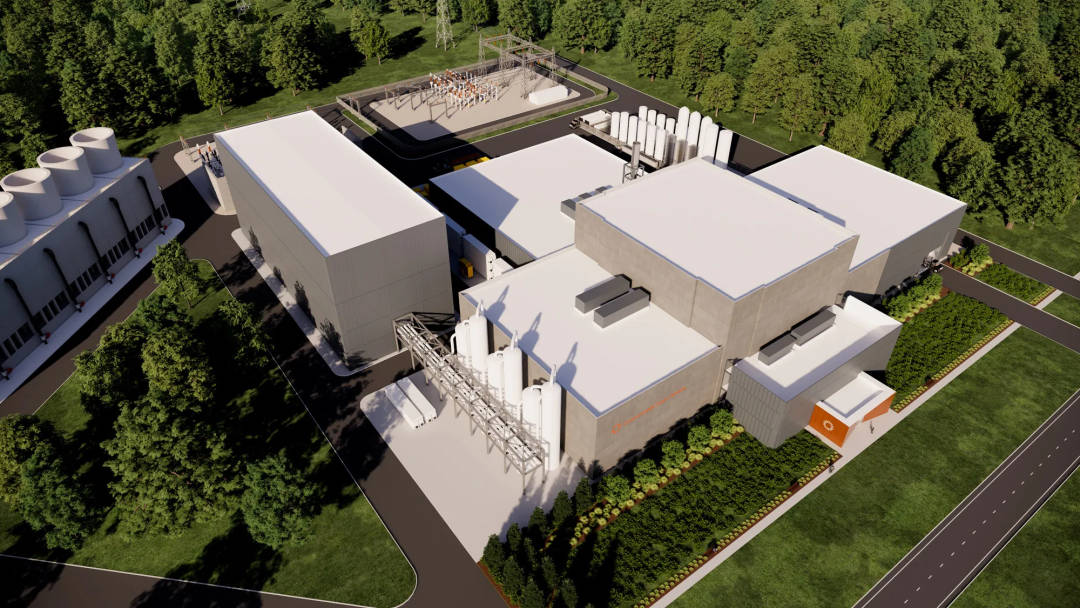
优先布局磁体系统供应商,把握CFEDR中长期机遇 | 投研报告
Zhong Guo Neng Yuan Wang· 2025-09-29 02:37
Core Insights - The report highlights the significant funding disparities within the controlled nuclear fusion industry, emphasizing that the magnet system, power supply, and superconducting materials represent the core value areas due to their high investment amounts and technical barriers [1][2][3] - The magnet system accounts for the largest share of the total investment at 287 million yuan, representing 42.34% of the overall budget, indicating its critical role in the funding landscape of nuclear fusion projects [2][3] Investment Opportunities - The current investment opportunities in the nuclear fusion industry are primarily focused on two logical areas: 1. Segments with clear performance delivery timelines, such as the magnet system with a cumulative budget of 370 million yuan and the power supply system exceeding 100 million yuan, which provide strong performance locking for related manufacturers [4] 2. Manufacturers that have established good verification and customer connections during the BEST phase are expected to maintain their advantages in the CFEDR pre-research and subsequent construction phases [4] Market Dynamics - The bidding rhythm indicates that orders are concentrated in the mid-stage of engineering construction (approximately 20%-50% progress), focusing on equipment installation and subsystem integration, particularly involving the magnet system, vacuum chamber, and power supply system [3] - The CFEDR project is projected to have an investment scale of around 120 billion yuan, with equipment costs estimated at 72 billion yuan, suggesting significant potential value release in the industry chain between 2030 and 2033 [3]