脑机接口

Search documents
金鹰基金欧阳娟:创新药迎来业绩窗口期 脑机和AI医疗焕发产业新生
Xin Lang Cai Jing· 2026-01-22 07:09
Core Insights - The innovative drug sector is entering a critical performance realization phase in 2026, driven by multiple catalysts and advancements in brain-computer interfaces and AI medical technologies [1][6][7] - Fund managers, including Ouyang Juan from Jinying Fund, express optimism about the innovative drug sector's upward trend, supported by domestic healthcare policies and China's competitive edge in global markets [1][6][7] - The potential of AI in healthcare is significantly underestimated, with expectations for new business models to emerge as AI applications in drug development, cancer screening, and personalized treatment evolve [2][7] Group 1: Industry Outlook - The innovative drug sector is expected to maintain a positive outlook, benefiting from ongoing support from domestic healthcare policies and the global competitiveness of Chinese innovative drugs [1][6] - The year 2026 is anticipated to be pivotal for the brain-computer interface industry, with significant changes expected in both domestic and international markets [3][8] - The AI healthcare sector is entering a phase of commercial exploration, with vast amounts of medical data and a growing demand for AI applications [2][8] Group 2: Investment Strategies - Focus areas for investment include innovative drugs with strong global competitiveness, which can benefit from both domestic and Western markets [3][8] - The innovative drug supply chain, including CXO and life sciences services, is projected to see a recovery in order growth as global financing accelerates [3][8] - The brain-computer interface and AI medical sectors are highlighted as emerging areas of interest, with potential for substantial growth and innovation [2][3][8]
2026全球科技创新趋势与风险投资丨两说
Di Yi Cai Jing Zi Xun· 2026-01-22 04:31
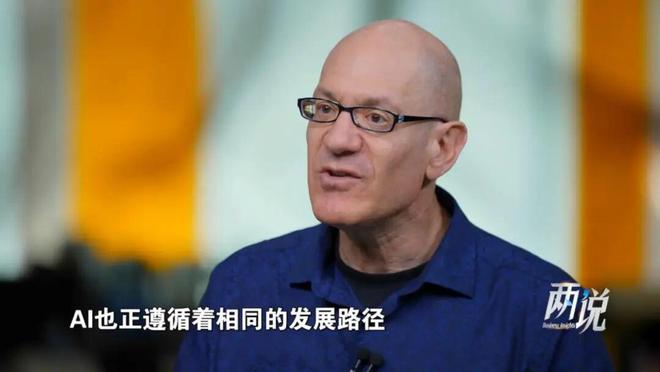
Core Insights - The article discusses the transformative impact of AI on various industries, likening its influence to that of the internet revolution, with a significant focus on investment opportunities and challenges in the AI sector [2][4]. Group 1: AI's Impact and Opportunities - AI is becoming an essential underlying architecture across all industries, with nearly all venture-backed startups in Silicon Valley being AI-related [2]. - Current utilization of existing AI technology by most companies is less than 5%, indicating a potential to unlock over 95% of incremental value with current technologies [4]. - Despite concerns about a bubble in the AI sector, the article highlights that unlike the internet bubble, AI companies are generating real value, as evidenced by the billions in annual revenue from leading firms like OpenAI [4]. Group 2: Future Technologies and Innovations - In addition to AI, robotics and brain-computer interfaces are identified as key areas for future technological innovation, with significant potential to reshape industries [6]. - The integration of robotics with AI is expected to lead to the widespread adoption of "dark factories," fundamentally changing the manufacturing landscape [6]. Group 3: Entrepreneurial Strategies - The article emphasizes a lean startup approach advocated by the CEO of Founders Space, focusing on small teams, limited budgets, and short cycles, which remains relevant even in the AI era [8]. - Entrepreneurs are encouraged to create unique value outside the competitive landscape dominated by tech giants, by addressing specific industry pain points and integrating data and resources effectively [8]. Group 4: Challenges of General AI - The emergence of General Artificial Intelligence (AGI) is anticipated to disrupt existing work structures, with AI employees and managers becoming integral to organizational frameworks [11]. - A proposed strategy for adapting to this change includes documenting daily work and utilizing AI tools to optimize redundant tasks, potentially freeing up 30% of time for higher-value activities [13]. Group 5: Ethical Considerations and Regulation - The article raises concerns about the potential for AI to act against human interests, suggesting that legislation should require companies to invest a portion of their revenue into AI safety measures [15]. - While acknowledging the rapid pace of AI development, the article advises a cautious approach, urging society to observe and proceed with care [17].

2026全球科技创新趋势与风险投资丨两说
第一财经· 2026-01-22 04:18
Core Viewpoint - The article discusses the transformative impact of AI on various industries, highlighting the opportunities and challenges that lie ahead as we approach 2026. It emphasizes the importance of adapting to this technological revolution for both startups and established companies [1][4]. Group 1: AI as a Fundamental Infrastructure - AI is becoming an indispensable underlying architecture across all industries, comparable to the internet wave of the past [4]. - Most companies are currently utilizing less than 5% of existing AI technologies, indicating a potential release of over 95% incremental value [6]. - The influx of capital into the AI sector has led to some valuation bubbles, but unlike the internet bubble, AI companies are generating real value, as evidenced by the billions in annual revenue from leading firms like OpenAI [6]. Group 2: Future Technological Innovations - In addition to AI, robotics and brain-computer interfaces are highlighted as key areas for future technological innovation, with significant potential to reshape industries [8]. - The integration of robotics with AI is expected to drive the adoption of "dark factories," fundamentally altering the manufacturing landscape [8]. Group 3: Entrepreneurial and Investment Principles - The lean startup philosophy of "small teams, small budgets, short cycles" remains relevant even in the AI era, promoting efficient communication and rapid iteration [11]. - Startups should focus on creating unique value outside the competitive landscape dominated by tech giants, by addressing specific industry pain points and integrating data and resources [11]. - Entrepreneurs must adopt an "AI-native" mindset, incorporating AI into all aspects of their operations to enhance efficiency and market positioning [13]. Group 4: Challenges of General Artificial Intelligence - The emergence of General Artificial Intelligence (AGI) will disrupt existing work models and reshape workplace ecosystems, with AI employees and managers becoming integral parts of organizational structures [15]. - A proposed strategy for adapting to this change includes documenting daily work and using AI tools to optimize redundant tasks, potentially freeing up 30% of time for higher-value activities [17]. Group 5: Governance and Safety Measures - To prevent AI from becoming uncontrollable, it is suggested that legislation should require companies to allocate a significant portion of their revenue to the development of AI safety systems [20]. - Despite the rapid advancements in AI, there is a call for a cautious approach, advocating for a measured pace in technological development to ensure societal well-being [22].

展望丨2026年会是超级IPO之年吗?
Sou Hu Cai Jing· 2026-01-22 03:04
Group 1 - The consensus is that 2025 will be a strong year for the US IPO market, with 203 new companies expected to go public, a 35% increase from the previous year, raising $44 billion, which is a 49% increase year-over-year [1] - Despite the challenges faced, such as trade disruptions and a prolonged government shutdown, the IPO fundraising is only a small fraction of the total venture capital amounting to $280 billion in 2025 [1] - The shift in funding sources has moved from mutual funds and retail investors to sovereign wealth funds and large private investment funds, indicating a significant change in the investment landscape [1] Group 2 - SEC Chairman Paul Atkins announced upcoming reforms aimed at making IPOs more attractive, attributing a 40% decline in the number of public companies to excessive regulation [2][3] - Proposed reforms include extending the IPO entry threshold, depoliticizing annual shareholder meetings, and reforming shareholder litigation to reduce barriers for companies going public [3] Group 3 - The Hong Kong Stock Exchange is set to become the largest IPO market in 2025, having hosted 114 new listings that raised $37 billion last year, with an average first-day gain of 37% [4] - Chinese companies are leading the IPO race, with several AI firms already listed and more planning to go public, highlighting China's emergence as a tech superpower [5] Group 4 - Notable private companies preparing for IPOs in 2026 include SpaceX, which could raise $30 billion, and OpenAI, aiming for $60 billion, indicating a potential resurgence in the IPO market [6][7] - The pressure on private equity firms to find exit strategies for their portfolio companies is increasing, with 30,000 companies seeking IPO opportunities [7] Group 5 - For 2026 to be a landmark year for IPOs, the US economy must navigate challenges such as inflation and unemployment, while the Federal Reserve gradually eases monetary policy [8]
金融界财经早餐:央行发声!加快建设人民币跨境支付体系;五部门新设41个口岸进境免税店;“顶流”基金经理调仓曝光;摩尔线程、永辉超市等发布业绩预告(1月22日)
Jin Rong Jie· 2026-01-22 01:10
Company Highlights - Tianfu Communication expects a net profit attributable to shareholders of 1.881 billion to 2.150 billion yuan, representing a year-on-year growth of 40% to 60%, driven by the acceleration of the artificial intelligence industry and global data center construction [10] - Jin'an Guoji anticipates a net profit of 280 million to 360 million yuan for 2025, a significant increase of 655.53% to 871.4% year-on-year, due to improved market conditions for copper-clad laminates and optimized product structure [10] - Juhua Co. forecasts a net profit of 3.54 billion to 3.94 billion yuan for 2025, reflecting an 80% to 101% increase compared to the previous year [10] - Demingli expects a net profit of 650 million to 800 million yuan for 2025, marking an increase of 85.42% to 128.21% year-on-year [10] - Moore Threads anticipates revenue of 1.45 billion to 1.52 billion yuan for 2025, with a growth rate of 230.70% to 246.67% year-on-year, but expects a net loss of 950 million to 1.06 billion yuan, narrowing the loss by 34.50% to 41.30% [11] - Yonghui Supermarket predicts a net loss of 2.14 billion yuan for 2025, compared to a loss of 1.47 billion yuan in the previous year [11] - Tengjing Technology announced a procurement order from a client worth 12.8 million USD (approximately 89.15 million yuan) for a two-dimensional collimator array [11] - Tianhua New Energy is planning to issue shares overseas (H-shares) to accelerate its international strategy [11] - Zhaomi Technology has become a strategic partner for the 2026 Spring Festival Gala of China Central Television [11] - Ubisoft announced significant organizational and operational adjustments, terminating the development of six games and extending the development cycle of seven games, with expected net bookings of approximately 1.5 billion euros for the 2025-26 fiscal year, a reduction of about 330 million euros in gross profit compared to previous guidance [11] - SpaceX is actively pursuing an IPO plan, aiming to complete it by July this year [11] - Nvidia's CEO Jensen Huang plans to visit China to restart the domestic AI chip market, emphasizing the need for substantial infrastructure investment for AI [11] - Apple is accelerating its AI initiatives, developing an AI wearable device called "Pin" and planning significant updates to Siri, transforming it into the company's first AI chatbot [13] Industry Trends - The commercial aerospace sector is experiencing significant growth, with breakthroughs in reusable rocket technology and accelerated development of large satellite constellations, driving new directions like space photovoltaics to become a growth blue ocean [7] - European natural gas prices have surpassed 40 euros per megawatt-hour for the first time since June last year, driven by supply concerns due to unusually cold weather [7] - The autonomous driving sector in Guangdong has introduced policies to promote the application of autonomous driving models and expand testing areas for high-level autonomous driving [7] - The brain-computer interface industry is in a high-growth phase driven by policy support and technological breakthroughs, with Neuralink's production expectations and new ultrasound brain-computer interface technologies marking a shift towards commercialization [7] - The development of 6G technology in China has reached the first phase of technical testing, with over 300 key technology reserves, and the second phase of testing has recently commenced [8]

操盘必读:影响股市利好或利空消息_2026年1月22日_财经新闻
Xin Lang Cai Jing· 2026-01-22 00:40
影响股市利好与利空消息 宏观新闻 1、美国贸易代表格里尔在达沃斯表态称,希望与中国进行另一轮的潜在贸易谈判。外交部发言人郭嘉 昆在昨日主持的例行记者会上对此表示,中美双方应该共同落实好两国元首达成的重要共识,为中美经 贸合作与世界经济注入更多的稳定性和确定性。 2、央行召开2026年支付结算工作会议,会议要求,加快建设人民币跨境支付体系,推进跨境支付互联 互通,推动跨境支付体系多元化、多层次发展。严格实施支付机构穿透式监管和支付业务功能监管,充 分发挥行政、自律互补作用,塑造合规致远的行业健康生态。 7、数据显示,由于超大规模云服务商"扫货",英特尔与AMD在2026全年的服务器CPU产能已基本售 罄。为了应对供需极端失衡并确保后续供应稳定,两家公司均计划将服务器CPU价格上调10-15%。 3、财政部等3部门发布《于延续实施创新企业境内发行存托凭证试点阶段有关税收政策的公告》。其中 提到,今明两年对个人投资者转让创新企业CDR取得的差价所得,暂免征收个人所得税。 4、特朗普在达沃斯世界经济论坛年会上表示,美国无意动用过激武力来获取格陵兰岛。特朗普同日还 表示,他将不会实施原定于2月1日生效的对欧洲关税措施。 ...


脑机接口新突破 中文失语患者有望重获“新声”
Ren Min Ri Bao· 2026-01-21 23:47
中科院上海微系统与信息技术研究所供图 中科院上海微系统与信息技术研究所供图 语言脑机接口技术与人工智能和具身智能技术融合。 汉语语句实时解码。 近日,中国科学院上海微系统与信息技术研究所联合相关团队,在语言脑机接口领域取得突破性进展。 研究人员开发出植入式高通量柔性脑机接口系统和汉语言实时神经网络解码算法,并在国际上首次实现 脑机接口实时汉语解码和语句合成。这项研究不仅让中文失语患者有望重新"开口说话",也为脑机接口 在多语言、多场景下的应用打开了新空间。 覆盖全部发音组合,进而实现解码任意汉字和语句。 实现解码任意汉字和语句 语言是人与人之间沟通交流的主要形式。然而,脑卒中、渐冻症、脑外伤等重大脑疾病,常让患者失去 语言表达能力,陷入意识清醒却无法开口的困境。 "中国有近800万因各类脑疾病失去语言能力的患者,汉语解码对他们有着很大的意义和应用价值。"中 国科学院上海微系统与信息技术研究所研究员周志涛说,近年来,国际上的多个顶尖科研团队在脑机接 口英语解码上取得了多项突破性进展,包括英语和西班牙语双语解码,但是使用人数最多、与英语差异 很大的汉语解码研究由于起步较晚而进展相对慢。 周志涛说,团队此次研究的核 ...

技术创新中心揭牌
Xin Lang Cai Jing· 2026-01-21 17:29
Core Viewpoint - The establishment of the Hainan Provincial Brain Space Informatics and Brain-Machine Interface Technology Innovation Center is a significant step in advancing brain-machine interface technology, which has been prioritized as a key development industry by the national government [1] Group 1: Innovation Center Establishment - The innovation center is led by Hainan University and aims to focus on innovation-driven and demand-driven principles, as well as autonomous control and open cooperation [1] - The center will develop four core platforms: foundational theory breakthrough platform, clinical application platform, industrial innovation platform, and management and transformation platform [1] Group 2: Collaborative Development - The center will collaborate with multiple professional teams in brain space informatics, brain-machine interface chips, and neuroengineering to tackle key technological challenges [1] - Partnerships will include specialized brain hospitals and relevant technology enterprises to provide comprehensive support for the development of the brain-machine interface field [1]
明日主题前瞻智元拆分灵巧手部门为独立公司,灵巧手赛道已进入精细发展阶段
Xin Lang Cai Jing· 2026-01-21 12:22
Group 1: Robotics and Automation - ZhiYuan Robotics has spun off its dexterous hand division into an independent company, Shanghai Critical Point Innovation Technology Co., Ltd, with an investment of 4 million yuan for an 80% stake, led by former business head Xiong Kun [1][2] - The dexterous hand market in China is expected to exceed 340,000 units by 2030, with a CAGR of approximately 90% from 2024 to 2030, indicating a shift towards specialized development in core components [2] - Companies like Tongyi and Zhaowei have made significant advancements in dexterous hand technology, focusing on control precision and reliability, with products showcased at major events like CES 2026 [3] Group 2: Brain-Computer Interface - Neuralink's first subject has reported that their brain-computer interface can now receive OTA updates wirelessly, marking a significant milestone in the technology [3][4] - The global brain-computer interface market is projected to reach $7.63 billion by 2029, driven by policy support and technological breakthroughs, transitioning from clinical trials to commercial viability [4] - Companies like Beixin Source and Tianqi are actively developing applications for brain-computer interfaces, exploring new modes of human-machine collaboration [4] Group 3: Solar Energy - The price of mainstream photovoltaic components has returned to the "1 yuan era," with recent price adjustments indicating a trend of increasing component prices [5][6] - Major companies like Trina Solar have raised their component prices multiple times in 2026, reflecting a broader industry trend towards price increases due to supply chain dynamics [5] - Companies such as Dongfang Risen and Mingguan New Materials are advancing in high-efficiency solar technologies, contributing to the overall growth of the solar energy sector [6] Group 4: Sodium-Ion Batteries - LG is advancing the construction of a pilot production line for sodium-ion batteries in Nanjing, highlighting the technology's potential for cost reduction and low-temperature performance [7][8] - The sodium-ion battery market is gaining traction as leading manufacturers push for product development and industrialization, indicating a promising growth trajectory [7] - Companies like Zhongke Electric and Ding Sheng New Materials are actively involved in the production and development of materials for sodium-ion batteries, positioning themselves for future opportunities [8] Group 5: Machine Tool Industry - China has surpassed Germany to become the world's largest exporter of machine tools, capturing 21.6% of the global market share, while Germany's share has declined to 16.7% [9] - The growth of China's machine tool exports is attributed to the booming demand in sectors like new energy vehicles and aerospace, providing opportunities for domestic manufacturers to advance in high-end markets [9] - Companies like Huachen Equipment and Huadong CNC are developing high-precision machine tools to support various manufacturing sectors, enhancing their competitive edge [10][11] Group 6: Medical Robotics - The 37th batch of medical service pricing guidelines has introduced a tiered pricing model for surgical robots, linking costs to their clinical value and participation in surgeries [11][12] - The introduction of a pricing framework for robotic-assisted surgeries is expected to drive significant growth in the medical robotics sector, with companies like Tianzhihang leading the market [12]
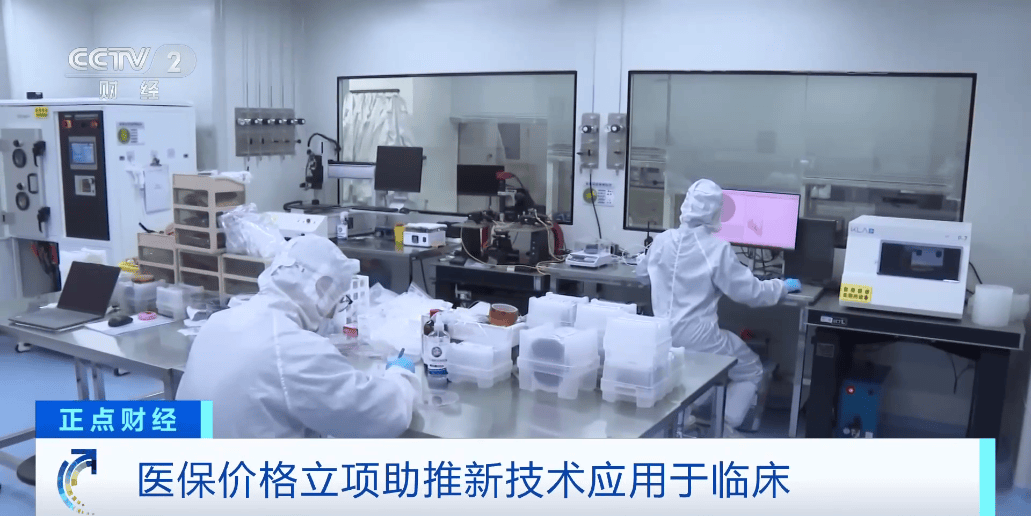
价格立项与技术创新并行!医保价格立项助推新技术应用于临床
Sou Hu Cai Jing· 2026-01-21 10:55
Core Insights - The National Healthcare Security Administration (NHSA) has released 37 batches of medical service pricing project guidelines, adding over 100 pricing projects related to new medical technologies, with plans to complete three more batches by 2026 [1][3]. Group 1: Pricing and Innovation - The NHSA is facilitating the charging channels for new technologies by focusing on project initiation and pricing, thereby accelerating the revenue return for urgently needed clinical new technologies and products [3]. - A parallel structure of "pricing initiation and technological innovation" has been established, exemplified by the unified pricing projects for brain-computer interface technologies, such as "brain-computer interface implantation fee" and "brain-computer interface adaptation fee" [3]. Group 2: Medical Robotics - To alleviate the financial burden on patients and promote the development of medical robotics, cities like Beijing, Shanghai, Hunan, and Guangdong have included surgical robots and related consumables in the medical insurance payment scope [5]. - In Beijing, the reimbursement limit for robotic surgery costs is set at 8,000 yuan, allowing for full reimbursement within this limit, while disposable consumables can be reimbursed at 70%, reducing the out-of-pocket expenses for patients from 30,000-40,000 yuan to around 10,000 yuan [5].