
住宅地产

Search documents
潍坊首个交付的在建省级高品质住宅项目,华安凤鸣朝阳如约呈现
Qi Lu Wan Bao· 2025-12-30 11:29
Core Viewpoint - The successful delivery of the Fengming Chaoyang project by Shandong Huaan Group represents a significant step towards the construction of high-quality housing in Weifang, aligning with national goals for a stable and healthy real estate market [1][19]. Group 1: Project Overview - The Fengming Chaoyang project is a provincial and municipal high-quality residential pilot project, marking Weifang's first timely delivery of such a project [1][19]. - The project is strategically located at the intersection of Beihai Road and Baotong East Street, benefiting from proximity to natural landscapes and urban amenities [6][19]. Group 2: Design and Aesthetics - The architectural design draws inspiration from Weifang's kite culture, featuring a "kite imagery" facade and has won the 2023 Global Excellence Design Award [9]. - The project incorporates low-density planning with 10 buildings, ensuring most units have unobstructed river views, enhancing the living experience [7][9]. Group 3: Community and Amenities - The community features a 3600 square meter immersive all-age park, promoting a deep connection with nature [13]. - A 2000 square meter hotel-style lobby is designed to serve as a social hub, integrating commercial and leisure facilities [13][15]. Group 4: Corporate Responsibility and Market Position - Shandong Huaan Group has established itself as a leader in Weifang's real estate sector, committed to delivering high-quality housing and maintaining a strong market presence [19][21]. - The company emphasizes its mission as a "service provider for a better life," focusing on the iterative upgrade of high-end living spaces in response to market demands [19][21].


香港私人住宅售价指数连升6个月
Zhong Guo Xin Wen Wang· 2025-12-29 10:05
香港私人住宅售价指数连升6个月 中新社香港12月29日电 (记者 魏华都)香港特区政府差饷物业估价署29日公布,2025年11月份香港私人 住宅售价指数为297.3点,按月上升0.9%,连升6个月。 12月29日,香港特区政府差饷物业估价署公布,2025年11月份香港私人住宅售价指数为297.3点, 按月上升0.9%,连升6个月。图为2021年8月拍摄的高楼林立的维港两岸。 中新社记者 张炜 摄 整体而言,市场普遍认为香港楼价已触底而且出现反弹,相信来年升势可以延续。(完) 来源:中国新闻网 编辑:付健青 广告等商务合作,请点击这里 本文为转载内容,授权事宜请联系原著作权人 中新经纬版权所有,未经书面授权,任何单位及个人不得转载、摘编或以其它方式使用。 关注中新经纬微信公众号(微信搜索"中新经纬"或"jwview"),看更多精彩财经资讯。 利嘉阁地产研究部主管陈海潮表示,11月份楼价持续上升,且升幅再次加快,主要受惠于市场憧憬再次 降息、中美两国经贸团队达成共识,加之股市反弹及新盘热卖所刺激。 租金方面,11月份租金指数升至200.7点,创下历史新高,按月升0.2%。陈海潮预料新来港人士租务需 求会继续刺激租 ...

2025年11月份70个大中城市商品住宅销售价格变动情况 - 国家统计局
Guo Jia Tong Ji Ju· 2025-12-29 09:36
大连 表 1:2025 年 1 1 月70个大中城市新建商品住宅销售价格指数 | 城市 | | | --- | --- | | 环比 | | | 同比 | | | 1-1 1月平均 | | | 城市 | | | 环比 | | | 同比 | | | 1-1 1月平均 | | | 上月=100 | | | 上年同月=100 | | | 上年同期=100 | | | 上月=100 | | | 上年同月=100 | | | 上年同期=100 | | | 北京 | | | | 99.5 | | | 97.9 96.0 | | 唐山 | | | | 99.4 | | | 94.3 | | | 93.2 | | 天津 | | | | 99.6 | | | 97.8 | | | 98.1 | | 秦 皇 岛 | | | | 99.6 | | | 95.5 | | | 94.0 | | 石 家 庄 | | | | 99.5 | | | 95.9 | | | 96.4 | | 包头 | | | | 99.4 | | | 93.9 | | 太原 | 93.9 | | | 99.3 | | | 99.3 | | | 100.8 | ...
香港楼价指数连升6个月
Ge Long Hui· 2025-12-29 06:08
Core Insights - The Hong Kong private residential property price index rose to 297.3 in November, marking a month-on-month increase of 0.92% and a year-on-year increase of 1.99% [1] - The price index for small units (under 100 square meters) increased by 0.95% month-on-month, while larger units (100 square meters or more) saw a month-on-month increase of 0.41% [1] - The rental index for private residential properties reached 200.7 in November, with a month-on-month increase of 0.2% and a year-on-year increase of 4.59% [1] Price Index Summary - The price index for A-class properties (under 40 square meters) increased by 0.6% month-on-month [1] - The price index for B-class properties (40 to 69.9 square meters) rose by 1.15% month-on-month [1] - The price index for C-class properties (70 to 99.9 square meters) increased by 1.12% month-on-month [1] - The price index for D-class properties (100 to 159.9 square meters) saw a month-on-month increase of 0.26% [1] - The price index for E-class properties (160 square meters or more) rose by 0.75% month-on-month [1] Rental Index Summary - Over the first 11 months of the year, the private residential property price index increased by approximately 2.8% [1] - The rental index for private residential properties increased by approximately 4.3% during the same period [1]
告诉大家一个坏消息:上海、广州出现3大怪象,正在蔓延,需深思
Sou Hu Cai Jing· 2025-12-24 14:37
Core Insights - The changing dynamics in first-tier cities like Shanghai and Guangzhou indicate a shift in the urban landscape, where subtle changes are accumulating to create a significant impact on residents' perceptions and experiences [1] Group 1: Urban Living Conditions - There is a noticeable trend of vacant properties in Shanghai and Guangzhou, with many homes remaining unoccupied or experiencing high tenant turnover, leading to a decline in the once vibrant housing market [3][4] - The commercial real estate sector is also affected, with many office spaces and retail stores remaining empty, particularly in less central locations, as small businesses struggle to survive [6] Group 2: Economic Sentiment Among Young Professionals - Young professionals in these cities are experiencing a decline in income expectations, with many feeling that their hard work is not yielding the financial rewards it once did, leading to a shift in their spending habits [8][10] - The change in consumer behavior reflects a more cautious approach to spending, as individuals prioritize financial security over leisure activities [10] Group 3: Migration Trends and Cost of Living - The cost of living in Shanghai and Guangzhou remains high, creating a higher barrier for individuals wishing to stay, while the perceived benefits of remaining in these cities are diminishing [12][14] - Many individuals are considering relocating to second-tier cities or their hometowns, where they find comparable income levels but with significantly lower living pressures [14] Group 4: Overall Urban Dynamics - The three observed phenomena point to a broader issue: the diminishing urban benefits in the face of persistent living costs, making it increasingly difficult for ordinary individuals to improve their circumstances through hard work [16] - The narrative is not about the decline of these cities but rather a call for individuals to reassess their choices regarding urban living, emphasizing the importance of finding a suitable environment rather than simply following the trend [18]
房产长期价值:十年后,低楼层与高楼层,谁将更胜一筹?
Sou Hu Cai Jing· 2025-12-22 04:39
Core Insights - The article discusses the changing preferences for housing floor levels, highlighting a shift towards lower floors due to various factors such as aging population, policy changes, and maintenance costs. Policy Trends - The Chinese government is promoting the installation of elevators in old residential communities, which enhances the appeal of low floors by addressing previous accessibility issues [3] - By 2030, there are plans to install elevators in 215,000 old communities, with a completion rate of 67% as of October 2025 [3] - Subsidies for elevator installation vary by city, significantly reducing costs for homeowners [3] Demographic Trends - The aging population in China is projected to reach 29.7% by the end of 2024 and exceed 40% by 2035, increasing demand for low-floor housing [4] - Low floors (1-5) are becoming essential for elderly individuals due to lower risks and easier access to medical care [4] - Data from 2025 indicates that low-floor second-hand homes have a quicker sales cycle and a premium price, reflecting market demand for their suitability for older residents [4] Maintenance Costs - High floors incur higher maintenance costs, which will become more pronounced over the next decade [6] - Energy costs for high floors are 20%-30% higher due to the need for secondary water pressure systems [6] - Low floors have lower energy and maintenance costs, making them more economical for long-term ownership [7] Living Experience - The advantages of high floors, such as better views and light, are diminishing due to improved urban planning standards [8] - Low floors offer a more vibrant living experience, with easier access to community amenities and social interactions [8] - Future housing preferences are expected to favor comfort and convenience, making low floors more desirable [8] Long-term Value Outlook - The future value of housing will depend on demand alignment and holding costs, with low floors likely to maintain stable value due to demographic trends and lower maintenance costs [9] - High floors may face declining demand and rising costs, making them less attractive for long-term investment [9] - Premium high-floor properties in prime locations may still retain value due to scarcity, but general market trends favor low floors [9]
中指研究院:11月百城二手住宅均价环比下跌0.94%
智通财经网· 2025-12-22 00:41
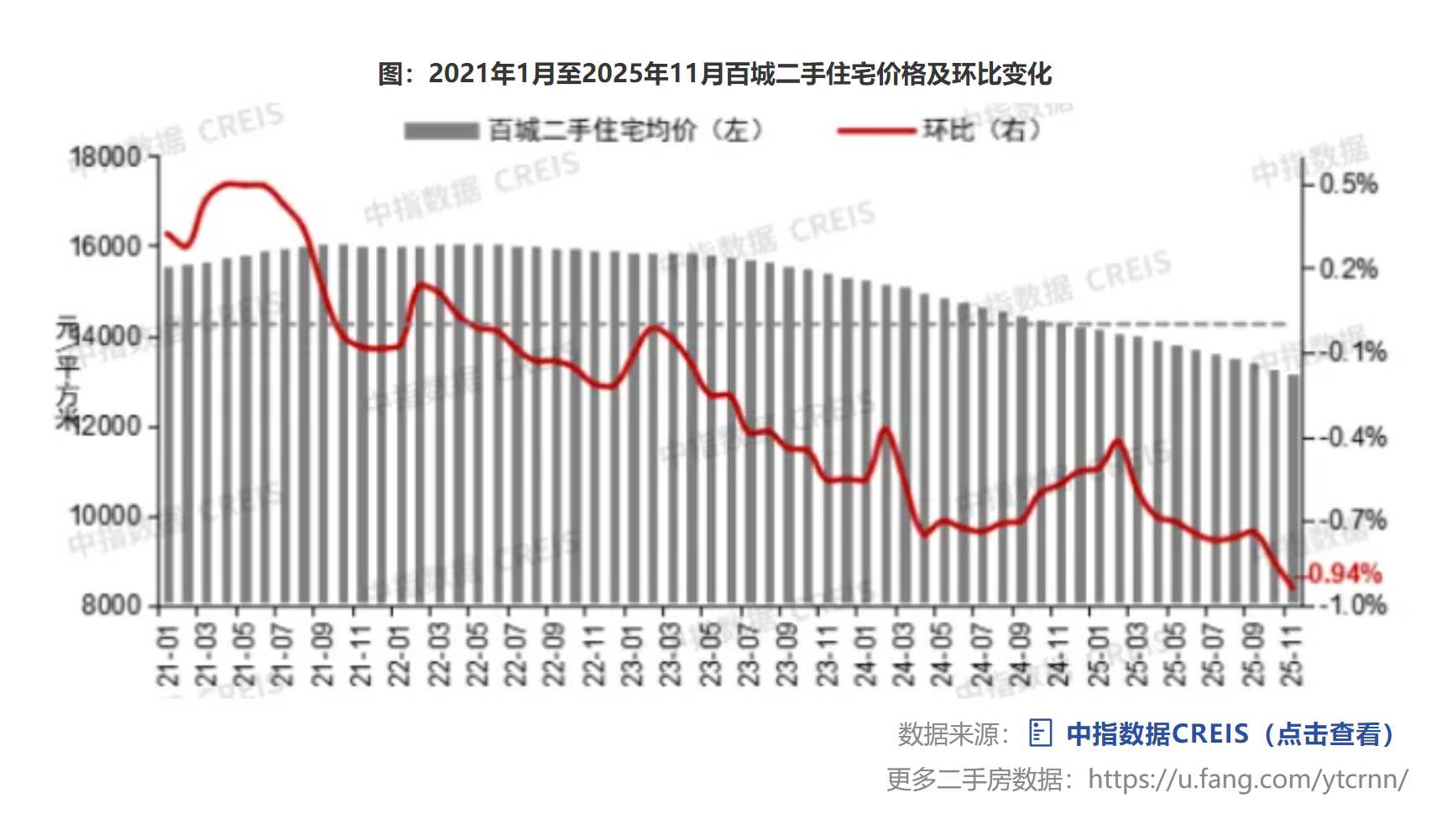
Core Insights - The average price of second-hand residential properties in 100 cities in November 2025 is 13,143 yuan per square meter, showing a month-on-month decline of 0.94% and a year-on-year decline of 7.95% [1][3] - The average price of newly built residential properties in 100 cities is 17,036 yuan per square meter, with a month-on-month increase of 0.37% and a year-on-year increase of 2.68% [1] - The rental market shows a decline, with the average rent in 50 cities at 34.36 yuan per square meter per month, down 0.60% month-on-month and 3.57% year-on-year [1] Second-hand Residential Market - In November, second-hand residential prices in first, second, and third/fourth-tier cities decreased by 1.15%, 0.98%, and 0.81% month-on-month, respectively, with year-on-year declines of 5.62%, 8.24%, and 7.47% [1] - The top ten cities saw a month-on-month decline in second-hand residential prices, with Nanjing and Wuhan experiencing the largest declines of 1.83% and 1.58%, respectively [3] - Year-on-year, Wuhan and Nanjing had the largest declines at 11.65% and 11.35%, while Chengdu had the smallest decline at 1.89% [3] New Residential Market - The new residential market remains stable with low supply levels, particularly in core cities like Shanghai, Chengdu, and Hangzhou, which have seen high-end improvement projects entering the market [1] - The structural increase in new residential prices is driven by these high-end projects, contributing to the overall price increase in core cities [1] Rental Market - The rental market is entering a traditional off-season, with average rents declining across major cities [1] - The rental price trends indicate a broader market slowdown, reflecting the overall economic conditions affecting housing demand [1]
第一批买到白菜价老破小的年轻人,快被装修掏空了
36氪· 2025-12-21 13:35
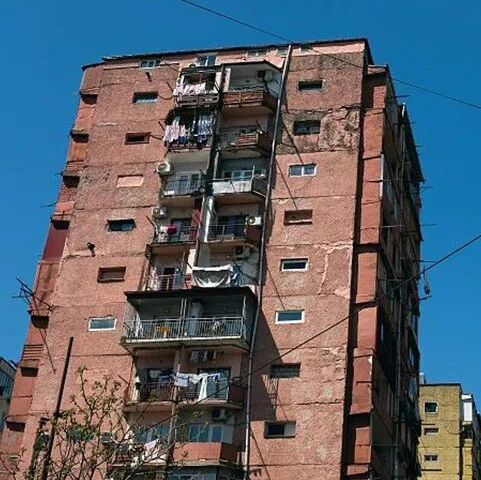
以下文章来源于新周刊 ,作者阿肉 新周刊 . 中国最新锐的生活方式周刊。 文 | 阿肉 编辑 | 安菲尔德 来源| 新周刊(ID:new-weekly) 封面来源 | 视觉中国 当小敏再一次拨打疏通下水道师傅的电话时,她知道,整修房子的事情,不能再拖了。 小敏住的这套50㎡的房子,是三十多年前父亲所在单位分下来的,属于典型的老破小,"算下来比我年龄都大"。 小敏和父亲曾经商量过,想把这套老房子卖掉,换取小敏在新区买房的首付款。但几年下来,这套没有加装电梯、位于顶层的老房子,在二手房交易市场的 价格一跌再跌,她想要以旧换新的可能性也越来越小,索性自己住了进去。 但是, 回到曾经生活多年的老房,小敏的回忆滤镜还没来得及被唤醒,大大小小的麻烦就率先浮出了水面。 比如隔音效果不佳,小敏晚上总能听到隔壁夫 妻吵架的声音;厨房与卫生间的管道,总是隔几天就要堵一次;水龙头水压不稳定、天花板漏水、墙体发霉脱落……各种问题接踵而至,令她头疼不已。 和小敏这样深受老破小困扰的人还有很多。在社交平台上,各种"3万爆改老破小"的内容,似乎也成为了一种流量密码。镜头下的老破小,在经过各种设 计、爆改、粉刷之后焕然一新,看起来确实让人精 ...
有钱人觉醒了!为什么开始不买大平层?老业主:这3大缺点住的憋屈
Sou Hu Cai Jing· 2025-12-21 10:04
Core Viewpoint - The luxury real estate market is witnessing a shift in preferences among wealthy buyers, moving away from large flat units (大平层) towards villas, small houses, and well-designed apartments, reflecting a deeper change in property consumption values that prioritize quality of life over mere size [1][7][10]. Group 1: Characteristics of Large Flat Units - Large flat units, typically ranging from several hundred to over a thousand square meters, have been perceived as symbols of status and taste among affluent individuals [3]. - Despite their impressive size, large flat units often suffer from uneven ventilation and lighting, leading to discomfort in certain rooms [4]. - The efficiency of space utilization in large flat units is low, with many rooms rarely used, resulting in high maintenance and cleaning costs [5][6]. Group 2: Shift in Buyer Preferences - Wealthy buyers are increasingly prioritizing comfort and practicality over size, leading to a preference for villas and well-designed smaller apartments that offer better lighting, ventilation, and outdoor space [7][8]. - The trend indicates that buyers are now more interested in the livability of a property rather than its sheer size, with many opting for homes that are well-suited to their lifestyle [9][10]. - The market is responding to this shift, with a decline in the prices of large flat units and an increase in demand for smaller, well-designed properties [7][8]. Group 3: Implications for the Real Estate Market - The changing preferences among wealthy buyers suggest a broader societal shift towards valuing quality over quantity in consumption [10]. - Developers are beginning to recognize this trend, leading to a reduction in the construction of large flat units and an increase in the development of smaller, more efficiently designed homes [9][10]. - The focus on smart home technology is also contributing to the decline in demand for larger spaces, as smaller homes equipped with advanced technology can provide a high-quality living experience [9].
2025年1-11月蒙古住宅价格同比上涨12.7%
Shang Wu Bu Wang Zhan· 2025-12-19 08:58
Core Insights - The residential price index in Mongolia reached 1.37 as of November 2025, reflecting a year-on-year increase of 12.7% and a month-on-month increase of 1.0% [1] Price Trends - The average price for new residential properties is 4.97 million Tugrik (approximately 1,401 USD) per square meter, with the same price for second-hand homes [1] - The highest property prices are found in the Sukhbaatar district, where new residential properties are priced at 5.90 million Tugrik (approximately 1,661 USD) per square meter, and second-hand homes at 5.95 million Tugrik (approximately 1,678 USD) per square meter [1] - The area with the largest price increase is the Khan-Uul district, where second-hand home prices rose by 18.8% year-on-year [1]