
农牧业

Search documents
新疆紧贴民生推动高质量发展取得显著成效
Xin Lang Cai Jing· 2026-01-28 18:54
Economic Development - In 2025, six major economic indicators in Xinjiang ranked among the top five in the country, highlighting significant achievements in high-quality development driven by a focus on people's livelihoods [1] - During the "14th Five-Year Plan" period, Xinjiang's foreign trade achieved a remarkable annual average growth rate of 28.5%, with a total import and export volume reaching a trillion-level for four consecutive years, ranking first in the nation in 2025 [2] - Xinjiang's grain yield maintained the highest in the country, with cotton production accounting for 92.8% of the national total, indicating a strong agricultural sector [2] Strategic Initiatives - The Xinjiang government aims to accelerate the transformation and upgrading of traditional industries, enhancing the vitality of traditional advantageous industries with local characteristics [1] - The focus for the "15th Five-Year Plan" includes increasing investment in technology, deepening the integration of technological and industrial innovation, and leveraging rich natural resources for high-quality development [1] - Xinjiang's foreign trade strategy will emphasize the strategic positioning of the Euro-Asian Golden Passage and the western opening-up hub, transitioning to a dual-driven model of "institutional opening" and "trade-investment integration" [2] Tourism Growth - In 2025, Xinjiang received a record 323 million tourists, showcasing the region's growing appeal as a travel destination [3] - The tourism department plans to enhance brand activities, develop unique product offerings, increase marketing efforts, and improve service capabilities to further promote Xinjiang as an attractive location [3]
德康农牧(02419)建议采用中国企业会计准则编制财务报表
智通财经网· 2026-01-28 12:38
Core Viewpoint - Dekang Agriculture (02419) plans to adopt Chinese Accounting Standards for its financial statements starting from the fiscal year ending December 31, 2025, to enhance operational efficiency and align with industry practices [1] Group 1: Regulatory Context - The company is permitted to use Chinese Accounting Standards for financial reporting as per the regulations set by the Hong Kong Stock Exchange since December 15, 2010 [1] - The adoption of these standards is supported by the Ministry of Finance and the China Securities Regulatory Commission, allowing qualified domestic accounting firms to provide auditing services [1] Group 2: Strategic Decision - The board of directors believes that adopting Chinese Accounting Standards is in the best interest of the company and its shareholders [1] - The proposal to adopt these standards will require approval from shareholders at the upcoming first extraordinary general meeting in 2026 [1]
“十四五”时期 青海经济运行“稳、进、韧”
Zhong Guo Xin Wen Wang· 2026-01-27 18:18
Economic Overview - Qinghai Province aims for a GDP growth of 4.1% by 2025, with per capita disposable income expected to rise by 5.1% and an urban unemployment rate of 5.4% [1] - In the previous year, the province's general public budget expenditure was 216.42 billion RMB, with a focus on implementing proactive macro policies and leveraging over 50 billion RMB in financial resources [1] Industry Performance - The agricultural and pastoral sector saw a value-added growth of 5.5%, with cattle and sheep output increasing by 5.2% and 1.9% respectively, and total grain production at 1.193 million tons [1] - The industrial sector's value-added output grew by 7.6%, with 85 new industrial enterprises established and 20 green factories created, while high-tech and equipment manufacturing sectors grew by 9.5% and 10.7% respectively [1] Service Sector and Consumption - The service sector showed stability with transportation, warehousing, and postal services growing by 8.5%, and total passenger and cargo turnover increasing by 9.5% [2] - Consumer activity was boosted by a 2.03 billion RMB "trade-in" subsidy, leading to a consumption increase of 21.5 billion RMB, alongside the establishment of flagship stores for brands like McDonald's and Xiaomi [2] Investment and Infrastructure - Significant infrastructure developments include the completion of the third phase of Xining Airport, expansion of the Ge'ku Railway, and the opening of 11 national and provincial highways, contributing to a 24% increase in investment funds to 79.56 billion RMB [2] - The province is enhancing its business environment and integrating into the national market, with a 17.6% increase in total import and export value, and notable growth in lithium-ion battery and salt lake chemical product exports [2]
德康农牧(02419)1月27日斥资607.42万港元回购8.86万股
智通财经网· 2026-01-27 09:30
智通财经APP讯,德康农牧(02419)发布公告,该公司于2026年1月27日斥资607.42万港元回购8.86万股股 份,每股回购价格为67.4-70.05港元。 ...
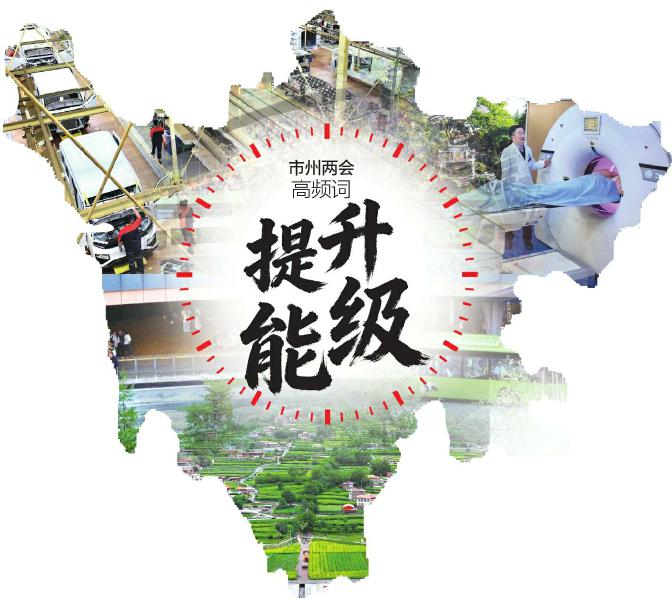
市州两会高频词 提升能级
Si Chuan Ri Bao· 2026-01-26 03:28
Group 1 - The core theme of the recent municipal meetings is "enhancing capability," which encompasses not only growth in scale and speed but also the restructuring of development momentum, industrial structure, and competitive positioning [2] - This year marks the beginning of the "14th Five-Year Plan," and the strategy for "enhancing capability" outlines a clear path for promoting high-quality regional economic development [2] Group 2 - Building a modern industrial system is identified as a primary task across various regions, focusing on strengthening advantageous industries, exploring the potential of traditional manufacturing, and establishing brand recognition for emerging and specialty industries [3] - Yibin has experienced a 60% growth in industrial added value over the past five years, with its power battery industry leading nationally and its photovoltaic industry ranking first in the province [5] - In 2025, despite industry pressures, Yibin's photovoltaic industry is projected to reach a scale of 37 billion yuan, reflecting a year-on-year growth of 28.5% [5] Group 3 - Nanchong is focusing on upgrading traditional manufacturing through quality improvement and strengthening supply chains, with a significant milestone achieved in the production of a new model of commercial vehicles [6] - Nanchong has 219 enterprises in the automotive and parts industry, and it plans to accelerate the construction of a circular economy industrial park to address gaps in mechanical manufacturing [6] Group 4 - Leshan is restructuring its industrial landscape through systematic layout and strengthening industrial chains, aiming to stabilize its advantageous industries while enhancing the support of specialty industries [7] - The city is promoting the development of photovoltaic energy storage and green chemical industries, while also extending the application of nuclear technology in various sectors [7] Group 5 - Luzhou is focused on cultivating competitive specialty industrial clusters, particularly in nuclear medicine, and aims to establish itself as a "nuclear medicine application demonstration city" [8] - Aba Prefecture is prioritizing ecological development and unique resource advantages, with plans to build clean energy bases and a modern seed industry park [8] Group 6 - Innovation and openness are seen as essential for enhancing capability, with discussions on topics like "new integration" and "external openness" being prominent at the municipal meetings [9] - Deyang is integrating technological and industrial innovation, with a focus on the equipment manufacturing sector and the establishment of innovation platforms [10] - Meishan is advancing the integration of new technologies and has established numerous pilot research platforms to facilitate the transformation of scientific achievements [10][11] Group 7 - Meishan has over 560 technology-driven enterprises, emphasizing the role of small and medium-sized tech companies in driving industrial transformation [11] - Both Leshan and Meishan are prioritizing the construction of transportation and logistics hubs as a breakthrough for enhancing openness [11]

把握时代脉搏 解码发展蓝图
Xin Lang Cai Jing· 2026-01-25 20:19
Core Viewpoint - The article discusses the key themes and initiatives presented during the annual meeting of the People's Congress and the Chinese People's Political Consultative Conference in Qinghai, emphasizing ecological priority, modern industrial development, and improvements in people's livelihoods as essential components of the province's modernization efforts [6][12]. Group 1: Ecological Priority - The concept of ecological priority and green development is highlighted as a fundamental aspect of Qinghai's modernization, with a focus on establishing a natural protection system and enhancing biodiversity [6][7]. - The Three Rivers Source governance project has seen an investment of 23 billion yuan since 2005, leading to significant ecological improvements and species protection [7]. - A shift from emergency governance to systematic enhancement in ecological protection is emphasized, with proposals for a dual-engine mechanism combining national compensation and market premiums [7]. Group 2: Modern Industrial Development - The establishment of a modern industrial system is identified as a material and technical foundation for Qinghai's modernization, with a focus on developing local特色产业 (characteristic industries) [6][8]. - Qinghai has made significant advancements in the comprehensive development of salt lake resources and has become a competitive "highland green vegetable garden" due to its unique climate [9]. - The province aims to develop a "green computing" ecosystem, integrating green electricity with computing power to create a sustainable value chain [10]. Group 3: Improvements in People's Livelihoods - The article notes that the past five years have seen significant improvements in the welfare of the people in Qinghai, with stable employment and rising incomes outpacing economic growth [12][13]. - Investments of 177.5 million yuan have been made to enhance drinking water quality, benefiting over 150,000 residents [13]. - The focus on agricultural modernization is crucial, with strategies to address challenges in the livestock sector and improve the quality of ecological agriculture [14].

地区生产总值2.67万亿元,比上年增长4.7% 2025年内蒙古经济运行向新向好
Xin Lang Cai Jing· 2026-01-25 09:01
Economic Overview - In 2025, Inner Mongolia's GDP is projected to reach 26,710 billion yuan, reflecting a 4.7% increase from the previous year [1] - The primary industry is expected to contribute 3,037 billion yuan with a growth of 5.0%, the secondary industry 11,293 billion yuan with a growth of 5.5%, and the tertiary industry 12,381 billion yuan with a growth of 4.0% [1] Agricultural Sector - Agricultural production quality and efficiency are set to improve, with a total grain output of 840.7 billion jin, marking a 2.5% increase and achieving "22 consecutive years of bumper harvests" [1] - The area for grain planting is projected to be 10,567 million mu, up by 0.5%, with a per mu yield of 397.8 kg, an increase of 2.0% [1] - Livestock production is expected to reach 3,158,000 tons, growing by 5.0%, with beef and mutton production both exceeding one million tons [1] Industrial Sector - The added value of above-scale industrial output is anticipated to grow by 6.7% in 2025 [2] - Strategic emerging industries, high-tech manufacturing, modern coal chemical industry, and rare earth industries are projected to see significant growth, with increases of 9.4%, 17.5%, 39.6%, and 32.0% respectively [2] - New energy generation is expected to reach 2,562.8 billion kWh, reflecting a growth of 28.8% [2] Service Sector - The added value of the service industry is expected to grow by 4.0%, with wholesale and retail increasing by 4.9%, transportation, storage, and postal services by 5.4%, and accommodation and catering by 2.9% [2] Investment and Consumption - Fixed asset investment (excluding farmers) is projected to grow by 4.0% in 2025 [3] - The total retail sales of social consumer goods are expected to reach 537.55 billion yuan, a 4.3% increase from the previous year [3] - Per capita disposable income is projected to be 41,921 yuan, reflecting a 4.6% increase, with urban residents at 52,829 yuan (3.8% growth) and rural residents at 23,855 yuan (5.8% growth) [3] Overall Economic Outlook - The economy is expected to show steady progress amidst multiple pressures, with internal driving forces gradually strengthening [4] - The region faces complex external environments and ongoing challenges, necessitating enhanced policy effectiveness and market vitality to sustain economic recovery [4]
温氏股份:温氏投资核心聚焦于农牧食品产业链及围绕产业链的赋能科技
Zheng Quan Ri Bao Wang· 2026-01-23 11:42
证券日报网讯1月23日,温氏股份(300498)在互动平台回答投资者提问时表示,温氏投资核心聚焦于 农牧食品产业链及围绕产业链的赋能科技,致力于构建高效、协同的温氏产业链生态圈。公司当前有投 资布局与农牧业相关的智能化机器人技术,旨在强化产业链技术储备,赋能主产业可持续发展,如AI 养殖等。目前相关投资对公司业绩直接影响较小,提醒注意投资风险。 ...

港股公司业绩预告密集发布,有色金属成“盈利担当”
Zheng Quan Shi Bao· 2026-01-22 09:37
在贵金属价格持续攀升的背景下,有色金属行业成为港股市场最耀眼的板块。紫金矿业此前发布的业绩 预告显示,公司预计2025年实现归属于上市公司股东的净利润为510亿—520亿元,同比增长约59%— 62%;扣非净利润475亿—485亿元,同比增长约50%—53%。 紫金黄金国际预计2025年度实现归属于母公司股东净利润约15亿—16亿美元,与上年同期相比将增加约 10.2亿—11.2亿美元,同比增加约212%—233%。 赤峰黄金预计2025年度实现归属于上市公司股东的净利润为30亿—32亿元,与上年同期相比,将增加约 12.36亿—14.36亿元,同比增加约70%—81%。 洛阳钼业的业绩预告显示,预计2025年度实现归属净利润为200亿元到208亿元,同比增长47.8%到 53.71%。 有色金属行业公司业绩攀升,主要受金属价格走高影响。比如,紫金黄金国际明确表示,矿产金产量增 加,良好的市场及并购因素,使得公司2025年业绩实现大增。2025年,公司矿产金产量同比增加至约 46.5吨,而2024年度约38.9吨(不含波格拉金矿产量)。2025年,矿产金销售价格同比上涨,加上2025 年度完成并购的两个在产金 ...
锻造农牧业发展新优势 全面推进乡村振兴
Xin Lang Cai Jing· 2026-01-18 19:30
Core Insights - The article emphasizes the importance of modernizing agriculture and rural areas as a crucial part of China's overall modernization strategy, highlighting the need for a resilient, value-added, and sustainable industrial chain in the agricultural and pastoral sectors [1][2]. Group 1: Agricultural and Pastoral Industry Development - The development of the agricultural and pastoral industry in Inner Mongolia faces challenges such as geographical remoteness, weak infrastructure, short industrial chains, and poor market connectivity, leading to issues like "having products without brands" and "having resources without transformation" [2]. - To strengthen the agricultural and pastoral industry, it is essential to integrate production, processing, and sales, focusing on standardization, greening, and branding to enhance product quality and market competitiveness [2][3]. - The establishment of a gradient processing network is proposed, which includes small-scale cold chain logistics and deep processing facilities to improve local product transformation and reduce post-harvest losses [3]. Group 2: Sales and Marketing Strategies - A three-tier logistics system is recommended to enhance sales channels, ensuring efficient distribution from local areas to broader markets, including the establishment of green agricultural product trading markets in key cities [3]. - Encouragement of direct procurement relationships between cooperatives and e-commerce platforms is suggested to improve market access and product visibility [3]. Group 3: Integration of Agriculture, Culture, and Tourism - The deep integration of agriculture, culture, and tourism is identified as a key pathway for value addition, leveraging natural landscapes and cultural resources to develop new tourism experiences [4]. - Innovative models such as "family ranch + homestay + hands-on experience" are proposed to enhance consumer engagement and product repurchase rates [4]. Group 4: Rural Revitalization and Environmental Improvement - The article stresses the need for a comprehensive approach to rural revitalization that combines environmental improvement with cultural preservation and economic development [5][6]. - Infrastructure improvements, such as better road access and digital connectivity, are essential for enhancing public services and overall quality of life in rural areas [5]. Group 5: Reform and Resource Activation - The article advocates for using reform as a tool to activate dormant resources in rural areas, emphasizing the need for institutional innovation to overcome barriers and transform resources into assets and wealth [7][8]. - Specific measures include clarifying property rights, marketizing resources, and modernizing governance to facilitate the effective allocation and enhancement of rural resources [8][9].